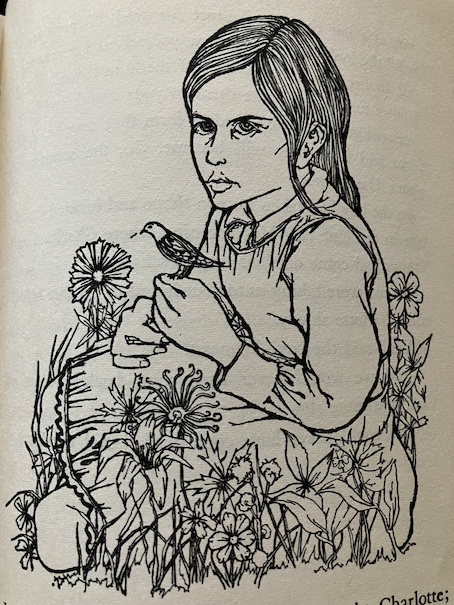
Emma in Winter

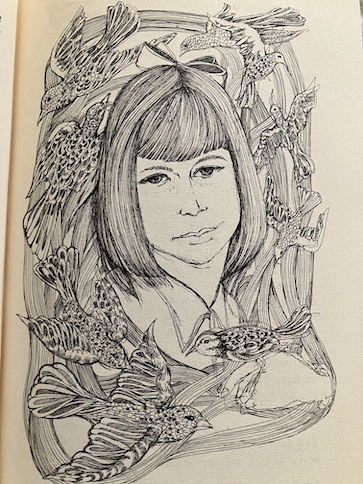
This is the second book in the Aviary Hall Trilogy. Each of the books in the series could be read independently of each other, but this book in particular makes more sense if you have read both the first book, which is The Summer Birds, and the third book, Charlotte Sometimes before reading this one. People in this book directly reference events in The Summer Birds, something with Charlotte Sometimes does not. Although Charlotte Sometimes was written and published after this book, it actually takes place during the autumn before this story and it does inadvertently contain a spoiler for Charlotte Sometimes because Charlotte appears at the beginning of the book. It’s just my own preference that it’s better to read this book after Charlotte Sometimes because it makes Charlotte Sometimes more suspenseful. Like Charlotte Sometimes, this book also involves time travel, and the characters do some research on the subject of time and how it works.

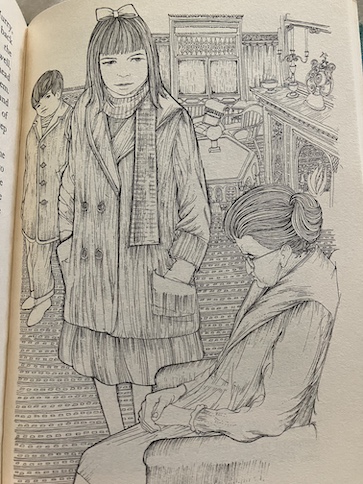
At the beginning of the story, Emma Makepeace is upset because her older sister, Charlotte, will be leaving early for the new term at her boarding school after Christmas. At this point, Charlotte has already had her first term at boarding school (which is where and when Charlotte Sometimes takes place, although there are no references to the events of that story here), and she has been invited to visit one of her new friends from boarding school before they return to the school together. All through Charlotte’s first term at boarding school, Emma has been lonely without her and has been finding life at their home, Aviary Hall, increasingly difficult. 

The girls are orphans (although the books never explain what happened to their parents) who live with their grandfather and his housekeeper. Between the two of them, Charlotte is the more serious and responsible and Emma is the more mischievous and thoughtless. Up to this point in their lives, Charlotte has acted the part of the caring older sister, trying to teach Emma to behave herself and covering for her when she doesn’t. Charlotte has realized that their grandfather has little patience for misbehaving children and that Emma pushes the limits, so she has frequently intervened and smoothed things over when Emma tries his patience. 

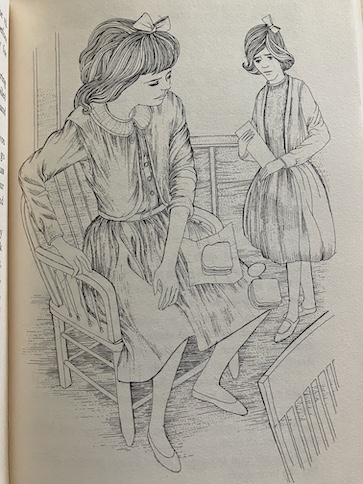
Emma has often thought of Charlotte as a kind of spoilsport for trying to act grown-up and mature, but during Charlotte’s absence at boarding school during the previous term, Emma has suddenly come to see how much Charlotte has been helping her and saving her from the consequences of her own actions and the realities of their home life. Without Charlotte there to be the motherly big sister, providing some warmth and affection and acting as a buffer between Emma and the adults, the grandfather has become more impatient with Emma’s immaturity. Both he and the housekeeper have been more direct with Emma about her behavior and bad habits, and there’s no one there to shield Emma from it. Emma is lonely for Charlotte’s company and feels picked on by the adults, so when Charlotte cuts her time with Emma short after her first visit home to go visit one of her school friends, Emma is angry and resentful. Charlotte is tempted to back out of her friend’s invitation for Emma’s sake, but she feels like she can’t, and their grandfather tells her that she must go ahead with the visit.

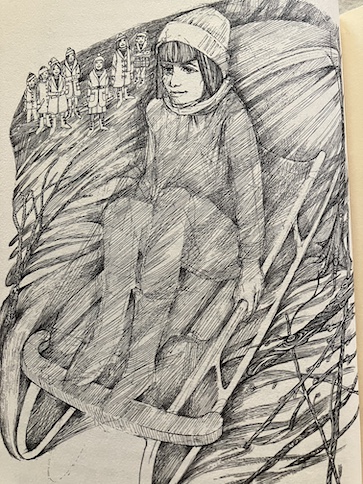
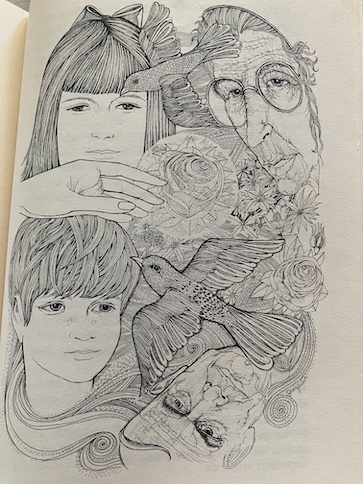
Emma is in a state of emotional turmoil through most of the story, adjusting to Charlotte’s absence, the new expectations of the adults in her life for her to mature and improve her behavior, and her own resentment about these things. While all this is happening, something else strange happens. Emma begins having strange dreams about flying. They remind her of the children’s flying adventures from two years previously, as described in The Summer Birds. It has been so long since she last flew that she struggles to remember how in her dreams, and when she wakes up, her muscles feel sore from the effort. However, at first, she can’t remember what happened in her dreams.

At school, when the new term begins, Emma is made head girl because she is the eldest girl in the class. A boy called Bobby Fumpkins is made head boy because he is the eldest boy. Emma is embarrassed and uncomfortable about being the head of the class in partnership with Bobby. She hates Bobby because he is fat, awkward, and spoiled. Before his mother gave birth to Bobby’s younger sister, who is still a baby, she babied Bobby more than she really should have at this age. Their family also has their own tv set, something most of the other children’s families don’t have at this time, and which Bobby bragged about when they got it. For these reasons, most of the other children in the class don’t like Bobby, either, and they’ve teased him mercilessly for years. They think he’s a sissy and a baby because of his mother’s attention and because he’s milder-mannered than they are and never stands up to them. Because of his awkwardness, they like to call him Jemima Puddle-Duck after a character from a children’s book by Beatrix Potter. Bobby tells himself that his classmates mean all this teasing good-naturedly, but they don’t really. Emma is particularly adamant within herself that she genuinely hates Bobby.

However, like it or not, Emma’s life has become intertwined with Bobby’s. Their teacher expects the two of them to work together at school during the day, and at night, she gradually begins to realize that he is sharing in her same dream of flying. Other children at school tease Emma about being friends with Bobby, particularly one girl who really wants to cause trouble for Emma because, as the next eldest, she would be next in line for the head girl position herself. Emma denies being Bobby’s friend, partly because he still gets on her nerves and partly because she’s still lonely without Charlotte and is worried by being shunned by the other children at school. However, she gradually begins to feel guilty about the way she and others have been treating Bobby, and she begins to feel the impulse to try to be nicer to him. 

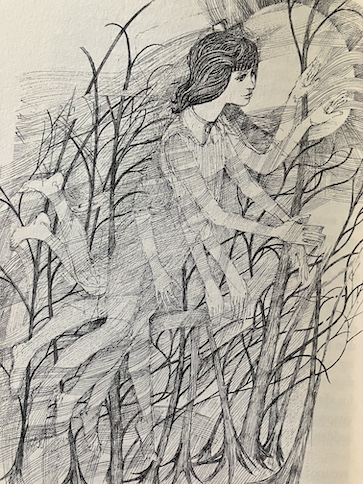
As her relationship with Bobby improves, Emma begins remembering more of their shared dream, and the two of them talk about the dream together. Bobby was one of the children at school who shared in their flying adventures two years before, and the two of them discuss their past adventures with each other and how they compare to the dream they’re now having. There are a few things that they begin to notice that are different from their past flying adventures. One is that they both have the feeling that someone is watching them. It seems to be a stern or hostile presence, a pair of eyes that belong to some unknown person, but they don’t know who it is. They also begin to notice that it looks like plants are growing backward as they fly over the countryside. That is, grown plants seem to be returning to small plants and seeds. They gradually notice that the land seems to be going back in time. Eventually, they start seeing dinosaurs in their dreams, and it looks like they might be going back to the beginning of the world. What will happen to Emma and Bobby in their dream when they eventually reach the beginning of everything?

The book is available to borrow and read for free online through Internet Archive.

I’ve already explained my reasoning about the reading order of the books. The Summer Birds is the first book in the trilogy, and you really have to read it before you read this book because the characters directly reference events from that story. Actually, I thought that was a really interesting choice, to have Emma and Bobby talking openly with each other about the summer when they learned to fly. They just accept that event as a common event in their lives that they shared and that everyone who shared it with them openly acknowledges. Sometimes, in children’s fantasy stories, the characters later downplay magical events, feeling like they were dreams they had or games of pretend they played because they seem too strange to have really happened, but no, in this book, the characters all know what happened to them and just accept it as a part of their lives. I thought it was interesting that this book acts as a bridge between the theme of flying and the themed of time travel in Charlotte Sometimes, although I still think that Charlotte Sometimes keeps more of its suspense if you don’t know that Charlotte safely returns to her own time before you read it. 

I still think that Charlotte Sometimes is the best book in the trilogy. It is the best known, and unlike this book, it can be read independently of the others in the trilogy. It doesn’t reference either of the other two books at all. There are no references to Charlotte having participated in any previous magical adventures in that story. That may be partly because she is among strangers at her new boarding school who wouldn’t know anything about her flying adventures, but even her private thoughts don’t give any hint to that. What I think that The Summer Birds and Emma in Winter add to Charlotte Sometimes are some further insights into Charlotte and Emma’s personalities and the relationship between them. I still think that Charlotte Sometimes is the best book in the trilogy. It is the best known, and unlike this book, it can be read independently of the others in the trilogy. It doesn’t reference either of the other two books at all. There are no references to Charlotte having participated in any previous magical adventures in that story. That may be partly because she is among strangers at her new boarding school who wouldn’t know anything about her flying adventures, but even her private thoughts don’t give any hint to that earlier adventure. What I think that The Summer Birds and Emma in Winter add to Charlotte Sometimes are some further insights into Charlotte and Emma’s personalities and the relationship between them. Emma in Winter also adds some thoughts about the nature of time and time travel, which add some further insights into Charlotte’s time travel experiences.

Emma and Bobby do some research about time in her grandfather’s study, a room where Emma is usually forbidden to go. One of the theories they find is that time moves in a coiled pattern, like a spring, and that the coils of the spring can be pushed together so different points on the coils can touch each other. This theory really relates better to Charlotte Sometimes than to Emma in Winter, but what is more relevant to this story is the idea that human thought can be the force that pushes the coils together and makes them touch. This is also a part of Charlotte Sometimes, and I explain in my review of that story about how Charlotte and Clare having many similarities and being in a similar state of mind as well as sharing the same physical space at different times allowed them to switch places with each other. However, the emphasis in Emma in Winter is Emma and Bobby realizing that their own thoughts and feelings influence their dreams and, therefore, their time travel.

This story is rather metaphysical and a little difficult to follow during the dream phases. I noticed that some other reviewers seemed confused about the point of the time traveling. I found it a little confusing, too, but it seems like this is a coming-of-age story, like the other books in the trilogy. The Summer Birds focused on Charlotte and how her more mature outlook helped the other children make an important decision that would alter their lives forever. Charlotte Sometimes raises the question about what defines a person’s identity and how a person’s identity can be tied to someone else’s even when they’re separate people. Emma in Winter focuses on emotional understanding.

Both Emma and Bobby are going through major changes in their lives, particularly ones that require them to become more mature than they once were. Bobby has been somewhat spoiled and coddled by his mother, but he’s no longer the center of attention at home, now that he has a little sister. At first, Bobby finds it hard to cope with his mother no longer giving him the attention she used to give him, but it does give him the opportunity to become more independent and mature. Emma despises Bobby for being babyish because he was spoiled and overprotected by his mother when he was younger, but the truth is that Emma is also babyish. She’s not accustomed to being accountable for her own behavior and bad habits because Charlotte usually takes responsibility for her and shields her from some of the reactions of the adults and other people. 

When Charlotte goes away to boarding school, Emma is left on her own for the first time to deal with the consequences of her actions and other people’s reactions to them. It’s a bit of a shock for her at first, and she realizes that she hasn’t fully appreciated what Charlotte was doing for her for the whole time. She also comes to the disquieting realization that, even thought she feels like the adults are picking on her over her behavior, she doesn’t like the way she behaves, either. She comes to feel guilty about the way she treats Bobby, and when she draws some nasty pictures of her teacher, she is startled to realize how much she has hurt her teacher’s feelings and how badly she feels about doing that. For the first time in her life, Emma has to face her own behavior and see how her behavior truly affects other people. She is shocked and troubled when she realizes that she doesn’t like what she sees and it’s her own fault. Only Emma can decide how nice or how mean she is and who she really wants to be.

The children’s time traveling adventures that they have while dreaming lead them to explore their relationship with each other. Emma realizes that she has to be nice to Bobby and learn to get along with him for them to be able to function with each other in the dream. Their final dream together is confusing and rather surreal, but it also involves the two of them confronting aspects of themselves, their lives with other people, and their own behavior. 

When they move all the way back in time as far as they can go, they’re confronted by a vision of their teacher, not as she actually is, but as Emma drew her in a mean drawing. Emma has to remind herself and tell the figure that it’s only a drawing she made; it’s not reality. They also see visions of other people in their lives and even of themselves at their worst and most frightening, but they have to hold on to the reality of themselves, as they are now, the people they’re becoming, not who they used to be or how other people see them. I took it to mean that neither of them can go backward in their lives anymore, to their old habits and who they were or how they were as younger children, but they have to accept the changes taking place in their lives and in themselves to return to the real world, their own time, and the lives they have ahead of them. They discover that the key to traveling through time is thinking, so they have to think themselves out of their time travel dreams, focusing on their real selves and the real lives, accepting and even loving themselves as they are. Change has been coming for both of them, but they have to make the decision to face it and embrace it and to let go of their past selves to move on in time and in their lives.

The Little Fir Tree

A little fir tree feels lonely among the large trees in the forest, but something happens that changes his life forever – he is chosen to be a living Christmas tree for a little boy!

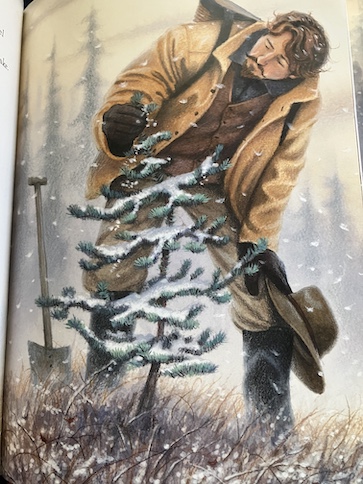
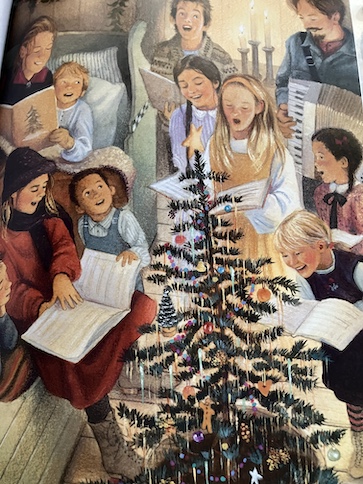
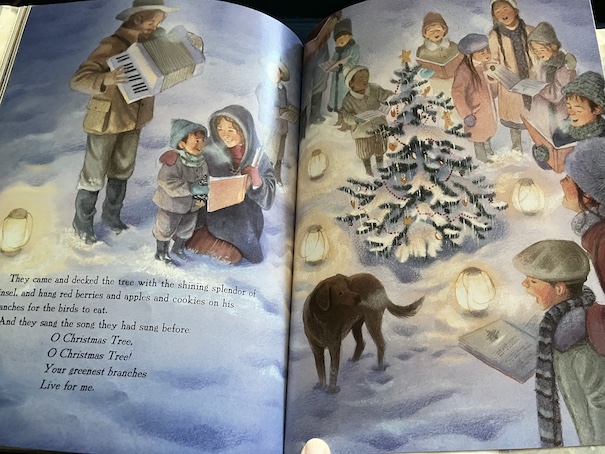
One winter, the boy’s father carefully digs up the tree and brings it home to his young son, who cannot walk because of a lame leg. The boy has been wanting to see the trees in the forest, but since he can’t go to the forest himself, his father has brought a free to him. The little fir tree loves being decorated, and the next evening, guests come and gather around him, singing Christmas carols.

In the springtime, the boy’s father takes the tree back to the forest, where he found it, and he plants the tree again so it will continue to grow. However, the following winter, the boy’s father returns to dig up the tree again and take it back to the boy for Christmas.

The little fir tree loves this ritual of visiting the boy and his family and being their Christmas tree every winter, but the next winter after that, the man doesn’t come to dig him up. The little tree is disappointed and lonely, but he is in for a surprise. This winter, the boy and his family come to see him in the forest!

The book is available to borrow and read for free online through Internet Archive, although that copy has different illustrations.

I mainly know Margaret Wise Brown for Goodnight Moon and The Runaway Bunny, but I found this Christmas story charming. I don’t like Christmas stories from the point of view of trees that are cut down, like the Hans Christian Andersen story, The Fir-Tree, which has a really depressing ending. I like it that this family in this book keeps the tree alive, returning it to the forest every year to continue growing. Things change for both the boy and the tree over the years, as they both continue to grow, but they change for the better, and they continue to be fond of each other and a source of inspiration for each other.

When I was a kid, our elementary school had a large tree on a hill on the kindergarten playground, and the story behind it was that it was once a living Christmas tree from the very first kindergarten class at the school. That tree is still there and alive today, about 50 years after it was first planted there and more than 30 years after I used to play under it. I like to imagine that it will be true of the little fir tree, too, that it will continue growing over the years.

Earlier versions of this book had different illustrations, but personally, I love the illustrations in this printing because they’re detailed and realistic. The version on Internet Archive has illustrations by Barbara Cooney, who is known for Roxaboxen and Miss Rumphius. Cooney’s illustrations are also good, but not as realistic as Larmarche’s, and they’re in a limited color range.

One other difference between versions of the book is that the earlier version also included the musical notes for the carols that the children sing and additional songs that aren’t included in the later version of the book. I enjoy books that include actual music and lyrics, like books that include recipes, because they are fun extras and add an extra dimension to the story by providing an accompanying activity. Although I like the more detailed and realistic illustrations of newer edition of this book, I do prefer the actual music and wider range of songs from the older version.

The Halloween Play

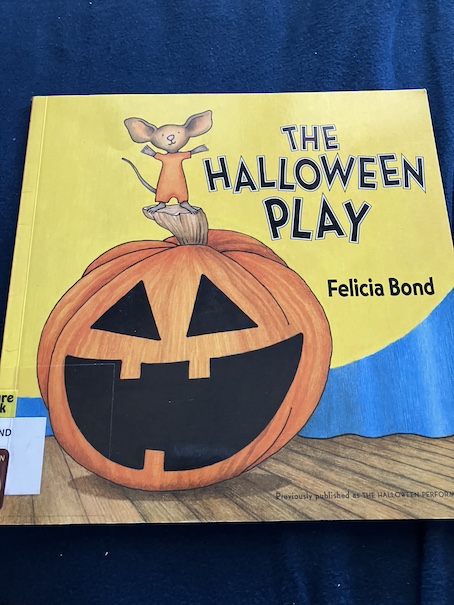
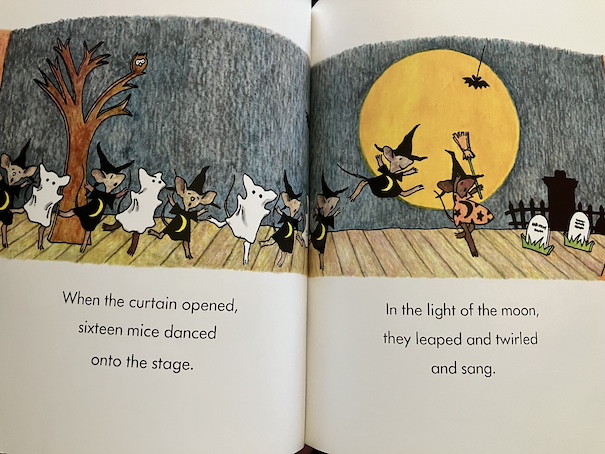
Halloween is coming, and the students in Roger’s class at school are preparing for their Halloween play. The class rehearses their play every day, and they make invitations to the play to send out to people in town.

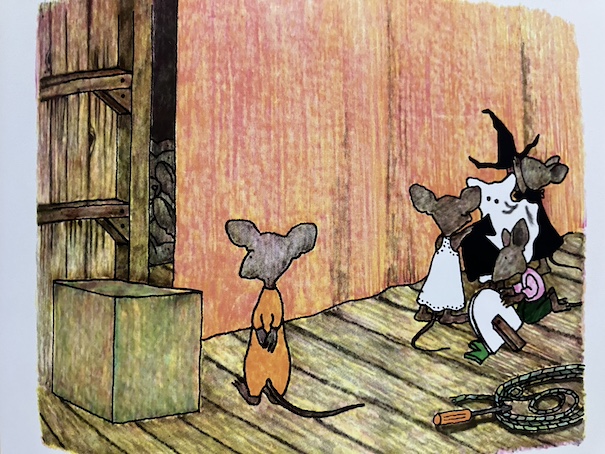
On the night of the play, the school’s auditorium is full of people waiting to watch the play, and Roger waits backstage for his turn to go on stage. He doesn’t have a big role in the play, but his role is important.

The other students in Roger’s class go on stage, dressed as witches, ghosts, and skeletons. They perform the songs and dances they’ve rehearsed. The audience laughs at the funny parts, and everyone is enjoying the play.

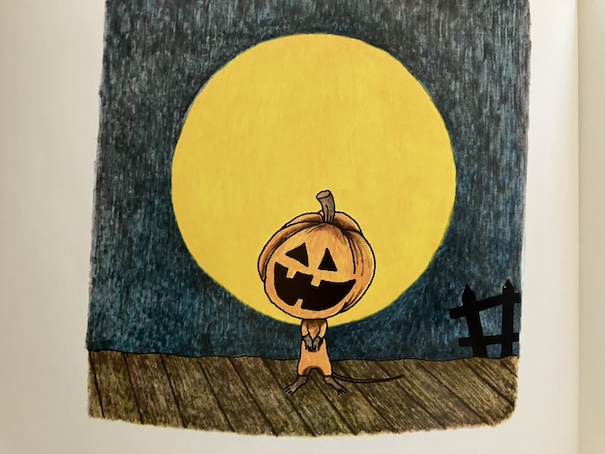
All the time, Roger is backstage, listening and preparing for his part. He counts down the lines until the moment comes when Roger steps on stage for the play’s finale!

The book is available to borrow and read for free online through Internet Archive (multiple copies).

I remember reading this book when I was a little kid, and it was a Halloween favorite of mine! Felicia Bond is better known today as the illustrator (but not the author) of If You Give a Mouse a Cookie, which was originally published two years after this particular picture book. The art style between the two books is noticeably similar, but the book about the Halloween play is different because this is about mice who live like people and do not interact with humans. I was also amused that one of the student mice in this book was dressed in an orange shirt with a black zig-zag and black shorts, like the cartoon character Charlie Brown, who wears a yellow shirt with a black zig-zag and black shorts. The tv special It’s the Great Pumpkin, Charlie Brown was known for popularizing the concept of Halloween tv specials, and Roger the mouse plays a large pumpkin in his class’s Halloween play, although Roger isn’t the mouse wearing the Charlie Brown style clothes. Roger is the one in the sweater with an R on the front. I was just amused by this little detail in the pictures of his class.

This picture book is a sweet little story about a mouse boy and the Halloween play given by his class. School plays on a wide variety of themes are a common experience for human children attending both public and private schools, and they are often memorable points in children’s school experiences. They can also be very emotional experiences. Students can be nervous about plays and being on stage in front of an audience, and sometimes, there are conflicts about which students get the best parts. This cute little picture book doesn’t have any drama in it and doesn’t talk about stage fright, although there are other children’s books that address these issues.

Instead, the story is more about a magical evening and the small but important role played by one particular student. Much of the story shows the build-up to the play, and when the play begins, Roger only appears on stage at the end of the play. The rest of the time, he’s listening to the other students from back stage, waiting for his cue to step into the spotlight. We don’t know exactly what the play is about, but it’s not that important. Those quiet moments of anticipation backstage are magical, and Roger will never forget how exciting this evening has been!

The Case of the Phantom Frog

McGurk Mysteries

Mrs. Kranz, an elderly sculptor, has been looking after her nephew’s 7-year-old son, Bela, because his parents were in a car accident and are still in the hospital. She consults the McGurk Organization because strange things have been happening since Bela came to live with her. At first, she is reluctant to say what is really bothering her. She was referred to the McGurk Organization by Willie’s mother, and she frames her request as hiring the kids to watch Bela while she’s working. McGurk turns down the offer, saying that the oldest members of the McGurk Organization are only 10 years old, not really old enough to babysit, and babysitting isn’t the kind of job they handle anyway. Wanda tries to refer Mrs. Kranz to a regular babysitter she knows, but Mrs. Kranz is strangely desperate and insists that she wants the McGurk Organization.

Because they’re reluctant to accept the job, Mrs. Kranz finally admits that there is a mystery connected to Bela. She starts by telling them that she’s afraid of frogs, like some people are really afraid of bugs or rats or other creatures. Ever since Bela came to stay with her, Mrs. Kranz has been hearing an unusually loud frog sound in her house, particularly in the evening, after Bela is in bed. Bela insists that he never hears it, but it’s giving Mrs. Kranz the creeps. She’s tried to search the house as best she can, but she can’t find the frog anywhere. It’s not the kind of thing that she can go to the police about, but it’s driving her crazy. The real reason why she wants the McGurk Organization to spend time with Bela is to see if they hear the frog, too, and if they can figure out where it is.

This time, McGurk is intrigued enough to accept the case, plus Mrs. Kranz offers them a larger fee for their services than they usually have. They consider the idea that Mrs. Kranz could be making up the story about the phantom frog she hears just to get them to accept her babysitting job, but they decide that isn’t likely, both because of the generous amount of money she’s paying them and because she seems genuinely frightened.

When they get to Mrs. Kranz’s house, it’s a big place that looks almost castle-like, and it’s surrounded by trees. Mrs. Kranz invites them in and introduces them to Bela. Bela was born in Hungary, where Mrs. Kranz was from originally. He doesn’t seem glad to meet the members of the McGurk Organization. In fact, he tries to ignore them and talk to them as little as he can. He doesn’t really want to talk to them about the frog when they ask him about it. He just says that maybe he’s heard a frog and that his aunt has frogs on the brain.

McGurk is annoyed with the kid, so he teases him about his name, saying that Bela sounds like a girl’s name. Bela defends his name, saying it’s Hungarian. Joey tries to defuse the situation, saying that Bela Lugosi was a famous actor in old horror movies, and he was also Hungarian. McGurk is intrigued by the mention of old horror movies because he loves them, and he starts asking Bela about whether there are things like vampires and werewolves in Hungary. Bela says that monsters are just stupid kid things. Brains is inclined to agree with Bela because there’s no scientific evidence that such things exist, and McGurk gets irritated with both of them.

When McGurk consults with the other members of the organization about Bela, he says that he thinks Bela is hiding something. His theory is that Bela is making the frog sounds himself to scare his aunt as a prank and that his hostility toward their presence and their questions is to cover up for what he’s doing. Wanda takes a different view because she thought that Bela seemed scared of something when they were talking to him, and she thinks that Bela is covering up his fear. Maybe he’s afraid of the frog or the frog sound and doesn’t want to admit it. Brains thinks that the sound could have some ordinary explanation, like sounds from the plumbing system that have been misidentified.

Aside from his hostility toward their questions, Bela seems like a well-behaved kid to watch. When it’s time for bed, he doesn’t argue with the older kids or make a lot of special requests or excuses to stay up later. In fact, he seems eager to go to bed. His only requests are that they leave the lights on and the window slightly open for air. As soon as Bela is in bed, the members of the McGurk Organization station themselves at strategic points around the house, waiting to see what they can hear and where it seems to be coming from.

They do hear the frog, and it sounds unnaturally loud, like it’s a monster frog! Most of them aren’t sure where the sound came from, but Brains is pretty sure that it came from Bela’s room. When they go inside, Bela seems like he’s asleep, and they don’t see a frog anywhere. They’re convinced that Bela is faking that he’s asleep, although Bela puts on an act like he was really asleep. McGurk knows that he must have been awake while they were out of the room because they left the light on for him, and when they first entered the room, the light was off. At some point, Bela must have gotten up and turned it off himself, although they don’t know why he would do that. For some reason, he also shut his window.

It seems pretty clear that Bela has something to do with the frog noise. The next night, they rig up a microphone in Bela’s room so they can monitor the sounds there. When they hear a loud frog sound, they hurry up to Bela’s room and find a frog sitting on his pillow .. and there is no sign of Bela! McGurk stuns the others when he makes the announcement that Bela is a werefrog! McGurk thinks that Bela has the transformation powers of a werewolf, but he’s turning into a frog instead of a wolf. They go to the kitchen, where McGurk finds some garlic, and when they return to Bela’s room, the frog is gone, and Bela is back in bed. Is Bela really a werefrog, or is there another explanation for what’s happening?

The book is available to borrow and read for free online through Internet Archive.

I remember reading this book when I was a kid, and I did a book report on it for school. I even did a little diorama about the story that looked like Bela’s bedroom, with a little frog made out of modeling clay. It was cute, but I can’t show it because I don’t have it anymore.

I found the story pleasantly creepy when I first read it as a kid. Even though I was sure that there must be some logical explanation for the phantom frog and Bela’s apparent transformations, I honestly wasn’t sure what it was at first. The mystery isn’t that complicated for an adult, but it’s creepy and mysterious for a child.

It sometimes seems to me that kids in the McGurk books are a little mean to each other and call each other names too much. I didn’t like it that McGurk was teasing Bela about his name in this book. However, it does serve a purpose in this story because the discussion of Bela’s name is what introduces the mention of Bela Lugosi and the idea that there might be a supernatural explanation for the phantom frog and that Bela might be a werefrog. Mrs. Kranz doesn’t suggest that idea to the kids when she first consults them about the frog. McGurk is the one who thinks of it because he’s really into old horror movies, and Bela being Hungarian, like Bela Lugosi, suggests a connection to the supernatural to him.

Not all the others are really as convinced as McGurk is, but they are creeped out by the phantom frog that appears and disappears and Bela’s odd behavior. Brains is the least convinced of everyone that there’s a supernatural explanation for the frog, reminding everyone that he invented an “invisible dog” in a previous book. He knows that it’s possible to create some pretty convincing illusions. He’s the one who convinces McGurk to investigate the possibility that Bela is faking everything somehow.

I like to take note of times when characters in books reference pieces of pop culture from the time when they were written. At one point, the kids in the story are watching a Peanuts special on tv, based on the characters from the comic strip. That comic strip was still being written and published at the time this book was written, and I remember watching Peanuts specials on tv myself as a little kid in the 1980s.

The Case of the Bicycle Bandit

A Jigsaw Jones Mystery

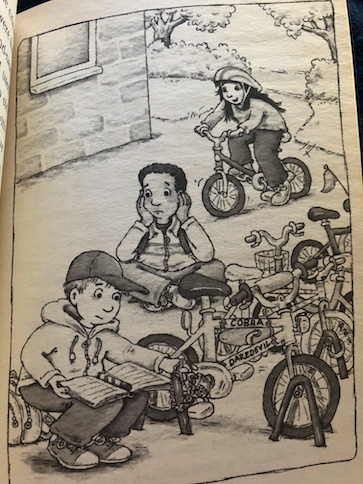
Jigsaw Jones and his friend, Ralphie, have to go to the library to get books for a book report at school. While they are at the library, somebody steals Ralphie’s bike!

First, it’s strange that Ralphie’s bike was stolen because Ralphie is sure that he locked it up using the same chain that he used to also lock up Jigsaw’s bike. How could someone take a bike that was chained up, and since the two bikes were chained together, why is Jigsaw’s bike still chained up, as if the lock was never opened?

Second, if someone could get the chain open to take one of the bikes, why did the thief take Ralphie’s bike? Jigsaw’s bike is new and in good condition, while Ralphie’s bike, which he calls “Old Rusty”, is old, beat-up, and always breaking in some way. Ralphie is fond of “Old Rusty”, which was a hand-me-down from his older brother, but if some stranger had a choice of stealing one of two bikes, wouldn’t it make more sense to take the one that’s in better condition?

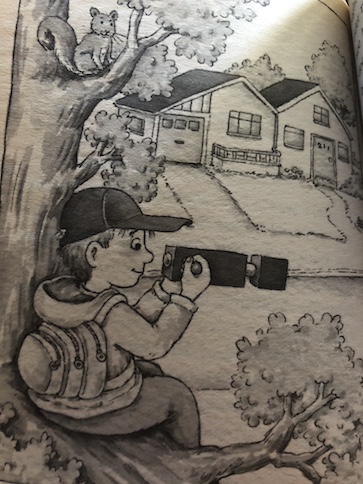
Jigsaw Jones calls his friend, Mila, to help him investigate and find Ralphie’s missing bike, and they get some help from a classmate who is good at drawing portraits to interview witnesses and do sketches of suspects. Their most likely suspect is a skateboarder whose face nobody saw clearly. But, how did the skateboarder know how to open the lock on the bike chain, and why did he take only the old bike and lock up the newer one again?

The book is available to borrow and read for free online through Internet Archive (multiple copies).

Books in this series are easy, beginning chapter books with pictures that accompany the story. The mystery in this book is pretty simple, although it might seem more difficult to younger readers. I liked the way the characters reasoned it out, logically confronting the problem of how the thief opened the bike chain and why the thief took the older bike instead of the new one. I also enjoyed their use of an amateur sketch artist to find one of their suspects.
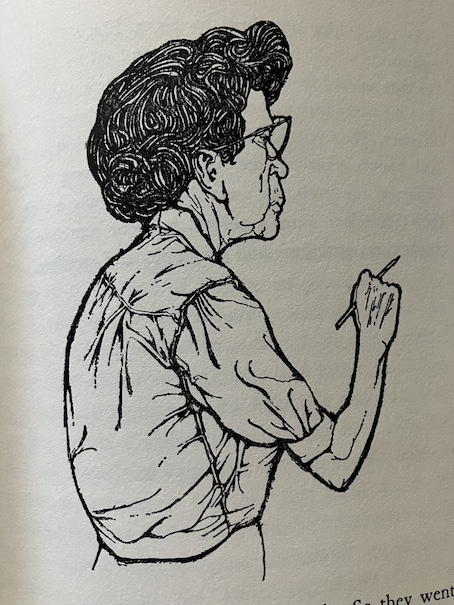
Even after Jigsaw does a stakeout and realizes who is responsible for taking the bike, he doesn’t seem to quite understand the motive until the thief explains it, although the motive was what I figured it was. Revealing the culprit in this book also includes a spoiler for an earlier book in the series.

I was amused when Jigsaw said that he charges a dollar a day for his detective services. At first, I thought that shows the inflation that’s happened since Encyclopedia Brown charged his clients a quarter. Then, Jigsaw checks out an Encyclopedia Brown book from the library, showing that Jigsaw is familiar with the books and also giving kind of a nod to an earlier boy detective who may have somewhat inspired this series. I always appreciate children’s books that reference other books.

The Puzzling World of Winston Breen

Twelve-year-old Winston Breen loves puzzles! He looks for puzzles to solve everywhere, and he also loves to make to give puzzles to other people to solve. Usually, on his sister’s birthday, he likes to set up some kind of puzzle or treasure hunt to lead her to her present. However, the year his sister Katie turns ten years old, Winston almost forgot about her upcoming birthday party, so he didn’t have anything planned. In fact, he was lucky to find a nice present in time for the party, buying a pretty box that he saw in a curio shop at the last minute.

When Katie opens his present at the party and sees an empty box, she’s sure that the empty box must be another of his puzzle tricks. Winston tries to explain to her that it’s just a nice box, and there’s no puzzle this time, but to his surprise, Katie finds a puzzle in the box that Winston didn’t make or put there. It turns out that there’s a secret compartment in the box that contains thin strips of wood with letters on them. It looks like the kind of puzzle Winston loves and one he might have made if he had planned better this year, but as Winston explains to everyone, this isn’t his work. So, whose puzzle is it, and what does it mean?

Everyone at the party tries to guess what the puzzle means, and Winston has to reassure everyone multiple times that it’s really not one of his puzzles. In the end, they all decide to let Winston try to solve the puzzle and tell them the answer. However, Winston can’t seem to solve the puzzle! When he’s unable to solve it, his relatives really begin to believe him that he didn’t make it. Winston’s cousin, Henry, questions him about who had access to the box and where he got it in the first place. When Winston says that it got it at the curio shop, Henry points out that the curio shop owner also likes puzzles and has shared puzzles with Winston before. It seems logical that he’s the original source of this particular puzzle.

When Winston talks to the owner of the curio shop, he says that he had no idea that there was a puzzle in the box that Winston bought. The box was part of a larger set of items that came from the estate of a woman who died recently. The lady was one of the daughters of a wealthy inventor who was one of the founding members of their town, Walter Fredericks. One of Winston’s friends is doing a report about Walter Fredericks for school. The owner of the curio shop says that the last living member of the deceased lady’s family is her sister, who is the town’s librarian, and that maybe Winston should ask her about the puzzle. Winston’s friend needs some information about the inventor for his report anyway, so they decide to go to the library and talk to the librarian. However, when the boys try to talk to the librarian, she suddenly becomes upset when she sees Winston holding the pieces of the puzzle. She starts to cry, asks why “you people” can’t leave her alone, and yells at them to leave the library!

The boys have no idea what made the librarian react like that. Later, they are approached by a strange man who introduces himself as David North. He says that he saw what happened in the library, and he thinks that he can help. He calls himself a treasure hunter and explains that the reason why Winston hasn’t been able to solve the puzzle is that he’s missing some of the pieces. David North shows the boys that he has more of the pieces to the puzzle, and he suggests that they become partners, sharing their pieces with each other to solve the puzzle.

Before talking to Mr. North, the boys didn’t even know that the puzzle was the key to a treasure. They don’t know exactly what this treasure is or how Mr. North knew about it, and they’re not sure that they can trust him. Soon after meeting Mr. North, they are also approached by a man who calls himself Mickey Glowacka. This man explains that he’s also looking for the treasure. The boys ask him what treasure that is, and Glowacka says that the inventor hid a large sum of money. Glowacka also has a set of puzzle pieces, and he says that there is also a fourth set, the set that belongs to the local librarian.

Although Glowacka is more forthcoming than North was, Winston isn’t sure that he’s trustworthy, either. Then, the town librarian comes to see Winston to apologize for her fit at the library, and she explains the rest of the situation to Winston and his family. Walter Fredericks had four children. Except for the librarian, Mrs. Lewis, who was the youngest of his children, the others are all deceased. Their father was a fun-loving man who enjoyed games and puzzles, but the siblings never got along with each other. Mrs. Lewis says that her entire childhood was full of petty squabbles that she and her siblings never knew how to resolve with each other, so they just increased over the years. Before their wealthy father even died, she and her siblings argued over their eventual inheritance. There was one item in particular that all four of them wanted: a valuable ring that was given to their father by a prince to thank him for one of his inventions. After their father died, the four siblings went to claim their shares of the estate, but the lawyer informed them that the ring was not included with the rest of the estate. Instead, their father arranged one last puzzle for his four children to solve together. Each of his four children received a set of puzzle pieces, and they were told that they would have to work together to solve the puzzle and claim the ring. Mrs. Lewis realizes that her father was making one last effort to get his children to stop arguing and join forces, but a single puzzle would never be enough to resolve years of arguments and fighting. Instead, the siblings turned their backs on each other and on the puzzle, so it has gone unsolved for more than 20 years, and the ring is still hidden somewhere.

Since her other siblings died, one by one, their shares of the puzzle pieces have been purchased by other people as their estates have been sold off. That is how North and Glowacka acquired their sets of puzzle pieces from the estates of Mrs. Lewis’s brothers, similar to the way Winston accidentally bought the set that once belonged to Mrs. Lewis’s sister, Livia. Since Livia’s death, someone has become desperate to get as many of the remaining puzzle pieces as possible. Someone broke into Livia’s house soon after her death, before items from her estate were auctioned off, but this person was unable to find Livia’s set of puzzle pieces because they were hidden in the secret compartment in her box. Someone has also broken into Mrs. Lewis’s house to find her set of pieces, leaving her a threatening message. She has also received threatening phone calls and demands for her puzzle pieces, which is why she was so upset when she saw Winston approaching her with puzzle pieces. It seems logical that either North or Glowacka could be the one breaking into houses and threatening Mrs. Lewis, or it could even be both of them.

Mrs. Lewis has decided that the most sensible way to resolve this situation is to do what she and her siblings should have done years ago with each other: arrange for all the interested parties to work together to solve the puzzle and find the ring, then sell the ring and split the money. Winston’s father points out that doing this would mean including whoever it was who’s been threatening her for a share in the treasure, and it doesn’t seem right to reward that person. Mrs. Lewis decides that she’s willing to do that just to settle the matter and remove the reason for the person to keep harassing her. To keep everyone in line and ensure that everyone plays fair with each other, she has recruited a friend of hers who is a retired police officer to act as her representative and a referee for this game. North and Glowacka grudgingly agree to abide by the rules of the game.

Winston’s sister, Katie, declares that the puzzle pieces that were in the box are hers since they were part of her birthday present, and Winston reluctantly agrees, even though he’s the main puzzle person in the family and feels a little possessive of the puzzle because he’s driven to solve it. Of course, he is included in the game, both as his younger sister’s chaperon at group meetings and the family puzzle expert. At first, Katie is reluctant to split her share of the treasure with Winston because of his participation, but their father points out that she will be relying on his help in this game. As the owner of the puzzle pieces, she has the right to decide what Winston’s help is worth to her, so she will control how much of her share Winston will receive, but it’s only right that she let him have something in exchange for his help.

The book is available to borrow and read for free online through Internet Archive (multiple copies).

I enjoyed this book both for the mystery story and for the puzzles that appear throughout the book. Because Winston loves puzzles so much, he creates little puzzles and brain teasers for readers to solve throughout the book, and some people also give him puzzles and brain teasers of their own. Readers have the opportunity to solve these puzzles themselves, and the answers are in the back of the book.

The main mystery of this book was good. It has a particular set of suspects, everyone who is participating in the search for the ring and the solution to the puzzles. They must work together at the same time as they look at each other suspiciously. However, there is a twist to this story because there are more people involved with this series of puzzles than the obvious ones. There are people who are on the scene and have access to at least some of the clues who are not immediately obvious suspects, and I admit that I didn’t suspect these people at first.

There is a point where Winston himself becomes a suspect for a break-in at Mrs. Lewis’s house. I think the author meant this accusation against Winston to ramp up the suspense in the story, but it just irritated me because Winston is still a kid. He’s not old enough to have a driver’s license, and he’s still in that age where his movements are still limited and monitored by parents. It would have been more credible if he had been a teenager, with more ability to get around on his own, unsupervised and with less accountability.

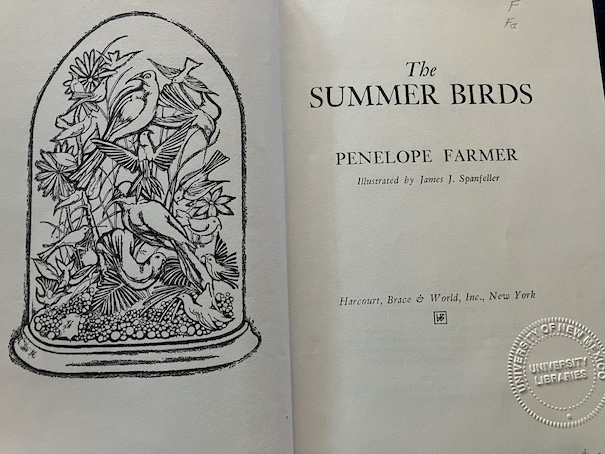
The Summer Birds

The Summer Birds by Penelope Farmer, 1962.

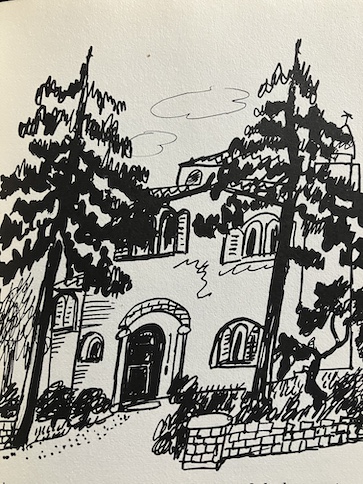
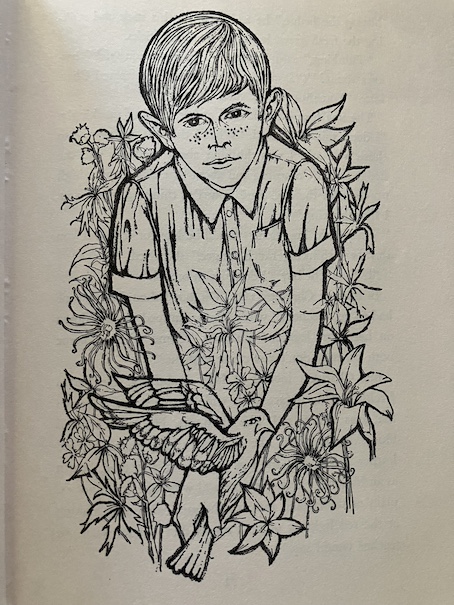
Aviary Hall is an old, Victorian-era house in a small village in England. It doesn’t really have an aviary, although there are hummingbirds on display in a glass case in the drawing room. Like other houses of its type, it has greenhouses and a walled kitchen garden. Twelve-year-old Charlotte Makepeace and her younger sister, ten-year-old Emma, live there with their grandfather. Every morning, they walk to school, and they admire the birds in the area, wishing that they could fly like that themselves. One morning, they meet a strange boy on their way to school. Charlotte is cautious about meeting strangers, but Emma talks to the boy. Charlotte says that they should hurry, or they’ll be late for school. The boy says that he doesn’t go to school, so Emma invites him to come with them to their school. Charlotte isn’t sure what their teacher would think of the strange boy showing up, but they have to go or they will be late.

However, when they arrive at school, Charlotte gradually begins to realize that nobody seems to notice the new boy except for her and Emma. Other people just look past him, and nobody asks who he is. It’s like they can’t even see him. As the lessons at school continue, Charlotte’s attention wanders, and she finds the heat of the room uncomfortable. Then, the boy invites Charlotte to come away with him, promising that he will teach her more than she will learn in class.

At first, she thinks that people will notice if she leaves, but they don’t. She and the boy run away from the school, and Charlotte feels wonderfully free, like a bird. The boy asks Charlotte if she would like to fly like a bird. Charlotte doesn’t see how that’s possible, but they says that it is and shows her that he can fly. The boy teaches her some exercises to make sure she’s strong enough. Charlotte can’t fly at first, just falling to the ground when she tries, but when the boy urges her to continue trying, she gradually realizes that she is staying in the air longer and longer. They have a wonderful time on this adventure.

The boy is very mysterious about who he is although he asks many questions about Charlotte and her home and family. Charlotte asks the boy if the other kids from school can also learn to fly. The boy says that they have to learn one-by-one, but he will teach them individually, and it has to be a secret.

Then, suddenly, Charlotte finds herself back at school. No one has noticed that she was gone, not even Emma. At first, Charlotte wonders if it was all just a dream, but she discovers that she still has the ability to fly and has to be careful not to let other people see her feet leave the ground when she kicks her feet. Emma can tell that Charlotte has a secret, and she’s irritated when Charlotte refuses to tell her what it is. However, Charlotte knows that Emma will learn soon enough.

Emma learns to fly the next day, and gradually, other children at school also start to be able to see the boy and get their own flying lessons. Charlotte’s best friend, Maggot (a nickname, not her real name), seems particularly accepting of the strange boy and his strange powers of invisibility and flying. She seems to understand things about him, maybe even more than Charlotte does, saying that her uncle has told her about such things.

Their teacher discovers what they’re doing when she catches one of the children flying, and she questions them about it. The children don’t want to admit anything to her because they call swore an oath to keep it a secret, but the mysterious boy says that their teacher is all right and reveals himself to her. He explains that he taught the children to fly, and their teacher is surprisingly accepting of that. She asks if she can also learn, but the boy explains that he can only teach children. The teacher regretfully says that she suspected that might be the case, and the children begin to consider that their ability to fly might also fade with age. The teacher invites the boy to join their class for the rest of the term and seems to quietly support their flying adventures.

When school lets out for the summer, the children continue their flying adventures, still a secret from their parents. The boy, who has still not told anyone his name, is very strange, and not just because he can fly. Charlotte sees him eating insects, which he says he loves, and he doesn’t seem to understand things about school and ordinary houses. During an argument among the boys in the group, who don’t want to be bossed by the mysterious boy without reason, one of the boys, Totty, challenges the mysterious boy about who he really is, where he really comes from, and how he came by his flying magic. The other children are afraid to challenge the mysterious boy because they know that he is strange, they worry that there may be something evil about his magic (although they doubt it), and they fear losing the ability to fly.

The children decide to settle the conflict with a special challenge. If the mysterious boy wins the challenge, he wants to stay with them for the rest of the summer, being their leader and not explaining anything about himself. If Totty wins, the mysterious boy says he will explain who he really is and then leave, although he will let the children keep their ability to fly until the summer is over. The mysterious boy wins the challenge, but at the end of the summer, he makes them all an offer that could change their lives forever.

The book is the first book of the Aviary Hall Trilogy, although it isn’t as well-known as Charlotte Sometimes, which is the third book. It is available to borrow and read for free online through Internet Archive (multiple copies).

My Reaction and Spoilers

Although Charlotte and Emma are sisters, this is the only book in this short series in which they both appear together. Each of the other books focuses on each of the girls separately. Charlotte Sometimes, the best-known book in the series, is set when Charlotte goes away to boarding school, and the second book in the series, Emma in Winter, takes place while Charlotte is away at school, focusing on Emma, who is left at home. All three books focus on growing up and issues of personal identity, although they do it in somewhat metaphysical terms and with fantasy elements.

Charlotte Sometimes focuses on personal identity as Charlotte finds herself traveling back and forth through time, trading places with another girl who attended her school in the past. At times, Charlotte feels like she’s losing her identity as Charlotte and becoming more like the other girl. One of the things I liked about The Summer Birds was getting a glimpse of Charlotte just being in her own identity all the way through the book. The beginning of the book makes it clear that the other children at school think that Charlotte is a prig (someone who is rigidly well-behaved to the point of being obnoxious), but it also clarifies that it’s because she feels compelled to look after Emma and set a good example for her.

The two girls live with their grandfather Elijah, who is obsessed with astrology, and an elderly, lazy housekeeper. The book never really explains what happened to their parents, but it seems that Charlotte and Emma are orphans. It is established in Charlotte Sometimes that their mother is dead, and this book mentions that their father was a sailor. Their grandfather likes girls to be well-behaved, and Emma is anything but, so Charlotte keeps trying to teach Emma how to act to keep their grandfather happy and trying to smooth things over with their grandfather when Emma misbehaves. In Emma in Winter, Emma has to face up to the realities of her personal behavior and other people’s reactions to her behavior without Charlotte running interference or taking responsibility on her behalf. That’s her coming-of-age moment, and it leads her to become more mature, personally responsible, and better-behaved herself and to appreciate what Charlotte was trying to do for her.

Although each of the books in this short series can be read independently of each other, I think reading all of them adds some depth and understanding to the characters. Charlotte was always a very responsible and cautious person in Charlotte Sometimes, showing that there is continuity to her character, but knowing the history of why is that way makes her more understandable. Although the other children sometimes consider Charlotte a drag for pointing out things that they shouldn’t be doing, it’s Charlotte’s serious nature that causes the other children to question the offer that the mysterious boy makes them at the end of the summer.

We also get to meet Charlotte’s best friend in her home town in this book, a girl called Maggot, who never appears and is never even mentioned in Charlotte Sometimes. The reason why she doesn’t appear in later book is that she is the only one who decides to accept the mysterious boy’s offer at the end of the book, leaving with him to be forever young as a bird. Charlotte is tempted by the offer, but she realizes that accepting it would mean giving up everything else and everyone else in their lives. The children would be happy for a while in their freedom as birds, but they would eventually miss their parents, and their parents would grieve for them because they would never be able to return. Although the other children don’t always listen to her, she is able to persuade them that this is really a serious matter that is about their very lives, forever, not just a brief summer lark. In the end, Maggot is the only one who can accept the offer because she is the only one who has no one left in the village to miss. She is an orphan and lives with an uncle who pays little attention to her. It is implied that he would hardly notice if she left, whereas Charlotte and Emma’s grandfather really would miss them, even if he sometimes doesn’t like their behavior. Maggot was also always the most birdlike, and she probably knew that the boy was really a bird before the others did because her uncle is a gamekeeper.

There are still some questions left unanswered at the end of book, but that is typical of this series. Readers might have guessed that the boy was really a bird all along, but we still don’t really understand his magic or see what happens in the village after Maggot leaves with him. We don’t know for sure that Maggot’s uncle doesn’t miss her or try to look for her, what the other villagers decide happened to Maggot, or if the teacher ever tells anyone what she knows about the children flying or if she understands what happened to Maggot herself.

Overall, it’s a pretty slow-paced book. Most of the story feels like pretty low stakes until the part at the very end, where the boy offers to let the other children come with him to be young birds forever. Then, it becomes a serious question of whether they are willing to continue with their normal lives, growing up and losing their flying magic, or if they’re willing to give up everything and everyone they know and love forever to keep it. Even though most of the story is peaceful, I had the feeling from the beginning that there might be a sinister turn somewhere because the boy’s behavior didn’t always seem straight-forward and friendly, and he was definitely keeping secrets. I had the feeling that the mysterious bird boy wanted something from them or was going to try to get them to do something they shouldn’t eventually. It’s an interesting premise, although I still think that Charlotte Sometimes is the best in the series. Events in this book are also mentioned in Emma in Winter, when characters in the story discuss them with each other, showing that all of the local children still remember their flying adventures together and that the events in this book didn’t just happen in their imagination.

Conrad’s Fate

Chrestomanci

Conrad’s Fate by Diana Wynne Jones, 2005.

This is the fifth book in the Chrestomanci series.  In this series, there are many different dimensions, and in each of those different dimensions, there is a copy of every person.  Different versions of our world can differ dramatically in their history across the dimensions, and individual people’s lives can differ dramatically between the dimensions. There is one person in each generation who has no duplicates in any of the other dimensions.  This person is called the Chrestomanci.  All of the talents, abilities, and lives that would have been spread across the other dimensions are now centered on that one person, giving that person, literally, nine lives.  The Chrestomanci fills an important role, being better able than anyone else to travel across the dimensions, and he acts to keep a balance between them and make sure that the different worlds keep their proper course.

Conrad lives in the 7 series of worlds in Chrestomanci’s universe. His family owns a bookshop. Well, technically, his Uncle Alfred owns the bookshop. He started it with Conrad’s father, but he says that Conrad’s father needed a large amount of money before his death, so he sold Alfred his half. When he was young, Conrad and his older sister, Anthea, imagined that their father probably lost a large amount of money at the casino. Conrad likes that idea because he’s a bit of a risk-taker himself and likes doing adventurous things, like rock climbing. Uncle Alfred tells them that they’re wrong about their father gambling. He says that he thinks that the aristocrats at the mysterious Stallery Mansion stole a large amount of money from their father. He doesn’t explain any more about how that happened, but he cautions Conrad not to be such a risk-taker because he has bad karma.

Conrad doesn’t understand what karma is, and his sister explains that karma is sort of like fate, but it’s the consequences of good or bad deeds committed in previous lives coming back to affect the present life. She thinks that the only way to clear bad karma is to correct for the misdeeds of the past. Conrad is intrigued and asks if it’s really possible for people to live more than once, but everybody else is busy with things they’re trying to do, and nobody will give him a straight answer. Conrad can’t help but wonder what this could all mean for his karma and his fate.

One day, while Conrad is looking for a book in the shop that is part of a series he’s been reading, he realizes that the books in the series have changed titles, and although he can tell that the basic stories are the same, some of the details are different. When Conrad asks his uncle about it, Uncle Alfred is very angry. He says that it’s the fault of the aristocrats at Stallery Mansion. Uncle Alfred explains that the aristocrats at Stallery Mansion make themselves richer by very literally playing the possibilities. They use powerful magic to evaluate different possible realities and make little shifts in the nature of reality itself to make things go the way they want them to go for their business interests, so they can turn bigger profits. The problem is that any little change in reality can have a ripple effect, changing many other details of life around them, from the titles of books to the color of everyone’s mailboxes. Not everyone notices these magical changes in reality because they use mind games to fool people into thinking that whatever changes they made were always like that. (It’s a weird combination of gaslighting and the Mandela Effect.) They also use powerful enchantments around their area to stop people from sensing what they’re doing, so powerful that they disrupt computers and television sets. Uncle Alfred is a magician himself, so he can tell what they’re doing, and he despises them for their manipulations.

However, Uncle Alfred is greedy and manipulative, too. Conrad discovers how greedy and manipulative he is after his sister leaves home to go to university. Both his mother and uncle are angry at her for leaving because she had been doing much of the work around the house and bookshop, and they had never had to pay her to do it. Anthea knows they’ve been taking advantage of her, and that’s the reason why she knows that she needs to leave and build a life of her own. Conrad misses her after she goes, and his uncle has to actually hire another girl and (gasp!) pay her to work for him. He frets constantly about how much it costs to actually pay someone wages in exchange for work. The other girl, Daisy, tells Conrad that his uncle isn’t hard up for money at all. The bookshop is very successful, and with what it brings in, Uncle Alfred could afford to pay her much better than he does. He just doesn’t want to do it because he’s so stingy. All of the money he brings in, he spends on himself. For the first time, Conrad becomes aware of how much money his uncle spends on fine port and tailored clothes. His mother is also two-faced, spending all of her time writing books about the oppression and subjugation of women while making Conrad do all the cooking in Anthea’s place. Conrad’s not very good at cooking, but his mother won’t cook anymore because she doesn’t want to be subjugated as a woman. She’s not above subjugating her own children for her benefit, though.

Conrad realizes that he has to use the techniques that Daisy uses to get his mother and uncle to stop exploiting him as badly as Anthea. He stops cooking and refuses to make any more food until his uncle agrees to give him things he wants as payment, like a bicycle. He notices that other kids at school get presents from parents without having to work for them or bargain for them, like he does, but he supposes that it’s all part of his bad karma.

Uncle Alfred has been blaming all of the changes that have taken place since Anthea left on Conrad’s bad karma. Conrad isn’t sure whether he lived a past life or not, since Anthea said that she didn’t believe in past lives, but since he keeps getting into trouble in various ways, he suspects that his karma might really be bad. He also starts blaming his bad karma for any accident he has (which all sound like perfectly ordinary accidents that could happen to anybody, really), and he starts feeling like maybe he deserves it all somehow for past sins. He asks his uncle what he could have done that could cause his karma to be bad. His uncle says he doesn’t know and that he’ll try to figure it out with magic.

When Conrad is getting old enough to go to high school, Conrad realizes that he’s going to have to use some kind of persuasion or negotiation to get his uncle to let him go on with his education. He wants to learn magic himself, but he knows that his uncle will probably want him to work in the bookshop for free, like Anthea did. His plan is to offer to work part time for his uncle in exchange for the money to attend high school with his friends when word spreads that Count Rudolph of Stallery Mansion has died. His heir is a 21-year-old man, and he only has a younger sister. People speculate that both of them will have to marry soon to ensure that their family line will continue. Sure enough, there is an announcement that the new count, Robert, will marry soon. People say that the old count’s wife is a controlling person and that she will control her son and his new wife, too. For some reason, the news upsets Uncle Alfred and his group of magicians.

Then, when it’s time for Conrad to leave his school and declare whether or not he’s going on to high school, his mother shocks him by telling him that he can’t go to high school because he already has a job at Stallery Mansion. Conrad demands that his Uncle Alfred explain what this job at Stallery Mansion is and why he signed him up for it. His Uncle Alfred says that he has learned through his magic that, in Conrad’s previous life, he was supposed to kill a wicked person, and he failed to do it, so this person continued their wickedness and has been reborn as an equally wicked person. Uncle Alfred says that this person’s current incarnation is someone at Stallery Mansion and that he got Conrad a job as a servant there so he can take care of the mission he failed to do in his previous life … to kill the person he is supposed to kill. Uncle Alfred says that this is the only way that Conrad can clear his bad karma and go on to live his own life. If he doesn’t, fate will take retribution on him by killing him before the year is out. Conrad isn’t sure whether to believe Uncle Alfred or not, but Uncle Alfred’s magician friends all say the same thing to Conrad, that they can read his bad karma and that it will hang over him and may kill him soon if he doesn’t clear it. As horrible as it is, twelve-year-old Conrad resigns himself to going to Stallery Mansion as a servant with a mission to kill some unknown evil person to save his own life.

When he goes for his interview at Stallery Mansion, Conrad is hired on as a page boy along with another boy, who is taller, handsomer, and very well-dressed. This other boy calls himself Christopher Smith, although Conrad is sure that “Smith” isn’t really his last name. At first, Conrad regards Christopher as a professional rival, but Christopher assures him that he isn’t interested in competing to move up the ranks of the servants. In fact, he admits that he is here for another purpose, and as soon as he’s found what he’s looking for, he will leave. Both Conrad and Christopher have their own intrigues.

Of course, Christopher is really Christopher Chant, who is currently in training to be the next Chrestomanci in his world. He is in Conrad’s world to find Millie, who has run away from boarding school because the other girls there were bullying her, and she didn’t feel like she was learning anything. Christopher had tried to tell their guardian, Gabriel DeWitt, who is the current Chrestomanci, that Millie was miserable, but he wouldn’t listen. After Millie disappeared, DeWitt still wouldn’t listen when Christopher tried to tell him that Millie was no longer in their world, so he went in search of her himself. He knows that she’s somewhere close, somewhere in Stallery Mansion, but he can’t find her, and he’s very worried. It feels like she’s trapped somewhere, but Christopher isn’t sure where.

Conrad is moved by Christopher’s story and offers to help him find Millie. Then, Christopher also witnesses the changes in reality that Conrad has seen and sees how someone at Stallery has been playing with probabilities. When Conrad confides in Christopher about his bad karma from a previous life, Christopher is sure that what his uncle told him isn’t true, no matter what his uncle and his uncle’s friends said. Together, Conrad and Christopher must confront the mysteries of Stallery: who is changing the nature of reality at Stallery and how, where is Millie and why can’t they find her, what is the truth about Conrad’s fate?

The book is available to borrow and read for free online through Internet Archive (multiple copies).

My Reaction and Spoilers

I really liked seeing young Christopher Chant in this adventure, while he’s still learning how to be the Chrestomanci. As an adult, Christopher is always very sure of himself and able to handle just about anything, but here, he’s still young and not always sure of himself. He has high self-confidence from knowing that he’s a powerful, nine-lived enchanter, but in this story, he runs up against things that he doesn’t completely know how to handle. He puts on a show of knowing what he’s doing, but both Conrad and Millie know that there are times when he’s just bluffing or muddling his way through.

I also enjoyed seeing Christopher’s relationship with Millie develop more. They were both children in The Lives of Christopher Chant, but they have known each other for years now. It’s pretty clear that Christopher has strong feelings for Millie from the way he desperately searches for her when she’s lost. Millie knows that he’s powerful, but she also knows his faults from growing up with him. She knows that there are times when he’s lazy and doesn’t want to bother learning something, so he just bluffs his way through. He’s also grown accustomed to getting his way with things. When Millie first told him that she was unhappy at school, he wanted to run away with her so they could live alone on an island together, and Millie realized that was a terrible idea. She likes Christopher, but she doesn’t want to live alone on an island or have him constantly dictating what they’re going to do. That was why she took matters into her own hands and ran away on her own. Since Christopher is a teenage boy, I can guess why he wants to be alone on an island with the girl he likes, and even Conrad realizes that Christopher is trying to be like a knight errant to Millie by single-handedly charging to her rescue. Christopher really does love Millie, and he’s trying to be her hero and help her in romantic ways.

Christopher is a little full of himself and still has some growing up to do, but both Conrad and Millie admit that they like him in spite of his faults. The fact that they know both his good and bad points and still like him makes their relationships with him stronger. Christopher’s faults, like his superior attitude and fussiness about his clothes are minor in the face of bigger issues. He’s on the side of good, where other people in the story definitely aren’t, and although he is powerful, he never abuses those powers. Millie respects Christopher, and he does his best to look after her. At the end of the story, Conrad says that Christopher and Millie are engaged to be married, and Christopher trusts Millie with the ring that contains one of his extra lives.

When Conrad and Christopher start working at Stallery Mansion, they both learn about the divided world of a wealthy mansion with servants, with areas where the family lives and the areas where the servants live, like that shown in Upstairs Downstairs, Gosford Park, and Downtown Abbey. The boys have to learn to make themselves unobtrusive, like they’re pieces of furniture, except when they’re needed to do something for the family. They also learn to be observant and to anticipate the needs of the people they serve. Conrad has some experience with housework and cooking from home, but when Christopher arrives, he has little or no idea how to do certain things because there are staff at Chrestomanci Castle to take care of the chores. Christopher isn’t exactly humbled by his time as a servant, but he does gain the experience of working a regular job and doing menial chores, like polishing shoes. It is a learning experience for him.

I thought it was pretty obvious from the beginning that Uncle Alfred and his friends were villains and that they made up the idea of Conrad’s bad karma to manipulate him into doing their bidding. Fortunately, both Christopher and Anthea help to convince Conrad of the truth before he does anything horrible. Anthea has also discovered that her father was the real owner of the bookshop, not their uncle, even has a half partner. When he died, he left it to their mother and to his children after her. Uncle Alfred has been using memory spells of his own to manipulate everyone into believing that he owns the bookshop. Anthea only realizes it after being away from his influence for a few years and meeting Conrad again at Stallery.

What Christopher realizes about Stallery Mansion is that it’s built on a probability fault, a place where several different probabilities happen to meet. The mansion keeps shifting between different probabilities, and the reason why they have trouble finding Millie is that she has gotten trapped in one particular probability. They can’t reach her until the mansion is in her particular probability. Part of the peculiar shifting of the mansion through probabilities seems to happen naturally because of its location, but both Christopher and Anthea realize that someone is helping it along. Unraveling the mystery of who is responsible reveals some further secrets about Conrad’s family and Conrad himself. Conrad has magical abilities and ends up receiving training from de Witt along with Christopher.

While Christopher and Millie learn a few things from their experiences, Gabriel de Witt also admits at the end of story that he has learned a few things about the way he was treating both of them. As their guardian, he takes his job of educating them and preparing them for the future seriously, something that he berates Conrad’s mother for neglecting for her own children. However, he confesses that he has neglected the emotional well-being of his wards and that he is partly responsible for them running away. When Millie complained about her school and Christopher told him off for ignoring Millie’s unhappiness, Gabriel brushed it off as teenage melodrama, but he later admits that he should have taken their complaints more seriously. After Millie ran away, he did what he should have done in the first place and went to the school to see the conditions there for himself, and he admits that Millie was right that it wasn’t a good school. He promises Millie that he will find her a better school where she can finish her education. He still makes it clear to Christopher that he was behaving like a hothead by running off himself and taking unnecessary risks, but the two of them eventually forgive one another. Later books show that Christopher and Millie still have respect and affection for Gabriel as adults. Gabriel de Witt isn’t always a perfect guardian and he doesn’t always understand young people, but he does care about his young wards and wants the best for them, which contrasts with the way Conrad’s mother and uncle were just using him and his sister with no thought to their well-being or future.

Grandma’s Records

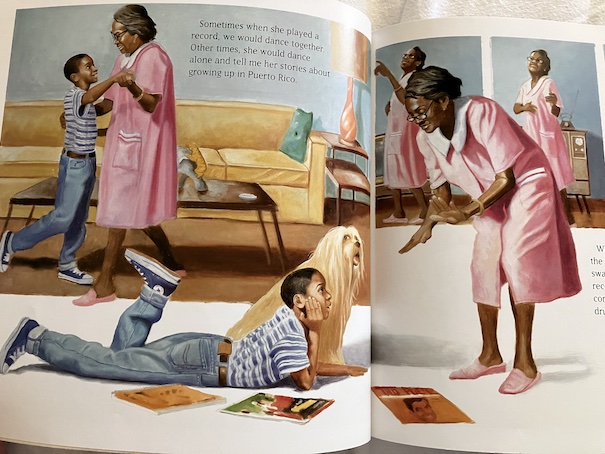
Every summer, a boy goes to visit his grandmother. He loves summers with his grandmother because she plays records from her record collection, teaches him to dance, and tells him stories about life in Puerto Rico, where she grew up.

She instills a love of music in her grandson and uses it to share memories with him about his grandfather and their home town. Sometimes, she lets him choose records from her collection to play, complimenting him on his choices. The boy likes art, and he makes sketches based on the album covers.

Then, his grandmother’s nephew comes to visit from Puerto Rico, along with his band. The boy is thrilled to meet them, and they give the boy and his grandmother tickets to see them perform in New York.

It’s a special occasion! They love the performance, and afterward, they visit with the band backstage. The boy and his grandmother continue sharing music with each other as the boy grows up, and as an adult, he continues to play it in his art studio.

At the end of the book, there are lyrics to one of the songs, In My Old San Juan (En Mi Viejo San Juan – YouTube video), both in English and Spanish. It’s a popular sentimental and nostalgic song for Puerto Ricans living abroad, as this YouTube video explains. The book is available to borrow and read for free online through Internet Archive (multiple copies, including one in Spanish).

The story is really about the author/artist of the book and his own grandmother. At the end of the story, the picture he’s drawing in his studio is the cover of this book. It’s a touching tribute to his grandmother and the special memories he shared with her as they bonded over music! Parts of the story reflect on their Puerto Rican heritage, which is something they share and discuss with the grandmother’s nephew and the members of his band. I like how the author emphasizes that what makes the music so special are the memories associated with it. At first, the memories are his grandmother memories, but through his experiences with his grandmother, he builds memories of his own associated with the music they’ve shared. It is these memories as well as the music that helps to fuel his art.

Stories of Rainbow and Lucky: Up the River

This is the fifth and final book in the Stories of Rainbow and Lucky series. I’ve already covering the rest of the books this series, and I have to do all five books in a row because the series is set up like a mini-series. That is, none of the books in the series can stand alone; they are all installments of one, longer story. They only make sense together.

It’s an unusual series from the mid-19th century, written on the eve of the American Civil War, by a white author with a young black hero. Rainbow is a teenage black boy who, in the previous installments of the story, is hired by a young carpenter, Handie, who is just a few years older than he is, to help him with a job in another town, working on renovating a farm house that Handie has inherited. The rest of the series follows the two young men, particularly Rainbow, through their adventures leaving their small town for the first time, learning life lessons, getting new jobs, and even dealing with difficult topics like racism. Lucky is a horse who used to belong to a neighbor of Handie’s new farm. Rainbow befriended him, and in the previous book in the series, he managed to buy Lucky on credit. Because he now owns a horse, he is able to take a new job, delivering mail. This final story in the series follows Rainbow as he begins his new job.

The story is unusual for this time period because it was uncommon for black people to be the heroes of books and for topics like racism to be discussed directly. I wouldn’t say that racism is the main focus of the series. It’s mainly a slice of life and coming of age story for Rainbow as he and Handie both set out in life and begin building careers for themselves, and it’s meant to be educational for young readers. However, racism and racist comments are sprinkled throughout the story, with the author calling attention to the fact that these are not good ways to behave or polite ways of speaking, for the benefit of its original audience of 19th century children. It’s also important to point out that our black hero is not a slave, he is not enslaved at any point in the series, and the series has a happy ending for him. People don’t always treat him right, but he does have friends and allies, and he manages to deal with the adversity he faces and builds a future for himself. 

This particular installment in the series focuses on Rainbow’s new job. It has its hardships and adventures, but it sets up a bright future for Rainbow. Keep in mind along the way that there are a lot of pun names in this series and that people’s names are often clues to their characters.

This book is easily available to read online in your browser through NINETEENTH-CENTURY AMERICAN CHILDREN & WHAT THEY READ, I’m going to do a detailed summary below. If you’d rather read it yourself before you read my review, you can go ahead, but some people might want to know what it’s like in more detail.

This story picks up where the previous book in the series left off, with Rainbow back in his home town with his horse, Lucky. He has just accepted the job of delivering mail. The first characters we see are Thomas and Jerry, two teenage boys working in the stable that belongs to the local tavern. Jerry is younger than Thomas and has only just started working there. He is disgruntled because Thomas won’t let him handle some tasks without supervising him closely. Thomas says that he needs to see how Jerry works before he will trust him to work unsupervised. Jerry thinks that Thomas is implying that he’s incapable of doing the work, which is insulting. Thomas says that his own job depends on his ability to make sure that everything is done correctly in the stables, and as a new employee, Jerry is his responsibility, so Thomas needs to make sure that he knows what he’s doing and does a good job.

Rainbow is boarding Lucky at the stable, and the boys talk about the horse and about Rainbow’s new job. Thomas is a little envious of Rainbow for getting the job of delivering mail, but he couldn’t apply for it himself because he doesn’t have a horse of his own, like Rainbow does. Jerry asks how Rainbow was able to afford a horse, and Thomas explains that he bought it on credit. Making a major purchase on credit involves finding someone who is willing to supply the loan, and Thomas is also a little envious that Rainbow managed to do that because he can’t think of anyone who would trust him enough to loan him that amount of money. Jerry says that he’s surprised that a black boy got the job because the black boys he’s known are so “saucy” (meaning flippant or impudent). However, Thomas says that Rainbow isn’t like that and that he’s smart and a good worker. In spite of the fact that Thomas wishes he was in Rainbow’s position, he admits that Rainbow got to this position because he’s a good worker, and employers trust him because he has demonstrated that he is scrupulous in fulfilling his duties to them. That’s how Rainbow finds people willing to hire him and loan him money.

Rainbow comes to the stable to give Lucky a brushing and take him out for a run. He tells Lucky that he’s been able to have fun up to this point, but soon, they will have to seriously begin their work of carrying the mail. They will have to follow a 24-mile route up the river, traveling in all kinds of weather with a heavy mail sack, and there will be a fine to pay if they don’t stick to the route and arrive on time. However, the work will pay off, and Rainbow says that he will see to it that Lucky has a nice, warm stable and good food. Lucky, being a horse, is unconcerned and is mainly interested in neighing at another horse he sees nearby.

When Rainbow and Lucky return to the stable, Jerry tells Rainbow that Trigget is waiting in the tavern to talk to him. Rainbow goes to see Trigget, and Trigget says that he is there to draw up the contract for Rainbow’s new job. They discuss the job requirements and the pay, and Trigget offers Rainbow advice about how fast his horse can travel and how he can make his mail run on time. Because Lucky is still a young horse, Trigget cautions Rainbow not to run him too hard and risk injury. Traveling the full length of his route at a good pace will take about 8 or 9 hours, so Rainbow should plan accordingly. During periods when the weather is bad and traveling will be slower, Rainbow will have to leave earlier in the morning to make sure that he finishes the route at the proper time.

Trigget also tells him that, even though he’s sure that Rainbow will do his best to be on time with his deliveries, there will be times when he will be late despite his best efforts. Sometimes, the weather will be bad, and there’s always the risk of accidents. Because there are government fines for being late with the mail, Rainbow’s pay includes the option to accept extra money that he can use to pay up to four fines per year, if Rainbow chooses to pay his fines himself rather than having the company pay on his behalf. It’s a bit of a gamble to accept this option because, if Rainbow is late more than four times during the year, he will have to cover the additional late fines himself and will lose money. However, if Rainbow is late less than three times during the year, he can keep whatever is left over from that extra money. Rainbow decides to accept this option because he is confident that he won’t be late very often. With the terms settled, Rainbow signs his contract with Trigget and begins his job.

Rainbow and Lucky set off on their route on the morning of November 1. The book explains that the post office in their town is in a small building next to the tavern, and Rainbow enters from the tavern, using a special key kept on a hook. The postmaster prepared mail bag the night before, so it is ready to go. Rainbow just needs to pick it up.

Rainbow and Lucky ride about 5 miles before they reach the first post office on their route. The postmaster there takes the mail bag from Rainbow, removes the mail meant for his office, and returns the bag to Rainbow. Everything goes according to routine at the first stop, and Rainbow and Lucky continue on their way.

Rainbow begins to consider his new schedule as they travel. They will be traveling for most of the week with a stop at post office No. 5 for a couple of days. The stop at No. 5 would be a good time for Lucky to rest, but Rainbow wonders what he’s going to do there for a couple of days himself. He considers whether he could find any side jobs to do there, like carpenter work or hauling wood.

As they continue on their way, Rainbow talks to Lucky about the countryside, the river, and the bridges, noting how high the water under them can get. About every four or five miles, they stop at another post office. As they keep going up river, the post offices become more primitive. One of them is just in a log cabin with a sign written in chalk to designate it as the post office.

At a place called Mix’s Corner, a man named Mix has a farm and a saw mill. His house also serves as the post office and tavern for the few travelers who come that way. Mrs. Mix handles the mail and gives Rainbow some food while her young son, Ephraim, puts Lucky in the barn, where Rainbow can give him some oats. Rainbow offers to make a whistle for Ephraim, but then, he remembers that it’s better to make whistles in the spring, when the barn is easier to separate from a willow or poplar stem. (There is a detailed explanation here about how that works because the new layer of wood formed in the spring, the alburnum, is softer then. After it has matured, it becomes harder, and it’s more difficult to remove. The author/narrator says that Rainbow doesn’t fully understand the scientific principles behind this process, but he knows from hands-on experience that these wooden stems are easier to work with in the spring. “So much for the philosophy of whistle-making.”) Ephraim is disappointed, so Rainbow offers to make him a windmill toy instead and to bring him a whistle from the store the next time he passes. Stores sell whistles for a penny each, so it wouldn’t be too expensive for Rainbow to buy one for the boy. Ephraim accepts the offer, so Rainbow makes him a windmill out of a wooden shingle (we called this toy a pinwheel when I was a kid, and we made them out of paper), and Ephraim runs around in the yard outside with it to make it spin.

As Rainbow continues on his way, he makes it a point to get to know the people along his route and to make friends with them. At the next house he passes, a woman named Mrs. Captain Myers greets him. The narrator says that she even gives him a “courtesy” (what we would call a curtsy). Normally, she probably wouldn’t make such a formal, deferential gesture for an ordinary black boy, but she knows that he’s the new mail-carrier, and this is an important position in this area as mail is the main form of communication. She values the position Rainbow holds, so he gets special consideration.

She asks Rainbow if he is carrying any letters for her, but he says that he doesn’t know. There is a lock on the mail bag he carries, and he can’t open it because only the postmasters at the post offices along his route have copies of the key. This is how they keep the mail secure. Since he can’t open the bag himself, there’s no way that Rainbow can check for letters for specific people. Mrs. Captain Myers lives a couple of miles from the nearest post office, and she says that it’s often difficult for her to get there to pick up her letters. Rainbow says that, if she likes, he can pick up her mail for her and bring it to her on his return trip, and she say that would be very helpful.

As he rides on, Rainbow confides to Lucky that his desire to make friends and help people he meets along the way isn’t entirely out of kindness for its own sake but also cunning. Rainbow knows that this route will become more difficult to travel during the winter, and there will probably be some times when he will need help from people who live in the area. If he has made friends with them and done them a few good deeds, they will probably be more likely to help him later, when he needs a good deed himself. The narrator/author weighs in at this point with some thoughts about how Rainbow needn’t think this form of “cunning” isn’t also kindness:

Rainbow was very much mistaken in supposing that his disposition to be obliging to the people who lived along the road was to be attributed to cunning and not to kindness. If we really entertain feelings of good-will o those around us, and desire to promote their happiness by every means in our power, and take pleasure in doing it, then we are truly and sincerely kind. The fact that we are aware that, by so doing, we make other people ready to show kindness to us in return, and that we are even influenced in what we do by a desire to secure such requitals, is nothing in any sense derogatory. “Cast thy bread upon the waters: thou shalt find it after many days,” is an injunction of the Scriptures, and it implies that it is right for us to be influenced in our efforts to do good by the hope and expectation of receiving at some day or other a beneficial return.

(I can see the point, that a kind act isn’t diminished by the other person’s gratitude or willingness to return the favor. The author might have also considered that there are also less kind ways for people to try to get people’s cooperation than building up goodwill in advance. Some people might simply expect deferential treatment as their due without showing care or consideration to the other people involved, or worse, they might use the threat of bad behavior to make other people do things for them. Rainbow is taking a better path by showing others that he does care about them and is willing to help them when he can, even if they haven’t done anything for him yet.)

The final stop on Rainbow’s route is post office No. 5, which is in Squire Holden’s house. (The book sometimes calls Mr. Holden by the title “squire,” which can have several meanings. Besides the British gentry title, it can refer to the primary land owner in a village, which may be the meaning here, or to someone who holds a legal position, like the lawyer in the first book in the series, who was also called “Squire.” The legal title is still in use sometimes as a courtesy title for lawyers in the form of “esquire“, after a lawyer’s name, frequently abbreviated as Esq.) The village is very small, with only a blacksmith shop, a mill, and a general store. Squire Holden’s house is only one story with an addition built on that doesn’t look completely finished. Since Rainbow has had some carpentry training from Handie (in the earlier books in the series), he thinks that he might be able to get some work helping the Holden family finish it. Squire Holden isn’t at home when Rainbow arrives, but his wife greets him and tells him where to put the mail bag.

According to the arrangement of his route, Rainbow will be staying with the Holdens for a couple of days before beginning the journey back. Trigget discussed with the Holdens before Rainbow began his job, telling them that the new mail carrier would be a black boy. As mentioned in the first book in the series, some people in this time and area might object to having a black person stay with them, so Trigget wanted to make sure that Rainbow would be welcome with them and would have a place to stay. The Holdens have no objection to hosting Rainbow, with Mrs. Holden saying, “that she never cared at all what color a cow was so long as she gave plenty of good milk.” (Meaning that she isn’t concerned about Rainbow’s race as much as his behavior, and Trigget has given him a good character reference, so it’s all fine with her.) The narrator says that Trigget thought that would probably be the case with the Holdens, but he thought that they would appreciate him discussing the situation with them first anyway, since Rainbow would be staying in their home as a guest. The Holdens’ small daughter, Toolie, is very shy of Rainbow when he first arrives, but she warms up to him gradually during his stay. Rainbow helps to win her over by making a little doll for her.

Mr. Holden is out in the woods, cutting down some trees. Rainbow offers to go and help him, if there is an extra axe, but Mrs. Holden says that the only other axe they have is an old, dull one. Rainbow goes to the village store to see if he can buy an axe, but the store is closed. The nearby blacksmith tells him that the store doesn’t sell axes anyway. All they have is axe handles. Rainbow watches the blacksmith making horse-shoe nails for a while, and the narrator describes the process. The blacksmith comments about the horse Rainbow rode there and asks who owns it. Rainbow says that’s a difficult question to answer because he has bought the horse but hasn’t yet paid for him. Since Rainbow doesn’t explain further about buying the horse by obtaining a loan for the purchase and that it’s the loan that he hasn’t repaid, the blacksmith is surprised and doesn’t really believe him.

Rainbow spots an old axe in the blacksmith shop and studies it. He knows more about evaluating the condition of tools than the blacksmith thinks because of his time working with Handie. Rainbow realizes that the axe is old and has been worn down and resharpened many time before. To put it in good repair again, the axe head would have to be removed from the hand and reshaped through a process they call “setting” (which the author describes as one of his detailed explanations of 19th century life). Rainbow negotiates with the blacksmith to purchase the axe and have it set. (The blacksmith quotes him the price of a “shilling.” It surprised me that he called it a shilling because that’s usually a British monetary description, and this is the mid-19th century, well after the Revolutionary War. I didn’t realize that expression was used in the United States that late. The amount of money in the “shilling” the blacksmith expects is also different from the British shilling. The British shilling would be worth 12 pence or pennies or 1/20 of a pound, but the book explains that the blacksmith wants 26 cents.) The blacksmith asks when Rainbow can pay for it because he said that he didn’t pay for the horse he bought, and the blacksmith doesn’t think he really has any money. To his surprise, Rainbow produces the money and pays right away, which makes the blacksmith hold him in higher regard. The blacksmith says that he can have the axe ready for him that evening.

When Rainbow returns to the Holdens’ house, he uses their old axe to split some wood in the yard. When Mr. Holden returns home for supper, he says that Rainbow can help him to clear a piece of land. He offers Rainbow two shillings a day for his help, which Rainbow considers a good wage. Rainbow tells him about the axe he is buying from the blacksmith, which he can use for clearing some bushes while Mr. Holden cuts down trees. However, Rainbow says that he would also like to explore the neighborhood the next day because he has never been in this area before.

After supper, Rainbow returns to the blacksmith, whose name is Mr. Whackhammer. He helps by operating the bellows while the blacksmith works on the axe. Mr. Whackhammer comments that Rainbow seems to have some understanding of tools, and Rainbow explains a little about his work with Handie over the summer. The blacksmith thinks that he’s bright to have picked up some knowledge of tools in such a short time. After the blacksmith finishes setting the head, Rainbow buys a new handle for it and fits the head to the handle. (The author also describes the process for that.)

Rainbow spends the rest of evening talking and telling stories with the Holdens by the fire. When it’s time to go to bed, Mr. and Mrs. Holden talk to each other a little about Rainbow. Mr. Holden says that Rainbow seems like a smart boy, and Mrs. Holden says that he is also pleasant company, noting that, “I’m more and more confirmed in my opinion, that it is of no consequence what the color of a cow is, provided she is not cross, and gives plenty of good milk.”

The next morning, Rainbow goes out to the woods with Mr. Holden and helps him clear the underbrush on the land he is trying to clear. When he does a good job with that, Mr. Holden says that he can try his hand at cutting down trees, which is trickier. A person cutting down a tree needs to cut it in a particular way so that it will fall in the direction he wants it to fall. The narrator explains how this works, and Rainbow follows Mr. Holden’s example. They make good progress before they go home for dinner. (“Dinner” is frequently what they call lunch in the countryside, and that is the case here. They go home for lunch.)

After dinner, Rainbow says that he would like to take a walk and explore the area that afternoon. The Holdens tell him a little about the people who live nearby, including a man named Mr. Dyker, who is building a house. Rainbow says that he might go see him and offer his help. This, unfortunately, leads us to the second use of the n-word in this series. As Rainbow approaches the house, he hears Mr. Dyker say to the man who is with him, “Who is this (n-word) coming, Dan?” When Rainbow hears that, he almost turns around and leaves, wishing that he hadn’t bothered to come. What stops him is that Dan replies, “Don’t call him a (n-word), Joe, till you find out whether he deserves it.” Rainbow decides that he might take a chance on these men since at least one of the two seems willing to give him a chance. (Personally, I might not be so charitable. Rainbow considers Dan a “fair man” for his comment about reserving judgement to see “whether he deserves it”, but to my way of thinking, calling that comment “fair” would imply that there might be people who do deserve that kind of slur, and I’m not convinced. Granted, it’s not as bad as immediately calling a total stranger something bad for no reason, but it’s still not great.) Rainbow still feels indignant about the insult, but he decides to follow his mother’s advice about “overcoming evil with good.”

Rainbow explains that he heard they would be raising a house frame this afternoon, so he came to see if he could help. Mr. Dyker says that perhaps he can. Mr. Dyker doesn’t think too much of Rainbow’s abilities at first, and he also hesitates to let him do too much because he thinks Rainbow might expect payment. He asks Rainbow what kind of wages he expects, but Rainbow says that he doesn’t need any money. He’s just looking for things to do because he is the new mail carrier and will be staying here for a short time before following the route back down the river. Hearing that Rainbow is the new mail carrier catches Mr. Dyker’s attention. Rainbow explains what he can do to help them, and Mr. Dyker and Dan realize that Rainbow has some carpentry experience. Dan suggests that they let Rainbow show them what he can do. When they see that Rainbow knows what he’s doing, they’re happy to let him work with them. As they work, they chat pleasantly with each other, and they begin feeling better about each other.

When Mrs. Dyker begins to lay out supper, Rainbow gets ready to leave, thinking that they might not way to eat with a black person, considering the way Mr. Dyker talked before, but they insist that they would like him to stay and have supper with them, so he does. While they’re getting the supper ready, Rainbow even picks some flowers for Mrs. Dyker, as “the lady of the new house.” The author/narrator says that this gesture pleases Mrs. Dyker, even coming from a black boy (which seems a little back-handed to me). The author/narrator also says that Mr. Dyker adds a prayer of blessing for Rainbow to their prayer before the meal. He says, “Mr. Dyker was perfectly honest and sincere in these invocations, for he was really a good man, although he had been so heartless, or rather so thoughtless, as to call Rainbow at first by an opprobrious name.”

Mr. Dyker compliments Rainbow on his carpentry skills, and Rainbow thanks him, but he says that he doesn’t plan on becoming a real carpenter. Mr. Dyker asks him why, and Rainbow says that he has trouble with the mathematical skills that professional carpenters need to plan what they build. Handie tried to teach him a little geometry, but he found it difficult to understand. The author/narrator praises Rainbow for this honest and accurate assessment of his own skills and limits. Rainbow knows his tools and can carry out some basic carpentry tasks and assist others, but he knows that he can’t plan out the full construction of a building or more complicated projects by himself. Still, Mr. Dyker thinks enough of Rainbow’s skills that he says anytime he has free time, he will pay him to help further with his building project. Rainbow says that he will be free on Friday, and he can work for Mr. Dyker that day, but he can’t make promises beyond that point. He’s still getting a feel for his new job as mail carrier, and he can’t say what other jobs might come up for him on the side.

On Rainbow’s way back down the river from his first trip, he remembers to pick up Mrs. Myers’s letters for her, as he promised before. He also remember to buy a penny whistle for young Ephraim to take with him when he begins his next route up the river. He knows it’s important to keep his promises while building relationships with the people he meets.

As Rainbow continues making trips up and down the river, he starts to become better friends with little Toolie. In particular, Toolie likes the way he answers the questions she asks. The narrator explains that Rainbow is very good at answering the questions of young children because he knows a little more than they do, but not a lot more. Rainbow is still young himself, in his teenage years, and he is just starting to get out in the world and experience more of life, but he isn’t that much more experienced than a kid yet, which the author says is the ideal mindset for explaining things to kids. Often, adults with a lot of knowledge and experience will try to tell kids too much or make their explanations too detailed when talking to young kids, confusing them. Rainbow is one step ahead of them in his knowledge, and one step further is the most a young kid can take at once.

At this point, the author delivers a reprimand to adults who assume that, just because they cannot give a young child a complete, detailed answer to their questions that the child should not have asked the question in the first place. He says that asking questions and trying to understand the world is part of the natural business of childhood and is important for helping the child to prepare for later life, so a child should never be criticized or shut down for doing that. He says that it is unreasonable for an adult to try to stop children from asking questions or reprimand them for their growing young minds simply because the adult finds it difficult to handle and formulate answers. (I have some thoughts about this, but I’ll save them for my reactions section.)

One day, little Toolie asks Rainbow questions about his appearance, trying to figure out why he looks different from everyone else she knows. (Her questions sound awkward and would be insulting, if they didn’t come from a little child who is just struggling to understand something that she has noticed.) She starts by asking him why his face is black. Rainbow simply says that he’s always been like that. Toolie thinks about it a little and then asks if the black would wash off if he washes his face. Rainbow explains that it won’t because his color is something inside himself that just grows there, and it’s not something on the outside of his skin that would wash off. (Rainbow might not know the word melanin, but this basic description is accurate. The scientific explanation is that all humans have melanin in their bodies, but we have it to different degrees. People with a lot of melanin have darker skin, hair, and eyes, and people with less have lighter features. This is an example of how Rainbow, with little formal education, can’t supply some of the more complex, scientific explanations, but he can deliver simple explanations that are accurate and easy enough for a young child to understand.) Toolie further asks Rainbow about his curly hair, and Rainbow says his hair curls like that naturally, although some people use curling tongs to curl their hair. Toolie understands this because her mother also has curling tongs.

Satisfied with this basic explanation, Toolie tells Rainbow about the schoolhouse up the road. Toolie sometimes goes to school there, when her father has the time to take her there, and she asks Rainbow if he will take her there sometimes. Rainbow says that he could take her on Lucky when he carries the mail, making a pun on male/female: “Then Lucky would have a mail and a female on his back.” Toolie is confused because she doesn’t understand the terms male and female yet. Rainbow asks her what she learns at school, and Toolie says she is learning to count, but she can only count up to nine so far. Rainbow jokes about his own ability to count, saying that he counts, “One couple three several, many more enough, plenty, and ever so many.” Toolie doesn’t believe him that this is the right way to count, and they move on to talking about why the sun is so bright and warm before it’s time for dinner.

Toolie’s parents arrange with Rainbow for him to take her to school one day before he leaves with the mail. Rainbow takes Lucky for a brief run before picking up the mail and Toolie because Lucky is very energetic, and he doesn’t want Lucky to act up and scare little Toolie while she’s riding with him. Toolie is very nervous when she gets up on Lucky, and Rainbow tells her that’s fine and normal:

“Yes,” said Rainbow, “every body’s afraid the first time they ride upon a horse. I expected that you would be afraid. But that’s no matter. It does not hurt any body to be afraid, so don’t you mind it.”

(I like that advice better than “All we have to fear is fear itself.” Learning not to be afraid of your own fear sounds like a more positive move.)

The other children and their teacher are surprised to see Rainbow arrive at the school, carrying Toolie on horseback. He introduces himself and explains that he’s the one who carries the mail. Some of them say that they would love it if Rainbow would bring them letters, and Rainbow laughs before he rides off again.

There is a brief interlude at this point that explains that Toolie is one of the youngest children at the school and describes what the youngest children do. It’s a small, one-room schoolhouse, so the teacher divides her attention between the different levels of students. Mostly, the youngest children just practice reciting their letters for the teacher at various points throughout the day, and the rest of the time, they are allowed to play outside, as long as they stay within sight of the school and come inside when the teacher rings the bell.

As Rainbow continues to travel his route, he meets more people and becomes better acquainted with the terrain and how it changes with the weather and changing season. There is one point when he has to ask a strange for directions for an alternate route because he realizes that the water in a stream he crosses is rising too high and that his usual road may become impassable. Later, he befriends some children he meets while watering his house and makes toy boats for them. He calls the children he meets along his route “my children” because he has a soft spot for young children and likes looking after them and making them little toys.

There are times when the route is harsh due to bad weather, which Rainbow knew would happen before he began the job. He still has to get the mail through as best he can, no matter the weather. There is one time when he has to walk the mail across and then his horse across a flooded crossing. The only time when he misses one of his stops is when he gets lost in a snow storm because the roads are covered in snow, and he fails to reach No. 5. When Rainbow realizes that they’re lost, he and Lucky have to camp out in the woods. Rainbow makes them a couple of huts for shelter, and they are able to find their way in the morning.

Rainbow’s most serious problem comes when Lucky is stolen from Trigget’s stable one night by a couple of thieves. At first, Trigget assumes that Lucky simply got out of the stable himself somehow and is lost, so he loans Rainbow another horse that he can ride to make the mail run. Rainbow is very upset, but he has no choice but to start on his route with the borrowed horse. At every stop on his route, he asks if anyone has seen Lucky, but nobody has.

Meanwhile, the thieves are hiding in a house in the countryside, planning to wait until Rainbow has stopped looking for his horse. Eventually, they plan to take the horse to Boston to sell him. To make Lucky less recognizable, they paint white markings on him. However, Lucky doesn’t like the rough shed where the thieves are keeping him. He gnaws throught he rope securing him. Unable to get out of the shed, he lies down behind some barrels, so when the thieves come to feed him the next day, they don’t see him. When they find him behind the barrels, they lead him out of the shed and have a look at his rope. Seeing that he chewed through his rope, they decide that they need to put a sturdier harness on him. While they’re trying to harness him, Lucky breaks free and runs away.

Lucky wanders around and hides in the woods. Getting hungry, he looks for food and eats some hay from a traveler’s sled. He runs away from most of the people he sees. He really wants to find Rainbow, and Lucky recognizes that Rainbow is black, so he runs away from any white person he sees. When he finally sees a black man coming along the road, he follows him, thinking at first the it might be Rainbow. It isn’t, but Lucky continues to follow him anyway because he reminds him of Rainbow.

The black man, whose name is Augustus, lives in a log cabin. Lucky explores around the cabin and finds a supply of hay, so he starts eating it and then goes to sleep. The next morning, Augustus comes to get some hay for his cows and finds Lucky eating it. Augustus calls to his teenage daughter, Rosalinda, to come and see the horse. He asks Rosalinda if she knows who owns this horse, but Rosalinda says that she doesn’t recognize him and doesn’t think he belongs to anybody nearby.

Augustus puts Lucky in his shed and gives him more hay to eat while he decides what to do. Since they don’t know who really owns him, Augustus decides that they should make some advertisements about the horse they found. Rosalinda knows how to read and write, so Augustus tells her what to write on the advertisements, having her make four copies. Augustus’s plan is to take their advertisements to Mix’s Corner and give them to the mail carrier to post in the tavern. Of course, Rainbow is the mail carrier.

When Augustus meets Rainbow and tells him about the horse he found, Rainbow recognizes Lucky from his description, except for the white markings the thieves painted on him. Rainbow goes with Augustus to have a look at the horse, and he realizes that the white markings are only paint. He knows that someone must have taken Lucky and painted him deliberately, although he still doesn’t know the full story behind Lucky’s disappearance. He is grateful to Augustus for finding Lucky and taking care of him, and he takes Lucky home and cleans him up.

Rainbow runs into trouble as winter begins turning into spring. The snow is still high, but it is just starting to melt, which makes it too soft and too deep for Lucky to walk on. People who live along Rainbow’s route help by trying to clear the roads where they can, so Rainbow can get through, but there are still times and places where Lucky has trouble sinking into the snow.

One day in early April, it rains, and this makes the going even more difficult. Rainbow and Lucky make it to Mix’s Corner, but the people tell him there that he shouldn’t try going further because the conditions are bad. Rainbow feels obligated to try to get the mail through anyway, so he decides that he will walk the rest of the way while leading Lucky. However, when he comes to a bridge, a stranger who lives nearby warns him not to try to cross because the bridge is unsafe. Rainbow could try to cross the stream on the ice, but with the thawing, the ice isn’t safe, either. Since there is a saw mill nearby, Rainbow decides that he can get some boards that can help him cross the ice by himself with the mail bag, but he will have to leave Lucky behind.

Rainbow arranges for the stranger to board Lucky in his barn and to help him lay the boards over the ice so he can cross. (The book explains that laying boards over thin ice can reinforce it so it can support the weight of a person when it otherwise wouldn’t. The idea is that the board will distribute the person’s weight more over the surface of the ice. It states this as a fact that young readers may already know, probably from living in areas where people do this. I’ve never lived in a place where it snows, so I’ve never had a reason to try to cross ice, but I understand the principle of weight distribution.) Rainbow says that he could also use a hand-sled to carry the mail further. The stranger doesn’t have one, but Rainbow asks to borrow his tools and makes one for himself. The man watches while Rainbow crosses the ice, and fortunately, Rainbow reaches the other side safely. Rainbow is able to successfully get the mail through, barely on time, which causes Trigget to lose a bet he made with Jerry because he didn’t think Rainbow would succeed in that weather.

This is the end of the five-book series, and the final chapter explains how our characters are doing and what is likely in store for them in the future. We are told that, “Rainbow went on very prosperously after this in all his affairs.” There are difficulties and dangers in his job, but he is successful because he is prudent and plans ahead for the difficulties he may encounter. The people along his route also help him when he needs it because he’s been so kind to them and their children. Before the end of the year, he is able to repay the loan he used to buy Lucky, so Lucky now belongs to him outright.

Because the loan worked so well for buying Lucky, some people suggest to him that he could buy some farmland in the same way. Handie recommends that he wait until he’s a little older before he does that, and if he wants to buy some land, it would be better for him to do it an area with other black people. While Rainbow gets along well enough with white people because he is so helpful, good-natured, and hard-working, Handie knows that white people don’t always treat Rainbow as well as they should, and he thinks that Rainbow would be happier with people who are like him.

Rainbow says that what he would really like to do eventually is to move to Boston and work for Colonel Hammond, the man who loaned him money to buy Lucky. Rainbow thinks he would enjoy taking care of Colonel Hammond’s horses and driving his carriage, and maybe he could buy a little house for himself so he can go to his own home in the evening. He also thinks that he would like to marry Rosalinda some day, although he hesitates to say that part out loud.

Like the other books in this series, and the series itself in general, this story is mostly slice-of-life, giving readers a look at life in the past. Originally, the places and situations in the book would have been familiar parts of daily life for its intended audience of children in the mid-19th century. Its descriptions of daily things like how blacksmiths make nails or the finer points of making wooden whistles would have just added detail to what would have been familiar to 19th century children. To people reading it in the 21st century, it adds color and dimension to the lives of people in the past, allowing us to picture the ordinary things they would do every day and to get a sense of the things they would have known.

There are adventurous aspects of the story, where Rainbow almost meets with disaster, but no matter what the situation, things always turn out well for him in the end. Sometimes, it seemed to me like the author/narrator built up excitement over Rainbow’s predicament, only for the problems to be solved more easily than expected, which can feel a little deflating. However, it is also reassuring that nothing truly disastrous happens to Rainbow and Lucky in the end, making a gentler read.

Although most of the emphasis of these stories is on daily life, and they’re pretty gentle to read, racial issues are always in the background. Rainbow is always aware that white people look at him differently because of his race, and that this can be a source of potential problems. It’s one of the reasons why he goes out of his way to build up good will with other people, so people come to like him and treat him better. For the most part, this strategy works. The author intended the stories to be educational for children, and there is a lot in the series about how to understand and get along with other people.

Sometimes, people say rude things to Rainbow about his race and appearance. There are three instances where the n-word is used in the entire series, once in the third book, Three Pines, and two times in one scene in this final book, although there are also other, lesser derogatory comments. In vintage children’s books, the way people speak can be clues to their character, and the author of this series particularly likes to examine people’s character and motives. In the second book in the series, Rainbow’s Journey, we had the example of a disreputable man who turns out to be a thief. He is the first person who makes derogatory comments about Rainbow and insists that he doesn’t want to sit near him on the stage coach. Trigget, who is driving the stage coach, tells him off for doing that, and other people laugh at him because they know that he is a disreputable and ill-mannered person in general. I’ve seen other vintage children’s books that use derogatory racial language and attitudes as signs that a character is ill-bred or generally ignorant.

What interested me about this particular series is that the people who use the n-word, characterized as the worst possible language to use, are not the worst characters, just as people. I found that interesting because the characters’ badness wasn’t directly proportionate to the bad language they used. The first person to use the n-word, in the third book, does it during a tirade against Rainbow because he has come to deliver Handie’s refusal to loan her his saw. Basically, she throws a temper tantrum, and she uses the worst possible language she can against the messenger while she’s having her fit just because she’s angry and wants to make him feel as bad as she feels. It’s simply childishness. During their interactions with her and descriptions of how well she doesn’t get along with her other neighbors, the author makes it clear that she is a highly emotional person with little or no sense of self-control, what we might call “no filter” today. For whatever reason, she has little or no ability to regulate her emotions or control the way she expresses them, like she’s permanently stuck in her terrible twos as an adult. Other people besides Rainbow also find her difficult to deal with because of the way she acts, and even she sometimes feels embarrassed about the things she says and does. However, she gradually becomes a more helpful and sympathetic character because the kind, controlled way that Handie and Rainbow respond to her inspires her to improve herself and to put forth a better image.

The two men who use the n-word in this story are different from all of the above. The author characterizes them as being merely thoughtless, especially the first man to do it. I partly believe that because, even after getting to know Rainbow better and appreciating his help, they don’t seem to experience any regret or even realize just how aggravating and offensive Rainbow found their language. The first man in particular, who just casually calls Rainbow the n-word when he’s idly wondering who he is the first time he approaches, is totally clueless. The author characterizes him as being a good man who says his prayers and later even adds a prayer for Rainbow because he’s grateful for Rainbow’s help, never even seems to have an inkling of the bad impression he made on Rainbow with just that comment. In the end, he focuses on how pleased he himself is with Rainbow’s help and totally misses that he’s not completely satisfactory in his own behavior. Rainbow is reconciled to that and appreciates when the man behaves better, accepting him for what he is, but it rankles with me because this man is, in fact, a grown man, and grown people without a clue are just plain aggravating. It just never even dawns on him that he’s done anything that anybody even might object to, and that level of obliviousness drives me crazy. Now, some modern readers might just brush this off as “just the way people talked bad then” and that he didn’t put enough thought into it to really mean anything by it, but I’m not buying it in this instance, for two reasons. In the first place, not everybody is talking like this. Some people realize that this is an ill-mannered and inappropriate way to talk, and they say so. Second, the second man’s comment adds a qualifier on this word that implies that there was more thought behind this comment that even the author of the book isn’t going into.

After the first man makes that off-handed slur, the second man uses the n-word himself, but he does it in the context of telling the first man not to say that until he finds out “whether he deserves it,” meaning whether Rainbow deserves it. It’s this qualifying statement, which is never explained, that makes me uneasy about the assertion that these guys are just “thoughtless.” In order for there to be an evaluation of who “deserves” this language and who doesn’t, there has to be a certain amount of thought into what the term implies and some kind of standard to judge who fits this term and who doesn’t. Rainbow takes the second man’s comment as reassuring, that the man is giving him a chance to prove himself without judging him immediately, but it doesn’t reassure me because I can tell that there is some standard being applied here, it’s a standard that both of the men seem to understand and believe in, I think it’s a negative standard, and I don’t have confidence in their ability to accurately assess other people.

There are reasons why Rainbow and others feel especially insulted by this word and why it’s considered even worse than other words that are also considered rude. To put it mildly, the n-word implies highly unfavorable things about the person being described, and it implies them to a greater degree even that other insulting words. In general, it carries connotations of worthlessness and a sub-human, animal-like state. I know that the men in the story are definitely thinking about some of the unfavorable implications and evaluating them seriously because the second man says that they will see if Rainbow “deserves” the term in a way that says he realizes that the first man may be insulting Rainbow needlessly. I guess it’s nicer to give Rainbow a chance to show his true character before they render judgement, but it’s still troubling because this conversation reveals that these characters do believe that some of the implications of the n-word are accurate about some people and that they think themselves accurate judges of that. It bothers me because I don’t believe either of those things. While I don’t like some people, I don’t think that calling someone sub-human or worthless, particularly just based on race. Also, I have no confidence in the standards or abilities of these people to accurately assess the relative worth of their fellow human beings in general. To be blunt, I believe that self-awareness is a prerequisite for understanding other people, and I don’t think either of these men have much self-awareness. The fact that both men have totally missed the affect that their attitudes have on Rainbow and the effort he has to make to work with them for free just to help them that day makes me think that neither one of them has the capacity to be accurate in their general understanding of other people or to read any individual in particular, even though they have appointed themselves as the judges of the situation. Even after spending all afternoon with him and seeming to get along with him, even noting his initial hesitation to accept the offer to stay for dinner, they still don’t get it. They just never give it a second thought.

You might wonder why does that bothers me so much, if they all managed to get along well enough anyway. I’ll tell you why. How many other people do you suppose they’ve labeled n-words before because those people reacted negatively to them, specifically because they’re clueless and provoked them, and they’ve just never had the self-awareness to realize that they caused it all themselves? I don’t know the overall number, but I could guess that the percentage is likely 100%. Because they have no self-awareness or situational awareness, they casually create bad impressions with the first words out of their mouths. The casual nature of their behavior indicates that this is habitual with them. They are completely comfortable with doing something that makes everyone else uncomfortable because they do it often and think nothing of it.

The author somewhat implies that these men are likely to provoke negative reactions from black people they just casually meet by pointing out that Rainbow could have turned around and walked away at the first mention of the n-word. The only reason why he didn’t do that and leave them there, probably saying that he must have been an n-word, is that he decided to give them a second chance when they didn’t even know that they’d blown the first impression. Rainbow didn’t really have to give them that chance since he was planning to volunteer his services to them, and he didn’t owe them his time or work. Many other people, including me, probably would have walked away with maybe a dirty look and not a single word, and these guys wouldn’t have had a clue why. These guys would probably mutter “What’s their problem?” to that reaction, never realizing that the only problem is their behavior. It bothers me that, even after getting to know Rainbow better, they still don’t know that they almost drove him away or why, and they don’t seem to have any regrets about what they said or realize that Rainbow ever had a problem with it. Because they don’t realize that their behavior is a problem, they’re probably going to do it again with someone else because no real lessons have been learned here. While they have apparently labeled Rainbow as “not an n-word” kind of black person in their minds, nothing has changed the notion that they still have that other people are, so they will probably repeat this process with other black people they meet, cluelessly provoking others and probably blaming them for being provoked. Until someone lays it out for them, they’re just not going to get it, and even then, they might still not because they feel justified and don’t see themselves as others see them.

I’ve said it before that some of the world’s most judgemental people often forget that other people can also look back at them and make their own evaluations of their behavior and character. The author of the story may consider these men as basically good but thoughtless, but bringing up the subject of who “deserves” to be called certain things also raises the question of who really deserves the label of “good.” “Good” is a relative term that comes with levels and gradations. I’d like to to make it plain that, while these men may be good in some ways, I don’t see them as being as good as other characters who also do good things but without talking the way they do. While I’m sure that they’re more law-abiding than the thief from the second book in general character, they rank behind many other characters in my evaluation. Handie, Trigget, and the Holdens all come before them in my estimation, for several reasons. Not only are these characters demonstrably ethical in their dealings with other people, but they give Rainbow a chance to demonstrate his good side to them without making it clear that they were factoring his race/appearance into their assessment of his character. In fact, they explicitly make it clear that they will not do that. More than that, each of them also stands up for Rainbow and/or shows consideration for his well-being. The take his feelings and situation into account, where the men we’re discussing are mostly concerned with what Rainbow can do for them. Even though they later pray for him, the prayer is based around what Rainbow did for them. While I like the fact that they’re showing gratitude for what they’ve received, which is a positive trait, that sense that they’re approaching it from the angle that Rainbow turned out to be a pretty good guy for someone who might have been just an n-word takes the shine off the apple.

It occurs to me that, in pointing out that these men are “good” in spite of their bad/thoughtless behavior, in a way, the author is almost repeating the sentiment of the man who said that they shouldn’t use derogatory language against Rainbow until they see whether or not he deserves to be regarded in a derogatory way. The author seems to be trying to look on the positive side and to encourage readers to find the positive side of other people, even ones who behave badly, but at the same time, there does seem to be an acknowledgement that they did behave badly and that it would take extra effort to get past that bad behavior to their better sides and to see that they might not be totally bad. Yes, these men are acting like rude and clueless racists. However, there is apparently more to their personalities than that. The author would like us to reserve judgement on these men long enough for them to show their true natures and demonstrate that, in fact, they are thoughtlessly rude and clueless and also seem to have some racist attitudes, but they can make exceptions to their racist preconceptions to accept good deeds from particular individuals whom they might otherwise have disdained for their race and remember to be thankful for what they have received and say their prayers.

The second part of that is good, but the first part of that hasn’t gone away. Maybe that’s less bad than if the sum total of their personalities was to swagger around and dish out the slurs and crude language, but less bad isn’t quite the same as “good.” They show gratitude after receiving something but not graciousness on meeting. To me, their up sides just doesn’t make me feel that much better about them, especially since these guys don’t seem to have learned anything from the experience and seem likely to repeat it. At least, Mrs. Blooman learned something and improved. These guys just managed to get through an afternoon and make a business deal for continued services for their project. I can see that the author is trying to demonstrate how issues like this can be smoothed over with good behavior on the part of other people so that people can get along, but I just find it difficult to buy the assertion that these men are that much better than they first seem to be when their good sides don’t seem to have an affect on their bad ones, and they don’t demonstrate a change in thinking or behavior.

After all my analyzing and ranting, what do I think of this book’s potential to teach us more about racial attitudes and interactions during the mid-19th century?

First, I like the fact that the author examines different types of characters who have different motives for their behavior. Human beings have wide-ranging personality types, and I can believe that each of the characters in the story represents the behavior and personality type of people who really existed. I can believe that a genuinely shady person, like the thief, would also have crude manners or racist beliefs due to a bad upbringing or general anti-social attitudes. (I’m guessing that someone who makes their living by taking advantage of their fellow humans and their belongings generally doesn’t hold other people in high regard and might have disdain for particular groups of people.) I have seen people with temperamental natures and poor impulse control, like Mrs. Blooman, and I can believe that someone like her could say some pretty awful things without necessarily meaning them seriously just because she’s lashing out at others during a tantrum. I could believe that the author might have based her on someone he’d seen in real life. I do also believe that the descriptions of the men using the n-word in this book could be realistic, even though I’ve already explained (ranted) about how I don’t look at them quite the way the author does. I believe that they are thoughtless and that they don’t realize the real problems with their behavior or the effect they have on others because they don’t examine their own motives or look at their behavior from someone else’s perspective. They probably also think that they are basically okay because they’re religious, even while provoking people and testing their patience (including mine). All of these types of people seem realistic enough, and some even remind me of people I’ve seen.

However, the second point to keep in mind that the author’s main goal is to write educational stories for children. He’s always in the role of teacher, whether he’s explaining the fine details behind daily things, examining people’s characters, or offering advice on how to behave or deal with someone else’s behavior. Because he is trying to demonstrate the ways that people should act and how people can be influenced to improve their behavior, even the problem people Rainbow meets can generally be managed, and some of them really do improve, at least to some degree. The author is trying to encourage positive behavior and positive outlooks in his young readers.

While I think that his attempts to set good examples are excellent, part of me knows that, in real life, not everybody really does change for the better from the kind behavior of people they disdain. In fact, some people can become increasingly resentful when someone they don’t like seems to be behaving better than they are because they feel like the other person is just acting that way to show them up, so they act contrary to good behavior the other person is showing just to make it clear that the other person can’t influence them. (In modern terms, “vice-signalling” as a response to “virtue-signalling.” ex. “Oh, you don’t like the Confederate flag? Well, I’ve got it waving outside my house, and I’m gonna get it painted on my truck and wear a shirt with it every day! I’ll show you!”) Mrs. Blooman changes her behavior because she feels ashamed of her lack of control and inspired to improve by seeing how well Handie and Rainbow behave. However, in real life, other people might double down on their bad behavior because they feel like they’ve got something to prove, like they’re “strong” for not being influenced by anybody, not even for the better, or because they want to show that they’ve got contempt for other people, no matter what they do. The examples of people and behavior that the author shows throughout this series tend to lean toward the milder side, although there are small implications that Rainbow has seen worse before and that worse and less manageable people are out there.

There are some instances where the author references more difficult and more racist people without directly showing them in the story. For example, we know from the first book in the series that Rainbow wasn’t allowed to go to the small school in his small town because people made it clear that he wasn’t welcome there. Yet, we don’t really see the people in his town abusing him, and people generally seem to like him for being good-natured. Even though we don’t see the people in his town being bad to him or disliking him, we know that they don’t fully accept him and that some have particularly excluded him. When the lawyer managing Handie’s inheritance tells him that he might run into trouble while traveling with Rainbow because some people might not be willing to rent a room to a black person or have a black person dine with them, I expected that this would happen at some point in the story, but it never does. There’s never an instance where they have to try more than one inn, tavern, or boarding house because they are refused service at the first one they tried. There is just that acknowledgement that some people are like that and that it causes problems, but the author doesn’t provide examples of some of the people with the worst behavior.

Overall, my feeling is that the books demonstrate not how everyone behaved during the mid-19th century but how the author would like young readers to behave and how they should respond to examples of poor behavior from other people without becoming angry and overly negative. I think these are useful lessons, and I’d like to think that at least some of the author’s young readers benefited from them. Some pieces of advice that the author provides make sense to me, like maintaining your own good behavior and kindness even in the face of provocation and leaving other people with the echoes of their own bad words rather than returning a flippant comment that might turn negative attention on yourself. The author does provide some insight on how people thought and behaved during the 19th century and how they wanted to inspire the next generation to behave for the better. However, I do know that, in real life, there are even more variations of people that the author doesn’t delve into, particularly some of the more harmful kinds, who do more than just use a bad word, and the kinds that are less likely to change. I think that a modern version of the same story would probably feature some of these darker elements of human behavior, although I also think it would do a disservice to the nature of the story to go too far in the negative direction and forget the positive side that the author wanted to promote. In general, I prefer a balanced approach that includes both the more negative aspects of humanity and the positive ones because I think reality does combine both.

There is one final issue that I’d like to discuss, and that’s the author’s thoughts aobut adults who don’t want to answer children’s questions or try to prevent children from asking questions about difficult topics. The author points out that some adults feel like the children aren’t ready to hear the answers for the questions they’re asking, but the truth is that the questions themselves are the children’s attempts to gain knowledge and make themselves ready for growing up and living in the world. Often, the adults’ insecurity with their ability to handle difficult questions from children that are the problem. It does matter how you answer children’s questions at their level of understanding, and I think the author is correct that it’s best to take things in steps. My own thought is that if kids are ready to ask a question, they are ready to hear an answer, although as the author points out, it doesn’t have to be the most detailed or complete answer. Partial ones can do for a beginning with more details provided later. You can figure out the steps to take by talking to the children and figuring out where they are in their current understanding, but if you shut down their discussion and questions, you’ve closed off that insight into what the children know and really need to understand.

I think that this issue of what children are ready to ask or to learn relates to children’s literature in modern censorship issues. Some adults want more control over what their children read because they think that they aren’t ready for certain things or that certain things will never be appropriate for their kids. Yet, if the kids didn’t have enough understanding about particular topics to be curious about them and want more information or have the reading level necessary for books on these topics, maybe the case is more that the kids are more ready to tackle the tough issues of life than the parents are to see their kids starting to understand these things.

I really don’t have any personal experience of adults censoring my reading when I was a child. My own parents never restricted the books I read or told me that I couldn’t read certain things. They weren’t hanging over my shoulder all the time while I was looking up books at the library or looking through what I selected before I checked it out, although they did talk to me about what I was reading. That wasn’t just because they were playing the Knowledge Police; it was more because my parents just generally liked to talk to me and to know what I was thinking about and what was going on in my life. As an adult looking back, I think that my parents just being interested in my thoughts and approaching issues as part of a conversation instead of a lecture probably did more for me in terms of increasing my range of understanding and methods of expressing myself than if they had tried to be authoritarian and controlling.

My parents also liked to read, and they would tell me about books they were reading, so I would tell them about what I was reading. We could and did talk about things that bothered me or questions I had. The way I evaluate books on this blog or rant about issues and characters I don’t like are pretty much the way I’ve always talked about these things with my parents and friends and, really, anybody who would sit still long enough. Generally, my family is full of people with strong opinions, and we are not usually the type to keep things to ourselves when there are things that bother us. We also do not tend to let go of things we don’t understand, at least not easily. Because my parents and I talked to each other, they generally knew what was going on with me, when there was a complicated issue bothering me, and if I had questions about things. Because they liked to explain things as much as I do, I typically would get an answer to whatever I asked. If I brought up a topic that they didn’t approve of, they would just tell me why they didn’t like it, just like I now explain the parts of books I don’t like. The more I think about it, the more I think that my wide-ranging interesting and the way I express myself in writing are really reflections of what I was allowed to read and talk about when I was young. At this point, I could well imagine that people who don’t like some of the things that I have to say or how wordy I am when I say them taking this as evidence that shutting down children’s conversation and limiting their range of knowledge and self-expression may have some benefits, but that’s the risk we all take.