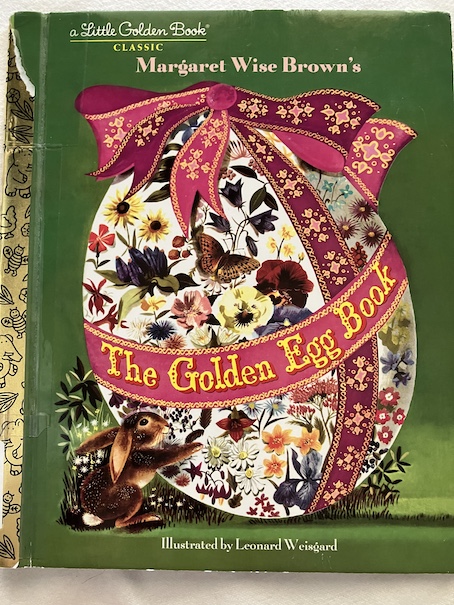
The Golden Egg Book by Margaret Wise Brown, illustrated by Leonard Weisgard, 1947.
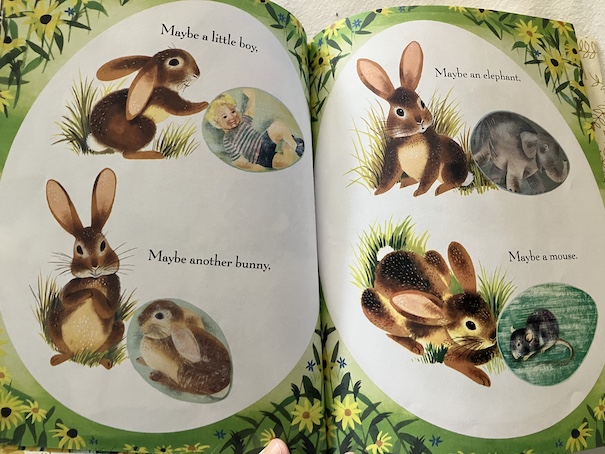
One day, a little bunny finds a blue egg. He knows there’s something inside the egg because he can hear it moving, but he doesn’t know what kind of egg it is. He imagines all the different creatures that could be inside the egg.
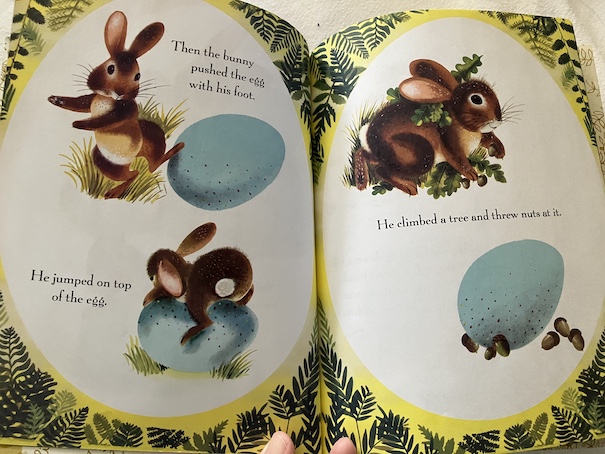
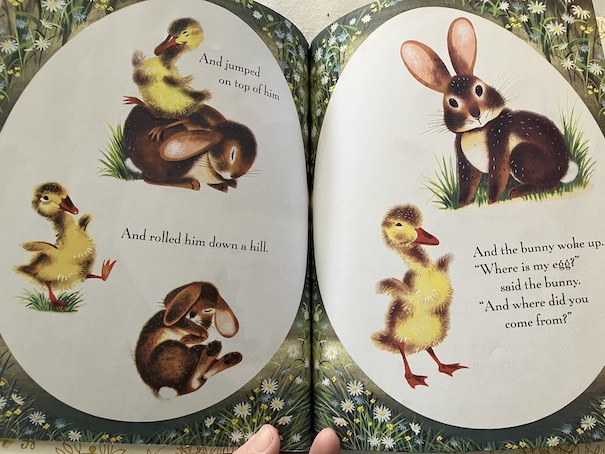
He tries to figure out how to get the egg open. He shakes it, kicks it, jumps on it, rolls it down a hill, and throws nuts and small rocks at it. Nothing he does causes the egg to open.
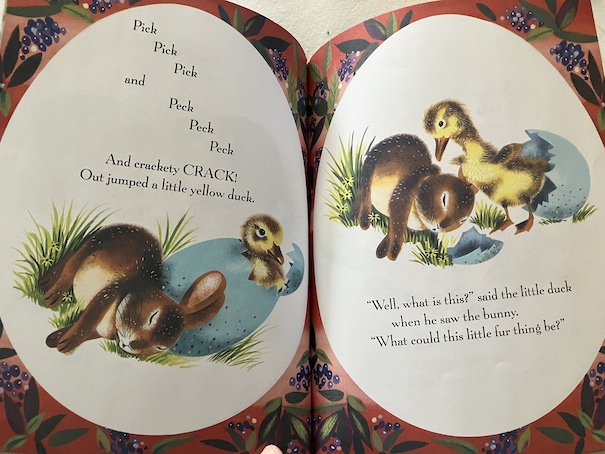
Eventually, the bunny falls asleep next to the egg, and while he’s asleep, the egg hatches! The animal that hatches out becomes the bunny’s best friend!
My Reaction
This is a vintage Little Golden Book, originally printed in the 1940s, about two young animals trying to figure each other out. The bunny apparently knows that some things hatch from eggs, but he’s not sure exactly how that happens or what sort of things might come from an egg. Even little kids will know that the things that the little bunny thinks might come from an egg are silly, like a little boy or an elephant, but that’s part of the fun of it.
There’s some repetition in the story, which young children enjoy, because when the duckling hatches out of the egg and finds the bunny asleep, he tries some of the steps that the bunny tried on his egg to get the bunny to wake up, like pushing the bunny with his foot, jumping on him, or rolling him down the hill.
Fortunately, neither animal hurts the other in their attempts to hatch the egg or wake up the bunny, and the two become friends. It’s just a cute little picture book that might be fun for springtime or Easter!
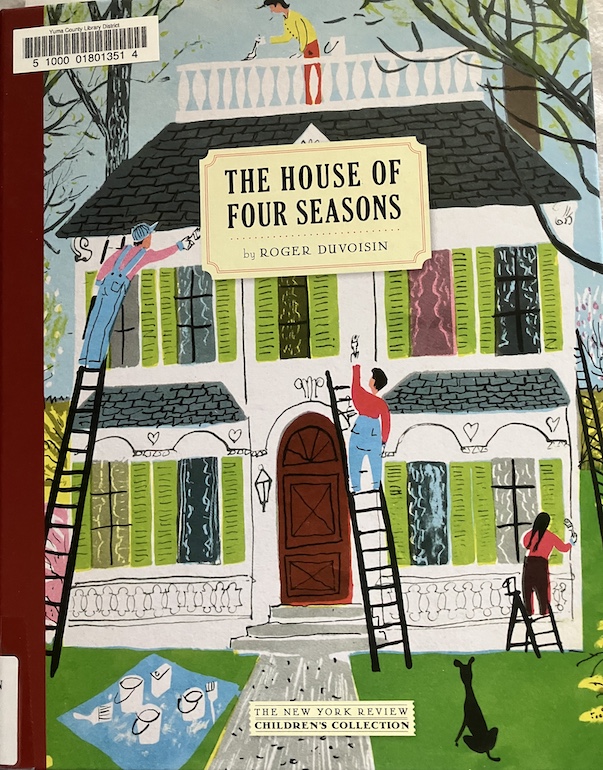
The House of Four Seasons by Roger Duvoisin, 1956.
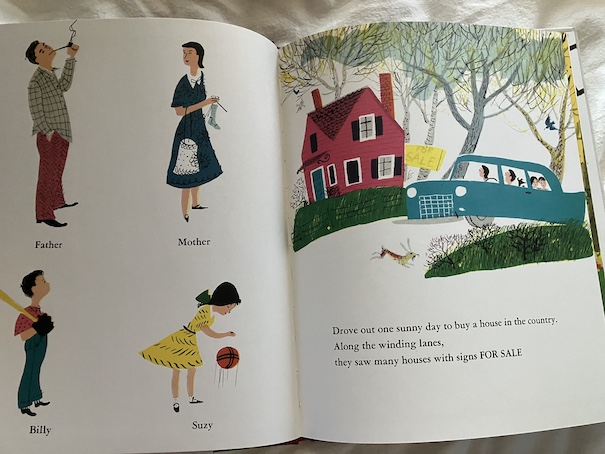
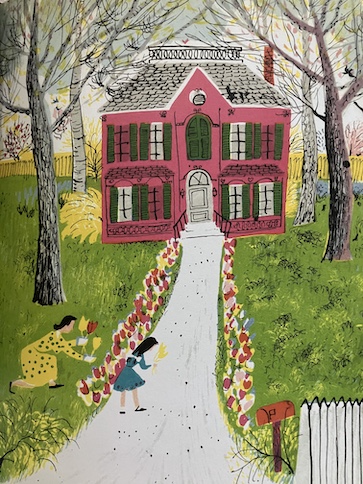
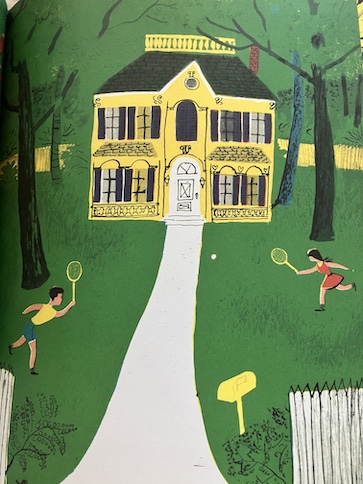
A family is searching for a house to buy in the countryside. They find one they love, but it needs some fixing up. Along with the repairs, the house needs a new coat of paint.
Different family members have different ideas about the best color to paint the house. Little Suzy likes the idea of painting it red with green shutters because she thinks that would look wonderful in the spring. Billy likes the idea of making it yellow with purple shutters, which would be great in summer. Their mother like the idea of a brown house with blue shutters because she thinks that would look great in autumn. Father suggests a green house with orange shutters because he thinks that would be colorful in the winter, when it snows.
They talk over the different possible color combinations, and Billy suggests that each of them could have their colors on a different side of the house. He says that they could call it the House of Four Seasons. However, when they go to the hardware store, they learn that the store only stocks three colors of paint – red, yellow, and blue.
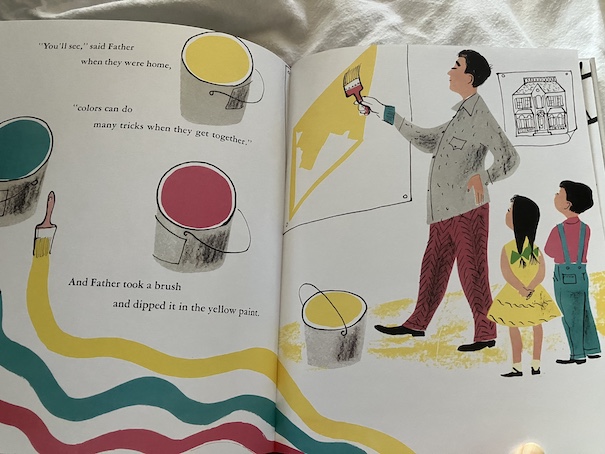
At first, the children in the family think they can’t have their House of Four Seasons with only three colors, but their father buys some of each color and shows them how the colors combine to make different colors. By mixing two colors together, they can also make orange, green, and purple. If they mix all three together, they can get brown.
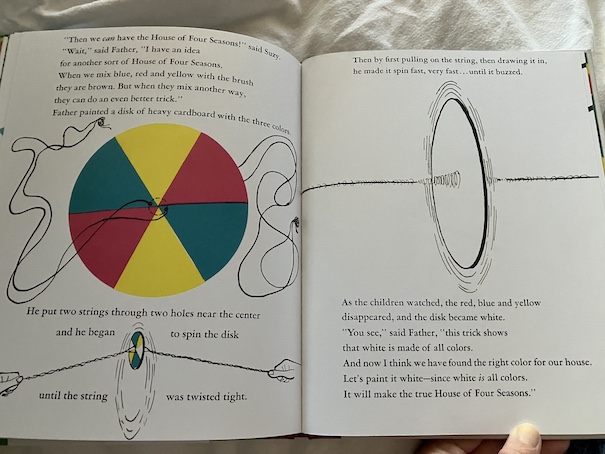
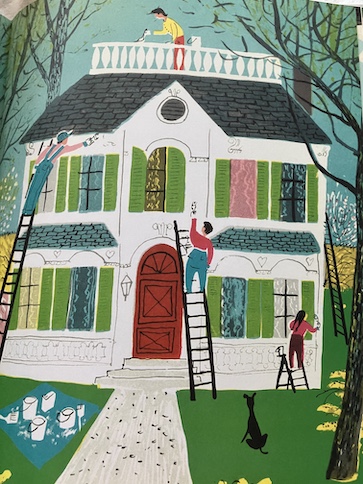
That covers all of the colors they originally thought of using, but there’s one more thing that Father points out. Although mixing all three colors of paint gives them brown, white is also the sum of all colors. That gives them a color they can all agree on!
My Reaction
I liked how the book demonstrated color combinations and how mixing primary colors make secondary colors. It is true that, when you mix all the primary colors of paint, you typically do get a brown color. Technically, according to an art class I once took, you’re supposed to get black by mixing all colors, but it usually doesn’t work out that way because the colors aren’t entirely true hues.
I’ve thought before that it’s interesting how, when it comes to paint, black is supposed to be the sum of all colors and white is often considered blank, the absence of color, but the opposite is true when it comes to light. These two ways of mixing colors are called “additive” and “subtractive” – mixing colors of light is additive and mixing physical colors, like paint, is subtractive. That’s really what the father in the story demonstrates, how different colors blend to form white visually with light, although he doesn’t really explain the additive vs subtractive color systems concept. If you’ve ever done web design, you’ve used the additive color mixing method with hexadecimal colors. Black in hexadecimal is #000000, the complete absence of all colors, while white is #FFFFFF, the full amount of all colors.
As fascinating as that is, though, I have to admit that I wasn’t entirely satisfied with the choice to paint the house white. Part of it is that it won’t stand out in the snow when it’s white, and part of it is that they just paint the shutters green without any discussion about it, but mostly, it’s because … the hardware store doesn’t sell white paint. They clearly stated that the hardware store only has three colors of paint – red, yellow, and blue – no white. They also can’t combine those colors to make white because they already demonstrated that combining those three colors makes brown. Combining colors to make white works with light but not paint.
It’s still a fun story that has some educational quality, but yeah, I realized that the proposed plan to use white paint actually wouldn’t work. Unless, of course, they just go to a different hardware store, one that has a wider paint selection.
The pictures really make this story stand out as being from the 1950s. The father is smoking a pipe, which is uncommon these days and almost never depicted in 21st century children’s books. Even in the late 20th century, when I was young, people were cracking down on depictions of tobacco use in children’s books and movies to discourage children from normalizing tobacco and using it themselves. The overall art style of the book is typical of the mid-20th century, but it has a full range of colors, in keeping with the theme of the book. Some other mid-20th century books were printed with limited color range.
I liked seeing the house depicted with the different color combinations that members of the family imagined, and I enjoyed how they associated the color combinations with different seasons of the year. Some of their color combinations are very unusual, like yellow and purple together on the house. Few people would choose such a combination in real life, although yellow and purple are complementary colors on the color wheel. So are red and green, the color combination that the daughter of the family would have chosen. I thought that it was interesting that the color combinations the family considered were all either complementary colors or leaned in that direction, although they never mentioned it in the book or explained what complementary colors are. Complementary colors are directly opposite each other, and they can be used to create contrast and visual appeal.
One of the things I like about seeing the different color combinations is that it invites children to consider what color combinations they would choose themselves. It reminded me a little of Katy Comes Next, where readers get to see the wigs, doll eyes, and doll clothes that Ruth chooses among for her doll, Katy, and imagine which ones they would choose. I think kids like to see different possibilities and consider their choices and favorites.
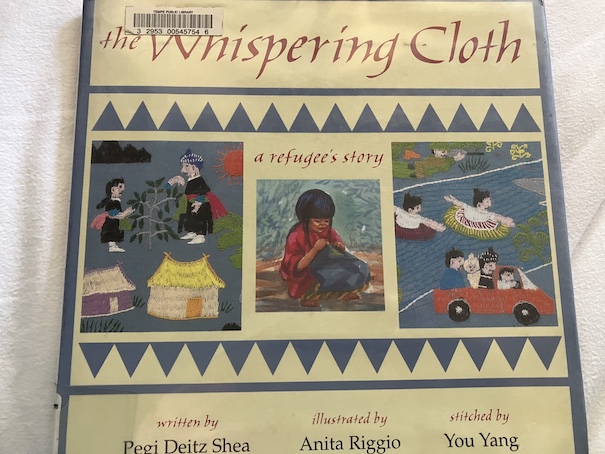
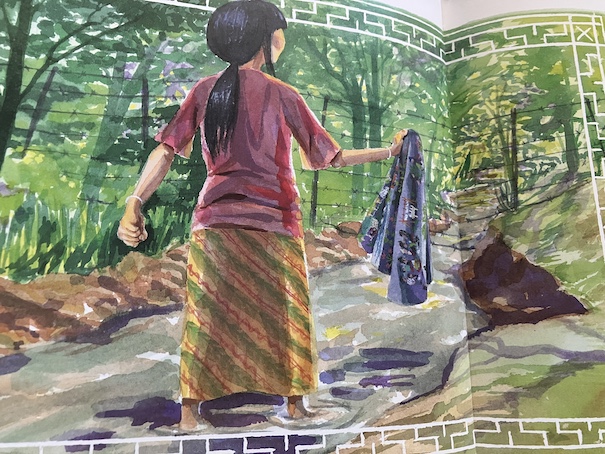
The Whispering Cloth: A Refugee’s Story written by Pegi Deitz Shea, illustrated by Anita Riggio, and stitched by You Yang, 1995.
Mai and her family are Hmong refugees from Laos, living in the refugee camp of Ban Vinai in Thailand. Some of her relatives have gone to the United States, but Mai and her grandmother are still waiting in the refugee camp. Mai’s parents are dead, and Mai doesn’t really remember her family’s life in Laos. Almost as far back as she can remember, she’s always lived in the refugee camp. She only has vague memories of her parents’ deaths and how she and her grandmother fled to the refugee camp.
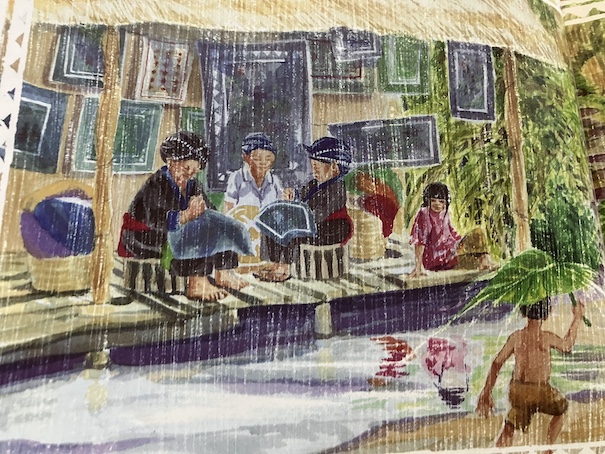
Mai’s grandmother teaches her how to do embroidery, and she begins helping her grandmother make pa’ndau, a kind of tapestry that tells a story. Together, she and her grandmother pa’ndau to sell to traders for money. They hope to use the money to get out of the refugee camp and join their relatives in the United States.
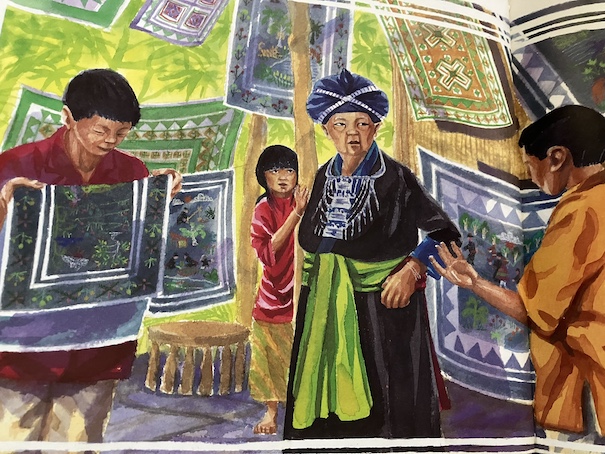
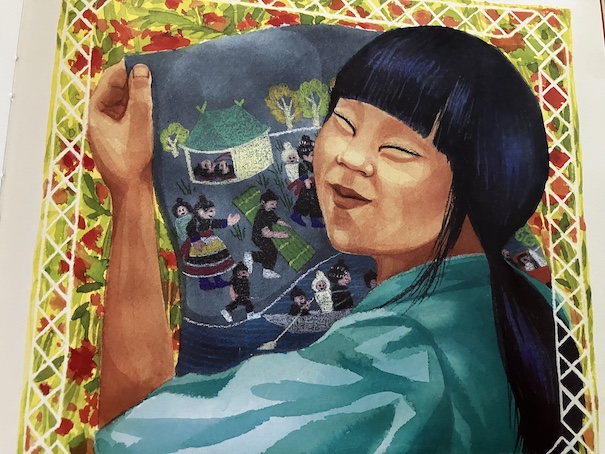
Their pa’ndau tapestries have beautiful floral borders and images that tell a story. Mai asks her grandmother if she can do one all by herself and if he grandmother will tell her a story she could use. Her grandmother says that she’ll be ready to do a pa’ndau of her own when she has a story of her own to tell.
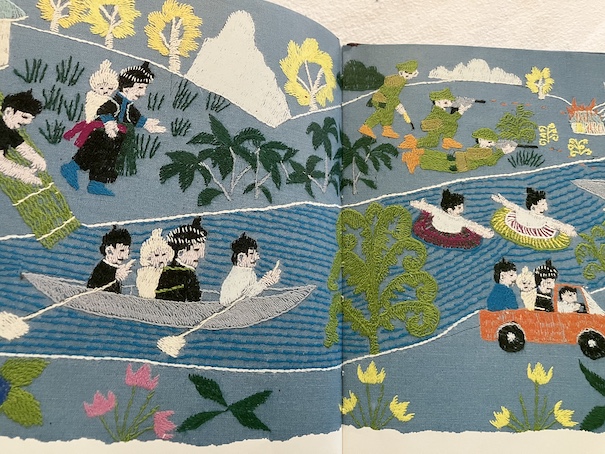
As Mai thinks about how much she misses her parents, she realizes that she does have a story to tell in her own pa’ndau. She begins embroidering a pa’ndau that tells the story of her parents’ deaths and how her grandmother carried her away in a basket, fleeing as soldiers shot at them. She embroiders their arrival at the refugee camp, and the people and things she sees there.
When she asks her grandmother how much money they can get for her pa’ndau, she says that they cannot sell it because it isn’t finished yet. At first, Mai thinks that there isn’t anything more to tell because they’re still living in the camp, and she hasn’t experienced life beyond it. Then, she realizes that she can embroider the life she hopes to have when they finally join her cousins, based on the things they’ve told her in their letters.
The book is available to borrow and read for free online through Internet Archive.
My Reaction
The foreword to the story explains that the Hmong people of Laos were driven out by the Lao Communist government, and many of them were killed before they had a chance to leave. The government drove them out because they sided with the Americans fighting in Laos and Vietnam. Many people, like Mai’s family, found refuge in refugee camps like Ban Vinai, waiting until they could find another country willing to take them on a permanent basis. However, at the time this story was published in 1995, the Ban Vinai camp was set to close. The refugees there were set to be either transferred to different refugee camps or sent back to Laos, to face whatever the government there had in store for them. Understandably, many of them didn’t want to be sent back to the country they had escaped from. This article explains more about the generation of children who, like Mai, grew up in the refugee camp, disconnected from the lives their parents knew in Laos, and with ambitions to go to other places, like the United States, to start new lives.
Although this is a picture book, there are violent themes of war in the story, so I wouldn’t recommend it for very young children. The pictures in the book are beautiful, an unusual combination of paintings and actual embroidery. The artist who did the embroidery, bringing Mai’s tapestry to life, was also a refugee in camps in Thailand before coming to the United States in 1992.
I thought this was an interesting way to introduce readers to part of the history of the Hmong people and the fallout of the Vietnam War through a traditional Hmong artform/craft that tells stories in a unique way.
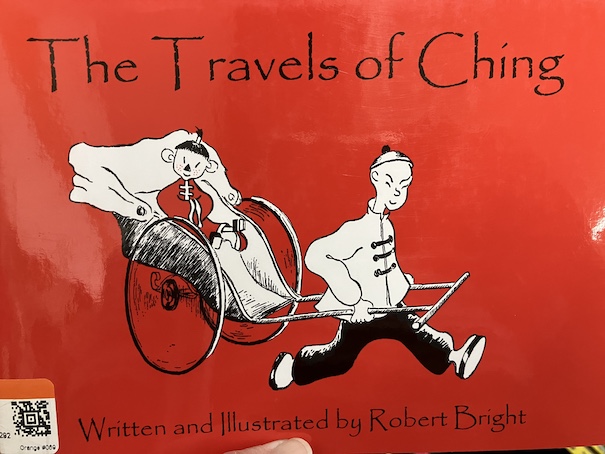
The Travels of Ching written and illustrated by Robert Bright, 1943.
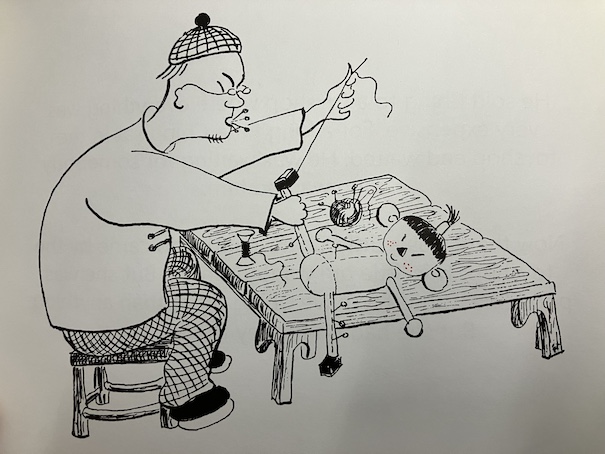
A dollmaker in China makes a little doll named Ching. Ching is a high-quality, handmade doll, and the dollmaker sells him to a toy shop.
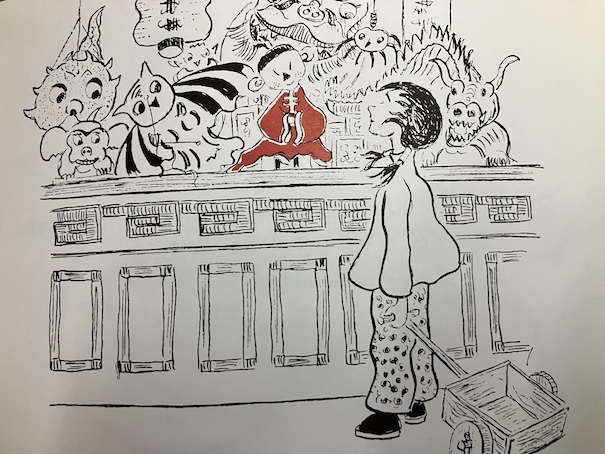
Ching sits in the window of the toy shop for a long time, waiting for someone who wants him. There is a little girl who sees him in the shop, and she wants him badly, but all the toys in the shop are expensive, and she can’t afford him.
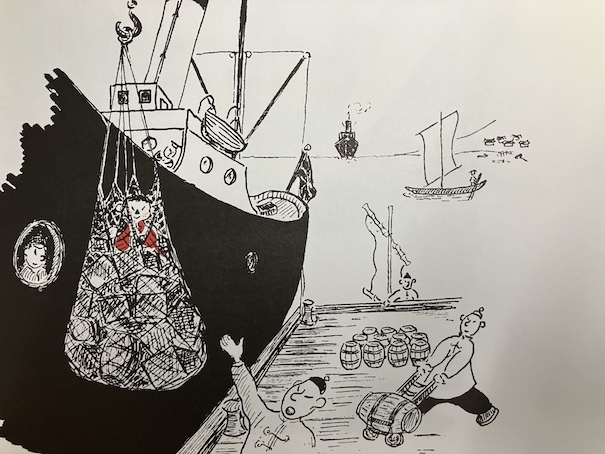
One day, a wealthy tea merchant buys Ching, but he doesn’t want Ching himself. He plans to send Ching to someone else overseas. Ching begins a long journey by donkey, boat, and steamship to America. When he gets to America, he travels even further by train, eventually arriving at the apartment of a wealthy girl.
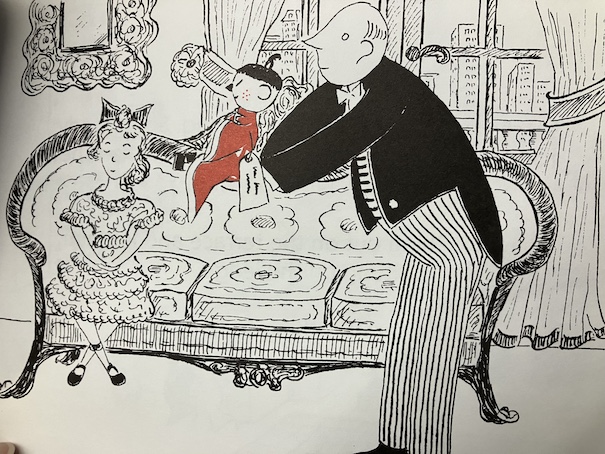
However, the wealthy girl doesn’t really want Ching. She already has many dolls, and she doesn’t find Ching interesting. She is careless with him, and one day, he falls off the balcony of the apartment and lies outside, forgotten.
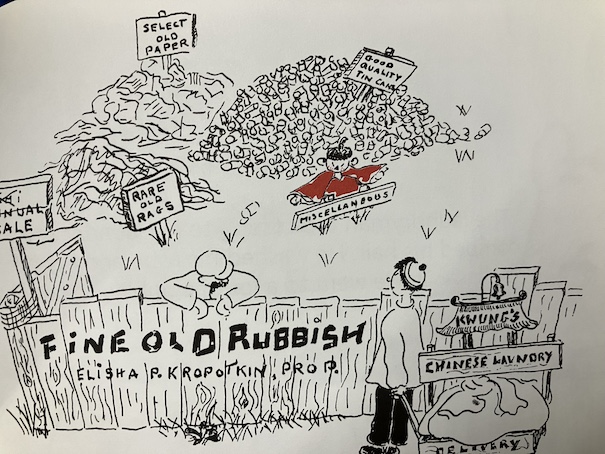
One day, an old man finds Ching and brings him inside, but he doesn’t really want Ching, either. He gives Ching to his cook, but she doesn’t really want him, so she throws him in the trash, and Ching ends up in a junk yard.
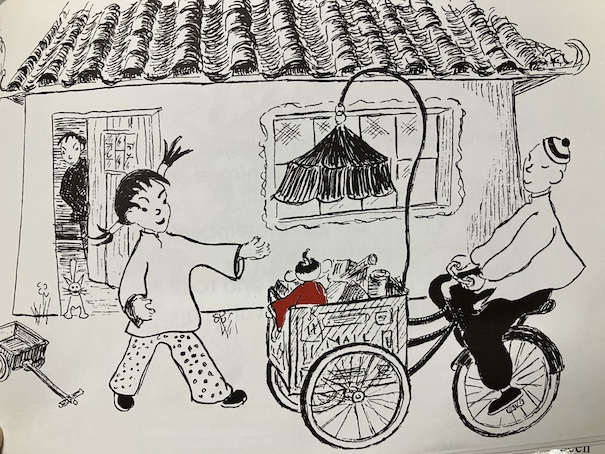
Fortunately, Ching’s story doesn’t end there. A man who works for a Chinese laundry happens to pass the junk yard and spots Ching. Although Ching is dirty from his time outside, the Chinese man recognizes Ching’s quality and is pleased that the junk yard owner is selling him cheaply. The man buys Ching and cleans him up because he knows someone who will really appreciate him.
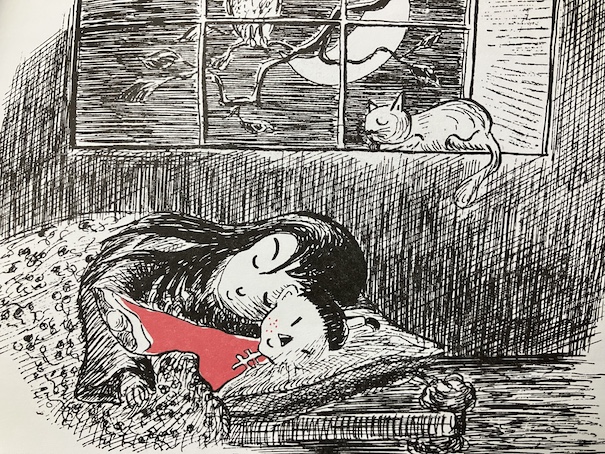
Thus, Ching is sent on another long journey … back to the person who always wanted him the most.
The book is available to borrow and read for free online through Internet Archive.
My Reaction
This is a vintage children’s book, and the illustrations of the Chinese people have the slits for eyes that are considered stereotypical now. However, there doesn’t seem to be any disrespect meant by the story. The basic theme of the story can be summed up by the saying, “One person’s trash is another person’s treasure.”
Ching travels a great distance from China to the United States, passing through the hands of various people along the way, and at times, he’s actually given or thrown away because the people who have him don’t really want him. There’s nothing wrong with Ching. He was always a high-quality doll, which is how he survived his time outside in the elements. It’s just that the people who have him don’t really appreciate him. Fortunately, there are people who recognize his quality, and there is one person who definitely wants him. It’s a happy ending when Ching finds his way back to her. All he really needed was for someone to want him, and in the end, he is happy to be with the person who does want him.
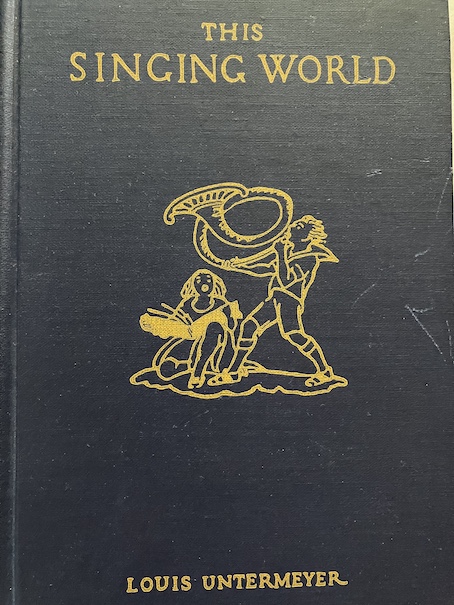
This Singing World collected and edited by Louis Untermeyer, 1923, 1926.
This little book is a collection of beautiful, classic children’s poems by some of the most famous poets for children and adults from the 19th century and early 20th century! Some of the poems are by Louis Untermeyer, the compiler of the book, but there are also poems by Robert Louis Stevenson, Henry Wadsworth Longfellow, Lewis Carroll, Robert Browning, Emily Dickinson, Walt Whitman, John Masefield, Robert Frost, William Butler Yeats, Walter de la Mare, Hilaire Belloc, and many others. In the book’s introduction, he says that most of the poems in the book “were written by living poets.” None of them are alive now, in the 2020s, but many (although not all) of the poets included were alive when this book was first compiled and published.
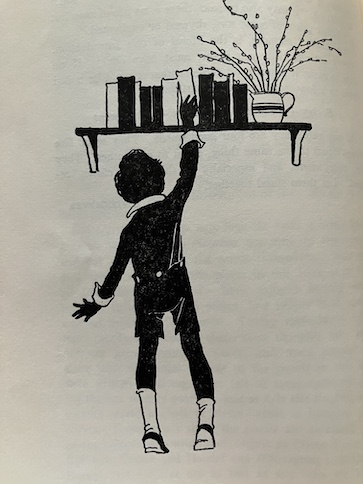
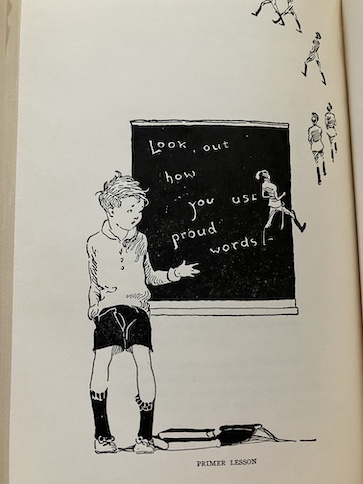
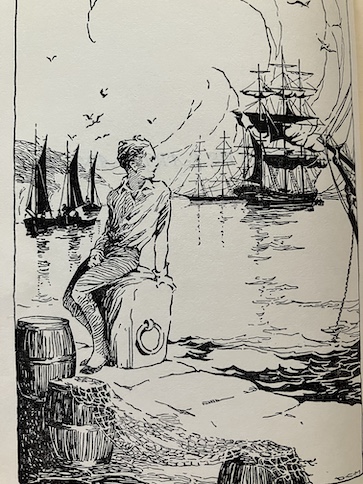
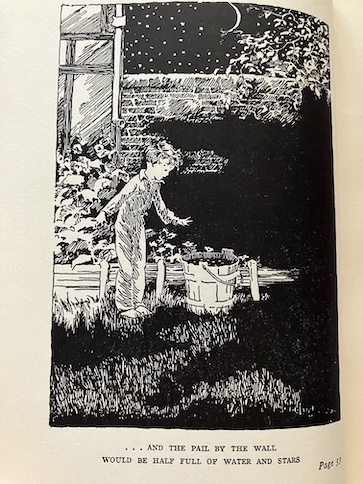
There are too many poems to list all the ones that appear in this book, but they are grouped by themes. Each section begins with a black-and-white illustration based on one of the poems in that section. There is also an interesting section of Notes in the back of the book that has extra information about some of the poems. I overlooked the Notes the first time I read the book, but it’s really worth seeing. Louis Untermeyer explains some of the background to his own poems there and also explains some of the background of other poems, pointing out ones that were based on real life incidents, giving some information about the authors of different poems, or explaining a little about the style of a poem. Although, Louis Untermeyer says that readers who prefer just to be left alone to read and enjoy are free to skip the Notes, anticipating exactly how I felt and what I did when I was a kid. I appreciate the extra information more now, so I’m glad it’s there, but I appreciate the Louis Untermeyer understood some things about how children’s minds work.
The author’s Introduction and A Few After-Words, two sections which I would also never have bothered to read when I was a child, are also worth reading because they take into account the feelings of child readers and his own philosophies about presenting poems to children. In A Few After-Words, the Louis Untermeyer addresses children reading the book and says that he wants them to know, whether their parents or teachers like it or not, that poems shouldn’t be taught in a formal way because turning them into lessons and picking them to pieces for analysis takes all the life and beauty out of them. He describes having gone to a lecture titled “How to Read a Poem in the Class Room”, which was an hour long (and a very long 60 minutes, to hear him describe it), where the lecturer outlined all the ways poems could be read and analyzed, never once mentioning “enjoyment.” Louis Untermeyer’s opinion was poems are best when read aloud, experienced, and not over-analyzed. (A philosophy not unlike that of the teacher in Dead Poet’s Society.) He is well aware, as he said in the Introduction, that nobody is going to like all of the poems in the book because they’re all very different from each other, but he hopes that there will be something in the book for everyone. He emphasizes, “don’t force yourself to like any of these poems just because they happen to be printed in this book.” He wants readers to explore what appeals to them now, in the phase of life they’re in, and be open to considering other poems later because some of them may take on more meaning for them later in life. I wish this man had been alive to be one of my high school English teachers because I argued about things like this with the teachers I had.
Sections in the Book:
Songs of Awakening
Poems about morning, sunrise, and day. This section includes Sunrise by Lizette Woodworth Reese.
Breath of the Earth and Sea
Poems about nature. This section includes The Storm and Autumn by Emily Dickinson.
Open Roads
Poems about travel. This section includes The Joys of the Road by Bliss Carman, I Want to Go Wandering by Vachel Lindsay, and The Road to Anywhere by Bert Leston Taylor.
Common Things
Poems about everyday events and small pleasures. This section includes Simplicity by Emily Dickinson, The Commonplace by Walt Whitman, and Escape at Bedtime by Robert Louis Stevenson.
Places
Poems about fascinating places. This section includes Stopping by Woods on a Snowy Evening by Robert Frost.
Children and Other People
Poems about children and interesting characters. This section includes The Young Mystic by Louis Untermeyer, The Children’s Hour by Henry Wadsworth Longfellow, and The Land of Story-Books by Robert Louis Stevenson.
Birds and Beasts
Poems about birds and animals. This section includes The Runaway by Robert Frost and The Blackbird by W. E. Henley.
Fairies and Phantoms
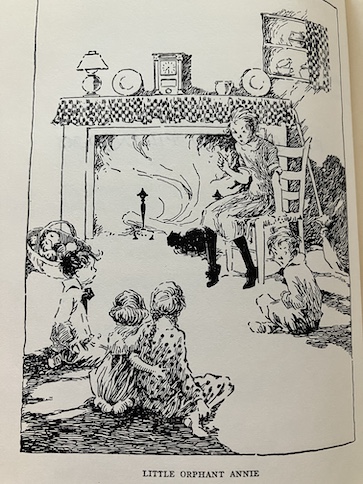
Poems about fairies and other supernatural creatures. This section includes Little Orphant Annie by James Whitcomb Riley, Disenchantment by Louis Untermeyer, and I’d Love to be a Fairy’s Child by Robert Graves.
Words and Music
Poems about music and poetry itself. This section includes Ode by Arthur O’Shaughnessy and The Singer by Anna Wickham.
Whims and Fantasies
Poems about imagination. This section includes Apparitions by Robert Browning.
Tales and Ballads
Poems that tell a story. This section includes The Highwayman by Alfred Noyes.
Laughing Legends
Humorous poems and poems about silly things. This section includes The Lost Shoe by Walter de la Mare and The Twins by Henry S. Leigh.
Fables in Foolscap
Poems that have a moral or lesson, although the morals and lessons are silly ones. This section includes The Embarrassing Episode of Little Miss Muffet by Guy Wetmore Carryl.
Rhyme Without Reason
Nonsense poems. This section includes The Snark by Lewis Carroll, The Owl and the Pussy-Cat by Edward Lear, and Topsy-Turvy World by William Brighty Rands.
Croons and Lullabies
Poems about night and sleep. This section includes Wynken, Blynken, and Nod by Eugene Field.
Stars to Hitch To
Poems to inspire. This section includes The Arrow and the Song by Henry Wadsworth Longfellow.
The Heroic Heart
Poems about courage and brave deeds. This section includes Opportunity by Edward Rowland Will and Invictus by W. E. Henley.
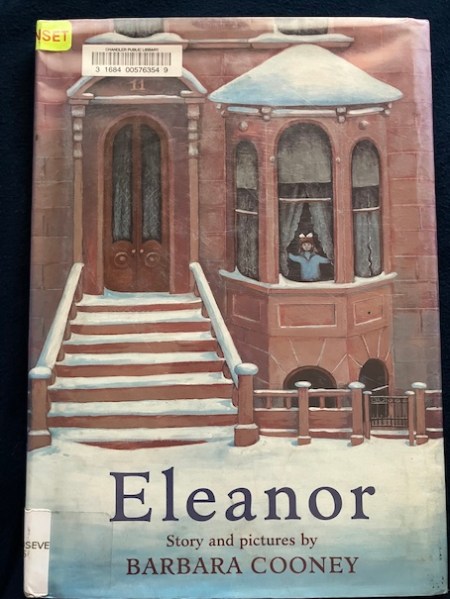
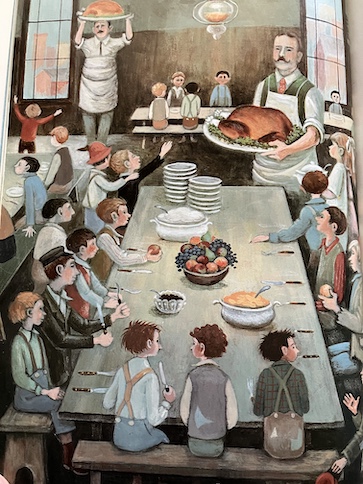
Eleanor story and pictures by Barbara Coooney, 1996.
This picture book tells the story of Eleanor Roosevelt’s early life. Eleanor Roosevelt (full name Anna Eleanor Roosevelt) was the niece of Theodore Roosevelt (called Uncle Ted in the book), and later, in life, the wife of Franklin Delano Roosevelt (a distant cousin) and First Lady of the United States. This book is about her childhood, so it doesn’t explain about her husband or marriage until the Afterword at the end.
Eleanor’s home life wasn’t particularly happy. She was a disappointment to her mother in a number of ways. Her mother had hoped for a boy, and she didn’t think Eleanor was a pretty baby. Her mother often called her “Granny” as a nickname because she was such a serious child and seemed rather old-fashioned looking, and she reminded her mother of an old woman. When Eleanor’s younger brothers were born, Eleanor often felt left out when her mother spent time with them.
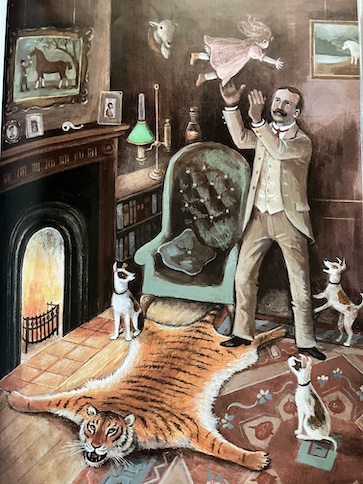
Eleanor’s father loved her and enjoyed playing with her and spending time with her, but she didn’t get to see him often as she was growing up. Her father, Theodore Roosevelt’s brother, Elliot Roosevelt, was a traveler and socialite and later became estranged from his family. Still, although he wasn’t a particularly reliable person and wasn’t present much, Eleanor was very attached to him and sometimes felt like he was the only one who really loved her.
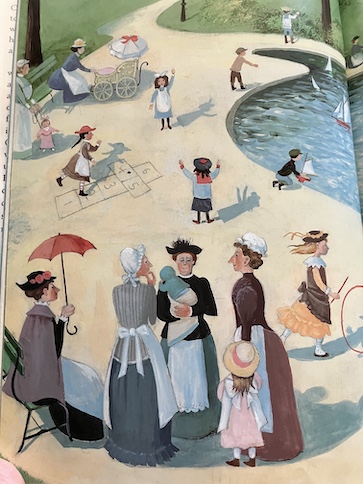
Much of Eleanor’s early life was spent with her nanny, who spoke to her in French, so she mastered the language at an early age. Eleanor was very shy, so she didn’t spend much time with other children. She did spend some time with relatives, too. Sometimes, she helped them with charitable projects, giving her a sense of caring for the less fortunate.
When Eleanor was eight years old, her mother died of diphtheria, and she and her little brothers went to live with her grandmother and the aunts and uncles who also lived with her. Her father had been living apart from the family at this time, but he returned after his wife’s death. After that, he would visit Eleanor sometimes and take her for outings. However, he was sometimes neglectful. The book explains that he died in a fall when Eleanor was nine years old.
Life with her grandmother was difficult for Eleanor because her grandmother made her wear old-fashioned clothes, she had a strict governess, and her aunts and uncles seldom paid attention to her because they were busy with their own work and projects. Other children didn’t think much of Eleanor because she was shy and wore old clothes. Sometimes, her cousin Corinny would join her for dinner, but Corinny never liked it because the house was so grim and silent.
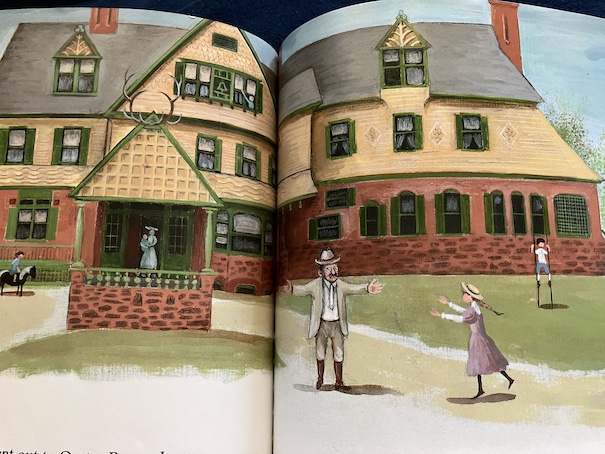
Eleanor was happier when they would go to her grandmother’s summer house, Oak Terrace. At the summer house, she could play games, daydream, read, and catch tadpoles with her little brother Brudie. Sometimes, she would go out in the rowboat with one of her aunts. There were also times when she visited her Uncle Ted and his family. Sometimes, she would play with her cousin Alice Roosevelt because they were the same age, but Alice teased her dreadfully, and Eleanor often found her a little intimidating. Her relatives encouraged her to be brave and to do things that she found scary, but she often found it difficult to keep up with them and some of their daring stunts.
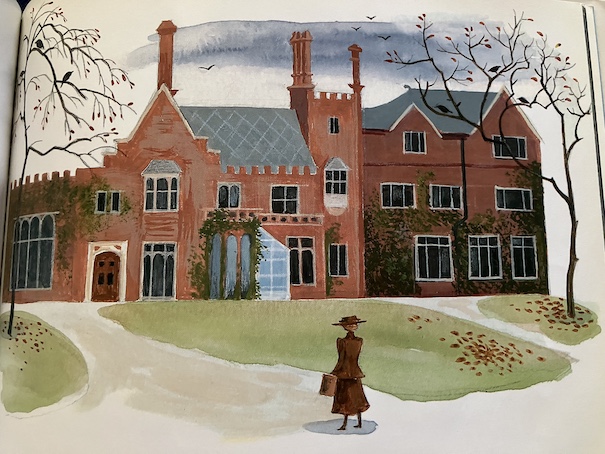
Eleanor was often considered the “ugly duckling” of the family, but things changed for her when her grandmother decided to send her to boarding school in England. She attended a school called Allenswood, and the headmistress, Mademoiselle Souvestre, became a mentor to her.
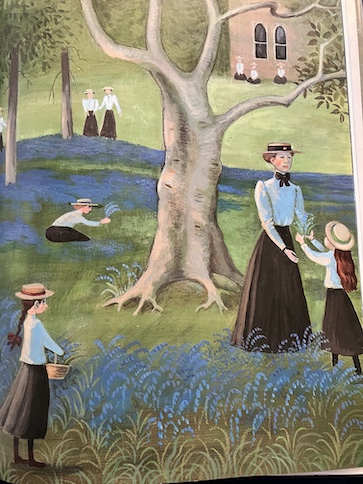
Thanks to the lessons in French from her former nanny, Eleanor excelled at boarding school. Because the school had a rule that the girls should only speak French at dinner, Eleanor was the only girl at first who felt comfortable talking, a rare change for her. Eleanor made friends with the other girls at school and was happy there. Mademoiselle Souvestre encouraged Eleanor’s sense of independence, opened her eyes to the world around her, took her along on trips to Europe, and advised her to get clothes made in Paris, ridding her of the clothes her grandmother made her wear. By the time she returned home from boarding school, Eleanor was happier and more confident than she had been before, and she credited Mademoiselle Souvestre for her influence.
The book is available to borrow and read for free online through Internet Archive.
My Reaction
I enjoyed this book for its focus on Eleanor Roosevelt’s childhood. Many books about famous people focus on what they did when the became famous, but I enjoyed seeing her as a shy, awkward child, when it didn’t seem obvious that she would one day be famous. By seeing how she grew up, I feel like I’ve come to understand more about her.
Eleanor Roosevelt came from a wealthy family, but her early life wasn’t very happy. She was deeply affected by her mother’s sense of disappointment in her for not being prettier and by her parents’ troubles and their separation from each other. She was orphaned at a young age, and one of her younger brothers also died not long after their mother. She often felt like she didn’t fit in with her family, and they didn’t seem to understand or appreciate her.
The book explains a little about her father’s estrangement from the family, but it doesn’t go into all the details or some of the dark reasons why. The truth was that he was an alcoholic. His alcoholism was the beginning of his strained family relationships, but then, he had an affair with a servant girl who worked for his wife and fathered a child by her. When that happened, Theodore Roosevelt had him forcibly removed from his family’s home and did his best to keep him away from his children as much as possible, even after his wife’s death. When the book says that Eleanor’s father died in a fall, that was a soft way of explaining it. The truth is that he committed suicide because he was drinking even more heavily after his wife and one of his sons died, and he was depressed about the rest of the family keeping him away from his remaining children.
I thought it was interesting that Eleanor really blossomed at boarding school. She had always been a shy girl, but she was very studious and spoke French, skills which suited boarding school life well. Boarding school encouraged her to spend more time around other girls her age and took her away from her family’s influence, giving her the opportunity to find herself and bond with other people. In particular, the headmistress of the school became her mentor and encouraged her to look at the world in new ways and to become the best version of herself.
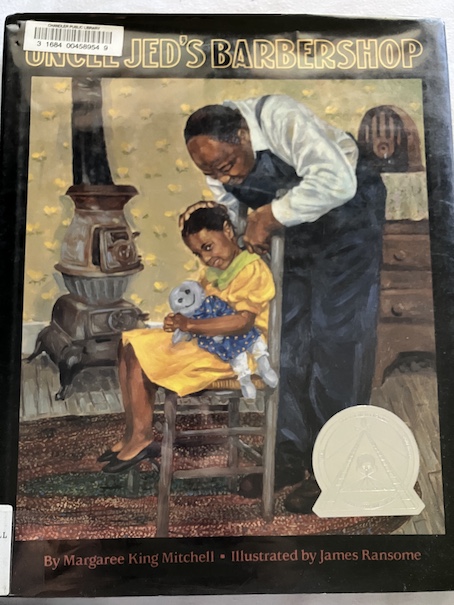
Uncle Jed’s Barbershop by Margaree King Mitchell, illustrated by James Ransome, 1993.
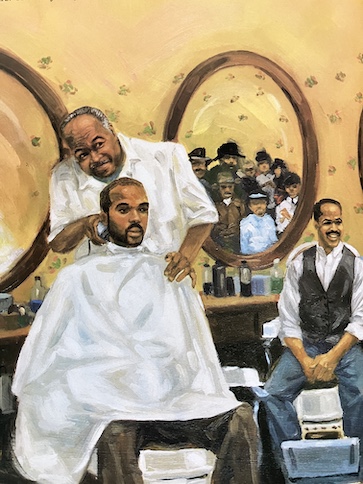
Sarah-Jean remembers her grandfather’s brother, Uncle Jed, and how he would travel to people’s houses to cut their hair during the 1920s and 1930s. He’s the only black barber in their area, so he cuts everybody’s hair in the black community. What he really wants is to own his own barbershop, with proper barbers’ chairs and equipment, but times are tough, and helping out his family means delaying his dream shop.
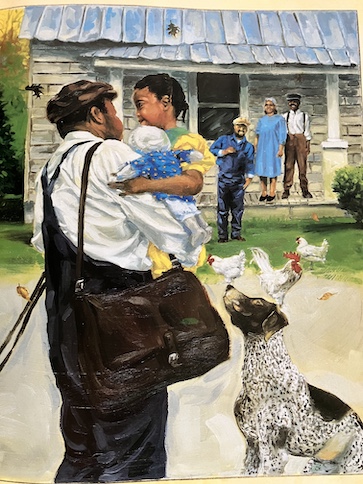
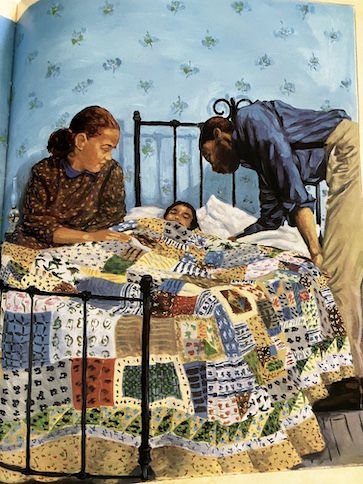
Everybody is poor in their town, so many people think Uncle Jed will never be able to get enough money to open a shop. However, even though things are tough and money is tight, Uncle Jed is willing to help out when he can. When little Sarah Jane develops a serious illness and needs an operation, Uncle Jed gives her father the money they need for her operation, saving her life.
Later, Uncle Jed loses his savings when the bank fails during the Great Depression, so he has to start saving all over again. Even though he has it hard during the Great Depression, Uncle Jed still helps other people, sometimes cutting hair for customers who can’t afford to pay him because they’re even worse off. He takes payment in whatever form they can offer, like garden vegetables or eggs.
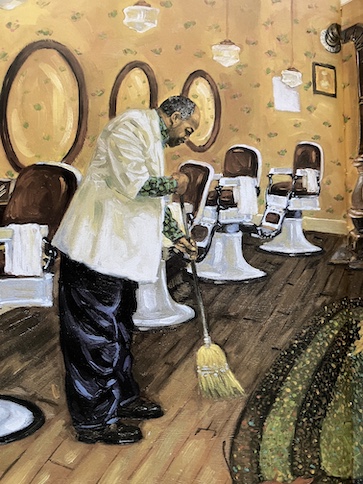
Eventually, things improve, and Uncle Jed is able to afford his barbershop, and everybody comes to the opening. He acquired his shop toward the end of his life, so he doesn’t have it for long before his death, but he was still happy because he accomplished his goal and did something people didn’t think he’d be able to accomplish.
The book received the Coretta Scott King Award.
My Reaction
I thought it was a nice story. The ending seemed a little sad, that Uncle Jed didn’t live very long after finally acquiring his shop, but the book has an optimistic tone. Although Uncle Jed accomplished his life goal toward the end of his life, he did get to accomplish it and enjoy it before he died. It’s less important how long he got to enjoy it than the fact that he did enjoy it.
It took a long time for Uncle Jed to accomplish his goal of having his own barbershop, but I think it’s important to note that he had a pretty good life along the way. Even though he lost his savings in a bank failure, he had steady work through the Great Depression, and he was also able to help friends and relatives when they needed it. He had good relationships with his family and neighbors because of his helpfulness and generosity, and everybody shows up to congratulate him when he finally opens his shop.
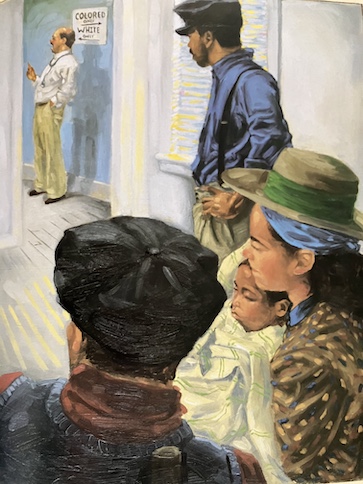
This story takes place in the South during times of segregation, which enters the story when Sarah Jane is ill and needs to go to the hospital. Although her condition is serious, not only is her family sent to a segregated waiting room, they also have to wait until all the white patients are tended to before the doctor will even see them. The doctor also insists upon payment before performing the operation she desperately needs, the implication being that the doctor will let her die if he doesn’t get paid up front to save her. Before anybody think that this is an exaggeration, that a doctor would refuse to treat a sick child or save her life because of her race, even during the Jim Crow era South, no, it’s not an exaggeration at all. It was routine:
“It’s absolutely incredible how little organized resistance there was,” says Theodore Marmor, emeritus professor of public policy at Yale University and a key health policy adviser during the Johnson administration.
Before the passage of Medicare and Medicaid, Smith says, the healthcare system was tightly segregated. Hospitals in the South complied with Jim Crow laws, excluding blacks from hospitals reserved for whites or providing basement accommodations for them.
“There were a lot of black communities in the South that had basically no access to hospitals,” says Smith. “Most of the black births in Mississippi were at home. The infant and maternal mortality rates were hugely different for blacks and whites because of that.”
The surgeon who developed the practice of blood storage and blood transfusions, Charles Drew, was also an African American who lived in the early to mid-20th century. He died relatively young of serious injuries from a car accident in North Carolina. There was a popular rumor, which was repeated on an episode of the tv show MASH, that he would have survived if he hadn’t been refused treatment at the hospital because he was African American. The reality is that doctors did try to save him, but his injuries were simply too serious for him to be saved. However, the rumor developed and persisted because the reality also is that hospitals of this time were known to turn away black patients. They had done it to others, so it was completely credible that they could have also done that to Dr. Charles Drew, even if they didn’t do it in this particular case. The fact that this rumor was completely believable and consistent with the practices of Jim Crow hospitals is an indication of their general behavior and conditions. With that in mind, it is also believable and credible that the doctor in the story would have refused to see a seriously ill black child until all white patients were seen and also that he would have refused her life-saving treatment until being paid.
However, rather than lamenting about the prejudices and inequities of this time period, the story focuses on Uncle Jed as one of the good people. The doctor and hospital in the story are not only prejudiced, but their behavior also contrasts with Uncle Jed, who is willing to put off payment or accept lesser or alternate forms of payment for people who need his services but are too poor to pay. The emphasis of the story isn’t on how bad other people or circumstances were so much as how Uncle Jed made things better for everyone as best he could. It meant some sacrifices on his part, putting off his own goals and dreams, but Uncle Jed enjoyed a good life and good relationships with other people along the way and accomplished his goals in the end.
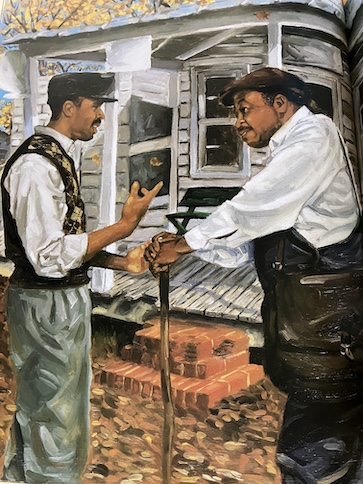
I also enjoyed the pictures in this story, showing the old-fashioned country and small town life in the early 20th century. The illustrator also did the illustrations for Aunt Flossie’s Hats (And Crab Cakes Later).
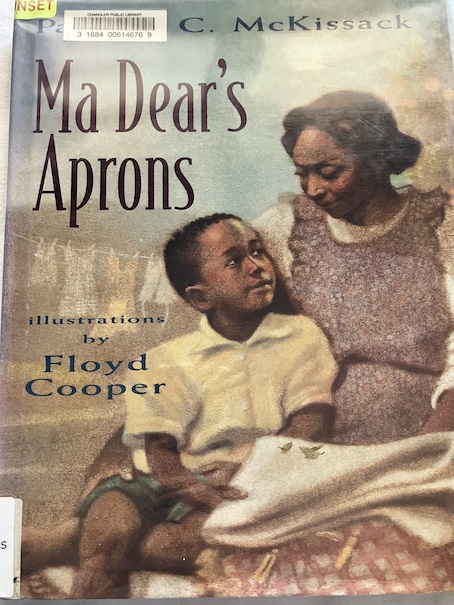
Ma Dear’s Aprons by Patricia C. McKissack, illustrations by Floyd Cooper, 1997.
Young David Earl’s mother, called Ma Dear, has a different apron for every day of the week, and David can always tell what day it is and what the task of the day is by which one his mother is wearing.
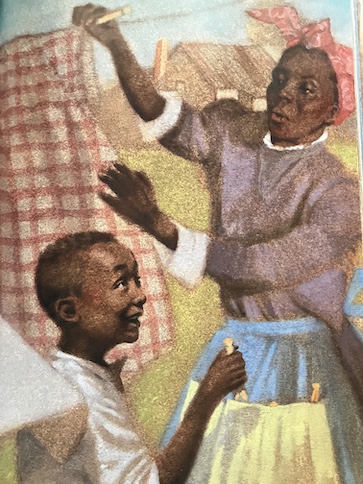
On Monday, she likes to wear her blue apron because that’s wash day, and she keeps clothespins in the pocket of that apron. After she’s done with the laundry, she has time to talk to David Earl, and she tells him about his father, who died as a soldier.
On Tuesday, she wears her yellow apron, when she does her ironing. On Wednesday, they deliver the finished laundry to their clients, and Ma Dear gives David Earl a treat from the hidden “treasure pocket” in her green apron.
On Thursday, Ma Dear wears her pink apron, and they pick vegetables and visit people who are sick or elderly at their homes. On Friday, Ma Dear cleans the house of another family, so she wears her brown apron. David Earl comes along, and she sings to him while she works. Saturday is for baking pies to sell, so she wears her flowered apron. She also gives David Earl a bath on Saturdays.
The best day of all, though, is Sunday. Ma Dear doesn’t work on Sunday, so she doesn’t wear an apron
My Reaction
The book starts with an author’s note, explaining that the characters in this story are based on her own family. “Ma Dear” was the nickname of her great-grandmother, Leanna, and Leanna was a single mother in Alabama during the early 1900s, who earned money by doing laundry, cooking, and cleaning for other people, like Ma Dear in the story. The story is about the family stories told to Patricia C. McKissack about her great-grandmother and how she made time for her children, even when she was tired from working hard. The aprons in the story are like one that Patricia McKissack inherited that used to belong to Leanna.
The author’s note, which I would have probably ignored when I was kid because I was too eager to get into the story, made this story better for me. I liked the explanation that this was a family story about a real person. The aprons are a device to help readers connect to memories of the real Ma Dear, similar to how the girls in Aunt Flossie’s Hats (And Crab Cakes Later) hear family stories and memories because they’re associated with the hats in their aunt’s collection. It’s a sweet way to share family memories.
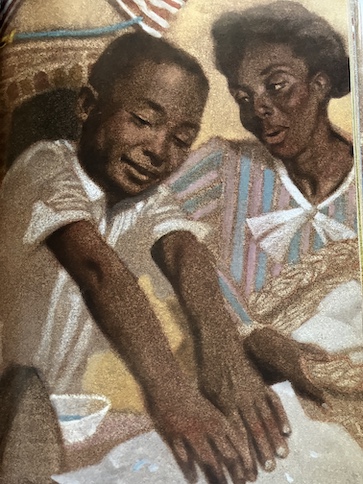
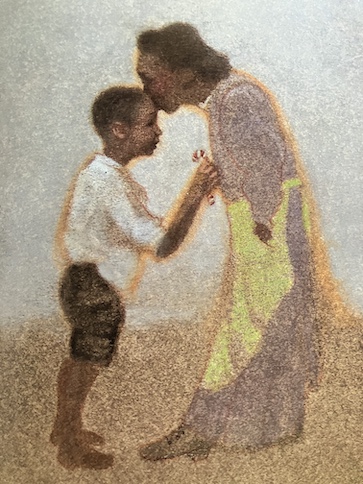
I also like the soft, old-fashioned pictures that accompany the story. Their softness and sometimes slightly blurred quality help create the mood of memories.
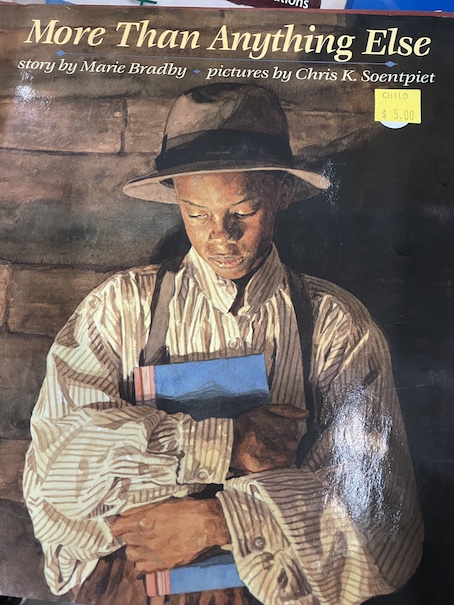
More Than Anything Else by Marie Bradby, pictures by Chris K. Soentpiet, 1995.
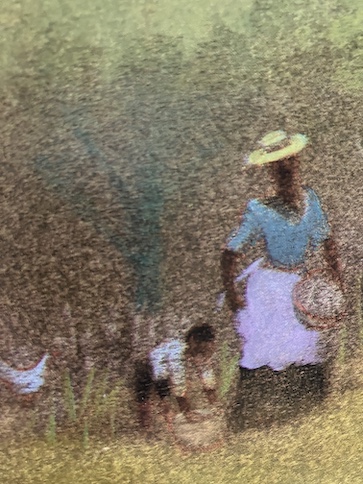
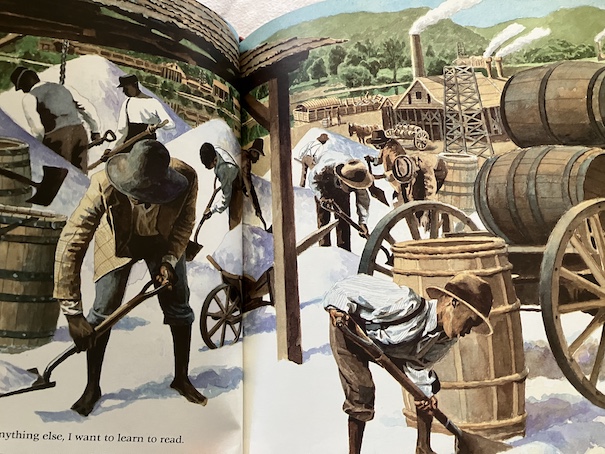
Young Booker lives with his family in a little cabin, and every morning, before the sun is up, he goes to work with his father and brother. They work at the saltworks, shoveling salt into barrels, and it’s hard, tiring work.
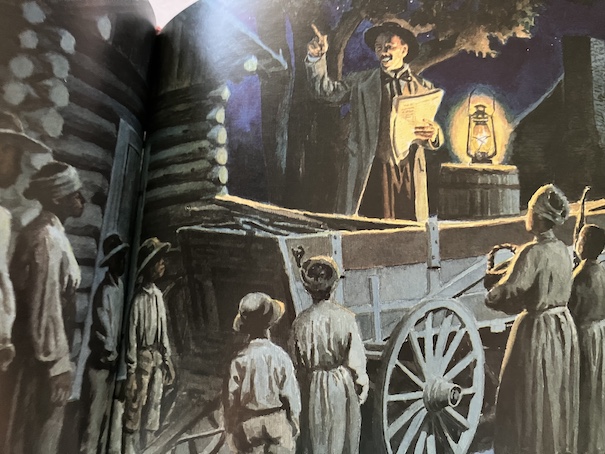
There is something on young Booker’s mind, though. More than anything else, he wants to learn how to read. One evening, he sees a black man reading aloud from a newspaper to a group of listeners, and he wishes that he could read like that himself. It inspires him that the man is black, like himself, showing that reading isn’t just something for white people.
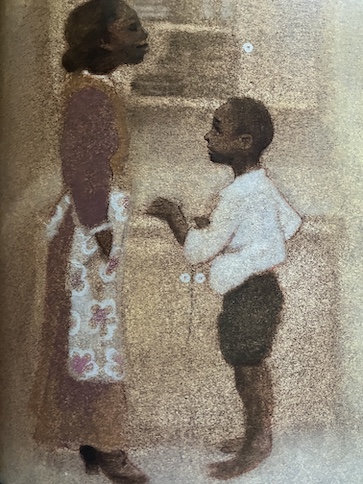
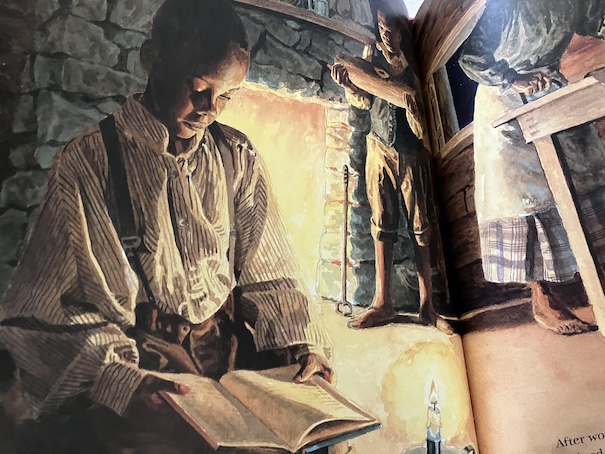
Booker tells his mother how badly he wants to learn to read. His mother can’t read herself, but somehow, she manages to find a book for him to study. Booker tries to figure out how to read by studying the letters in the book, but he just can’t figure out it by himself.
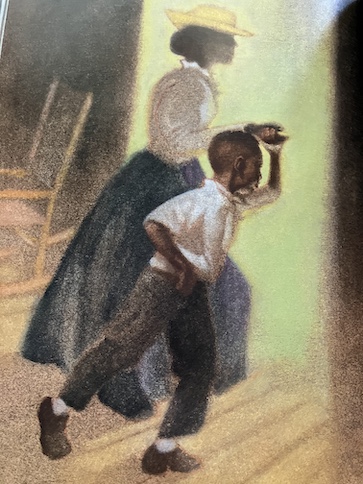
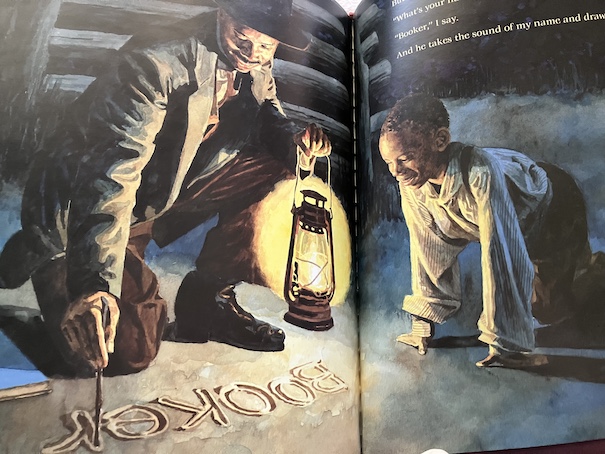
Then, Booker thinks of someone who could help him: the man who was reading the newspaper. Before Booker can learn to read, he needs some help from someone who already knows.
My Reaction
The boy in the story is a young Booker T. Washington. The book doesn’t refer to him by his full name in the story because it’s told from his perspective and because, when he was young, he was never referred to by a surname and was only known as Booker. We only get his first name, but the book summary makes it clear that it is Booker T. Washington, the famous African American educator, who lived from 1856 to 1915 and was the first principal of the Tuskegee Normal School, which later became Tuskegee University. He was born into slavery, but he was freed as a child during the Civil War.
I’m not sure whether the description of how he learned to read from this story actually happened in real life. From what I’ve read, he learned to read at a school managed by the Freedmen’s Bureau. Another account that I read said that he wanted to learn to read after seeing white children going to school and that his mother got him a book that taught him basic reading and writing. I don’t know whether he was ever inspired by seeing a black man reading a newspaper, but I couldn’t find anything about it. Because I’ve read some differing accounts, I think that either Booker’s exact inspiration for learning to read is unknown or that there were multiple influences in his early education, with different people putting emphasis on different aspects.
I liked the story, although it doesn’t explain more about Booker T. Washington’s life. I think it would have been more educational if it explained to readers what he did when he grew up, showing how he became a teacher and influenced others’ lives and education. It’s a little disappointing that kids can read the story as it is without really understanding who Booker T. Washington was and what he did. A section of historical information in the back of the book would have helped add context to the story. The story in the book simply ends at the point where Booker learns to write his own name, but I think that showing how this simple accomplishment in basic reading and writing started him on a path to greater accomplishments.
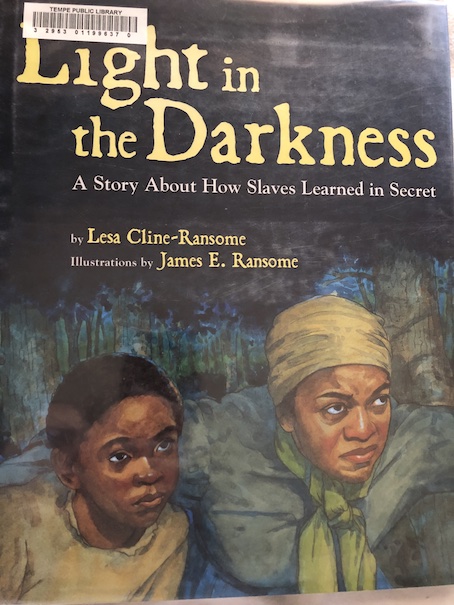
Light in the Darkness by Lesa Cline-Ransome, illustrated by James E. Ransome, 2013.
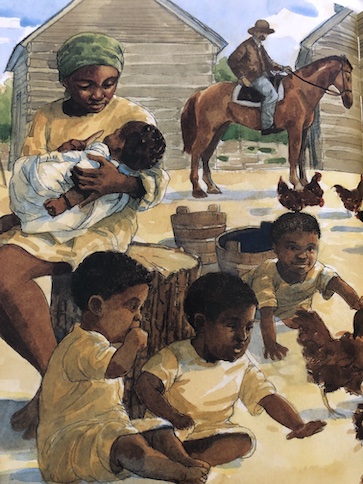
As the subtitle of the book says, this is “A Story About How Slaves Learned in Secret.” During the history of slavery in the United States, slaves were often forbidden to learn to read, and there were punishments for people who taught slaves to read. These anti-literacy laws were the norm for most people prior to the Civil War. However, there were some slaves who managed to acquire some basic reading and writing skills in secret, in spite of the anti-literacy laws, and that is what this story is about.
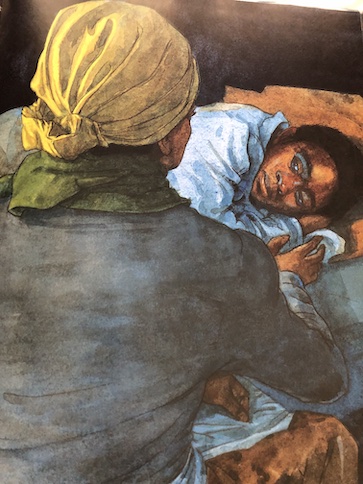
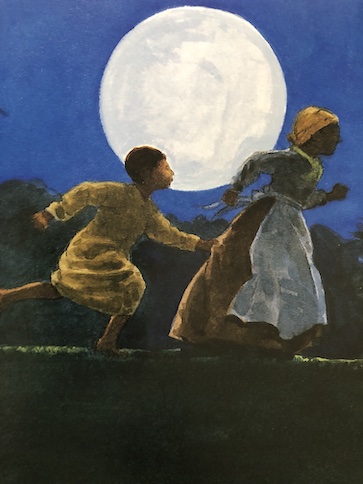
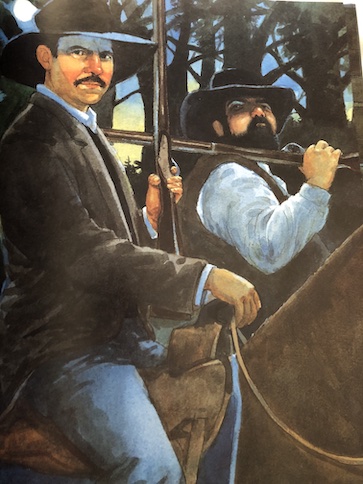
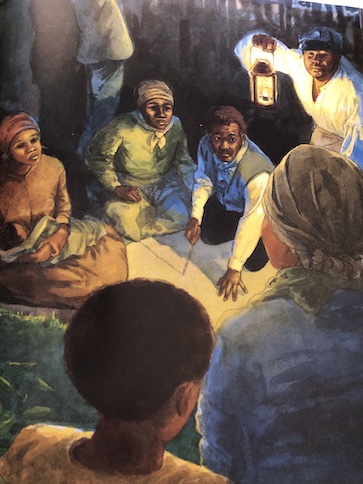
The story is told from the point of view of a young slave, Rosa. Rosa’s mother wakes her in the middle of the night, and they sneak out to go to the secret reading and writing lessons. They have to be careful because there are patrollers out, looking for runaways and slaves who are doing what they’re doing.
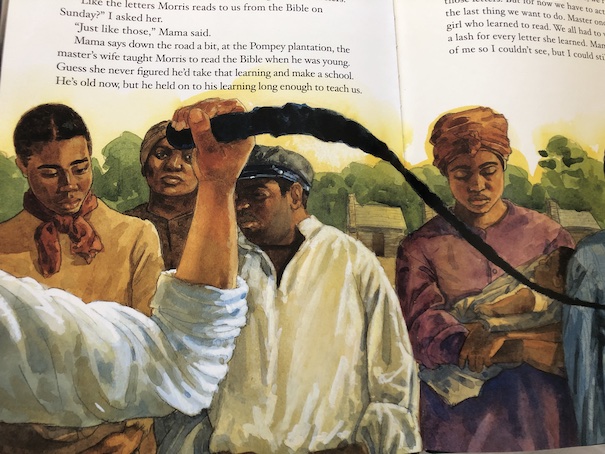
The risks are serious because slaves are whipped for learning how to read. Rosa and the other slaves were once forced to watch a girl being given a lash for each letter she learned. The slaves who go to this secret school know that the same thing will happen to them if the patrollers catch them and turn them in to their master.
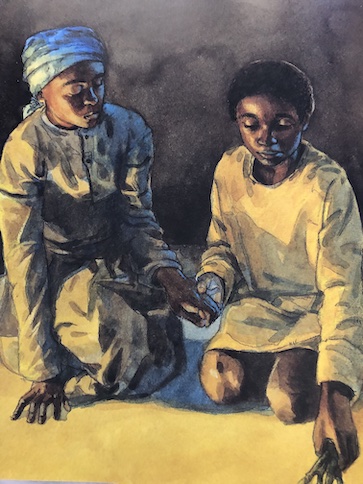
The man teaching the secret school, Morris, was taught to read Bible stories by his master’s wife when he was young, although nobody expected him to teach other slaves. Morris’s “school” is an improvised pit hut, a pit dug in the ground and covered over with branches. He uses sticks to show his students the shapes of the letters by the light of a lantern.
During the day, the slaves who go to this secret school have to proceed with their usual chores and pretend like they don’t know anything about reading and writing at all. By night, they help each other learn their letters. It’s a slow process, and sometimes, they can’t hold the school because they know that patrollers are traveling the area, and it’s too dangerous. However, they keep coming back when they can because this is important to them. They are doing something that their masters don’t think they’re bright enough to do, and they know that this secret knowledge will be an important tool in their eventual quest for freedom.
My Reaction
I thought that this was a good book, focusing on a particular area of history that isn’t always explored in detail in other sources. I’ve read other books that refer to slaves, both real and fictional, as having found ways to read in secret, but this book focuses solely on that process, how they managed it, how they organized others to participate, what the risks were, and what it meant to them. There is an Author’s Note in the back of the book, which explains that the author was doing research for a book about Frederick Douglass when she found a reference to “pit schools”, like the one in the story, where slaves would meet in secret for lessons from each other. I had never heard about pit schools before, and I found the concept fascinating.
The subject of education and literature is a particular sore point for me when it comes to the Confederacy, and I’m sure I’ve mentioned it before. Slavery apologists sometimes talked about how slave owners treated slaves like “family” and taught them to read and gave them Bible lessons, etc. These claims have been made since the 19th century, and you can see it in plantation or “anti-Tom” literature, including some 19th century and early 20th century books for children. (I discussed this earlier in my list of Books from the 1850s, the decade when Uncle Tom’s Cabin was published. “Anti-Tom” literature was a direct response to that book.) However, such lessons were actually forbidden by law in most slave-owning areas. There were exceptions to this rule, like Phillis Wheatley in the 18th century and Frederick Douglass in the 19th century, but the reason why these people became famous was because they were the relatively rare exceptions. Only a small percentage of slaves ever achieved any level of literacy, and of those who did, few received any help from their masters or their masters’ family because the practice was discouraged more than encouraged, with laws and punishments in place against it. In real life, Frederick Douglass received some basic lessons in reading and letter recognition from the wife of one of his masters, but that ended when his master found out about it and made his wife stop.
I never believe those stories about slaves and masters being just one big, happy family or the assertion that it was common for masters to benevolently educate their slaves to better their lives because I already know that was not at all the case for the vast majority, by design, with intention, and enforced by law. The “history” books produced by the United Daughters of the Confederacy particularly try to create this impression of slavery as a benevolent institution, but actual benevolent institutions do not have laws that specifically restrict both the personal development and freedom of movement of the people they serve with harsh physical punishments for violations. I resent the mere existence of these history books and the organization that produced them because I resent anyone who lies to me (whether directly or indirectly or even by omission or implication) about anything important, and it is personally insulting to me that they would think I would ever be dumb enough buy that bunk. I’m sure they didn’t mean it as a personal insult to me because they’ve been doing it since long before I was born. I’m sure they have no idea who I am and couldn’t care less about me as a person, but at the same time, the fact that they did it at all carries an implied insult to anyone who may potentially believe them or is pressured to read and believe them. They must either think very little of other people’s intelligence or simply never think about other people outside of their own family lineage at all except as resources to be used or manipulated for social aggrandizement. I don’t blame people for merely having ancestors who owned slaves, but when someone works hard to make me believe that slavery wasn’t bad, that their ancestors weren’t bad for doing things they admittedly did, that I don’t really know the things I actually do know about that, and that I should not only be respectful but reverent toward these people and their institutions, I blame them a lot, specifically for that. When I was young and found out about censorship, propaganda, and book burnings, I daydreamed about writing something that would personally offend this type of person as much as they offended me, and it seems like the best way to do that is just by telling the truth about history.
Although some people like to think of people in the past, especially their own ancestors and family, as being above average, most people are average, by definition. It’s not that it never happened, because I know that it did in rare cases, but most people are simply not rare exceptions. If they were, the average would have looked very different indeed, and those anti-literacy laws would not have existed in the first place, but that’s just not the reality. The reality is that those laws did exist, and most people both followed and enforced them because they both agreed with them and feared the consequences of disobedience. Most people, by definition, are basically average, and this is just what the basic average was. The average slave-holder was harsh, punitive, anti-education, and far more interested in what they could get out of their slaves than in the slaves themselves because that was the entire reason for having them in the first place.
Plantations were not non-profit organizations, and they were not run like non-profits as tools for the welfare and social betterment of clients. Non-profits serve others. Slave owners forced other people to serve them, and that’s seriously all there is to it. Slave owners were takers, not givers, although I’m sure that they engaged in occasional public philanthropy for the social cred because one of their primary goals was climbing that all-important social ladder and maintaining their place on it. Plantations were family businesses for the wealth and social betterment of the families who owned them, designed to maximize profits, and the profits were meant entirely for the owners and no one else.
In the story, Morris becomes a teacher for the other slaves because he is the rare exception among them, having had lessons from his master’s wife when he was young. Most were not given any lessons at all, and both the slaves and their potential teachers could face serious consequences if they were caught. Everyone knows that, if Morris is caught teaching the others, he will be punished much worse than the rest of them. They’re all taking a serious risk, but Morris is in the most danger if they are discovered.
 Jestress's Forgotten Books and Stories