Then There Were Five

It’s summer, and the four Melendy children have some big plans! They’ve already started building a dam to make the swimming area on the property of their new house bigger. Their father, who travels frequently, giving lectures, tells them that he’s going to be away for most of the summer. He has to work hard to provide for his big family, and he has also taken a government job that will help the war effort. Mr. Melendy isn’t going to be a soldier because he’s a little old for that and the father of four children. He says that he can’t tell the children about his job, but it will keep him away in Washington for long periods of time. While he’s away, the children will be in the care of the housekeeper, Cuffy, and the handyman, Willy. They will also largely be left to entertain themselves, which is something they definitely know how to do.

Aside from swimming and enjoying themselves this summer, the kids decide that they should also do something useful, to help the war effort. Because of the war, patriotism is running high, and the children feel like they should take on some serious responsibilities. They’ve held events to help the war effort and bought bonds before. This summer, Rush and Randy decide that they’re going to go door to door, collecting scrap metal. Their collecting efforts help them to further get to know their neighbors, and they make friends with the Addison children and a nice, older man named Mr. Titus, who likes to spend his time fishing and baking things and invites the kids to join him sometimes.

However, there is a nasty man called Orin who yells at the children and scares them away when they come to ask him for scrap metal. Soon after this unpleasant incident, Rush and Randy meet Mark, the nice boy who lives with Orin. Mark is an orphan, and he lives with Orin because he’s a distant cousin. Orin’s wife was a nice lady, and Mark liked her, but she died a couple of years before. Orin is mean to everybody, and he mainly sees Mark as a source of unpaid labor on his farm. The Addison children, who know Mark from school, confirm that all of this is true. Orin doesn’t even let Mark go to school very often because he wants to keep him working most of the time. Their teacher and the school superintendent both tried to go see Orin and insist that Mark go to school regularly, but Orin is a violent and frightening man. He chased them both away and sent his mean dogs after them. Nobody really knows what to do about Orin, and most people are afraid to try. He also locks Mark in his room to keep him from running away, although Mark has found a way out and sneaks out sometimes.

The Melendy children feel sorry for Mark, although they try not to be too pitying so they won’t make Mark feel too self-conscious. Rush and Randy start meeting with him secretly to go swimming and fishing and hunt for arrowheads left by the Iroquois who used to live in the area. Rush and Mark also play at being soldiers on a secret mission and go stargazing. Mark knows about the constellations, and the boys watch the Perseid meteor shower in August.

Then, Mark reveals to Rush that Orin and his few friends are making illegal alcohol in a still. They do it because it costs less than buying alcohol. Orin’s friends include a couple of brothers who live in the woods and hardly ever come to town and a man who’s been suspected of bank robbery and murder although nobody was ever able to prove it. The boys spy on Orin and his friends at their still one night, and they hear Orin talking about selling his farm and maybe getting one of the new defense jobs. His friends ask him what he’ll do with Mark if he moves out, and Orin says that he’ll probably just turn him over to the county. One of his friends say that giving Mark to the county might not be so easy because they’ll ask questions, but Orin says he’s thinking of changing his name. The suspected criminal says that he might take Mark because he has trouble keeping workers around his place. Mark tells Rush that he’d rather run away that go live with that criminal, and Rush says that Mark can come stay with his family. The men almost catch the boys listening because the boys are wearing citronella to keep the mosquitos away, but the boys manage to get away before the men catch them.

Rush tells Mark that he’ll talk to his father to see if Mark can stay with the Melendy family or if he knows what else Mark can do. Then, a series of events happen that change everything. First, Cuffy has to go away for awhile to take care of an injured relative, leaving the children even more to their own devices, with Willy and the older children in charge. Then, the in the middle of the night, Rush wakes up to realize that something is on fire. It turns out that Orin’s farm is burning! Rush wakes Randy, and the two of them hurry down to Orin’s farm to see if Mark is safe. They find Mark hurrying to get the animals out of the barn, and neighbors and firefighters are already working on the blaze, but it’s a loosing battle. They manage to save the animals, but both the house and barn are destroyed. Willy, who was also there to help fight the fire, take the Melendy children and Mark back to the Melendy house. Later, Willy informs them that they have discovered that Orin was still in the house and was killed in the fire. (A short flashback informer readers, although the characters in the story don’t know it, that Orin accidentally started the fire when he returned home from his still, drunk, and passed out in the kitchen with a lamp too close to a wall calendar.)

Mark was never fond of Orin because Orin treated him badly, but without Orin, Mark’s custody is in doubt. Mark doesn’t have any other relatives. He’s still only 13 and not old enough to live alone. Rush decides to call his father to ask if Mark can live with them. Mr. Melendy tells Rush to keep Mark at their house for now, and when he returns home from Washington, he’ll straighten things out.

The Melendy children make Mark welcome at their fascinating house, the Four-Story Mistake, and Mark begins to enjoy all the new experiences they give him. He gets to try their books, enjoying classics like Tom Sawyer, Robin Hood, Eight Cousins, and various fairy tales. Mark also likes listening to Rush playing music on his piano. Above all, Mark gets the new experience of living with a family that really cares for him. Mark becomes part of the Melendy family’s idyllic summer, but the children worry about whether or not their father will allow them to stay with them permanently.

This is the third book in The Melendy Family series. The book is available to borrow and read for free online through Internet Archive, as part of a collection.

This book is different from the earlier two books in the series because, while the other adventures were all just treated as fun adventures without anything truly tragic happening when things go wrong, this book actually contains some serious issues. Mark is an orphan living with a violent and abusive guardian who frightens all of the local adults who have tried to intervene on Mark’s behalf. Mark’s guardian is also involved with some seriously shady people and illegal activities. The sudden death of Mark’s guardian frees him from the abuse but also leaves his future in doubt. This is the darkest book in the Melendy series. The book doesn’t shy away from Mark’s feelings and the sadness of Orin’s death, even though he was an awful person. Fortunately, because the tone of this series is optimistic, things work out for the best.

Of course, Mr. Melendy agrees that Mark can stay with the family, but in a realistic touch, adopting him isn’t as simple for the family as taking in a stray dog. Some of the local farmers offer Mark a place working on their farms, including the disreputable man and possible criminal who was one of Orin’s friends. Social service agencies want to know about the home and family Mr. Melendy has to offer Mark before they decide whether or not to allow Mark to remain with them, and a social worker comes to interview him. The social worker sees a taste of the family’s boisterous children and eccentric hobbies (at one point, Mona enters the room, practicing the part of Ophelia from Hamlet), but she is charmed by them and sees that Mark loves being with them, and she decides that the Melendy family will be good for him. There is extra legal work for Mr. Melendy to officially adopt Mark after Mark is allowed to stay with them as a ward or foster child, and the local bank is also interested in Mark’s custody because Orin had a mortgage on his farm, and there are financial issues to be arranged.

In the end, the bank claims Orin’s property because of the mortgage, but Mark inherits the animals because he’s Orin’s only relative. Mark keeps a few animals that can live on the Melendy property, and the Melendys help him sell the others in an auction held on their property. They turn the livestock auction into a fair to raise money for the war effort. Some of them make baked goods to sell, Mona dresses up as a fortune teller, and they hold a talent show with other children from school.

The element of raising money for the war effort continues a theme from earlier books in the series and emphasizes the point that this book was set contemporary to the time when it was written, during WWII. I find books that were written during major events and that take those events into account interesting because it shows how people felt about those events and what they wanted children to understand about them. The kids sometimes make references to the war in casual conversation in a way that seems realistic for a child’s observations, such as when they describe someone as having “teeth like a Japanese general”, although I know that what they’re probably referencing is anti-Japanese propaganda cartoons at the time rather than actual pictures of them. That isn’t mentioned in the story, but I’ve seen those cartoons before, so I can envision what kind of teeth the kids in the story are probably picturing.

In spite of the dark parts of the story, the book still has qualities of idyllic life in a big house in the country and the outdoor fun the children have. Some of the images in the story would fit well with cottagecore themes today, such as Mona weaving a strawberry plant in her hair. Oliver collecting caterpillars and watching moths. On Oliver’s 8th birthday, the whole family, including Mark, goes on a picnic to a cave that Mark knows.

There is also a theme around cooking and baking in the story. Mona develops an interest in cooking and baking, and Mr. Titus teaches her recipes and helps her and Randy when they experiment with canning vegetables from the garden. Mona had told her brothers to leave her and Randy alone in the kitchen when they were canning because it was women’s work, and Rush thinks it’s funny that it’s Mr. Titus who rescues them when the job gets too much for them and it becomes obvious that the girls don’t know what they’re doing. Mr. Titus tells the kids at one point that, when he was younger, he was a little embarrassed about his interest in cooking because it didn’t seem like men’s work, but now, he doesn’t care anymore, and he just appreciates doing what he really loves to do.

Another fun note is that the Melendy children like to play a game they call the Comparison Game. One child leaves the room, and the others think of a person they all know or know about. When the other child returns to the room, the others say whether they thought of a male or female person, and the other child starts asking them what that person is like. The child who left the room earlier asks the others what color the person is like, what animal the person is like, what type of weather the person is like, etc., until the child can guess which person they’re talking about by the comparisons made about the person.

Dig for a Treasure

This is the second book in The Invisible Island series. It begins with the arrival of the Lennox family and their two children, Hugh and Barbie. The Lennox family has been staying with various relatives since the father got out of the army, but now, they’ve found a house to rent in the small town of Anchorage, Connecticut. The children are looking forward to having a yard to play in, and the mother wants to have a garden.

Unfortunately, when they arrive they are shocked to see that the house they were going to rent has been destroyed by fire. Their landlord, Mr. Prentice, is also on the scene, and he regretfully tells them that the fire just happened, although they don’t know the cause, and that there are no other houses in the area to rent. At first, they think that they will have to go back to staying with relatives, but Mrs. Lennox says firmly that they won’t. The family has had enough of staying with relatives, and they desperately need a place of their own. It’s summer, so her idea is that they can camp out on the property of the burned house for a few months while they look around for another place to rent. The children are excited about the idea of a camp-out. Mr. Prentice says that he wouldn’t have any problem with the family camping on the land, and he returns their rent deposit to them, saying that they can stay at his house that night and get some camping equipment the next day.

While Hugh and Barbie are exploring the area and looking for their cat, who ran off, they meet the children from the first book in the series. Hugh is about the age of David Guthrie, and Barbie is about the same age as Winkie Guthrie, the youngest of the children who play on the island they call “The Invisible Island.” Since the previous book in the series, they have finished their stone hut, and it has a grass and sod roof and four built-in beds for the four Guthrie children. Mr. Guthrie is an architect, and he helped the children build the house.

Hugh and Barbie admire the hut, and they say that they wish they had a stone house like that because it couldn’t catch fire. They explain to the other children what happened to the house that their family was going to rent, and they ask the children if they would consider renting the stone hut to their family until they can find another place to live. Mr. Lennox isn’t really happy about the idea of camping in tents because he lived out of tents when he was in the army.

At first, the Guthrie children and the Leigh children aren’t sure that they want to rent out their stone hut. They spend a lot of time there, and they’ve been trying to save up money to add improvements. The hut really belongs to the Guthries, who built it, but they want to add an extra room for the Leighs. However, after thinking it over, they realize that they can earn more money as rent from the Lennox family than they can by just doing chores, and while the Lennox family stays in the hut, they can camp out on other parts of their little island, like the woods that they call “Sherwood Forest.”

Since the little hut is just a one-room hut with no bathroom or other amenities, the children aren’t sure at first whether the Lennox adults would want to stay there or not. However, staying in a stone hut does sound better than in a tent, where they would also have no bathroom or amenities. Mr. Lennox is also intrigued by the pond, where he can go fishing. The children and the Lennox family talk things over with Mr. Prentice and the Guthrie children’s parents, and they all agree to renting the stone hut to the Lennox family.

The Lennox family still isn’t sure whether or not they’ll find another house for sale or rent in the area. They want to stay in the area because Mr. Lennox has a job nearby and Mrs. Lennox knows that some of her ancestors used to live in the area, although she doesn’t know much about them. However, Anchorage is a small town, and most of the houses already have people living in them. There is only one empty house in the area, but the owner has always refused to rent it or sell it. Mr. Prentice explains that the owner believes that there is a treasure in the house or nearby, a necklace that once belonged to a queen, and she’s been looking for it for years. Mr. Prentice doesn’t think that there really is a necklace or, if there once was, it’s probably long gone, but the owner insists that it exists and is still there, somewhere.

The children are fascinated, and they ask Mr. Prentice to tell them the story of the queen’s necklace. He says that during the time of Queen Elizabeth (Tudor), the ancestors of the Winthrop family who owned the house did something for Queen Elizabeth that caused her to reward them with a golden necklace that was passed down through the family for generations. When the Winthrops came to the colonies in America around 1650, they brought that necklace with them. However, when they came to this area and settled there, they had problems with the local Indians (Native Americans).

Mr. Prentice says that he can’t blame the American Indians for resenting strangers coming and taking over their lands and hunting grounds or for them trying to stand up for their rights, but the situation escalated with increasing violence. David Guthrie protests that American Indians scalped people and that, if he’d been there at the time, he’d “show them.” Mr. Prentice explains that was exactly the problem – everybody who was there at the time thought he’d “show them”, and that’s why the violence escalated. As for the scalping, Mr. Prentice says that white people committed their share of atrocities, too, and when David is older and learns more about it, he might not feel so proud of his side in this battle. (I thought that was an amazingly honest and self-aware interlude about European colonization and its effects on Native Americans for a book written in the late 1940s, when cowboy and western shows were becoming popular, and American Indians were mainly portrayed as violent enemies to be defeated. I was a little concerned at first when “Indians” entered the story, but I was relieved that the author took this attitude.)

Continuing with the local legend, Mr. Prentice explains that the colonists received warning one day that the local tribe was going to attack. In preparation for the attack, some families hid valuable items that they didn’t want stolen or destroyed in the coming battle. Some people buried valuables, and others hid their valuables in wells or caves. Presumably, the Winthrops hid their necklace, called the Queen’s Chain, during this time, but nobody really knows what happened to it. The colonists fled the area, and the American Indians burned the entire village to the ground. Every man-made structure was destroyed during this attack. Although people later returned to the area and rebuilt the town, it’s unknown what valuables they retrieved or when or if they ever retrieved them from their hiding places. Because all the buildings and some of the trees were burned, many landmarks were destroyed, so some people might not have found their hidden valuables again, even if they managed to return to look for them.

Mr. Prentice is related to the Winthrop family, and so is his cousin, Lizzie, who currently owns the rebuilt house known as the Winthrop house. Lizzie is firmly convinced that the Queen’s Chain is still there, somewhere. She thinks it was never hidden during the attack that destroyed the first house and was passed down through the family but hidden by a later generation, which is why she won’t sell or rent the house. Mr. Prentice, on the other hand, thinks that the necklace is lost forever. He thinks that either the necklace was hidden with other valuables that were never retrieved after the attack or that the family found the necklace and sold it to get money to rebuild the farm that was destroyed. Mrs. Prentice, on the other hand, sides with Lizzie, saying that nobody in the Winthrop family would have sold the necklace because it was part of a family trust.

The children are fascinated by the story, and they immediately begin thinking about searching for the necklace themselves. They talk to Miss Lizzie about the story Mr. Prentice told them and use some of the descriptions that she gives them of the old Winthrop property and the plants that once grew in their herb garden to see if they can pinpoint the exact location of the original house and the hiding place that the Winthrops might have used for their valuables. Even though everything manmade was destroyed in the attack, some plants have a way of coming back, and the remains of the old herb garden might still be there, even almost 300 years later.

The treasure hunt takes on greater importance when the Guthrie children learn that their family might not be able to buy the island from Mr. Prentice. Mr. Prentice is also the Guthrie family’s landlord, and the family has been saving up to buy their house from him. They had also hoped to be able to buy the island where the children have been spending so much time, but Mr. Prentice is reluctant to sell it. Lumber is valuable, and he’s thinking of cutting down the pine trees on the island to sell the wood. The children are horrified at the thought that their beloved “Sherwood Forest” might be cut down! Perhaps, if they can find the missing treasure, they can persuade Mr. Prentice to sell the land to them and Miss Lizzie to rent her house to the Lennox family.

The book is available to borrow and read online through Internet Archive (in audio form!).

There isn’t as much imaginary play as “castaways” in this book as their was in the first book in the series, but the theme still shows up in some ways. The kids still go camping on the island. They use tents when the Lennox family is living in their hut. The children’s search for treasure also offers plenty of outdoor adventure, and I really enjoyed the element of mystery in the story.

The children approach the treasure hunt from the assumption that the necklace is still hidden wherever the Winthrops hid their valuables. They do find that spot and recover some relics of the 17th century, but the necklace is not among them. Readers probably won’t guess exactly where the necklace has really been hidden, but there are a few clues to notice along the way. Mrs. Lennox says at the beginning that her ancestors were from this town, even though she doesn’t know much about them. I had guessed that they might have a connection to the Winthrops, especially when Miss Lizzie explains that the name of the girl who hid the family’s valuables before the attack was Elizabeth, and there are other Elizabeths in the family. Besides Miss Lizzie, Mrs. Lennox is called “Betty” when her husband addresses her by her first name, and Betty is another nickname for Elizabeth. When Barbie recognizes something that Miss Lizzie has as being like something her family owns, Miss Lizzie realizes that the Lennox family is related to her. By comparing what each of them has and what Miss Lizzie knows about their family, they figure out what really happened to the necklace. It not only solves the mystery of the necklace, but once Miss Lizzie realizes that the members of the Lennox family are relatives, she’s happy to have them living in the old Winthrop house.

The problem of what will happen to the children’s island and the trees on it is solved when the children win a bet with Mr. Prentice. In the first book, the children called their island “The Invisible Island” because it isn’t obvious at first that it really is an island, surrounded by water on all sides. So far, the children have kept the knowledge to themselves and their parents. When the children accidentally refer to the island in Mr. Prentice’s presence and realize that Mr. Prentice isn’t aware that it’s really an island, they start to explain. Mr. Prentice can’t believe that there’s actually an island on his land, and he says that he will give up ownership if they can prove that it’s really an island. The children easily demonstrate that it’s truly an island, showing him all of the waterways and bodies of water around it, and Mr. Prentice says that they’ve won. The Guthries end up with control of the island and the trees on it.

Swallows and Amazons

Roger Walker is staying at a farm near a lake for the summer holidays in 1929 with his mother and siblings. His father is away on a ship, a destroyer, and the family write letters to him. The children are particularly waiting for a reply from their father because they’ve asked him for permission to do something special, and their mother says that they will be allowed to do it if their father agrees. What they want is permission to sail the family’s sailboat, the Swallow, by themselves and to camp out on an island in the middle of the lake. They are all thrilled when their father agrees that they can do it! Roger is especially thrilled because, until their littlest sister, Vicky, was born, he was the baby of the family, and he was often left out of things that the older children were allowed to do.

There are a couple of conditions on the permission for the children to go sailing and camping by themselves. The first is that the two oldest children, John and Susan, are in charge. Roger and their other sister, Titty, will have to follow their orders. Before the children can camp out, their mother also makes them tents to use, shows them how to set up the tents, and takes them on a sailing trip so she can make sure that the children know what they’re doing. The excited children prepare for their sailing and camping expedition, giving themselves sailing roles, working out ship’s articles, and gathering supplies. John will be the captain of their ship, while Susan will be the mate and cook. Roger is a cabin boy, and Titty is an able seaman.

When the children go to the island, they find a nice place to set up their camp and a harbor for their boat. Surprisingly, they also discover signs that someone else has been on the island before them, but they don’t know who that is. They begin to think of the mysterious people who have been there before as “Natives” of the island, and they also start to think of their mother and other adults who help them as “Natives.” Their mother plays along with it, as if she’s part of one of the stories the children have probably been reading. When their mother comes to bring them some supplies, the children also mention seeing a man with a parrot on a house boat. The man helping their mother, Mr. Jackson, says that the man often has his nieces with him, but they don’t seem to be with him this time. The children’s mother tells the children where to go to pick up milk, and she says that she wants the children to talk to her every couple of days so she will know they’re all right and so they can pick up more provisions from her.

The children continue with their camping and fishing, and they continue to notice the man on the houseboat, who they think of as being like a “retired pirate” with his parrot. They also notice that he has a small cannon on his houseboat. One day, the children spot another boat approaching the island, sailed by a pair of girls. The children hide and watch the boat. Then, it sounds like the cannon on the boat goes off, and the “retired pirate” is on the deck, appearing to shake his fist at the girls in the boat. The children from the Swallow think that the man on the houseboat might be firing at the girls! The girls also run a flag with a skull and crossbones on it up their mast. The girls are being pirates! The children try to follow the girls’ boat, the Amazon, to see who the girls are and where the boat docks, but they lose track of the Amazon.

The lady who gives the children their milk talks to them when they come to get their supplies. She tells them not to bother Mr. Turner, the man on the houseboat. The children realize that Mr. Turner thinks of them as a nuisance, although they don’t know why. The crew of the Swallow takes it as the “retired pirate” stirring up the “Natives” against them. Then, someone steals their boat, the Swallow, and the children are set upon by the pirate girls at their camp!

There is a battle at the camp between the Swallows and the Amazons, but one of the Amazons asks for a “parley.” The crew of the Swallow confronts the Amazons about the theft of their boat, and the Amazons confront the Swallows about the campers trespassing on “their” island. The crew of the Amazon says they’ve been coming to this island for years, and they’re the ones who built the little fireplace the Swallows found when they started setting up camp.

During their “parley”, the children sort of continue their imaginary roles as explorers and pirates in their talk, but they also reveal some of their real backgrounds. The two girls from the Amazon explain that Mr. Turner on the houseboat is their Uncle Jim. At least, they say that sometimes he’s their uncle and is nice to them. They’ve been visiting the island for years, and their uncle is the one who gave them their boat. However, this year, their uncle is a hostile “native” and their enemy. The Swallows say that Mr. Turner has apparently been complaining about them to the local adults, “stirring up the natives” against them, so he is their enemy, too. The Amazons, Nancy (real name Ruth) and Peggy (Margaret) Blackett, suggest a truce between the Amazons and the Swallows and an alliance against their shared enemy, the “pirate” Jim Turner, characterized as a Captain Flint type character. If the two crews are allied, it won’t matter who technically “owns” or controls the island because they have a shared mission against their enemies, particularly Uncle Jim, aka “Captain Flint.” The Amazons admit that they really have wanted to be allies all along. The Swallows agree to this plan, and the two crews sign a treaty with each other.

As the two crews celebrate their new alliance, the Amazons explain how their uncle came to be their enemy. Usually, their uncle likes playing with them when they visit during the summer, sailing and exploring with them and teaching them things he knows about sailing. However, this year, he’s writing a book about his travels, and he doesn’t have time for them. He gets upset when they disturb his work, and the girls’ mother has told them to leave him alone when he’s working. The girls feel betrayed that he isn’t paying attention to them and gets annoyed by them. The day when the crew of the Swallow thought the man on the houseboat fired his cannon at them, the girls say that it wasn’t the cannon. They set off a firecracker when Uncle Jim was asleep as a prank, and that’s why he was shaking his fist at them as they fled in their boat.

It sounds like the Blackett girls have been a nuisance to their uncle because they’re hurt that he’s not spending time with them, and they’re trying to get his attention. Still, the Swallows enjoy their new alliance with the Amazons. Each of the crews has some experience sailing, the Amazons having learned what they know from their uncle and the Swallows having been taught by their father. John is impressed by what the Amazons teach them, but there are a few things that they know that the Amazons don’t. The two crews learn from each other, and they begin planning war games with their two ships to practice for a battle with their sworn enemy. In between, they enjoy their camping and exploring activities.

It turns out that Mr. Turner on the houseboat has been blaming the children from the Swallow for his nieces’ pranks with fireworks, which is why he’s been complaining about them to local people. When Mr. Turner leaves a complaining note at the Swallows’ camp, John realizes why he resents them. John knows that he could tell Mr. Turner the truth about who had the fireworks, but he doesn’t want to tattle on the Amazons because of their alliance and because Mr. Turner is angry and offensive and accuses him of being a liar when he insists that he and his siblings didn’t do what he’s accusing them of doing.

The Swallows and the Amazons start a daring war game with each other, a contest for them to try to capture each other’s ship. The winning crew will have their ship declared the flagship of the fleet! The Swallows attempt to capture the Amazon after dark, but their attempt is foiled because the Amazons sneak out of their house and head for the island that night. Titty, left alone on the island to mind their camp, realizes that the Amazons are on the island and decides on a risky plan to take their ship herself!

However, the children aren’t the only marauders abroad that night. When Titty takes the Amazon, she overhears some men in another boat. Some charcoal burners told the children from the Swallow earlier that Mr. Turner should make sure that he locks up his houseboat securely because they’ve heard some talk that someone might try to break in, but they never delivered the message because Mr. Turner accused John and his siblings of setting off the fireworks, and they forgot they were going to tell him what the charcoal burners said. The men that Titty overhears are suspicious, and they seem to be hiding something. After the Swallows win the mock war, the Swallows tell the Amazons what the charcoal burners said, although the Amazons are reluctant to tell their uncle to lock up his boat because they want to stage their own raid on it.

The Walker family will be heading home in only three more days and bad weather may be coming, so the children have to hurry to make the most of their adventures as Swallows and Amazons. Titty tells her siblings about the men who seemed to be hiding something, and she thinks it’s some kind of treasure. Her older siblings think that she probably dreamed about hearing men hiding something because she fell asleep on the Amazon, but Titty persuades Roger to come with her to find the treasure.

The book is available to borrow and read for free online through Internet Archive. This is the first book in a series, and it’s been adapted for film and television multiple times.

The author of the story, Arthur Ransome, named the character of Roger after Roger Altounyan, who he met when the real-life Roger was a child, visiting grandparents in the Lake District of England with his sisters. (Real-life Roger Altounyan later became a doctor and pharmacologist, known for a pioneering treatment for asthma.) The names of the fictional Roger’s siblings are also based on the real-life Roger’s siblings. The name “Titty” is odd, but it’s actually a nickname. The real-life Roger had a sister, Mavis Altounyan, who was called “Titty” as a nickname after a children’s story, Titty Mouse and Tatty Mouse by Joseph Jacobs. The character of Titty is sometimes called “Kitty” in some adaptions of the story.

Although the story explicitly states the year as 1929 when the Swallows and Amazons sign their treaty with each other, most of the book could take place at just about any time during the 20th century and into the 21st century because the children are dedicated to camping and sailing and don’t use any form of technology that would firmly date the book. The book has a timeless quality, and it’s the sort of independent adventure that many children dream of having!

The books in this series have been popular in Britain since they were first published, and they have also inspired other books for children on similar themes, having outdoor adventures with minimal adult help or interference. Enid Blyton wrote several series for children on these themes after Swallows and Amazons was published, such as The Famous Five Series and Enid Blyton’s Adventure Series, and Elinor Lyon started her Ian and Sovra series in the 1950s, explicitly stating that she wanted to write books with similar adventures for children but with child characters who weren’t as competent as the children in Swallows and Amazons. The children in Swallows and Amazons are very knowledgeable about sailing and camping and seem to do almost everything right, and Elinor Lyon thought it would be more realistic if the children in her stories didn’t entirely know what they were doing but somehow managed to muddle their way through anyway. There are also similar books by American authors written after Swallows and Amazons, like The Invisible Island by Dean Marshall.

The children in the story take their inspiration for their imaginary play from books they’ve read, like Robinson Crusoe and Treasure Island. All of the children in the story seem familiar with sea stories and books about exploration and island adventures, and they make references to aspects of them and use those aspects when they’re playing. For example, they refer to adults and anyone who is unfamiliar to them as “Natives” and “savages”, and they call their bottles of ginger beer “grog”, while tea is “hot grog”, lemonade is “Jamaica rum”, toffee candy is “molasses”, and tins of corned beef is “pemmican”, living out their fantasy that they’re sailors exploring unknown territory. Later, they compare Jim Turner, the man on the houseboat, to Captain Flint and call him that for most of the story. Some of the language that the children use, like “natives”, “savages”, and the phrase “Honest Injun” are racially out of date and can have some offensive connotations. The children probably got those phrases from the books they’ve been reading, and they seem to think of them innocently, as part of their imaginary play, living out the stories they’ve read, but modern readers should be aware.

Danny Dunn and the Homework Machine

Danny Dunn

At the beginning of the book, Danny develops a device that allows him to do his homework and his friend Joe’s homework at the same time by using a system of pulleys and a board that holds two pens at once. (This seems like an unnecessarily complicated device, since he and his friend could accomplish the same thing just by sitting next to each other and talking over their answers as they both write them down at the same time, although Danny says that he plans to build a second pen board so Joe can work on their English homework at the same time as Danny does their math homework.) Danny thinks that it would save even more time if he could find a way to build a robot that will just do the homework for them, but Joe warns him to be careful because things often go wrong with his inventions.

Joe leaves to get more materials for their homework device, and suddenly, Danny is surprised by a tapping at the window, and he sees a girl’s face looking in at him. It’s surprising because Danny is on the second floor of his house. At first, he thinks that this girl who seems to be hovering in the air must be from outer space or something, but it turns out that she’s just an ordinary girl on a ladder.

The girl tells Danny that her name is Irene Miller and that her family just moved in next door. Her father, Dr. Miller, is an astronomer who will be working at Midston University. The reason why Irene is up on a ladder is that she’s built a weather balloon, and now, it’s stuck on the roof of Danny’s house. Unfortunately, she’s just discovered that her ladder isn’t quite long enough to reach the roof. Danny, who loves science, is intrigued by Irene’s weather balloon, and he helps Irene retrieve it by climbing out an attic window and onto the roof.

Danny shows Irene his device for doing homework, but Irene says it doesn’t seem quite honest because it’s basically like copying from someone else. Danny defends his idea, saying it’s not really cheating if the second person actually does know how to do the homework and would give the right answers anyway. He just sees it as a time-saving device. He also says that Professor Bullfinch, an inventor and physicist at the university, says that homework isn’t relevant to the learning kids do in the classroom. Danny’s father is dead, and his mother is Professor Bullfinch’s housekeeper, so Danny and his mother live with him.

Danny is surprised at how much Irene knows about science because he didn’t think girls would be into science. Irene says that there have always been female scientists, like Marie Curie, and she also wants to study physics. Although Danny has learned a lot from Professor Bullfinch, he’s a little intimidated that there are things that Irene knows that he doesn’t.

When Joe returns, he isn’t enthusiastic that Danny has made friends with a girl. When Joe is derisive about women and girls, Danny even defends Irene and how much she knows. Irene confesses to Danny that getting her weather balloon stuck on the roof wasn’t an accident. Her mother had already talked to Danny’s mother, so she knew Danny was interested in science. She purposely got the balloon stuck on the roof to get his attention and give them a reason for meeting. Joe uses that as part of his assertion that women are trouble.

Irene joins Danny and Joe’s class at school, and she starts making some other friends there. There is one boy in class, Eddie, who seems to have a crush on Irene. She’s a little flattered that he thinks she’s pretty, but she begins to feel uncomfortable with his attention because he keeps staring at her. Danny explains to Irene that people call Eddie “Snitcher” because he’s always telling on somebody for things they do, seemingly out of spite.

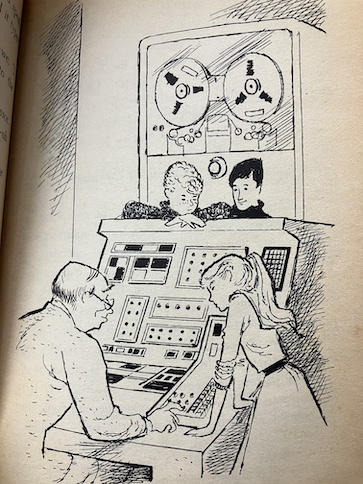
When Danny invites Irene to come to his house for cookies after school, Professor Bullfinch surprises them by telling them that he’s going on a business trip, and while he’s gone, he’s going to let Danny take care of his new computer. The computer is called Miniac, which is short for “miniature automatic computer.” It’s much smaller than most computers of its time. During the 1950s, computers could take up an entire room. The Miniac is about the side of a large sideboard.

Joe asks Professor Bullfinch how the Minaic works, and he explains that they can ask it questions through a microphone. The computer prints out answers with an electric typewriter. Irene asks if they can ask it a question to see how it works, and she asks the Miniac a question from their homework. Joe is amazed at how quickly the computer answers the question, and Professor Bullfinch explain a little more about how computer work, with a memory unit that stores information. He says that facts are stored on magnetic tape. (This was true at the time this book was written, although 21st century computers are constructed differently, in ways that allow them to be made much smaller than 1950s computers. What he says next about the nature of computer intelligence is still true, although I’m going to have some things to say about AI in my reaction section.)

Irene marvels at how the computer seems almost like something from science fiction (for her time) and how amazing it is to have a device that can give you the answers to everything. Professor Bullfinch explains to her that’s not quite true, and that there’s something more amazing: the human mind.

It is only a kind of supertool. Everything in this machine is inside the human head, in the much smaller space of the human brain. Just think of it — all the hundreds of thousands of switches, core memory planes, miles of wire, tubes — all that’s in that big case and in this console — are all huge and awkward compared to the delicate, tiny cells of the human brain which is capable of doing as much as, or more than, the best of these machines. It’s the human brain which can produce a mechanical brain like this one. … The computer can reason … It can do sums and give information and draw logical conclusions, but it can’t create anything. It could give you all the words that rhyme with moon, for instance, but it couldn’t put them together into a poem. … It’s a wonderful, complex tool, but it has no mind. It doesn’t know it exists.”

Danny’s assignment while the professor is away is to feed data to the computer. The professor has laid out the information and code tables that Danny will need, although the professor says that Danny can add some extra information if he comes across something new and interesting in Scientific American or one of the other science magazines he reads. Irene asks if she can help with this task because she finds it interesting, and the professor gives her permission. Before he leaves, he warns Danny not to get too carry away with his enthusiasm. He knows that Danny likes to experiment, and sometimes, he gets carried away when he has an idea, without stopping to think first. The computer is a tool, not a toy, and the professor wants him to treat it as such.

However, a few days after Professor Bullfinch leaves, Irene has a question about their homework that Danny and Joe can’t answer because they also don’t really understand the subject. Then, Danny gets the idea of asking the computer about it. Inspired by how easily the computer answers the question, Danny suggests to the others that they use the professor’s computer as a “homework machine.” After all, it can answer questions and supply them with information, and Danny thinks he could even program it to write short compositions. Irene is a bit dubious about it, but Danny amends his idea to say that the computer would “help” them with their homework.

The book is available to borrow and read for free online through Internet Archive (multiple copies).

One of the interesting things about reading a vintage book like this that focuses on the technology of its time is seeing how things have changed and how people’s perceptions of technology have changed. The kids in this book are amazed by the professor’s computer, which is cutting edge for their time, although 21st century children grow up accustomed to computers in their homes that they are allowed to use. Modern children do use computers as toys, playing computer games, and they are also tools for doing homework.

However, even though things have greatly changed in the decades since this book was written, some of the issues surrounding the ethical use of technology are still concerns in the modern world. This story brings up the issue of how much a reliance on technology to do homework borders on cheating and keeps students from gaining the skills they’re supposed to use. This has become a major issue in modern education in the 2020s, with the rise of AI technology. In the story, Professor Bullfinch says that a computer cannot write poetry, which might get a smirk from modern readers because AI has achieved compositional writing skills. What I’d like to point out, though, is that there are still limits on that. As of this writing, the ideal way to use AI in writing is as a starting point for writing and research but not as a replacement for human writers or the human mind to edit and control the content of the writing. AI also uses human writing as the basis for its compositions, not writing everything from scratch:

“… an AI writing tool will gather information based on what other people have said in response to a similar prompt. The bot will search the internet for information about what you’ve asked it to write, then compile that information into a response. While this used to come back as clunky and robotic, the algorithms and programming for AI writers have become much more advanced and can write human-like responses. … AI writers are, so far, limited in their abilities to create emotional and engaging content. Humans, by nature, are storytellers. We have been since the beginning. Robots, however, are not. They are limited by what they’re programmed to do, and AI bots are programmed to gather information and make an educated guess about what you want to hear.”

(AI Writing: What Is It And How Does It Work?, July 2023)

Computers, even those in the 21st century, which are both smaller and more efficient than the ones from the 1950s, still rely on input from human sources to do anything. AI work is not original, it only builds on what humans have given it to use. In spite of the word “intelligence” in the name “artificial intelligence”, it still “has no mind“, as Professor Bullfinch put it. It’s literally artificially intelligent. It knows nothing independently of human beings, and one of the current problems with AI is that, although it can write convincingly and sound almost human, it not only does so only because it’s basing its writing on human writing that has been supplied to it but also, it has no idea whether or not anything it says is true or not. As the Microsoft article points out, it’s only using predictive technology to guess at what you want to hear and just tell you what you want to hear. It still takes a human being to reason out how much sense AI writing actually makes or whether or not it’s accurate.

One of the current problems with AI in the 2020s is AI hallucinations. Sometimes, AI seems to make things up that aren’t true at all because the way it processes information sometimes produces errors, and by itself, AI has no way of knowing when this has occurred. It has no understanding of the subject its writing about. It’s only attempting to predict and supply what it thinks the human who supplied the prompt wants it to supply.

“AI hallucination is a phenomenon wherein a large language model (LLM)—often a generative AI chatbot or computer vision tool—perceives patterns or objects that are nonexistent or imperceptible to human observers, creating outputs that are nonsensical or altogether inaccurate.

Generally, if a user makes a request of a generative AI tool, they desire an output that appropriately addresses the prompt (that is, a correct answer to a question). However, sometimes AI algorithms produce outputs that are not based on training data, are incorrectly decoded by the transformer or do not follow any identifiable pattern. In other words, it “hallucinates” the response.”

There are currently problems with students relying too much on AI to do both their thinking and writing for them, and even professionals who rely too much on AI tools to get through their work faster sometimes fail to notice when the AI writing says things that don’t make sense or are just blatantly untrue. The AI doesn’t know what’s true or not, it’s just telling you what it thinks you want to hear, based on information given to it, put together, and rearranged in its logic programming. Because it doesn’t actually understand the information fed into it, it has no idea when it gets the story wrong. Computers are faster at processing data than a human, but actual understanding of information is still entirely a human quality. A computer cannot understand anything on behalf of a human mind because it “has no mind” of its own to do the understanding.

There have been cases where professional lawyers who have relied on AI writing instead of doing their writing themselves have been sanctioned when AI hallucinations included information that was not only inaccurate but actually fictitious, citing court cases that never actually existed. The lawyers who received disciplinary action about this did not proofread the writing produced by AI, just trusting it to do all of their writing and thinking for them. Yet, the errors jumped out immediately when actual humans read the writing.

The more complex the writing is, the more the limitations of AI become apparent. AI can sound convincing in a short article (especially if you’re not doing any fact checking to see whether it’s talking about something real or not), but it isn’t always consistent or coherent in longer writing. The drama department of one of the local colleges where I lived put on a performance of a play written entirely by AI as a kind of thought experiment, and the results were hilarious. It was a mystery play, and the script was confusingly written. The AI had trouble keeping track of which characters were currently on stage and which were not, so actors who were not actually present in particular scenes had dialogue. At one point, when the detective was questioning everybody, he even talked to the person who was murdered, and the corpse responded. The play didn’t make sense because the AI doing the writing didn’t really understand the story it was telling. It just told a story in the pattern that was requested of it. It was, technically, a complete play, and if you gave it a cursory glance, it would have looked like a fully written play. It’s just that it had absent people and dead people talking. Perhaps at some point in the future, AI can do its own proofreading and learn to catch these types of problems, but for it to do so with the accuracy of an actual human, it would have to have a human level of understanding about the world and the subject matter it writes about. That is, it would have to have real intelligence, not just artificial intelligence.

This video from Wired on YouTube features AI and machine learning professor Graham Morehead from Gonzaga University, answering common questions about the nature of AI. In the video, he explains some of the differences between how AI “thinks” and how a human brain thinks, which help explain why AI can do some things that a human being would find pretty stupid. AI often thinks in terms of two-dimensional images as opposed to the three-dimensional world we live in as humans, and it doesn’t always understand the consequences of actions because, to AI, everything comes down to simple numbers and data as opposed to a physical world where actions have context and consequences.

Overall, I think this story did a good job of evaluating the differences between the human brain and the electronic brain at a point in history where the technology was relatively new and evolving. It also did a surprisingly good job of anticipating some of the developments and problems associated with the use of artificial intelligence, although the form it takes in this story isn’t quite what we’ve seen in the 21st century, and the kids in this story encounter an issue that modern students attempting to use AI to do their homework aren’t likely to encounter.

At the end of this story (spoilers), Danny and his friends come to realize, to their surprise, that they’ve actually been doing more homework than their classmates in order to make their wonderful homework machine function. They had to teach the machine the subjects they’re studying in order to have it do the assignments because the machine doesn’t innately understand the subject matter. The kids have to supply the knowledge base for the machine learning to function, and that ultimately takes more work and study for them than simply understanding the subjects in their own minds and just doing the assignments themselves. Danny’s mother and his teacher allow the kids to continue using the machine once Danny’s mother explains to the teacher how the process works so the kids can experience how a seeming shortcut can actually take more effort.

This is a little different from the 21st century AI tools, where someone else has already done the basic programming work, and students don’t have to actually understand the subjects themselves to use the AI tools. Of course, if the student doesn’t understand the subject matter of the assignment, there’s less chance that they’ll even notice when the AI produces an AI hallucination and says something that isn’t true or doesn’t make sense. There is an incident in the book where the computer messes up and outputs something that makes no sense, and the kids have to figure out why it did that.

The kids also consider the issue of whether or not using the machine to do their homework is cheating or not. Irene has serious reservations about it at first, and their teacher and some classmates think it gives them an unfair advantage when they find out. Danny, on the other hand, defends it, thinking of the computer as just a time-saving tool, like a typewriter, although the computer is doing more for them than a typewriter does. Danny is only focused on the idea of saving time so he can do things other than homework because he’s confident in his own ability to understand the academic subjects and thinks that practicing his skills or proving his knowledge through homework is a waste of his time.

The only reason why the teacher agrees to let them continue using the computer is that Danny’s mother figures out before he does how much extra work he and his friends are doing to teach the computer how to do their homework. This becomes obvious after the teacher gives them a special assignment, beyond what was covered in class, so Danny and his friends have to work extra hard and spend far more time to understand the material themselves and then teach the computer to understand it well enough to do the work. The first assignments weren’t so hard for Danny and his friends to teach the computer how to complete because the kids are at the top of their class, and they do know the material. However, the more difficult the assignments get, and the less familiar they are with the subject matter, the harder it gets to program the computer to handle the assignments. This exposes the flaws in their system and highlights the need for them to understand the material themselves rather than depend on the computer to do their work for them or even necessarily do it more efficiently. The great use of computers is to do tasks more efficiently, but that depends on the task and whether or not the computer has accurate instructions and an efficient knowledge base to draw on to do it. Building the programming and the knowledge base takes the work of a human mind that knows what it’s doing and is willing to put in the effort to do it correctly and to troubleshoot errors.

In this book, we get a glimpse of school in the 1950s. Something that stood out to me was when the teacher mentions that the class sizes have grown considerably in recent years, meaning that she has less time to work with individual students than she used to. This was a real problem in the 1950s, due to the effects of the Baby Boom. This generation of children was much larger than previous generations, so there were shortages of teachers and class space, and teachers and students did complain that students got less individual attention. (This documentary on YouTube shows some of the overcrowding.)

The focus on science and technology in the Danny Dunn stories is also important to the 1950s because that was the beginning of the era of the Cold War technology race, exemplified by the Space Race. The capitalistic United States and its allies competed against the USSR and its allies for world supremacy following WWII, and one of the ways they did that was by trying to develop superior technology and technological skills. This need to compete in the areas of science and technology led to changes in the US public education system, emphasizing the skills that we would call “STEM” skills today (science, technology, engineering, and mathematics). Echoes of those changes still influence the way we think about education in the 21st century.

This technological and scientific focus also influenced children’s entertainment, as adults tried to encourage children to take an interest in science and technology. The Danny Dunn series is one example of this, showing children who are interested in science and new inventions and portraying them as fun and exciting. Another example was the educational tv show Watch Mr. Wizard, which was being broadcast at the time the Danny Dunn books were written and published. Watch Mr. Wizard featured the title character performing experiments in his laboratory and demonstrating scientific concepts to child visitors. It was very popular, and in the 1950s, there were science clubs for children based around this show. This show also helped inspired new generations of shows with a similar premise, such as Bill Nye, the Science Guy, which was popular when I was a kid.

The Mystery of the Silly Goose

Three Cousins Detective Club

As soon as they arrive home from their trip to the powwow in the previous book, the cousins are approached by Timothy’s neighbor, the snobby 13-year-old Lyddie, with another mystery. While they were out of town, someone went around the neighborhood, stealing lawn ornaments. Lyddie is concerned because her grandmother has come to live with her and her parents, and her lawn geese were stolen. One of the geese was the mother goose with a silly-looking bonnet on her head, and the others were her goslings. Lyddie’s grandmother is rather attached to the geese because they were a present from someone.

The three cousins don’t really like Lyddie because she and her friends are usually unfriendly and too concerned with being “cool” all the time. However, they feel sorry for her grandmother and agree to take the case. To their surprise, most of the lawn ornaments are actually pretty easy to find. They were hidden in some obvious places around the neighborhood. The only ones that are difficult to find are the geese. Who hid the lawn ornaments and why?

The theme of this story is Proverbs 24:3-4, “It takes wisdom to have a good family. It takes understanding to make it strong. It takes knowledge to fill a home with rare and beautiful treasures.”

The book is available to borrow and read for free online through Internet Archive (multiple copies).

Part of the mystery has to do with image, but it also has to do with sentimental attachment. Lyddie is very obsessed with image because she and her friends try so hard to maintain their cool image. Although she calls in the cousins to find the missing lawn ornaments, she only does it because her grandmother takes the loss of the mother goose so hard. Lyddie doesn’t see why the goose is so important, although she knows that her grandmother is attached to it because it was a present from someone.

The situation changes when Lyddie’s grandmother reveals the full story behind the lawn geese and her own understanding of the situation. Lyddie cares for her grandmother, and she comes to see the geese in a new light once she understands why they matter to her grandmother. It’s not the value of the geese, and it’s not about how the geese look. It’s all about the person her grandmother associates with them. Fortunately, Lyddie’s grandmother is a very understanding woman, and when the lawn ornament thief explains the issue, they work things out to everyone’s satisfaction.

The Girl in the Castle Inside the Museum

In this story, there is a little girl who lives in a castle in a museum, inside a big, glass globe.

Children love to come to the museum and look at her in her castle. The girl also likes it when the children come to see her.

Although the girl in the castle has other creatures to play with and things she likes to do, like making music, she sometimes gets lonely when the museum closes, and all the children go home.

When the girl in the castle dreams, she dreams of the children who come to visit her at the museum, imagining their journeys to come see her.

When the children are visiting or when she’s dreaming about them, the girl isn’t lonely, but when she wakes up from a dream and there aren’t any children, she gets lonely again.

However, the girl gets an idea. If you, the reader, want to be her friend, you can give her your picture. When she looks at your picture, she won’t be lonely anymore!

I love the surreal, fantasy pictures in this book! We don’t know exactly what the girl is or why this tiny girl lives in a miniature castle in a museum. The book says that people claim “she’s lived there forever.” She is alive and has feelings, but she seems to be surrounded by fantasy creatures as companions in her castle rather than other people. She doesn’t seem to have parents or family. My theory is that she is a magical, living toy because the museum seems to be filled with other toys, the fantasy creatures in her castle seem to be toys with little wind-up keys in their backs, and the castle itself incorporates little toys and odd-and-ends, like buttons and marbles. However, the girl’s backstory is left up to the imagination of the readers.

This book breaks the fourth wall of the book, with the girl inviting readers to put their own pictures into the book and saying that the girl can see them through the book when they read it. Readers looking at the book keep the tiny girl company when she doesn’t have visitors to her museum. It’s not the first book that I’ve seen that uses the concept of readers keeping a book character company through their books. There is a book from the 1930s called The Tale of Corally Crothers, where a lonely girl with no brothers and sisters goes in search of a friend and finds you, the reader. (I haven’t found a copy of it myself, but you can see some pictures of this book on this site.) Books that involve the reader and invite the reader into their world are charming, and I found the fantasy elements of this particular book delightful!

Emma in Winter

This is the second book in the Aviary Hall Trilogy. Each of the books in the series could be read independently of each other, but this book in particular makes more sense if you have read both the first book, which is The Summer Birds, and the third book, Charlotte Sometimes before reading this one. People in this book directly reference events in The Summer Birds, something with Charlotte Sometimes does not. Although Charlotte Sometimes was written and published after this book, it actually takes place during the autumn before this story and it does inadvertently contain a spoiler for Charlotte Sometimes because Charlotte appears at the beginning of the book. It’s just my own preference that it’s better to read this book after Charlotte Sometimes because it makes Charlotte Sometimes more suspenseful. Like Charlotte Sometimes, this book also involves time travel, and the characters do some research on the subject of time and how it works.

At the beginning of the story, Emma Makepeace is upset because her older sister, Charlotte, will be leaving early for the new term at her boarding school after Christmas. At this point, Charlotte has already had her first term at boarding school (which is where and when Charlotte Sometimes takes place, although there are no references to the events of that story here), and she has been invited to visit one of her new friends from boarding school before they return to the school together. All through Charlotte’s first term at boarding school, Emma has been lonely without her and has been finding life at their home, Aviary Hall, increasingly difficult. 

The girls are orphans (although the books never explain what happened to their parents) who live with their grandfather and his housekeeper. Between the two of them, Charlotte is the more serious and responsible and Emma is the more mischievous and thoughtless. Up to this point in their lives, Charlotte has acted the part of the caring older sister, trying to teach Emma to behave herself and covering for her when she doesn’t. Charlotte has realized that their grandfather has little patience for misbehaving children and that Emma pushes the limits, so she has frequently intervened and smoothed things over when Emma tries his patience. 

Emma has often thought of Charlotte as a kind of spoilsport for trying to act grown-up and mature, but during Charlotte’s absence at boarding school during the previous term, Emma has suddenly come to see how much Charlotte has been helping her and saving her from the consequences of her own actions and the realities of their home life. Without Charlotte there to be the motherly big sister, providing some warmth and affection and acting as a buffer between Emma and the adults, the grandfather has become more impatient with Emma’s immaturity. Both he and the housekeeper have been more direct with Emma about her behavior and bad habits, and there’s no one there to shield Emma from it. Emma is lonely for Charlotte’s company and feels picked on by the adults, so when Charlotte cuts her time with Emma short after her first visit home to go visit one of her school friends, Emma is angry and resentful. Charlotte is tempted to back out of her friend’s invitation for Emma’s sake, but she feels like she can’t, and their grandfather tells her that she must go ahead with the visit.

Emma is in a state of emotional turmoil through most of the story, adjusting to Charlotte’s absence, the new expectations of the adults in her life for her to mature and improve her behavior, and her own resentment about these things. While all this is happening, something else strange happens. Emma begins having strange dreams about flying. They remind her of the children’s flying adventures from two years previously, as described in The Summer Birds. It has been so long since she last flew that she struggles to remember how in her dreams, and when she wakes up, her muscles feel sore from the effort. However, at first, she can’t remember what happened in her dreams.

At school, when the new term begins, Emma is made head girl because she is the eldest girl in the class. A boy called Bobby Fumpkins is made head boy because he is the eldest boy. Emma is embarrassed and uncomfortable about being the head of the class in partnership with Bobby. She hates Bobby because he is fat, awkward, and spoiled. Before his mother gave birth to Bobby’s younger sister, who is still a baby, she babied Bobby more than she really should have at this age. Their family also has their own tv set, something most of the other children’s families don’t have at this time, and which Bobby bragged about when they got it. For these reasons, most of the other children in the class don’t like Bobby, either, and they’ve teased him mercilessly for years. They think he’s a sissy and a baby because of his mother’s attention and because he’s milder-mannered than they are and never stands up to them. Because of his awkwardness, they like to call him Jemima Puddle-Duck after a character from a children’s book by Beatrix Potter. Bobby tells himself that his classmates mean all this teasing good-naturedly, but they don’t really. Emma is particularly adamant within herself that she genuinely hates Bobby.

However, like it or not, Emma’s life has become intertwined with Bobby’s. Their teacher expects the two of them to work together at school during the day, and at night, she gradually begins to realize that he is sharing in her same dream of flying. Other children at school tease Emma about being friends with Bobby, particularly one girl who really wants to cause trouble for Emma because, as the next eldest, she would be next in line for the head girl position herself. Emma denies being Bobby’s friend, partly because he still gets on her nerves and partly because she’s still lonely without Charlotte and is worried by being shunned by the other children at school. However, she gradually begins to feel guilty about the way she and others have been treating Bobby, and she begins to feel the impulse to try to be nicer to him. 

As her relationship with Bobby improves, Emma begins remembering more of their shared dream, and the two of them talk about the dream together. Bobby was one of the children at school who shared in their flying adventures two years before, and the two of them discuss their past adventures with each other and how they compare to the dream they’re now having. There are a few things that they begin to notice that are different from their past flying adventures. One is that they both have the feeling that someone is watching them. It seems to be a stern or hostile presence, a pair of eyes that belong to some unknown person, but they don’t know who it is. They also begin to notice that it looks like plants are growing backward as they fly over the countryside. That is, grown plants seem to be returning to small plants and seeds. They gradually notice that the land seems to be going back in time. Eventually, they start seeing dinosaurs in their dreams, and it looks like they might be going back to the beginning of the world. What will happen to Emma and Bobby in their dream when they eventually reach the beginning of everything?

The book is available to borrow and read for free online through Internet Archive.

I’ve already explained my reasoning about the reading order of the books. The Summer Birds is the first book in the trilogy, and you really have to read it before you read this book because the characters directly reference events from that story. Actually, I thought that was a really interesting choice, to have Emma and Bobby talking openly with each other about the summer when they learned to fly. They just accept that event as a common event in their lives that they shared and that everyone who shared it with them openly acknowledges. Sometimes, in children’s fantasy stories, the characters later downplay magical events, feeling like they were dreams they had or games of pretend they played because they seem too strange to have really happened, but no, in this book, the characters all know what happened to them and just accept it as a part of their lives. I thought it was interesting that this book acts as a bridge between the theme of flying and the themed of time travel in Charlotte Sometimes, although I still think that Charlotte Sometimes keeps more of its suspense if you don’t know that Charlotte safely returns to her own time before you read it. 

I still think that Charlotte Sometimes is the best book in the trilogy. It is the best known, and unlike this book, it can be read independently of the others in the trilogy. It doesn’t reference either of the other two books at all. There are no references to Charlotte having participated in any previous magical adventures in that story. That may be partly because she is among strangers at her new boarding school who wouldn’t know anything about her flying adventures, but even her private thoughts don’t give any hint to that. What I think that The Summer Birds and Emma in Winter add to Charlotte Sometimes are some further insights into Charlotte and Emma’s personalities and the relationship between them. I still think that Charlotte Sometimes is the best book in the trilogy. It is the best known, and unlike this book, it can be read independently of the others in the trilogy. It doesn’t reference either of the other two books at all. There are no references to Charlotte having participated in any previous magical adventures in that story. That may be partly because she is among strangers at her new boarding school who wouldn’t know anything about her flying adventures, but even her private thoughts don’t give any hint to that earlier adventure. What I think that The Summer Birds and Emma in Winter add to Charlotte Sometimes are some further insights into Charlotte and Emma’s personalities and the relationship between them. Emma in Winter also adds some thoughts about the nature of time and time travel, which add some further insights into Charlotte’s time travel experiences.

Emma and Bobby do some research about time in her grandfather’s study, a room where Emma is usually forbidden to go. One of the theories they find is that time moves in a coiled pattern, like a spring, and that the coils of the spring can be pushed together so different points on the coils can touch each other. This theory really relates better to Charlotte Sometimes than to Emma in Winter, but what is more relevant to this story is the idea that human thought can be the force that pushes the coils together and makes them touch. This is also a part of Charlotte Sometimes, and I explain in my review of that story about how Charlotte and Clare having many similarities and being in a similar state of mind as well as sharing the same physical space at different times allowed them to switch places with each other. However, the emphasis in Emma in Winter is Emma and Bobby realizing that their own thoughts and feelings influence their dreams and, therefore, their time travel.

This story is rather metaphysical and a little difficult to follow during the dream phases. I noticed that some other reviewers seemed confused about the point of the time traveling. I found it a little confusing, too, but it seems like this is a coming-of-age story, like the other books in the trilogy. The Summer Birds focused on Charlotte and how her more mature outlook helped the other children make an important decision that would alter their lives forever. Charlotte Sometimes raises the question about what defines a person’s identity and how a person’s identity can be tied to someone else’s even when they’re separate people. Emma in Winter focuses on emotional understanding.

Both Emma and Bobby are going through major changes in their lives, particularly ones that require them to become more mature than they once were. Bobby has been somewhat spoiled and coddled by his mother, but he’s no longer the center of attention at home, now that he has a little sister. At first, Bobby finds it hard to cope with his mother no longer giving him the attention she used to give him, but it does give him the opportunity to become more independent and mature. Emma despises Bobby for being babyish because he was spoiled and overprotected by his mother when he was younger, but the truth is that Emma is also babyish. She’s not accustomed to being accountable for her own behavior and bad habits because Charlotte usually takes responsibility for her and shields her from some of the reactions of the adults and other people. 

When Charlotte goes away to boarding school, Emma is left on her own for the first time to deal with the consequences of her actions and other people’s reactions to them. It’s a bit of a shock for her at first, and she realizes that she hasn’t fully appreciated what Charlotte was doing for her for the whole time. She also comes to the disquieting realization that, even thought she feels like the adults are picking on her over her behavior, she doesn’t like the way she behaves, either. She comes to feel guilty about the way she treats Bobby, and when she draws some nasty pictures of her teacher, she is startled to realize how much she has hurt her teacher’s feelings and how badly she feels about doing that. For the first time in her life, Emma has to face her own behavior and see how her behavior truly affects other people. She is shocked and troubled when she realizes that she doesn’t like what she sees and it’s her own fault. Only Emma can decide how nice or how mean she is and who she really wants to be.

The children’s time traveling adventures that they have while dreaming lead them to explore their relationship with each other. Emma realizes that she has to be nice to Bobby and learn to get along with him for them to be able to function with each other in the dream. Their final dream together is confusing and rather surreal, but it also involves the two of them confronting aspects of themselves, their lives with other people, and their own behavior. 

When they move all the way back in time as far as they can go, they’re confronted by a vision of their teacher, not as she actually is, but as Emma drew her in a mean drawing. Emma has to remind herself and tell the figure that it’s only a drawing she made; it’s not reality. They also see visions of other people in their lives and even of themselves at their worst and most frightening, but they have to hold on to the reality of themselves, as they are now, the people they’re becoming, not who they used to be or how other people see them. I took it to mean that neither of them can go backward in their lives anymore, to their old habits and who they were or how they were as younger children, but they have to accept the changes taking place in their lives and in themselves to return to the real world, their own time, and the lives they have ahead of them. They discover that the key to traveling through time is thinking, so they have to think themselves out of their time travel dreams, focusing on their real selves and the real lives, accepting and even loving themselves as they are. Change has been coming for both of them, but they have to make the decision to face it and embrace it and to let go of their past selves to move on in time and in their lives.

The UFO Mystery

This book is part of the Sherlock Street Detectives series.

Halloween is approaching, and the Sherlock Street Detectives are talking about their costumes. David is going to be a bear, and he made his costume out of an old rug. Pedro is going to be a clown. Walter and Ann, who are twins, refuse to tell anyone what their costumes are because they want it to be a surprise.

Then, David says that he has to go home because it’s dinnertime, and after dinner, he’s going to look for a comet with his telescope. Pedro says that he’s never used a telescope before and asks if he can look, too. David says he can, and Pedro says that he will come back to his house when it’s dark.

When David and Pedro meet to use the telescope, David shows Pedro how to use a star map to find the constellations. While Pedro is looking through the telescope, he thinks that he sees a UFO! At first, David doesn’t believe him. It’s too early to see the comet, so he thinks maybe Pedro saw a meteor. Pedro insists that it was a UFO, and David points out that UFO stands for Unidentified Flying Object. That means that anything that “unidentified” can be a UFO. Pedro can’t identify exactly what it was he saw, but that only means that he didn’t recognize the object. It doesn’t have to be an alien spacecraft, just some normal thing he didn’t recognize, like a meteor, a comet, or even just a firefly.

Since David’s dad works for NASA, Pedro says that they should ask him if it could have been a comet other than the one they were expecting to see. However, David’s dad confirms that there should only have been one comet that night and that the comet should have been in a different part of the sky. The boys talk about getting Walter and Ann to help them investigate, but then, they see some strange creatures in the bushes!

What did Pedro really see through the telescope, and could those weird creatures really be aliens?

The book is available to borrow and read for free online through Internet Archive.

This is fun mystery picture book! Figuring out what/who the aliens are is the easiest part of the mystery, since this is before Halloween and the twins were being mysterious about what their costumes are, although it might seem harder to young children. The answer to what Pedro thought he saw through the telescope is revealed first, although I wasn’t entirely sure what to think of it myself. At first, I thought that the “aliens” might have been throwing around some glowing toy or something, but they would have to have thrown it really high to get it in front of the telescope because the boys were using the telescope on the roof. There’s a perfectly logical explanation behind the phenomenon, and David figures it out by noting where the object was and it was moving. David’s father confirms David’s guess with a call to NASA.

One of the nice things about this simple mystery story is that it introduces some real concepts for stargazers and amateur astronomers. There is a vocabulary list and glossary in the back of the book.

This series also offers good representations for racial diversity. Racial issues don’t enter into the story. The kids are just a bunch of kids who happen to live in the same neighborhood and are friends and like to solve mysteries, but they are a mixed racial group, and that’s nice to see. David is black, Pedro is Hispanic, and the twins are white. The children’s races are not referred to in the text of the story, but they are shown in the pictures.

Spooky Sleepover

A couple of weeks before Halloween, Ernie decides to have a sleepover party for her friends. The kids enjoy scaring each other with ghost stories, and a thunderstorm adds to the spooky atmosphere.

Michael, in particular, keeps insisting that an old witch called Mrs. Maloney used to live in Ernie’s house with a bunch of cats. When spooky things happen during the course of the evening, Michael says that Mrs. Maloney and her cats have returned to haunt Ernie’s house. The kids try to stay up until midnight because ghosts are supposed to appear at midnight, but there’s no telling what they might actually see.

The kids fall asleep, but they wake up around midnight when they hear a crashing sound from the basement. Although they are afraid, they take their flashlights and go down to see what it is. Will they find a ghost?

The book is available to borrow and read for free online through Internet Archive.

This is one of those stories that has a pretty simple explanation, but the adventure seems bigger to the kids because their imaginations run away with them. I remember liking this series when I was a kid, and I think this is one of the books I read back then. I liked the creepy-cozy atmosphere of the story. Even though the kids have been scaring each other with ghost stories, they’re still just at a sleepover in an ordinary, safe house, and there’s nothing there that is harmful. It’s that kind of safe scariness that Halloween represents to young kids. They can enjoy the spookiness, knowing that there’s a logical explanation for everything. Adults and older kids will figure out pretty quickly what’s really going on.

The Mystery of the Green Ghost

The Three Investigators

Bob and Pete are looking at an old, abandoned house that’s in the process of being torn down when they hear an unearthly scream from the house! There are stories that the old house is haunted, and the boys run away, only to be stopped by a group of local men, who ask them what’s going on. When the boys explain, the men talk about calling the police or going inside the house to investigate. The men decide to just go in and have a look around themselves, in case someone’s hurt and needs help right away. They tell the boys that they can leave because they will handle the situation, but the boys decide that they can’t leave without having a look themselves.

As they take a look around inside, they see the remains of the ornate wall paper and impressive features of the once-rich house, and the men talk about Mathias Green, who used to live in the house. At first, the searchers can’t find anything, but then, they spot a greenish figure on the stairs. Thinking that there’s some prankster in the house, the searchers go upstairs to confront the person, but they can’t find whoever it was. The boys suggest that they have a look at the dust on the floor and try to follow the person’s footprints, but the only footprints the searchers can find are their own. Could they have seen a ghost?

The searchers do notify the police about what they’ve seen in the house, but the police don’t take it too seriously … at first. However, they soon begin receiving other reports from various people around the city who claim to have seen a greenish, ghostly figure. Even then, the police might not have take the reports too seriously, except that a couple of officers on patrol witness a greenish, ghostly figure in the cemetery … at the burial site of Mathias Green, who died falling down the stairs in his house, 50 years before.

While Bob and Pete were at the house, Bob had his tape recorder with him, and he plays the recording of the scream they heard for their friend and fellow investigator, Jupiter. Jupiter is willing to believe it could be the scream of Mathias Green’s ghost, and the boys review the information they know about Mathias Green. Mathias Green was once the skipper of the ship, and he sailed to China. For reasons that nobody fully understands, he had to leave China suddenly, and the rumors were that Mathias’s wife was a Chinese princess and that Chinese nobles had a grudge against Mathias. Mathias brought his wife back to the United States with him, and they built their house in Rocky Beach after Mathias had a fight with his sister-in-law, and they moved away from San Francisco. They had some Chinese servants, but when Mathias was later found dead, apparently from an accidental fall down the stairs, the servants and his wife disappeared. People assumed that they left for fear that they would be blamed for Mathias’s death, and Mathias’s sister-in-law inherited the house. Recently, Mathias’s niece decided to sell the house to a developer, who is planning to tear it down and build more modern houses.

Local newspapers have picked up the stories about the green ghost and its apparent connection to the old Green mansion, and some of them have implied that the ghost is looking for a new place to haunt now that its house is being torn down. The Three Investigators have access to more information than most people because Bob’s father is one of the reporters covering the ghost incidents. The police chief tells them, off the record, that he witnessed the ghost himself, in the cemetery, and it looked like it disappeared by sinking down into Mathias’s grave. Then, the police chief learns that the workmen tearing down the house have discovered a hidden room. Bob’s father and the boys are allowed to come with him to see what the room contains.

The discovery is a shock. The hidden room contains an ornate coffin, holding the skeleton of Mathias’s Chinese bride, dressed in elaborate robes and with an unusual necklace of gray pearls, called ghost pearls. The story is that the reason why Mathias and his bride had to suddenly flee China was that Mathias reportedly stole the pearl necklace to give to his bride. When she died in Rocky Beach, he couldn’t bear to be parted from her, so he “buried” her secretly in his house, along with the necklace.

The discovery of Mathias’s wife’s hidden burial chamber doesn’t lay the ghost to rest, though. Bob and Pete get a phone call from Mathias’s niece, Lydia, asking them to visit her at the vineyard where she lives, to talk about what they witnessed at the house. She says that the ghost has actually appeared at her vineyard! Jupiter is not invited to the vineyard because he didn’t witness the appearance of the ghost with the others, but he couldn’t go anyway because he’s temporarily in charge of his uncle’s salvage yard while his uncle is out of town. He tells Bob and Pete to go ahead and meet with Lydia and let him know what they learn.

At the vineyard, Bob and Pete meet Lydia’s distant cousin, Harold, and Lydia’s great-nephew, Charles, who is actually the great-grandson of Mathias Green and the real heir to Mathias’s estate. Charles, who is called Chang, grew up in China, and they explain that he is descended from Mathias’s first wife, who died of an illness in China. After the death of his first wife, Mathias put his young son into an American missionary school in China and left him there as a boarding student. When he married his second wife and had to flee China, he left his son behind. His descendants remained in China since then, until it became unsafe for Americans or people of American descent in China. Then, Charles, who is an orphan and part Chinese (hence his nickname of Chang), was sent to live with Lydia in the United States. Until that point, he knew very little about his ancestors and his relatives in America. Technically, Mathias’s estate should have come to Chang’s side of the family when Mathias died, but they were living in China at that time and were not in touch with the rest of the family. Lydia says that Chang should even technically own the vineyard that she and Harold have built with the family’s money, but Chang doesn’t want to take it from them, so Lydia says that she is leaving it to Chang in her will. Chang is satisfied with this arrangement, but the family has debts, and if they don’t resolve them, they might lose the vineyard entirely.

Lydia believes that the green ghost is Mathias’s ghost, and he is haunting them because he’s angry with her for selling his old house to be torn down. The ghost has been scaring away workers at the vineyard, and if they can’t get the harvest processed, they won’t be able to keep the vineyard. However, Chang doesn’t believe that his great-grandfather would want to hurt his own family. Chang might be willing to believe that the ghost is an evil spirit, masquerading as his great-grandfather. That’s not the only possibility, though. There could be a human being with a motive for wanting to ruin the vineyard. Then again, there is the question of who really owns the ghost pearl necklace. If Mathias’s family owns the necklace, they could sell it to cover their debts, but it might really belong to the family of Mathias’s Chinese wife. Her family is more difficult to trace, but one person has stepped forward, claiming to be her heir. Then, someone attacks Harold and steals the necklace from him. Was the necklace always the ghost’s target, from the beginning? Meanwhile, back in Rocky Beach, Jupiter has a revelation. There was a dog present when Bob and Pete were searching the Green mansion with the men, and the dog … didn’t do anything. That might be the most important clue of all!

The book is available to borrow and read for free online through Internet Archive (multiple copies, including some in other languages).

I enjoyed the mystery and the reference to Sherlock Holmes about the dog that did nothing in the nighttime. In this story, Jupiter takes the dog’s non-reaction as a sign that there was no supernatural presence in the house because animals are supposed to react to the presence of ghosts. There is definitely a human behind all the spooky happenings, and I was partly right about who it was. However, the author threw in a complication by inserting another mysterious villain who kind of usurped the original plotter’s plot for his own purposes and partly distracts the characters from the original villain for part of the story.

This added villain is a mysterious old man from China who claims that he’s 107 years old and that he wants the pearls because drinking dissolved ghost pearls is the key to immortality. This mysterious old man is wealthy, and he has bought up the family’s debts, meaning that he will get control of the vineyard, if they can’t pay their debts. However, he’s not really interested in the vineyard for its own sake. He just wants those pearls. Although he does some criminal things in the story, nothing much seems to happen to him at the end, and he works out a deal with Lydia, so she can keep the vineyard. It’s left open whether or not he truly ended up with the pearls or whether the pearls actually have properties for preserving someone’s life, but it seems that he truly believes it, and he has no other motivations for his part in the story.

This almost Fu Manchu style character, who uses hypnosis to control people, adds an element of exoticism to the story that I thought wasn’t really necessary. I liked the ghost mystery well enough with its original villain and without him, and I felt like the introduction of the extra villain sent the plot a little off the rails, but he does allow the story to end on a somewhat creepy and ambiguous note. We don’t entirely know who he is, and we never really find out what happens to him. We don’t know if he’s really as old as he says he is or if he continues much further in his quest to live forever. He just disappears after getting what he can of the pearls, presumably to go hunting for more elsewhere.

As far as I’ve been able to determine, the ghost pearls aren’t real, and the legend about them prolonging people’s lives isn’t real. However, there are legends and superstitions from around the world about pearls being associated with wisdom and longevity and having healing powers. Pearls can be dissolved in an acidic liquid and drunk by a human, as in the famous story about Cleopatra drinking a pearl in vinegar, which was supposed to be an aphrodisiac.

Getting back to the mystery, though, I did like the Scooby-Doo-like mystery, and I was satisfied by the original plot, and the villain’s methods and motives. I was looking at that character with suspicion for a number of reasons. Perhaps, if the part about the pearl necklace, the ancient man who drinks pearls, and Mathias’s bizarre room with his dead wife weren’t in the story, the solution would be too obvious, but overall, I enjoyed it. I also appreciated how Jupiter worked out some of the details of the first haunting by visiting the house and studying the scene while his friends were at the vineyard. He comes to some conclusions about how that first haunting occurred that Bob and Pete didn’t think about, and his solution also provides a reasonable answer to the question of why that group of men happened to show up outside the house on the evening the haunting happened, to witness it.