Fourteen-year-old twins Ryan and Chris Taylor are on a ski trip in Colorado with their parents, their eight-year old sister Lucy, and their friend, Billy Maguire. Although Billy is a friend of both of the twins, he’s really closer to Chris because the two of them are interested in sports. Ryan is more of an intellectual than either of them, and they tease him about not being as good at sports as they are. When the three of them get together, Ryan often feels left out, although he argues with them that he can do decently well at physical activities; he just cares more about other things.
The ski resort where they will be staying is called Moosehead Lodge. It used to be a very exclusive resort, but it’s fallen on hard times in recent years. The reason why they’re going there is that the current owner is an old friend of Mr. Taylor’s from college, and he’s asked Mr. Taylor to write a travel article about the lodge for a magazine to attract new customers.
It turns out that Dede and Wendy, two girls who attend the same school as the boys, will also be staying there over winter break. The twins have crushes on the girls, but they’re also at the age where they still think girls are weird or likely to spoil their fun, so they have mixed feelings about the girls joining them on the ski trip. The boys consider trying to avoid the girls for the entire trip and make them wonder what happened to them, but Ryan thinks that sounds like something a little kid would do. Billy says that, if the twins are going to hang around with girls, he wants a girl for himself, too.
When they arrive at the lodge, the girls greet them right away, so the hiding scheme definitely won’t work. The girls are enthusiastic that there will be a lot of fun things for them all to do. The lodge includes several stores for the guests to shop in, which the girls and Mr. and Mrs. Taylor find intriguing. However, the boys think that the lodge looks haunted. With all the old-fashioned furniture and paintings, it reminds them of something from a movie.
At their first ski lesson, Chris brags that he doesn’t really even need lessons because he’s such an athlete. However, skiing doesn’t come as naturally to him as soccer does. In spite of his bragging, he is clumsy at his first attempts. He apologizes to the instructor, saying that he’s just eager to get going because he knows that they’ll only be staying there a short time. The instructor says that he understands but that the instructions he’s giving them are important for keeping them safe while they have fun.
When the boys return to the lodge, Mrs. Taylor is very upset because a pearl necklace that’s a family heirloom is missing! When Mr. Taylor and the boys go to the manager to report the loss of the necklace, they find out that other pieces of jewelry have been stolen from other guests. The manager has hesitated to contact the police about it because he’s been hoping that the jewelry was merely misplaced and would turn up. The lodge is suffering financially, and if they have a bad season, they might have to close down. Mr. Taylor likes the lodge and wants to help his old friend, but the thefts have to be cleared up for the lodge to continue functioning. The twins decide that they’re going to be the ones to find their mother’s necklace, bring the thief to justice, and save the ski lodge!
The book is available to borrow and read for free online through Internet Archive.
My Reaction
I liked this book better than the last book I read in the series. It’s more of a mystery than the last one, although there’s still plenty of excitement and adventure. Unlike the other book I read, where the boys know right away who the villains are, in this story, the boys have no idea who the thief is for much of the book. They have to investigate different suspects, and their first suspects turn out to be completely wrong. The boys undertake a deliberate investigation into their suspects, moving from person to person. There are enough potential suspects with apparent odd behavior to keep readers guessing along with the amateur detectives. A skiing accident and a blizzard and avalanche add excitement and adventure to the story.
When the girls argue with the boys about one of their subjects, the boys say that girls would be more likely to fall in love with a jewel thief than to either be a jewel thief or catch one themselves. The kids turn their investigation into a contest, boys against girls, to see which of them can solve the mystery first. The competition between boys and girls gets carried over to the adults, and it even influenced some of my theories about the identity of the jewel thief. Part of what I suspected turned out to be true, but saying what it was would be a spoiler.
The boys do solve the mystery before the girls, although the solution does disprove some of what the boys said earlier. Considering some of what they said, I would have liked to see more acknowledgement about that, but the book ends a little abruptly after the final solution is revealed. Overall, I liked the story, but I could see some room for improvement in the ending. Although I understand that part of the premise of this series is that the twins can sense each other’s thoughts, that doesn’t really enter into the story, either, which was also a disappointment.
The Secret of Grey Walls by Malcolm Saville, 1947.
It’s shortly after Christmas, and Petronella (called “Peter” by her friends) is home from boarding school for the holidays. She has a strange dream about running through the woods with an unfamiliar girl and finding a house with gray walls, but she’s not sure where it is or what the dream means. She wakes up when there’s a fire in her dream.
Petronella and her father live by themselves in the countryside because her mother died when she was a baby. Her father misses her when she goes away to school, but he knows that it’s important for her to go, and although he would like to spend all of their holidays together, he also knows that it’s important for her to spend time with her friends.
When Petronella goes to visit her friends, the Mortons, Mr. and Mrs. Morton and their housekeeper, Agnes all receive news that changes the children’s plans for the remainder of their vacation. (This is after Mr. Morton is home from the war after serving in the RAF.) Mr. and Mrs. Morton have to go to London to see a lawyer about some business, although they’re vague about the reasons why. Agnes’s news is that her sister is sick and in the hospital. With all of the adults leaving the Mortons’ house at Witchend, Mr. and Mrs. Morton wonder who they can have looking after David and the twins until they return. They consider different people they can ask, but Agnes says that all of the children can come to the village of Clun with her. Her sister has a very big house, and she’s been worried about not having anyone to look after the house while she’s in the hospital. There will be plenty of room for all of them, and Agnes says that she would appreciate the company in that big, old place. The children can even invite the other members of the Lone Pine Club to join them.
At this point in the series, not all members of the Lone Pine Club have actually met each other. David invited Jon and Penny, a pair of cousins, to join the club while visiting the hotel that Jon’s mother, who is Penny’s aunt, owns in another town. This trip will be an opportunity for the whole club to get together and get to know each other. Jon and Penny are very excited about the trip, especially Penny, who is a talkative girl who enjoys meeting new people.
On the train to meet the others, Penny strikes up a conversation with a man named Alan Denton, who brought a dog onto the train. Denton recently left the Navy and is heading home to manage his family’s sheep farm near Clun. He is very surprised when Penny says that they are also going to Clun because it’s a very small town, and few people visit there during the winter. The old house where they will be staying is usually run as a boarding house for summer visitors, but there won’t be anyone else there during the winter. The old house is called Keep View because it has a view of a crumbling old castle. There isn’t much else left of the castle other than the old keep. The children are fascinated as Denton describes the castle and other points of interest in the area, like a circle of standing stones. He says that visitors sometimes dig for old flint arrowheads.
The other kids are going to Clun by bicycle, except for Peter, who is riding her pony, Sally. Along the way, the kids meet up with a caravan of gypsies they know from a previous book. (Yes, this is a mid-20th century British children’s mystery adventure story, so of course, there are gypsies. The book spells it “gipsies,” and they also call themselves “Romany.” In the case of this series, the Romany are friends of the kids, not suspicious characters, as in many other children’s books from around this time.) The kids tell the Romany where they are heading, and they say that they’ve just left Clun. Ordinarily, they like the area, but there’s been some trouble there lately. Someone is stealing sheep from some of the sheep farms. The Romany know that people are often suspicious of Romany, so they thought that they’d better leave the area before someone accuses them of being involved with the thefts. Before the kids leave the Romany, the Romany remind them about the special whistle that they gave to Peter, saying that if she blows it, any Romany who hears it will come to help.
Peter, meanwhile, has a disturbing encounter on her trip to meet the others. She meets some men whose truck has broken down. The men behave oddly, and although the truck says that it’s a furniture truck, Peter is sure that she hears the baaing of sheep inside.
The kids don’t start to put together pieces of what’s going on until they reunite in Clun. While they are getting to know each other and exploring the area, they suddenly meet up with Alan Denton, who is distraught because his sheep farm has been the latest victim of the sheep thefts. Peter mentions to the others about the strange truck with the sheep sounds, although Denton dismisses the idea that Peter might have encountered the sheep thieves on her way to Clun because he doesn’t think that the thieves would have been able to load all the sheep onto a truck without being noticed.
Meanwhile, a strange man called Mr. Cantor rents a room at Keep View from Agnes. The boarding house doesn’t usually get boarders in the winter, and the children had counted on having the house to themselves during their stay. Mr. Cantor says that he’s recovering from an illness and needs some peace and quiet, which is disappointing to the children because that means that they’ll either have to spend most of their time outside or being very careful not to disturb Mr. Cantor. Although the children like being outdoors, it is cold, and they know they can’t be outdoors all the time, and a houseful of children isn’t usually quiet. Mr. Cantor seems a little strange, and some of the kids get the feeling that he isn’t quite what he seems to be, but he knows a great deal about the history and landmarks of the area. He entertains the children with stories about local history and ancient burials, and they begin feeling better about him.
However, something happens that causes them to becomes suspicious of Mr. Cantor. After a visit to Mr. Denton’s sheep farm, the children get lost. They find a strange grey house and try to ask directions there. Nobody answers their knocks or calls even though the children are sure that someone is watching them from inside the house. Then, they realize that someone is also watching them from the woods. They briefly see this person leaving, and this person has a bicycle that rattles badly. When the children get back to Keep View, they realize that the bicycle they heard belongs to Mr. Cantor because it makes that same distinctive rattle. Was Mr. Cantor spying on them? Who was in the house, and why didn’t they want anyone to see them. Does any of this have something to do with the sheep thefts?
The book is available to borrow and read for free online through Internet Archive.
My Reaction
I’m new to this series of mid-20th century British mystery adventure books. This is the first book I’ve read, so I’m really getting to know them as some of them are getting to know each other. I was a little disappointed that this particular book seems to be set after WWII is over because I knew that the series started during the war and that the war was part of the story, but that does put this book contemporary to the time when it was written.
This story and the series in general does have a similar feel to other British children’s mystery adventure stories and series written around the same time, especially the Enid Blyton books, such as Enid Blyton’s Adventure Series and The Famous Five Series. Like the characters in the Enid Blyton books, the members of this friendship club attend boarding schools and have outdoorsy adventures on school holidays. The Romany appearing in this book is also a common element found in Enid Blyton books and other children’s books written around the same time. In all such books, there are stereotypical elements surrounding the Romany characters, although I think the Romany in this book were treated more kindly than the ones in Enid Blyton books. The use of the word “Romany” as well as “gipsy” is one element of understanding, but also the Romany characters in this book are friendly and helpful characters, not suspicious ones. There are people who are suspicious that the Romany are involved in the sheep thefts, but our heroes know that isn’t the case, defend them publicly, and help to expose the real thieves.
I really liked the addition of Mr. Cantor in the story. Like other kids’ mystery books of this type, there is more adventure in the story than mystery, but the appearance of Mr. Cantor adds that needed element of mysterious. For much of the story, it’s difficult to say what Mr. Cantor’s motives are and whose side he’s on. The kids have the feeling from the beginning that he’s not quite what he seems to be, but they find themselves having mixed feelings and debating back-and-forth about him as the story continues. When he’s nice to them and telling them stories about the history of the area, they decide that they like him and that they were silly to be suspicious before. Then, when he seems eager to agree with the authorities that the Romany are responsible for the sheep thefts, they look at him suspiciously again. There are some funny moments when the youngest members of the group, the twins Dickie and Mary, make friends with Mr. Cantor and try to distract him and keep an eye on him while the others do some investigating. The twins are irritated at being left behind by the older kids, but they do throw themselves into the roles of spies and put a lot of effort into making Mr. Cantor their special friend, guilting him into spending time with them. Mary gets Mr. Cantor to entertain them by telling them fairy stories and acts sweetly enthralled, while Mr. Cantor struggles to come up with story ideas to keep the kids happy, and Dickie thinks that the whole thing is stupid and little-kiddish.
I was a little surprised at the way characters in the book talked to each other at times, both children and adults, although I suppose I really shouldn’t have been. They use words that sound rough and insulting, like “stupid” and “ass” in very casual ways, both in describing themselves and each other. I’ve heard that before in British movies and television shows, but it always surprises me because it sounds so ill-mannered. Nobody in the book or in any of the shows I’ve seen seems to mind it, though. It’s just surprising when you hear someone who seems like they’re from the upper classes or who is supposed to have some of the refinements of a boarding school education throwing around words that sound rude and insulting with no thought about it.
There is a foreword at the beginning of the book that says Clun is a real town, but the author took some creative liberties with the landmarks in the story.
I haven’t found a copy with its dust jacket intact.
Gone Away by Ruth Tomalin, 1979.
Time flies? Ah no. Time stays. We go.
Sundial motto from the beginning of Gone Away
Francie is an only child living on a farm called Goneaway Farm in Sussex in the 1930s. It’s a very old farm, and there’s a story about it that, hundreds of years before, another family once lived there, another couple with only one child. One day, this family went to a fair in another town, Alchester, and for reasons nobody understands, they never returned to this farm. The farm stood empty for a long time before it had a new owner. Because this old family went away with no explanation, the farm came to be called Goneaway. In spite of this strange story and the age of the farm, Francie has never felt that the farm was haunted or that there was anything sinister about it. Then, Francie finds herself staying in a real haunted house.
There are no illustrations in the book. It starts with this quote.
Because the farm where Francie lives with her parents is far away from local schools, Francie studies her lessons at home with her parents’ help, but she often gets distracted by the animals on the farm and doesn’t focus on her lessons. Francie’s great-aunts, Aunt Berta and Aunt Fanny, live in Scotland, but when they come to visit the farm, they see how Francie isn’t getting her schoolwork done. The aunts are also concerned at how isolated Francie’s life is. There are no other children living nearby to be friends with Francie, and they think that her life must be lonely. They talk to Francie’s parents about sending her to boarding school, but they say that they can’t afford it. They can’t even afford a car, which is why they can’t drive Francie to school in town. The aunts remind Francie’s mother that she used to board in a private house with a nice family so she could attend school when she was young. Boarding with a family wouldn’t cost as much as a fancy boarding school, and she could come home on weekends. Still, Francie’s parents are reluctant to send her away because they think she’s too young, and they’re not ready to part with her.
When the aunts leave after their visit and her parents don’t bring up the subject of school again for a while, Francie is relieved. She loves her life on the farm, and she doesn’t want to leave. Yet, she also finds herself oddly disappointed, too. She’s read stories about children at schools, and their adventures do sound exciting. She thinks it would be ideal if she could go to school during the day and come home afterward, like other children do, but that just won’t work with her family’s circumstances. Her parents’ attempts to find friends for her just aren’t working, either. Her parents start inviting other farm families to visit on Sundays, but Francie doesn’t get along with their children. The reasons why she doesn’t get along with them are largely because the other children don’t behave well, but these incidents convince Francie’s parents that maybe the aunts were right and that Francie could benefit from going to school and meeting a wider range of other children.
Her parents write to the high school in Alchester and inquire about registering Francie. They arrange for Francie to take entrance exams, but Francie has mixed feelings about it. On the one hand, the idea of boarding and going to school, with the knowledge that she will come home on the weekends, seems exciting, but on the other hand, she worries that the children at the school won’t be any more friendly than the children of the nearby farm families. Her mixed feelings continue through the day when she and her mother visit the school. At first, Francie thinks that maybe she’ll flunk the entrance exams on purpose so she won’t have to leave her farm. Then, after the initial tour of the school, Francie thinks that going there may be exciting after all, so maybe she’ll try to pass the exams. The exams are difficult, and she expects she’ll fail them after all because she really can’t do the work. Her parents tell her not to worry because, if she fails this year, she can always study more and try again next year. However, it turns out that she did pass. The arithmetic portion of the exam really was too difficult for her because the person giving her the exam accidentally gave her a higher level test instead of the basic entrance exam, but Francie did an excellent job on the writing portion of the test.
Since Francie will be attending the school in Alchester after all, she and her mother begin shopping for her school uniforms and other supplies. Francie is still worried about the prospect of boarding with strangers in town, and her mother isn’t sure how to find a house or family willing to take her. A boarding prospect turns up because Francie is too small and skinny for even the smallest available size of the school uniform, and she and her mother have to visit a professional tailor. The tailor, Mrs. Majendie, also has a few rooms that she rents out to boarders. Francie isn’t sure that she’ll like boarding with Mrs. Majendie at first because she and her house seem a bit grand, her dog seems oddly bored and unresponsive to Francie’s friendliness, and her other boarder is the headmistress of another school in town, the Chantry School. However, the available room is beautiful, with a four-poster bed and tapestries, and the room has a view of the nearby churchyard, where the children from the Chantry School are playing among tombstones in the old graveyard. Mrs. Majendie says that the Chantry School was once a chapel, and her own house was once an old inn. She also says that a new housekeeper will be moving in soon with her daughter, who will attend the Chantry School. It all seems like a fairy tale kind of place to Francie, and she is reassured that there will be another girl living in the house with her, so she tells her mother that she would like to board there.
When she actually starts school, it goes pretty well. The classes aren’t too hard, the subjects are interesting, and she gets along well with the other girls. There is an older girl called Trixie who likes to play pranks on the younger students, and some of the girls tease Francie about her height, but the older girl who is assigned to look after her, Verity, tells Francie not to take any notice of those girls. At first, Francie is able to use her bicycle to get from school to the train station, so she is able to go home every night, but then, as the days grow shorter, and it gets dark sooner, she can’t do that anymore, so she starts to board in town with Mrs. Majendie.
Her boarding experience turns out to be different from what she first thought, though. It turns out that the new housekeeper isn’t very friendly, and her daughter decided to stay with her grandmother instead of coming to town with her mother, so the house is lonelier than Francie had expected. The atmosphere is also different in the winter than in the summer, when Francie first saw her room. The room seems colder, darker, and a little more sinister in the winter, and in the evening, there aren’t any children playing in the churchyard outside. At night, she hears strange sounds, like a tapping and a wailing. When Trixie learns that the place where Francie is boarding is Falcon House, she implies that there’s something really wrong with the place, but Francie assumes it’s just another of Trixie’s tricks. Then, when other students try to get Trixie to shut up and remind her that they all promised not to talk about it in front of Francie, Francie realizes that there really is something weird about the house. She tries to get Verity to explain it to her, but Verity refuses, which just makes Francie angry and more scared. Now, she knows there is a real secret about the house, but she doesn’t know exactly what it is.
A strange man comes to visit Falcon House, and Francie sees that his card says he is Dr. D. Bone Fane from the Circle for Psychical Research. Francie doesn’t know what it means, so she asks some of the other girls at school if they know. One of them, Bryony, says that she’s met this man before. He’s a ghost-hunter from the United States, investigating supposedly haunted places. Bryony’s father teaches in the Abbey choir school, and this man has been pestering him about stories of a haunting there, although Bryony’s father thinks it’s all boring nonsense. From this information, Francie realizes that Dr. D. Bone Fane is interested in Falcon House because he thinks it’s haunted. She confronts Verity about it, and Verity admits that there are stories of hauntings at Falcon house. Nobody’s ever actually seen the ghost that haunts the house, only heard things, and the only people who have heard the ghost are children. According to the stories, Mrs. Majendie’s own children were the last children to be haunted by the ghost, and they were so scared of the house that they begged their mother to send them to boarding school so they could get away from it. Francie is the first child to live in the house since the Majendie children grew up. Francie realizes that this is why the housekeeper didn’t bring her own daughter to the house and why she seems uneasy about Francie’s presence in the house. Mrs. Majendie even gave her nightlights as a gift because she was expecting Francie to be frightened. The headmistress at Francie’s school told everyone not to talk about the ghost stories, not because she believes in them, but because she was afraid that Francie would believe them and get scared. Everyone but Francie has known about the ghost stories from the beginning, and they’ve all been waiting to see what she will experience in the house, if anything.
The more Francie thinks about it, the more she realizes that she sensed the presence of the ghost on her first visit to the house. Besides the noises she’s been hearing at night, the dog in the house reacted to something at the top of the stairs, as if an invisible hand was petting him. When Francie returns to Falcon House after visiting Verity, it’s a stormy night, and she’s terrified about what might be waiting for her at the top of the stairs. However, when she gets there, and she realizes that it’s just her, the dog, and the ghost, she suddenly realizes that the ghost isn’t a menacing presence. The dog likes it, and it seems a little teasing, but it doesn’t mean Francie any harm. Strangely, its presence begins to feel reassuring to Francie because she’s no longer alone in the house, the only child among adults. The ghost is a child, too. In fact, it’s the ghost of the child from Goneaway, the one who disappeared hundreds of years ago, along with its parents.
The more that Francie investigates, the more she comes to realize that the ghost needs her help. Helping the ghost means learning the truth about the family who once lived on the farm that Francie calls home.
This book was originally published in the UK. The book is available to borrow and read for free online through Internet Archive. There is a sequel to this book called Another Day.
My Reaction and Spoilers
This book fits well with the Dark Academia aesthetic, and it could also be considered Dark Cottagecore because of the farm and countryside themes. When Francie is on the farm, she describes the animals and plants in the countryside. Francie’s school isn’t a boarding school, but she does have to board in a spooky place to go there. There are many literary references throughout the story, and there’s a note in the beginning of the book about the poetry references. Francie reads The Story of the Amulet by E. Nesbit for fun, and her class at school reads Treasure Island. She uses stories she’s read to help her understand what is happening around her. When she makes friends with a girl named Geraldine at school, Geraldine also uses story references to explain what she thinks is happening with the ghost.
When Francie first begins to interact with the ghost, she is only able to sense its presence but not really see it. As the ghost begins to interact with her, it gradually begins becoming more visible. At first, Francie can’t even tell whether the ghost is a boy or a girl, only that it’s a child about her size. She wonders why the stories she’s heard about this child and its parents never mention whether the child is a boy or a girl or what its name and age were. She thinks it’s sad that so many little piece of history get lost.
What she eventually realizes is that the child and its parents were probably plague victims because they disappeared around the time that the plague came through this area in the Middle Ages. She thinks that they probably caught the plague when they came to town for the fair and were buried in one of the unmarked mass graves she’s heard about, and that’s why they were never able to return home. When she talks it over with Geraldine, Geraldine realizes that the children who have been able to see the ghost were all suffering from homesickness when they first arrived at Falcon House. The ghost is awakened by feelings of homesickness in other children because that’s what the ghost has been feeling the entire time. What it wants is to go home to the farm, and Francie has to find a way to help bring it home with her. There is a twist in the ghost story later that leaves Francie wondering how much of what she’s perceived about the ghost is her imagination and another girl, the housekeeper’s daughter, sneaking around the house. However, there really is a ghost, and Francie does figure out how how to help it. It comes home for Christmas with Francie.
During the story, Francie struggles with the difficulties of being away from home and going to school for the first time, and she also starts to consider what it’s going to mean for her future. She still thinks of herself as living at Goneaway Farm, but then, the wife of a farm hand refers to her as becoming a “visitor.” Francie feels uneasy about that because she knows that the woman’s son also went away for school and decided that he would rather do something other than farming, so he now lives somewhere else. Francie still thinks of the farm as her home, and it upsets her to think of the farm without her or her life without the farm in her future. But, is that really what she wants? Before her great-aunts raised the issues of school and friends, Francie was content with her life and didn’t realize that either of those things was something she was missing or might want. Now that she’s going to school in town, meeting new friends, and experiencing some independence to explore the town on her own, what else might she discover that she wants and never knew she could experience before? Will the new things she learns and wants to experience mean giving up her old life, which she still loves? These are all questions that people have as they’re growing up and pursuing an education.
Nobody really knows where life will lead them when they’re just starting out, and that can be scary, but at the same time, growing up does mean change. The changes that Francie experiences are ones that she would have experienced anyway, eventually. Her mother understands some of how Francie feels because she also boarded as a child so she could go to school, but at the same time, Francie realizes that her mother doesn’t understand everything that she’s going through because she isn’t there with her every day. Her mother doesn’t fully know what her classes or teachers are like or what the other people she meets and lives with at Falcon House are like. For the first time in Francie’s life, she and her mother are starting to live different lives, and there are some things that Francie must experience and make decisions about on her own.
The practice of children from rural areas boarding at a private house to attend a day school in town is a real part of history, both in the UK and in the US. I covered that earlier when I reviewed Sixteen and Away From Home, a book set in the 19th century Midwestern US, and The Secret School, when a teenage girl named Ida wants to go to high school in the 1920s. Anne Shirley did the same in Anne of Green Gables, which is set in 19th century Canada. This is what children from rural areas in different countries have had to do if they wanted more schooling than they could get in their area.
There is a scene in the story with some gyspies. The book calls them both “gypsies” and “travellers.” One of them tells Francie’s fortune, which gives her hints about what to do. There is also a scene where girls from Francie’s school put on a performance, and there is a dancing dragon and a student who is dressed as a “Chinese boy” for part of it. The “Chinese boy” costume is only mentioned briefly and not described in detail. It’s the sort of thing that is discouraged now in school, people dressing up as people from other races.
“Sooner or later everyone has to go away from home for the first time. Sometimes it happens when a person is young. Sometimes it happens when a person is old. But sooner or later it does happen to everyone. It happened to Victoria North when she was eight.”
Victoria North is attending boarding school for the first time at the Coburn Home School. Victoria is only eight years old, and this is her first time being away from home at all, so she is very nervous and shy. When she arrives at the school, she is met by an older girl named Ann, who shows her where her room is in the dormitory. Ann shares a room with Victoria and is supposed to show her around and tell her the rules, but she doesn’t really explain much. Victoria still feels lost and has trouble even finding the table where she is supposed to sit at dinner.
At dinner, one of the other girls, Martha Sherman, starts uses funny words, and she tells the other girls that they are part of a secret language that she made up. However, she refuses to tell anybody what they mean. Martha is moody and rude to the other girls at dinner, so the housemother sends her to her room before the meal is over.
Overcome with homesickness, Victoria cries at dinner and during the songs they have to sing afterward. No one has any patience with poor Victoria. Ann tells her that she’s being a crybaby. Other girls laugh at her when they see that she’s been crying. Victoria doesn’t know how she’ll be able to handle boarding school if every day is going to be like this!
The other girls in the dormitory say that Miss Mossman, the housemother, is strict. She blows her whistle at them and makes them line up for inspection every morning. Miss Blanchard, another teacher, is nicer, and she tries to reassure Victoria that things will get better when she gets to know the other students and makes some friends. However, nobody seems to want to be friends with Victoria. Nobody except Martha.
Martha is the only girl who seems interested in talking to Victoria. Martha doesn’t like Coburn Home School, either. More than anything, Martha wants to live at home and just go to an ordinary day school instead of being boarder. Victoria knows just how Martha feels! The other girls are surprised at how well Martha seems to get along with Victoria because Martha doesn’t usually want to be friendly with anyone.
The two of them start to talk about their homes and families. Martha’s father is an importer. She keeps saying that her parents are going to let her come home from boarding school and just go to day school, but it quickly becomes apparent that it isn’t likely. Victoria only has her mother, who works and sometimes needs to travel for work. She doesn’t even remember much about her father. Martha likes math, a subject which Victoria finds hard, but Martha says that she doesn’t reading, which is Victoria’s favorite subject. The two complement each other well.
Although Martha misses home, like Victoria does, and doesn’t really want to be a boarder, she is more experienced about boarding school life, and she helps Victoria to adjust to the school. Martha starts teaching Victoria about pieces of boarding school lore, like school rhymes and the traditions made up and passed down by students, and she also begins teaching her the secret language that she made up. There are only three words in Martha’s secret language, but Martha explains to Victoria what they mean, and the girls decide that they’ll make up more together. Martha becomes Victoria’s best friend all through the rest of her first year at boarding school.
Being friends with Martha makes boarding school feel better to Victoria. Martha still constantly talks about hating boarding school and how she definitely won’t come back next year, although Victoria realizes that’s just a wish of hers. Victoria also comes to realize that many other kids at the boarding school feel the same way. Even the ones who like the school admit that they’d really rather be at home with their parents. They daydream about just going to school during the day and coming straight home afterward, where they can just relax at home and eat what they want and not have to answer to whistles or line up for inspections. When Ann’s family decides to bring her home, Martha and Victoria ask Miss Mossman if they can share a room, and she agrees as long as the girls behave themselves.
Victoria is fascinated at the things that Martha knows about life at boarding school. Martha teaches her about “pie beds.” (I always heard it called “short-sheeting” when I was a kid, although I was never good at making beds the normal way in the first place, so I never fully grasped how to pull off the trick, and I didn’t go to summer camp or boarding school, where people typically did this anyway.) The girls argue about what costumes to wear to the school’s Halloween party, but the school’s handy man helps them make ice cream cone costumes that win a prize for the most original costume. The costumes are uncomfortable to wear, but Victoria is pleased and thinks that Martha should get the credit because the costume concept was her idea. Martha says that, next year, they’ll start planning their costumes earlier and come up with an even better idea. That’s the moment when Victoria realizes that Martha is no longer talking about how she’s definitely not coming back next year.
After the girls come back from Christmas vacation, Victoria is homesick again, but it turns out that their old, strict housemother has left to take care of her father, who is ill. Instead, they get a new housemother, Miss Denton, who is much nicer. She doesn’t blow whistles at the girls to wake them up. Victoria likes Miss Denton right away, and even the other girls in the house start calling her “Mother Carrie” as Miss Denton requests, even though the name strikes them all as silly at first. Martha finds Miss Denton to be overly sweet (“ick-en-spick” in the secret language), although she admits that she’s better than Miss Mossman.
Martha also finds herself liking Miss Blanchard, who teaches math. Miss Blanchard was nice to Victoria in the beginning, but Victoria can’t bring herself to like her much because she has so much trouble in math. Victoria has a fanciful imagination and likes to imagine that certain numbers are boys and others are girls, and Martha finds it frustrating because the idea doesn’t make sense to her, and Victoria doesn’t even follow an exact pattern, like odds vs. evens in her designation. Meanwhile, Victoria is confused by the math tricks that Miss Blanchard teaches Martha. Martha thinks they’re fun, but Victoria isn’t as good at math and has trouble following them.
The two girls find themselves arguing sometimes because of their different preferences, but they remain friends. It’s more that, now that they’re getting comfortable with each other and their school, more of their individual personalities are coming out. Victoria is also surprised to realize that, while she still frequently misses her mother, she no longer agrees with her mother about certain things. When her mother comes to visit the school, she worries about Victoria sleeping in the top bunk of their bunk bed, but Victoria herself loves it and has to assure her mother that she likes the top bunk. One thing that boarding school has done for Victoria is to give her a sense of independence and room to develop her own identity and preferences. She no longer has to get her mother’s permission for everything she does, as long as her housemother approves.
Victoria and Martha are both imaginative, and they begin enjoy their shared adventures at school. They try to hold a midnight feast in their room and search for hidden passages or secret compartments in the dormitory because Martha has heard or read that these things happen in boarding schools. Neither of those adventures goes as planned, but Miss Denton allows the girls to build a little play hut of their own with help from the school’s handy man. Miss Denton also gives the girls a little lockbox to keep some of their treasures in, and they hide it so they can have a buried treasure.
As the year comes to an end, Victoria knows that she’ll be coming back to boarding school next year, and the prospect doesn’t seem so bad as it did before. Martha isn’t sure whether she will or not, talking sometimes about what they’ll do next year but still hoping to live at home with her parents. But, if Martha doesn’t come back to school, it just wouldn’t be the same for Victoria!
The book is available to borrow and read for free online through Internet Archive.
My Reaction and Spoilers
One of the things I found interesting about this book is that it is set in the US. The iconic boarding school stories for children tend to be British stories, but the Coburn Home School is in New York state. The girls’ parents live in New York City.
Most of the story focuses on the girls’ relationship with each other and their growing sense of self-identity and confidence at their boarding school. They talk about classes they take and how they each feel about the other’s favorite subject, but they aren’t shown in classes themselves. The school is also a co-ed school, with both boys and girls, but the boys don’t enter into the story much because most of the action takes place around the girls’ dorm. The boys live in a different dorm. There is only one instance where a boy is shown talking to Victoria, with a hint that he might have a crush on Victoria, another new development in Victoria’s life at school. The little developments in the girls’ lives and attitudes through the school year and each little experience and adventure they have are the main focus of the story. These are the things that are helping the girls understand and develop their identities, self-confidence, and sense of independence.
Toward the end of the book, Miss Denton encourages the girls to think about all of the things they’ve learned this year, and not just the ones they’ve learned in class. The girls don’t fully understand and appreciate that Miss Denton is talking about personal growth and development, but they do consider things they’ve learned, like how to make beds, that midnight feasts aren’t as fun as they sound, and how Victoria learned not to be homesick. These are some of the little things that are part of their school experience and that are slowly making them more grown up and independent than they used to be.
Although Martha is a little older than Victoria and sometimes chides her for being babyish about some things (like putting a lose tooth under her pillow) or still homesick, the truth is that Martha has been just as homesick the entire time. Martha doesn’t appear to be as upset about boarding school as Victoria because she is not a new student in this book, like Victoria. She already went through her first year at boarding school before Victoria got there, so she no longer openly cries about being away from home. Still, the reason why she keeps talking about going home and living with her parents all the time is that she misses them. While the girls’ adventures during the school year and Victoria’s realizations about how boarding school gives her the opportunity to do things and be with people she wouldn’t at home make her feel better about coming back next year, Martha still feels uncertain about it. Martha has also come to love being friends with Victoria and even loves Miss Denton, but her feelings of homesickness leave her feeling torn about what she really wants.
There are hints that Martha will probably return to boarding school anyway, but Miss Denton reassures Victoria that she will be fine at boarding school even if Martha decides not to come next fall, reminding Victoria that she is now one of the “old girls” instead of a scared new one, like she used to be. Victoria also starts to feel that way herself. Martha will probably be back the next year to be with Victoria, Miss Denton, and Miss Blanchard, but readers can be reassured that, even if she doesn’t return, Victoria will be all right with her new sense of identity and independence. This first year at boarding school with Martha may be the beginning of a lifelong friendship or just one step to Victoria finding herself and building other friendships. Maybe it’s both. Victoria’s future life will be fine in general as she continues growing up and finding her way, learning to manage her life one step at a time.
There is a modern 21st century documentary about young children going to boarding school for the first time at 8 years old, What’s Life Like in a Private British Boarding School? | Leaving Home at 8 Years Old, on YouTube. The school in that documentary is British, but I was struck by the common feelings in the documentary and the book, even though they take place decades apart in different countries. There are just some parts of the human experience that last through the generations. The documentary also shows the parents’ side of the boarding school experience, the reasons why they choose to send their children to boarding school, and how they cope with their feelings about sending their children away and being separated from them.
Boarding school isn’t always easy for parents in terms of emotions, and there are hints of that in The Secret Language. We never see Martha’s parents in the book, so we don’t know what’s going on with them, but Victoria’s mother fusses over Victoria when she gets the chance, and she talks about how great it would be if she could arrange things so that Victoria can be home with her all the time again, too. If Victoria’s mother wasn’t a working single mother who has to travel for work, she probably wouldn’t have sent her away to boarding school at all. Miss Denton is very in tune with people’s feelings, and I think that she’s aware of all the complexities in the lives of the girls and their parents. She does her best to look after the girls emotionally, and that’s part of her urging the girls to consider other people’s feelings, to be thoughtful about each other, and to think about the ways they’ve been changing inside as well as outside. I think that the universal nature of the girls’ and adults’ feelings in the book are a sign of the author’s emotional awareness, understanding of how different types of people feel.
Ursula Nordstrom, the author of the book, was actually a famous children’s book editor. She is credited with helping to transform mid-20th century children’s literature to have more of a focus on children’s feelings, experiences, and imagination instead of being morality tales, focused on what adults want children to know or understand. The Secret Language was the only children’s book that she wrote herself. This YouTube video explains about her life and career.
This is the second book in the Bruno and Boots series (also called the MacDonald Hall series), which is about a pair of boys at a Canadian boarding school for boys and their humorous adventures and pranks.
Once again, Bruno and Boots are faced with a problem when Boots’s parents consider sending him to a different school. MacDonald Hall, unlike its athletic rival York Academy, doesn’t have its own swimming pool. MacDonald Hall is superior to York Academy in academics, but they often lose to them at swim meets because the MacDonald Hall team can only train at the local YMCA once week. Boots’s father is an athlete who once competed in the Olympics, and athletics are very important to him. Because of York’s superior athletic facilities, he’s considering sending Boots there instead. Bruno and Boots ask their headmaster why the school doesn’t have a pool, and he says that they want to build one but haven’t been able to raise the necessary money. Of course, Bruno, the idea man, immediately starts getting ideas.
Boots loves MacDonald Hall and doesn’t want to leave his friends, especially his best friend and roommate, Bruno. Although Bruno’s schemes often cause chaos, they do produce results in the end, so he is able to convince his friends to go along with them. While Boots writes letters home, talking about how great MacDonald Hall is and how much he loves it there, hoping to sway his parents’ minds, Bruno begins scheming for a way to raise the money so that MacDonald Hall can build a new pool.
First, Bruno gets the other students at the school to hold a rummage sale, selling things of their own and even some furnishings from their dorm rooms. The girls from Miss Scrimmage’s school across the road also join in their efforts, including donating some items that they liberated from their headmistress’s rooms. Mr. Sturgeon, the headmaster of MacDonald Hall is upset when he finds that the boys are holding a large public sale without his permission, and there are some complications because of the items that the girls stole from Miss Scrimmage, including the shotgun that she keeps for protection. While almost everyone would be relieved by someone else buying that gun and removing it from Miss Scrimmage’s dangerous hands, the purchaser turns out to be a robber, who uses the gun in a holdup. Chaos ensues when the police come to arrest Miss Scrimmage because the gun had her name and address engraved on it. However, Mr. Sturgeon manages to get the situation under control by explaining about the sale and giving Miss Scrimmage an alibi for the crime, and he is persuaded not to punish the boys by his wife, who is sympathetic to the boys, and a member of the school’s board of directors, who is impressed by the boys’ initiative and school spirit. However, Mr. Sturgeon tells the boys not to hold any more sales and that he needs to know about any future fundraising efforts.
Their next fundraising project is a talent show with students from both MacDonald Hall and Miss Scrimmage’s. It doesn’t go too badly, although there are complications. Mrs. Sturgeon’s attempts to take pictures of the performers startle the performers with bright flashes that cause a few accidents. Elmer’s bird calls accidentally attract an owl that flies away with Miss Scrimmage’s hat. Then, several of Miss Scrimmage’s girls modify their dancing costumes to make them skimpier, scandalizing Miss Scrimmage. In spite of the incidents of minor chaos, Mr. Sturgeon appreciates that the boys have managed to raise more money, and they’ve also managed to get some of the more shy students, including Elmer, to participate in school activities.
Mr. Sturgeon does put a stop to some of Bruno’s more inappropriate ideas. He refuses to let them hold a casino-themed fundraising event or bet on a race horse because he can’t condone gambling, and he won’t let them enter a fellow student in an eating contest out of concern for the student’s health. However, Bruno convinces his fellow students to enter any contest they can find with a cash prize. Unfortunately, some of the contests also have non-cash prizes, which is how they end up with a massive amount of jelly beans and a refrigerator. When Bruno asks Mr. Sturgeon for permission for them to hold a funny photo contest at the school, he agrees on the condition that the photos be tasteful enough for a school environment. Of course, the students’ attempts to deliberately produce humorous pictures also lead to some antics and bizarre pranks.
After that, the boys hold a kind of carnival that they call “Individual Effort Day” because each student gets to do their own kind of fundraising effort, making and selling things or producing some form of entertainment. While everyone, including the girls at Miss Scrimmage’s school, who are also participating, tries to come up with an original idea, some of the students try spying on each other and stealing ideas. Mr. Sturgeon particularly enjoys the game that Bruno and Boots are holding, where people pay to throw wet sponges at them. He accurately hits both of them and also hits Miss Scrimmage when she passes by. Cathy and Diane’s haunted house scares Miss Scrimmage, and Mr. Sturgeon gets hooked on an elaborate pinball game built by Elmer.
When Mr. Sturgeon points out that the boys have mostly been getting money from the students and parents of MacDonald Hall and Miss Scrimmage’s, Bruno takes his attempts to get money from the public too far by setting up a toll stop on the road that runs by the school. It’s illegal to get money under false pretenses, so Mr. Sturgeon calls a halt to all the fundraising efforts. However, he changes his mind when he finds out that some of the boys’ parents, including Boots’s parents, have been considering sending their boys to York Academy because of the pool issue. Realizing that the boys have been trying to save the school and continue going to school with their friends, Mr. Sturgeon lifts their punishment, although he still gives them a warning that if they do anything illegal again, it will jeopardize the rest of their lives.
The boys still have the problem that they are thousands of dollars short of their goal, even after Cathy wins a large cash prize in a recipe contest. There is still one student at the school who hasn’t contributed to all the fundraising efforts, though: Boots’s old roommate from the previous book in the series, the wealthy but stuffy and fussy hypochondriac, George. George has resisted getting involved in all the weird activities happening on campus because he considers them all “vulgar”, but when they finally explain to him that the point of it all is to raise funds for the school, he approves. If there’s one thing George knows how to do well, it’s manage money. George convinces them that they don’t need to raise more money from other people if they know how to put their money to work for them in the stock market. The other boys are a bit dubious about letting George invest their money, but George knows what he’s doing. Meanwhile, Boots’s parents have been taking all the letters he’s been writing them about how great MacDonald Hall is and how happy he is there to heart. In the end, they just want their son to be happy.
The book is available to borrow and read for free online through Internet Archive (multiple copies). It’s also one of the MacDonald Hall books that was made into a movie. You can sometimes see the trailer for the movie or clips of it on YouTube.
My Reaction
I always liked the Bruno and Boots series when I was a kid. The pranks aren’t quite as funny to me as when I was a kid, but I like it that the boys’ antics always have a purpose. I don’t like stories where people play pranks just to be mean, but the boys’ escapades in this series are always in support of their school and their friends.
There are also aren’t really any villains in the series, and there are no villainous characters in the story. Even when people are in opposition to the boys, they aren’t really evil. There is the rival school, which is snobby and rude to the boys, but other than giving the boys a motive for fundraising for the pool project, they don’t play much of a role in the story. The headmaster of MacDonald Hall is a good man who really cares for the boys, and even when he punishes them, he has their welfare at heart. The boys, especially Bruno, have a tendency to go too far with their schemes, and they do need someone to restrain them at times. George wasn’t a very likeable character in the previous the book, and even here, he’s kind of fussy and not too fond of Bruno and Boots. However, he also cares about the school, and this time, he has just the talents that they need. The other boys at the school also appreciate what George does for them, and they hail him as a hero.
I also appreciated that, in the end, Boots’s parents acknowledge that it’s more important for him to be happy with his school and his friends than for him to seriously train for the Olympics. Boots’s letters are overly enthusiastic about the things he’s been learning in class, and I’m sure his parents know that he’s not really that excited about his math lessons, but they can read between the lines and realize that the purpose of his letters is to indirectly ask them not to make him switch schools. Even if MacDonald Hall wasn’t able to get a swimming pool of their own, I think his parents would have agreed to let him stay there if he insisted that he just wouldn’t be happy anywhere else.
The Mystery of the Blue Ring by Patricia Reilly Giff, 1987.
When Dawn Bosco first joined Ms. Rooney’s class at Polk Street School, she stole Emily Arrow’s toy unicorn. Now, that incident has come back to haunt her. When the book begins, her theft of Emily’s unicorn was just weeks ago. Now, she and Emily are starting to be friends, although their friendship is a bit shaky.
At school, the teachers are talking about vegetables because it’s Good Vegetable Day. Everything is geared around vegetables all day, and the art teacher has the children make sculptures of vegetables out of clay. Dawn is bored because she’s been reading a mystery book, and she’d rather be finding mysteries and learning to be a detective than making silly vegetables out of clay.
Dawn gets irritated with Emily when she says that she’ll make a cucumber, which is what Dawn was going to make because it’s easy. The teacher won’t let Dawn make a cucumber because Emily already claimed that idea, so Dawn has to make a carrot instead. (Not that much different in shape, really, except one end is more narrow.) However, she still resents Emily for using the cucumber idea first.
As the girls push against each other by the sink, cleaning up from using the clay, Dawn spots a ring next to the sink. Later, Emily says that her ring is missing. It’s a special ring with a blue stone that she got for her birthday. Dawn is pleased that she’s found a mystery to solve. Remembering that she saw a ring next to the sink in the art room, Dawn proudly goes back to the art room to see if she can find the ring and return victorious. However, the ring isn’t there when she checks.
Then, suspicion turns to Dawn herself. After all, everyone knows that Dawn stole Emily’s unicorn before. Instead of being the hero detective, Dawn is turning into the main suspect in this crime. Now, she really needs to find the ring to clear her name!
Dawn’s grandmother, Noni, gave her a special detective kit for her birthday. Dawn uses it to turn into The Polka Dot Private Eye to hunt down Emily’s ring.
The book is available to borrow online through Internet Archive.
My Reaction
I liked the way the series returned to the subject of Dawn’s theft and used it to spark a spin-off mystery series. This is the first of the Polka Dot Private Eye books. In this series, Dawn becomes a more likeable character than she was when she first appeared in Fish Face, and she gets a little comeuppance for her earlier, unpunished theft of Emily’s toy unicorn in the form of her classmates’ suspicion of her. When I read this book for the first time when I was a kid, I hadn’t read the book where Dawn was first introduced, Fish Face, so I didn’t really understand the relationship between Dawn and Emily and how Dawn took Emily’s toy unicorn. We never really find out in either book exactly why Dawn took the unicorn, although in this book, she thinks of herself as having “borrowed” it instead of having stolen it.
Reading Fish Face isn’t necessary to understand the basic story in this book, but after having read it, I appreciate Dawn’s position in this book a little better. By now, everyone knows what Dawn did, and although Dawn thinks of “weeks ago” as a long time ago, it’s not really that long, and it’s still fresh in everyone’s mind. Dawn is still a relatively new kid in class, and one of the few things everyone knows about her is that she has a history of taking things that don’t belong to her. It is a logical conclusion that Dawn might have helped herself to another of Emily’s belongings when everyone knows that she’s done it before. As my grandfather used to say, it’s easier to keep a good reputation than to redeem a bad one, but Dawn works at it and learns that she likes being a detective and that she has a talent for figuring things out. After Dawn figures out where Emily’s ring is, the two of them become better friends. Solving the mystery also makes Dawn a class hero and begins to establish Dawn’s reputation as a person who likes to solve mysteries and crimes rather than commit them.
This book gets bonus points from me for mentioning jelly sandals. Jelly shoes were a regular part of my childhood in the 1980s and early 1990s, and I’ve seen some of them return again in the early 2000s, probably partly because people my age now have children, and they’re nostalgic for some of the things from their childhoods. Jelly shoes (or “jellies,” as we called them) are sandals and sandal-like shoes made from flexible plastic in different colors, some clear or with sparkles inside. They were cheap when I was a kid, and I used to get a new pair or two when the weather turned warm. Eventually, they wear out, and the plastic bits snap. I’d wear them around my backyard with my toes sticking out the front as they started breaking, and I started growing out of them. By the time they were too broken to use anymore, my toes were usually beyond the bottom of the shoes, and I was always kind of proud of that because it was a sign that I’d grown over the summer. It wasn’t much of a loss when the shoes wore out because they’d be too small for me at that point anyway, so we’d throw them away, and I’d wear more solid shoes when the weather turned cold. Jellies, flip-flops, and cheap canvas shoes were a major part of what I wore when I was young and growing out of shoes fairly quickly. They were all inexpensive, and while they didn’t last very long, they lasted about as long as they needed to before I needed the next size and weren’t much to lose when I was rough on them.
One moonlit evening, as Gail Foster walks home from the movies with her brothers, a pair of twins named Ted and Tim, and their friend, they pass the old house called Morgan’s Green. The old house was ruined by fire years before. The house hasn’t been repaired since the fire, but the owner, Miss Morgan, pays someone to maintain the grounds and to keep trespassers away. The old ruin bothers people in the neighborhood because Miss Morgan seems to have no intention of ever repairing it so anybody can live there again. For some reason, she seems to want it to just stand there, a ruined and empty eyesore.
As the children pass the house, Gail suddenly hears a knocking or rapping sound. She stops the boys and gets them to listen, but by the time they do, the sound has stopped. The children debate about what the sound could have been. One of her brothers worries that maybe someone has wandered into the old house and gotten hurt, but the other one thinks that maybe Gail just imagined the sound because she likes to write stories and recently wrote a scary one about a ghost. The brothers’ friend, a boy named Conan, has a job helping the groundskeeper at Morgan’s Green, and he says that he’ll check everything over when he goes to work there the next morning.
Gail feels uneasy about the idea of some unknown person being at the old house because the truth is that she has been secretly trespassing on the grounds herself. She went there one day when she was chasing her brothers’ dog, and she found an old, disused tool shed with a workbench inside. This forgotten shed struck her as a good place to go and write in secret. Her brothers have been teasing her about the stories she writes, so she could use a little privacy. Actually, she could use any privacy. Her brothers routinely sneak into her room, read her stories and her private diary, and even deface the diary and tell their friends what she wrote. Their father always tells Gail that the boys’ teasing and bullying is her fault because she makes it too easy and fun for them by showing her emotions, and her parents refuse for punish the boys for any of it or allow Gail to have a lock on her bedroom door to keep them out. It’s no wonder Gail feels the need to escape. Now, Gail worries that maybe someone (or some thing?) knows about her trespassing and that the knocking sound was some kind of warning for her to stop.
The next day, she reconsiders that idea, remembering that she has heard about thefts in the area lately. Maybe what she heard was actually thieves! Miss Morgan still has some furniture stored in part of the old house that might tempt a thief. Conan’s father is the local sheriff, and he hasn’t had leads on the robberies yet.
The next time that Gail goes to write in the old shed, Conan comes to talk to her. At first, she is worried that her secret hiding place has been discovered, but Conan tells her that he’s known about it for a while because he’s seen her going there before. Gail tells him how badly she needs a place with some privacy. He hasn’t told Gail’s brothers about it, and he says that he doesn’t care if Gail wants to continue using the shed.
Conan is also the only one who’s really taken the rapping that Gail heard seriously. Conan tells Gail that he’s looked around Morgan’s Green, but he hasn’t found any sign of whatever made the noise. However, he has some worse news. The groundskeeper at Morgan’s Green, Mr. Hopkins, has fired Conan, and he won’t even give Conan a reason. They’ve always gotten along well enough before, and Mr. Hopkins has never had any complaint about Conan’s work. Conan feels badly about getting fired, but all he can think of that’s changed lately is the rapping sound and the way he looked over the old house to see if he could find a source. It makes Conan wonder if Mr. Hopkins knows something about what caused the noise and wanted to keep him from finding out about it.
Gail wonders if Miss Morgan could be involved with the local thieves and told Mr. Hopkins to get rid of Conan to keep him from finding their secret hideout or something. The kids pause to consider what they really know about Miss Morgan. She does seem to have odd feelings about the old, burned house. It used to belong to her aunt and uncle, who didn’t used to socialize with the people in town much. After they died, Miss Morgan only lived in the house for a few years before it burned. Now, she doesn’t seem to want to either fix it up or sell it, and no one knows why or what she plans to do with it. However, the kids conclude that she has too much money of her own to get involved with thieves. Still, Conan wants to investigate the situation more because he’s sure something strange is going on at Morgan’s Green, and he wants to find out what it is and if it has something to do with him getting fired.
Gail volunteers to help him investigate, and Conan says that he wants to investigate with just her and not the twins. The twins don’t take things seriously and would be less likely to keep quiet about the whole operation. Conan and Gail do involve Gail’s friend, Lianne, because visiting her gives Gail a reason to walk past Morgan’s Green, both on her way to Lianne’s house and on her way back.
The kids see a strange young man hanging around Morgan’s Green with a sketch pad, and Gail learns that his name is Steve Craig. He’s an art student who makes custom Christmas cards to fund his education at design school. Even Gail’s parents have hired him to make a set of Christmas cards for them with a drawing of their own house on them. When Steve comes to talk to Gail’s parents about the sketches he’s made of their house, Gail mentions that she saw him at Morgan’s Green earlier and asks him why he was there. He says that he was fascinated by the house, but he doesn’t think it will do for his paintings. Gail asks Steve if he has a studio, and he says yes, that he has a room in the attic at his house where he had do his work and that it’s important to have a private place to work. Tim and Ted take this opportunity to jump in and publicly tease their sister about her writing again, the reason why she wants and needs some privacy (from them, specifically). Fortunately, Steve isn’t having any of that, and he makes it clear. The dinner guest speaks to the boys more severely than their father ever did, telling them the plain truth, for once, “You two boys don’t sound very understanding. I can see why your sister would need a place of her own for her writing. But then, you’re rather young. Gail will have to be patient with you.” (Oh, thank God! I hope those useless, idiot parents listened, too. I hated them by this point in the story.) The twins are stunned and embarrassed by this response because no one has ever said anything like this to them in their entire lives. (They would have if the parents weren’t useless twits with obvious favorites among their children. I enjoyed seeing someone tell the twins what they’re really like.) The parents say absolutely nothing. (Again, useless.)
Later that evening, Conan walks Gail home from Lianne’s house, and as they pass Morgan’s Green, they hear voices. They can’t catch everything the voices say, but they do hear one talking about “a few more days.” Who was it, and what’s happening for “a few more days”? When Gail tells Lianne what they heard, Lianne is afraid that maybe the place is haunted.
From Lianne’s parents, they learn that Mr. Hopkins has been moving furniture at the old house. Lianne’s parents think that Miss Morgan might have decided to sell the place after all. However, when Conan mentions that to his father, he talks to Miss Morgan, and Miss Morgan says that she didn’t know Mr. Hopkins was moving anything around at Morgan’s Green. She also doesn’t know anything about Conan being fired.
Mr. Hopkins looks kind of sinister when they hear this, but there are still other suspects and an interesting twist that reveals a secret that Miss Morgan herself has been trying to keep for years. There is a reason why she hasn’t wanted to sell Morgan’s Green, and the revelation of one mystery also reveals the other.
The book is available to borrow and read for free online through Internet Archive (multiple copies). This book is also still in print and available on Kindle through Amazon.
My Reaction and Spoilers
The Mysteries
I liked the layers of mystery in the story and range of possible suspects. First, there is the mystery of why Miss Morgan doesn’t want to fix up and sell the house, why she’s left it empty and ruined for years. There is a reason that is revealed toward the end of the book. I liked the reason, which opens up some intriguing elements in the story and a device that the kids themselves use, although I felt like there could have been a little more priming for the reason if people had talked a little more about the aunt and uncle’s history. They were involved in something that Miss Morgan didn’t want to reveal, but surely at least some people in the area should have known about their interests in spiritualism and seances. A good book along some similar lines is The Talking Table Mystery.
Then, there is the question of who, aside from Gail, has been sneaking around Morgan’s Green and why. There are some thieves active in the area, which provide logical suspects, and there are some valuable pieces of art in the possession of the Morgan family that could make targets for thieves. However, Mr. Hopkins has also been acting strangely, and Steve Craig, as an art student, would have a special interest in art. Even though Mr. Hopkins and Steve are usually nice, they behave suspiciously enough to give readers more suspects to consider, and each of them turns out to know more about the Morgan family than they initially let on. Overall, I really liked the setting and mysteries in the story.
Gail’s Family and Teasing
I have very strong feelings on the subject of teasing, and I was appalled at the way Gail’s parents allowed her brothers to treat her and her personal belongings. It wasn’t just that the boys were ribbing her a little about liking to write stories. They kept going into her room and not only reading her stories and making fun of what she says in them, but they also read her diary, actively deface her diary, and tell all of their friends about things in her private diary to invite public teasing. This is a serious privacy violation, and when she asks if she can have a lock on her door to keep them out, not only do the parents not punish the boys for any of this, her father says, “They only do it because you get so excited about it. You’re just too teasable, Gail.”
Oh, I see. It’s all Gail’s fault for having emotions and caring about her privacy and the fact that her parents are refusing either to help her or punish the boys for what they’ve done. Her parents always promise her that they’ll punish the boys “next time”, but each time “next time” arrives, they don’t! They’ve repeatedly broken promises, refused to actively parent their children, and enabled the twins’ bad behavior and abuse of their sister. They’re also gaslighting Gail, trying to make her think she is in the wrong for being a human. The father’s basically saying that it’s right for people to victimize others in any way they want as long as it’s easy and fun to do, and that the way bullies act is 100% the fault of the victim and 0% the responsibility of the bullies themselves. That’s the level of personal responsibility he teaches his sons. It’s the level of parental responsibility he shows for teaching his sons how to act and treat other people.
As I was reading, I couldn’t help but think that the father would probably be the first to holler if someone just walked into his room and started going through his drawers and finding those embarrassing things that adults often have hidden away from kids, and I can just imagine his response if that person told him they did it because he made it “too easy”, so it was all his own fault. I don’t know what things he might have hidden away specifically, although as an adult, I think I could make some decent guesses. (Just for starters, a search of the parents’ room would probably reveal what kind of birth control they use, if any, and whether or not they have any private reading material that would be unfit for kids and not safe for work. Should we also count the number of pairs of underwear the father has that have stains or holes?) I just know that everyone has something that they wouldn’t want the general public to see, whether it’s a private diary or clothes that we just can’t get rid of even if they might be embarrassing to wear or something that indicates much more personal habits that might change the way other people might see us if they were made public. The parents are either unable or unwilling to see how they would feel in Gail’s place and take an active role in teaching their sons how to act, imposing consequences for bad behavior.
Gail’s parents say that they worry that she spends too much time alone writing as it is to let her have privacy or a lock on her door, but privacy is also about trust. The fact is that Gail can’t really trust either her brothers or her parents, not with her private belonging and not even with her personal feelings. They repeatedly and deliberately disrespect and violate both and try to gaslight her like it’s her fault, and that’s deeply damaging to personal relationships. They say that they’re worried about her, but how can they be if they’re not in tune with her feelings and continually allow and support the boys in making her feel uncomfortable, embarrassed, disrespected, violated, and abused? The fact that they can’t figure that out or maybe do know it and just don’t care just makes me angry with them.
I don’t think the twins are bad for doing this kind of thing to their sister once, but I do think that they’re bad for doing it repeatedly, knowing that it causes her distress, because they enjoy her distress. Kids do act up and tease siblings, but it’s the parents’ job to lay down the house rules and enforce them and teach the children standards of behavior that they will carry out into the rest of the world with them. These parents are very deliberately not doing that and dodging every opportunity to do it, giving the twins the impression that what they’re doing it fine and fun and there’s no reason to ever stop. This father makes me sick because I can tell that he’s not stopping the boys from teasing their sister and violating her privacy because he identifies with them and is secretly enjoying his daughter’s distress himself.
Pain-in-the-butt people raise pain-in-the-butt kids, and if those boys don’t somehow get some personal awareness or get someone else to make them shape up, they’d be hashtag material in their later years and deeply offended that anyone sees a problem with their behavior because they’ve never had anybody give them consequences for their behavior in their entire spoiled lives. At every single misbehavior, they’ve experienced only excuses, justifications, and free passes from their parents. I’ve always hated this kind of attitude from people and every single person who does this because it does not get better with age alone. Without something to make them realize that there are reasons to restrain themselves, it just escalates until someone finally hits them with a consequence, and then, they’re stunned because it’s never happened to them before, just like the twins are stunned when Steve points out at dinner that they’re behaving badly and that they should think of their sister’s feelings. You can tell that nobody, certainly not the parents, has ever mentioned it to them before, ever. Just imagine them at age 50, explaining to a police officer, a set of angry parents, and a distraught teenager, that the 14-year-old girl they up-skirted made it “too easy”, they were “just having fun”, it was all her fault for being pretty and wearing the wrong clothes, and phones wouldn’t be equipped with cameras if there were any restrictions on how they could use them, no clue why everyone’s mad at them, because that’s the level of morality and personal responsibility, they were raised with. It’s good for people to get feedback on their behavior when they’re young and learning how to be around other human beings. If they don’t get any rules for behavioral standards or an emphasis on considering other people’s feelings during their formative years, they won’t have any basis for understanding behavioral standards, consequences, or human empathy later in life. The older they are when someone finally gives them a consequence for inappropriate behavior of any type, the angrier they typically get because they think they know what they’re entitled to as adults, and they just want the free passes and apparent tacit approval they always get.
The key is confrontation, facing behavior and the consequences of misbehavior directly and honestly. Maybe Gail’s parents are afraid to punish the boys because they think that punishing them would be a reaction to them and the volatile boys will just act up more, but that’s not really the case. The boys take their nonreaction as approval for what they’re doing and, in the father’s case, I think that might really be it. He strikes me as one of those awful people who thinks that nothing should matter when the boys are having fun, and it’s everyone else’s responsibility to deal with the situation because the people having fun shouldn’t be bothered. The mother at least says once that they shouldn’t be messing with Gail’s things, even though she does absolutely nothing at all about it, but I noticed that the father never says that even once and didn’t say anything to agree with his wife that the boys were doing something they shouldn’t.
The twins are shocked and embarrassed whenever anybody says something negative about the way they’ve behaved or even just calls it into question. They don’t know what to do when that happens because, apparently, nobody has ever said anything negative to them about their behavior or questioned them about it … certainly not their own parents. Even when Lianne is careful not to react much to one of the boys repeatedly taking her hat and throwing it in the gutter and in the street, the boy keeps on doing it three times in a row. The nonreaction doesn’t stop him. What finally stops him is Lianne asking him calmly what he’s trying to do. The boy is again shocked and embarrassed. It’s like he’s never had to think about his own actions before in his life. He probably hasn’t because his parents have never taught the twins that they should think about their actions, the consequences, and other people’s feelings before. It’s not just when people don’t react to them (like “Don’t feed the trolls”), it’s when someone actually says something to them that makes them take a hard look at what they’re doing that makes them realize that they’re just being mean and stupid and how that looks to everyone who sees them, and then, they get embarrassed. These are things that they need to hear from somebody, and they’re sure as heck not going to hear them from the people who are supposed to be raising them and teaching them how to function in life. The twins’ parents never say anything about how they should behave, never make them stop and think, and never talk to the twins about thinking of other people or thinking before they act. They let near strangers and other kids do that important piece of parenting for them, and at no point do they present any follow-up to these comments from other people to support the idea.
I found the twins and their parents to be the most stressful parts of the book. It’s partly by design because they represent obstacles for Gail to overcome and reasons for Gail to look for privacy and support outside of the family home. Her need to get away from them helps to move the action forward, but I still found them stressful because of how awful mean people and irresponsible parents are in real life. Like I said, they’re the kind of people who end up getting called out in hashtagged social media messages later and getting angry about it, like people haven’t been trying to deal with them for years, even decades, leading up to it.
The twins never become really great people by the end of the book, either. People are giving them direct messages and hints about their behavior, and there are brief moments when they show some effort to understand why peoples’ reactions to their bad behavior are embarrassing to them, but they never fully get the message, probably because the parents are still enabling them. They’re still kind of mean little twits at the end of the book. They also almost poison their dog by feeding her 21 pieces of chocolate, and they don’t seem very concerned about that, either. Apparently, that’s another thing that their parents never talked to them about. Gail is the one who is concerned about the dog and looks after it, not the boys or the parents. I get the feeling that even the twins’ friends are getting fed up with their babyish meanness, partly because Conan starts preferring to hang out with their more serious sister instead.
Fortunately, at least some of the other adults in the story are starting to get the idea that maybe Gail needs a little privacy, even though the parents aren’t caring enough and are deliberately ignoring Gail’s direct requests and other adults’ comments. Gail’s grandparents give her a diary with a lock on it, so they seem to know how much she likes to write and how much she needs a little privacy and protection from her brothers. She also finds a way to get a desk with a lock, so she can at least lock her work in her desk so the twins can’t get in the desk, even though they can still get in her room.
A group of friends in Summary, Indiana has had a club together for years, and they’ve always thought that their club would last forever. They call themselves the Silly Stuff Club because they collect all kinds of weird and silly things that they find at sales. However, when one of the girls, Sarah, finds out that her family is planning to move to another state, it looks like their club might come to an end. The club meets in the old carriage house on Sarah’s family’s property. If their family moves, where will the club go, and where will they store their collection of silly stuff? The other girls in the club aren’t just losing a friend but also losing their club’s home and maybe even the club itself.
Then, Lily gets an idea. Down the road, there is an old mansion that’s been abandoned for years. The Winston estate is the property of Melva Winston, who is something of a legend in their town. According to the story, the Winston heiress rode out of town on her motorcycle about 50 years earlier, and she hasn’t been seen since. Lily reasons that the Winston estate is huge and has outbuildings, and somewhere on the estate property, there is probably a place that they can claim for the club. Since nobody lives there or goes there anymore, who is to know or care if they move in?
Some of the other girls in the club don’t like that idea because they’ve been warned to stay away from the old Winston estate. An empty old house can be dangerous, and they might get in trouble for trespassing. Still, nobody has any better ideas, so they decide to sneak onto the property and have a look around.
When they do, they discover that the house isn’t quite as empty as they thought. After all these years, Melva Winston has returned to town. She now calls herself Annie, after one of her middle names, Anastasia. The girls’ sudden arrival startles her, but when she overhears them talking about needing space for their club, she becomes sympathetic. She also realizes that she could use their help. There’s plenty of space in her big house, and she agrees to give them some space in the attic for their club, and in exchange, she asks them to look after her cat while she goes out of town for a few days. She’s hired a local woman, Ms. O’Leary, to do some cleaning for her, but the woman is allergic to cats. The girls are eager to accept because the old mansion would be a fantastic place to have their club, and it would solve their problems … except missing Sarah when her family moves.
Then, one night, a couple of the girls see someone sneaking around the old mansion when no one is supposed to be there. Ms. O’Leary tells them that there were rumors that one of Annie’s ancestors, who made the family fortune in veterinary pharmaceuticals, became an eccentric toward the end of his life, and rumor has it that he hid a great deal of money somewhere on the property. Are the rumors true, and is someone looking for the hidden money?
My Reaction
This book is something of a mystery to me, even after reading it. It is clearly intended to be park of a series because it’s marked as being part of the Creative Girls Club Mystery Book Series, but when I looked up this series, there was only one other book in it. From the descriptions I’ve seen online, it might not even really be that there are two books in the series so much as one book with two different titles because the plots given for the two books sound alike. I’ve only ever seen one of the books, so I can’t be sure.
The book is clearly set up to introduce the set of six girls in the club and establish a basis for the rest of the series. Each of the girls in the club has her own section at the beginning of the book, providing her backstory. So, what happened?
The series had a web page that was given on the inside cover, so I looked it up. It still exists, after a fashion, but the Creative Girls Club is now a subscription box service with craft kits for girls ages 7 to 12. I think what probably happened is that the book series was meant to be a vehicle for marketing the craft kits, but they changed their minds and decided to just move forward with the craft kits in a subscription service without the associated books and characters. There are no actual crafts included in this book for readers to do, although that might have been planned for later books.
The craft kits are by Annie’s Attic, and Annie’s Attic published this book. The book incorporates Annie’s Attic by having the girls move their club to the attic of Annie’s mansion. Ha, ha. At the end of the book, Annie decides to open a craft store and studio in the old mansion, and the girls decide to reinvent their club as a crafting club in Annie’s attic, calling it the Creative Girls Club, and thus setting up the premise for the subscription box service.
Overall, I thought that it was a pretty nice mystery for kids. It kind of worked its way around to Annie’s Attic and the Creative Girls Club in a somewhat contrived way, but still, there are plenty of things in the stories for kids to like, from the club in the attic of an old mansion to a secret room and hidden treasure.
Encyclopedia Brown Takes the Cake by Donald J. Sobol with Glenn Andrews, 1982, 1983.
This book is a little different from other books in the Encyclopedia Brown mystery series. Like other books, it’s a collection of short solve-it-yourself mystery stories with the answers to the mysteries in the back. However, this book also has special sections with recipes and cooking tips after each story. The recipe sections are based on things that happen in each of the stories. It’s best to read the stories first to avoid some of the spoilers in the recipe sections.
The book is available to borrow and read for free online through Internet Archive (multiple copies).
Stories and Recipe Sections:
The Case of the Missing Garlic Bread
Encyclopedia Brown’s neighborhood nemesis, Bugs Meany, and his friends stole some garlic bread and a chocolate cake meant for a birthday party. They deny it, but Encyclopedia Brown knows how to prove that they’re the thieves.
Kitchen Basics
The birthday boy’s mother gives the kids kitchen tips, like how to peel and cut vegetables.
The Case of the Fourth of July Artist
On the Fourth of July, a local boy known for trying to cheat people attempts to sell a picture of the Liberty Bell supposedly painted by one of his ancestors on July 4, 1776. Encyclopedia explains why the painting is a fake. (It was a good enough painting that the guy should have just tried to sell it as an ordinary painting instead.)
The Fourth of July Party
Encyclopedia and his friends make oven-fried chicken, some side dishes, and a red, white, and blue shortcake for their Fourth of July party. All the recipes are provided.
The Case of the Oven Mitt
A friend of theirs has started working in her father’s kitchenware store. On her first day, while she’s helping their friend, Hermes, to decide on a present for his mother, someone sneaks in the back and steals a couple of mixers. She feels badly about it, and at Hermes’s birthday party, Encyclopedia realizes that the thief is one of the party guests.
Hermes’s Birthday Brunch
In honor of a friend’s tooth collection, all of the food at the birthday party has something to do with teeth or foods that resemble teeth, like corny chowder and tooth-collector’s chocolate cake with frosting and teeth in the form of bits of marzipan and slivered almonds.
The Case of the Overstuffed Pinata
Bugs Meany steals a pinata from another boy. He insists that it’s his, but Encyclopedia proves it’s not.
A Mexican Fiesta
Encyclopedia and his friends make Mexican food, including cookies called polvorones, which are also known as Mexican Wedding cookies.
The Case of the Missing Watchgoose
A girl’s pet watchgoose goes missing. I didn’t like the solution to this one.
An Italian Dinner
The goose’s name was Christopher Columbus Day, so the kids cook an Italian-themed dinner.
The Case of the Secret Recipe
A friend of Encyclopedia’s, Beauford Twitty, invites his friends to his private potato museum to see his exhibits and sample a new recipe he’s created with a new variety of potato that his grandfather developed on his farm. While they’re there, someone steals a potato autographed by Yankees pitchers.
Dinner at the Twittys’
As a reward for helping to recover the potato, the Twittys give a dinner with no potato dishes at all: cream of chicken soup, meat loaf, corn pudding, baked tomatoes, lemon-buttered green beans, and apple pie.
The Case of the Chinese Restaurant
Oliver, who is a fan of Chinese food and the treasurer of the Service Club, is suspected of stealing from the Letterman’s Club treasury that was entrusted to him. Encyclopedia proves that he’s innocent.
A Chinese Banquet
Encyclopedia and his friends make Chinese food, including egg drop soup, Chinese riblets, egg rolls, and sweet and sour meatballs.
Snacks and Lunches
This section isn’t a story, just a collection of additional recipes for things like pizza made with pita bread, a variety of sandwiches, Twitty’s recipe for French fries from the potato story, French toast, cookies, and brownies.
Pointers from Pablo
Pablo, a young artist, offers advice on how to present and serve food while helping himself to cookies that Encyclopedia and Sally made.
The Mystery of the Gulls by Phyllis Whitney, 1949.
Taffy Saunders and her mother are heading to Mackinac Island for the summer while Taffy’s father is in the hospital, recovering from a car accident. Taffy’s mother’s Aunt Martha has recently passed away, and she left the hotel she owned to Taffy’s mother. It’s a strange bequest because Aunt Martha hadn’t gotten along with her niece for years because she had disapproved of her marriage. There is also a condition on the inheritance. In order to retain ownership of the hotel, Taffy’s mother has to run it herself for a summer. Taffy thinks that it all sounds strange and mysterious, but her mother says that her aunt was an eccentric, and it was often difficult to understand why she did some of the things she did.
Taffy’s mother worries that something will go wrong over the summer that will prevent her from owning the hotel. It isn’t really that Taffy’s mother wants to be a hotel keeper, but since Taffy’s father’s accident, they’ve spent most of their money on medical bills. When he gets out of the hospital, he won’t be able to do his old job, which involved a lot of travel, so they’re going to have to settle down in a new city. Taffy is happy about living a more settled life than they used to live, but they’re going to need all the money they can get to buy a new home. Taffy’s mother is hoping to sell the hotel to pay their bills and buy a new home, but she can’t do that unless she can prove that she can manage the hotel first. Mrs. Saunders is hoping that her aunt’s long-time housekeeper, Mrs. Tuckerman, will help her make this summer a success, while Taffy is hoping that Mrs. Tuckerman’s daughter, Donna, will be a friend for her. Because their family has moved a lot, Taffy hasn’t had many opportunities to make and keep friends.
On the boat ride to Mackinac (which they point out is pronounced “Mackinaw” by locals), Taffy meets a boy about her age, David Marsh, who is going to Mackinac to visit his grandmother, and they talk about the sights to see on the island. There is an old fort on the island that is now a historic site for tourists, and David offers to show Taffy around. He tells her where his grandmother’s house is and says that she can come see him there, or he’ll come to the hotel, Sunset House, to see her.
When Taffy sees Sunset House, she thinks it’s charming. The hotel is a large, old house with turrets, cupolas, and a widow’s walk. Mackinac Island in general seems charming. Cars are not allowed on the island, so people get around with horses, carriages, and bicycles. Taffy’s mother talks about wanting to “wake this place up”, but Taffy thinks that the calm, sleepy atmosphere is right for the house and doesn’t want to disturb it. Since Taffy has moved a great deal with her parents because of her dad’s job, she has lived in many hotels and apartments, and she finds the old-fashioned and comfortable furniture at Sunset House to be homey. Taffy thinks that the home-like atmosphere of Sunset House is a nice change and that she will like it there. The room she shares with her mother is beautiful, also filled with old-fashioned furniture and a charming alcove with a lovely view.
It seems like Aunt Martha’s usual guests prefer the place quiet, too. The first guests that they meet are the Twig sisters, a pair of elderly ladies who are at first concerned about a new child in the house. Until Taffy arrived, the only child at Sunset House was Donna, who is described as a quiet child. Aunt Martha only rented rooms to adults with no children. Taffy learns that Donna, who is about her age, is usually never even allowed to bring other children to visit her. Taffy feels sorry for Donna and hopes that she will want to be friends as much as she does.
Besides Mrs. Tuckerman, the housekeeper, there is also a cook named Celeste. When Taffy and her mother first arrive, they are told that Celeste hasn’t prepared lunch because she’s been seeing “omens.” Apparently, this is something that she does periodically, and Mrs. Tuckerman thinks that, this time, it’s just because she’s upset about Mrs. Saunders arriving. There are three other people who also work in the kitchen, but they all seem pretty useless without Celeste’s direction. Fortunately, Mrs. Saunders is a woman of action, so she immediately takes charge of making sandwiches for lunch. To speed things up, she even offers to let guests come to the kitchen to make their own sandwiches, any kind they want, if they wish to. Although Mrs. Tuckerman isn’t sure that will work, lunch turns out fine. However, Taffy has a strange encounter with Celeste in the garden.
In the garden, Celeste asks Taffy what word the gulls are saying. Taffy did have the feeling before that the gulls are saying a word, and it sounds like the word “help” to her. Celeste says that’s what she thought, and she says that’s a sign that a storm is coming. Her fear of the bad storm coming is why she feels like she can’t cook, and it bothers her that nobody else seems to understand, implying that there is impending doom. Taffy shows Celeste a map that David drew to his grandmother’s house, which she is having trouble understanding. Celeste explains to her how to get to the house, and she also mentions a shortcut, but she warns Taffy not to take the shortcut after dark because it goes through a “goblin wood.”
Taffy meets Donna for the first time at lunch. Donna is a shy girl, but she is glad that Taffy is there because she has spent much of her time alone since children are not usually allowed at Sunset House. Taffy asks Donna about Celeste and what she means about the “goblin wood.” Donna explains that Celeste and her family have lived on Mackinac for a long time because they are descended from fur traders (this is why Celeste has a French name, although the book doesn’t mention it directly) and Native Americans (the book uses the word “Indians”). Because of this heritage, Celeste has a lot of superstitions about the island and the spirits that supposedly inhabit it. Taffy doesn’t believe in spirits, but she can’t resist taking the shortcut to David’s grandmother’s house, just to see what it’s like. She has an odd encounter in the woods with a Native American boy (called an “Indian”) wearing overalls, who refuses to speak to her and seems hostile toward her.
When Taffy sees David, she tells him everything about Celeste and her encounter in the “goblin wood.” David says that he’s taken the shortcut through the woods many times without a problem, and he never had any reason to think that it might be haunted. Taffy is a little insulted at his comment that maybe girls get scared easier than boys, and David explains that the boy might not have been as unfriendly as she thought because her imagination might just have been fueled by Celeste’s stories, so she was primed for something scary or sinister to happen. They reconsider that theory when the two of them walk back through the “goblin wood” and find a note left on a tree, telling her that she’s not wanted on the island and that her presence makes the “manito” angry. David says that the “manito” is one of the Native American gods or spirits who supposedly inhabit the island. (This is a real concept in Native American lore, but I’ve seen it spelled “manitou.”) Whoever wrote the note was trying to scare Taffy, but why?
David is intrigued by what Taffy has told him about Celeste and her “omens” and the “goblin wood”, the note left for Taffy, and the unfriendly boy in the overalls (who Taffy sees again, talking to Donna, when she and David try out his grandfather’s binoculars), and he says he is willing to help her investigate further. The two of them work out a code, where Taffy can hang things of different colors in the window of her bedroom to send him messages.
The mystery deepens when Taffy’s mother tells her that there are two vacancies in the hotel after Taffy heard Mrs. Tuckerman turn away a man who wanted a room. There is also a locked room off of Aunt Martha’s old office that Donna says no one is supposed to enter. She says that they can’t even find the key, that no one has seen it since Aunt Martha died. When Taffy talks to her mother, she says that the locked room is a library and that the boy in overalls she’s been seeing is named Henry and that he does odd jobs for the hotel. Taffy tells her mother that it seems like people don’t want them on the island, including Henry, Celeste, and Mrs. Tuckerman. Even Donna has been acting strangely. Even though she said that she was glad Taffy was there, she’s been strangely unfriendly, and she’s been telling her mother that Taffy is the unfriendly one! Taffy thinks that’s really unfair, but her mother thinks that it’s just because everyone is adjusting to the changes since Aunt Martha died. Donna isn’t used to being with other children, and Celeste and Mrs. Tuckerman may be worried about their jobs since the ownership of the hotel depends on how well Mrs. Saunders manages it this summer and what she plans to do with it when she takes full ownership. Taffy and her mother don’t even know what will happen to the hotel if Mrs. Saunders can’t prove that she can manage it well enough. Aunt Martha’s will deliberately keeps the alternate heir secret until the end of the summer.
This is only the beginning of the mysteries and puzzles. Taffy learns that the man Mrs. Tuckerman turned away from the hotel was actually an old friend of Aunt Martha who has worked in hotels in Asia and says he would like to own a hotel of his own. The storm that Celeste predicted comes, and a baby seagull crashes into the window of the Twigs’ room. Celeste thinks that’s another bad omen and that Taffy and her mother should leave. Then, someone leaves a bat skeleton in Miss Twig’s bed. Donna says that Aunt Martha used to collect things like that and that maybe her spirit put the skeleton in the bed because she’s not happy. Of course, Taffy doesn’t believe that. Too many living humans seem unhappy that she and her mother are there. Donna admits that Aunt Martha was originally going to leave the hotel to her mother before the two of them had a quarrel, and Aunt Martha changed her will. Whether Mrs. Tuckerman might still be the alternate heir to the hotel is still unknown. Donna thinks the alternate heir might be some bird society because Aunt Martha was an amateur naturalist with a fondness for birds. Could there be another heir who is hoping to drive Taffy and her mother away so they can have the hotel? Could Donna and her mother still be hoping that the hotel will come to them? Could Celeste or Henry be trying to drive them away for their own purposes?
The book is available to borrow and read for free online through Internet Archive. Like other Phyllis Whitney books, this book is something of a collector’s item now, and copies are not cheap through Amazon.
My Reaction and Spoilers
I’ve been to Mackinac Island before, when I was in my teens, and I didn’t know about the pronunciation until I read this book. I had even forgotten about the horses and carriages since I’ve been there (which might seem odd, but I only spent one day there and I was obsessed with the fudge), but Mackinac Island is still car-free today. Reading this book revived some old memories for me, and it makes me want to go back and spend more time there! I didn’t stay overnight while I was there last time, but there are plenty of hotels there, including ones that resemble the one in the story, with turrets, cupolas, and widow’s walks.
Culture and Folklore
The book mentions that there are many Native Americans living on Mackinac Island, but it doesn’t mention a specific tribe. Even though some of the spooky and ominous things that happen in the story appear to have their roots in Native American folklore and superstition, I’m not completely sure how accurate the descriptions of the folklore aspects are. From what I’ve read, it seems that manitous (or manitos) really are a part of Native American folklore in that region, but there are a couple of aspects of it in the story that I haven’t been able to verify. As a slight spoiler, we eventually learn that Aunt Martha used to collect not only animal skeletons but dead birds, which she would turn into taxidermy. Celeste didn’t think that this was fully respectful to the spirits of the creatures, although she did seem to think that Aunt Martha had some kind of special connection to the spirits of birds because she was so good with them, living, injured, or dead. Because the author, Phyllis A. Whitney spent her youth in Asia because of her father’s job, she also has a habit of introducing Asian elements to most of the books she wrote at some point. In this one, although the main focus is on aspects of Native American folklore, there is also an Asia folklore story about a Chinese gong in the hotel, which seems to have a connection to birds or winged creatures, and that complicates the situation. The effect is that Taffy sometimes feels like she is dealing with forces that she doesn’t understand, which adds some suspense, although she is also sure that there’s a person behind it all because she doesn’t really believe in all the folkloric superstitions and physical objects are being used for the strange things that are happening.
One thing that I like about Phyllis A. Whitney’s juvenile mysteries is that they do frequently include history and folklore of different places and people around the world, and they do seem generally well-researched and presented with empathy. This book and other she wrote were published in the middle of the 20th century, around the same time that other books I’ve read were also published. Some mid-20th century books for kids lean into racial or cultural stereotypes, but Whitney’s book often subvert that or show characters rethinking some of their preconceived notions. The book does use the word “Indian” instead of Native American, which isn’t preferred, but apart from that, Taffy’s attitudes and ability to look at things from someone else’s point of view are good. Taffy is characterized as a very imaginative girl, and one of the ways she uses her imagination is to picture what other people think or how they would feel about different things. At one point, David says that Celeste is crazy for all of her superstitious talk, but Taffy defends her, saying that she’s not crazy. Taffy doesn’t believe in Celeste’s superstitions, but she recognizes that Celeste believes and acts the way she does because she has spent her whole life being steeped in stories of the history of spirits. These stories don’t make sense to Taffy and David, but Taffy recognizes that they make sense to Celeste. Celeste is wrong about the spirits being responsible for everything weird that’s happening, but being wrong about something isn’t the same as being crazy.
Later in the story, the kids form a club for exploring the island and giving hotel guests tours of some of the scenic spots. Taffy, David, and Donna ask Henry to be their “Indian guide” for the tours, and Henry sarcastically asks if they’re expecting him to wear feathers. The others quickly reassure him that they’re not asking him to be the guide because they want him to put on a kitschy show for the tourists or anything embarrassing like that. They just think he would make the best guide because he knows the island better than the rest of them and all the history and stories of the island. They want to call him an “Indian guide” to emphasize his Native American heritage and provide a credential for his knowledge for the sake of the tourists, but they say they would still want him to be part of the tours even without that, just because they want to be friends and include him. This explanation satisfies Henry, and he joins their tour club. For those who would like to learn more about the history of real Native American life on Mackinac, I recommend the Biddle House Native American Museum.
Time Period and Atmosphere
This book is set contemporary to when it was written, the in late 1940s. Readers will notice that Taffy periodically mentions whether or not women are wearing slacks instead of skirts, and that’s because that was a modern fashion trend in her time. Taffy’s mother is very much a modern woman, and she wears slacks from the beginning. However, Taffy can see that many women who stay at Sunset House (although not all) are older and more old-fashioned women, who wear skirts, like the Twig sisters. At first Taffy worries about whether her mother is dressing appropriately for her new job, managing the hotel, but it works out fine.
Taffy and her mother have different views on the hotel from the beginning. Taffy thinks that the old-fashioned hotel is charming and that the quiet atmosphere really suits the place. However, Taffy’s mother thinks that the place seems depressing and wants to “wake it up” a little. Taffy worries that her mother’s attempts to “wake it up” might ruin the quietness and quaintness that appeals to their customers. This is one of the reasons why people who work at Sunset House are concerned about what Taffy’s mother plans to do with the hotel. On the one hand, they didn’t always like the way Aunt Martha did things, but Taffy’s mother is a newcomer, who might not understand which parts of the hotel’s atmosphere should be preserved.
It’s true that people often visit places like this hotel specifically for their atmosphere, and the kind of people who choose to stay at Sunset House are looking for exactly that quiet and quaint atmosphere. When she was alive, Aunt Martha cultivated that time of atmosphere and a client base who likes that. With Aunt Martha’s death, Sunset House is at a transition point, where the new ownership will set the tone for its future. I think Taffy is right that the old-fashioned charm of the house should remain because even modern people like to visit quaint and charming places that are very different from the places where they live the rest of the time, but at the time time, Aunt Martha’s ways were unnecessarily strict, and there is some room for relaxing the atmosphere without ruining the quaintness. Allowing families with children wouldn’t be bad, and when Taffy’s mother learns that Donna’s passion in life is dancing (something that Aunt Martha disapproved of), she arranges for Donna to do an evening show for the guests, which Donna and the guests love. A little live music and dancing is a way of adding some life to the old house without ruining the charm because Donna’s ballet and tap dance are also charming and tasteful.
For some context between Taffy’s mother and her Aunt Martha, I’d like to point out that, because this book takes place in the late 1940s, Taffy’s mother’s youthful visits to her aunt’s Mackinac Island hotel took place before her marriage, which was probably in the mid-1930s, given Taffy’s age. That means that she was there as a kid during the 1920s or early 1930s. Culturally, the 1920s and 1930s, post-WWI, was the beginning of the modern era, with flappers pushing the boundaries of women’s dress and behavior, and women needing to take on greater roles in working and supporting their families during the Great Depression and WWII. Taffy’s mother would have been growing up, coming of age, and marrying and having a child of her own during all of these changes, and I think this helps explain her practical, modern outlook on life and personal habits. (Remember, she wears slacks. Other women don’t, especially the older and more traditional ones.) As a member of the previous generation, Aunt Martha would have been a product of the late 19th century and early 20th century, which I think helps explain the Victorian/Edwardian style of her home and her apparent attitude that children should be seen and not heard, an attitude which seems to be shared by the Twig sisters. Not all Victorian era adults felt this way, and many parents genuinely loved and indulged their children whenever they could, but it seems like Aunt Martha clung to the strict aspects of Victorian upbringing. In fact, her resistance to listening to the needs of the young people is a central part of the mystery. In fact, it is the reason for the mystery, and we learn that Aunt Martha’s behavior wasn’t solely a matter of her upbringing but her own mercurial personality and moods.
Aunt Martha (Spoilers)
Understanding Aunt Martha is key to understanding the entire mystery because she is literally the one who set everything up. Although she is dead before the story begins, we actually do get more explanations of her thinking in her own words than almost anyone else, except for Celeste, because she left behind journals that explain everything. I got angry with Aunt Martha when I realized that her manipulation of everyone was deliberate and planned. Aunt Martha wasn’t just strict; she was controlling and vindictive. She expected everyone to consult her about everything going on in their lives and to do everything she said, just based on her say-so. Whenever anybody resisted that control because their lives were their business and not hers, she would get angry, and that’s when she would withdraw affection and support and renege on promises she had made, seeking to punish them for their resistance. As Taffy later observes, Aunt Martha was not a nice person, and in her journals, she even said that she distrusted people who were too nice and too liked by other people because she never was herself. Her hotel was charming, but she wasn’t.
The terms of Aunt Martha’s will were not so much designed to benefit someone as to punish them all. She didn’t leave the hotel to Mrs. Tuckerman, as she had originally planned, to punish her for not following her orders on how to raise Donna, even though Mrs. Tuckerman had previously let her control things for both her and Donna. Leaving the hotel to her niece wasn’t meant as a nice gesture, either. She thought her niece was an idiot whose decision to marry a man she didn’t approve of was a sign of ingratitude for all that she had done for her (whatever that was – apart from letting her visit during summer, we don’t know of anything else she did), so she expected that she would fail at managing the hotel and would be publicly embarrassed by the failure. Aunt Martha purposely set up a situation where some people would have to ensure that others would lose in order to “win” something because she liked the thought of them fighting among each other and having problems because of her.
While understanding other people’s thinking is important, I also think that it’s important to recognize that understanding does not equal approval. We can understand that Celeste’s superstitions make sense to her without believing that everything has a supernatural cause, and we can also understand why and how Aunt Martha decided to use her will to get back at everyone for defying her in some way while recognizing that everything she did was toxic and done out of malice. What eventually stops it all is the revelation of Aunt Martha’s thinking and the understanding of the motives of the people doing all the strange things at the hotel. Taffy and one other person realize that, in spite of Aunt Martha’s manipulation, there is still a way for everything to work out well for everyone, with no “losers” in the situation. Once they figure that out, they are able to explain things to the others and get them to cooperate.
There is a theme in the story about good people who do bad things, but that applies more to the people Aunt Martha manipulated than Aunt Martha herself. Aunt Martha was good to birds and helped them heal when they were injured, but she wasn’t so kind to her fellow human beings. Some of the characters in the story think that they have no choice but to do what they’re doing because of the way Aunt Martha set things up, and it’s very hurtful to Taffy because she thought they liked her and she liked them, yet they were plotting against her and her mother the whole time. Taffy’s mother says that they did like them and feel badly about what they did, that they just felt trapped. I was bothered by some of the characters talking about how likeable these characters were because I don’t like people letting others off the hook for doing harmful things just because they can be pleasant and charming sometimes. There are serious abusers who too frequently get off the hook for those reasons. Heck, people let Aunt Martha get away with many of the things she did because she was nice to birds and could be charming and helpful sometimes, but her journals explain detail how little she thought of other people and how she schemed to manipulate and control them. Her last act was to do something she knew would hurt and embarrass the people close to her and cause them problems with each other.
Fortunately, even though the offenders are otherwise nice and likable, the book doesn’t let them off the hook for their behavior. I was gratified that Taffy’s mother and other characters say that people need to take responsibility for their choices, even if they’re “all mixed up inside”, and that doing things that harm others can’t be excused. Even the miscreants just saying that they understand now that they were wrong about what they were thinking and doing doesn’t get them completely off the hook. Instead, the characters make the offenders each pick a way to punish themselves and make amends for the trouble they’ve caused, to show everyone that they’re genuinely sorry and really mean to make things right. I like it because, as Taffy points out, their behavior makes her wonder about their entire relationship. How much of their previous likeability was just an act while they were scheming against them behind their backs, and what is their relationship going to be now? Can they still be friends, or is that all over because they were plotting harm the entire time? The punishments they give themselves are a gesture to show that they really do regret what they did and that they are going to follow through on that regret and change for the better. Nobody gets away with causing problems just because they put on an outward show and come across as likeable. In the end, they’re not trying to insist on everyone letting them go because that’s what they want, and they’re not acting as though they’re entitled to anything or deserving of being treated as special exceptions. It’s just them, taking responsibility for themselves and owning their feelings and motivations, as Aunt Martha never fully did outside of her journals. As Mrs. Saunders says, “like anyone who does wrong, they’ll have to take their punishment.” Their willingness to do that and to admit that they were wrong and make amends is what paves the way to repairing their relationships with the others.
I was disappointed, though, that we don’t really get to see the miscreants explain themselves. The Taffy’s mother and others talk to them without Taffy being present, saying that they want to handle the matter privately, even though Taffy is the main character and the one who was investigating the mystery all along. It’s sort of weird that the main character was shut out of the final discussion. Because she’s not there, readers don’t get to “see” exactly what happened or hear the miscreants’ explanations in their own words. Taffy’s mother just tells her about it afterward, and that feels like a cheat. “Show” is generally better than “tell.”
A Touch of Cottagecore
I think this mystery story about a summer spent in an enchanting place, with an old-fashioned hotel and an island with horse-drawn carriages, might appeal to fans of the Cottagecore aesthetic. The kids in the story have some independence in where they go and what they do. Taffy is allowed to spend some time exploring the island with David, seeing the sights and enjoying the beauty of the island. The garden around the hotel has pretty flowers, and Taffy starts learning some of their names. She never had the opportunity before to learn much about flowers because she’s been living in hotels and apartments. She thinks that, when her family finally has their own house, she also wants her own garden with flowers.
Some characters in books make up their own special words which are only used in their story, and the word for this book is “exasper-maddening”, which Taffy and her father use to describe her mother’s behavior at times. The mother is a woman of action, which can be good when someone needs to take charge of the situation. However, she is also impulsive and stubborn, given to doing things as soon as she gets the notion to do them and sweeping everyone else along with her, and she also has a tendency to focus on whatever seizes her attention in the moment instead of what’s concerning someone else.

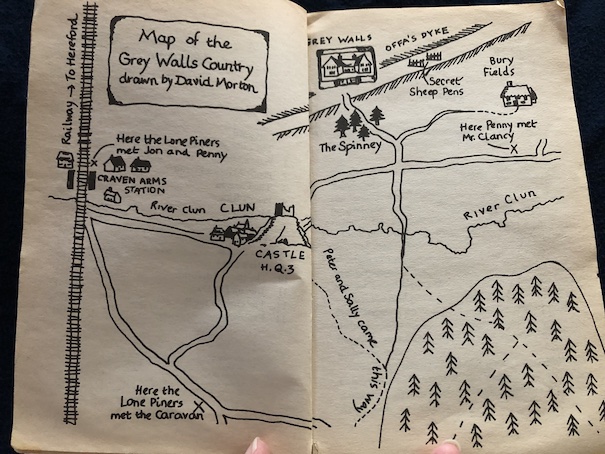


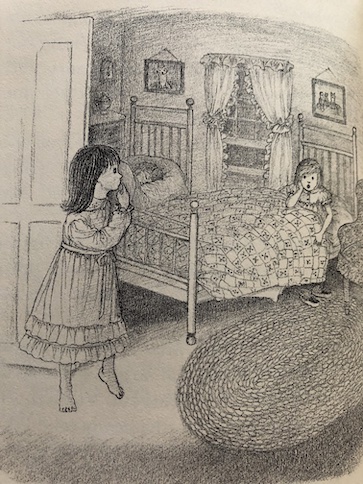

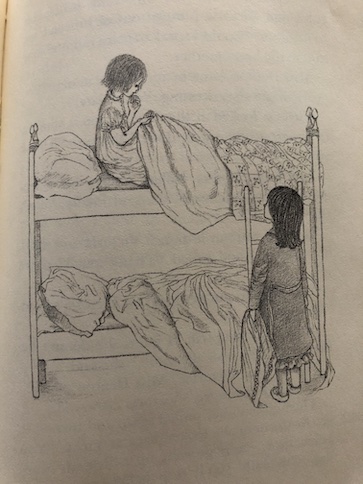


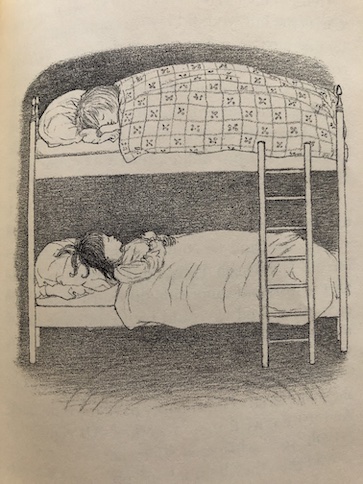


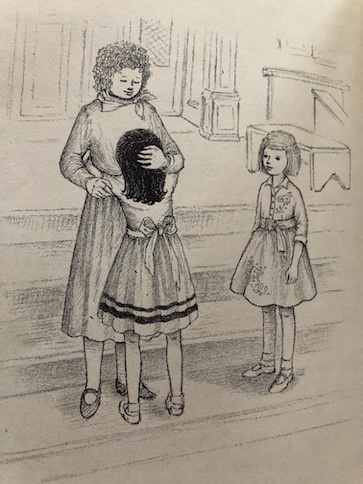

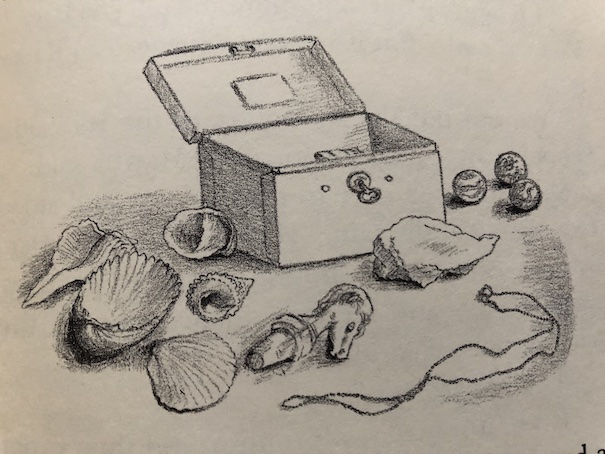


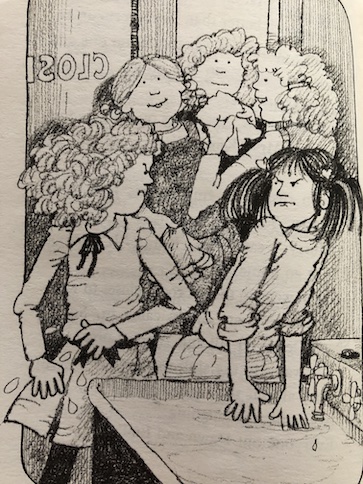
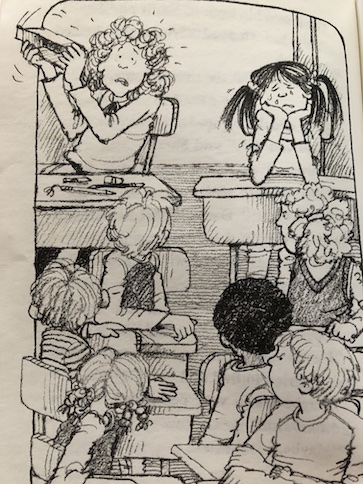

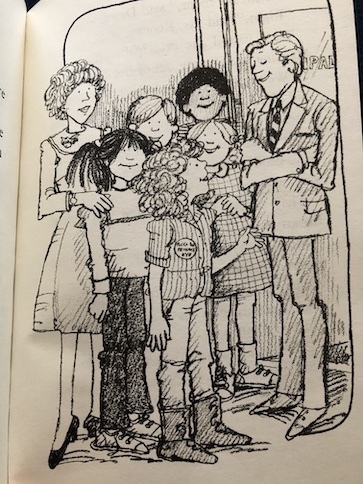
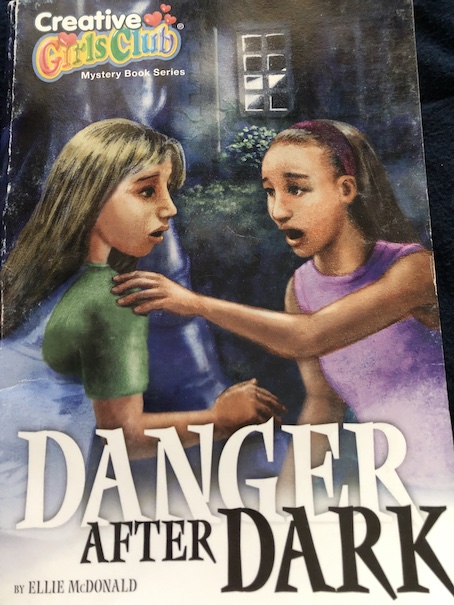
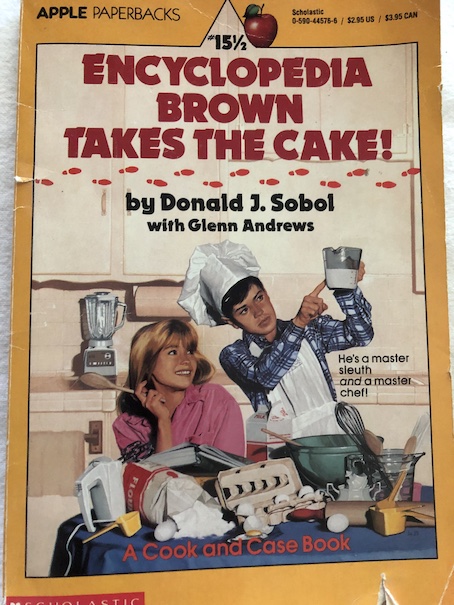


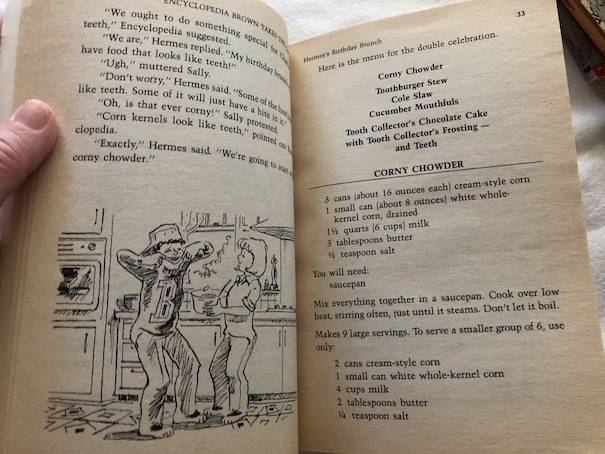
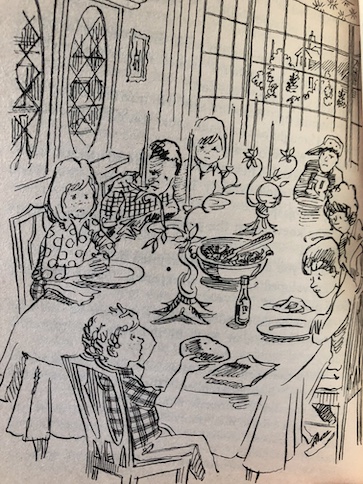
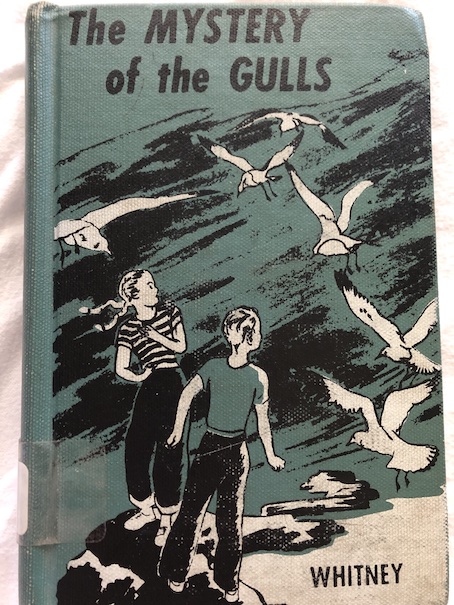
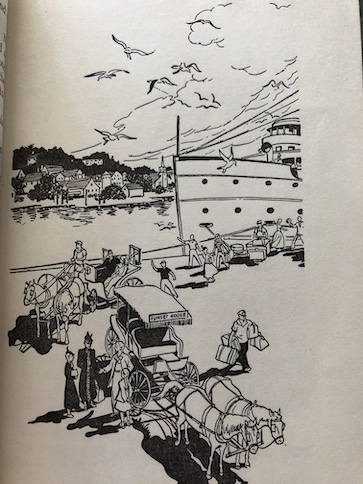
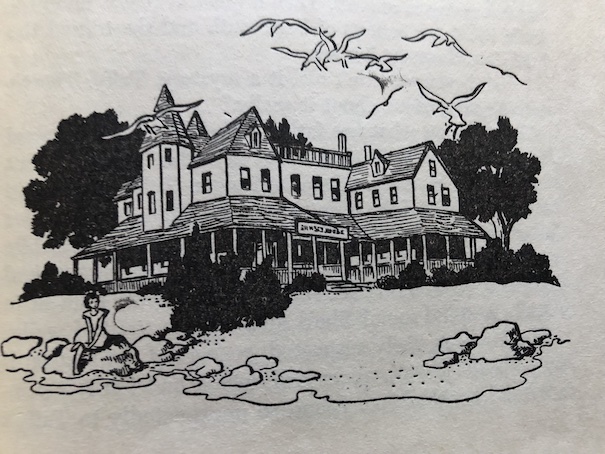

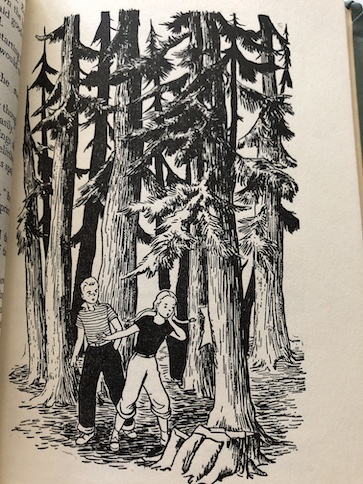
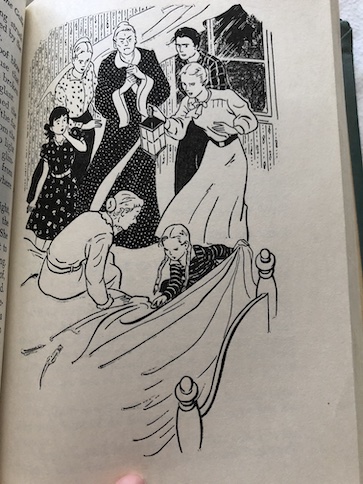

 Jestress's Forgotten Books and Stories