Sammy Keyes and the Runaway Elf by Wendelin Van Draanen, 1999.
Every year, Sammy’s town, Santa Martina, puts together a calendar with pictures of people’s pet dogs. People whose dogs are chosen for the calendar pictures get to ride in the town’s Christmas parade with their pets. Sammy is a cat-lover instead of a dog-lover, so she’s usually not too interested in the parade float with the dogs, but now, her friend Holly is living and working with the people who own the dog-grooming business and who prepare the float.
Sammy goes to the parade early to help Holly and the others to get the canine calendar float ready. She meets Mr. Petersen, the disagreeable man who assembles the dog calendar. Then, they learn that one of the dog owners has broken her leg and will need someone else to manage the dog, Marique, on the float. Marique is important because she’s trained to jump through a hoop, and they’re planning to have her jump through a Christmas wreath on the float. The dog owner’s daughter says she can’t be on the float with the dog because she promised her mother that she would make a video recording of the parade for her, so she has to be in the audience. Various other people also refuse to handle Marique because they have other jobs to do or other dogs to manage. Eventually, Sammy gets recruited to ride on the float and handle Marique.
At first, it goes pretty well, and Marique is a big hit with her jumping-through-the-wreath act. Then, some people show up dressed like the Three Wise Men and carrying cats, for some reason. Marique jumps off the float and runs off into the crowd. Before Sammy can do anything more than shout a warning to the others on the float to hold on to their dogs, both the cats and the other dogs start going wild and running in all directions. Everyone jumps off the canine calendar float and begins chasing after their dog. Sammy searches for Marique through the chaos.
Sammy doesn’t find Marique, but she does meet an unhappy little girl named Elyssa, who is dressed as an elf. Officer Borsch finds both girls and escorts them back to Elyssa’s mother. Officer Borsch wants to take Sammy home (which is a problem because Sammy secretly lives with her grandmother at a retirement community that doesn’t allow children, and they’ve been trying hard to avoid anyone finding out), but Elyssa insists that she wants Sammy to stay with her. When Elyssa goes to buy Sammy a soda, her mother questions Sammy about what Elyssa said to her. Elyssa seems to have an odd obsession with the moon and a tendency to run off by herself (making her the “runaway elf” in the title), but her mother doesn’t want to explain it. Elyssa asks if Sammy can spend the night with her. Sammy says that she has to get home, but Elyssa’s mother says it’s okay if the girls want to see each other tomorrow. Elyssa’s mother encourages the friendship between Elyssa and Sammy because Elyssa seems to need someone to open up to, although Sammy isn’t quite sure why.
Sammy’s grandmother’s friend Hudson finds Sammy, and she explains what happened with the Canine Calendar float. The more Sammy thinks about it, the more she suspects that her school nemesis, Heather Acosta, was one of the people dressed as Wise Men and holding cats. She can’t prove it, but it’s the sort of nasty trick Heather would do. The problem is that Sammy has also realized that Marique jumped off the float right before the cats and dogs went crazy. Just before the chaos started, Sammy heard someone calling Marique’s name, and Marique took off in the direction of the voice. Who was calling to Marique, and where is the dog now?
Marique’s owner, Mrs. Landvogt, is blaming the groomer who was managing the float for the disaster and her dog’s disappearance, which Sammy knows isn’t fair. Then, Sammy’s best friend, Marissa, calls her and says that Mrs. Landvogt is a neighbor of hers and wants to see Sammy. When Sammy meets Mrs. Landvogt, she is angry and in no mood for excuses. Mrs. Landvogt has received a ransom note for her dog, proving that someone took the dog on purpose. Rather than expecting apologies from Sammy for losing her dog, she insists that Sammy find Marique and get her back. At first, Sammy says that she doesn’t think she can do that, but Mrs. Landvogt says that she knows all about Sammy, and more importantly, she knows where Sammy really lives. If Sammy doesn’t find Marique, Mrs. Landvogt threatens to report Sammy and her grandmother for violating the terms of the retirement community. Sammy has no choice but to undertake the investigation. She also needs to find out where Mrs. Landvogt gets the information she uses to pressure people. Sammy isn’t her only victim … and therein may lie the solution to the mystery.
The book is available to borrow and read for free online through Internet Archive (multiple copies).
My Reaction
In this book, Sammy feels a little awkward about Elyssa wanting to be friends with her because Elyssa’s a few years younger than she is. When kids are young, a few years’ difference in age makes a big difference in terms of knowledge, behavior, and interests, and she has trouble seeing what she and Elyssa would have in common and do together. When she talks to Hudson about it, he doesn’t think that age is such a big issue. He’s in his 70s, about the age of Sammy’s grandmother, and a few years’ age difference doesn’t make much of a difference to adults. Sammy is uncomfortable, thinking about how Hudson is decades older than she is. She likes spending time with him, but she worries that maybe she looks like a baby to him and that he just tolerates her in the way she tolerates Elyssa as first. As an adult who’s spent time babysitting and playing with younger cousins, I know it’s not really like that, not to people with depth to their relationships and personalities. People of different ages and backgrounds can still bond with each other over common interests and enjoying talking to each other and spending time together. People who are young at heart and enjoy nostalgia can also have fun sharing in kids’ activities. Playing kids’ games with kids won’t make you a kid again, but it can be fun to feel like one for a few hours at a time, now and then. There’s also something to be said for getting in touch with earlier versions of yourself that have never completely left you and being reminded of the things that you loved when you were young, another theme that enters into the story when Sammy considers some of the unhappy adults around her and what’s made them that way. During the course of the story, Sammy and Elyssa become real friends, and Sammy does help her to come to terms with what’s really bothering her.
During her investigation and through her budding friendship with Elyssa, Sammy begins to learn the secrets of some of the unhappy people in her community. The truth is that everyone has suffered some form of hardship or loss in their lives, and as I mentioned last year when I was talking about experiencing Christmas in a Pandemic, feelings like this can come out stronger around Christmas. Christmas is both the last major holiday before the New Year and a time that people romanticize as being perfect and magical. The problem is that life itself isn’t perfect and magical, and people can feel angry and depressed when the reality of their situations doesn’t match their vision of how their life and Christmas should be, especially if they’re really dealing with a serious situation or long-term unresolved feelings, as many people in this story are.
There is real grief and loss in the story. Elyssa is still struggling to come to terms with the death of her father the year before. He was a police officer who was killed in a situation that went horribly wrong. Elyssa was not at her father’s funeral because a psychologist said that she might find it traumatic at her age. Instead, her mother simply told her that her father went to heaven. However, Elyssa understands more than her mother thinks she does. She knows where her father is buried, and when she runs off by herself, she often goes there to stare at his grave and try to understand how he can be underground and in heaven at the same time. Elyssa’s worries and confusion come out when Sammy’s nosy neighbor, Mrs. Graybill, the one who suspects the truth about Sammy’s life with her grandmother and has often tried to expose it in the past, becomes injured. Mrs. Graybill’s health deteriorates, and she becomes a patient in the nursing home where Elyssa’s mother works. Sammy becomes her only visitor there and learns the truth about her unhappy past and how the resentments she’s borne throughout her life have harmed her and left her with many regrets. Sammy is actually at Mrs. Graybill’s side when she dies, and the two make peace with each other before the end. Witnessing the death of a former nemesis and coming to terms with her real humanity is an emotional roller coaster for Sammy, but facing her own inner turmoil helps her to see how to help Elyssa face hers.
Not everything in the story has a perfect resolution. Sammy does figure out where Marique the dog is, and the dog is safe, but she can’t bring back Elyssa’s dad or Mrs. Graybill, and there are some people who are going to have to learn some lessons of their own about how to resolve their feelings and face up to their own hardships and bad decisions. The brighter spots in the story are what Sammy learns from her experiences and with helping other people face their problems. People really do have to face up to their situations, even when they’re unpleasant, and deal with their emotions in healthy ways. The people in the story who are the most unhappy are those who have tried to hide from their feelings or deal with them through spite and long-term resentment. Sammy comes to understand the importance of forgiveness and focusing on positives instead of negatives when it comes to dealing with one of her own long-term problems: her own mother.
Before the beginning of the series, Sammy’s mother, Lana, left Sammy with her grandmother while she was pursuing an acting career. Even though Sammy had missed her mother when she first left, she has come to realize that she resents her mother for abandoning her to the precarious, secretive life she lives with her grandmother and for putting her second to her acting ambitions. She feels like being a mother wasn’t important to Lana and that her mother only thinks of her as an afterthought when Sammy was depending on her so much. I would say that there is definite truth that Lana has neglected Sammy and her welfare and that Sammy has justification for being angry with her. In this book, Lana is excited about getting her biggest part yet, and Sammy is mortified to find out that this amazing role is in a commercial for anti-gas medicine. Lana sees the commercial as a possible stepping stone to something better, but Sammy thinks it’s embarrassing and a terrible result for the sacrifices that Sammy herself has had to make in her life for the sake of Lana’s “career.” However, seeing what long-term anger and resentment has done to other people in the story causes Sammy to consider that she should also learn to cultivate some forgiveness in her life for Lana so she won’t go down the unhappy paths that other people have. To get past the parts that she has genuine reason to feel angry about Sammy remembers the good times that she and her mother shared before, the times when Lana was nice to her and motherly, and the reasons why she missed her mother in the first place.
I can see why a little forgiveness can be healing, but I don’t see it as a perfect solution, especially not to problems like Sammy’s. Sammy and her grandmother are genuinely living a precarious life which Lana doesn’t seem to understand or appreciate. Even though Sammy finds a way to stop the blackmail in this story, her danger isn’t over, and she lives with it every single day. If Sammy is caught living with her grandmother, her grandmother could actually lose her home, and Sammy might be sent into foster care because social services might decide that neither her mother nor grandmother can or is willing to provide for her. I think it’s important to understand that Sammy isn’t just harboring a petty resentment against her mother; she’s dealing with a serious situation. Hiding in her grandmother’s little senior apartment with only extremely minimal belonging isn’t a fun adventure for her, it’s actually a serious situation with lasting consequences to her well-being. While her desire to temper her resentment toward her mother with some forgiveness and positive memories can help her get a healthier emotional balance, as a responsible adult, I think that Lana’s failure to address the reality of this situation and her role in it is going to remain an unhealthy problem in the lives of her nearest and dearest. If this were real life instead of a fictional story, I think it’s likely Sammy would be showing even more emotional trauma and would probably be in foster care already. It wouldn’t matter then if Lana wanted forgiveness or for people to look only at her good points when she had fun with her little girl because I don’t think judges award custody on that basis, not to someone with a long-term history of neglect because she wanted the freedom to “follow her dreams.”
This book isn’t a particularly happy story for Christmas. It turned out to be darker even than I thought it would be when I started, and Sammy Keyes mysteries tend to be a bit gritty. I would say that it’s more thought-provoking. I would not give this book to a child currently suffering from trauma because, when someone is actively suffering, dealing with characters’ suffering can feel like pulling double duty or rubbing salt in the wound. However, for those in the mood for a deeper understanding of dealing with life’s difficulties, especially at a time of year when everyone expects happiness and joy, it isn’t bad.
Parts of the story are genuinely touching. Sammy is understanding and gentle with Elyssa and changes her life for the better. There are even a couple of bonding moments between her and Officer Borsch. Officer Borsch was a friend of Elyssa’s father, and when Sammy asks him about what happened, Officer Borsch candidly admits that he was there when he was killed and still has nightmares about it. Sammy understands nightmares because she had them when her mother left her. Later, the two of them help each other. Sammy uses some of Hudson’s advice for a little psychological warfare on Heather that gets her to admit the cat prank in front of Officer Borsch. Officer Borsch promises to put some healthy fear into Heather that will help keep her in line in the future. The resolution of the prank also saves Officer Borsch some embarrassment at the office because he was on duty when it happened and took some flak for it, and Sammy also learns something about Borsch’s nemesis on the force from Mrs. Landvogt that will allow Borsch to resolve a serious problem that both he and Elyssa’s father had tried to solve.
Sammy Keyes and the Skeleton Man by Wendelin Van Draanen, 1998.
Sammy Keyes decides that she wants to go trick-or-treating even though her grandmother thinks that she’s getting too old to do it. She’s still living secretly in her grandmother’s apartment in an apartment building that’s intended only for seniors, so she jumps at the chance to go out with friends on Halloween night. Dot (real name Margaret/Maggie), a new girl at school, invites her and Marissa to come over to her house to get ready before going out trick-or-treating, which works well for Sammy.
As Dot’s house, Dot is painting herself yellow as part of her bee costume. Sammy is going to color herself green so she can be a marsh monster (something she made up, but it sounds like a swamp monster from old movies). When Marissa comes, she brings Sammy a green sweater that she borrowed from her mother that would be good for a marsh monster costume, and the other girls help Marissa wrap herself in toilet paper for her mummy costume. As the girls set off to trick-or-treat, Sammy gets the idea to go by the old Bush House. The Bush House isn’t haunted, but it is a creepy place and there are stories about the crazy Bush Man who supposedly lives there and will jump out of the tangled bushes that surround the house and kill people. Sammy’s grandmother says that the stories are just stories and the old man who lives in the house is just a lonely old man, but Sammy thinks that it would be thrilling to visit the house and see it up close on Halloween.
As the girls approach the house, they almost collide with someone in a skeleton costume who’s running away. He looks bigger than the girls are, and he’s carrying a pillowcase that looks pretty full. The girls are startled, but Sammy is determined to go up to the Bush House and just knock on the door once for the experience of it. What Sammy sees when she knocks on the door is even more startling.
The door of the house just swings open, and there’s a pile of newspapers on the floor inside that are on fire. Sammy calls out to see if there’s anybody in the house. There’s no answer, so Sammy rushes inside and manages to put out the fire by smothering it with her marsh monster sweater. As the girls are about to leave, Sammy sees someone in a Frankenstein costume in a chair, and they scream and run outside. Then, Sammy realizes that the Frankenstein mask was on sideways, and it’s not easy to breathe in a sideways mask, when the nose and mouth holes don’t line up, so she decides that she has to go back and see if the person wearing the costume is really alright. It’s definitely a human in a costume, and not a dummy. When Sammy removes the mask, she at first fears that the person in the costume is dead because he’s so still, but it turns out that the person under the mask is the Bush Man. He’s tied up, has a head injury, and is barely conscious. He begs the girls for help. The Bush Man is having trouble talking, so after the girls untie him, he writes a message down on paper, asking the girls to go next door and call the police. He also wants to know if the girls saw the skeleton man.
The Bush Man’s real name is Chauncy LeBard, and the reason he can’t talk is that he’s had surgery on his throat because of smoking-related throat cancer. He needs a device held up to his throat to really speak in an electronic voice (an electrolarynx, I’ve seen one used before). While Dot and Marissa run next door and call the police, Sammy stays in the house with him. When the police come, Sammy uncomfortably recognizes the police officer who knows her from the previous book in the series, Officer Borsch. Last time, she and Marissa told him that Sammy is Marissa’s foster sister so they wouldn’t have to reveal where Sammy is actually living. Dot is confused when Marissa refers to Sammy as her “sister”, but she doesn’t give them away.
Mr. LeBard explains that the man in the skeleton costume had forced his way into the house and tied him up, but he doesn’t know who the man is or why he did it. The girls can’t fully describe the man because he was wearing a full-body costume, although they agree that he seemed like a full adult, not just a tall teen. It seems like the skeleton man was a thief because Mr. LeBard’s wallet and a pair of candlesticks are missing.
After the night’s adventures are over, Sammy winds up spending the night at the house of an elderly friend, Hudson Graham, because her grandmother’s nosy neighbor is awake, trying to find proof that Sammy is illegally living with her grandmother in their apartment building. Hudson agrees to let Sammy stay with him, and it turns out that he’s also an old friend of Chauncy LeBard. Mr. LeBard used to be a political science professor at the local college, and Hudson was one of his students. The two of them liked to get together and have political debates. Then, Mr. LeBard’s mother died, leaving him her estate. The local rumors say that’s when Mr. LeBard went crazy and became the Bush Man. The reality is that he developed health problems because of his smoking and didn’t want his old friends to know. Chauncy also has a brother, who was disinherited by their mother because she disapproved of his wife, but nobody knows why the mother didn’t like her.
Sammy can’t forget about what happened with Chauncy LeBard, even if she wants to. She at least has to go back to the Bush House to get Marissa’s mother’s sweater, which turns out to be worth a lot more than either of them thought. Marissa tells her that, even though her mother never wears that old green sweater, she did notice that it was gone and was upset because it turns out that it was a designer sweater that she bought for $500. Sammy is horrified because, having put out a fire with that sweater, she’s pretty sure that it’s done for, and if she has to come up with $500 to replace it, so is she! When Sammy goes to see Chauncy about the sweater, she starts learning more about him and how his inheritance from his mother turned out to be more of a curse than a blessing. Sammy also starts to wonder whether theft was really the motive for what happened on Halloween. If Chauncy didn’t have that hole in his throat from his surgery, the sideways mask might have smothered him. Did the skeleton man want Chauncy dead?
The mystery of the skeleton man and the ruined $500 sweater aren’t Sammy only problems, though. At school, there’s a nasty rumor going around that Sammy has been calling a boy name Jared, trying to get him away from his girlfriend, Amber. Amber is angry with Sammy, and Sammy’s school nemesis, Heather, has been gleefully making sure that everyone in school knows about it in order to embarrass her as much as possible. Sammy knows that she has never called or even spoken to Jared in her life and doesn’t care about him, but it’s not easy to convince everyone else of that. So who really has been calling Jared? Sammy is sure that it’s really Heather, pretending to be her and saying embarrassing things to get her in trouble. It would certainly be in character for Heather to do that. The rumors are get so out of hand even in a day that one of Sammy’s teachers even suggests that maybe she should talk to a school counselor about her issues with Jared so it won’t affect her schoolwork.
Because the characters are middle school kids, Sammy decides that the best way to get evidence that Heather is her phone imposter is to crash her Halloween party. With everyone in costume and the whole class from school invited (except for Sammy, of course), Sammy, Marissa, and Dot are pretty sure that Sammy can sneak in with them, posing as Dot’s cousin “Nikki.” What could possibly go wrong?
The book is available to borrow and read for free online through Internet Archive (multiple copies).
My Reaction
There are characters in the Sammy Keyes series who smoke, which was becoming uncommon in children’s books in general when I was young in the 1980s and 1990s because adults didn’t want to set a bad example for children. In the last book, the fortune teller character smoked, and it kind of surprised me, but it seems that the series follows the unspoken rule for children’s books that include smoking, that the only characters who do it are either villains or oddballs, not cool people to be imitated. This book confronts the issue of smoking more directly, with Chauncy LeBard’s throat cancer. Mean girl Heather also turns out to be a secret smoker who bribes one of her friends to spy on Sammy and her friends by giving her cigarettes. Sammy later finds out that Chauncy’s mother was also a smoker who died of lung cancer. Between Chauncy’s throat cancer and his mother’s death, the story helps illustrate the hard realities of long-term smoking. Chauncy seems to be living in reduced circumstances, without heat or electricity in his house. My first thought was that his mother’s medical expenses and subsequent funeral and Chauncy’s surgery drained his funds. Medical expenses have wiped out people’s savings before in the US, and I remember that one of the stories they told us to discourage smoking when I was in school years ago was about a woman who was forced to sell her family’s heirlooms to cover her cancer treatment. When Sammy meets Chauncy’s brother, Douglas, she finds out that Douglas was trying to get his mother and brother to quit smoking, but neither of them would, and that’s part of the reason for the family rift. Douglas says that if Chauncy has suffered health problems and blown through the family’s money, it’s really his own fault. It’s true that Chauncy should have taken the hint and quit smoking a long time ago, and he might have spared himself a lot of pain and misery if he had, but it turns out that he didn’t sell the family heirlooms to pay for his medical expenses. There was something in his house that was worth a great deal of money, something that Chauncy couldn’t bear to part with even to improve his own living situation because of the sentimental value. The thief is one of the few people who understood what Chauncy had and how to take it without him even noticing that it was gone right away. In a way, what the thief really stole is as much of a mystery for most of the book as who the thief was. The skeleton man turned out to be one of the people I suspected, but not my first suspect, so I was actually in suspense for most of the book.
As for the side plot with Heather calling Jared as Sammy: Oh, criminy! This is one of those ridiculous tween problems that seems so impossibly complicated when you’re in middle school but pretty dumb when you’re not. I appreciate that the math teacher is concerned when Sammy seems distracted in class and her work suffers, but I have trouble believing that an adult teacher would really be interested in rumors about who at school is calling who. I can’t remember any of my teachers ever caring about that stuff because adults usually know that rumors are wrong and that this kind of school drama passes faster if you don’t feed it. I don’t recall any massive rumor campaigns getting the attention of teachers when I was a kid, and I can’t imagine any of my old teachers giving rumors much weight or interest. I think my teachers would have just told us to stop being drama queens, focus on our work, and save the gossip for after school. A few of the more outspoken and direct communicators on the faculty would have flat out told us that gossip isn’t worth anything, that most of it is wrong anyway (that was actually the subject of a play I was in at school once), and that everyone will have gotten bored of whatever it is and moved on in a week or two because nothing we were talking about was really that earth-shaking and we all had the attention spans of chihuahuas on a sugar rush.
If I had to say something to these kids about this situation, I might just tell Sammy not to go calling people who don’t want to speak to her (if I were to assume that she was doing that) because it’s just going to annoy everyone. As for Amber, it’s not really her business to control either her boyfriend or the person calling him, whoever it is. Her decision is whether or not she’s satisfied with how Jared is responding to the situation and if she wants to still be his girlfriend when he acts that way. I’d make it a point to tell Jared, as the center of this drama, that if he doesn’t want to talk to somebody on the phone, he should just hang up without saying anything. You don’t need to stay on the line with someone who’s bothering you. With today’s caller IDs and cell phones that identify everyone who calls, it’s even easier because you don’t have to pick up the phone in the first place if you recognize a number you don’t want to answer. I can’t remember if they had those in the late 1990s, or if that was more an early 2000s development, but I know we definitely had answering machines, and I knew people who would just let the machine answer most of the time, only picking up if they recognized the voice leaving a message. Either way, just because someone calls you doesn’t mean that you have to take the call. On the other hand, if Jared likes being called by a girl other than his girlfriend, it might be time for him to rethink his relationship and decide what he really wants. That seems to be where Jared is. The book describes him as not being too bright and going on an ego trip from whoever keeps calling him. Actually, if I were one of the teachers, the people I’d really want to talk to the most would be Jared’s parents because I think they’d have more power to stop the situation than anybody, no matter who the caller was. Jared’s a kid who still lives at home, so his parents could answer the phone first and find out who wants to talk to him or let the machine record a message that could be used as proof against a prankster who’s bothering him if it gets excessive. Most child pranksters would give up if they called a few times and only got the boy’s parents, especially if the parents sound annoyed or angry when they answer. If Jared’s family got the call on a landline (probable for the 1990s), an annoyed parent could also *69 to last-call return the prankster’s number or look it up on their phone bill if they want to confront the prank caller or talk to the prankster’s parents. It’s annoying to deal with a prank calling kid but not really that hard. I didn’t have access to my parents’ phone bill as a kid, but everyone knew how to *69. Of course, if people in the book handled the situation sensibly, the book would probably be less exciting, and we wouldn’t get the payoff of seeing Sammy get the best of Heather.
There are some laughs when Sammy finds a clever way to record Heather making one of her calls and play the recording for the whole school. It was the sort of victory moment that I would have loved when I was about twelve. However, Sammy’s secret life living in her grandmother’s apartment complicates any problems that Sammy has with the authorities and school administration. After she turns Heather into a public spectacle during a school assembly, the vice principal insists that Sammy’s mother attend a parent-teacher conference. Since Sammy’s mother isn’t available, her grandmother has to attend instead, risking the exposure of their secret.
There is a little more insight into Heather when Sammy sees what Heather’s home and mother are like, but understanding doesn’t equal approval. Heather’s life isn’t perfect, and she lets slip at her party that her mother is a 40-year-old who dresses really inappropriately and flirts with much younger men, possibly including some of her daughter’s teenage classmates. She doesn’t appear to know about Heather’s smoking habit or the truth about any of the other things Heather does. Knowing that her mother is odd and may have really inappropriate taste in men/boys doesn’t make Heather any more likeable, though. At the end of the book, Heather’s outbursts in front of the vice principal may lead to the school insisting on counseling for Heather, which is a hopeful sign, but since Heather remains a bully mean girl for the rest of the series, it’s not that hopeful. You can lead a person to professional help, but you can’t make them internalize it and make use of it.
For me, one of the best parts of this book was the further development of the relationship between Sammy and her grandmother and Hudson Graham. There are hints that Hudson is romantically interested in Sammy’s grandmother, and he treats Sammy like his granddaughter. He seems to be in on the secret of Sammy living with her grandmother and is one of Sammy’s best protections against getting caught. He willingly aids and abets Sammy’s investigations, giving her knowledge and guidance whenever she needs it, and at the end of the book, he gives Sammy and her grandmother a ride to the parent teacher conference.
The ending of the story sets up the beginning of the third book in the series with Sammy being given the assignment of completing some volunteer hours to make up for the disruption that she caused at school.
Ruth Fielding at Lighthouse Point or Nita, the Girl Castaway by Alice B. Emerson (the Stratemeyer Syndicate), 1913.
When this story begins, Ruth’s friend Helen is finally being initiated into the society that Ruth and some of their friends founded at their boarding school, Briarwood Hall. In the second book of the Ruth Fielding series, when the girls started attending Briarwood, they found themselves caught between two rival social groups. One of them had the reputation for being led too much by the school faculty instead of the students themselves. Ruth, Helen, and some of the other girls craved more independence from the teachers. However, the other main social group, which was more student-led, was led by a sly bully of a girl named Mary Cox. That group had basically turned into a cult of personality centered around Mary Cox, where everyone else had to do whatever she said. The initiation into Mary Cox’s group was a mean trick, and Mary Cox, known as “the Fox” to many girls at school because of her slyness, used bullying tactics to dominate the other girls.
For awhile, Helen was a member of Mary Cox’s group, finding it exciting, but Mary Cox took exception to Ruth very soon after they first met because Ruth is more independent-minded and not easily led or intimidated by Mary. Although Ruth was one of the new girls at school and one of the youngest, she decided to assert her independence and create a new society without some of the problems that plagued the older ones. She found other interested girls who felt the same way she did, and they soon attracted more members who were similarly tired of the old groups. Ruth’s group is called the Sweetbriars, or S.B.s for short, although Ruth frequently reminds people that the group is not hers exclusively. To avoid the problem with Mary’s group, having everything monopolized by one person, Ruth established in the rules that leadership of the Sweetbriars will rotate, with no member serving as the club president for more than one year. That way, no one will have total control, and there will be opportunities for new people with fresh ideas to get more involved.
Helen, who eventually figured out what kind of person Mary was, stuck with her group for awhile anyway, out of loyalty to the membership, but since then, Mary’s group has fallen apart. Helen was one of the last to leave it, but Mary is still resentful that many of her old members have joined the Sweetbriars, including Helen.
Shortly after Helen’s initiation, Ruth and her friends are talking about taking a summer trip to a friend’s beach house. They started talking about their summer plans over the winter break, and now, they’re making the final arrangements. Mary, still looking for ways to cause trouble for Ruth and the Sweetbriars and regain her social dominance, tells Helen that the only reason she’s being invited to the beach house is because she’s now a Sweetbriar, implying that the other girls wouldn’t have wanted her around if she hadn’t joined their club. Frankly, Helen is a bit of a sucker and falls for Mary’s manipulation. She confronts the other girls about what Mary said.
The other girls all remind her that, first of all, they started planning this trip well before her initiation. Second, they are inviting people who aren’t part of the Sweetbriars. They’ve invited Madge, who is the student leader of the faculty-led social club, and she’s coming. They’ve also invited some boys, brothers of girls at the school and their friends, who attend the nearby boys’ boarding school. Helen says that Madge is also an honorary Sweetbriar, even though she’s in another club, and the other girls correctly realize that Mary’s comments to Helen were a manipulation to secure her own invitation. The girl whose family owns the beach house, Jennie Stone (nicknamed “Heavy” by the other girls because she’s “stout”), is actually one of Mary’s roommates at school, and she reminds Helen that she also invited Mary but that Mary was non-committal about accepting.
The girls debate among themselves whether or not Heavy should renew the invitation and encourage Mary to come with them. It’s pretty obvious to the girls (except maybe Helen) that Mary is being manipulative and probably has a trick up her sleeve. (They don’t call Mary “the Fox” for nothing, and if the reader has any doubts that this is a ploy, Mary is listening to this whole conversation through the keyhole.) Mercy, known for her outspokenness, thinks they should all just forget about Mary because her meanness will spoil the fun. Ruth doesn’t like Mary, either, but she can see that Helen will feel bad if they act exclusionary, and Mary will try to use that against them. Ruth tells Heavy that it’s only right for her to invite her roommate, and not only does Ruth want her to invite Mary, she insists on it.
So, Mary will be going to the beach house with the other girls, but before their trip even gets started, the situation is rocky. When the girls get on the boat that will take them from the school to the train station, Mary goofs off, teasing one of the other girls, and she ends up falling overboard. Since Mary can’t swim, Ruth has to jump in and save her. This is the second time that Ruth has saved Mary’s life since she arrived at the school. The first time, Mary credited the rescue to Helen’s brother, Tom, who also helped, but this time, Ruth gets the credit alone, and everyone witnessed it. One of the other girls says that Mary will have to change her attitude toward Ruth now, but Ruth knows that isn’t likely. Just because Mary might owe her some gratitude for the rescue doesn’t mean that Mary will like her, and Mary is the kind who would resent “owing” a person she doesn’t like.
Worse still, Ruth learns that her Uncle Jabez has lost a considerable amount of money in a bad investment, and he might not be able to afford to sent her back to Briarwood Hall! It’s a heavy blow because she’s finally settled in there and has a good group of friends. He’s become so paranoid about money again that he might also stop the money he was contributing toward Mercy’s education, which would be a double blow.
Ruth is an ambitious girl and determined not to give up on her education so easily. Raising the money for her next year’s tuition would be difficult all on her own, but Ruth knows that she has to find a way to do it over the summer. At first, she isn’t sure that she should go to the seaside with the others as planned, but Uncle Jabez surprises her by giving her some money and telling her to go. As the girls set out on their trip, Heavy also tells Ruth that Mary Cox’s family is having trouble. Mary’s father died a year ago, leaving the family with money problems, and her brother left college to tend to his father’s business affairs. Now, her brother has disappeared on a business trip, and she and her mother are worried about him. With the girls’ problems hanging over their heads, they all set off for Heavy’s family’s seaside bungalow at Lighthouse Point.
When the party arrives at Lighthouse Point in Maine, there’s a storm, and they hear that there’s a shipwreck on a nearby reef. The young people all go down to the seaside to watch the rescue efforts. At first, they think it’s all very exciting, but then, the destructive power of the storm and the real risk to the rescuers makes them realize the seriousness of the situation. They watch, horrified, as a lifeboat overturns in the storm. It seems like there won’t be any survivors of the wreck, but some people are saved.
Among the survivors is a girl who calls herself Nita. Nita, who is about the same age as Ruth and her friends, admits to being a runaway, but she is evasive about where she came from and what her situation is. The ship captain’s wife, Mrs. Kirby, is also rescued, and she says that it’s her impression that Nita was not well cared for when they first met and that Nita was trying to go to New York, possibly to stay with some relatives there. Nita says that she wants to go to New York, but she is still evasive about why, what she plans to do there, or if she knows anyone there.
In spite of her recent traumatic experience, Nita is very self-controlled, mentally sharp, and even a bit sly. The party of young people and Heavy’s Aunt Kate take Nita with them to the bungalow where they give her a bed and question her more about her past. She lets a couple of things slip, referring to a man named Jib Pottoway, who was a “part Injun” (that’s how Nita puts it, she means that part of his family is Native American, saying that “Jib” is short for Jibbeway, which is apparently either an older version or slang corruption of Ojibwe) “cow puncher” who lent her books to read. Nita apparently came east from somewhere in the western United States, having romantic notions from books about how poor girls can make friends with wealthy families in the east who can help them with their education and help them rise up in society. She’s been finding out that the realities of the east are very different from what she’s read in books, but she still has her stubborn pride. Nita says that she can move on if the others don’t want her around or if they’re getting too nosy about her past, but Aunt Kate is reluctant to let her go until she knows whether Nita is going to be able to manage on her own or has somewhere to go.
Since Nita has only the clothes she was rescued in and those are ruined, the part gets her some new clothes to wear. They notice that a somewhat disreputable man named Jack Crab seems strangely interested in Nita, as if he recognizes her from somewhere. There is an explanation later when Tom picks up a newspaper clipping that Jack Crab drops about a girl named Jane Ann Hicks, who has run away from her wealthy uncle who owns a ranch in Montana. Nita certainly first the description of the missing Jane Ann. In her uncle’s and the reporter’s words, “‘Jane Ann got some powerful hifalutin’ notions.’ She is now a well-grown girl, smart as a whip, pretty, afraid of nothing on four legs, and just as ignorant as a girl brought up in such an environment would be. Jane Ann has been reading novels, perhaps. As the Eastern youth used to fill up on cheap stories of the Far West, and start for that wild and woolly section with the intention of wiping from the face of Nature the last remnant of the Red Tribes, so it may be that Jane Ann Hicks has read of the Eastern millionaire and has started for the Atlantic seaboard for the purpose of lassoing one–or more–of those elusive creatures.” They’ve got her pegged, although the “or more” part of lassoing millionaires makes her sound more like a gold-digging adventuress than an overly-romantic teenager who’s read too many novels. However, if Nita really is Jane Ann Hicks with a wealthy, ranch-owning uncle, why would she need to find a wealthy benefactor to buy her the piano she says she wants and fund her education?
Nita runs away from the beach house, but unfortunately, she trusts the wrong person and is soon in need of Ruth and her friends to rescue her again.
The book is now public domain and is available to borrow and read for free online through Internet Archive (multiple copies) and Project Gutenberg.
My Reaction and Spoilers
Racial Language and Other Issues
I think I should start with a warning that there are some issues with racial language in this book, which is pretty common with early Stratemeyer Syndicate books. I already mentioned the word “Injun” and the newspaper article that mentions “Red Tribes” above. I also noticed that in the article that describes Jane Ann’s disappearance, it is mentioned that she was raised by her uncle alone at his ranch “for a woman has never been at Silver Ranch, save Indian squaws and a Mexican cook woman.” I’m sure they’d be thrilled to find that they don’t count. The Stone family’s cook at their beach house is a black lady called “Mammy Laura” who speaks in a stereotypical way with phrases like “lawsy massy.” (Although, to be fair, Mr. Hicks the rancher also speaks like a stereotypical cowboy, so stereotypes are being used in a very general way and not directed at any group in particular. I know, it’s still not great.)
It’s also a little uncomfortable how they keep referring to Mercy as “the lame girl” or “the cripple.” They don’t seem to mean it as an insult, more as a general description, and it’s true that it’s one of Mercy’s characteristics and a major part of her storyline in the first book. Her health has improved since then, although it’s established that she’s never going to be able to walk as well as other people and will always need some assistance, like crutches. It’s just that it feel like we’re being beaten over the head with it when they keep repeating that she’s “lame.” I think they’re trying to do it as a descriptor, trying to make the writing a little more colorful by referring to characters by some part of their appearance and not just by name, like how they keep calling Ruth “the girl from the Red Mill”, but it falls flat because it seems insensitive and shallow. First of all, this isn’t something that readers are likely to forget and need to be constantly reminded about Mercy. Second, it gives the impression that this is Mercy’s main characteristic. Mercy is the most blunt and sarcastic character among the girls, and she has quite a lot of personality, so she does have characteristics beyond her disability. Third, in the first book, they establish how much Mercy hates her disability and how bitter she was about it until she found a way to improve her situation, make friends, and move forward with her life and education. It doesn’t seem like she’d enjoy people constantly calling her “cripple” and “lame”, and it would be completely in character for her to bluntly say so if asked, so it’s a little uncomfortable when the invisible narrator of the book keeps doing it.
Heavy’s nickname is also a little irritating. She doesn’t seem to mind it, but this is a good opportunity to point out that older Stratemeyer Syndicate books do have a tendency to use characters’ weights as one of their defining characteristics. Even up through later series, like Nancy Drew, characters are often specifically described in terms like “slender”, “slim”, “stout”, etc. Typically, in Stratemeyer Syndicate stories, the slimmer characters are either the main characters or the nicer or more talented ones, while the fatter ones are either more comic relief, socially awkward, or villains. Actually, one of the things I like about Heavy is that she doesn’t fall into this pattern. Heavy is pleasant, cheerful, practical, and generous.
The Runaway
As Ruth considers Jane Ann’s position and why she would run away from her uncle, she remembers that she also considered running away from Uncle Jabez when she first came to live with him. Both Ruth and Jane Ann are orphans who depend on their uncles, who control the family finances and their education. Jane Ann’s uncle is far richer than Uncle Jabez, but he also has firm ideas about the kind of life Jane Ann is going to live as the future heiress to his ranch and what kind of education she’s going to need. He rejects the kind of education a girl would have on the east coast of the US as being too “effete” for a young woman who will someday have to manage a ranch with tough “cow punchers.” However, Jane Ann wants some of the refinements of east coast culture, like her own piano, an education, and the company of other girls her own age who share her interests, none of which are available at her uncle’s ranch. It’s true that Jane Ann has a lot of unrealistic notions about life from the books she’s been reading, but that’s largely because cheap romantic novels have been her main source of information about life outside of her uncle’s ranch. Getting an education and more interaction with the outside world would do her some good. Actually, I think Jane Ann’s problem does reflect a problem that exists even in modern education, when parents and instructors are so focused on job training and the roles they think the young are going to fill in life that they neglect the subjects that give students a broader view of life and how the world works, their roles as human beings outside of career roles, and their relationships to other human beings in the world.
When Mr. Hicks comes to the beach house later, looking for his niece, Ruth talks to him about what she knows about Jane Ann/Nita and what Jane Ann really wants. Mercy also adds some criticism because she has “a sharp tongue and a sharper insight into character”, pointing out to Hicks in no uncertain terms what a young girl needs and how she feels about things. Her criticism of the name “Jane Ann”, which seems as dull and plain to the other girls as Jane Ann thought it was herself, seems a little overdone. Jane Ann’s uncle picked that name because it was his grandmother’s name, and it is traditional for certain names to be reused in families. It’s not as romantic and modern as the girls think it should be, but it’s also simple and classic and could really belong to just about any time period, so I don’t think it’s as old-fashioned as they’re implying. I do appreciate Mercy’s straightforward talk and how she speaks her mind without being intimidated by either Hicks’s age or wealth. Mercy really is a character with a personality, which makes her different from some of the other cookie-cutter characters in Stratemeyer Syndicate books with little variation in their personalities, and she’s one of my favorites in this series.
Like other books in the series, there is an element of mystery, but the book tends to lean more toward adventure. However, as the series goes on, the stories are becoming more mystery, and this one is more mystery than previous books. There is first the question of who Nita really is. The newspaper clipping provides a clue, although it’s not a firm answer until Jane Ann’s uncle shows up, looking for her. Then, there is the question of where Jane Ann went after she left the beach house. Ruth is sure that Crab had something to do with her disappearance, but she and her friends have to do some intentional investigating and searching for Jane Ann to rescue her. In spite of some of the problematic language, I like the direction this series is heading.
At the end of the story, there is still something unresolved, and that’s how Ruth is going to pay for her boarding school. Jane Ann’s uncle offers a reward for rescuing her, but Ruth can’t bring herself to accept it because she doesn’t want it to appear that she was only helping Jane Ann for the sake of the money. Instead, she and her friends will be rewarded with a trip to the ranch where Jane Ann and her uncle live.
Odd Piece of Trivia
When Jack Crab tries to pester Nita about what her name is, Mercy bluntly tells him off using a children’s retort:
“Puddin’ Tame!” retorted Mercy, breaking in, in her shrill way. “And she lives in the lane, and her number’s cucumber! There now! do you know all you want to know, Hardshell?”
I not only appreciate that she pokes fun at Crab’s name, calling him “Hardshell“, but she brings up an interesting piece of children’s lore. The “Puddin’ Tame” retort was old-fashioned when I was a kid in the 1980s and 1990s, but it was a popular playground retort for decades, maybe over a hundred years, although I’m not sure of its actual age, and it’s possible that it’s still circulating in schools and playgrounds somewhere. When kids say it, the quick rhyme is more important than the meaning, although there are theories that “Pudding Tame” or “Pudding Tane” (as some people say it) is a reference to a devil character called Pudding of Thame.
#1 Ruth Fielding of the Red Mill or Jasper Parloe’s Secret, by Alice B. Emerson (The Stratemeyer Syndicate), 1913.
In the first book of the Ruth Fielding mysteries, one of the older series produced by the Stratemeyer Syndicate, young Ruth Fielding has recently lost her parents and is traveling by train to New York state to live with her Great Uncle Jabez. She has never met him before, but she knows that he lives in a red mill outside of a small town. She meets the town doctor on the train when he notices how sad she looks and explains to him why she’s traveling to her great uncle’s home. Her old home was in a poor area, and although she would have liked to stay with her friends there after her father’s death, no one would have been able to keep her. Then, the train unexpectedly stops when the engineer sees what looks like a warning light.
It turns out that the light is a red lamp tied to a large mastiff, who seems very upset. Ruth, who is good with dogs, is the only person who is able to calm the dog enough to get a look at the dog’s tag. It turns out that the dog belongs to Tom Cameron, who doesn’t live too far from where her Great Uncle lives. Tom Cameron comes from a wealthy family, and he has a reputation for being a wild boy. The lamp tied to the dog appears to come from his motorcycle, and there is a note tied to the dog that appears to be written in blood and only says, “Help.” Ruth is very upset, thinking that the dog’s owner must be badly hurt somewhere. The adults around her aren’t so sure because they think Tom could be playing a prank, but they take the dog aboard the train. The town doctor says that it’s possible that Tom could have had an accident on his motorcycle, and when they get to town, the town doctor, some of the other men, and Ruth set out to see if the dog will lead them to where Tom is. Ruth needs to come because the dog behaves better for her than for the men.
When they find Tom, he really is hurt, having had a motorcycle accident. He is barely conscious and muttering, “It was J. Potter. He did it!” They don’t know what it means, although it sounds like he’s accusing Ruth’s great uncle of causing his accident. By the time they get Tom to safety, it is late, and it turns out that Ruth’s uncle visited the train station at the wrong time, before the train even arrived and not seeing Ruth, assumed that she wasn’t on the train and left. Because her uncle lives outside of town and it’s rather late, the station master, Mr. Curtis takes Ruth to stay the night at his house with his family. Mrs. Curtis is very nice, but Mercy is a young invalid. She doesn’t like other children because they stare at her because of her disability, and she can’t play the games other children play.
The next day, Helen Cameron, Tom Cameron’s twin sister, comes to the Curtis house to give Ruth a ride to her great uncle’s house. Ruth likes Helen, but Helen tells her that her great uncle is a good miller but has a reputation as a miser, and she’s surprised that he decided to take her in. That worries Ruth, but Helen assures her that there will be others in town who would be willing to have her if she can’t stand living with her great uncle. In fact, Helen’s father even told her that he would be interested in having Ruth come to stay with them because she would be a good companion for Helen. Tom and Helen’s mother died when they were babies, and Helen would appreciate having another girl in the house. It’s a generous offer, but first, Ruth needs to meet her great uncle and see what he’s like.
Great Uncle Jabez is very much like Helen described. He is a hard worker but an impatient, hard-hearted, and self-centered man who doesn’t do much of anything without analyzing what he can get out of it for himself. He makes it clear that if Ruth wants to stay with him, he’ll expect her to work and make herself useful to the household. There is only one other person who lives with Uncle Jabez, the housekeeper, who likes to be called Aunt Alvira, although she is no relation to either Jabez or Ruth. Aunt Alvira tells Ruth that her uncle is a good man for giving her the position of housekeeper when she had nowhere else to live and no family of her own. She is more warm and affectionate than Ruth’s great uncle, making Ruth feel more at home. Ruth sees that she can be helpful to Aunt Alvira by assisting her with household chores. Aunt Alvira is getting older and has aches and pains that cause her to often exclaim, “Oh, my back, and oh, my bones!” She appreciates having a strong young person to help her. Uncle Jabez becomes appreciative when he sees that Ruth knows how to do chores and make herself useful, and Aunt Alvira’s affection makes Ruth’s new home bearable for her.
One day, when Tom is feeling better, he and Helen come to see if Ruth wants to take a ride with them. Aunt Alvira says it’s okay for her to go, and while they’re out in the Camerons’ car, they witness the breaking of the mill’s dam. The young people realize that they need to warn others who are in danger. They drive around, shouting warnings for people to get out of the way, and they finally take refuge at the red mill, which is soon cut off like an island. The mill’s office is partially destroyed in the flood, but the mill itself is undamaged. Uncle Jabez makes it safely back to the mill, although he has to drive his mules hard to make it through the waters. Unfortunately, there are two major losses: Ruth’s trunk, which Jabez was bringing to the mill from the train station and was lost out the back of his cart in the water, and Uncle Jabez’s money box, which was in the mill office and contained his life’s savings, all of the cash he had in the world. Uncle Jabez hasn’t trusted banks since the last time he lost money when the town’s bank failed. Everyone thinks that the money box was swept away when the office was partly destroyed by the flood, but Uncle Jabez has other suspicions when he learns that Jasper Parloe, a disreputable man, was near the mill office around the time when it was destroyed.
The book is now public domain and available to read for free online in several formats through Project Gutenberg. There is also an audio book version on Internet Archive.
My Reaction
As one of the earlier Stratemeyer Syndicate books, there are elements of adventure and general fiction as well as mystery. In fact, there is more of these elements than there is of mystery. There are the disasters that Ruth and her friends must confront, the motorcycle accident and the flood caused by the breaking of the dam, but they don’t really seem to try to investigate any further into these for much of the book. They also don’t really try to investigate the disappearance of Uncle Jabez’s money box, thinking that it just washed away in the flood, even though Jasper Parloe suspiciously ran to where he knew it was and then ran away immediately after. I don’t think it’s even that much of a spoiler to tell you that Jasper Parloe did indeed take Uncle Jabez’s money box. The fact that he has a “secret” is right in the title of the book, there are no other suggested secrets about him, he was right on the scene to take it at the time it disappeared, and there are absolutely no other suspects other than the flood.
Ruth has legitimate complaints about her uncle. Insisting that Ruth help out around the house isn’t bad, but at first, he resists the idea of sending Ruth to school, asking basically, “What’s in it for me?” Uncle Jabez never does anything for anybody without seeing what’s in it for him. Even though Aunt Alvira credits Uncle Jabez with giving her a home, Jabez got a free servant out of it, so it’s not like he was really doing Alvira a favor as a Good Samaritan. In fact, in places where slavery and indentured servitude are illegal, most people would pay a live-in housekeeper a salary as well as providing them with a place to live as part of the job. Jabez isn’t even doing that. His “favor” gets him free services most people would pay for.
I don’t fault him too much with not trying to immediately get Ruth some new clothes after he lost her trunk in the flood. While he should replace the clothes as soon as possible, his money was missing, so he might not have had the funds. Still, he is not the least bit sympathetic to Ruth about her loss and even seems to take some pleasure in telling her that he lost her trunk, which is awful. Uncle Jabez does get better, though, especially after he gets his money back.
A fun, expected part of the story is the fondness that unexpectedly develops between Uncle Jabez and Mercy Curtis. From the beginning of the book, Mercy is bitter about her physical condition and the fact that she has to use a wheelchair. The book makes it clear that Mercy’s bitterness is poisoning her chances of making friends in her community. She thinks that other people are mocking her or looking down on her for her disability. A major part of that exists only in Mercy’s own mind because she herself is upset about being disabled, so she exaggerates what she thinks other people are thinking about her or saying about her behind her back, and she’s often wrong. One thing that she’s not wrong about is that people pity her, and even if they’re not being mocking of her, they are sometimes overly sweet or pitying in their tone. She takes that as mockery, although it’s really meant to be a kind of sympathy. Mercy ends up liking Ruth because Ruth doesn’t do that around her. Ruth feels pity for Mercy, both because of her physical problem and because of her bitter attitude that’s making her more unhappy, but she purposely doesn’t show it because she knows that would only annoy Mercy more. Instead, she just speaks calmly and nicely to Mercy about things that she’s experiencing and finds pleasant, and that draws Mercy out of her shell. When Ruth describes her life at the mill while visiting Mercy, Mercy admits that she’s often admired the red mill and the grounds around it from a distance, the first time she really admits to liking anything. Most of the time, Mercy has a sharp tongue and is full of criticism. However, she expresses an interest in seeing the red mill up close and meeting Uncle Jabez. Uncle Jabez fascinates Mercy because he is ugly. Because Mercy is physically imperfect, she is drawn to other people who are also physically imperfect, and the fact that Uncle Jabez is blunt and biting in his speech also fits well with Mercy’s personality. She knows that Uncle Jabez won’t talk to her with any of the pitying sweetness that she can’t stand. In return, Uncle Jabez is pleasantly surprised that Mercy honestly likes him for being the crotchety old coot he is and enjoys letting her come for a visit at the mill. The twins take her to the mill in their car, which is a treat for Mercy, and the visit with other people who accept her for who she is does her good.
Stories about invalids getting better through improving their attitude and outlook on life were a common trope in children’s literature in the late 19th and early 20th centuries. The Secret Garden was only published two years prior to this book. However, I was pleased that they chose to make it clear that Mercy has a genuine physical disability, not one that’s all in her head and vanishes as soon as she starts thinking pleasant thoughts. It makes the book more grounded in reality. Mercy did have a real problem that would be genuinely upsetting to have, and while making new friends and getting a new perspective on life did help her feel better, it takes real medical intervention to bring about improvement in her physical condition. Before the end of the book, the local doctor brings a specialist surgeon to see Mercy, and Mercy gets an operation that restores some of the use of her legs, giving her improvement that she can genuinely feel glad about. She doesn’t get completely better, which also is true to life with serious physical conditions. She still has to walk with crutches, so it’s not like they gave her an unrealistic, magical cure. However, Mercy accepts the marked improvement in her condition for the blessing it is. No longer being dependent on a wheelchair means that she can do more things than she was previous able to do, and in the next book in the series, she is even able to attend boarding school with Ruth and Helen.
This is one of the most famous time slip stories for children! I remember either reading it or having it read to me when I was a kid, but I have to admit that I really remembered only the broad strokes of the story until I reread it as an adult.
When the story begins, Tom Long is sad and angry because his brother, Peter, has caught the measles, and it’s going to ruin their summer holidays. The two of them originally planned to spend the summer building a tree house in the apple tree in their backyard garden, but now, Tom is being rushed away from the house (sent into exile, as he thinks of it) so that he won’t catch the measles from his brother. Tom thinks that he would rather be sick with Peter than sent away by himself.
Tom is going to stay with his Uncle Alan and Aunt Gwen. His aunt and uncle are kind people who like kids, and in a way, it makes Tom feel worse because it makes him seem unreasonable for resenting spending the summer with them. If they were cruel, he could run away and everyone would tell him he was right for doing so, but when people are nice to you, there’s less to complain about, and Tom is in a complaining mood. The major problem with staying with Uncle Alan and Aunt Gwen is that they live in a small flat with no garden. Tom can’t even get out and see the sights of the city because he’s supposed to be in quarantine for awhile, just in case he’s already caught the measles from Peter and it hasn’t started to show yet. (It takes about 10 to 14 days after infection before measles symptoms start to show, so Tom has to stay in quarantine that long to be sure he’s not sick. Anybody with experience of coronavirus quarantines knows the drill, even if they didn’t before.) So, basically, Tom is going to be temporarily shut up like he’s sick, with the goal of making sure that he’s not sick and not going to be, but without the company of his brother or the comforts of his own home. They’re doing it for Tom’s welfare because measles can have serious side effects, and it’s not something anybody wants to get. There are sound reasons for trying to both protect Tom from infection if he hasn’t been infected already and also trying to protect others that Tom might infect while they’re waiting to make sure that he’s really okay, but it’s still a depressing situation. They’re planning on Tom quarantining for ten days with his aunt and uncle, just about a week and a half, provided that he doesn’t show any symptoms that would force him to quarantine for longer. The only people Tom is allowed to see during his quarantine period are people who have already had measles and are now immune to it, like his aunt and uncle.
The flat where Uncle Alan and Aunt Gwen live is in an old house in or near Ely, England that has been divided up into flats. It’s not a bad house, but Tom doesn’t think it seems particularly welcoming. He’s also a little offended that the guest room where he’s supposed to be staying used to be a nursery and has the characteristic bars on the windows that old-fashioned nurseries have to keep children from falling out. Aunt Gwen explains that those are left over from when the house used to be a private home and aren’t meant for him, but Tom is in no mood to be treated like he’s a baby. The one feature of the house he likes is the old grandfather clock that belongs to Mrs. Bartholomew, the owner of the house and his aunt and uncle’s landlady, who lives upstairs. The clock’s chimes can be heard all over the house, and it’s something of a joke and a source of irritation to the people living in the house because, even though the clock keeps perfect time, it never chimes the right number. The chimes are always some random number for no apparent reason. Of course, there is a reason.
Tom is bored and restless. All he has for entertainment is crossword puzzles, jigsaw puzzles, and his aunt’s old books from when she was a kid, and the books are just school stories for girls, so Tom doesn’t find them interesting. Tom helps his aunt in the kitchen, and he loves her cooking, but it’s a bit rich and gives him indigestion. Because of that, he often has trouble sleeping, but his aunt and uncle insist that he get ten hours of sleep a night because that’s what kids his age are supposed to need. They won’t let him read or get up or do anything when he can’t sleep, so he just has to lie awake, bored.
One night, while lying awake in bed, Tom hears the clock downstairs strike thirteen. That strikes him as odd because he’s never heard a clock strike thirteen times before, and he didn’t even think it was possible for a wrong clock to do that. He starts considering that maybe there is actually a hidden, thirteenth hour of night that his uncle knows nothing about, so that one free hour should belong to Tom, to with as he wishes. He’s not sure that idea really makes sense, but he feels compelled to get up and go downstairs to investigate.
When Tom gets downstairs, he can’t read the clock because it’s too dark, and he can’t find the light switch. Then, he gets the idea to open the back door so he can read the clock by moonlight. However, when he opens the back door, he sees a beautiful lawn and garden instead of the empty yard his aunt and uncle told him was there. At first, Tom is angry that they lied to him about there not being a garden. He thinks to himself that he’s going to come back and see the garden in daylight. As he’s heading back inside to look at the clock, he encounters a young maid. He’s surprised to see the girl enter someone else’s flat without knocking or ringing the bell in the middle of the night. Then, he begins to notice that the house is different from the way he saw it during the day. The grandfather clock is still there, but the laundry box, milk bottles, and travel posters have been replaced by an umbrella stand, a dinner gong, an air gun, and a fishing rod. The girl calls out that she’s lit a fire in “the parlour,” and Tom watches as she crosses to another room, kind of melting through the door instead of opening it like a living person would. Is Tom seeing a ghost? Then, the vision fades, all of the old-fashioned furnishing are gone, and everything in the downstairs hall looks the way Tom remembered it from his arrival.
In spite of realizing that the house might be haunted, Tom is happier from his adventures and knowing about the beautiful garden outside. He now has something more exciting to think about than just being bored. However, he’s still mad at his aunt and uncle for keeping him in the dark about the garden outside. He tries to hint to them that he knows about it, but when he mentions seeing hyacinths blooming, his aunt tells him that’s impossible because it’s summer, and hyacinths are out of season. Tom is unsettled by that, and he runs downstairs to check. When he gets there, the lock on the back door is different from what he remembered the night before, and when he opens the back door, there’s no garden there, only the dust bins his aunt and uncle mentioned and a man working on a car. Tom asks the man, who lives in the flat where Tom saw the maid enter to light a fire if he has a maid, and man tells him no. Tom tries to ask him about the garden, but he starts crying when he realizes that the garden couldn’t have been real. The man tries to ask him what’s wrong, but Tom doesn’t want to explain it. He stops Tom from running into old Mrs. Bartholomew, who has come downstairs to wind the grandfather clock. Tom watches the winding process with fascination and feels calmer.
Tom begins to reason out how he could have seen a garden the night before when there isn’t one there now. He’s sure that he didn’t just dream it or imagine it, so he decides to conduct an investigation. He considers the different pieces of the puzzle – the house that looks different at night, the clock that chimes thirteen times, and trees that are now in the backyards of neighboring houses but which must have been part of the large garden he saw. Tom begins writing a series of letters to his brother about what he’s experiencing and his investigations into it, which he asks Peter to burn after reading. At night, he stays up, waiting for the clock to chime thirteen again … and it does. When it does, everything is as he saw it before – the different furnishings downstairs, the different latch on the back door, and best of all, the garden.
Tom visits the garden every night, noting that every time he goes, it’s a different time of day or a different season of the year. Time in the garden doesn’t correspond to time in the real world. Months can pass between his visits, even though Tom goes there every single night. It seems like, no matter how long Tom spends there, exploring, only a few minutes of the night has passed when he returns. One night, he sees a tree struck by lightning, but the next time he looks, the tree is just fine. Tom starts a discussion with his aunt and uncle about time without fully explaining why he wants to know how time works. When he poses the question of how a tree could fall over and then be standing upright again later, his aunt thinks that he’s talking about fairy tale or something he dreamed or imagined. His uncle says that it’s impossible without turning back the clock. The mention of a clock being turned back intrigues Tom, but his uncle says that’s just an expression, meaning to relive the past, which nobody can actually do. It’s a clue to Tom, though, about what’s really happening in the garden.
Tom also quickly realizes that he seems to have little substance when he’s in the garden. He can climb trees in the garden, but he can’t open doors by himself, for some reason. If he concentrates hard, he can walk through doors like a ghost, which is both frightening and fascinating. Also, most of the people he encounters can’t see him. Animals react to his presence, but people tend to look through him or past him and don’t seen to hear anything he says. There are three brothers who spend time in the garden, and Tom thinks that he’d like to be friends with the middle boy, James, but James never sees or hears him. The boys have a younger cousin, Hatty, who follows them around. They’re not very nice to her and often ignore her or exclude her from their activities, but Tom discovers, to his surprise, that Hatty can both see and hear him. Hatty becomes Tom’s friend, and they begin talking to each other, playing, and exploring the garden together.
Hatty is a sad and lonely girl who often plays imaginary games by herself in the garden. She tells Tom that she’s a captive princess, that the cruel woman who claims to be her aunt isn’t really her aunt, and that the mean boys aren’t her real cousins. The truth is that Hatty is an orphan and that her aunt resents her being her responsibility. Hatty’s aunt and cousins have money and servants, but Hatty is emotionally neglected. She has no one to be close to and share secrets with except for Tom.
Tom is so captivated by his shared time in the garden with Hatty that he tells his aunt that he’d like to stay longer. His uncle is mystified that Tom is really that interested in staying with them because he knows their apartment is boring, but his aunt is enthusiastic about him spending an extra week beyond his quarantine so she can show him some of the sights of the city. Then, Tom catches a cold that requires him to stay in bed for longer, but he is still able to visit the garden at night.
By this time, Tom has figured out that the garden once existed in the history of the house and that Hatty was someone who lived in the house at some point in the past, but he doesn’t really understand how or why he is able to visit her in the no-longer-existing garden at night. He still thinks that Hatty might be a ghost and even the garden might be some kind of ghost that haunts the house. However, Hatty tells Tom that she thinks he’s the ghost. Tom denies it, knowing that he’s not dead in his own time, but it’s true that, whenever he’s in the garden with Hatty, he is somewhat non-corporeal, unable to affect physical objects but able to walk through solid objects when he tries, and he is invisible to most people. Tom says that the only reason why he can walk through closed doors is that the garden itself, and every physical thing in it, is a ghost – he’s not passing through them so much as they’re passing through him because he’s solid, and they’re not really. Tom and Hatty argue about who’s a ghost and who’s not because, from each of their perspectives, they’re both real and alive, but yet, the entire situation is unreal. Tom sees pieces of the past changing and disappearing, and he knows what’s real in his time. However, Hatty can also say the same – she knows what’s real in her time, and Tom has a definite ghostly quality when he’s in her garden. What is the truth, and how long can the two of them continue meeting like this?
The book is available to borrow and read for free online through Internet Archive (multiple copies, including one in Chinese). It’s been made into tv versions (parts sometimes appear on YouTube) and a movie in 1999. The movie is also available online through Internet Archive.
If you’re interested in other time slip stories, see my list of Time Travel books.
My Reaction and Spoilers
Things to Do
First of all, I just have to get it out of my system: Tom’s family is not a creative bunch. I know the aunt and uncle took Tom in on short notice, but I’m just saying that with a little imagination, they could find more things for Tom to do during his quarantine. Two weeks is not that long if you have things to do and think about. There were always art supplies at my house when I was a kid, and even if you don’t have them on hand, paper and colored pencils or crayons aren’t very expensive. The cooking is a good activity, and maybe the aunt could teach Tom some new recipes that he could make by himself. With as much as the aunt is cooking, she’s also probably using things that come in boxes and cans, and boxes and cans can be made into things. Also, they could get the kid a book on something more interesting he can learn and use, like magic tricks he can practice or secret codes. They wouldn’t have to buy him books for just a couple of week, either. They could just go to the local library and ask the children’s librarian for some recommendations. They could teach him how to fold different kinds of paper airplanes or carve things out of soap (save the shavings in an old nylon stocking – it’s almost like soap on a rope you can use in the shower) or make a kite he can fly in the park when his quarantine ends. Heck, if he had a deck of cards, he could at least learn different types of solitaire games. There are over one hundred variations, and the kid just has to be entertained for a couple of weeks, 14 days. The activities don’t have to be very impressive if you can think of enough of them to have a different one each day for him to try to break up the monotony of the the more usual stand-bys, like reading and puzzles. Just to prove that it’s possible, I made a list:
Drawing – I mentioned before that paper and crayons or colored pencils aren’t too expensive, and he doesn’t need to be any good at it. It’s just a challenge and would give him something creative to do, maybe while listening to music on the radio or something. Bonus points if you know enough about art to tell him about different styles of art and suggest that he try some different styles, like cubism or surrealism. He could also use art supplies to map out things, like a plan of the tree house he and Peter want to build. After he’s done that, he could draw a creative map of an imaginary castle or mansion or a haunted house or an entire amusement park or an elaborate clubhouse he would build if there were no restrictions on space or money. It doesn’t have to be possible or even drawn particularly well as long as it’s entertaining.
Paper airplanes or origami – You can make some fun things out of folded paper, and if you know how to make different styles of paper airplanes or can find a book about it, you can conduct tests to determine which styles fly the best. Yes, you then have a lot of paper airplanes laying around, but if your goal is to pass the time, cleaning up also takes up time.
Card games – I covered that. There are a lot of things you can do with a deck of cards, even if you’re just playing solitaire. He could try to build a house of a cards. He could also learn card tricks and the order of poker hands. (I know that not every family would be okay with a kid learning the rules to a gambling game, but my parents never minded as long as we didn’t gamble with money, and it’s the sort of mildly daring activity that appeals to kids. Besides, this kid has nobody else to play with right now, except for his aunt and uncle.)
Magic tricks – I covered this one. There are (and were back then) books of magic tricks that a boy could study, many of which use ordinary objects that a person could find around the house. He could practice a new trick each day or spend an entire day with one book, trying anything that looks interesting.
Secret codes – Again, they had books about this even back then, and once you know a few principles, you can start making your own codes. When I was a kid, I liked to experiment with basic alphabet shifts, and secret codes often formed the basis of treasure hunts that I had with my brother. Tom can’t have a treasure hunt for his brother yet, but he could be encouraged to plan one. Give him a notebook where he can practice his codes and make notes of possible hiding places. He can also write coded messages to send to his brother and challenge him to read them.
Current events – Kids don’t often read the newspaper, but his aunt and uncle could introduce him to features of the newspaper and what’s happening in the world. A new newspaper arrives every day, and it’s a source of reading material. At least, he could look at the comics or the sports pages, if he likes sports.
Model town or castle – As I said, there are probably cardboard boxes and cans being thrown out of this house, and they could be appropriated for some kind of craft project, ideally one that would take awhile for Tom to build and that he could add to each day. One of the best things to make out of random junk would be a town or a castle. Tin cans are towers and turrets, and cardboard boxes are the main buildings. Cover the outsides of the cans and boxes with plain paper and draw on them for decoration. Make people out of paper and cardboard. It could turn out amazing if he’s willing to put the time into making it as detailed as possible, but if it doesn’t turn out amazing, it’s okay because it was just junk anyway.
Plan for the future – This quarantine will end. Tom can mark off days on the calendar until he’s in the clear. Give Tom a guidebook to the city and tell him to make a list of places he wants to go and things he wants to do when the quarantine is over. It could be amusing for at least an afternoon. He’ll learn about the sights and landmarks of the city and be mildly entertained thinking of fun things to do in the near future. It will give him something to look forward to. It’s also an incentive for Tom to behave himself because his aunt and uncle can tell him that they’ll take him places he wants to go if he’s good about abiding by the rules of the quarantine until it’s over. Admittedly, Ely is one of the smallest cities in England, so there wouldn’t be as many sights to see as in London, and Tom already knows about the Cathedral, but there are shops, restaurants, and museums there. Some of them were founded after the 1950s, but there were some in Tom’s time, too. He visits at least one museum with his aunt at the end of the quarantine and goes to the movies with her. If they can’t find enough to do just in Ely when Tom’s quarantine is over, they could also spend a day visiting surrounding towns.
Discover or develop your mental powers – The amusement potential with this one depends on whether the kid has reached that phase where kids get fascinated by things like psychic abilities. Many kids go through a phase like that, and since Tom seems to like the idea of being in a haunted house, he’s probably the right age. If you can get him a book about psychic powers or telekinesis, he’d probably find it a fascinating read. The aunt and uncle could talk to him about whether or not such things actually exist, and he could try to test himself to see if he has any such powers. I had an English teacher in middle school who actually did that with us. There was only one test I really did well. Most people don’t do those types of tests well at all, but it’s amusing for at least an hour or two to try or talk about. If he happens to do better than average on anything, he could brag about it to his brother and his friends, telling them that he discovered and honed his psychic powers in a spooky old house during his vacation.
Write a story or poem – All you need is paper, a pencil, and some imagination. Writing a long story and trying to do it well could cover the entire quarantine period by itself, it would give him something to think about, and he’d have something to show for his relative isolation. Of course, the real goal is to be entertained and pass the time, so the story or poem doesn’t have to be great. It can be as crazy as Tom wants to make it, as long as he’s amused.
Start learning a language – Two weeks isn’t enough to really learn to speak a language, but it’s enough to learn a few words and phrases. If his aunt or uncle has an old textbook lying around from their student days, they could use that, or they could pick up a used one cheaply or get one from the local library. It might make Tom groan because it’s a little like school, but it would be a challenge to practice using words from another language. Of course, that depends on which words and phrases the kid learns. There can be a lot of amusement potential in learning to insult people in other languages, although that lesson should also come with the warning that you never know which languages other people might know.
Board games – A classic! If they’re not into card games, Tom can spend evenings playing board games with his aunt and uncle. Most people have chess and checkers sets (his uncle does offer to teach him chess later in his visit), and Monopoly and Clue (or Cluedo) were common back then. Monopoly games are notorious for taking a long time to finish.
Invent a game – There are a lot of things you can do if you have paper and pencils, and one of them is to design your own board game. It can be about anything, and the rules can be anything you want. When you think you’ve got it the way you want, try playing it and see if there are any adjustments you need to make. Tom can also make his own jigsaw puzzles by cutting up a picture he’s drawn or gluing a magazine picture to a piece of cardboard and cutting it up. The cardboard can come from an empty cardboard box or he can remove the cardboard back of a drawing pad, if he no longer needs it.
Jokes – Get Tom a joke book and have him mail his brother a new joke every day. When he’s done reading the book, they could challenge him to try to make up some jokes of his own. Sending and receiving mail is an activity by itself, and Tom does write to Peter during the story.
Learn to dance – This is assuming that the aunt and uncle also know how to dance, but I think it was pretty common back then for people to know at least a couple of basic dances. Tom could practice with his aunt in their living room (if they have to rearrange the furniture to do it, that’s another time-consuming activity), and it would give him something to do for some mild exercise. Even if a boy might be embarrassed to dance with his aunt, nobody’s going to see them while he’s in quarantine, he doesn’t have to tell people who taught him, and if he’s willing to learn, it could help him later at school dances.
See? If you think about it, there are plenty of things to do for just a couple of weeks. There are even more if you’re willing to invest in buying things like craft kits or model kits or other things necessary to start a new hobby, but I was trying to be as basic as possible, mostly relying on inexpensive books and paper and pencils. However, the plot of the book requires Tom to be bored and lonely, so they can’t do those things, and that brings us back to the story.
Measles
How readers receive the beginning premise of the story, that Tom was sent away from home because his brother has the measles, depends partly on their generation. I have never actually seen a live case of the measles in my entire life, as of this posting. I was born in the early 1980s, and growing up, everyone I knew who had the measles was an older person who had it as a child in the 1950s or earlier, before the time that this story was written. Vaccines against measles have been available in the United States since the early 1960s, too late for my parents but well before I was born.
I know that this disease still exists, and it’s been the subject of recent controversy because there’s been a recent outbreak in the American Southwest among unvaccinated people (2025), but I grew up in a community where measles vaccines were required for going to public schools. Because all of the kids I knew when I was young went to the same school with the same requirement, everybody I knew in my own generation was vaccinated, and none of us ever got measles.
I’m pointing this out because the first generation of children to read this story would have found the situation familiar, but it’s not something that happened to me or anybody else I knew as a kid. When I was a kid, I used to think of measles as an old-timey old people’s disease, one of the diseases that your characters could get in the Oregon Trail computer game that could either delay or kill your characters, but not something that I ever expected to encounter in the real, modern world. When I read books like this as a child, that was kind of how I thought about it. For me, it marked the time period of the story as “old.”
The closest equivalent from my youth was chicken pox because that was a spot-causing disease that I knew people had to be quarantined for, and it was unavoidable because there was no vaccine available in my earliest years. I did have chicken pox as a small child, which is why I have a scar on my face now, and I was isolated from other children when it became obvious that I had it. However, my younger cousins were vaccinated for chicken pox when that vaccine became available in the 1990s, so they’ve never experienced the disease that afflicted me. For the next generation, I get to be the older person who has a story about an old-timey disease because life moves on. It’s just part of the cycle of time and history. But, just as background for my mindset as a child reader, when I was a kid, I pictured measles as a kind of old-fashioned but more serious chicken pox. That’s not medically true because they’re separate diseases, but I just never saw or experienced actual measles, and that was the closest equivalent I could imagine at that age.
For younger generations, the covid pandemic of the 2020s might be what they picture when someone talks about quarantines.
The Truth About Hatty (Spoilers)
So, what is the truth about Hatty and the midnight garden? This is a time slip story, not a ghost story, although sometimes the two of those go together in books. In this case, the time slip is not based around ghosts but around memory. When Tom is seeing the garden as it was in the past, he is seeing it as it existed in Hatty’s memories. He is somewhat correct in saying that he is non-corporeal there because the garden itself is non-corporeal – it’s a memory. Hatty is still alive in Tom’s time, and Tom is able to enter the garden when she revisits it in her memories and when she remembers him.
The twist in the book (spoiler) is that Hatty is Mrs. Bartholomew, the current owner of the house and the landlady of the flats. When Tom is trying to figure out whether Hatty’s a ghost, he briefly considers asking Mrs. Bartholomew about the history of the house, but he rejects the idea because his aunt and uncle told him that Mrs. Bartholomew only moved to this house fairly recently, after the death of her husband, so Tom assumes that she has no connection with or knowledge of Hatty and her family.
I liked the part where Tom tries to do some research and figure out what time period child Hatty lives in based on the types of clothes people wear in her time. He has some difficulty finding a good source with details about the variations in clothing styles over the years. He does realize that Hatty was a child in the Victorian era, between the 1830s and the early 1900s, but he ends up guessing earlier in the Victorian era than she actually lived, which is why he thinks she’s definitely dead and a ghost instead of an elderly lady in the 1950s.
As Tom continues his time travels into the past, Hatty gradually ages because Mrs. Bartholomew is remembering different times in her life. Eventually, Tom sees Hatty fall in love with a young man she calls “Barty.” Tom is hurt because, when she falls in love with Barty, Hatty seems to forget about him and is suddenly unable to see him any more. It’s because Mrs. Bartholomew’s focus is shifting in her memories, focusing more on remembering Barty than remembering Tom. The last time when Tom tries to go back in time, the garden is suddenly not there, and he crashes into the dust bins outside. His aunt and uncle think he was walking in his sleep, and Tom is depressed that Hatty seems like she’s gone forever. He learns the truth when Mrs. Bartholomew insists that he come upstairs and apologize for waking her by knocking over the dust bins.
Mrs. Bartholomew thought for years that Tom was some kind of ghost who became harder and harder to see as she got older, probably because, as she got older and started thinking about other things, like Barty, she wasn’t concentrating so much on Tom. The night when the garden didn’t appear, Mrs. Bartholomew was dreaming about her wedding, so she wasn’t thinking about the garden. When Tom crashed into the dust bins, he called out her name, and she woke up and recognized his voice. Tom is happy that Hatty remembered him all these years, that she didn’t deliberately forget him, and that she’s not dead or a ghost. Mrs. Bartholomew tells him about what happened in her life after to marriage to John Bartholomew/Barty. Hatty and her husband moved away from the house, and they had two sons, who both later died during World War I. She and her husband continued living together for many years, until his death, when she returned to the house where she’d grown up.
The Time Traveling
So, now you know who Hatty is, but what does the clock and its thirteen chimes have to do with her memories and Tom’s time traveling? The mechanics of the time traveling in time slip stories are rarely fully explained, but the characters in this book do consider and discuss the possibilities. Part of it seems to involve the Biblical reference engraved on the clock about “Time no longer” from Rev. 10 1:6. I thought it was an interesting approach, bringing religious references into the story. When Tom tries to talk to his uncle about how time works, his uncle goes into scientific theories of time and gets annoyed with him when he tries to talk about the angel in the Bible. After talking to his aunt, Tom gets a sense that his uncle believes in a different version of “Truth”, and that makes it difficult to talk to him. Most of what his uncle says about more philosophical and scientific explanations of time goes over Tom’s head.
What Tom eventually figures out from bits and pieces of his uncle’s explanation and his own reflection about his time-traveling experiences, is that perspective matters in relation to time. He has his perspective of how time moves – he’s been traveling back to the garden every night for a few weeks during the summer. However, Hatty has her own perspective of time – Tom has appeared to her in the garden roughly every few months over a period of about ten years of her life. When Tom considers the situation from Hatty’s point of view, he decides that people’s individual experiences of time are just pieces of the much larger experience of time and history. This is the point when Tom realizes that neither he nor Hatty are ghosts, just two people whose experiences of time have crossed. When Tom enters into Hatty’s time, she perceives it as the present and him as a ghost because he’s outside of his natural time period and not fully a part of her present. Similarly, the maid appeared ghost-like to Tom at first because she had somewhat entered into Tom’s present before fading back to her present, appearing to vanish like a ghost. Time in the garden appears to jump around because Tom is entering into different sections of Hatty’s time. That’s why he sees the tree in the garden standing, then struck by lightning and fallen, and then standing again, and it’s also why he sees Hatty as being around his age, then younger, and then getting older. All of those things he sees are just sections of Hatty’s timeline that Tom experiences in isolation from each other, a different one every night.
Toward the end of the book, Tom tries to take advantage of the way time seems to stand still in his own time while he’s in the garden, so he can stay longer with Hatty. He thinks maybe he’ll stay for days or even forever, safe in the knowledge that time back home is standing still, and he can return there whenever he wants, enjoying carefree days of playing in the garden forever. However, he has not fully reckoned that time is still passing for Hatty even when it seems to pause for him while he’s in her time. Hatty has gradually grown up, and is moving forward with her life. She can’t stay a little girl, playing in the garden forever.
When Tom talks to the elderly Mrs. Bartholomew later, she observes that “nothing stands still, except in our memory.” When she was younger, she had always thought that the garden would stay the same forever, but it didn’t. She realized that when she saw the tree in the garden get struck by lightning. Everything changes, sometimes gradually, and sometimes suddenly, but time always moves forward. The property was eventually split up by her cousin James when he was having trouble with his business and needed money. He sold off pieces of land at a time, so parts of the garden were built over by new houses. Eventually, all that was left was the main house and part of the old yard. When James decided to sell off what was left and move to another country to start over, Hatty and Barty bought the old house and some of Hatty’s favorite things, including the grandfather clock. Hatty admits to Tom that she used to intentionally misunderstand what time it was chiming on the clock and often got up extra early in the morning to go play in the garden. This is apparently the source of the clock’s weird chimes that don’t match the real hour. The clock is now connected to Hatty’s memories of the house and the garden, and Hatty’s memories are what controls what time it is in the garden when Tom makes his nightly visits.
Old Hatty was controlling the timing of Tom’s visits through her memories, although young Hatty was unaware of it. However, Tom realizes that even old Hatty wasn’t completely in control, either. Old Hatty comments that this summer, she’s thought of the garden far more than she ever had before and how much she wanted someone to play with when she was little. Tom realizes that old Hatty is describing his desires. When he first came to his aunt and uncle, he was bored and lonely and just wanted to play with someone, like he would have with his brother in their garden. It seems like Tom’s mood influenced Mrs. Bartholomew’s memories and dreams of the past, and their shared wish for friendship produced the midnight garden, so they could play there again.
In the end, Tom decides that “Time no longer” means that both the past and the present are both real and connected, not separate from each other, just as he and Hatty were always both real and connected to each other through their sharing of the same time. They were not separated by time but joined each other in it.
According to Wikipedia, the theory of how time works in this story is based on a book called An Experiment with Time by J. W. Dunne. When he was young during the late 19th century, Dunne had dreams that seemed to be visions of the future, seeing himself flying in a sort of airplane before airplanes had even been invented. He eventually became an airplane designer, and he also theorized about the nature of time. Dunne’s theory of time, called serialism, postulates that human beings are only conscious of traveling along a base timeline, where we experience the past, present, and future of our physical lives, but that there is also a higher level of time that can be experienced by a higher level of the mind or human spirit. Part of his theory states that, while people eventually die a physical death in the lower timeline, their spirit or consciousness lives on in the higher timeline for eternity. This is partly the conclusion Tom comes to when he starts seeing his time and Hatty’s as being part of some bigger timeline, and it’s referenced by the phrases “time no longer” and “exchanged time for eternity.”
When I first read this book, I didn’t have a copy of it because copies are collector’s items, and many of them are too expensive for me to afford, but after I read this book online, I managed to find a physical copy at an affordable price! I didn’t read this book as a child, but it’s exactly the kind of book I would have loved with atmospherically magical places (although no real magic), mysterious memories, and an orphan with a hidden past. This book was my introduction to the the Ian and Sovra series, although it’s the third book in that series. It’s available to borrow and read for free online through Internet Archive.
Thirteen-year-old Cathie lives at St. Ursula’s Home for Female Orphans in Birmingham, England. She has lived there ever since she was a young child and was found wandering the streets of London after a bombing raid during World War II. When she was found, she was wearing only a nightgown and clutching a locket that held a picture of a dark-haired woman and some dried flowers. She was unable to tell anyone her full name, only calling herself something that sounded like “Cathie.” (Hint: It “sounded like” Cathie. It wasn’t actually “Cathie.”) There was a label attached to her clothes, but it was torn. It only had the first part of her name (“Cat”) and the words “Passenger to” followed by what looked like the beginning of a place name that started with the letter “K” followed by “via” and what looked like the beginning of King’s Cross. If the label had been intact, there would have been no trouble identifying the child at all. The authorities made inquiries for her family or anyone who could identify her, but no one came forward. The conclusion was that her parents must have been killed in the bombing raid and that she had no other living relatives. Her family, whoever they were, was probably not from London because she was found near some railway station hotels, which had been destroyed. Most of the people staying there were killed, and the hotel records were also destroyed, leaving no further clues to Cathie’s identity. Cathie was sent to the orphanage and given the full name of Catherine Harris, but she knows that isn’t her real name. She has no recollection of the traumatic night of the bombing, but she has a vague sense that she has a real home and family somewhere else and a desperate need to discover her real identity.
One day, while reading a poem by Wordsworth aloud, a description of the seaside awakens a memory in Cathie of her early childhood. She’s had dreams of the seaside before, but she’s never been to the seaside since coming to the orphanage. Her memory of it is so clear that she’s sure that it’s not a dream but a place she’s actually been in the past, perhaps even the place where she used to live. She clearly remembers playing in the white sand on the beach, but she just can’t remember where the beach is.
When Miss Abbott, the headmistress of the orphanage, chides her for stopping her reading of the poem aloud, Cathie is upset that she disrupted her vision and her attempts to remember and screams, throwing the book across the room. Later, when she is called to the headmistress’s office to explain her fit of temper, she explains about the memory. The headmistress once again tells her the story of the night when she was found and shows her the locket and label that were found with her. The authorities honestly tried everything to locate her family and learn her original name, but since all attempts failed, the headmistress tells Cathie that she’s going to have to reconcile herself to not knowing. They’re not even completely sure whether the locket is Cathie’s or not because she was carrying it instead of wearing it, so it might have been something that she just found in the rubble after the bombing and picked up.
The headmistress says that she’s known other girls before whose birth names and parents were unknown, and it’s common for them to imagine some grand past or wealthy relations, pretending that they’re the long-lost daughters of a duke or something, but she wants Cathie to be more practical than that. Her parents are almost certainly dead, and if Cathie had any living relatives, Miss Abbott thinks they would have claimed her before. Miss Abbott thinks it’s unlikely that Cathie will ever get the full story of her past, no matter what she may or may not remember from a seaside holiday. Even if she somehow managed to locate the beach she’s thinking about, Cathie’s parents are dead, and there would be no one waiting for her there. Miss Abbott wants Cathie to focus on the here and now, applying herself to making a future for herself and making friends with other girls. Miss Abbott says that family isn’t everything because even blood family members aren’t always supportive to each other, but learning how to make and keep supportive friends will ensure that Cathie won’t be lonely. She says that Cathie will have a much easier time making and keeping friends if she improves her attitude and learns to keep her temper. It’s actually not bad advice if it’s really impossible for Cathie to learn about her past or if she genuinely has no relatives, but Cathie has a strong sense that isn’t the case for her.
Cathie can’t stop wondering about her memory of the sea and her mysterious past. She’s sure that the locket really did belong to her, but she can tell that the picture in it is much too old to have been her mother because of the woman’s hairstyle, which looks like styles from about 100 years earlier. The woman is standing in front of some mountains, and Cathie wonders if those mountains are a real place as well. She keeps thinking that, if she can get away from the orphanage and see other places, maybe she could find the place she remembers and learn who she really is.
As punishment for her temper tantrum, Cathie is sent to do some mending work for Miss Langham, who owns a big house nearby, instead of going to the pictures with the other girls. Cathie doesn’t mind too much because they were going to see a movie that she didn’t really want to see, and she also likes sewing and Miss Langham. While the two of them have tea in Miss Langham’s garden, Cathie brings up the topic of mountains, and Miss Langham mentions that she likes mountains, too. When she was younger, she used to go for mountain hikes. Cathie shows Miss Langham some embroidery work that she’s been doing with a floral design based on the little flowers in her locket, which look like silver buttercups. Miss Langham recognizes the flowers as Grass of Parnassus, which grows in marshy places, but not in Birmingham. She says that she used to see those flowers when she was younger and went hiking in the mountains in Scotland.
For the first time, Cathie realizes that she might not be English at all. If she had come from somewhere else, that might explain why no one in England knew who she was. The place that she’s remembering might be somewhere in Scotland. If she had really been a passenger from King’s Cross station in London, the train that brought her there might have been the Flying Scotsman, which Cathie knows comes to that station. Cathie tries to think of a place in Scotland that starts with ‘K’, which might have been where she was originally from. Feeling increasingly stifled by the strict rules of the orphanage, the lack of privacy at the orphanage, the bleak city, and Miss Abbott’s attempts to get her to stop dreaming about her past, Cathie begins plotting how she can run away to Scotland and start looking for the secrets of her past.
The next time she sees Miss Langham, she shows her the locket with the flowers, and Miss Langham confirms that the flowers are Grass of Parnassus. She also notices something that no one else who has looked at the locket has noticed – the little ribbon that’s holding the flowers together has a tartan pattern (a special kind of plaid pattern). When Cathie looks closer, she sees that the woman in the picture in the locket is wearing the same tartan. Cathie is excited because she realizes that this is confirmation that she was originally from Scotland. Even better, Miss Langham tells her that there are tartans that are specific to certain families or clans. Miss Langham doesn’t know enough about tartans to recognize which clan’s tartan is in the locket, but Cathie realizes that if she can find someone who can identify tartans, she has the key to learning who her family is! (Yes, the tartan pattern in the story is a real tartan, and it is one of the tartans shown on the tartan site page I linked. I checked after I knew what family to look for. But, it’s tricky to figure it out based only on the description in the book because some clan tartans share color combinations. To really identify which is which, you’d have to actually see and recognize the patterns of the colored lines and squares in the tartan. There are no pictures in the book.)
Miss Langham begins to like Cathie and sends an invitation to the orphanage to invite her to spend a few days with her in her home. Since Cathie has been pretty well-behaved lately, Miss Abbott decides to let her visit Miss Langham for a few days, although she has some misgivings because she can tell that Cathie has been acting oddly, as if she were keeping a secret. This visit to Miss Langham is critical because it gives Cathie the means to go to Scotland and try to find her home and family.
When Cathie goes to Miss Langham’s house, she isn’t there. Instead, Mrs. Riddle meets her and apologizes to her on Miss Langham’s behalf. The visit is canceled because Miss Langham’s brother is ill, and Miss Langham has gone to see him. There was no time to inform the orphanage of the change in plans before Cathie left because they don’t have a telephone. Cathie is bitterly disappointed because she had been looking forward to the visit, but Mrs. Riddle gives her some tea and cake and a note that Miss Langham left for Cathie. The note tells Cathie where to find some money that Miss Langham left for her to pay for purchasing the embroidered place mats that Cathie had been making with the Grass of Parnassus design. Suddenly, Cathie realizes that she now has money that no one else knows about. Her clothes already packed in her luggage for a few days away, including some holiday clothes that are different from the orphanage uniform, and no one is expecting her back at the orphanage for days because they all think that she’s with Miss Langham. Her opportunity to escape has come!
Feeling obligated to let everyone know that she isn’t dead when they discover that she’s missing, she adds a note of her own onto Miss Langham’s note that asks her to tell Miss Abbott that she has gone back to the place where she came from. Cathie thinks that, when the message reaches Miss Abbott, Miss Abbott will assume that Cathie has gone to London, the place where she was found as a young child. But, she has a few critical days to reach Scotland before her disappearance will even be discovered. She changes into her plain holiday clothes and goes to the train station in Birmingham. After she gets on the train, she uses her sewing things to remove the distinctive red trim on her coat so it won’t look like it’s part of an orphan uniform anymore.
The first place she goes is Derby, and she decides to hitchhike further north from there to save some money. She gets a ride from a truck driver (lorry driver, this is a British book), but he gets concerned that she might be a runaway or in some kind of trouble. He notices that the name she gives him isn’t the same as the one written on her luggage, a detail that Cathie had forgotten. At least, the driver has no bad intentions toward her and is kind enough to be genuinely concerned for her welfare. He tries to take her to a police station in Sheffield, but Cathie slips away from him and hides in the back of his truck, so he’s tricked into taking her further. When she gets the chance, she gets out and hides in the back of another truck that takes her almost to the border of Scotland. When this driver discovers her, she makes up a story about hitching rides to Scotland because she’s going there for a job in Edinburgh. She decides to take a train the rest of the way to Edinburgh, but by this time, Miss Abbott has already discovered that Cathie is not with Miss Langham. At first, Miss Abbott does think that Cathie might be going to London because of her note, but the police report of a possible runaway in Sheffield gives Miss Abbott the idea that Scotland might be Cathie’s intended destination. Cathie narrowly avoids being picked up by the police as she falls asleep in the waiting room of the train station because they think that she’s already left on an earlier train.
Once Cathie successfully reaches Edinburgh, she isn’t quite sure what to do next, but she enjoys being in the city, feeling like Scotland is the right place for her to be. Then, she spots a boy and a girl who are about her age, noticing that the boy is wearing a tartan kilt (but not the tartan in Cathie’s locket). When the boy, Ian, trips and drops the parcels he’s carrying, Cathie helps him. She makes friends with Ian and Sovra (the girl), and they invite her to come with them to see Edinburgh Castle. They notice that she speaks with an English accent and ask her about where she’s from. She confides in them about running away to find where she’s from, hoping that the answers lie in Scotland. Ian and Sovra are thrilled by Cathie’s story.
Ian and Sovra Kennedy don’t actually live in Edinburgh but on the west coast of Scotland. They’re only in Edinburgh temporarily to help their Aunt Effie. The name of their town is Melvick, and they live in a house called “Camas Ban”, which they tell Cathie means “White Bay” because of the white sand on the beach there. More than ever, Cathie is sure that she’s headed in the right direction!
Ian and Sovra catch the train home while Cathie returns to the cafe where she ate breakfast, searching for her locket, which she lost earlier. By the time she finds it and returns to the station, they are already gone, but Cathie asks about other trains to Melvick. There is going to be another train to Melvick early in the morning, and Cathie is told that it goes straight through to Melvick via Kinlochmore, with no changes necessary. Kinlochmore is the first Scottish place name Cathie has heard that starts with a ‘K’, and from the description of the area that Ian and Sovra gave her, which include a beach with white sand and mountains, Cathie is convinced that is where the secrets of her past can be found!
Cathie is on the right trail for finding the answers that she seeks, but getting caught is still a concern. The police and Miss Abbott are still looking for her, and she’s running out of money. Ian and Sovra help her and hide her in their secret hidden cottage (from the first book in the series), but unbeknownst to all of them, they’ve actually met Cathie before. Cathie really is remembering the beach near their home, and while she doesn’t remember the two of them, there was a time when they were all there, back before Cathie’s parents were killed in the Blitz and Cathie was known by her real name … Catriona, or as her parents used to call her, Catri.
My Reaction and Spoilers
One thing that I appreciated about this story is that there are no evil characters in it. None of the strangers Cathie meets wish her harm, and they even try to help her, although she dodges some of their help because it would take her back to the orphanage instead of allowing her to move forward on her mission. The orphanage where Cathie lives isn’t terrible. It’s kind of like a boarding school, so she is being educated, and she is not starved or beaten there. The worst Cathie can say about it is that the discipline is somewhat strict and she never has real privacy from the other girls.
Miss Abbott is the closest that Cathie comes to having an antagonist, and she does give Cathie punishments early in the story for the emotional and discipline problems she has while trying to revive her memories and reconnect with her past. In modern times, I think most caregivers would recognize the emotional turmoil Cathie is experiencing and be more patient and supportive to help her work through her feelings and memories, but Cathie’s orphanage doesn’t seem to offer professional counseling. Miss Abbott isn’t trying to harm Cathie. She does repeat the story of Cathie’s past when she asks her to, and when she lectures her on her behavior or gives her punishments, it’s not blind, unfeeling discipline; she explains her reasons to Cathie and tells her not just what she doesn’t want her to do but how she wants her to act and why. Miss Abbott is strict, but she actually does care what happens to Cathie and is trying to do what she thinks is best for her. The only reason why she doesn’t want Cathie to pursue the past in the beginning is that she thinks that it’s hopeless, and she’s pretty clear about that. She’s seen other girls pine for families they just don’t have or who are never going to reclaim them, for whatever reason. She thinks that there just isn’t enough information for Cathie to reconnect with her past and that she has no living relatives to find. Thinking about what she’s lost and will never find could just lead to more frustration, anger, and depression for Cathie. Even if she could find the beach she once visited as a young child, what would she do if there’s no one there waiting for her? Miss Abbott wants Cathie to reconcile herself to her loss and focus on the present and the future, building skills and relationships with the people around her, because she thinks that is what will lead Cathie to a better life. Cathie admits that Miss Abbott is nice, but she likes to plan other people’s lives, and she didn’t like the life that Miss Abbott had planned for her. In some books, that might actually be the moral of the story, learning to reconcile with the past and move forward without getting all of the answers, but this is is a sort of mystery/adventure story, so Cathie is on the path to finding the answers she seeks. It is a pretty calm, relaxing sort of adventure story, though, because no one is trying to harm Cathie, and the only threat is that they will put an end to her inquiries and take her back to Birmingham.
I liked the part of the story where Ian and Sovra are talking about which of the adults in their family and community would be most likely to give Cathie away to the authorities if they found out about her, and Ian says that even the two of them might turn Cathie in if they were a lot older. Cathie demands to know what he means by that, and Ian explains that it has to do with priorities. Kids and adults have different priorities. The biggest concern for the adults would be that Cathie is running around unsupervised and might get into all kinds of dangerous situations on her own, with no adult to supervise and take care of her. They would feel like they have to reign her in for her own good, and they’re also probably angry with her for causing them worry about her. However, Ian says, explaining the priorities that he and Sovra share with her as children, “You see, we know what’s more important. It doesn’t matter a bit if people are worried about you and rushing around looking for you. It does matter a lot for you to find out who you are.” Maybe he and Sovra would feel differently about it if they were older than Cathie and directly responsible for her safety, but as friends and equals in age, they put their concentration on helping her to accomplish her mission instead. It’s not that the kids and adults have different understandings of the situation. Both understand what Cathie is trying to do and both know know that there are risks involved in what Cathie is doing, but the main difference between them is that the children think that it’s still possible for Cathie to accomplish her mission to find out about her past, and the adults in Cathie’s life have already given up on that possibility and are just concerned with keeping her safe.
One of my early thoughts about the book was that Cathie’s parents might not necessarily be dead, since we don’t know in the beginning why Cathie was in London during WWII or how she got there. However, they really were killed in the bombing attack the night that Cathie was found, and they really are dead. For a long time, Cathie’s other relatives have assumed that Cathie/Catri died with them because the place where she was found wasn’t the place where they expected her to be and where they had been making inquiries for her and her parents. When they never heard from any of them again and they found out that there also had been a bombing in the area where they were supposed to be around the time when they disappeared, they had assumed that the whole family had been killed. Not everyone who died in bombing raids was able to be identified, so there were times when families weren’t notified of deaths and had to assume them from the circumstances and lack of contact from their relatives.
Stories about mysterious orphans with unknown pasts are staples of children’s literature and make great topics for mystery stories, but one of the fascinating things about this particular story is that it’s the kind of thing that could and did happen around the time of WWII. The time period really makes this story because it’s not only plausible that an orphan could go unidentified for a long period of time, but this is just the time and place where that would actually make sense. England was a war zone in World War II. It wasn’t actually invaded, but it was bombed frequently. People were killed, and children were separated from their parents in the chaos. In this era of chaos and sudden death, children were sometimes born out of wedlock to parents having a wartime fling and grew up without knowing who their parents were, or at least not knowing who their fathers were. That could account for some of the other children at the orphanage with unknown parents, but not Cathie. Some children were abandoned by desperate parents or were accidentally left when arrangements for unofficial adoptions suddenly fell through. Those are all things that really happened around that time, but that isn’t Cathie’s story, either.
In modern times, DNA evidence can help solve mysteries of this type, and it has helped to solve some past mysteries for people who were adopted as children, but back in the 1940s and 1950s, that wasn’t an option. Also, in modern times, Internet news stories and televised communication methods would also have helped the story of the found girl travel further, making it more likely that it would reach her relatives or someone who knew them. During this time, they would have been relying solely on newspapers and radio, and there might not have even been a picture to accompany a news story about the found child that would help someone recognize her. Modern methods don’t always solve every mystery, but they can help a great deal. That’s why this story really only works for this time period – a time when chaotic events happened that separated families and orphaned children and when modern investigative tools were unavailable.
Early in the story, I had thought that Cathie might have been about to head on her way out of London to somewhere else at the time of the bombing as a child evacuee because many children were sent away from London for safety from the bombings around that time. That wasn’t the case with Cathie, but it would have been a plausible explanation for the tag on her clothes. Child evacuees were known for having tags with their names attached to their clothes, and some children never returned home to their families when the war ended because their parents had died or had abandoned them. However, that’s not the case in this story, either. At the time her parents were killed, young Catri was actually traveling with her parents en route to another destination. The stop in London was unplanned, and they never made it to the place where they were supposed to be because of the bombing. It was just a case of bad luck and being caught up in the larger chaos of the war happening around them. The story does provided details of exactly how that happened, but since the book is available online, I decided not to include some of that information to preserve some suspense for people who want to read the story.
The special magic of this book isn’t just that Cathie discovers her identity, but how she does it. Readers know that when Cathie sets out on her journey, she’s likely to find some answers or at least a new home that will be better for her than the orphanage because the title of the book is “Run Away Home.” But, in the beginning of the story, readers are not quite sure how Cathie will do it and exactly what waits for her at the end of her journey. It’s the journey toward the truth and her special connection to the other children who help her that make the story satisfying. Little by little, Cathie uncovers pieces of the past. There are some lucky coincidences where she connects with people who were already connected to her and who can explain the past to her. When she comes to Melvick, Ian and Sovra hide her in a shieling or hut that they found hidden behind a waterfall in the first book of this series, which is a magical place to stay. For the first time in her life, Cathie has time alone where she can explore the beach and nearby mountains, and she enjoys the peace and serenity of the countryside more than the big city where she had been living. The characters in the book mention that, during WWII, parts of the west coast of Scotland were blocked off to visitors, except people who lived there or had relatives in the area, due to military exercises. The fact that Cathie definitely remembers being there during that time tells her and others that she either lived there or had family there, and it wasn’t just a one-time beach holiday.
At one point, Alastair Gunn and Dr. Kennedy figure out that Cathie is some sort of runaway, and Ian is physically punished for hiding her. I thought at that point in the book, Alastair handled the situation clumsily, saying too soon that Cathie can’t stay hiding there without first questioning her more closely about what she’s doing there and where she came from. I habitually ask a lot of questions, and it seemed to me that the adults in the book act too soon without finding out what they need to know about the situation. In their place, I would have wanted to get the situation straight before declaring anything or punishing anyone. At that point, the adults hardly know what the kids have been up to. By the time Miss Abbott arrives in Melvick, there is no need for her to return to the orphanage. Just when Cathie is thinking that she’ll have to reconcile herself to not knowing about her past and build a new future in the new home she’s been offered, the final pieces of the puzzle of her life fall into place, and Cathie gets the answers she’s been looking for. Even Miss Abbott is satisfied that Cathie has finally found the home she’s been looking for. After this book, Cathie becomes one of the major characters in this series.
I also liked this book for explaining the meanings of some Gaelic terms and place names. The Scottish characters do use some words that American readers might not be familiar with, like “dreich” and “havering,” but their dialogue is still easy to understand. The book doesn’t go overboard with trying to write to show the characters’ accents, which can get confusing and annoying in some books. The Scottish characters use “och” as an expression sometimes, but they don’t overdo it.
Sidney’s Ghost by Carol Iden, illustrated by Paul Galdone, 1969.
Nine-year-old Sidney Robinson’s best friend is a girl named Megan McKenna. The two of them have many interests in common, including fishing, cars, ghost stories, and horses. Megan’s father owns a stable, and Sidney envies Megan for having her own pony. Because Megan’s father sells horses to other people, the kids are used to seeing horses come and go. When Megan’s father can’t find a buyer for a horse, he’ll try to sell it at public auction. However, if he can’t sell a horse at auction at all, he sometimes sells it to the slaughterhouse, where they use the horse parts for glue and dog food. It’s sad, but the kids accept this as part of life until Megan’s father acquires a retired police horse whose former owner died, and Sidney realizes that he can’t let this beautiful black horse suffer this terrible fate.
The horse, officially named Sergeant O’Hara but called Uncle Charley by Megan’s family is a beautiful animal with a gentle temperament. Sidney wishes that he could persuade his parents to buy the horse for him. He is easy to ride and obeys commands, and he has an excellent history of his time as a police horse.
Megan’s father isn’t completely honest as a horse seller. The book goes into some detail about how he prepares horses for sale, painting on dapples and filing their teeth down to make them seem younger than they really are. Even Sergeant O’Hara gets this treatment, although Sidney worries that it hurts the horse. (I looked it up, and it turns out that it can be beneficial to file the sharp points off of a horse’s teeth, which is called teeth floating. However, this is something that should only be done by someone who has been trained to do it because it can hurt the horse to file the teeth down too much.)
Sidney and Megan love to watch the horse auctions and pretend they’re bidding on the horses, but Sergeant O’Hara is auctioned off as planned. Megan’s brother Michael let him loose in the paddock when he was supposed to be watching him, and he got all dirty, so he isn’t fit to be shown. Then, to Sidney’s shock, Megan tells him that her father is planning to just sell Sergeant O’Hara to the slaughterhouse instead of trying again at the next auction. If Sidney and Megan are going to save poor Sergeant O’Hara’s life, they’ve got to do something, fast!
Megan tells Sidney that she’s thought of a plan to save Sergeant O’Hara. The two kids sneak out and take the horse in the middle of the night and hide him in an old barn. As they go to hide the horse, they see a shadowy figure near the barn. Megan is afraid, and Sergeant O’Hara wants to chase the figure because of his police training, but Sidney stops him.
However, even with the horse safely in the barn where hardly anybody ever goes, there is the very real worry that they’ll be caught. The horse will need exercise, so Sidney will have to go ride him at night or when they’re sure nobody else will be around. Still, they feel like they need to come up with an additional plan in case the horse is spotted. Then, Sidney takes a hint from the way Mr. McKenna painted dapples on a horse earlier and suggests that they could paint Sergeant O’Hara a different color so he won’t be recognized. Megan thinks that’s a great idea, and they decide to paint him white, like the Lone Ranger’s horse, Silver.
They get the painting supplies from Sidney’s father’s hardware store, but Sidney grabs a can of paint labeled “Super Glo – White.” It turns out that it’s not just a really bright white; it’s a glow-in-the-dark white. The kids don’t figure it out until they’ve already painted half of the horse. When Sidney sneaks out to feed and exercise Sergeant O’Hara again, he’s frightened when this big, glowing thing comes out of the darkness at him. Somehow, the horse got out of the barn and scared him by running out in the dark, glowing. Sidney realizes after a moment of panic that’s what happened. Because they only painted half of the horse before they stopped, one side of Sergeant O’Hara is glowing white, and the other is pitch black. When the horse gallops back and forth, he looks like a glowing ghost that vanishes with each turn. It’s a neat effect, but having a ghost horse certainly isn’t inconspicuous.
One night, Sidney accidentally frightens his old teacher, Miss Winthrop, when she’s walking home from visiting a friend. Soon, she spreads the story of her ghost sighting all over town. Most people think that she’s getting a touch of senility in her old age, but Mr. McKenna thinks it over and notices Sidney’s comings and goings in the area. When he goes to the old barn to investigate what Sidney’s been doing. Seeing the horse and the glow-in-the-dark paint, he realizes what happened. He appreciates that Sidney and Megan wanted to save the horse and sees the humor in their unintentional ghost act.
Since the kids feel that strongly about wanting the horse and are taking good care of him, Mr. McKenna decides to let them continue to do so, but there’s still one thing that nobody has answered: Who was that mysterious figure they saw around the barn? The answer comes when this mysterious person sets fire to the McKenna’s stables and Sergeant O’Hara has the opportunity to show his skills as a police horse.
My Reaction
When I first read this book as a kid, I was expecting it to be a mystery. It kind of is, but the mystery isn’t about the horse or about any ghost. There are hints from the very beginning of the story that there is a thief in the area, but the story doesn’t really focus on that until near the end. Sidney and Megan hear people talking about a prowler, and they do see the mysterious prowler around the barn, but they’re too busy with their plans to save the horse to pay too much attention. Fortunately, their horse and his ghostly appearance help them to catch the the thief, and the reward money for catching him straightens out a lot of problems so Sidney can keep Sergeant O’Hara.
The gimmick of the “ghostly” painted horse has stayed in my mind for years since I first read this story, but it’s not the only memorable part of the book. One of the things that I remembered best about this book from when I read it as a kid was the difference in Sidney and Megan’s homes and families. The book puts some emphasis on the difference in their family lives, and it’s shown when each of the kids has dinner at each other’s home. Megan has several siblings, and their house is always noisy and boisterous. Sidney is Sidney is a fussy eater at home, but he just eats what’s put in front of him at the McKennas’, like the other kids do. Megan gets a rap on the knuckles from her father for starting to eat before Grace is said. One line from the book that stuck with me for years was when Megan’s brother, Frank, says Grace with this joking prayer: “We thank the Lord for the next meal – we’re sure of this one.” I still think of this whenever someone says Grace aloud.
By contrast, dinner at the Robinson house is much calmer, quieter, and more formal. Sidney is an only child, and his father owns a hardware store, so the Robinsons can afford nicer things. Megan is impressed at the nice tile in the bathroom, and the table is set with embroidered placemats and matching cloth napkins. Megan accidentally bites into one of the cloves in the ham, and when it burns her mouth, she spits the bite of food into her cloth napkin, feeling terribly guilty about it because the napkin really seems too nice for that sort of thing.
I could identify with the feelings the children have about being in houses where people have different habits. There were times when I was young when I felt a little out of place because they were either more formal than I was accustomed to being or more boisterous than I feel comfortable being. People always feel more comfortable with what they’re used to.
The Mystery of the Other Girl by Wylly Folk St. John, 1971.
It’s a rainy Saturday in Florida for the Barron family when Stevie (short for Stephanie) gets a strange phone call from Mobile, Alabama that’s meant for her ex-boyfriend, John Henderson. Stevie just broke up with John, who likes to call himself “Ian” because he thinks it sounds classy, the day before, and she has no idea who the strange girl on the phone is or why she’s trying to reach John/Ian at her number. Stevie asks the girl for her name, and she says that she’s Morna Ross, but suddenly, the girl screams and is cut off, like someone put a hand over her mouth, and then someone hangs up the phone at her end. Stevie is disturbed by the call, fearing that something bad happened to the other girl, but she doesn’t know what to do about it because she doesn’t know Morna Ross and doesn’t know exactly where she was calling from or why she wanted to talk to Ian.
Since Stevie already has a date to go dancing with friends at a place where Ian and his band are performing that night, she tells her friends about the weird phone call and asks them what she should do. They say that they’ve never heard of Morna Ross and tell her that she should talk to Ian about it. However, Stevie feels too awkward about the breakup to talk to Ian and asks a couple of her friends to do it for her.
That evening, Stevie and her friends run into Stevie’s old friend, Hope. She and Hope haven’t seen too much of each other lately because she’s not interested in dancing and dating and other things that Stevie wants to do. This evening, though, Hope is out with a visiting cousin from Mobile, Alabama named Phil Walters. Stevie is glad that Phil is getting Hope to come out of her shell a bit. Stevie and Phil say that the style of dancing popular with teenagers today is better than older styles of dancing because they don’t have to take any lessons to learn it – it’s just moving to the music, like everyone else. On impulse, she asks Phil if he’s heard of Morna Ross, but he says he hasn’t. Stevie’s friends say that when they asked Ian, he claimed not to know Morna Ross at first, but then he said something about her being a girl who’s “crazy about him.” Apparently, he dated her before he dated Stevie, and since he and Stevie broke up, he decided to invite her to the Old Seville Festival that’s happening next week, a local celebration of the history of their town. Stevie thinks it’s strange that Ian didn’t mention that Morna lives in Mobile, since that’s the place she was calling from. Stevie’s friends think maybe Ian was lying about Morna being crazy about him and that he probably doesn’t really know her because Ian is always bragging about things, like how great his family is. Hope thinks Ian makes up things to brag about because he wishes they were true even though he knows they really aren’t. After she thinks it over, Stevie thinks that’s true, that Ian likes to keep up appearances and a superior attitude because, underneath it all, he’s actually a very insecure person. But if he made up his relationship with Morna, and he doesn’t really know her, why was Morna trying to call him?
Before the evening is over, Ian confronts Stevie and reminds her that their first date was almost a year ago, at the last Old Seville Festival and that he’s planning to see her there again this year because they promised each other that they would see each other during the festival every year. In return, Stevie confronts Ian about Morna. Ian says that she’s just another of the girls who have come to see his band perform and likes him. When Stevie asks why nobody’s met Morna at any of the teenage hangouts in town, he says that they like to hang out at the more adult spots. He begins spinning a story that Stevie is sure is at least half fiction about how he and Morna order non-alcoholic drinks at adult nightclubs but they sneak in some gin to mix in with it and how they’ve tried marijuana. (Keep in mind that marijuana was illegal everywhere in the US at this time.) Ian says that he and Morna don’t really want to become potheads, but they see trying these things as part of growing up, “to experience everything and then make a choice.” Stevie pauses to wonder about the word “everything.” (That is always a good thing to wonder about when someone talks about wanting to try “everything.” Define “everything.”) Stevie asks him where Morna lives, and he says that she lives across town, but her family has moved around a lot because her father deals in real estate and sometimes even sells their own house and moves his family to a different one. (Ian sounds like he thinks that’s clever. I thought it sounded really suspicious, like maybe Morna’s family is actually involved with the mafia or something and has to keep on the move.) Stevie doesn’t really believe any of this, but she pries a few more details out of Ian about what Morna looks like. Although she thinks that Ian made up most of the things he said about Morna, there is still the girl who called her earlier and screamed like she was in trouble. She was a real person, even if what Ian said about her wasn’t all true.
When Stevie gets home, she tells her mother what Ian said about Morna and how Ian likes to make up things. Stevie is still concerned about the girl who called and wants to find out who and where she is and if she’s okay. Her mother says that her father will be coming home from a business trip the next day, and they can ask him what to do about it. Stevie’s father is a fingerprint expert at the police department, so he knows about police procedures and can make inquiries. Stevie wishes that she had Morna’s fingerprints so her father can analyze them himself, and in another weird development, she gets that opportunity.
The next day, Stevie gets a letter from Morna. The letter is addressed to her and not Ian. Morna didn’t know her home address, so she addressed it to the high school she attends, and the letter was forwarded to her from there. Stevie handles it carefully so she won’t disturb any fingerprints. The letter even has Morna’s return address, so she knows where she lives in Mobile. The contents of the letter are strange. Morna talks about her school band and how they’re always short of instruments. She says that she’s liked Stevie since she saw her playing with her school band in a competition (Stevie really is in her school’s band) and wonders if her school would be willing to sell spare instruments. The letter is oddly worded, the word “see” is underlined twice, and there are doodles all over page. Also, the specific instrument Morna says that she wants is written in French and doesn’t sound at all familiar to Stevie. Stevie looks up the term Morna uses, and it turns out to be a French horn. But, if Morna meant “French horn”, why didn’t she just say that? Also, the price she mentions for the French horn is far less than what an actual French horn would cost. It seems like Morna is either crazy or trying to say something else in her letter.
Stevie has a younger brother named Lyle who is really smart, and he suggests that the letter might be in some kind of code. As they talk it over, Stevie realizes that the French horn refers to Ian because he plays the French horn in her school band. Lyle wants to study the letter more to see if he can figure out other parts of the code, and Stevie decides to invite her friends over to see it, too, because most of them are also in the band and might notice something else in the message that’s music-related. Little by little, the kids begin working out the real meaning of Morna’s message. First, the amount of money that didn’t make sense is meant as a clue the reader that there’s more to this message than just an inquiry about musical instruments. Second, Morna phrases sentences oddly in order to work certain words into the message and put them in the right order for her hidden message. Third, the doodles around the message are the beginnings of pieces of music. Stevie and her friends providing their musical knowledge and Lyle coaches them through code-breaking techniques. After awhile, Lyle goes to his room to work on the code alone because he finds it easier to think by himself and likes surprising people with his discoveries. When he returns, she has the final solution.
Morna’s message says that she has to get in touch with Ian. She says that she is being watched and her mail is being read, which is why she has to communicate in this way. Morna asks Stevie to write to her in the same way, promising to explain the situation later. Stevie remembers that Ian wanted to see her at the Old Seville Festival, so she decides to tell Morna when and where to come if she wants to see Ian. Shortly after Stevie mails the letter, Morna calls again, saying that she needs to warn Ian because someone might try to kill him. Then, she screams and someone hangs up the phone again.
At first, Stevie’s father thinks that Morna is some kind of prankster or maybe having some kind of paranoid fantasy because she’s into drugs or something, but Stevie is sure that Morna really is scared. The danger is real, and Stevie’s family realizes it when Lyle is kidnapped at the Old Seville Festival.
The book is available to borrow and read for free online through Internet Archive.
My Reaction
I was pretty sure, for much of the early part of the book, that the whole thing with Morna’s mysterious phone calls and messages was just an act that Ian dreamed up and got someone to do for him as one of his dramatic bids for attention. It seemed weird to me that Morna second phone call ended exactly the same way as her first, like it was part of a rehearsed routine. Also, someone who wanted to interrupt Morna’s phone calls and keep her from talking could do it in easier ways that wouldn’t involve dramatic screams that would get attention. They could have just unplugged the phone or held down the hang up button. (Remember, this is the early 1970s. Morna’s using an older style of telephone that has to plug into the wall, and there are buttons where the handset rests that hang up the phone. That was the first type of phone I ever used as a kid, and I know that you can push those buttons down with your hand to end a call even if someone is still holding the handset.) I would think that if a sinister person was watching Morna, they would cut her off that way rather than try to put a hand over her mouth while she screams. Also, if they really didn’t want her to communicate with anyone, I don’t think they’d let her write any kind of letter, not even one that just seems to be about band instruments. Even if they couldn’t figure out the code, I doubt that they’d want to take the chance that she might communicate something to the wrong person. It all just seemed too theatrical and not realistic. So, I couldn’t really blame Stevie’s father for initially thinking that the whole thing might just be some kind of prank. However, I did wonder why he didn’t just phone the Mobile police department and ask a colleague to do a welfare check on the girl at the address on the envelope to find out if it was a prank or not. Better safe than sorry, and if it turned out to be just a prank, knowing that the police knew about it would probably be enough to get the girl to stop.
As it turns out, it’s not just a prank. There is something genuinely sinister going on, although I wasn’t sure what it was for quite awhile. I thought it might have something to do with drugs because there were repeated references to drugs in the story, but that’s not what’s going on. It turns out that Ian/John has been having trouble with his self-image and even self-identity because he’s adopted. He’s aware that he’s adopted, which is why he secretly worries that he doesn’t really fit in with his family or friends and makes up fantasies about himself to impress people while being inwardly insecure. However, there’s quite a lot that Ian/John doesn’t know about his past, not even his birth name, and the truth of Ian’s past is even stranger than anything that he’s ever imagined. His blood relatives love him and didn’t forget about him, even though they couldn’t take care of him when he was a baby, and now, they’re trying to protect him from a very real threat. Finding out the truth comes as a shock to Ian, but it’s an important step in making peace with himself and realizing just how important he is just for being himself, not only to his adoptive family but to the family who gave him up for adoption and to the friends who cared about him even when he was a bit of poser and who took great risks to protect him and help him find the truth.
Lyle is fun as an eccentric genius character who has a pet walking catfish. I hadn’t actually heard of a walking catfish before reading this book, but that’s part of the fun. I enjoy stories that bring up interesting facts that I didn’t know before. Walking catfish can actually survive out of water for long periods of time and move across land. The walking catfish ends up playing a role in catching the bad guys in a way that actually makes sense, which is nice. I also like that, although Lyle is pivotal in solving the mystery, he didn’t get all the answers too easily, like some geniuses in stories, and he needed some specialized knowledge from other people. That makes him a more realistic character.
I would like to discuss the costumes that the characters wear to the Old Seville Festival, though. They explain that it’s common for people attending the festival to dress in historical costumes from different time periods in the town’s history to get into the spirit of the event. Ordinarily, I would think that’s fun and be completely supportive, but there’s one exception that I think crosses the line a little. Some people, including Lyle, dress in Native American costumes. I’m not Native American myself, but I know that real Native Americans are usually not too happy to see traditional forms of dress being used as costumes. I would cut the characters more slack for it if they confined themselves only to wearing clothes like traditional Native Americans, but what pushes it over the line for me is that Lyle is described as darkening his hair and his skin as part of his costume. He also does some kind of warpaint on his face, but it’s the skin coloring that he does that I think is unacceptable. I think that’s going too far, and that’s what pushes this costume into the realm of the tasteless and offensive. A little more restraint, just sticking to the clothes might have been okay, but looking like one of those white actors trying too hard with makeup to pass for a minority in an old black-and-white movie is just too much. It’s one of the things that really dates this book because fewer people today would be willing to take it that far, at least not without some embarrassment or criticism from other people. It was published in the early 1970s, and may possible take place a little earlier, in the 1960s, because no exact year is given. I’ve heard some people claim that it was normal for them to wear racial face makeup as part of costumes when they were kids, and never having seen that even once when I was a kid in Arizona during the 1980s and 1990s, I’ve wondered just when and where kids did that of their own free will when they were given the opportunity to wear literally anything else, and I think I have at least a partial answer here. Lyle carries a tomahawk as an accessory to his costume and gives war cries. He also comments about how hippies are bringing Native American style headbands back into style, which further dates the story.
I should also explain that Lyle is not just dressing as any random Native American; he is trying to be a real historical figure. He is specifically trying to be William Weatherford, a mixed-race plantation owner known for his involvement in the Creek War in the 1810s. I like the part where Stevie wonders about the authenticity of Lyle’s costume. Apparently, Lyle got some help from someone at the local museum, but Stevie realizes that nobody else at the festival is going to know (or care) whether Lyle’s war paint designs are accurate or not, and even if he’s dressed accurately as a Native American of the area, the real William Weatherford probably typically dressed in the British style favored by other plantation owners of the era because he was living in the same manner as fully white plantation owners and going by his English name rather than his Native American name. I’m not actually sure how the real William Weatherford dressed because this isn’t a part of history that I know much about, but Stevie’s logic makes sense. My guess is that he probably wore a variety of different clothes in his life, depending on his circumstances at the time. (After all, various other historical figures did. Emperor Hirohito was photographed at various times wearing traditional Japanese ceremonial clothing, Western-style suits, and military uniforms, depending on the event.) One thing I could state with confidence is that William Weatherford probably didn’t have a pet walking catfish on a leash, which Lyle does because he insists on bringing his pet to the festival with him.
It’s part of the plot that Lyle is wearing an outlandish costume and has his walking catfish with him when he’s kidnapped, but I still think that there are equally outlandish historical costumes that he could have chosen that could have chosen that would have worked. It’s important that Lyle dyed his hair for the costume, so he had the same hair color as Ian on the day he was kidnapped when his ordinary hair color is much lighter, but I think there could be other ways around that or maybe he could have worn a hat so his hair wasn’t visible at first. I wouldn’t mind if he just dyed his hair, but the skin coloring is just too much.
Personally, I prefer the costumes that Stevie and her friends wear to the festival. They decide to dress as Gibson girls from the late 1800s and early 1900s. They basically wear old-fashioned-looking skirts and blouses and put their hair in the typical Gibson Girl hairstyles. Historical costumes that are based on wearing different clothes and hairstyles are the type of costumes I favor.
Aside from the costume issue, I really liked the story. I honestly wasn’t sure what the real problem was until the very end of the book. I had several theories, but Morna really surprised me when she explained who she really was and why Ian was in danger. I thought that she might turn out to be a relative, but the situation wasn’t what I expected.
Patty wants to paint a picture of her kitten, Happy, to hang in her room. However, she has trouble creating a painting that truly satisfies her. Her first attempt doesn’t really look like her kitten. Patty is taking an art class at a local museum, and her mother suggests that she take her picture of Happy to her teacher and ask her how to make it better. Through Patty’s efforts to paint a realistic picture of her kitten, she comes to learn more about art.
Patty’s teacher suggests that Patty actually bring her kitten to class so that everyone can observe and paint him. When Patty takes her kitten to her art class, the whole class looks at Happy, pointing out parts of the the cat, like his whiskers and his little padded feet with retractable claws. Every part of Happy, including the shape of his eyes and his powerful back legs that are good for jumping, is suited to making him a good hunter because cats often hunt for their food. Studying the form of the cat helps the children understand how to draw him.
The fun part of the book is when Patty studies all of the different ways her friends in class draw the kitten, seeing how everyone looks at the kitten differently and uses different art styles, some drawn better than others because all the artists are children. The children’s pictures in the book look like pictures that would be painted by real children.
The children in the art class paint the cat in different ways and different imagined settings, indoors and outdoors, depending on their interests and how they see the cat and his personality. The boy who drew Happy in a cartoon style, with a bird in his stomach and a caption, wants to be a cartoonist, which is why his style was a good choice for his painting. Patty, on the other hand, wants her painting to be realistic for the way she sees her kitten.
The book explains how Patty learns new art techniques to make her painting look more realistic. She studies the lines that people use in their paintings and compares them to her cat, seeing that curved lines for the cat’s body make him look more realistic. Patty’s teacher points out that one of the mistakes that she’s made in her first efforts is giving Happy a body more the size of an adult cat than a kitten. A kitten’s body looks smaller when compared to the size of the head. To make her picture more realistic, Patty has to learn to draw her kitten’s body parts and features in the right proportions. Patty also notices that the edges of another girl’s cat painting look fuzzy because she’s painting in watercolor and the edges of her painting are wet and running. Patty likes the fuzziness of that painting, so she decides to use that technique on purpose to make more realistic, fuzzy fur. Her teacher shows her how to use that technique with more control by putting a wet blotter under her paper. I like how the book describes Patty’s observations of both her kitten and other people’s pictures and how she uses them to improve her own painting.
At one point in the story, Happy disappears from the art class, and Patty is afraid that she’s lost her kitten forever. Fortunately, she finds Happy hiding in the art room, taking a nap, and he is fine.
In the end, Patty produces a painting that satisfies her because it really looks like her kitten, the way she sees him.
This is one of those vintage children’s books that I would like to see in print again! It’s a nice story, and I really liked the way the book examines the different ways that people look at art and the styles they use. There’s no wrong way to paint something, but the book explains how learning different techniques can help artists to express themselves and their vision the way they want. Patty knows when she’s doing well at her painting when the picture she paints looks more like the vision she has of her kitten.
Sammy Keyes and the Hotel Thief by Wendelin Van Draanen, 1998.
Samantha “Sammy” Keyes lives with her grandmother in her apartment because her mother (who she calls “Lady Lana”) left her with her grandmother a year before, when she left to pursue an acting career. Much of the time, Sammy doesn’t have much to do at her grandmother’s apartment, so she spends her time watching people and nearby buildings with her binoculars. Technically, Sammy isn’t supposed to be living in her grandmother’s apartment because the apartment building is for seniors only, so they have to keep her presence a secret. Sammy only keeps a few belongings that are easily hidden, and she has to hide in a closet when people they don’t know and trust come to the door. She can’t come and go as often as she wants because her grandmother’s nosy neighbor will notice and report her. One day, while looking at a seedy hotel nearby, she witnesses someone with black gloves stealing money from someone’s purse. As she watches, this man looks directly at her and can tell that she’s watching. Sammy has the strange feeling like she’s seen the man somewhere before, but she can’t think where, and she’s nervous that he saw her, too.
A little later, Sammy’s friend, Marissa, comes to the apartment and asks Sammy to help her find her younger brother, who’s missing. Sammy knows that the best place to look for Marissa’s brother is at the pet store, so the two girls hurry off to find him. On her way back to her grandmother’s apartment, Sammy sees that there are police at the hotel, so the theft has been discovered. There are other kids standing around and watching, so Sammy decides to take a look, too. She sees the police interviewing the woman whose money was stolen. As she listens to them talk and mention looking for fingerprints, she can’t help but comment that there won’t be any fingerprints because the thief wore gloves. When the police and victim all hear her say that, they realize that she’s the only witness to the crime. As they question her, she describes what she saw while giving them as little personal information as possible so her secret of living with her grandmother won’t be exposed. When the police take down her name and address, she gives them her real name but Marissa’s address in a wealthy part of town.
The next day, both Sammy and Marissa have their first day of junior high school. Sammy immediately gets the attention of the school mean girl, Heather Acosta (who becomes her school nemesis for the rest of the series). When Heather jabs Sammy in the butt with a sharp pin, Sammy punches her in the nose. Of course, the vice principal shows all kinds of sympathy to poor Heather and punishes Sammy because he claims that nobody saw Heather jab Sammy in the butt with a pin. He makes her sit alone in a tiny closet that the school calls “the Box” to think about what she’s done. Even when Marissa tells the principal what really happened, supporting what Sammy said, the principal just says that there’s never any excuse for punching anybody and that Sammy is suspended. The vice principal expects Sammy to shake hands with her rotten abuser and make peace when she returns to school. (Ooh, I hate that. I’ve got a rant for later.)
After Sammy’s suspension, she and Marissa walk home together, and Sammy tells Marissa about what she witnessed at the hotel. When the two girls stop at the store, they see the woman whose purse was robbed and learn that she’s an astrologer called Madame Nashira (real name Gina). Surprisingly, she admits that she doesn’t really believe in fortune-telling, but she does it anyway because she needs the money. She likes drawing up astrological birth charts for people, though. There’s an interesting scene in the book where she does one for Sammy and explains how it works. (I’ve never been serious about astrology, and I doubt it even more since I took an astronomy class and my teacher showed us how to use a star globe and used it to explain why people’s birth signs aren’t their real birth signs, but it was still kind of fascinating just to think about. I’ve never actually seen a real birth chart before.)
When Sammy gets back to her grandmother’s apartment, Sammy’s grandmother’s nosy neighbor, Mrs. Graybill, tries to find evidence that Sammy is living there against the rules, or Sammy has to pretend like she’s only visiting and leaves to visit a nearby friend, Hudson Graham, an old man who has a lot of books. The two of them talk about other robberies that have happened in the area recently. When Sammy gets back to the apartment, she finds Mrs. Graybill angrily telling her grandmother that Sammy wrote her a threatening note and slipped it under her door. Of course, Sammy didn’t do any such thing. When Sammy sees that the note says, “If you talk, you’ll be sorry,” she knows that the threat is actually from the thief. The thief knew that someone from the apartment building was watching him, but he accidentally delivered the threat to the wrong apartment. With a threatening thief wanting to keep her quiet, Heather and the school principal wanting her butt to suffer at home, the nosy Mrs. Graybill wanting her sent away from her grandmother’s apartment, and the police wanting Sammy at her friend Marissa’s house, Sammy’s witnessing of the theft threatens to expose her own secrets.
The book is available to borrow and read for free online through Internet Archive (multiple copies).
My Reaction
One of the things that stands out to me is that neither Marissa nor Sammy really live in the best homes. Marissa’s family has a lot more money, and they live in a big house, but her parents are busy business people who spend most of their time working and traveling, often leaving Marissa alone with her younger brother, fending for themselves with Pop Tarts and tv dinners. Marissa feels neglected, and she really is. She also doesn’t have many real friends. A lot of the other kids who play up to her, like Heather, are trying to get her to give them money because they’re aware that her parents give her a lot of spending cash, and Marissa has had trouble saying “no” to them in the past. One of the thing Marissa likes about Sammy is that she’s never asked her for money. Sammy likes Marissa for herself.
Sammy is surprised when she finds out that Marissa actually envies her because her grandmother is always there for her in ways her parents aren’t. Sammy doesn’t feel lucky because, even though her grandmother cares about her, she always lives on the edge, having to pretend like she’s not really living with her grandmother, keeping only a few belongings that are easily hidden, and ducking into a closet to avoid being caught. She can never be completely at home in her grandmother’s apartment because she isn’t supposed to be there at all. Sammy’s mother occasionally calls, but Sammy always feels uncomfortable and neglected by her mother’s abandonment of her, which is why she refers to her as “Lady Lana” instead of as her mother.
I thought at first that Sammy’s housing situation might be solved by the end of the book, but it wasn’t. At the end of the story, she’s still secretly living with her grandmother and lying to the police about being Marissa’s foster sister. However, there are hints in this book about another possible place for Sammy and her grandmother to live in the future, so that situation might change. At no point in the story does anyone mention who Sammy’s father is, where he is, or why he didn’t take Sammy when her mother left. The identity of Sammy’s father is actually an over-arching mystery in this series, something that they discuss later.
As for the book’s introduction of “Rear” Admiral Heather the Butt Poker, the book doesn’t use the phrase “rotten abuser”, but that’s my take on it. Get ready for another one of my anti-bullying rants, or skip the rest of this long paragraph and the next two after that. I always find bullying in books stressful, especially when adults take the side of the young bully. It’s not as bad when a bully is punished or at least called out for their bullying, but when adults refuse to believe the victim, it’s awful. I know from long, bitter experience how the worst, most twisted mean kids provoke fights so their victims end up looking like the bad ones when they finally snap. The abusive kids know that the adults like them and will favor them every time. I’ve seen it happen before, and the fact that situations like this end up in books like this shows that it’s a sadly common experience that many people relate to. The abusers’ behavior never changes because they never experience consequences. The adults delude themselves that the abusers are either “normal” kids or will change (somehow, magically) as they get older and gaslight the victims that the situation is their fault and that it’s possible to be friends with the abuser without the abuser changing their behavior and continuing to act the same mean way they always act. I appreciate that the book shows the unfairness of the situation by adults who just want the situation easily resolved and make the kid they don’t like as well take the brunt of it. I know that Sammy’s use of physical retaliation is what put her in trouble, but honestly, I feel more inclined as an adult to think that sometimes physical force is necessary when dealing with a physical abuser. I’ve never heard of anyone who stopped being physically or emotionally abusive because they were asked politely, and when people in authority refuse to do anything, there sadly isn’t much recourse. Heather should not be touching anyone else’s butt, not with a sharp object, not with her hands, and not with anything else.It’s someone else’s butt.Heather should NOT be touching anyone else’s butt for any reason at all, let alone inflicting pain to someone else’s butt by penetrating it with something sharp. At her age, she should be old enough to understand that sort of thing has connotations other than a kid’s prank, and if she isn’t, someone needs to have a long, serious talk with her to explain why. I know that Heather’s meant to be just a thoughtless mean kid and not molester or something, but she’s still young and someone should put a stop to this before it goes any further. Understanding of these things has to come at some point in a person’s life. If there’s any lesson that’s difficult to carry too far, it’s the concept that no one should mess with someone else’s butt and cause pain. If Heather is allowed to mess with people’s butts in this school, understand that there is absolutely nowhere else in this society where she would be allowed to do that without repercussions. There’s no shame in having some weirdo you don’t even know assault your butt, but there’s a whole world of shame for being that weirdo who can’t leave someone else’s butt alone. Also, Heather jabbed Sammy with something sharp that penetrated her skin. Am I the only adult thinking about tetanus and blood poisoning?
Kids who are bullies in school are more likely to engage in aggressive, anti-social, and criminal behavior in adulthood. Shrugging and saying “Kids will be kids” while doing nothing is one of the worst possible things to do. Bullies don’t magically get better when they hit a certain age. If no one intervenes and teaches them that there are some forms of behavior that are never acceptable and really enforce the rules, they will continue their bullying for the whole rest of their lives, seeing the whole rest of the world as being in the wrong for complaining about their behavior, causing workplace stress, family turmoil, and failed relationships. It’s a serious problem. It’s not harmless. It seems like decades past time for the school vice principal to have this explained to him as well. A school can have all kinds of anti-bullying rules, but if they never enforce them for all parties involved, they’re completely useless because it’s like they don’t even exist at all. Kids are pretty good judges of who’s a pushover and what they can get away with, so anyone who’s worked with them should realize that the only rules that matter are the ones that actually get enforced. Unless the vice principal is one of those grown-up bullies himself who never got a clue and can’t stand to realize the reality about himself, which is always a possibility. I just have no sympathy for that.
I wonder if the vice principal considered how his reaction to what Sammy told him about being jabbed in the butt by a sharp object, actively punishing Sammy for what she said and for her physical retaliation to the violation of her body, might be teaching her some terrible lessons about how to respond to a sexual assault, including the one that people in authority will never believe her and will actively punish her because it’s the easiest thing for them to do and that’s all that matters. That happens quite a lot in real life, as the #MeToo movement has shown. This video, which is rather explicit in its descriptions and not for kids, explains about university officials who act like this vice principal and the harm they do when they let sexual violators go unpunished and even rewarded, while their victims are sent jumping through hoops for justice they never plan to give them because they just want them to shut up, go away, and not make trouble for the bullies they really like. At their core, bullying and sexual violence are both about power and control over other people and using people for the perpetrator’s purpose. It’s not really surprising that there is a connection between the two and that young bullies can turn into perpetrators of sexual violence. I wonder if the vice principal’s response would have been different if it had been a boy who jabbed Sammy’s butt instead of a girl. Actually, I don’t really wonder. I’m sure he would never think of that and would spend a lot more time coming up with reasons why this situation is different is different from any form of sexual assault, so harmless, and how he shouldn’t have to think of it if someone asked him. I liked the part where Sammy offered to show him the mark from the pin if he refused to believe her, an offer the vice principal didn’t accept. I know he’s just taking the easy way out here, punishing the person who didn’t lie and deny throwing a punch and maybe sympathizing with Heather because she got noticeably hurt in a place that isn’t covered by pants and underwear, but as an adult who remembers kids like Heather, I have absolutely no respect for this vice principal for his hard-line punish-the-bullied stance. I don’t feel for Heather at all because she got what she provoked, and there was repeated provocation followed up by a physical attack before Sammy finally broke. Every human on Earth has a breaking point, anyone might snap when pushed too far, and nobody is clever for exploiting someone’s human emotions to the point where they break. Learning that is a valuable life lesson. Of course, I know Heather sticks around as a bully for other books, so she’s not learning a thing.
While Sammy is suspended, Heather and her friend Tenille start a scheme at school to get money from other students by milking their sympathy for her “broken nose” (what they call the “Help Heal Heather Fund”). Of course, her nose isn’t really broken. Sammy realizes it because she’s seen someone with a broken nose before, and the bandaging on Heather’s isn’t right. (The book doesn’t mention it, but people with a broken nose also typically get two black eyes or at least dark, obvious bruises under the eyes from the broken blood vessels. I didn’t know that as a kid, but someone told me about that as an adult, so that’s one of the first things I’d look for.) When Sammy realizes that Heather is faking a broken nose and putting bandages on herself, she figures out how to expose her scheme. She calls the office of the doctor Heather mentioned to someone else, pretending to be Heather, and has the doctor’s office call the vice principal to explain that she doesn’t really need to wear bandages, implying that the vice principal is forcing her to wear them against her will out of an abundance of caution. After the vice principal gets the call from the doctor, who chewed him out for forcing a girl to cover her nose in bandages over just a little nose bleed, he marches into the cafeteria and tells Heather to take her bandages off in front of everyone, exposing her fraud. He tells her that they’re going to have a talk in his office about her lies, and Heather tries to hit Sammy, accidentally hitting the vice principal instead. Heather gets suspended for much longer than Sammy was, and the other students are angry with both her and Tenille for taking their money. The vice principal never apologizes to Sammy for his earlier implication that she was lying and for making her sit in that little closet called “the Box” to think about it, but her reputation is restored at school.
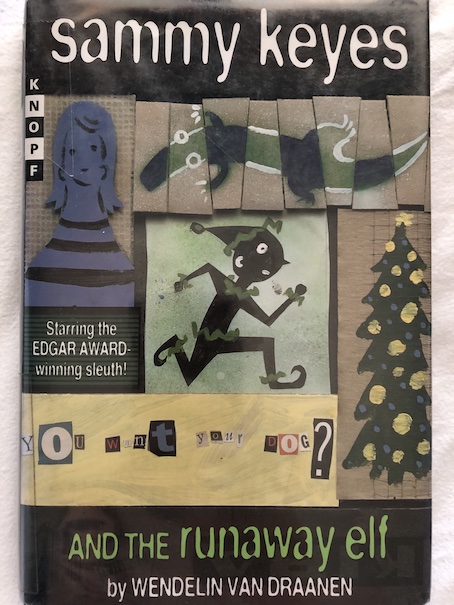



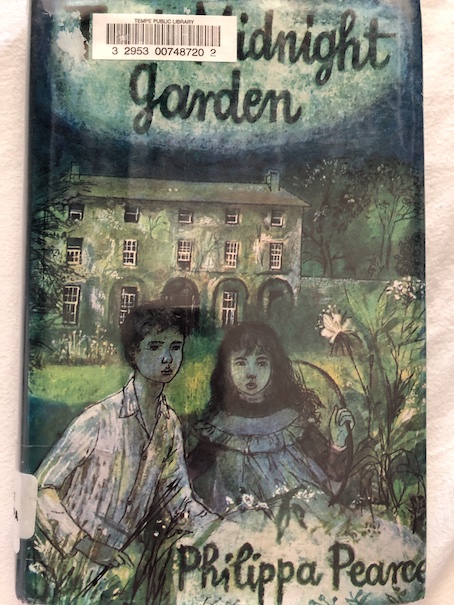


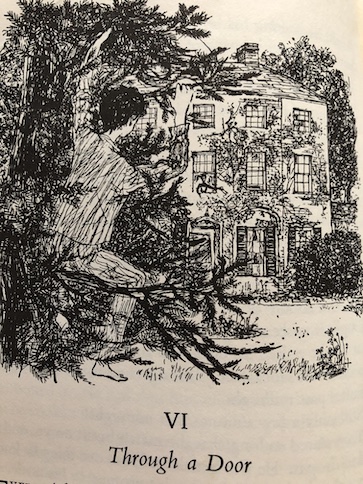
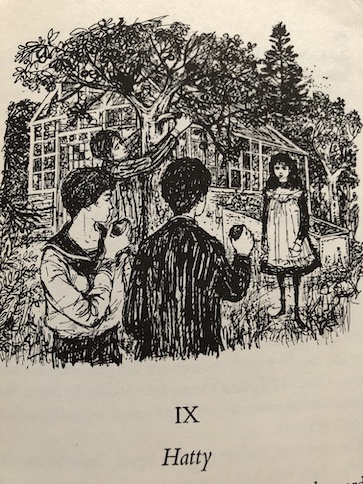
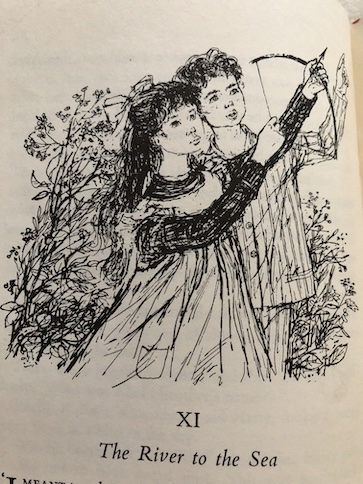

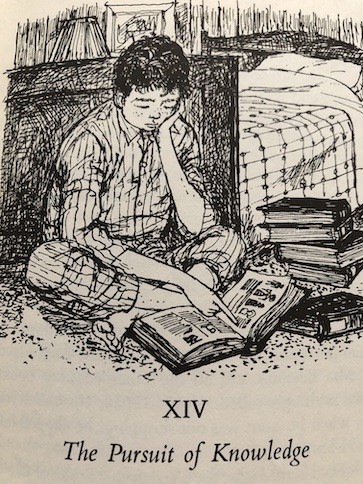
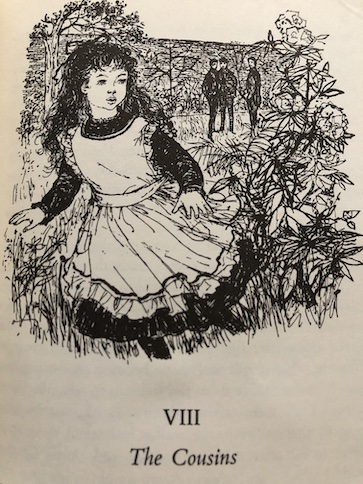


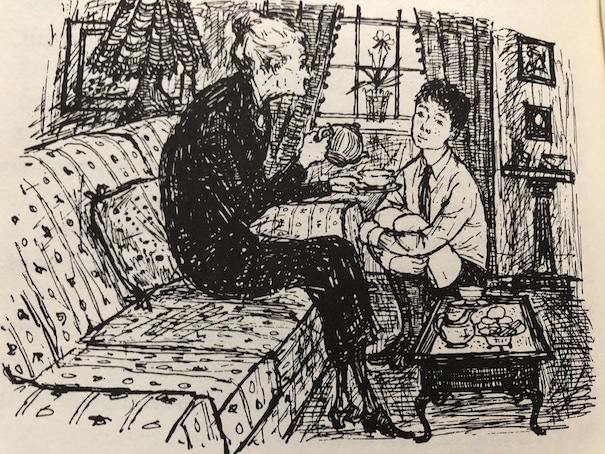




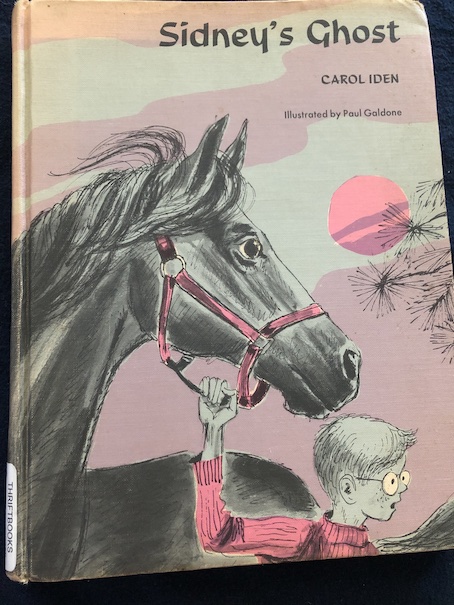





 Jestress's Forgotten Books and Stories