Mystery Dolls From Planet Urd

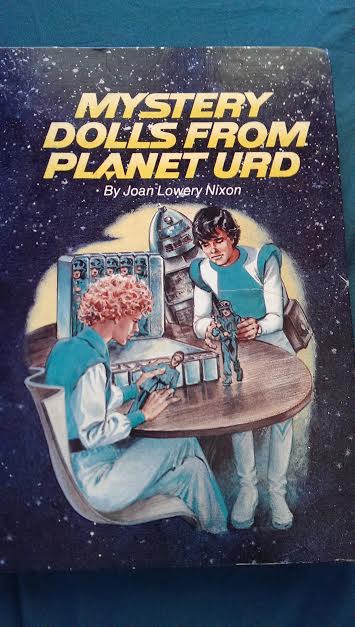
KleepDollsUrdMystery Dolls from Planet Urd by Joan Lowery Nixon, 1981.

This is part of the Kleep: Space Detective series.

Kleep’s grandfather is an inventor, and she loves it when she’s included in the gatherings of other inventors that her grandfather hosts.  They come from many different planets, and she loves to hear them talk about their work.  However, there are some other inventors that Kleep doesn’t like at all.  Slurc, who is from the planet Urd, takes no notice of Kleep until he overhears another inventor telling Kleep about something he has recently learned about that comes from the planet Earth.

Earth is unaware of other planets, like the planet Astarr, where Kleep lives, but people do visit Earth secretly to study the people and their habits.  Kleep’s own parents mysteriously disappeared on a mission to Earth, and Kleep is determined to find them one day.  Pili, an inventor from Ruel, knows that Kleep is interested in anything about Earth, so he gives her an Earth doll.

Children on Astarr do not play with dolls, so Kleep doesn’t really understand what purpose they serve, and it makes her nervous that it looks so much like either a small person or robot but is not alive and does not do anything.  Then, Slurc, listening to their conversation, tells her that children on Urd play with dolls, but theirs are much better, and he promises to send her some that she can share with her friends.  Although Kleep does not really like Slurc, she thanks him for the offer just to be polite.

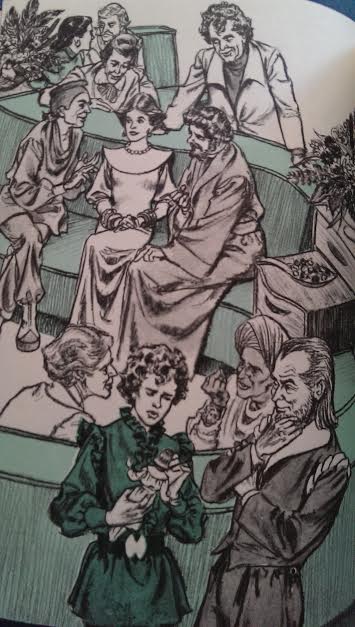
KleepDollsUrdPic1Sure enough, the dolls from Urd soon arrive, but they make Kleep even more nervous than the doll from Earth.  They seem a little too life-like, and one night, Kleep wakes up, certain that she heard them whispering to each other!

At first, her grandfather and her best friend, Till, think that she’s just imagining it because the dolls make her nervous.  However, when she gives a couple of the dolls to Till, he experiences the same thing!

The dolls from Urd are not normal, and Kleep is sure that they are there for a sinister purpose.  She and her friend must discover what it is and fast!

The setting and inventions on Kleep’s world are imaginative.  I especially like the idea of the learning devices that can send knowledge directly into your mind (maybe a little creepy, but certainly a time-saver).  The plot might seem a little far-fetched, but I liked it when I was a kid, and it’s still entertaining.  It’s my favorite book in the series.  I think of this book every time someone mentions Furbies or any similar sort of electronic toy that is supposed to speak to another.  Furbies especially talk to each other, and they look like they’re from outer space.  Who’s to say what sinister plots might be hatching in their furry little minds?

Mystery of the Secret Message

secretmessageMystery of the Secret Message by Elizabeth Honness, 1961.

Penny lives with her aunt and uncle because her mother is dead and her father travels on business much of the time, dealing in Asian art.  Thanks to his travels, Penny and her aunt and uncle have quite a collection of Asian art themselves.  However, Penny has just been told that her father’s airplane crashed in the Pacific Ocean.  No survivors have been found, although Penny still has hope that perhaps her father survived and might yet be found.

At the same time, Penny and her aunt and uncle are moving into a house from the apartment where they used to live. Penny is happy about the move because she knows that she won’t have to worry as much about being quiet and not disturbing the neighbors, like she had to do in their apartment. This means that Penny can bring her friends over to the house to play and have parties. Also, their new house has a very special feature: its own private elevator.

Penny loves the new house and soon begins building a tree house with the help of Pete, a boy who lives nearby.  She tells Pete about her father and her hopes that he might still be alive.

However, events take a disturbing turn when Penny receives a package from Japan containing a beautiful wall scroll. The package appears to have been sent by her father, who meant it as a present for her new room in her new house. Was the package sent before his death, or did he somehow survive the crash?

There is also something odd about Penny’s new neighbors.  Penny’s new house is actually half of a duplex, and the new neighbors, the Carruthers, have also recently moved in after renting the other half. When Penny accidentally gets stuck in the elevator and hears voices coming through the wall, she starts to suspect that her neighbors might not be what they seem to be.  They show an unusual interest in her family’s collection of Asian art, asking to see pieces and borrow pieces for an exhibition that Mr. Carruthers is holding at his gallery.  One of Penny’s friends even catches Mrs. Carruthers sneaking around, looking at things uninvited.

When Penny and her friends have a sleepover on an evening when her aunt and uncle are out, someone sneaks into the house, leaving muddy footprints on the floor.  Penny isn’t sure that her aunt and uncle will believe her because they seem to like the Carruthers, so at Pete’s suggestion, she continues to spy on them, using the elevator to listen in on their conversations through the walls.

When her uncle catches her one day, using the elevator without permission (something she is not supposed to do), she finally explains her suspicions and what’s she’s heard the Carruthers say.  Together, Penny and her uncle discover a hidden secret about the wall scroll Penny recently received, which points to a number of secrets that Penny’s father kept from her and the rest of his family for years.  A stranger from the government helps Penny to fill in some of the blanks, but he has a favor to ask in return that requires Penny to take a big risk.

My Reaction and Spoilers

Although this book is much older than I am, it was a favorite of mine when I was a kid, yet another of my used book sale treasures! I actually got rid of my first copy years ago, when I was cleaning some things out, but I missed it, so I got another one. It’s actually a collector’s item these days.

I always liked the feature of the elevator in the story and how Penny uses it to find the right spot to hear what her neighbors are saying through the wall. I love intrigue, and as a kid, I liked the idea both having a house with an elevator and of overhearing clandestine conversations that reveal sinister secrets. There are points in the story where the two-faced Carruthers think that they have the upper hand, and Penny has to be careful not to let on just how much she knows.

As I explained, the neighbors are not what they seem to be, and Penny’s father was involved in things that his family knew nothing about. Since it’s not easy to get hold of this book right now, I’ll include a couple of spoilers. Penny’s father was acting as a spy for the US government, using his profession as an art dealer to travel to locations he needed to go and to smuggle information back to the US. He is apparently dead, killed in the plane crash, although there are hints that the crash wasn’t an accident, that it may have been intended to kill him. However, before his death, he managed to smuggle his last important information to Penny in the wall scroll that he sent her. When Penny manages to convince her uncle that something isn’t right about the Carruthers, he begins making inquiries and learns the truth about Penny’s father. A government agent speaks to the family and arranges a plan to fool the Carruthers into thinking that they’ve found what they were looking for, but the plan requires Penny to spend an evening in the house alone with them.

Mystery on Taboga Island

TabogaIslandMystery on Taboga Island by Patricia Maloney Markun, 1995.

Amy is excited to be spending the summer with her aunt on Taboga Island, off the coast of Panama, near the Panama Canal.  Aunt Rhoda is a curator for an art museum, and she is writing a series of art lectures.  In particular, she has an interest in Paul Gauguin, who painted in Panama in the late 1800s.  She has invited Amy to join her for the summer not only so that she can visit another country but because of their mutual interest in art.  Amy loves drawing and painting and wants to be an artist someday.

The one drawback of going is that Amy is worried that she will be lonely over the summer.  She doesn’t know whether there will be any kids her age close by or if she would be able to talk to them if there are because she doesn’t speak Spanish.  Fortunately, soon after they arrive on Taboga, Amy meets Zoe.  Zoe is from California but she comes to visit her relatives on Taboga every year.  She introduces Amy to her cousin, Juan, as well.  The three of them become friends, and Zoe and Juan even share their special, secret hiding place with Amy: a old lookout point on an old, abandoned pier left from World War II that can only be reached by walking on a narrow beam over the water.

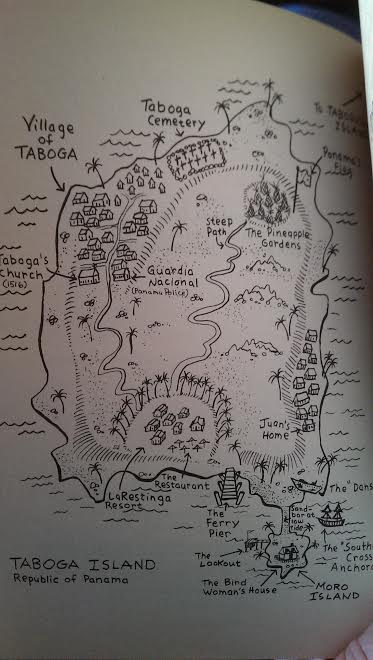
TabogaIslandPicThey also introduce Amy to Madame Odelle, who people call The Bird Woman because of all the birds she keeps around her house.  She is a widow who lives alone and hardly ever sees people, but she invites the children in and when she learns that Amy is interested in art, she shows them a special painting that her family has had for generations.  Madame says that her grandfather bought the painting years ago from a traveling Frenchman who was in need of money.  Amy thinks that it looks like one of Paul Gauguin’s paintings, and she knows that some of his work is unaccounted for.  However, the initials on the painting are PGO.  What could the ‘O’ stand for?

Then, the painting is suddenly stolen, and there’s no shortage of suspects.  A strange woman named Phoebe Quincy has been lurking around Madame’s house and asking questions about her.  There’s also Donald S. Deffenbach, a birdwatcher who doesn’t seem to know much about birds, and Captain Billy, an Australian who owns a sailboat that he sails himself.  Dr. Denis Dobson, who is also a Gauguin expert, also happens to be staying at the resort on the island.  He is visiting places where Gauguin painted while writing a book about him.  Could he be the thief?

I like this book for the pieces of history about Panama and Paul Gauguin, which are important in solving the mystery and understanding the origin of Madame’s mysterious painting.  One of the things I remembered most about reading this book as a child, though, was when Amy and her aunt were eating at the little restaurant on the island and her aunt urged her to try a Panamanian dish so that she could get used to trying new foods when she travels.  Amy tries a tamale for breakfast and loves it, wishing that she had been brave enough to try it earlier since she and her aunt are now planning to do more of their own cooking.  I was familiar with tamales as a kid, but not for breakfast, although I like the idea.

The book is currently available online through Internet Archive.

Mary Geddy’s Day

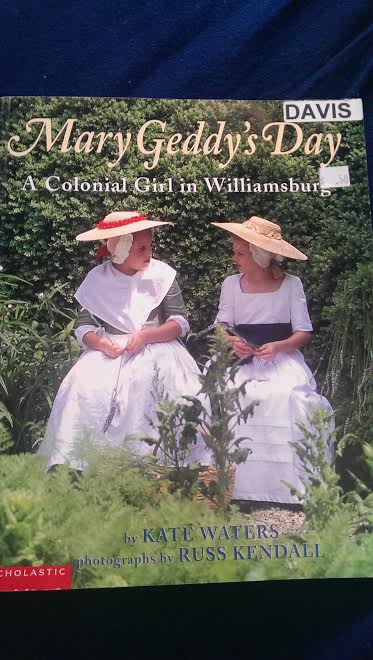
MaryGeddyMary Geddy’s Day: A Colonial Girl in Williamsburg by Kate Waters, 1999.

This book is part of a series of historical picture books about Colonial America.

Mary Geddy was a real girl living in Williamsburg in 1776. In this book, she is reenacted by Emily Smith, a young interpreter at the Colonial Williamsburg living history museum. The story follows her through a single day in her life as it would have been typically experienced by girls around the beginning of the American Revolution (lessons, chores, shopping, and visiting with her friend) up until the moment when the vote for independence at the Fifth Virginia Convention was announced.

Mary Geddy’s father was a silversmith, which put them in the middle class for the times.  They had a comfortable house with a shop next door where Mr. Geddy sold his silver work.  The Geddy family also had slaves to take care of household chores.

At the beginning of the story, Mary knows that the Fifth Virginia Convention is voting on the subject of independence from Great Britain.  Mary is concerned about the prospect of war, and she knows that if the vote is for independence, she will probably lose her best friend, Anne.  Anne’s family are loyalists, and her family plans to return to England if the colonies decide to break away.

All through the day, people are speculating and worrying about what is going to happen as they go through the typical routines of their day.  Mary explains the clothing that colonial girls would wear as she gets dressed in the morning.  Then, her mother sends her out to buy eggs at the market.  Although she can see Anne there and hear some of the talk about what’s happening, Mary is kept at home for most of the rest of the day, practicing her sewing, learning to bake a pie with her mother, helping in the garden, and having her music lessons. She is learning to play the spinet.  She envies her brothers, who are allowed to help their father in his shop and therefore able to hear more of the talk than she is.

I particularly liked how they showed the coins that Mary uses when she goes shopping.  Even though Mary’s family lives in an English colony, she’s using pieces of eight, which is Spanish money.  The book doesn’t explain what currency she’s using or why, but that’s why the coins are those little triangular shapes, like little pieces of pie. Let me explain.

First, the American colonies had a currency problem.  They actually had a shortage of English currency because England didn’t want wealth to leave the English economy and go out to the colonies.  One of the measures they took to prevent wealth from leaving England was to make it illegal to export higher-value pieces of currency to the colonies.  People in the colonies needed something to replace the pieces of currency that they didn’t have or had in too short supply, so they resorted to other methods of exchange such as barter, IOUs recorded in ledgers, and currency from other countries.  They had some standard units of exchange for converting different currencies into British money because that was the way people in British colonies thought about money.  One of the most popular coins in use was the old Spanish dollar or piece of eight, which was worth eight reales (unit of Spanish currency).  However, sometimes, people wanted to use a smaller piece of currency for small purchases and transactions (like buying eggs), so they physically cut one coin into eight pie-shaped pieces (hence, “pieces of eight”), each worth only one real.  They had to do the coin cutting very carefully because the value of this type of money was based on the amount of silver in the coins themselves, and if they cut a coin unevenly, it would impact the value of the sections.  Each section of a piece of eight was called a “bit“, and two bits would be worth one-quarter of the value of the original coin, which is why some people in the US refer to a US quarter as “two bits.”  That’s what Mary is holding in her hand in the picture.  For more information, see the YouTube video from Townsends about The History of Money in America.

When they discover that the Convention voted for independence, there is celebrating in the streets, and Mary goes with her parents and brothers to see everything.  Her little sister is afraid of the noise and stays at home with the slaves.  Everyone is excited, but Mary is worried because she knows that her friend will leave and nothing will be the same again.

Throughout the book, you can see that the slaves are always a part of the family’s activities.  They do chores together, and when the family is not doing housework, the slaves are still working in the background.  Having slaves didn’t mean that the family never had to do any chores themselves, but they had to do less of them, giving them more time for other things, like music lessons and visiting with friends.  When the celebrating starts, the boy slave, Christopher, who is about the age of the Geddy children, wants to go and see what is happening himself, but he has to stay and help look after the younger girl in the family.  Although the slaves live as part of the household and seem to be on friendly terms with the Geddys (Mary speaks of them fondly, wishing that Christopher could join in the celebration and is happy that Grace, the slave who mainly works in the kitchen as the cook, seems proud of her for learning to make a pie), they have no say in making decisions and are expected to follow the orders they are given, even when they don’t want to or larger events are taking place.

In the back, there is more historical information about the period and the Geddy family.  There are also instructions for making a lavender sachet like the kind Mary and her friend Anne make and a recipe for apple pie that was used in Colonial Williamsburg, like the one that Mary learns to make in the story.

The book is currently available online through Internet Archive.

The Powder Puff Puzzle

The Polka Dot Private Eye

PowderPuff#4 The Powder Puff Puzzle by Patricia Reilly Giff, 1987.

Dawn is on her way to go swimming with her friend Emily Arrow when her cat, Powder Puff, is startled and jumps into a stranger’s car.  Before Dawn can do anything about it, the car drives away with her cat!

Fortunately, Dawn managed to notice a few things about the car and driver. The car is red and dented.  The driver is tall and skinny and has long, gray hair.  She was eating a jelly cookie and carrying a box and a long pole.  Her license plate had a name on it and that started with “PA,” but Dawn didn’t get to read the rest.

Emily’s father is a police officer, but he can’t trace the license plate with just the letters that Dawn was able to give him.  Instead, he has the kids make Lost Cat posters to put up in the neighborhood.  Still, that’s not enough for Dawn.  As The Polka Dot Private Eye, she should be able to figure out where her own lost cat is!

PowderPuffPicWith the help of her friends, especially Jason, Dawn uses what she knows to put together a picture of the person they’re looking for, and they try to retrace her steps through town.  Can they track down Powder Puff and get him back?

Part of the puzzle that Dawn and Jason overlook at first is the woman’s profession, which is one that the kids hadn’t really expected to find a woman doing, although Dawn spots the clues which point to what the woman was doing in the area and allow them to realize where she had to be going.  Whether more modern kids reading this book would feel the same way about the woman’s profession, I’m not sure.

The book is currently available online through Internet Archive.

Ginger’s Upstairs Pet

GingerUpstairsPet

Ginger’s Upstairs Pet by John Ryckman, 1971.

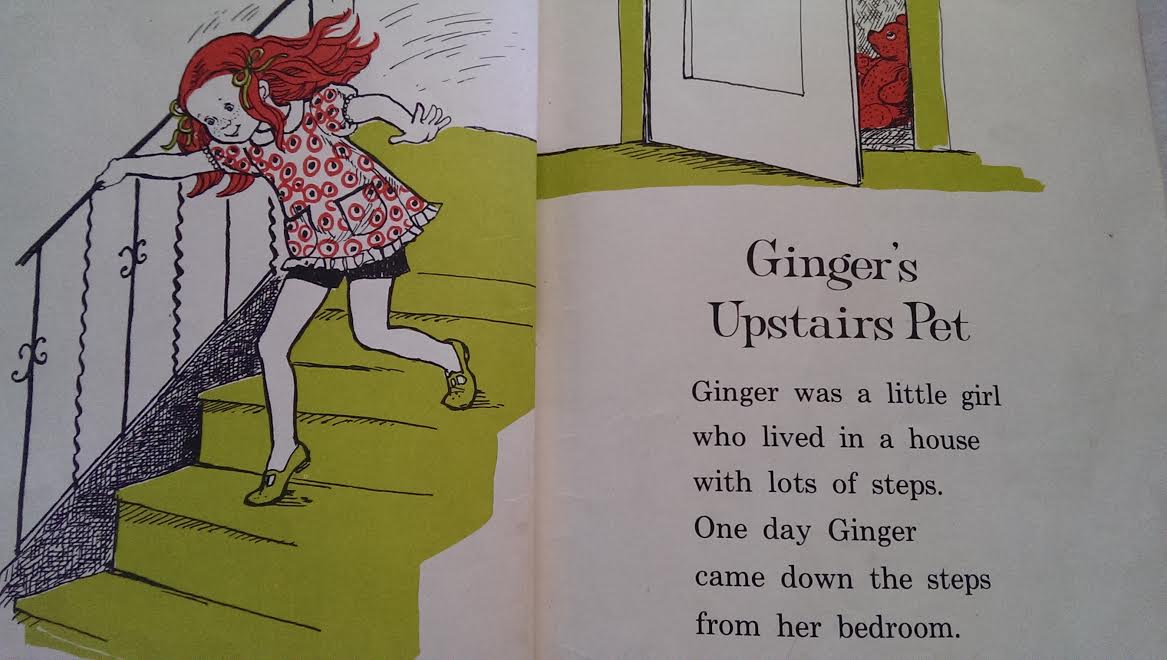
This is a cute picture book about a little girl named Ginger and the mysterious new “pet” she’s found.  At first, her mother doesn’t believe that Ginger has a pet, but Ginger keeps running downstairs from her room to ask for more food to feed her pet.  First, it’s cake.  Then, it’s apples.  Ginger keeps coming back down stairs with more requests for food.

GingerUpstairsPetPic1

Ginger’s mother thinks that Ginger is eating the food herself until Ginger comes downstairs with an especially strange request.  Then, her mother decides to see Ginger’s mysterious pet herself.

What kind of pet does Ginger have?  More importantly, how did she get it?

My Reaction and Spoilers

If you don’t want to know what pet Ginger has, don’t look at the pictures below!  I don’t mind giving spoilers, though, because this isn’t a very common book these days.  It isn’t on Internet Archive, although it’s possible to buy it on Amazon.  I won my copy in a drawing back when I was in first grade, and the school library was raffling off books they were getting rid of.

It’s a fun, light-hearted story about a strange day in the life of this family and the unusual “pet” that little Ginger temporarily acquires without even leaving her upstairs bedroom.  It’s a calm but humorous story that has enough reality to it to be believable.  Ginger’s pet and the way she found it are unusual enough that it would be unlikely that anything like this would happen to any real child, but not so far out and crazy to be completely unbelievable or too cartoony, and the situation is resolved realistically, after which Ginger and her mom have some cake themselves.  There’s nothing serious or tense about the story at all, so it would make good bedtime reading.  It’s one of the books that I think would be nice to see in print again.

The drawings are cute, and they’re interesting because they only use four colors: black, white, red, and green.

Susan’s Magic

SusansMagicSusan’s Magic by Nan Hayden Agle, 1973.

Susan Prescott believes in magic, although her mother tries to tell her that it’s all imagination.  Susan gets feelings about things and sometimes seems to have the ability to make things work the way she wants them to.  That’s part of the reason why she can believe that old Mrs. Gaffney is really a witch.  People say that Mrs. Gaffney used to be a fortune teller but had to stop when one of her predictions became frightening true and people got scared of her.  Now, Mrs. Gaffney runs an antique shop, living in a small apartment above it.  But, whether Mrs. Gaffney is really a witch or not, Susan’s life soon becomes entangled with hers through a series of unforeseen events.

Susan lives with her mother, who is a practical, down-to-earth woman, and her older brother Mike, who likes to play football.  Her parents are divorced, and her father lives in another state, only visiting occasionally, often at unpredictable times.  Susan’s father is known for not being very dependable, and he apparently left the family to be with another woman, although the story doesn’t provide many details.  Susan misses her father and is hurt by his absence, lack of dependability, and that he is more interested in being with someone else, somewhere else, instead of with her, her mother, and her brother.

The story begins when Susan sets out one day to buy a present for her mother’s birthday, and another girl she knows from school tells her to have a look at the flea market being held that day at a church.  Susan doesn’t have much money, and even most of the used items at the flea market are beyond her small savings.  Then, she foolishly spends what little money she has on cupcakes and lemonade.  Susan is angry with herself for her  foolishness, but her mistake leads her to greater adventures.

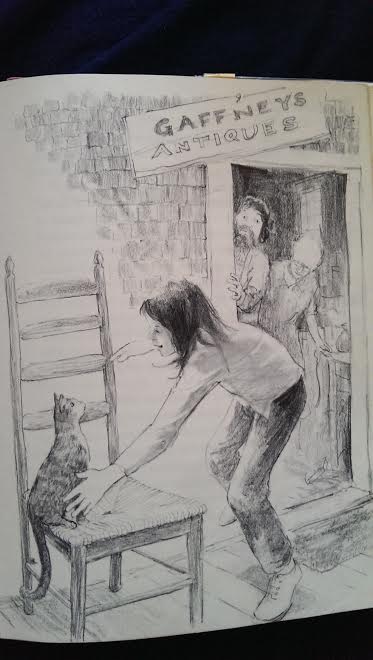
SusansMagicPic1One of the things at the sale which especially captures Susan’s attention is a small stuffed toy elephant.  The elephant is very worn, and Susan feels sorry for him, wanting to take him home and take care of him.  However, her money is gone, and she still has no present for her mother.  Then Mrs. Gaffney spots her looking sad and offers to lend her the 25 cents she would need to buy the elephant.  Although Susan has reservations about accepting such a loan, she does anyway, telling Mrs. Gaffney that she’ll pay her back.

Susan brings the elephant, which she names Trunko, home, and when her mother thinks that Susan meant to give it to her for her birthday, she doesn’t correct her although she has become very attached to him herself.  Her mother, sensing Susan’s attachment to the toy, says that they can share it and that Susan can sleep with it.  Susan thinks this is a good arrangement until someone calls the house to say that the toy elephant was donated by mistake and that the original owner is sad and wants it back.

At first, Susan can’t bear the thought of giving up Trunko. But when she learns that the real owner is Hugo, a member of her brother’s football team, that he has had the toy ever since he was small, and that he really misses it, she realizes that she has to let him have it back.  To thank Susan for giving him back Trunko (originally named Stanley), Hugo gives Susan a stray cat that had been living under his porch.  Susan loves the cat immediately and names her Sereena.

However, Susan’s mother says that they can’t keep the cat because the hill nearby is a bird sanctuary.  Susan tries to persuade her mother otherwise, but she says that they’ll just have to find another home for Sereena.  Susan tries to get an older girl from school to look after the cat for awhile while she tries to persuade her mother to let her keep her, but the other girl refuses.  Then, unexpectedly, the cat runs into Mrs. Gaffney’s shop as Susan is walking past it.

In Mrs. Gaffney’s shop, Susan accidentally breaks a teapot, increasing her debt to Mrs. Gaffney.  However, Mrs. Gaffney turns out to be a cat lover and agrees to look after Sereena for Susan.  This is the beginning of a new relationship between Susan and Mrs. Gaffney as Susan offers to work for her in order to pay off her debt.  Mrs. Gaffney could use some help in her shop because sales haven’t been good, and she’s worried about losing it.

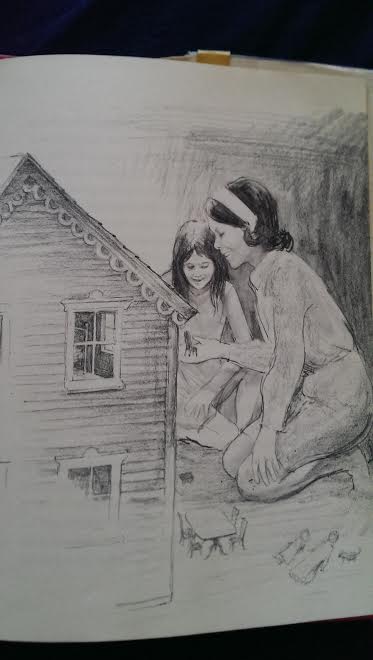
Sereena herself turns out to be good for Mrs. Gaffney’s shop, attracting customers’ attention to the items for sale.  Susan feels jealous about how much Sereena likes Mrs. Gaffney and her shop, as if Sereena has abandoned her like her father and Trunko have.  But, when a beautiful dollhouse in Mrs. Gaffney’s shop catches her eye and it turns out to be even more valuable than Mrs. Gaffney believed it was at first, Susan has to decide whether she is willing to give it up to help Mrs. Gaffney earn enough money to fix up her shop or if she will hold Mrs. Gaffney to her earlier promise to sell it to her for much less.

SusansMagicPic2In spite of the talk about magic and witches, this is not a fantasy story at all.  Susan’s concept of magic has more to do with a way of living, dealing with change, and solving life’s problems.  For the first part of the book, Susan’s “magic” focuses on getting what she wants for herself and getting things to work out the way she wants them to.  But, as the book goes on, Susan matures in the way she deals with the complications in her life.

Toward the end of the book, Susan thinks about reality and fantasy: “The magic part of living was how you fit yourself around real things, she guessed.  A magician was extra good at fitting. That’s why being one was important.”  What Susan really wants and the kind of person she wants to be change.  She comes to realize that, while she can’t get and keep everything she wants in life in the sense that it’s always with her all the time, caring about people and things is also a kind of ownership.  Giving up the toy elephant and sharing the cat with Mrs. Gaffney do not mean losing them completely because she still cares about them and the people connected with them.

Susan also realizes that, even if she doesn’t get exactly what she wants in the beginning, as long as things work out for the people she cares about, she can still be happy.  Although she has to make sacrifices at times for the people she cares about, she earns the love and respect of the people who mean the most to her.  Susan says, “Anyway, magicians don’t lose. They win. Dad, Trunko, and Sereena are mine still in a way.”  She will always be close to her mother and brother, even without her father’s presence, and Hugo, Mrs. Gaffney, and Sereena are all her friends.  Susan is a winner not because she gets what she wants for herself but because she knows how to make things work out in the best possible way for everyone she cares about, and that’s a kind of magic.

The book is currently available online through Internet Archive.

In some ways, this story reminds me a little of the Miyazki movie Whisper of the Heart, which also features a young girl who likes making up stories and who is led to an antique store by a friendly cat and meets an older person who helps her to learn about the person she wants to be and the kind of life she wants to live.  The two stories are not the same, though, and Whisper of the Heart was based on Japanese manga, not this book.  In some ways, however, both this book and Whisper of the Heart are the kind of stories that take on a new life when you read them as an adult because, at that point, you understand some of the feelings behind them better.

Mandie and the Secret Tunnel

MandieSecretTunnelMandie and the Secret Tunnel by Lois Gladys Leppard, 1983.

Young Amanda Shaw is almost twelve when her father dies, leaving her with a bully of a sister and a mother who doesn’t really love her. Her only friends are Joe, who is the son of the local doctor, and Uncle Ned, a Cherokee Indian. Amanda and her father are part Cherokee, and Uncle Ned helps to look after her now that her father is gone. Then, Amanda’s mother remarries and sends her to live with another family who want someone to help them look after their young son. However, the family is rather mean to Mandie, exploiting her for cheap labor, and Uncle Ned offers to take Mandie to live with her uncle in the town of Franklin.

Mandie never knew that her father had a brother (Uncle Ned is Mandie’s “uncle” by affection, not blood), but she readily agrees to go to him. Uncle Ned and some other Cherokees help Mandie to sneak away in the middle of the night and make the journey to Franklin. When she arrives at her uncle’s house, she is taken in by the servants, but she is told that her uncle is away in Europe.  Mandie’s uncle turns out to be rich, and Mandie is very happy in his house. She gets new dresses for the first time in her life and makes friends with Polly, the girl next door.

Then, word comes that her uncle has died in Europe. Her uncle’s will is missing, and no one knows exactly what will happen to her uncle’s property or to Mandie until it is found. Strangers come to the house, saying that they are also relatives of Mandie’s uncle, but Mandie wonders if they really are who they claim to be. With the help of Polly and Joe, who comes to visit her, Mandie searches for her uncle’s missing will and accidentally finds a secret tunnel leading out of her uncle’s house.

As Mandie and her friends investigate this mysterious situation, where things and people aren’t what they claim to be, Mandie learns that her own past isn’t what she believed it was.  Her family has kept many secrets from her, and learning these secrets leads her to a better future than she’d ever imagined.

This book is one of the Mandie Books.  It is currently available online through Internet Archive.

The Vandemark Mummy

The Vandemark MummyThe Vandemark Mummy by Cynthia Voigt, 1991.

The Vandemark Mummy is an exciting mystery with believable characters. The story includes a bit of history about Ancient Egypt and side plots about the complications of family life, the role of women in society, and the nature of ambition.

Twelve-year-old Phineas Hall and his fifteen-year-old sister, Althea, have recently moved to Maine with their father, Professor Hall, because he got a job working at the small Vandemark College. Moving and starting over in a new place is never easy, but the move is more difficult for the kids because their mother didn’t come with them. Their mother is an ambitious, career-oriented feminist, and when she was offered an important job working for a congressman in Oregon, she could not bring herself to turn it down in order to go to Maine with the rest of the family.

Although the entire family talked the situation over, and everyone agreed to the current arrangements, no one is really happy about it. Althea particularly feels hurt. Even though she has shared her mother’s feminist ideals, she’s hurt by her mother’s apparent selfishness and the seeming ease with which she abandoned the family. Althea believes that her mother should have compromised on her career this time because her husband has made compromises for her in the past. To make herself feel better, Althea spends her time studying one of the oldest feminists, the Greek poet Sappho. Phineas, on the other hand, is just trying to be a normal kid and fight off boredom while waiting for the summer to end and school to start. But, boredom is the last thing on Phineas’s mind when the mummy arrives at the college.

The wealthy patriarch of the Vandemark family dies and leaves his collection of Egyptian antiquities (one of many collections he had) to the college, including a real mummy. The Vandemark family is a little disappointed because they had hoped that the collection might go to a much more prestigious institution, even though Vandemark College is named for their family. To the joy of the Hall family, Professor Hall is put in charge of the collection, which will be put on display in a new addition to the college library. Professor Hall lets Phineas and Althea go through the collection with him and another professor, Ken Simard. Although at first the collection does not seem to be particularly valuable, except for the unusually good condition of the mummy and the funeral wreath, it seems to be a lot more valuable to someone. After a failed attempt to break into the collection, someone later manages to steal the mummy. Then, Althea suddenly disappears. The adults suspect that Althea might have run away because of the troubles in their family, but Phineas knows better and begins a desperate hunt to find his sister.

One of the best things about the book is that it really takes both kids to unravel the entire mystery: Phineas for his persistence and decisive action and Althea for her more mature understanding of the thief’s motives. Although, even at the end, their family’s situation isn’t completely resolved, the kids’ experiences give them a new perspective on things. It would be a great book for middle schoolers.

The book is available to borrow and read for free online through Internet Archive (multiple copies).

Themes and Spoilers

I debated about saying more because I didn’t want to spoil the story too much, but after thinking it over, I can’t give my full opinion of it in this review without talking a little more about what Althea and Phineas learned from their situation.  If you’d rather not know more detail, you can skip the rest of this.

On the one hand, I was a little disappointed at the lack of complete resolution to the family’s troubles because, by the end of the book, I really cared about the characters and wanted to know what would happen to them, but I think the author purposely left the story open at the end so readers could imagine for themselves what the characters are going to do next.  However, there is one thing that is pretty well established at the end of the story: whatever happens to their parents, whether their separation is temporary, as they’d originally planned, or whether they end up divorcing, Althea and Phineas are going to be okay because they still have each other, their father, and their new friends in their new town.

In the beginning, their mother’s absence is worrying because they will now have to cope without her, and they don’t know what is going to happen to their family in the long run.  But, part of the children’s self-sufficiency actually does come from their mother and things that she taught them, whether she is with them or not.  The book does mention little things they learned from their mother.  It’s subtle, but she’s still with them because of the influence she’s had in their lives.  The kids also develop more of an appreciation for their own resources and abilities, which makes them less fearful.  One of Althea’s early characteristics was a long-standing fear of the dark.  After her ordeals, her father and brother expected her fear to be worse, but she tells them that she is actually less afraid now than she was before because she has learned something about circumstances she can control and ones she can’t.  She says, “I think, there’s a difference between being scared and not knowing how you’ll do, and being scared but knowing you’ll do okay.”  As she notes, if she goes to bed at home with the lights off and decides that she really can’t stand it, she can always get up and turn them on again.  She has realized that she has control in her daily life and actions she can take to make things better, which she didn’t have during parts of their adventure.  It gives her confidence.

The kids also learn lessons about the nature of ambition and about their own feelings.  In the beginning, Althea is more vocal about how she feels about her parents’ separation.  She feels betrayed because, although she learned her sense of idealism from her mother and thought that they shared the same views, her mother has now done something which she views as a selfish act, rejecting her family and her family’s needs solely in the name of her personal ambitions.  Phineas, on the other hand, doesn’t seem to know what to feel or is afraid to show his true feelings at first, just trying to keep busy so he doesn’t have to think about it too much because he thinks that his parents’ marriage is only their business.

At the end, the two alter their positions somewhat, coming a little more into agreement with each other.  Althea has the chance to contrast her parents’ marriage and ambitions with that of the villain’s (without naming names), and she sees the difference in the way each of them responds to the same pressures.  Although her father may have been hurt by his wife’s reluctance to make sacrifices in her ambitions for the sake of his and her preference for separation over compromise, he still genuinely cares about her and understands her ideals and what she really wants to achieve.  The fact that it’s only a separation, not a divorce, is a sign that the parents still care about each other and respect each other and hope that they will be able to reconcile eventually.  The villain doesn’t have those feelings, and unlike either of Althea and Phineas’s parents, really is motivated solely by selfish ambition.

Ambitions often require sacrifice in order to achieve them.  Revealing exactly what the villain sacrificed would say too much, but this person does end up losing pretty much everything in the end.  For the sake of her ambitions, Althea’s mother sacrificed her place in the family.  Although she thought that it would only be temporary, the hurt she caused her family members will probably have longer-lasting effects. When she calls them to find out what’s been happening, she learns what she’s been missing and the ordeals her children have faced without her, which leave her feeling both worried and left out, feelings that her husband understands and explains to the children (“One of the things she knew, without knowing how it would feel, is that we’d be able to get along fine without her.”), which shows that he is still in tune with his wife’s feelings.  Toward the end of the story, she is upset and seems hurt that Althea is too tired and busy talking to the police to talk to her much other than to briefly reassure her that she is now safe.  At that point, Althea needs her mother’s comfort less than her mother needs reassurance from her.  Althea feels a little bad about not being able to soothe her mother’s feelings because she is no longer as hurt and angry with her as she was before, but Phineas tells her not to worry if their mother’s feelings are hurt right now because she owes her daughter some hurt feelings.  In other words, Phineas has finally learned that it’s okay for him to have feelings and an opinion about the things happening in his family and to show them.  He recognizes how hurt and confused his sister was at their mother’s apparent betrayal, and he has decided that it’s okay for their mother to see that hurt and feel a little of it herself so that she will understand what’s really happening and what her children are really going through. They have coped without her, but the fact remains that she wasn’t there for her family during their time of crisis.

You’ve probably noticed that I’ve been focusing more on the mother’s ambitions and questioning her motives more than the father’s in the story.  That’s partly because that is the focus of the story.  The children do not see their father as abandoning the family for the sake of ambition because he didn’t.  They make it clear that he has supported his wife’s ambitions in the past, often at the expense of his own.  He mentions that the attraction of this new position that he has accepted is that it’s “the first job in fifteen years that I’m not over-qualified for, and I plan to enjoy it . . .”  He is primarily a scholar and has felt under-challenged intellectually.  Because he’s an academic, his schedule is more in sync with the children’s school schedule, which is why both of the children chose to go with him rather than with their mother.  He also makes time for his children and even involves them in his work when possible, supporting Althea’s interests in history and philosophy, which he shares.

At one point, Althea says to her father, “You and Mom don’t have exactly the same set of values, you know.”  The mother of the family is more concerned with money, climbing the occupational ladder, and achieving higher positions, higher salaries, and more influence.  She sees these things as ways of furthering the cause of feminism, and often works long hours away from her family for her jobs. In the past, she has used the fact that she earns higher salaries than her husband to convince him and the rest for the family to make accommodations for the sake of her jobs.  Althea says that her mother’s arguments aren’t honest and that her lack of support for her husband’s career as well as her own are a betrayal of the “equality” that she supposedly believes in.  It isn’t that Althea is completely opposed to her mother’s ambitions so much as she disapproves of the way her mother goes about achieving them. Her mother is apparently more concerned with status than the intellectualism that her daughter and husband crave.  Much of the conflict in their values comes down to what they think they need to feel fulfilled in their lives.  Because the characters seem to need different things, they are having trouble living a shared family life.  That’s the situation for the Hall family, as the book describes it.

In the end, this book is bound to spark a lot of opinions and discussions about the characters and their views and much speculation about what will happen next for the Hall family.  Will one or both of the parents change their view of the situation, just as Althea and Phineas have?  Will the mother, who admits that the job she took wasn’t what she had expected it to be, decide to quit and rejoin her family?  If she does, what will her role in the family be now that Althea and Phineas have become more independent than they once were?  Another character, who I haven’t mentioned before, is a female reporter in their new town who befriends the family and helps them through their ordeals in the mother’s absence.  In some ways, her values seem more in tune with the father’s than the mother’s are.  Is it possible that she could be the children’s eventual stepmother if the parents separate permanently?  Or will she only ever be just a supportive family friend?  Families in real life experience changes like these as children grow older and begin to forge their own identities and values in the face of changes in their lives, reevaluating their parents’ decisions and making ones for themselves.
Journey to America

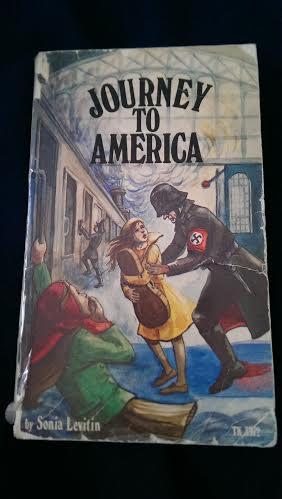
journeytoamericaJourney to America by Sonia Levitin, 1970.

This is the first book in the Journey to America Saga.  Like her heroine, Lisa, Sonia Levitin also fled Germany with her family during World War II, and her stories are semi-autobiographical.

Twelve-year-old Lisa Platt lives with her family in Berlin in 1938.  But, with the rise of the Nazis, events have taken a frightening turn for Jewish families like theirs.  There has already been violence toward Jewish people, and travel is restricted.  Lisa’s father fears for their family, and their mother believes that war is about to break out.  Reluctantly, her parents have decided that the only thing to do is to leave Germany and try to start over somewhere else.

Because of the travel restrictions, Lisa’s father has to leave secretly, pretending that he is only going on vacation.  In reality, he and Lisa’s uncle will go to America and try to get established before sending for the rest of the family.  But, it isn’t safe for Lisa, her mother, and her two sisters to stay in Germany, waiting for word from them.  Instead, they pretend that they are joining Lisa’s father for a holiday in Switzerland.  They can only take a little luggage with them, as if they were really just going on vacation, and very little money.

journeytoamericapicBut, getting on the train out of Germany is only the first step of their long journey.  Lisa and her mother and sisters live as refugees in Switzerland, waiting for her father to help arrange for their passage to America.  Often, they have too little to eat because they don’t have much money.  There are some people who help them, and they make some new friends, but the long wait is difficult.  Meanwhile, they must face the frightening events taking shape around them, around the people they left behind, and their own uncertain future.

There is something in the stories that I’d like to describe a little more because I didn’t quite understand it when I first read this book as a kid, but I can explain it better now.  At one point in the story, Lisa’s grandmother suggests that her mother send the girls to England because other families are doing it and it would ensure that the children get safely out of the country.  Later, in Switzerland, Lisa gets a letter from her friend Rosemarie that says she and her sister are now in England without their parents because their father didn’t didn’t feel like he could leave Germany.  What they’re describing is the Kindertransport, a rescue effort started by Jewish, Quaker, and British government leaders to transport unaccompanied Jewish minors, from babies to age 17, from Germany and German-controlled countries to England for safety after the events of Kristallnacht made it clear that Jews were in serious danger in Germany.  When the children reached England, they were placed in foster homes, schools, and anywhere else willing to take them, similar to the way children evacuated from London to avoid the bombings later would be placed in foster homes or on farms.  Grandmother Platt points out that this could have been an option for her grandchildren when she discusses the possibilities with their mother, but since, neither the mother or father of the family wanted to stay in Germany, the family decided that they should all leave together.  The Kindertransport program ended when war actually broke out, but by then, about 10,000 children had been brought to England.  Although parents who sent their children to England on the Kindertransport hoped to reunite with them in England, most of the Kindertransport children who went to England never saw their parents again because their family members who stayed behind in Germany were killed in the Holocaust.  I had lessons about the Holocaust in school in Arizona, but they never mentioned the Kindertransport because it wasn’t something that really affected the area where we lived.  I did see a Holocaust survivor who came to speak at my high school in the early 2000s.  There were Holocaust survivors living in my area of Arizona then, and there still are as of this writing because I heard that they were among the first to be vaccinated during the coronavirus pandemic in early 2021.  This video from the BBC Newsnight and this video from the University and College Union explain more about it and have interviews with people who were brought to England on the Kindertransport as children.  Rosemarie and her sister would probably be very much like the people in those interviews years later.

Although there are sad parts of the book, there are lighter moments, too, and the characters are realistic and engaging.  There is only one illustration in my copy of the book, a drawing of Lisa and her sisters getting their pictures taken for their passports.  Other editions of the book have different illustrations.

The book is currently available online through Internet Archive (multiple copies, in different editions).