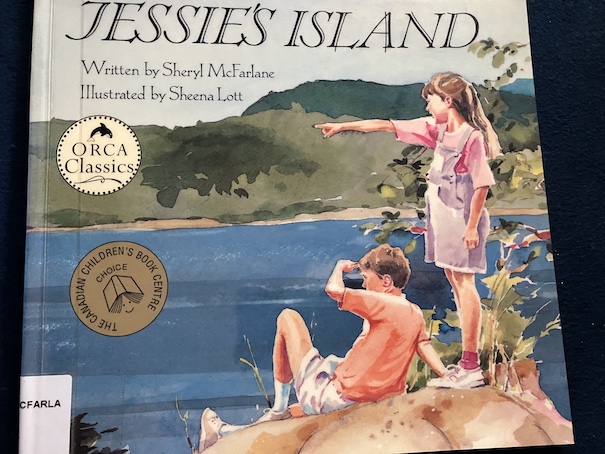
Jessie’s Island by Sheryl McFarlane, illustrated by Sheena Lott, 1992.
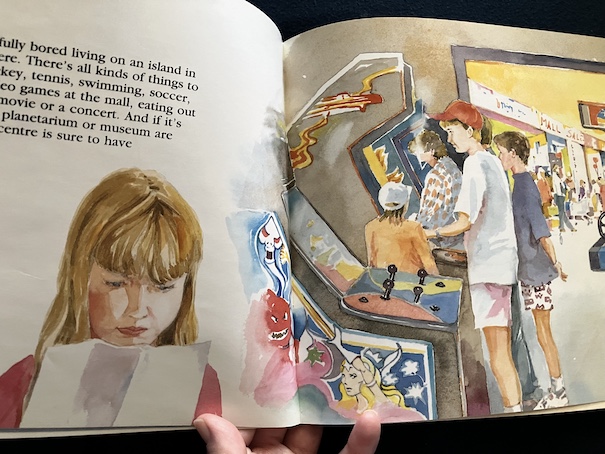
Jessie cousin, Thomas, thinks that life must be dull on the island where she lives because there are so many things to do in the city that her island doesn’t have, like arcades, museums, and concerts. However, Jessie’s mother decides to invite Thomas for a visit so he can see what life on the island is really like.
Much of the story takes the form of letters between the two cousins, first where Thomas brags about all the things there are to do in the city and then a letter from Jessie to Thomas, telling him all the things she will show him when he comes to visit.
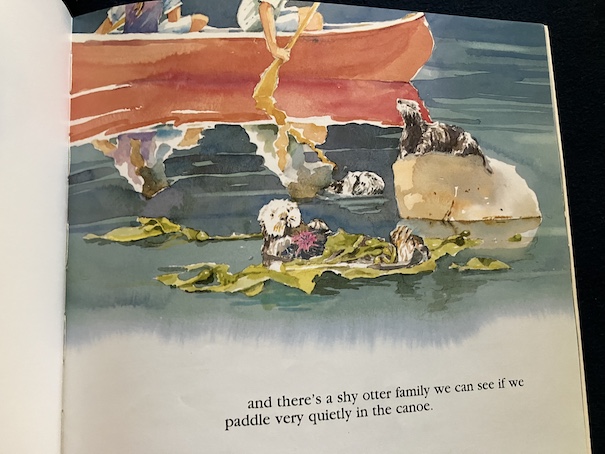
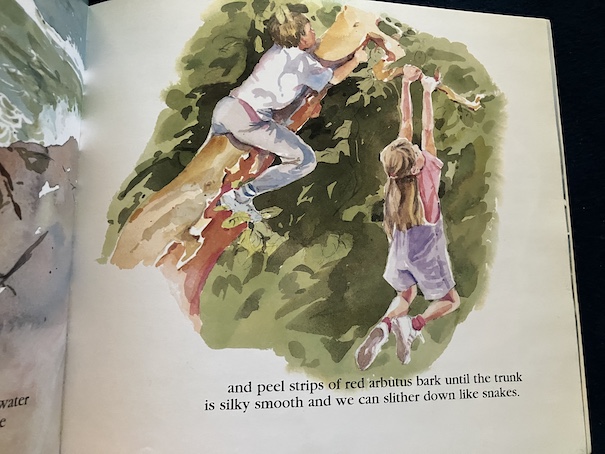
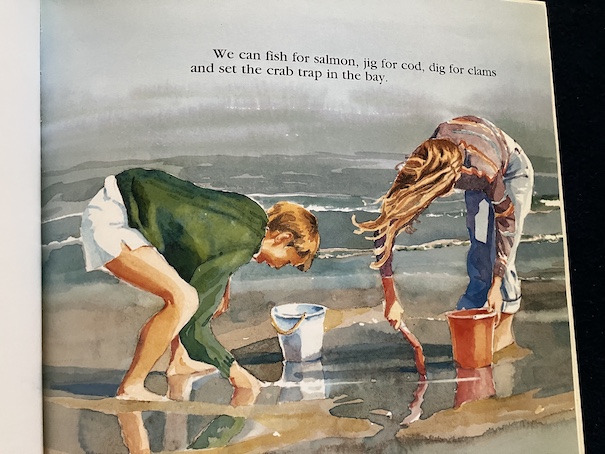
Jessie describes animals, like bald eagles, seals, and killer whales. There also an old, abandoned cabin to explore that has trees growing through the roof. They can also climb trees, pick berries, go out in a canoe, dig for clams, and go fishing.
The book is available to borrow and read for free online through Internet Archive.
My Reaction
This book is fun because it points out that, no matter where you live, there are things to do and see that you can’t do and see everywhere else. It’s true that the island doesn’t have the shopping malls and museums that the city where Thomas lives has, but it has other things that Thomas can’t experience in the city. The natural environment provides interesting sights, entertainment, and scope for the imagination! Just because their environments are different doesn’t mean that there’s less to do or appreciate.
The pictures in this book are beautiful watercolor paintings that take up whole pages. I love the way the illustrator captured the colors and scenery of the island!
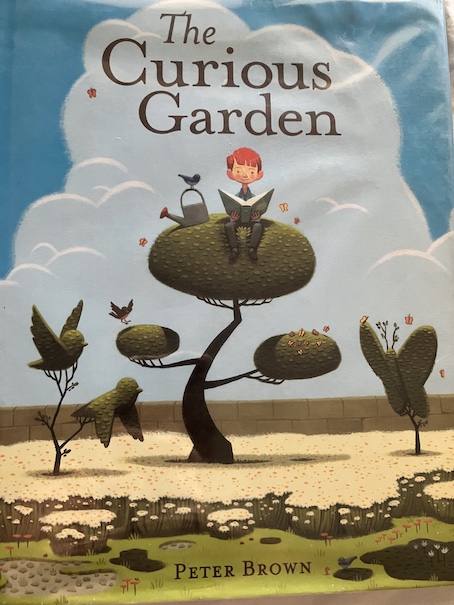
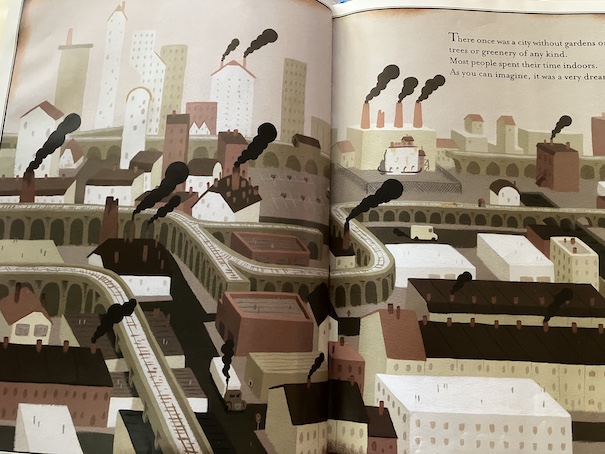
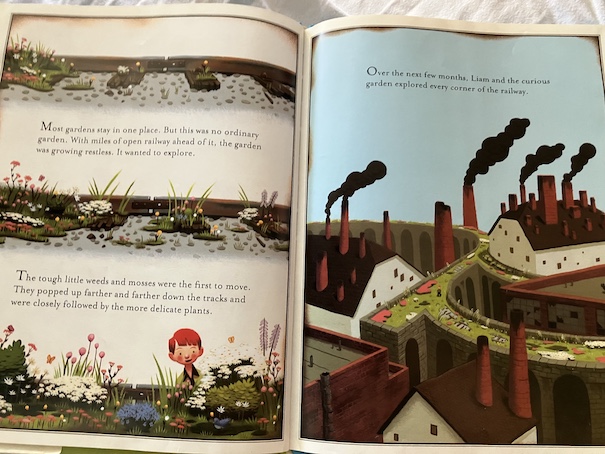
A boy named Liam lives in a dreary city where there aren’t any gardens or green spaces. Most people in the city spend most of their time inside. However, Liam likes to explore outside.
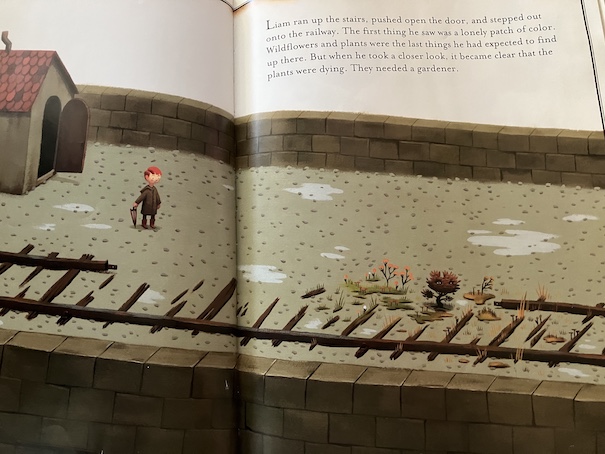
One day, while exploring some disused train tracks, he finds a few plants struggling to survive. Liam doesn’t know much about plants, but he decides to help them by giving them water. Gradually, he begins to learn more about what will help the plants, and they begin to grow and spread into a small garden.
As Liam helps the plants, they begin to spread all along the old railroad tracks. During the winter, the plants are covered in snow, and many of them are killed or have suffered badly from the cold. However, because Liam spent the winter studying about plants and gathering some gardening tools, he is able to restart the garden.
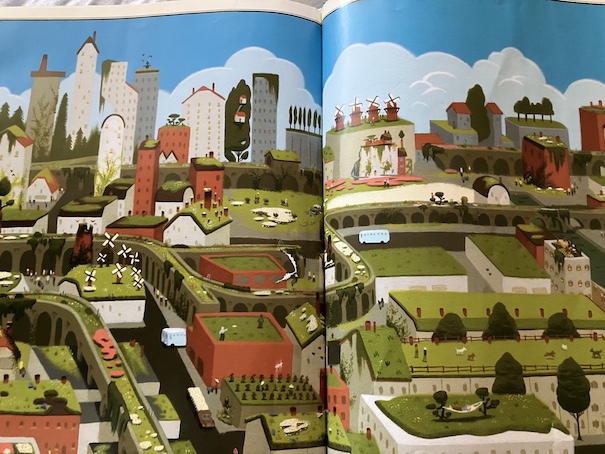
As the garden spreads through the city, other people begin to notice, and they start joining Liam in tending the garden. Greenery begins taking over places and things that are disuses and abandoned, and people encourage the plants to grow where they can enjoy them. Because of their efforts, the city is transformed!
There is an author’s note in the back of the book about the inspiration for the story. There was an elevated train in Manhattan that was shut down in 1980, and plants took over the abandoned tracks. The author, Peter Brown, considered what it would be like if the phenomenon took over an entire city.
My Reaction
The pictures in the book are great, and some pages are full pictures with no text, just showing how the garden grows and spreads through abandoned places in the city. I love how this story was inspired by the way plants take over abandoned places in real life. Plants can grow in some unlikely places, when nothing interferes with them, and in the story, the boy discovers that they can spread further with a little help.
By the end of the story, his entire city is completely transformed into a greener, more eco-friendly place. It’s not just that there are more plants and green spaces in his city, but the factories that we see in early scenes are no longer putting out all that smoke by the end, and we see windmills in the pictures as alternative forms of energy production. We aren’t told exactly why some things are changed about this city, but it seems like the increasing presence of the green spaces has caused people to change aspects of their lives and businesses to accommodate and preserve them. It’s an idyllic solution that doesn’t show a lot of the conflict that occurs in real life, when some people are ready for a change and others just don’t want to change. Still, I like this mage of a hopeful future because it comes as an antidote to the dystopian quality that we see in many forms of modern entertainment.
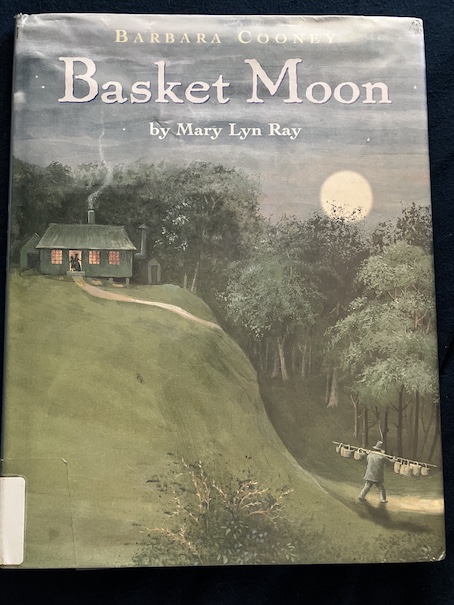
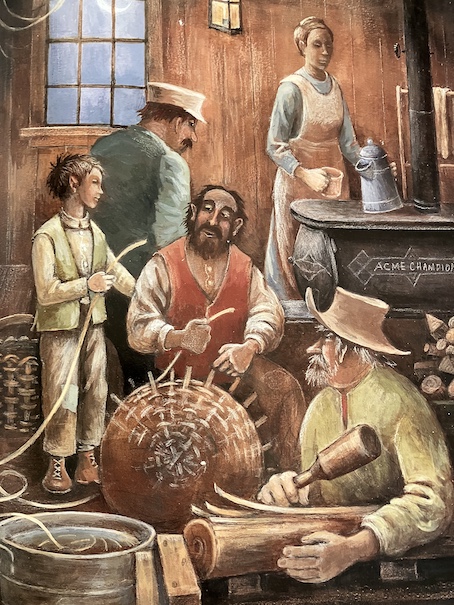
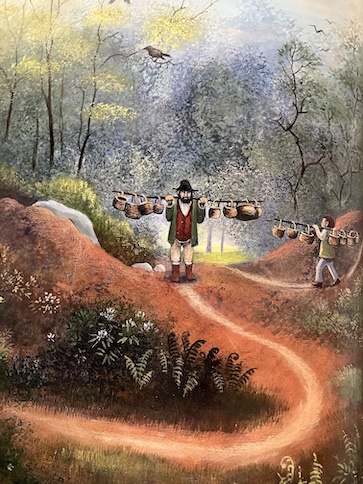
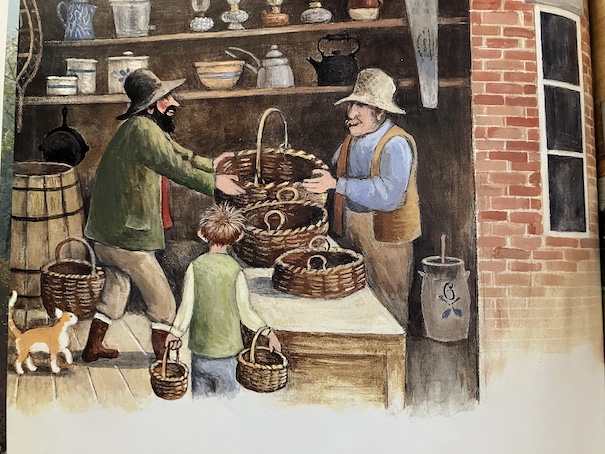
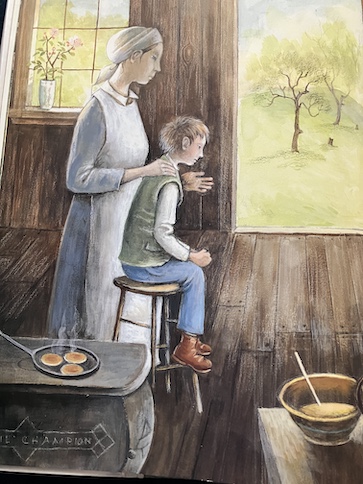
Basket Moon by Mary Lyn Ray, illustrated by Barbara Cooney, 1999.
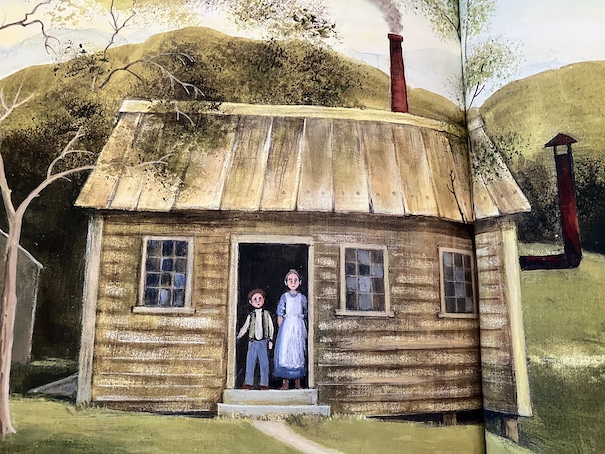
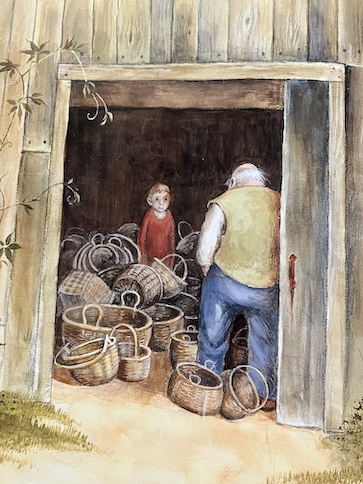
An eight-year-old boy lives in the countryside with his parents, and his father makes baskets to sell in the town of Hudson in New York. The boy has never been to town before, and he wants to go, but his father always says he’s too young.
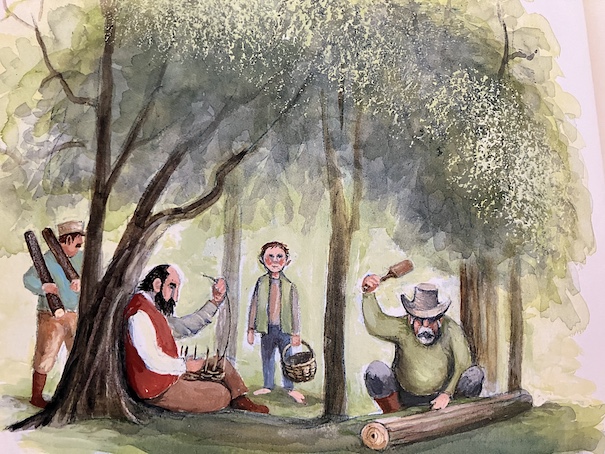
His father has taught him which trees are best for wood to make baskets, and he watches his father and the other men who live in the area gathering it. He’s also watched his father weaving baskets, and he starts to weave baskets of his own. When he turns nine years old, his father decides that he’s old enough to go to town with him to sell the baskets.
They sell their baskets to a hardware store, and they buy some supplies their family needs. The boy marvels at all the new sights around him. However, as he and his father are heading home, a man teases them about being hillbillies who only know how to make baskets. The boy’s father ignores them, but the boy is bothered by what the man said.
For a time, the boy no longer wants to make baskets, thinking that it’s something that only hillbillies do, like the man in town said. However, when the boy kicks over stacks of his father’s baskets in anger, they don’t break when they fall, and he sees that his father makes strong, high quality baskets. His mother and one of the other men who works with the boy’s father talk to him about how they learned the art of basket making from the trees and the wind. The trees and the wind never seemed to talk to the boy before, but when he really listens, he begins to understand what the men mean.
The book is available to borrow and read for free online through Internet Archive.
My Reaction
I like books about traditional crafts and lesser-known pieces of history. In the back of this book, there’s an author’s note about the history of making baskets among the country people around Hudson, New York. Sometimes, these country people came into town to sell their baskets, but the townspeople were also somewhat leery of them. The wooded countryside around the town was spooky to the townspeople, and there were a lot of stories about frightening things that lurked there. The author points out that this is the area where the stories of Rip Van Winkle and The Legend of Sleepy Hollow were set. The time period of the story is indefinite although it looks like it might be set around the late 1800s or early 1900s. The author’s note says that the art of making baskets in the area started dying out in the mid-20th century because people were using different types of containers, such as paper bags, plastic containers, and cardboard boxes. However, the traditional baskets were made very study, and surviving examples of this functional folk art still exist in collections and museums.
One of the themes of book is being in touch with nature, which is what the adults in the story really mean when they talk about hearing the wind and the trees speak to them. In the end, the boy thinks he literally hears the wind calling to him, but I think it’s supposed to be a metaphor for him getting in touch with nature and with his craft. His family and the others around them are country-dwelling people, and some of the townspeople look down on them for living out in the countryside, away from the society, amenities, and business of the town, but the country-dwelling adults are comfortable with themselves and with their lives. They realize that they know things about nature and about their craft that the townspeople don’t know.
It did occur to me that the townspeople probably wouldn’t know how to make their own baskets if they had to do it themselves. We don’t think that much about baskets today, although we still use them sometimes, frequently as a form of decoration. In those days, though, the baskets were functional home necessities for carrying and storing food and other items. The townspeople in the story buy their baskets from these makers in the countryside because they are the ones who have necessary skills and knowledge to make strong, high-quality baskets that the people in the town need, whether or not the townspeople truly appreciate the work and skill that went into them. Part of what the author’s note points out is that the baskets were of such high quality that some of them have long out-lived their original makers and users. Things of quality last.
Whose Garden Is It? by Mary Ann Hoberman, illustrated by Jane Dyer, 2001.
This is a cute picture book, told in rhyme, about who is the real owner of a garden.
One day, Mrs. McGee goes for a walk and passes a beautiful garden. She wonders aloud whose garden it is. Of course, the owner of the garden, who is tending the plants speaks up, but he’s not the only one.
A small rabbit also tells Mrs. McGee that the garden belongs to him because he’s lived there his whole life, and he eats the vegetables. Then, a woodchuck says that’s nothing because he eats everything that grows in the garden. A bird chimes in, saying he eats the worms from the garden. Then, a worm says that worms are there to make the soil in the garden better, so he’s the real owner of the garden.
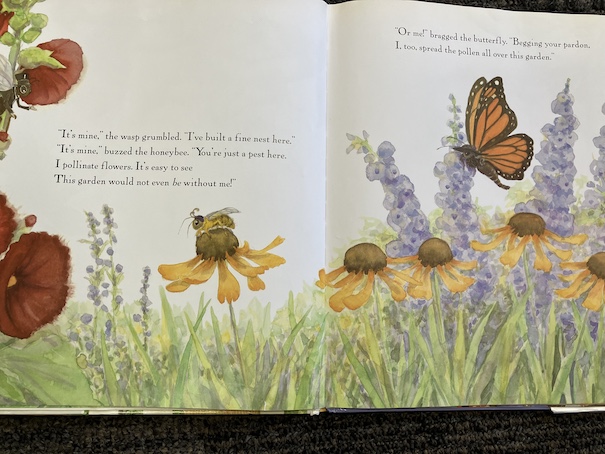
Various other creatures, big and small speak up, each of them pointing out that they live in the garden, what they’ve done for the garden, and what the garden has done for them. The bees and butterflies pollinate the flowers.
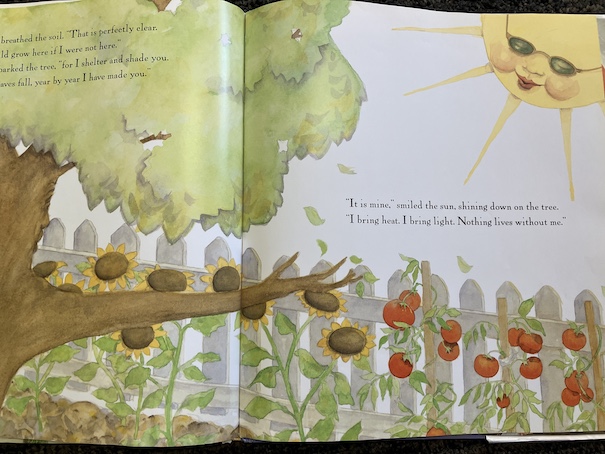
But what about the plants in the garden? They have a strong argument that they are what makes the garden a garden. Then again, the soil is where the plants grow, and the plants need the sun and rain to grow. Also, all plants grow from seeds, so the garden exists for the seeds that will be the future plants.
It seems that the answer to Mrs. McGee’s question isn’t as easy as she might have thought.
My Reaction
This is a charming story about how various plants, animals, creatures, and forces of nature are interconnected. The book doesn’t use the word “ecosystem“, but that’s the concept being described here. The garden’s ownership and the reason for its existence is much more than the gardener who owns the land and planted and tended the garden; it’s everything that’s growing in it, everything that contributes to its growth, and everything that depends on the garden. Without all of these creatures and natural forces put together, the garden wouldn’t be what it is.
The book doesn’t attempt to get scientific about the details of this garden ecosystem, and the animals wear clothes and talk, so the story isn’t meant to be entirely realistic. However, it is thought-provoking about how many different parts of nature affect each other. It could be a good book for introducing the topic to young children before teaching them about the science of ecosystems later. The rhyme scheme makes the story fun to read.
Isabel’s House of Butterflies by Tony Johnston, illustrated by Susan Guevara, 2003.
The story begins by explaining that the forests of Michoacan, Mexico are a sanctuary for monarch butterflies, but that sanctuary is in danger because of logging activities. The large-scale industry is a major threat, but sometimes poor people living in the area also chop down trees because they need to sell the wood. The author notes that there have been efforts to preserve these trees, but it’s difficult to enforce laws protecting them, and no one is sure what will happen to the monarch butterflies if the trees disappear.
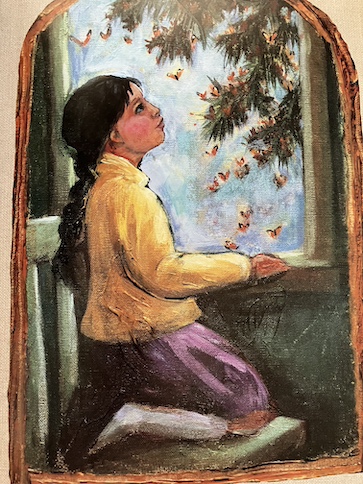
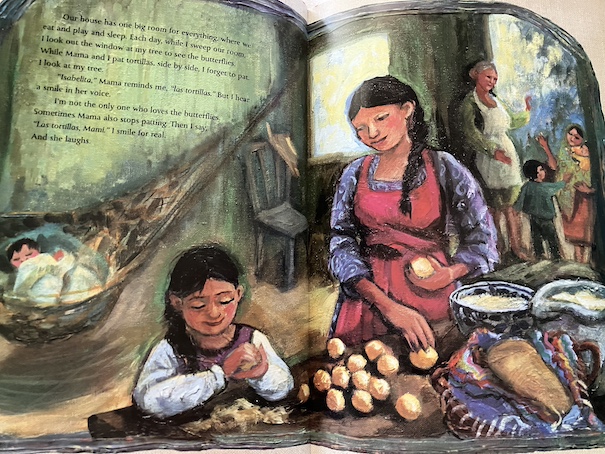
Isabel is an eight-year-old girl living with her family on a small farm, and the tree outside their house attracts butterflies on their migration route. She calls it, “La casa de las mariposas,” which means “The House of Butterflies.” Her family is poor, but they can’t bring themselves to chop down their special butterfly tree, like other families in the area have done. They love it that the butterflies appear there every autumn, and they think it’s a beautiful miracle to see them return every year. Sometimes, tourists come to the area to see the butterflies, and that brings the family a little extra money.
However, one year, there is very little rain, and they have a very bad harvest. The family sells their pigs and continues on as best they can, but their money is running low. They don’t have many resources left for money, and Isabel’s father is reluctantly considering cutting down their butterfly tree. He doesn’t want to do it, but he doesn’t know what else to do.
Isabel is distressed at the loss of the tree and the butterflies, so she suggests another plan to her parents. She often helps her mother to make tortillas, so she tells her mother that maybe they can set up a stand selling tortillas to the tourists who come to see the butterflies. The family decides to give Isabel’s plan a try.
The book is available to borrow and read for free online through Internet Archive.
My Reaction
The story ends on a somewhat hopeful note, but it bothered me a little because it’s not definite that Isabel’s plan is going to work. Isabel is hoping that they’ll be able to make enough money that they won’t need to cut down the tree, but we only see them getting set up, so we don’t know if they’re successful or not. I would have preferred to see them succeeding so we would know that things are going to get better, but the story just ends at that point, and it’s left up to the minds of the readers whether they were successful or not.
I think that hopeful but slightly worrying note at the end of the story is meant to reflect how people trying to preserve natural resources often feel – they have ideas and plans to help preserve natural areas and resources, but nobody knows for sure what will work or how well their plans will work. It’s realistic, if a little bit of a let-down. However, while nothing is guaranteed to be successful and life has its uncertainties, there is hope in the people who are willing to try different approaches to problems rather than simply giving up. The book does speak to the concerns that modern people, even children, have about the environment and the search for systems that work better than the ones that we already have.
The pictures in this book are soft, colorful, and lovely. Although the family is poor, they appreciate the small pleasures in their lives, like making the tortillas and the yearly appearance of the beautiful butterflies. I did also feel a little sorry for the butterflies the pigs ate, but the story doesn’t dwell on that part too much.
This book was published by Sierra Club Books for Children, and there is a small note with the publishing information about the origins of the Sierra Club, which is dedicated to protecting scenic and ecological resources.
The Girl Who Loved Caterpillars adapted by Jean Merrill, illustrated by Floyd Cooper, 1992.
This story is a rendition of a 12th century folktale from Japan.
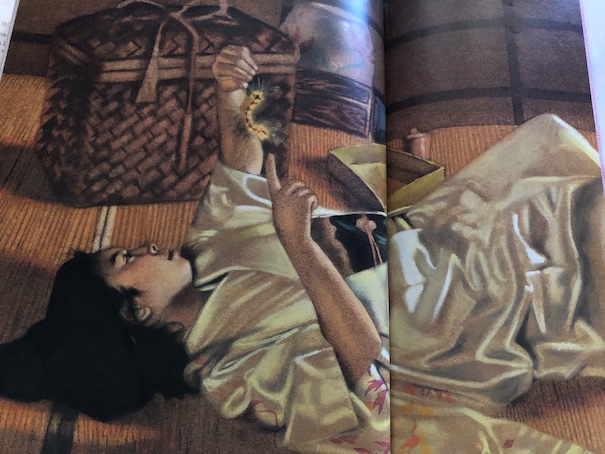
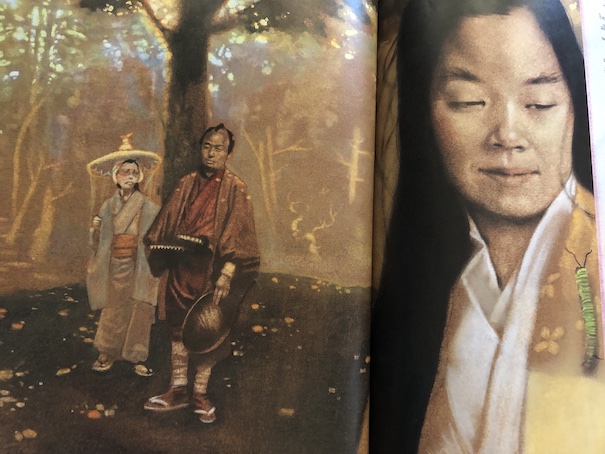
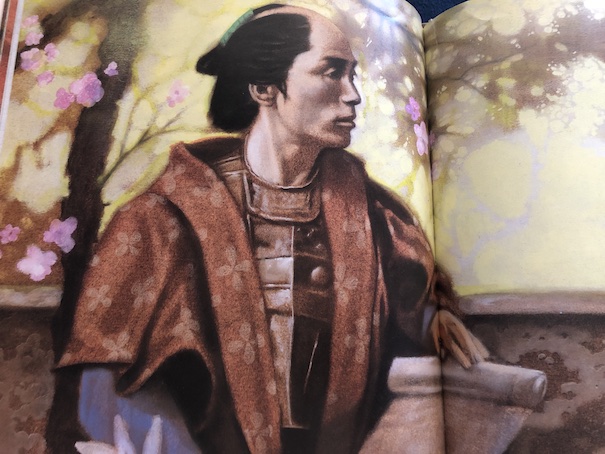
Izumi is the daughter of an important man, a provincial inspector who serves the emperor in Kyoto. Court life is full of elegance, and Izumi is a pretty and clever girl. Her parents have high hopes that she might become a lady-in-waiting or marry a nobleman, but she is mainly known for one thing: her peculiar love of caterpillars.
A beautiful and elegant woman who lives nearby is known for her love of butterflies, and she is considered to be The Perfect Lady. She has all of the skills that a noblewoman could aspire to, and Izumi’s parents think of her as a great role model for their daughter.
However, Izumi doesn’t see the appeal of beautiful butterflies. After all, they come from caterpillars, and caterpillars are much more interesting. Izumi also loves worms, toads, insects, and other things that most people would find unappealing. She likes to keep them as pets and observe how they live and grow. Izumi’s parents don’t approve of the lower-class boys who bring Izumi new creatures for her collection, and nobody else understands her fascination with these creatures.
Izumi just loves the natural world. To her, court life and the beauty standards for women there are too artificial. She also believes in reincarnation and the idea that any person might have been one of these unusual creatures in a past life or could be one in the next. Her parents love her, and they understand how she feels when she explains her reasoning to them, but they also worry about her future. If she doesn’t conform more to the standards of the court and develop more “normal” interests, will she ever make a desirable marriage? People at court gossip about Izumi and her odd tastes.
However, the rumors about Izumi reach a young nobleman who is as clever as Izumi, and he is fascinated at the idea of a pretty girl who isn’t afraid of the creeping creatures of the Earth.
The book is available to borrow and read for free online through Internet Archive.
My Reaction
I remember this story from when I was a kid! When I was a kid, I didn’t bother to read the Afterword of the book, which explains more about the origins of the story. Izumi’s story actually seems to be part of a much longer story about court life in Medieval Japan. The original author of the story is unknown, and Izumi’s part of the story is incomplete. It ends with the promise that what happens next will be revealed in the next chapter, but the rest of the story is unknown. We don’t know if she ends up marrying the nobleman who has developed a fascination with her or not.
I have a theory, based on a comment that Izumi made, comparing caterpillars to their adult forms and asking why people are only interested in the adult forms, that Izumi’s love of caterpillars is based both on her young age and perhaps a hidden affinity for children. Perhaps Izumi will grow to love butterflies as well as she grows up and be viewed as more of a butterfly herself, or maybe the nearby lady who loves butterflies will admit to a secret love of caterpillars as well. None of us stay young, and we all evolve as we grow, but part of us always remembers being in those early, awkward stages. Maybe everyone has a secret soft spot for the young, even when they’re fuzzy or grubby crawling things, and a desire to see them become the best form of themselves.
Whatever her future brings, readers get the impression that Izumi is happy and at peace with herself as she is, whether anyone else agrees or not. We can hope that the young nobleman will also love her for the person she is, but Izumi seems to believe that being true to her own nature is the way to achieve inner peace.
In other times and places, as the Afterward observes, Izumi might have been a scientist, naturalist, or philosopher. The traits that make her seem odd for her time and place are actually desirable ones that could make her more successful in other circumstances. In the early 21st century, Izumi’s sense of individualism and her value of the natural world would probably win her many friends. People who enjoy the aesthetic of Goblincore would probably relate to her feelings about caterpillars and other crawly creatures.
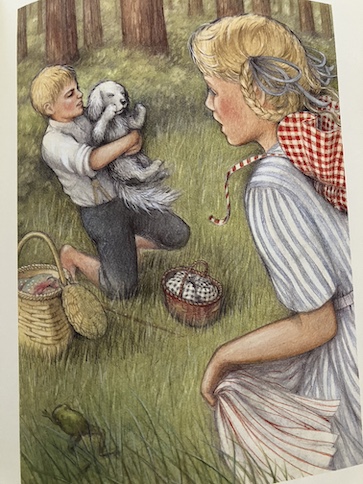
It’s summer, and for a frontier family, the summer chores can be the most fun! Kirsten and her younger brother, Peter, are going fishing. They’re hoping to get enough fish for their family and their Uncle Olav’s family to have for supper. There is plenty of trout in the stream, and they should be able to get enough fish, although sometimes, disasters happen on their fishing trips. Once, Peter chased a skunk, and their mother also warns them to be careful of snakes and bears. Kirsten wears a whistle around her neck that she can blow if they get into trouble. Kirsten thinks her mother worries too much.
The children take their dog, Caro, fishing with them. Kirsten is a little concerned because Caro likes to chase things, but Peter insists that he can watch the dog and fish at the same time. When they don’t seem to have much luck getting big enough fish in the stream, they decide to go upstream to the pool. The fishing goes well, but Caro is stung by a bee.
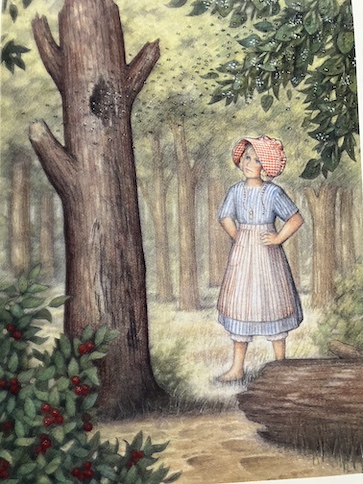
Kirsten realizes that Caro must have found a “bee tree”, a tree where bees have built their hive. Kirsten is interested in finding the tree because it’s a source of honey and honeycomb that their mother can make into special treats. If they can collect enough honey, their father might even be able to sell some and buy some of the things the family needs. They need to be careful while looking for the tree, though, or they might get stung themselves. Kirsten is pleased when she finds the tree, but she notices that there are marks on it from a bear’s claws, so it looks like a bear was trying to get the honey, too. Kirsten could ask her father how to get the honey and get him to help, but she wants to figure out how to do it herself and surprise everyone. She asks Peter to keep the bee tree a secret while she tries to figure out how to get the honey, and Peter reluctantly agrees.
Meanwhile, Kirsten’s cousins tell her about the town’s Fourth of July celebration. Kirsten’s family hasn’t lived in America for very long, so her cousins have to explain the significance of the holiday to her. Every year, the nearby town holds a parade and picnic with music and games. A lot of the local farmers also bring things to sell, like pies, butter, or preserves, and they use the money they make to buy things they need. Kirsten thinks again about the honey tree and the things her family could buy. She really wants a straw hat, like her cousins wear.
Later, when Kirsten is picking berries with her cousins, she sees a little black bear cub. She thinks it’s adorable, but Lisbeth says they have to leave the area immediately. If the baby is near the berries, its mother is sure to be somewhere nearby, and mother bears get dangerous if they think someone might hurt their cubs. Kirsten doesn’t really take the warning seriously until she tries to take Peter and Caro back to the bee tree with her to get the honey, and they meet the mother bear face-to-face!
The book ends with a section of historical information about the wilderness on the American frontier in the 1800s. Wild plants and animals were sources of food, but they were also sources of danger, like the bears in the story. The attempts of the pioneers to control the land were about securing sources of food and reducing sources of danger. There is information in the book about how pioneers cooked and how they dealt with changing seasons and weather. It also discusses the Fourth of July and how trips to town were rare treats for pioneer farming families.
The book is available to borrow and read for free online through Internet Archive (multiple copies).
My Reaction and Spoilers
It’s a good story about the difference between bravery and being foolhardy. From the beginning, even young Peter reminds Kirsten that being brave and being foolish are not the same thing. After their hair-raising encounter with the bear, in which the children have a narrow escape and their dog is injured (but fortunately not killed), the children’s father lectures Kirsten about putting both her life and her little brother’s life in danger. When Kirsten explains what she was trying to do with the bee tree, her father also tells her that she doesn’t really know what she’s doing. She took his equipment, but if she had carried out her plan the way she was thinking of doing it, she would have both destroyed the hive and ruined the honey as well as getting badly stung. Kirsten should have just gone to her father as soon as she found the tree and got his help from the beginning. Kirsten is ashamed for getting their dog hurt and putting herself and her brother in danger and almost ruining her special find, and she apologizes.
Because Kirsten’s father now understands the situation, he gets Kirsten’s older brother, Lars, to help him move the colony of bees to their farm. He knows how to set up hives and keep bees long term, so instead of this being just a one-time find and honey harvest, they will be able to get honey from the bees regularly. Kirsten goes with her father and Lars to watch them move the bees. She does it because she’s been having bad dreams about the traumatic escape from the bear, and she thinks it will help her to recover if she goes to the area again and sees it with her father and brother, when it’s safe.
Kirsten still feels bad that she wasn’t able to get the honey all by herself and that her attempt to do it was a disaster, but her mother consoles her. She says that she and Kirsten’s father understand that Kirsten was just trying to help and that her discovery has helped them. She just needs to learn to be careful as well as being brave. I thought that it was also a lesson in learning to share the glory instead of trying to take all the credit by going it alone and risking the success of the project, but the book didn’t quite say that. Kirsten wanted to be the one to say that she did it all herself, but because she couldn’t really do it all herself, everything went wrong. She could have accomplished her goals by talking to her father in the beginning and still been the heroine who found the bee tree, as her mother pointed out. She still gets credit for what she did without needing to take credit for what she couldn’t do alone.
The book ends with the family enjoying the Fourth of July celebration. Thanks to the discovery of the bees, they are able to buy the things they need.
A small caterpillar hatches out of an egg and is very hungry. Each day, the caterpillar goes out looking for food, finding different things to eat.
Part of the book is a counting story, as the caterpillar eats different numbers of different types of fruit in different numbers. The format of this part of the book is really interesting because each of those pages isn’t a whole page but sections of pages that are different sizes, showing how the amount that the caterpillar eats increases each day.
Also, there are real holes in the pages to show where the caterpillar ate through different types of food. Kids like books with interesting physical features that encourage them to interact with the book as a toy as well as a story. I think that’s part of what has caused this book to have lasting appeal.
The book does also have a story to it about the growth and development of the caterpillar along with the counting part. At the end of the part that counts the number of pieces of fruit the caterpillar eats, the caterpillar eats a bunch of random junk foods and gives himself a stomachache. Eating a green leaf makes him feel better. By this point, the caterpillar is a fat caterpillar who is no longer hungry. At the end of the book, the caterpillar makes a cocoon and turns into a butterfly.
This is a cute picture book that is fun to show to very young children. The counting element is good both for teaching young children and for the children who have already learned to count because they can predict what the caterpillar is going to do next. The unusual format of those pages with the holes also makes the book distinctive.
On the 50th anniversary of the book in 2019, the BBC produced an article about the book’s history and its appeal to generations of young readers.
The book is available to borrow for free online through Internet Archive.
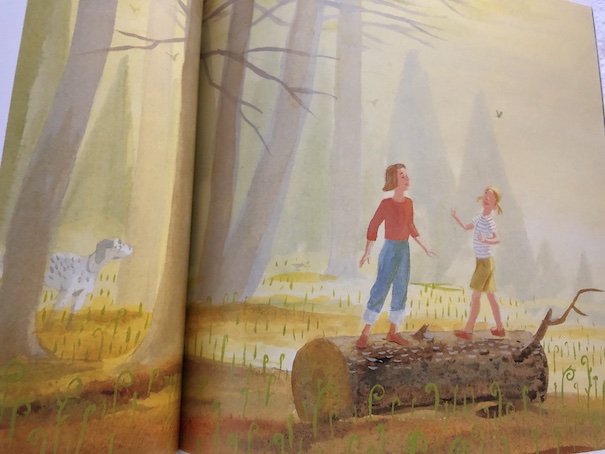
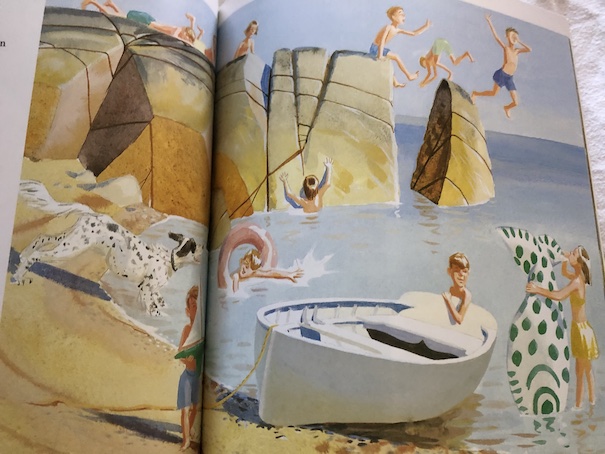
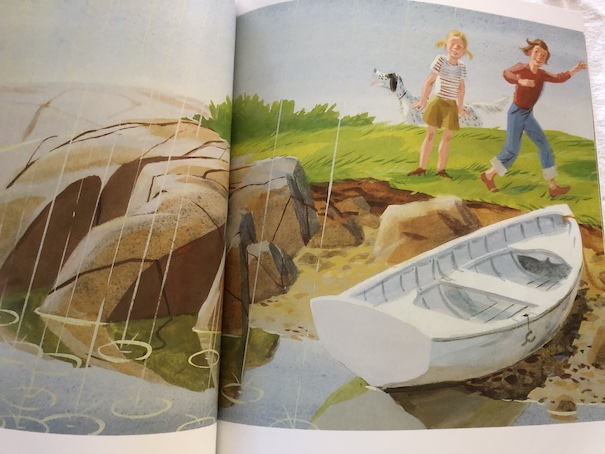
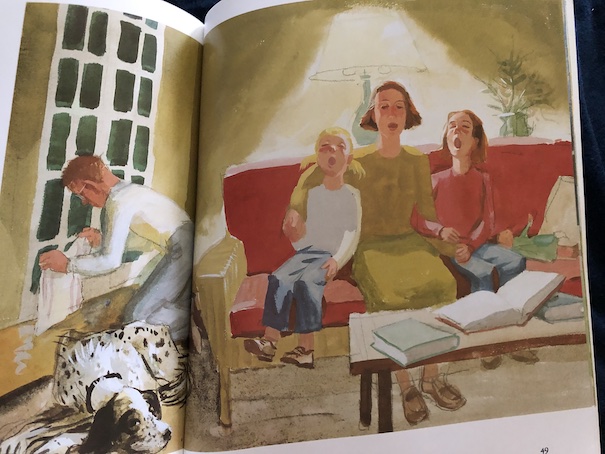
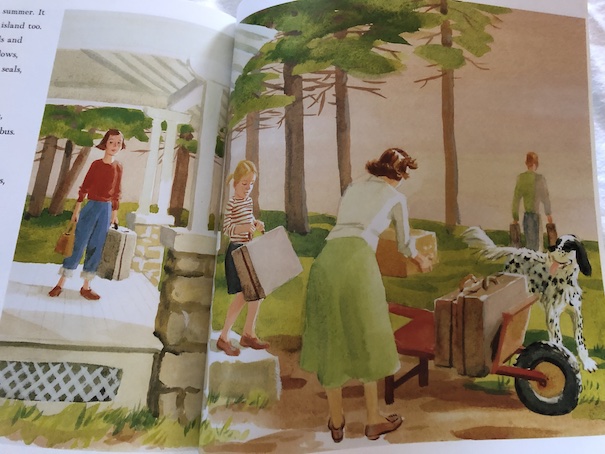
This is a beautiful, very relaxing picture book about a family’s summer vacation on an island off the coast of Maine. Although you can see from the pictures that the main characters are a pair of sisters, the entire story is told in the second person, from the point of view of “you.” Readers are meant to feel like they’re part of this magical summer trip!
“You” feel like you’re spending the morning walking in the fog along the bay, enjoying the plants and birds in the forest nearby, and sailing in the bay with seals and leaping porpoises.
During the day, there are other children playing on the beach, diving from the rocks, and swimming. In the evening, “you” row a boat out into the quiet water and use a flashlight to look at the crabs.
When it rains, “you” feel it! Most of the time the weather is peaceful, but there is a storm approaching, and people know they have to get ready for it. When it comes, it brings a strong wind that blows through the house!
The family reads together and sings songs until the storm is over and it’s time to go to bed.
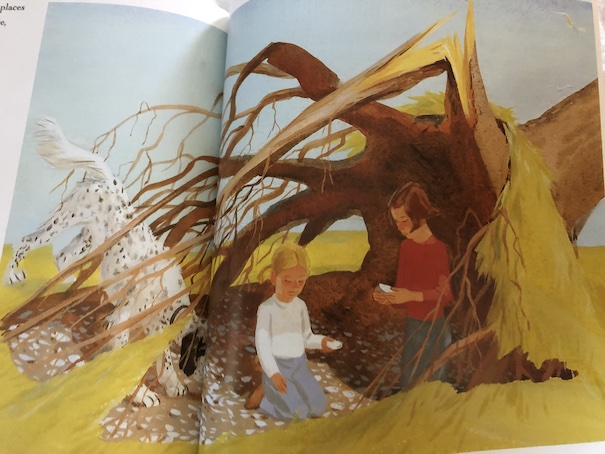
The next day, trees are uprooted, and “you” get to explore what’s beneath their roots.
When it’s time to go home because school will be starting again, you’re a little sad to leave this place, although you’re also glad to go home again.
The book is available to borrow and read for free online through Internet Archive (multiple copies). It’s a Caldecott Medal winner!
My Reaction
This is a great book when you want something calm and relaxing or you feel like you need to take a mental vacation, whether you’re a kid or adult! Nothing stressful happens in the story. It’s just a lovely memory of a peaceful vacation. Even the storm that comes doesn’t do anything worse than blow things around the room and knock over some trees and plants. The girls in the story help clean up after the storm, find ancient seashells under the roots of a fallen tree, and are happy that the sunflowers are looking toward the sun again.
When the girls are looking at the shells under the fallen tree, they think about the Native Americans who lived in the area before white people came and before the tree grew there. They call them “Indians” instead of Native Americans, but that’s the only thing I can find to nitpick about the story.
I think this would make a great, calming bedtime story for kids, especially during the summer! It reminds me a little of the song Verdi Cries, about someone’s memories of a special vacation.
The setting for the story, on an island off the coast of Maine, is based on the author’s family’s summer home, and the two girls in the story are based on his own daughters. They are not named here because the story is about “you”, but the older girl is Sarah (called Sal) and the younger girl is Jane. They appear in and are named in Blueberries for Sal and One Morning in Maine, where they are much younger.
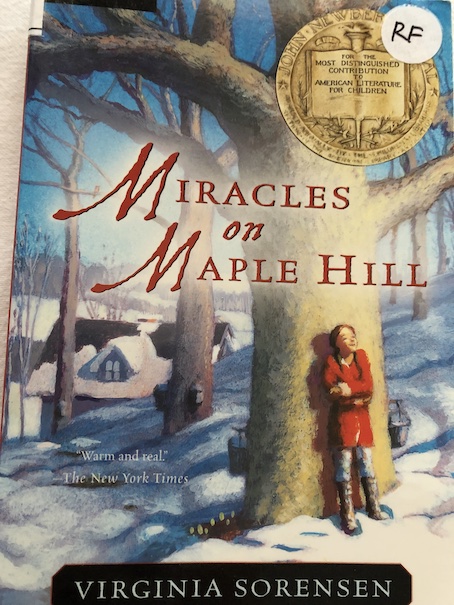
Miracles On Maple Hill by Virginia Sorensen, 1956.
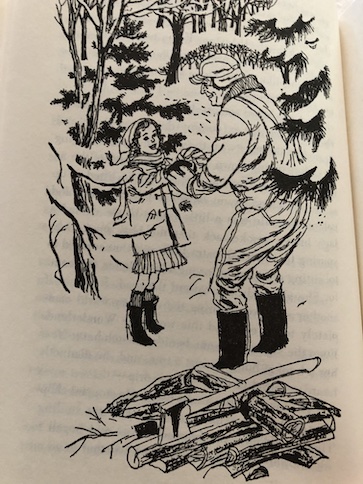
Ten-year-old Marly and her family are moving from Pittsburgh to the countryside, to Marly’s mother’s grandmother’s old house on Maple Hill. They’re making the move for Marly’s father’s sake. Marly’s father was a soldier and prisoner of war, and everyone says he was lucky to return home from the war. (The book doesn’t specify which war, and no date is given for the story, but the book was written during the 1950s. If it was set slightly earlier than the time of writing, it could be WWII, and if it’s in the 1950s, it would be the Korean War. Not giving the story a date gives it a timeless feel.) Since then, he has suffered from the stress of his experiences. He is frequently tired and irritable. He is easily startled by loud noises, even a door slamming, and he finds arguments between Marly and her older brother Joe too much to handle. On Christmas, he can’t even bring himself to get out of bed to celebrate with his family. (He is suffering from shell shock or PTSD, although the characters in the book don’t use those terms. Mostly, they just describe the symptoms they see in him without giving it a name. Much of our modern understanding of what PTSD is and how to treat itcame out of the World Wars and following conflicts, like the Korean War and the Vietnam War. During the 1950s, they had a general sense of what it was, and they called it different names, like “battle fatigue” or “combat stress reaction” or “gross stress reaction,” but not everyone fully understood it or how to treat it. They didn’t have as many resources for dealing with it, so this family is trying to find their own solution by giving the father a quiet place to rest and process his feelings.) Marly’s mother thinks that the peace of the countryside will do him good.
It’s March when the family makes their first trip to Maple Hill, and there is still snow on the ground. Their car gets stuck in the snow before they reach the house. Joe and Marly both get out of the car to find help. Twelve-year-old Joe initially didn’t want Marly to come with him because he’s in a phase where he likes to show off and make a big deal about how much better he is at doing things than his younger sister, but Marly sets off by herself and meets their friendly neighbor, Mr. Chris. Joe is a little offended that Marly saved the day instead of him, but Mr. Chris and his wife are very friendly and helpful. They remember the children’s mother from when she used to visit her grandmother as a child, and they welcome the family like they’re relatives themselves. Marly likes Mr. and Mrs. Chris, but her father finds their friendliness a little overwhelming. He feels like what he really needs is time alone, and he doesn’t feel much like chatting with people.
The old house at Maple Hill is a little run down because no one has lived there for years. The family has a lot of fixing-up to do, but Marly’s mother thinks that the work will be good for the children’s father. Marly and Joe aren’t used to living in the countryside, and they find some parts of it fascinating. They use a pump for water for the first time and take baths in an old tub. The house contains a Franklin stove (and Marly references the story Ben and Me by Robert Lawson).
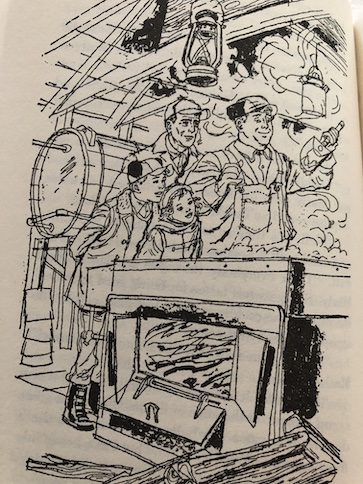
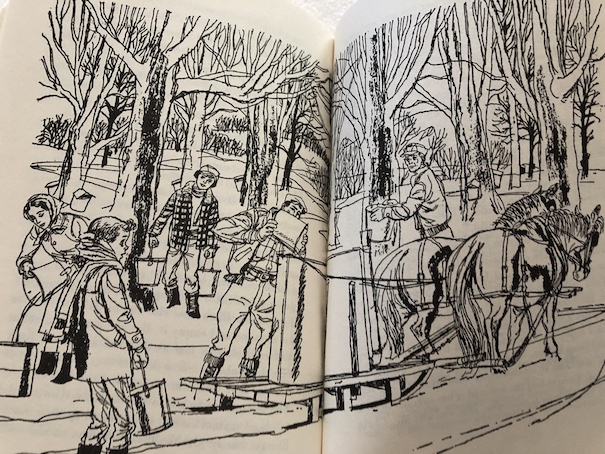
Marly is upset when her family kills a nest of baby mice, although they tell her that mice are pests, and they have to get rid of them or be overrun by them. Marly loves animals, and she would have loved to keep the cute little mice as pets. Marly talks about her feelings with Mr. Chris when he shows them how he processes maple syrup. Mr. Chris says that he understands how Marly feels. He also has a soft spot for small animals. Although he doesn’t tell his wife about it, he has a little mouse friend who visits him every day. Marly’s family is there for the conversation, and they say that Marly makes too big a deal out of getting rid of pests, but Mr. Chris says that there’s nothing wrong with Marly for caring and gives her an extra taste of the maple sap. To Marly’s surprise, her father takes her on his lap and says that the only thing wrong with Marly caring too much is that she’ll have to spent her life crying more than she would otherwise have to. Feeling an emotional attachment to people or animals can mean having your feelings hurt when you lose them, and what Marly’s father has been through is about the most extreme version of having hurt feelings that human beings experience.
Marly’s father stays at Maple Hill alone for a couple of months while his wife and children return to the city so the children can finish the school year. In spite of her father’s reluctance to be around people, he does become friends with Mr. and Mrs. Chris in their absence. He sometimes calls his family from the phone at their house. Mr. and Mrs. Chris help him adjust to living in the countryside. He discovers how much life in the countryside is influence by changes in the weather, much more so than life in the city, where people spend more of their time indoors, and Mr. Chris gives him an almanac to use. Mr. Chris tells Marly that, when she and her brother return to the countryside in the summer, he’ll take her around and show her everything, and he’ll show her all the “miracles” at Maple Hill, meaning the wonders of the natural world.
However, even people in the peaceful countryside have their troubles. Marly overhears her mother talking to Mrs. Chris, and Mrs. Chris says that she’s worried about Mr. Chris’s health. Jolly Mr. Chris has suffered a heart attack before, and he hasn’t been taking it easy. He’s always been a hard worker, and Mrs. Chris worries that he pushes himself too hard.
Over the summer, when Marly and her brother and mother return to Maple Hill, Marly has to get used to life in the countryside, as her father has. One morning, when she tries to make pancakes for her family by herself, she accidentally fills the kitchen with smoke because she doesn’t really know how to use the old-fashioned stove. Her father comes in and helps her, and at first, Marly is worried that he’s going to get really angry, the way he often has when things go wrong because of his stress from the war. However, this time, he reacts much more calmly because he knows how to handle the situation, and he admits that he did the same thing himself when he first used that stove. It’s one of the first signs that Marly’s father has been improving in the peaceful countryside.
As Mr. Chris promised, he shows Marly the wonders of the countryside and introduces her to different types of plants and animals. Joe likes to show off what he knows about plants and animals and their scientific names from his books, but Marly enjoys learning the colloquial names for plants from Mr. Chris and observing them directly. However, she realizes that she and her brother Joe have to be careful not to overtax Mr. Chris. When Mr. Chris gets really enthusiastic about something, he pushes himself harder than he should.
As the summer comes to an end, Marly’s parents discuss whether the mother should return to the city with the children for school or if they should stay at Maple Hill year-round now. Marly’s father loves life in the country. He has been growing crops on the farm, and he feels better in the peaceful countryside. He wants to stay there for at least for one year before trying city life again. Marly is eager to stay, although Joe is reluctant because he really likes his old school and the museums and theaters of the city. However, even Joe finds some parts of country life fun and fulfilling, so he is persuaded to give it a try. It helps that boys Joe’s age take the bus to the bigger school in the next town, and that school has a marching band, because Joe had wanted to join the band at his old school.
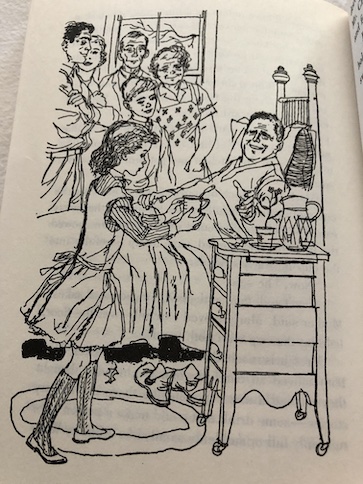
Staying in the country year-round gives the children the opportunity to experience the changes in nature and farm life through the seasons. However, as it reaches a year since they first came to Maple Hill, Mr. Chris suffers another heart attack. While he is in the hospital, Marly’s family steps in to help harvest and process the maple sap crop, turning it into maple syrup. It’s hard work because the family also has their own crop to tend to, but helping Mr. Chris helps Marly’s family as well. Through hard work for the sake of helping someone else and the relationships they build with their new community, Marly’s father’s old tiredness and harshness turns to gentleness, further healing his spirit.
This book is a gentle story that would appeal to people who enjoy Cottagecore Style Books. It’s full of the wonders of nature and life in the countryside, and the family’s little farmhouse is cozy and charmingly old-fashioned. The “miracles” in the book refer to changes in the natural world that take place over time and with the changing of the seasons. Even Marly’s father’s recovery is natural and gradually takes place over time during the course of the story.
The book doesn’t go into detail about what Marly’s father experienced as a soldier, but it does a good job of showing how the war has affected him. He is tense, nervous, and angry because of his experiences, but not in a way that would be too frightening for children. Getting away from the chaos of the city and working outside in nature does help him. The physical activity of working outdoors gives him an outlet for his stress, and the slower pace of life and limited number of people he sees in the country give the chance he needs to rest.
Cottagecore as a genre and aesthetic became very popular during the Coronavirus Pandemic of the early 2020s. I explained when I wrote my list of books that fit the genre how the pandemic forced many people to change the way they were living. During the height of the pandemic, when there were lockdowns and quarantines, people didn’t get out as much. Many people worked from home, if they could, and limited the number of people they would see. This caused some people to feel stressed and cooped up, but one of the ways they were able to alleviate that feeling was to spend time outside, whether it was in their own gardens or in public parks or in the open countryside. When people were outside, there was less risk of contagion because they either wouldn’t encounter other people or could encounter them from a safe distance. Being out in nature, as much as they could manage, helped people feel a little more free. It gave them a welcome break from being inside their own homes all the time, and seeing beauty in the natural world can be soothing for all kinds of stress.
I mention this because that’s similar to the way Marly’s father and the rest of their family felt when they decided to go to the country. Marly’s father’s condition was hard on his family as well as himself because they were worried about him and because he would become moody and irritable at small things they would do which ordinarily wouldn’t have bothered him much. For a long time since he came back from the war, everyone had to be extremely careful about what they did around him because they didn’t want to upset him. In the countryside, without other distractions and causes of stress, everyone in the family was able to relax more. That’s why books of this kind became so popular during the pandemic; people saw in them feelings that they were experiencing themselves because of the stressful situation everyone was going through. I noticed that the people who handled the social distancing of the pandemic the best were the ones who used it as an opportunity to enjoy a slower pace of life and simple pleasures and to strengthen their connections with a small number of important people, like the people in this story do. Of course, individual circumstances varied, and some people had a greater ability to do this than others, but I think it’s interesting and helpful to note these common ways that people have of dealing with trauma and stress, even when the trauma and stress come from different sources.
Life and Death of Animals and War
There is a subplot that continues all the way through the book about how Marly feels about animals and how her feelings clash with both the way her family feels and the realities of life in the country. She gets very upset when her family destroys the nest with baby mice, and she bonds with Mr. Chris about their caring for small animals. However, Mr. Chris shocks her when he talks about hunting a family of foxes. Marly cares about the foxes because they have five babies, and she can’t imagine how a caring man like Mr. Chris would hunt baby animals. What is the difference between cute little baby mice and baby foxes? Mr. Chris explains that the foxes have been hunting his chickens, and they also eat mice. By eliminating the foxes, he can save the lives of other animals. The area has too many foxes already, and there is a bounty on their pelts. What Mr. Chris and the rest of Marly’s family understand, and which Marly struggles to come to terms with, is that sometimes animals pose a risk to other animals and even to humans. The mice would carry disease if they were allowed to live in the house with humans, and the foxes are killing the chickens. In a perfect world, everything would be able to live peacefully side-by-side without hurting each other, but the world isn’t perfect, and circumstances mean that something that poses a risk to something else sometimes has to be killed. It’s a good metaphor for war.
Marly’s father didn’t go to war because he wanted to. He was sent to war because the government decided it was necessary to prevent something even worse from happening. People don’t normally want to hurt and kill each other, but when faced with someone who poses a real threat, they will. Part of the reason why Marly’s father has suffered is that he had to endure things that went against his natural instincts. Ordinarily, he wouldn’t want to hurt or kill other people, but he had to as a soldier, and he had to survive other people’s attempts to hurt or kill him. To survive those circumstances, he had to change his way of thinking, and now that it’s over, he’s struggling to get back into the mindset of peace, where not every loud sound is a threat, conflicts are minor, and it’s okay to care about people and be sentimental about things. During their time at Maple Hill, the family also meets a hermit who came to the countryside while he was recovering from shell shock from a previous war. The book doesn’t say what war that was, but he’s been in the area for years. If Marly’s father was in either WWII or the Korean War, this man could have been a soldier during WWI, given the time period. The hermit’s experiences show the family and readers that the trauma of war affects people in similar ways across generations and between conflicts, and that what Marly’s father experienced is an inherently human reaction. It also points to the similar ways people have of responding to that type of trauma. Both Marly’s father and the hermit found solace in nature and the peaceful countryside.
Fortunately, Marly and her brother figure out a way to save the foxes from being hunted by scaring them away from their den. If you can get past the early point in the book where they destroy the nest of mice, no further animals were harmed during the course of the story. There is a point where Marly gets some chickens of her own to care for, and I was worried that the foxes would come and eat them, to prove her family’s point that some animals have to be hunted, but I was glad that didn’t happen. Marly does reflect more on how animals eat each other later in the book without needing to have anything else killed. She thinks about how she and her brother saw small animal bones and fur around the foxes’ den and how her own family eats meat and eggs. Mr. Chris says that everything needs to eat something to survive, and that helps Marly to understand the cycles of life and death in the animal kingdom and in farming. The lessons in the book are pretty gentle even though they touch on serious topics.
Boys vs Girls
One of the criticisms that I’ve sometimes seen about this book is the stereotypical gender roles in the story, but I think that’s a little unfair because Marly in particular questions the ways boys act and how other people view boys and girls. It starts very early in the story when the family’s car gets stuck and Joe doesn’t want Marly to go with him to get help. When Marly goes on her own and finds help first because she’s put a little more thought into where to go for help, Joe feels a little bad that his younger sister did better than he did. There’s a kind of competition between them that mostly seems to come from Joe, and Marly gets a little offended sometimes when he tries to leave her out of things so he can be first to do something.
I thought that it was perceptive of her to realize that boys try to prove that they’re better at things than girls because they “seemed afraid they’d stop being boys altogether if they couldn’t be first at everything.” Marly knows that boys aren’t treated the same as girls, and I think her comment comes pretty close to the reason why. The boys have a stronger idea of what they’re supposed to be, relative to girls, and in a way, they’re more threatened when either they’re not as good at something as a girl is or a girl does something that they think is supposed to be a boys’ activity. I’ve noticed men and boys with this sort of attitude even in the 21st century, and it’s ironic that they don’t seem to realize that very attitude puts them at a disadvantage by making their sense of self more fragile and dependent on someone else’s relative skills and interests.
Marly realizes this sense of fragility later in the story when she thinks about how she really likes being a girl better than she would like being a boy. Although some people might tell girls that they can’t do certain things or think of girls as being silly compared to boys, Marly realizes that there is a greater amount of freedom for girls in her time and society to simply be human beings than the boys experience. In some ways, the boys of her time seem like they’re being raised to be like little soldiers, possibly to prepare them for the day when they might be drafted, like their fathers. Boys are urged to be tough, competitive, and unsentimental. Marly knows that her brother cries sometimes, but he doesn’t want to be seen crying. Joe is not expected to care about animals or feel anything about killing them. By contrast, Marly can feel emotions and show them freely about anything she wants because she’s a girl. She realizes that people sometimes laugh when a girl does something silly or makes a mistake or asks what seems like a dumb question or is overly emotional about something, but girls are still allowed to do these things without people thinking much of it. They can do all of these things without anyone questioning their identities as girls or human beings in general. Really, everyone does these things once in a while, but Marly realizes that a boy doing one of these very human things is likely to get more criticism and might even be called “girly.” People of this time would question a boy’s identity as a boy in ways that they wouldn’t question a girl’s identity as a girl, and that’s why Joe acts the way he does sometimes, like he has something to prove to everybody. Boys of her time may have more opportunities in some ways, but in some ways, girls are more free to simply be human. Joe acts like he’s competing with his sister sometimes and trying to show her up, but in reality, he’s competing with society’s expectations for him and his own expectations for himself because of what he’s been told that boys are or have to be.
Toward the end of the story, Marly and Joe are so busy trying to help their family and the Chrises with their maple syrup processing that they miss some time in school. The local truant officer comes to check up on them and find out if they’ve been ill, and she is fascinated when she finds out that they’ve been helping to make maple syrup. She admits that, even though she’s lived in the area her whole life, she’s never actually helped to make maple syrup herself or eve watched it being done. She spends some time with the family, watching them work and asking them questions about the process. Based on what she’s seen, she decides that the children are engaging in a practical and educational experience because they are learning something that is culturally and historically relevant to the area that is not taught in classrooms. In fact, she thinks that this is such a great educational opportunity that she not only makes sure that the children are excused from classes until the work is done but also arranges for field trips of other children from the area to come to the farms and help, giving the two families the extra help they really need and the children’s classmates a unique experience. I thought that was a great example of how a disruption to the usual routine can be an exciting and valuable learning experience, something that I think is also relevant to the changes people had to make to their routines and education during the pandemic, but it also brings up the topic of boys’ work vs girls’ work again.
Throughout the book, there are certain types of work that are considered for men or women, and Marly is happy when her mother counts her among the “women” doing work in the kitchen because it makes her feel grown-up. However, there are times when she boldly speaks up about how girls should be allowed to do other things that boys also do. The truant officer is a woman, but when she arranges the field trips of students visiting the farm to help out, she specifically invites only boys at first. Marly asks her why she didn’t invite the girls because she’d like some other girls on the farm. The truant officer admits that she didn’t think of it as something the girls would want to do, but finding the process interesting herself, she decides that she’ll ask the girls to see if they’re interested. Joe dismisses the idea that girls would help out with the maple syrup because farm work is men’s work. Marly points out that she’s been doing this work the entire time herself, and Joe says that she’s different because she’s kind of a “tomboy” (meaning a girl with boyish qualities or who enjoys activities that boys typically enjoy). Marly insists that she’s not a tomboy because she’s very comfortable with her identity as a girl, and she just thinks that other people are wrong about the range of things that girls can do or be expected to enjoy. It turns out that she’s right that other girls are interested in the farm work and making maple syrup and do want to come on the field trips. They just didn’t before because nobody asked them.
I haven’t actually heard anybody say the word “tomboy” in a long time. When I was a kid in the 1980s and 1990s, it referred to a girl who acted like a boy and liked things boys liked, and it was a term far older than my childhood. In the 21st century, I more often hear about girls who are described, or more often, describe themselves as being “not like other girls.” There is still a concept that “typical” boys and “typical” girls like or do certain kinds of things and that people who don’t like or do the typical things are different somehow, although I think that concept isn’t as strict as it once was. I think that 21st century society has a more expansive notion of the types of things people of different genders like and do and a greater recognition of the varying interests people can have. Some people still leap to the conclusion that, just because someone doesn’t do or like what’s “typical”, they might be homosexual or trans (which I think might be part of that fear that Marly described about boys worrying that they’d “stop being boys altogether” if they couldn’t be first and best at everything compared to girls), but that’s not always the case. Humans come in many variations, and in the grand scheme of life, figuring out what’s “typical” for boys or girls doesn’t really tell you much about any particular individual person’s interests or feelings. (If you’ve ever tried to buy Christmas or birthday presents for a kid based on general recommendations for boys or girls their age and guessed wrong for that person, you know what I’m talking about.) There are some things that can really only be decided on an individual level. Marly is not a “tomboy.” She knows who and what she is, and she’s a girl who also likes to do outdoor activities and farm work. That’s really all there is to it, and there are more girls like her who find that appealing, when people bother to ask them how they feel.
History and Language
There aren’t many issues with language in the story, but there is one incident that I thought I would mention. There are a couple of points in the story where the characters discuss the history of making maple syrup. Mr. Chris says that one of his ancestors learned how to do it from some “Indians” in the area, meaning Native Americans, and his family has continued using the same process ever since. The truant officer is intrigued when Marly’s family tells her that, and she wonders how the Native Americans first realized that they could process tree sap into a food product. She does a little research and later tells the family a story about how a Native American woman used tree sap in making a kind of mush for her husband, and he liked the flavor, so they continued cooking with it.
Using the term “Indians” instead of “Native Americans” is very common in older children’s books, especially those from the 1950s or 1960s and earlier. This book isn’t unusual for doing that because it was written in the 1950s, although “Native American” is the preferred term of the late 20th and early 21st centuries when referring to “American Indians.” I think it’s generally better to use the most specific term possible in descriptors because it’s both more accurate and less confusing, and most people find it more polite and respectful. When I was a kid, I remember finding the term “Indian” a little confusing sometimes because I was aware that “Indians” are also people from India, although I could usually tell by context which kind of “Indians” authors meant.
(By the way, if anybody out there know which kind of “Indian” is meant when someone is sitting “Indian style”, meaning cross-legged or what some teachers now call “criss-cross applesauce”, do let me know. I asked one of my teachers when they first taught us to do it when I was a little kid, and I never got an answer. She rudely ignored the question, probably because she didn’t know the answer, either. I thought at the time it was probably based on Native Americans because of where we were living, but I was curious which tribe it was. The more I thought about it, I also realized that I couldn’t rule out India as the source because people sit crossed-legged for yoga, and yoga comes from India. Personally, I prefer to just call that kind of sitting as “sitting cross-legged” because that describes exactly what you’re supposed to do, and both of those other terms require more explanation of what they mean than I think should be necessary for just telling someone how to sit.)
The use of “Indian” instead of “Native American” sounds outdated and can be a little irritating to some people, but there is one instance where the truant officer uses the word “squaw” to refer to the Native American woman who discovered how to cook with sap from the maple tree. “Squaw” is a controversial word because, apparently, it can mean “woman” in a generic sense in some Native American languages, but in other Native American languages, it can mean something more vulgar and offensive. The word is only used briefly in that one part of the story and not in any insulting manner, but if you’re going to read this to children or have them read this story, I think it’s important for them to understand that this is not a word they should use themselves in conversation. If they want to refer to a Native American woman, they should just call her a woman and not use an ambiguous term that may seem insulting to some people. If they can understand that, sometimes, a word can mean different things to different people and that it’s important to consider your audience’s feelings when choosing what to say and how to describe other people, I don’t think this will be a serious issue with this story.
One final note that I thought of adding is about Marly’s name. Nobody in the story ever calls her anything but “Marly”, but I think that’s a nickname. In the early 21st century, there’s been a trend of giving children, especially girls, surnames as first names as a form of “gender neutral” name, but that wasn’t common back in the 1950s, and the surname of “Marley” is usually spelled with an ‘e’, unlike Marly’s name. Marly’s name could just be “Marly” as a variant of “Marley”, but I suspect, although I can’t prove it, that “Marly” is a nickname for Marlene or a similar name. I think her name is probably Marlene because there was a famous actress during the 1930s named Marlene Dietrich, and there was a spike in popularity for the name Marlene during the mid-20th century, probably because of her. Marlene Dietrich was known for defying traditional gender roles, both in her acting career and in her private life. Although she was considered a fashion icon in her time, when she described her sense of fashion in 1960, she said, “I dress for the image. Not for myself, not for the public, not for fashion, not for men. If I dressed for myself I wouldn’t bother at all. Clothes bore me. I’d wear jeans. I adore jeans. I get them in a public store—men’s, of course; I can’t wear women’s trousers. But I dress for the profession.” That sounds like the kind of girl Marly is. She knows that she’s a girl, but she’s her own kind of girl, who knows what she likes and doesn’t like.