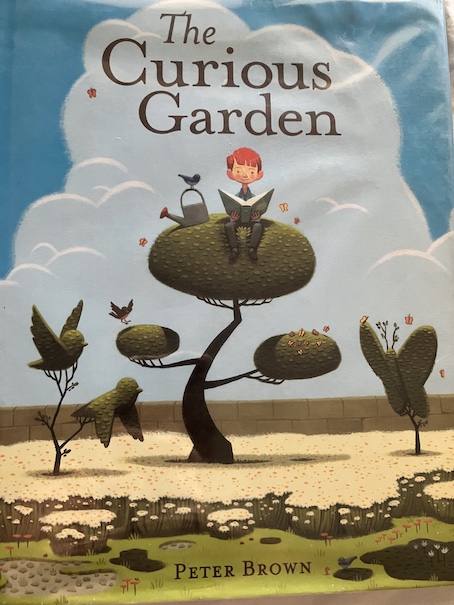
The Curious Garden by Peter Brown, 2009.
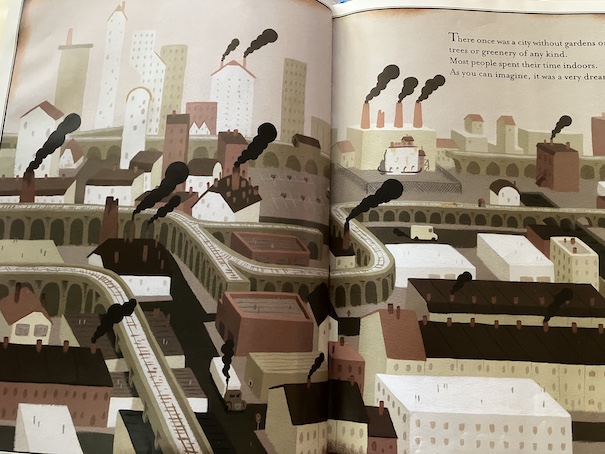
A boy named Liam lives in a dreary city where there aren’t any gardens or green spaces. Most people in the city spend most of their time inside. However, Liam likes to explore outside.
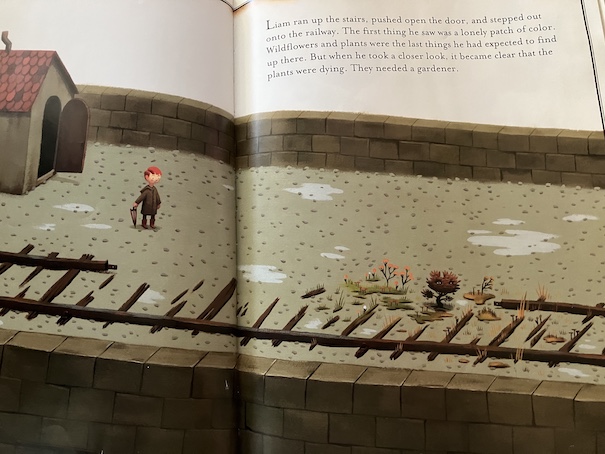
One day, while exploring some disused train tracks, he finds a few plants struggling to survive. Liam doesn’t know much about plants, but he decides to help them by giving them water. Gradually, he begins to learn more about what will help the plants, and they begin to grow and spread into a small garden.
As Liam helps the plants, they begin to spread all along the old railroad tracks. During the winter, the plants are covered in snow, and many of them are killed or have suffered badly from the cold. However, because Liam spent the winter studying about plants and gathering some gardening tools, he is able to restart the garden.
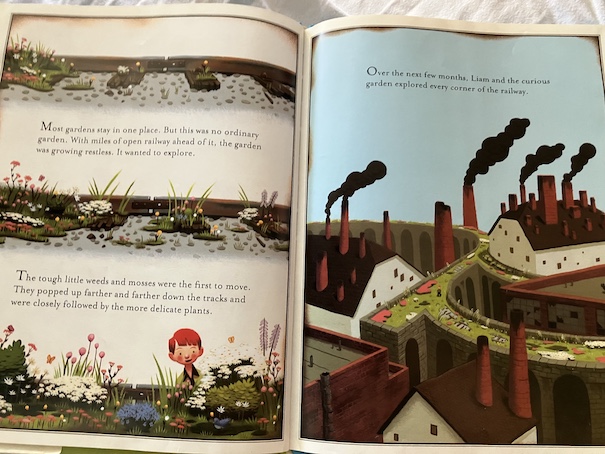
As the garden spreads through the city, other people begin to notice, and they start joining Liam in tending the garden. Greenery begins taking over places and things that are disuses and abandoned, and people encourage the plants to grow where they can enjoy them. Because of their efforts, the city is transformed!
There is an author’s note in the back of the book about the inspiration for the story. There was an elevated train in Manhattan that was shut down in 1980, and plants took over the abandoned tracks. The author, Peter Brown, considered what it would be like if the phenomenon took over an entire city.
My Reaction
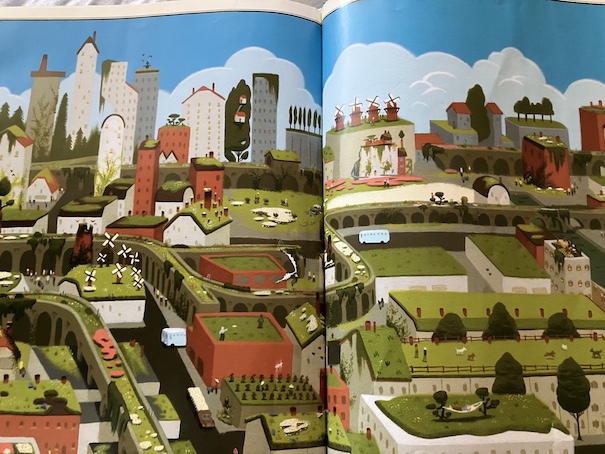
The pictures in the book are great, and some pages are full pictures with no text, just showing how the garden grows and spreads through abandoned places in the city. I love how this story was inspired by the way plants take over abandoned places in real life. Plants can grow in some unlikely places, when nothing interferes with them, and in the story, the boy discovers that they can spread further with a little help.
By the end of the story, his entire city is completely transformed into a greener, more eco-friendly place. It’s not just that there are more plants and green spaces in his city, but the factories that we see in early scenes are no longer putting out all that smoke by the end, and we see windmills in the pictures as alternative forms of energy production. We aren’t told exactly why some things are changed about this city, but it seems like the increasing presence of the green spaces has caused people to change aspects of their lives and businesses to accommodate and preserve them. It’s an idyllic solution that doesn’t show a lot of the conflict that occurs in real life, when some people are ready for a change and others just don’t want to change. Still, I like this mage of a hopeful future because it comes as an antidote to the dystopian quality that we see in many forms of modern entertainment.
 Jestress's Forgotten Books and Stories