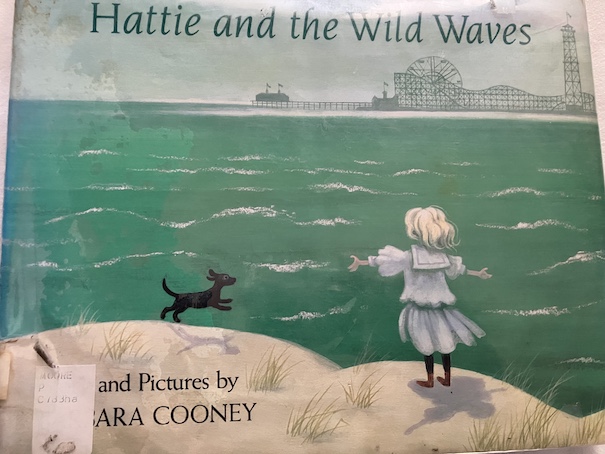
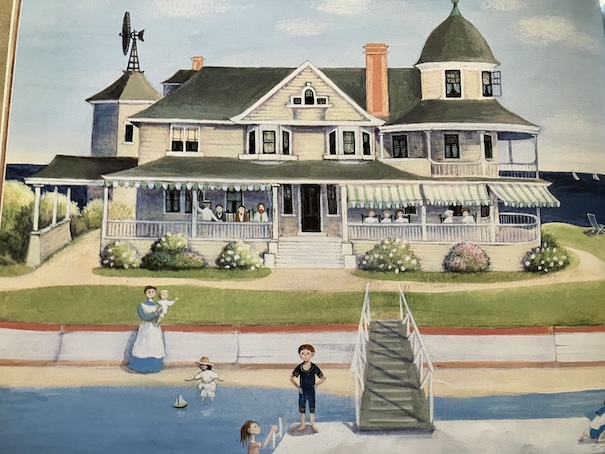
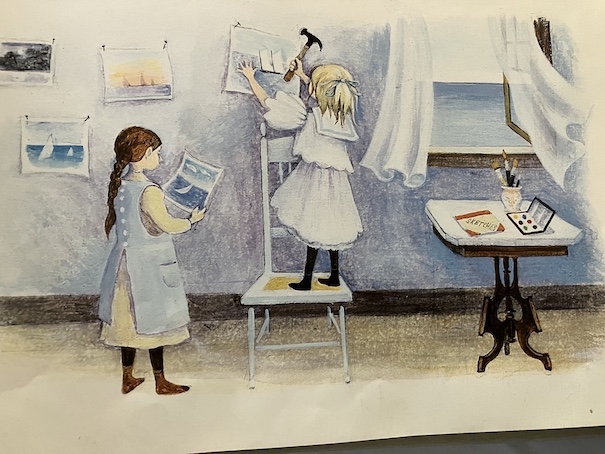
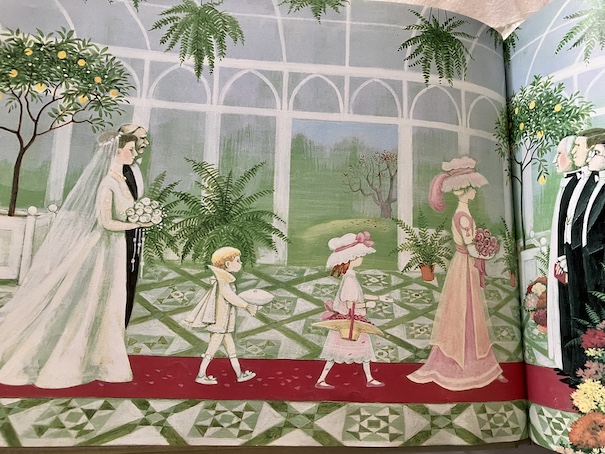
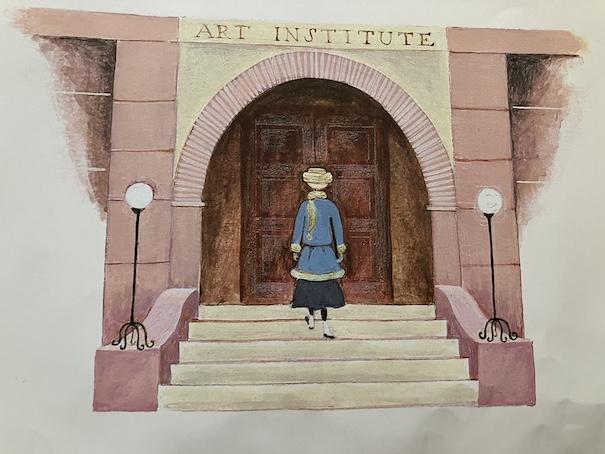
Hattie and the Wild Waves story and pictures by Barbara Cooney, 1990.
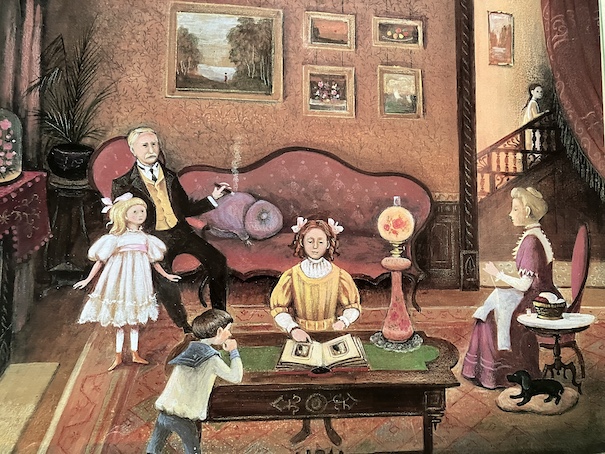
Young Hattie grows up as part of a wealthy family in a red brick house with beautiful woodwork because her father is in the woodwork business. She comes from a family of German immigrants living in New York around the turn of the last century. When she and her siblings start talking about what they want to do when they’re grown up, Hattie says that she wants to be a painter. At first, the others think she means painting houses, but what she actually means is that she wants to be an artist.
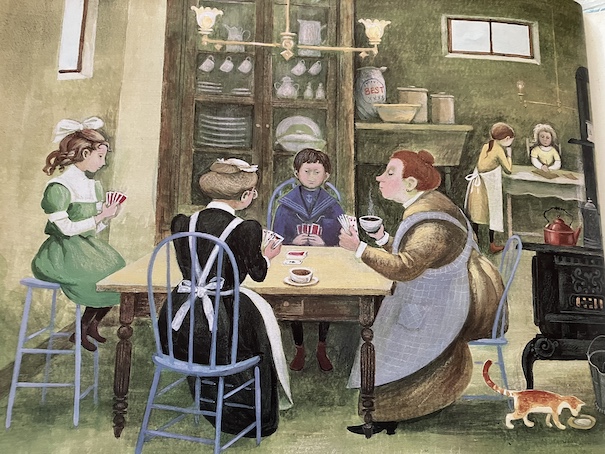
While Hattie’s siblings make life hard for the series of nursemaids who come to look after them (and are ultimately fired for reacting to their teasing) and play cards with the cook and maid, Hattie likes to spend her time drawing. The cook’s daughter admires her drawings. Hattie never minds it when she’s confined to bed with a cold because it just gives her more time to draw.
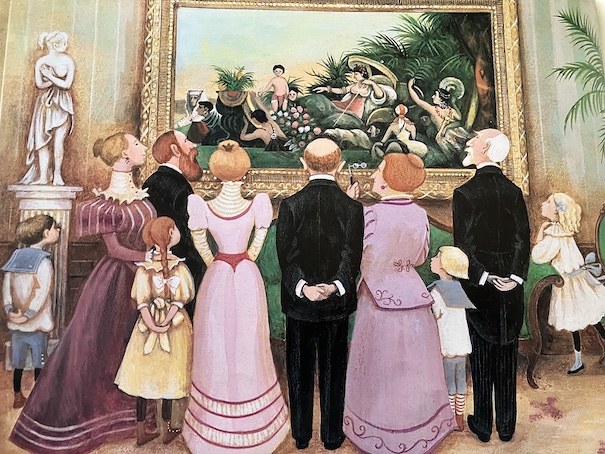
When Hattie’s relative come to visit, they always have a big dinner, and they admire a painting that Hattie’s grandfather painted years ago called Cleopatra’s Barge. However, Hattie’s father prefers a drawing that Hattie made of a barge because he thinks it looks more seaworthy. Hattie knows that the people on her mother’s side of the family tend to be musicians and artists. Hattie’s mother is one of the musical members of the family. She teaches Hattie and her sister how to play the piano and how to sew, but Hattie never does either of these very well.
The family spends their summers at a summer house at Far Rockaway with their relatives. The adults like to gather on the veranda and talk, the women sewing and knitting. Sometimes, they go sailing in their boat. Hattie absorbs the details of everything she sees at the seaside and paints pictures.
Hattie loves their summer house, but then, her father sells it and buys a bigger summer house on Long Island. Hattie’s brother and sister think it sounds exciting because it will be like a castle, but Hattie thinks she will miss the wild waves of Far Rockaway.
Their new summer house is incredible. The children ride horses there and have tennis parties. Hattie’s sister is now old enough to have suitors. While everyone is busy with her sister’s suitors and later, her sister’s wedding plans, Hattie takes walks by herself and finds new things to paint.
Hattie’s life continues to change, but she stays true to her dreams, joining the Art Institute to become the painter she’s always wanted to be. Her mother thinks that she will be like her grandfather, but Hattie knows that she will be her own artist.
The book is available to borrow and read for free online through Internet Archive.
My Reaction
Some aspects of the story are similar to Miss Rumphius, another book by Barbara Cooney about a young girl growing up around the turn of the century who has very definite ambitions early in life. Miss Rumphius’s life ambitions aren’t quite the same as Hattie’s, but they each know what they want to do with their lives from an early age and find their own way of adding beauty to the world.
This is a very calm and relaxing story about a girl with a strong ambition early in life to be an artist. She comes from a wealthy family, so she grows up in charming homes and summer houses, surrounded by beauty and with a family that includes other artists, so her family isn’t opposed to her ambition. There are changes that come in the girl’s life as she and her siblings grow up, but nothing tragic or traumatic happens to her. This is a book where readers can enjoy the beautiful atmosphere and artwork.
The author based the story on her own mother, Mae Evelyn Bossert, although the girl in the story is called by a different name. The hotel where the family lives at the end of the story is the Hotel Bossert, which Barbara Cooney’s grandfather built and which was the place where she was born. There are German words and phrases sprinkled throughout the story because this is an immigrant family, and they speak at least some German to each other. Readers can generally tell by context what the characters are saying.
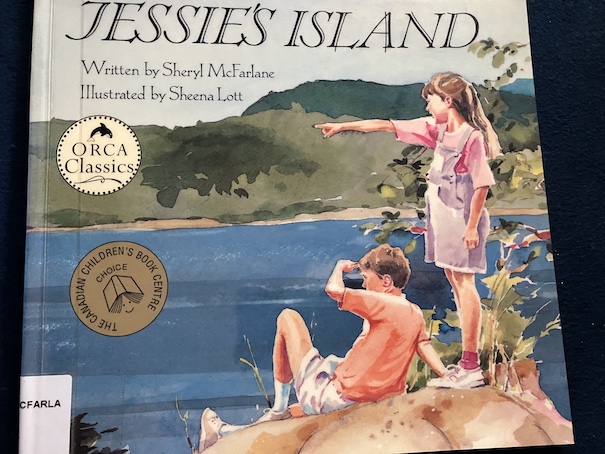
Jessie’s Island by Sheryl McFarlane, illustrated by Sheena Lott, 1992.
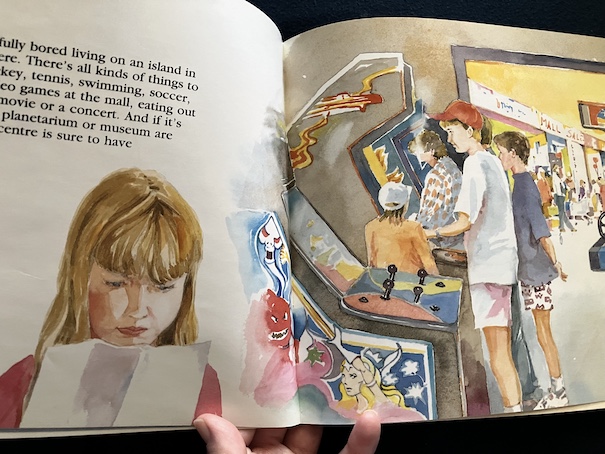
Jessie cousin, Thomas, thinks that life must be dull on the island where she lives because there are so many things to do in the city that her island doesn’t have, like arcades, museums, and concerts. However, Jessie’s mother decides to invite Thomas for a visit so he can see what life on the island is really like.
Much of the story takes the form of letters between the two cousins, first where Thomas brags about all the things there are to do in the city and then a letter from Jessie to Thomas, telling him all the things she will show him when he comes to visit.
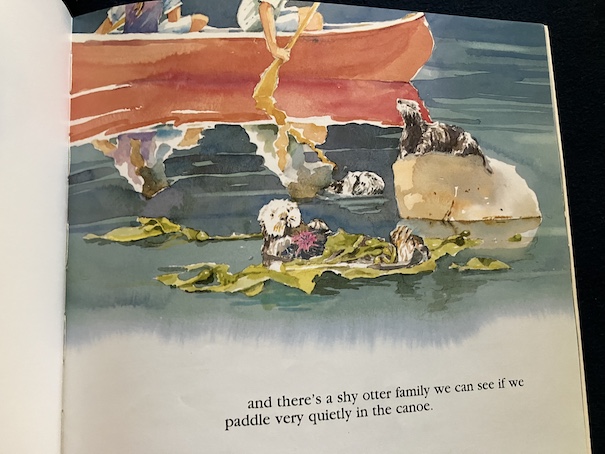
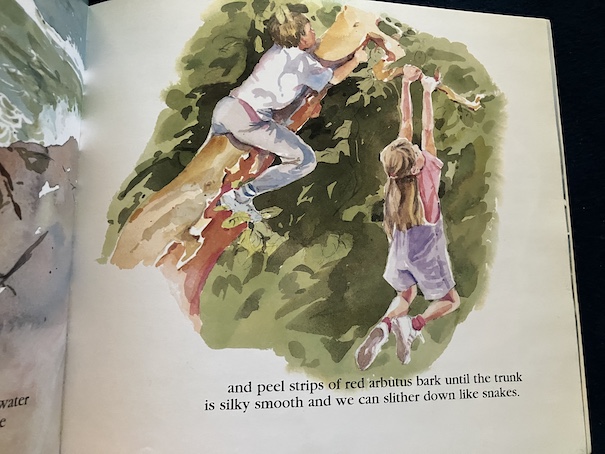
Jessie describes animals, like bald eagles, seals, and killer whales. There also an old, abandoned cabin to explore that has trees growing through the roof. They can also climb trees, pick berries, go out in a canoe, dig for clams, and go fishing.
The book is available to borrow and read for free online through Internet Archive.
My Reaction
This book is fun because it points out that, no matter where you live, there are things to do and see that you can’t do and see everywhere else. It’s true that the island doesn’t have the shopping malls and museums that the city where Thomas lives has, but it has other things that Thomas can’t experience in the city. The natural environment provides interesting sights, entertainment, and scope for the imagination! Just because their environments are different doesn’t mean that there’s less to do or appreciate.
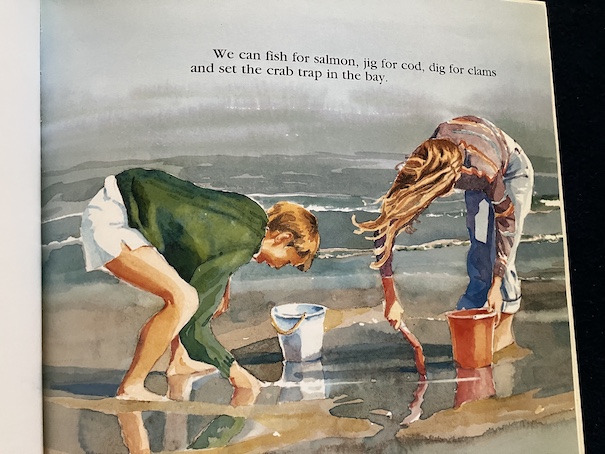
The pictures in this book are beautiful watercolor paintings that take up whole pages. I love the way the illustrator captured the colors and scenery of the island!
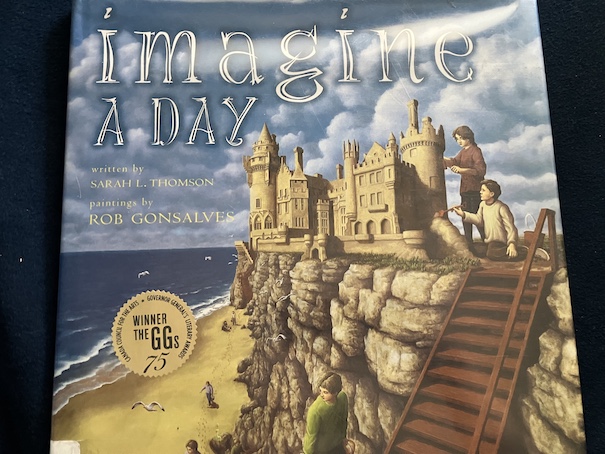
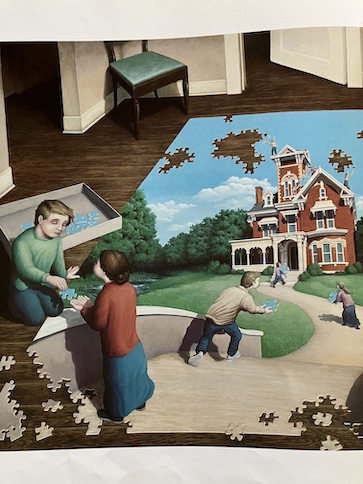
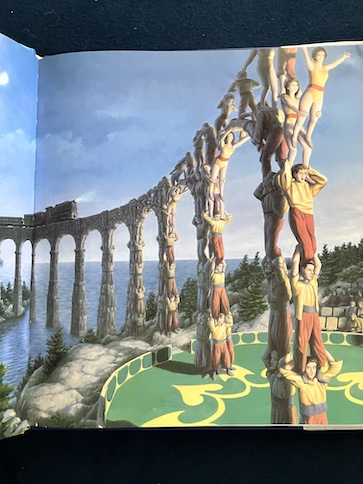
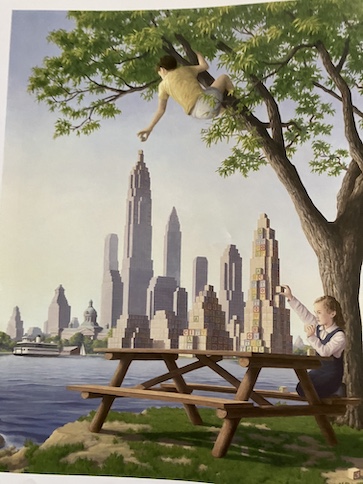
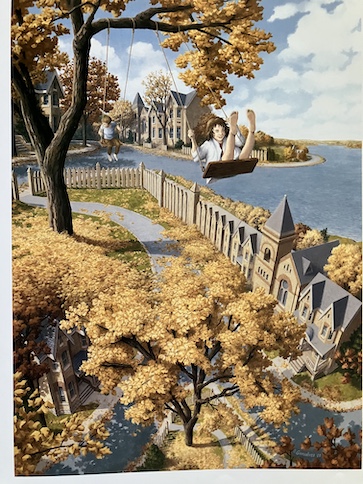
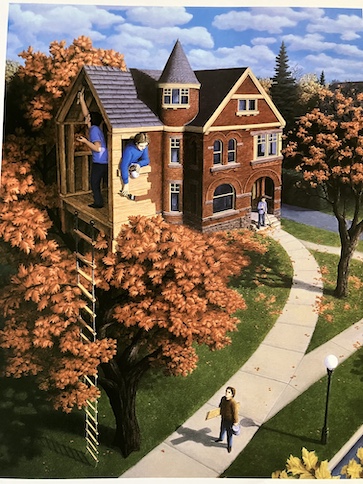
Imagine a Day by Sarah L. Thomson, paintings by Rob Gonsalves, 2005.
This book celebrates the power of imagination and invites readers to use their imaginations, envisioning things that are impossible but amazing!
There isn’t exactly a story to the book. Each page poses something for readers to imagine with an accompanying picture where the shifts from the real world to the imaginary or impossible one are shown.
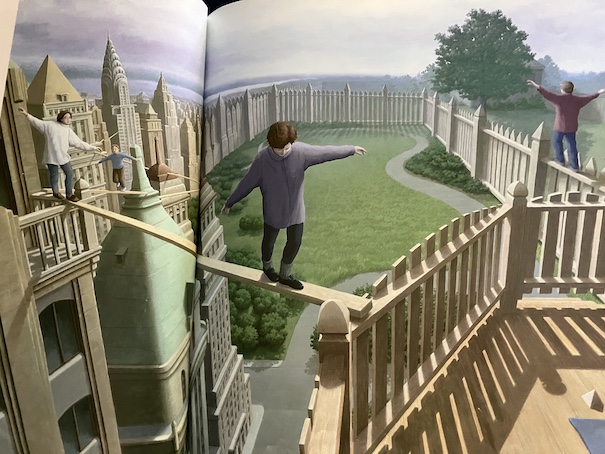
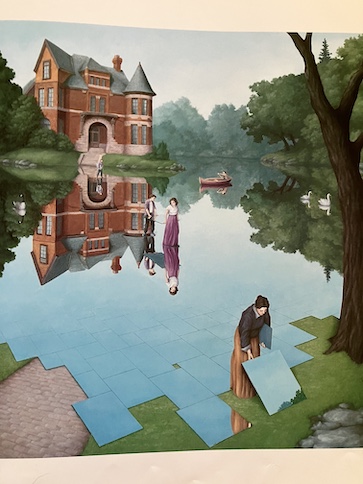
Each of the illustrations is surreal, with perspective changes from the real to the unreal.
The book invites readers to imagine powerful and amazing things, like “when grace and daring are all we need to build a bridge”, “when you forget how to fall”, “when we build a moat not to keep strangers out, but to welcome them in”, “when everything you build touches the sky”, “when you build the world around you piece by piece”, or “when the edge of the map is only the beginning of what we can explore.” All of this amazing things are things that could happen on a wonderful day! Just imagine a day like that!
The best part of the book is the end when we “Imagine a day … when a book swings open on silent hinges, and a play you’ve never seen before welcomes you home. Imagine … today.” Books are a key that unlocks a person’s imagination!
My Reaction
The pictures are amazing, and they really make the book! The pictures use perspective to shift the characters and their actions from the ordinary world to the extraordinary! Fence posts or toy blocks gradually morph into buildings. Streets become rivers, and rivers become trees. People on swings or bikes start off on the ground and end up above the trees! I’ve shown a number of pictures from this book to show you what they’re like, but there are many more to enjoy!
The pictures are fascinating to look at, and each of them seems like it could represent the beginning of a story. In that way, the book reminds me a little of The Mysteries of Harris Burdick. The things the book invites readers to imagine are positive, inspiring, and uplifting, and I think this book would be good to use for a story-writing prompts. Even adults can find this enchanting book inspirational for their creative powers!
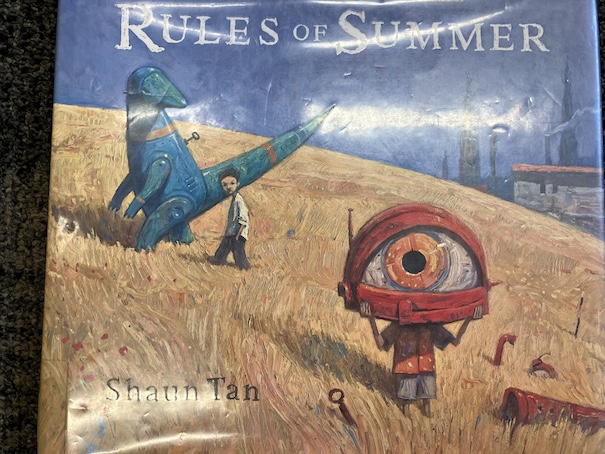
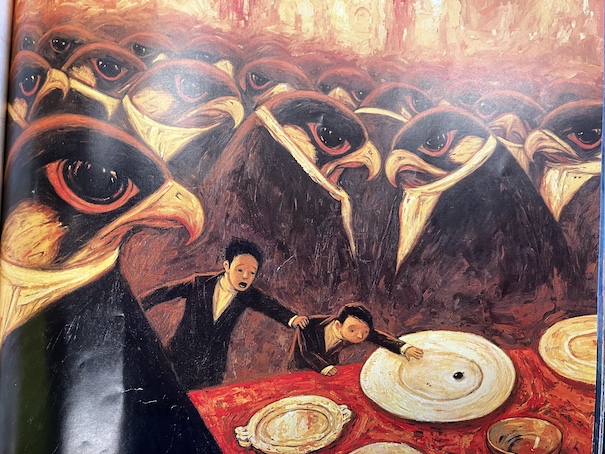
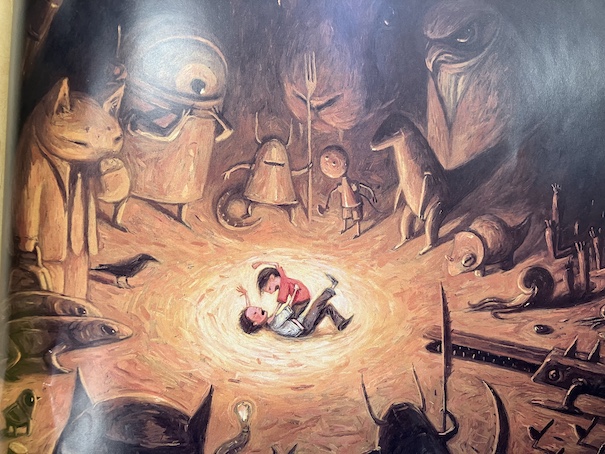
The book starts with the phrase, “This is what I learned last summer:” On every page, there’s a different “rule of summer”, something that the kid and his brother learned from their summer adventures.
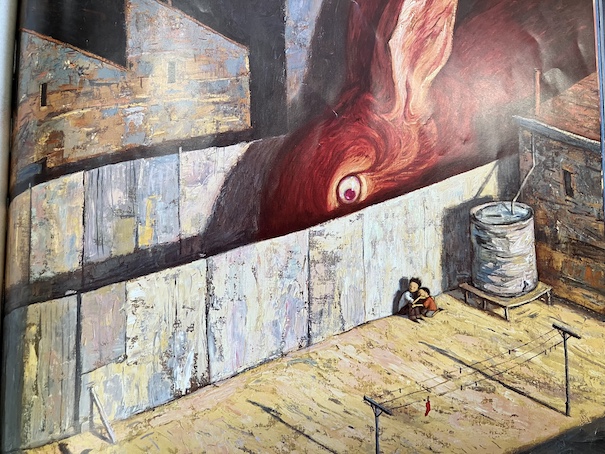
However, they’re not having the ordinary kind of summer adventures. He apparently learned not to leave a red sock on the clothesline when a giant red rabbit appeared, and he learned not to drop his jar when he and his brother were catching falling stars.
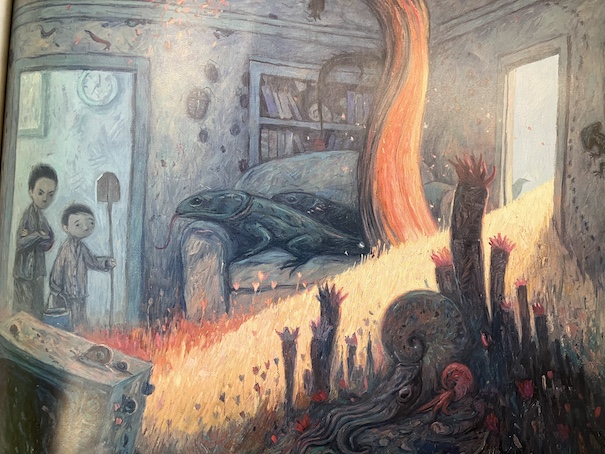
The pictures show all kinds of strange things happening, like a giant lizard and weird plants spilling into the living room, which apparently taught the boy not to leave the back door open overnight and a tornado that came after the boy stepped on a snail.
At the end of the book, the two boys sit in front of their tv with pictures of all the strange creatures they’ve seen pinned to the wall. Are they pictures from the boys’ imagination or memories of a fantastic summer?
The book is available to borrow and read for free online through Internet Archive.
My Reaction
The book is set in a gritty, urban environment where some surreal things happen. Either that, or the surreal adventures all take place in the boys’ imaginations. They could be turning regular adventures in the city where they live into sci-fi, dystopian epics. There is no backstory to anything in the book, so it’s all up to the readers’ imaginations whether anything in the book actually happened or not.
Their world may be post-apocalyptic (at least in their imaginations), peopled by all kinds of strange creatures and robots. There are no other humans in the book other than the boys. I don’t really like gritty or dystopian style books or art, but this book appealed to me because it leaves so much up to the imagination, including whether or not the boys just imagined everything. To me, the last picture, where the boys are just sitting in front of their tv with pictures they’ve drawn all over the walls suggest that they imagined their fantastic summer adventures, but that’s never clarified. In fact, there are a couple of additional pictures after the story ends that suggest maybe it wasn’t all imagination, but you can make up your own mind.
A disease has killed off all of the adults on Earth, leaving only children. In a world without adults, all of the laws, rules, and structure of society are gone, and the children struggle to survive by themselves. When they run out of food in their own homes, they raid the grocery stores and other people’s homes to get more. However, even those sources of food are starting to run out, and they need to find new sources of food. Children are starting to form gangs and raid each other, desperate for food and resources.
In one particular neighborhood, a girl named Lisa Nelson, struggles to look after her little brother, Todd. She also begins to realize how much her friends in the neighborhood are struggling and the dangers around them posed by other kids. Lisa is more practical and organized than many of the other children, and she begins to emerge as the leader of their neighborhood.
Lisa considers where food comes from before it ends up in grocery stores, and she reaches the conclusion that it’s usually transported from farms and stored in warehouses before being shipped to individual stores. Since the adults died, nobody has been taking food from the warehouses to restock stores, so there are warehouses somewhere that are still filled with food and supplies. She recruits help from other kids in the neighborhood to find a warehouse of food and raid it. However, to maintain control and keep the other children organized, she claims ownership over the warehouse and the distribution of food from it. She even threatens to burn the whole thing down if people start raiding it for food without her permission.
If the children manage their resources wisely, they will be secure for a long time while they figure out how to begin producing new food themselves. However, a gang of children from another neighborhood led by a boy named Tom Logan have been raiding the area and attacking children from Lisa’s neighborhood. The children in the neighborhood struggle to defend themselves from Tom’s gang, but Lisa realizes that their neighborhood doesn’t provide adequate defense. The only way the kids from Lisa’s neighborhood will be safe is if they relocate to a place that offers more protection and will easier to defend.
Lisa chooses the high school, Glendbard, as the children’s new home. It’s an ideal location to create a fortress because it’s surrounded by fences and has a limited number of entrances and exits. It’s self-contained, offering many rooms with indoor corridors with facilities in place for the children to use. Lisa persuades the children from the neighborhood to relocate there, set up organized defenses, and move stores of food into their small fortified city.
Under Lisa’s leadership, the new little city of Glenbard is run efficiently, and it offers the children improved safety, but nothing for them is entirely secure. When Lisa is injured in a battle with Tom’s gang and retreats to a farm outside of town with some of her friends, the children consider what the future of the civilization they want to rebuild will be. Tom and his gang are the immediate threat, but sooner or later, there will be others. Tom knows how to raid and conquer, taking things from other people, but he doesn’t have Lisa’s ability to organize, govern effectively, produce new food and supplies, and inspire real loyalty. If everyone is going to survive, they need an effective leader, someone who can organize everyone and make use of their individual talents to grow and protect their society. If Lisa is going to be that leader, she has to not only learn to fight people like Tom but also help them to see her vision of the future.
The book is available to borrow and read for free online through Internet Archive (multiple copies). The book has also been made into a graphic novel, although some of the details from the original story were changed in the graphic novel.
My Reaction
I remember reading this book in a middle school English class when I was about 13! It has always reminded me of the episode from the original Star Trek series, Miri, about a planet of children living without adults because all of the adults were killed off by a disease that only affects people adolescents and adults. The Star Trek episode is from 1966, older than this book, so if there is a connection between them, it would have been the Star Trek episode that inspired the book.
In the Star Trek episode, when any of the children gets too old, they also start showing signs of the disease, and it eventually kills them, until the crew of the Enterprise figures out a way to cure it. In this book, it isn’t clear whether or not any of the children are going to be at risk as they get older. The implication seems to be that the disease died off with the last of the adults. Presumably, the children who are alive now will live to grow up and will rebuild their society, as long as they can figure out how to manage their resources, develop new food production, and maintain order well enough that they don’t kill each other off.
Dealing with their own fears is as much of a struggle for the children as simply finding food and supplies, and it fuels much of the violence between them. Children who lack resources more than the others and don’t have the imagination, knowledge, or skill to figure out how to get more turn to bullying and violence to get what they need. They are simply desperate for survival and doing what they know how to do, which for some kids, is more about taking from others rather than scavenging for themselves or about using violence and destruction instead of creating and building. Lisa is more successful than most because she’s a thinker and planner, and she has some knowledge about how the world usually works, which she can use to fill in the gaps left by the adults (like realizing the connection between farms, warehouses, and stores and that what’s missing now is people to produce food and transport it to the places where it’s usually stored and accessed by others, so she can trace resources back through the supply chain). Lisa realizes that thinking things through is the key to survival. She has her worries, like the others, but she manages her emotions and directs her focus on making plans and accomplishing things rather than panicking and taking out her feelings and needs on others.
Around the time this story was written, in the 1970s, there were a number of other dystopian books about people needing to rebuild society after a disaster. (See In the Keep of Time Trilogy for an example.) What makes this particular book different from other dystopian books of its time is that other books tended to focus on nuclear war as the reason for the society-ending disaster. The 1970s were part of the Cold War, and nuclear threats were on people’s minds. In this book, though, the cause of the disaster is a disease, and children are the only people left on Earth. All of the infrastructure is intact, and the primary challenge is for the children to figure out how to use it. The focus on children trying to build a society of their own is great for keeping children interested in the story!
One of the things I liked about this book when I was young was how the children adapted the school into a city. Sometimes, I used to imagine how it would be to live in other unconventional places – a library, a museum (like From the Mixed-Up Files of Mrs. Basil E. Frankweiler), or a shopping mall. Some of the features of the school do lend themselves to communal living or a small city. The school’s gates offer them protection from outsiders, the classrooms provide living space, and they have a library, an infirmary, and a cafeteria.
The school in the story is based on a real school. The story is set in Glen Ellyn, Illinois, which is a suburban area near Chicago, where the author lived, and the school, Glenbard, is a real high school there. The children in the story, Lisa and Todd Nelson, are named after the author’s own children.
There is a new graphic novel version of this book. I haven’t read the entire the graphic novel version yet, although I’ve read selections of it. In some ways, what I’ve read so far bothered me because it seemed to me that they made Lisa meaner in the beginning. In the original book, Lisa shares the spoils from her scavenging with other kids, telling them that she would be willing to help them, if they ask her. In the graphic novel, she makes it a point to tell Todd that they got everything they have because they’re smart and work hard, and other people should just learn to do the same. It’s a very conservative/libertarian attitude, but it isn’t completely faithful to Lisa’s original character or the themes of the original story. I have to admit, though, that there are strong connections in the story to libertarian/Ayn Rand philosophy that didn’t occur to me when I was 13 years old because I hadn’t heard of Ayn Rand at that age. As an adult, it jumps out to me more now, and there’s another book reviewer who has noted the connection. The original author was a firm libertarian, which is something else I didn’t know until I was an adult. It just seems to me that the graphic novel version of the book bore down on the callousness of libertarian attitudes, that “I’ve got mine, and screw everyone who doesn’t get their own because I don’t owe you anything that’s mine” kind of attitude, than the original book did.
In the original book, Lisa realizes that she is proud of herself and Todd for learning to survive by their own efforts rather than by resorting to violence and stealing, like other kids have, but that didn’t mean that she wasn’t also willing to share whenever she could or thought someone really needed help. The times when she was reluctant to share were when someone had already stolen from her, and she no longer trusted them, not merely because she thought that they weren’t smart enough, not hard-working enough, or too undeserving to merit help. In the original book, Lisa wants to rebuild community and society, and you just can’t be part of a community or society with people who would hurt and betray you if they thought they could get something they wanted for doing that. She does realize that working toward survival is useful for building community and also provides an individual sense of purpose. Like she points out to Jill, who has made it her mission to look after the youngest children, having chores to do and feelings of accomplishment are important to making the younger children feel less afraid because they can see that they have agency (although the book doesn’t use that term), that they are capable of making a difference in their own lives. Lisa works through her own fears and develops her own sense of self-confidence by realizing that she is capable of handling situations, and she wants to help the other kids build that sense of agency and capability. Lisa’s vision for building a new society is for the mutual protection and welfare of everybody, not just self-promotion or personal enrichment. At one point, she thinks to herself how she and her brother can’t focus on just their own survival alone or just getting things for themselves because, for the other kids to be willing to listen to her ideas, they have to be part of the same community with them, sharing their concerns and looking after their mutual welfare. She says to herself, “All the brilliant ideas in the world will be useless if the world collapses around me and I’m the only one left to steal from.”
That’s an issue that I often have in real life with fans of Ayn Rand. Ayn Rand focused a lot on how special her main characters were and that society didn’t appreciate how brilliant and how much better they were than other people and didn’t acknowledge how much more deserving they were than anybody else. Frankly, Ayn Rand’s characters strike me as a kind of wishful thinking Mary Sue. As others have pointed out, the only characters considered “good” in any respect in Rand’s books are the ones who agree with her philosophy, and she just completely trashes everyone else. It’s not that Randian heroes are never compassionate, but they only seem compassionate to people who support them or provide personal validation. To everyone else, they’re ruthless, and anybody who disagrees with them is a villain with no positive traits on purpose.
Lisa kind of represents an Ayn Rand type character in the sense that she has more vision of what is possible for the children as they attempt to rebuild society and better organizational skills, but the focus of the original book isn’t about “look how great Lisa is and other people should acknowledge her greatness as the superior person and defer to her.” Lisa has a sense of communal welfare and an understanding that, while she and Todd have managed so far on their own, they really do need other people. She doesn’t want only rugged individualism and competition with everyone else to prove her own worth or place herself above others. Lisa doesn’t seem to see her position as leader of her new society as some kind of reward for being special or better than other people, and she isn’t trying to hoard all she has for herself as the rewards of her hard work or some kind of token that she’s the most deserving of having things. What she gathers has a purpose beyond simply enriching herself and securing her own future welfare.
She is definitely not laissez-faire in her leadership style, either. When she reveals the existence of the warehouse to the other kids and claims ownership of it, she lets everyone know that she can supply them with things they need but she would rather destroy it all if any of them abuses or misuses it. She uses its existence as a tool to gain and keep their loyalty and get them to do what she tells them, which seems a bit authoritarian. However, there are no adults left, and it seems that Lisa has realized that there always has to be an adult in the room to provide guidance and direction. Although she might not realize it, she effectively creates a kind of welfare state that provides housing, mutual protection, food, and other essentials in exchange for labor and cooperation. Providing for everyone is necessary because they’re going to have to keep everyone alive while they’re preparing for their future. The warehouse has a lot of food in it, but it will run out eventually or things will expire, and to provide for their future, they’re going to have to study food production and get crops growing again. It’s going to take time, and for them to make it to that point, they need to regulate their usage of food and supplies. Lisa is acting as the adult to guide that process.
The other kids are expected to participate and contribute in their new society, although not all kids can contribute in precisely the same way or to the same degree because some of them are much younger than the others. This is something that she discusses with Jill, who thinks that younger kids need more protection. In some ways, they’re both right and wrong in their approaches. Lisa proves correct that younger kids are sometimes capable of more than Jill thinks and that they start to feel better about themselves and the frightening loss of their parents when they realize that they can accomplish small tasks. However, Lisa does sometimes expect too much of them, and Jill is correct that little children would be frightened to patrol as night guards and wouldn’t really make intimidating guards against the bigger kids anyway. Lisa has high expectations of others and high ambitions, but her friends help to keep her more realistic about what other kids can do and what their priorities as a new society should be. When Lisa gets carried away with their accomplishments so far and excited about all the things they can do now that they’re free to do anything they want without adults, she talks about learning to fly an airplane, and one of her friends has to remind her that their first priorities should be to secure sources of food and restore water and electricity.
It seems that Lisa provides goods equitably (she doesn’t seem to provide extra to special favorites, elites, or people she deems as more deserving than others in her society) as long as everyone is willing to go along with her plans. Her primary reason for wanting to be in control is to keep the system functional and equitable. She also relies on people like Jill, who have some altruistic motives and are willing to provide nurturing care for the very young and people who are sick or injured, those least able to help themselves without help from someone else. Lisa and Jill don’t have quite the same philosophy, but building a society requires different people with different types of focus. Both of these characters are necessary for building the new society. Jill even takes in Lisa and Todd after their house burns, so Lisa benefits from Jill’s altruism, which gives her the support she needs while she recovers and makes other plans.
In the original book, her leadership and the resources that she has gathered are treated largely as tool that Lisa uses to achieve her ultimate goal of rebuilding a society. Lisa doesn’t seem opposed to the concept of “common good”, and she really wants to be part of a society. She especially wants a society that actually cares about all of its members and provides what all of its members need, and she recognizes that any society that doesn’t care for its members or provide for them sufficiently isn’t going to survive because nobody’s going to want to join something that doesn’t care about them or provide what they really need. Many of these other kids are also her long-term neighborhood friends, so she has some personal feelings for them. They’re not just there as underlings, and they have worth beyond just serving the system or proving themselves as earners.
The original book’s philosophy has some strong libertarian leanings, but it didn’t strike me as being purely libertarian in the way that the graphic novel seems to. From what I’ve read, it seems like the graphic novel doubled down on the more callous and self-centered form of individualism and took away at least some of Lisa’s consideration for other people. For me, it made her a less likeable, sympathetic character and less inspiring as a leader, and these are frequently requirements of mine when I consider literary characters. Just as people don’t tend to join societies with nothing to offer them, I lose interest in books and characters that don’t offer me what I’m looking for. The graphic novel didn’t grab me in the same way the original book did because it took out some of the aspects that appealed to what I was looking for.
Because of the subject matter, this book is best for older children. According to Wikipedia, it’s recommended for ages 12 to 15, and that estimate seems about right to me. There is real violence in the story. The children start using weapons against each other, and Lisa gets a gunshot wound. When her friend is treating her wound, she gives Lisa alcohol to drink because they don’t have any better painkiller.
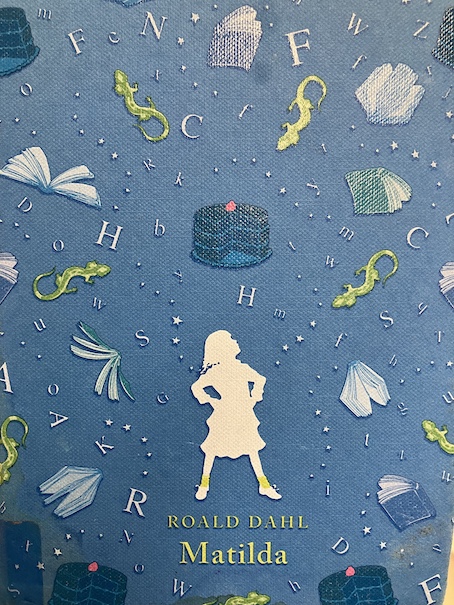
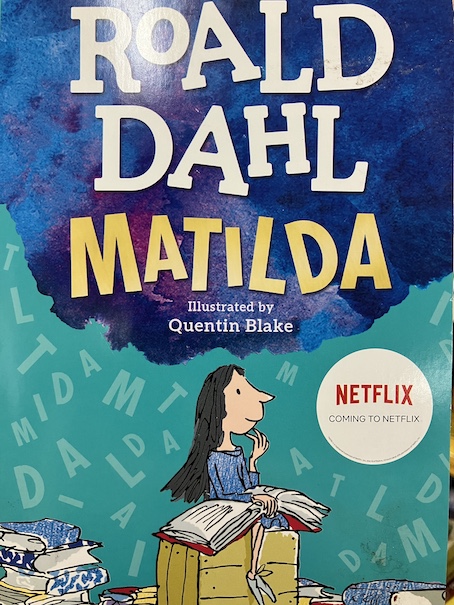
Matilda is an exceptional child, a young genius with amazing talents, but her parents are dull and self-centered, and they never notice. They can’t understand why she wants books when everybody else just watches television, her father prefers her brother Michael to her, and she is often neglected by her mother, who just wants to go out and play bingo. At a young age, she takes herself to the library to get her own books. She reads her way through all the children’s books in the library at age four, and she starts reading adult classics.
Her father hates it that Matilda likes books so much because he’s never been able to like or understand them. He prides himself on being clever, but he only uses his brain to come up with new ways to cheat the customers at his used car lot. Matilda maintains her sanity in this awful family by outsmarting them and playing pranks on them whenever they’ve been particularly nasty. Once, she uses superglue to stick her father’s hat to his head, and another time, she manages to convince her family that their house is haunted.
When Matilda is old enough to begin school, her teacher is the kind Miss Honey. Miss Honey’s is greatly impressed by Matilda’s abilities, realizing immediately that she is more advanced than other students her age. She is even more impressed when Matilda explains that she taught herself. The school’s headmistress is the mean and formidable Miss Trunchbull. Miss Trunchbull intimidates everyone, from the students to the teachers. When Miss Honey tries to tell Miss Trunchbull about Matilda’s unique abilities, Miss Trunchbull doesn’t want to hear about it. She knows Matilda’s father, and he’s always talking badly about Matilda, so Miss Trunchbull is prepared to believe the worst about her. She refuses to believe anything positive about her. Miss Honey thinks that Matilda should be put in a higher grade at school because she needs something mentally challenging, but Miss Trunchbull refuses to consider it.
Since Miss Honey can’t move Matilda up to a higher grade, she gives her higher level textbooks to study in class. She tries to talk to Matilda’s parents about her abilities, but they don’t want to heard about it, either. Matilda’s father only values skills that immediately produce money, and he doesn’t think Matilda’s abilities are likely to do that. Matilda’s mother thinks that the only thing that’s important for girls to do is look pretty so they can get good husbands who will provide them with money. Neither of Matilda’s parents think that a college education is important, and her father says that people learn bad habits at universities. Miss Honey points out that, if they were really in trouble, like if they were sick or needed legal help, they would turn to people with university educations, but it does no good. Miss Honey finds Matilda’s parents offensive and realizes that they are never going to do anything to help Matilda and that they don’t care about her future.
Meanwhile, Matilda and her new friend, Lavender, have discovered just how mean Miss Trunchbull is. She locks up misbehaving students and makes girls with pigtails cut their pigtails off for no other reason than she just hates pigtails. When Lavender plays a trick on Miss Trunchbull by putting a newt in her water, Miss Trunchbull, already expecting trouble from Matilda, decides that Matilda was the culprit. Matilda angrily protests that she didn’t do it, and suddenly, she makes Miss Trunchbull spill water on herself just by thinking about it and looking at her glass. Miss Trunchbull angrily accuses Matilda of having done that, too, but nobody can see how she could have when she was nowhere near Miss Trunchbull when that happened.
Later, Matilda confides in Miss Honey that she made it happen. Matilda’s intelligence has gotten beyond her, and she is starting to develop powers of telekinesis. She also realizes that it gets easier for her to use these abilities with practice. Miss Honey invites Matilda to the little cottage where she lives so they can talk more about it. They discuss trying some tests of Matilda’s abilities, but while they’re at the cottage, Matilda realizes that Miss Honey is actually very poor. Miss Honey reveals that Miss Trunchbull is actually her aunt, and not only has she been withholding her wages but she’s defrauded her of her inheritance. Matilda hatches a plan to use her powers to get justice for Miss Honey.
The book is available to borrow and read for free online through Internet Archive (multiple copies).
My Reaction
I saw the movie version of Matilda before I read the book, and I think the book is definitely better! It’s a favorite of many fans of cottagecore and light academia because it has elements of both. Matilda is a highly intelligent little girl whose incredible brain and love of books change her life forever. She loves to read books while drinking hot chocolate, and her Miss Honey, lives in a charming little cottage that reminds Matilda of fairy tales.
I love books that mention other books, and Matilda likes to talk about the books she likes. Her favorite children’s book is The Secret Garden, and she also likes adult classics, like books by Charles Dickens. She says that she’s also read books by C. S. Lewis and Tolkien, but she doesn’t like them as well as some others because they don’t have much humor in them. Matilda thinks it’s important that books for children have humor in them.
Humor is what makes Matilda such a fun book to read! Matilda is badly neglected by her parents, and Miss Trunchbull does some horrible things to the children at her school. In a story with a more serious tone, these things could be truly tragic or make readers angry at the injustice, but the horrible people in this story are played for humor. Their misdeeds are portrayed with whimsy. Matilda doesn’t waste time crying and only rarely gets angry, instead using her powerful mind to devise amusing punishments for the perpetrator and to change things for the better. Readers can relax and enjoy Matilda’s adventures, confident that, no matter what the antagonists dish out, she will always get the upper hand in the end.
In some ways, Matilda reminds me of an earlier children’s book called The Girl with the Silver Eyes because both books involve misunderstood girls with unusual abilities. However, they are not the same story. Matilda is more whimsical fantasy, and The Girl with the Silver Eyes is science fiction. Matilda’s unusual mental abilities come from her need to be intellectually challenged, while Katie, the girl in The Girl with the Silver Eyes, gets her abilities as a side effect of a medicine that her mother took while she was pregnant with her. Both girls frighten and intimidate people and sometimes use their abilities to get back at people who are mean to them, but in different ways. Both of them also begin to thrive when they find people who understand them, especially teachers who help them cultivate their abilities. In The Girl with the Silver Eyes, Katie also learns that there are other children like herself, but Matilda remains unique in her story.
Roald Dahl was opposed to any of his books being altered in any way, but in 2023, the publishers had some of the language in this book changed, particularly words related to appearance, such as skin color or people being fat. It was a controversial decision because of the author’s specific wishes against having his work changed, but the publishers insisted that it was necessary to “ensure that it can continue to be enjoyed by all today.” I can understand the purpose of some of the changes, although I don’t see why some others were changed. For people who want to compare the two versions, there are still plenty of copies of the original version available today. Check the printing date of the copy of your book to see which version it is. Updated books will be printed 2023 or later. The changes were also not implemented in all countries where this book was published. As of 2026, the United States, France, and the Netherlands have not implemented the changes.
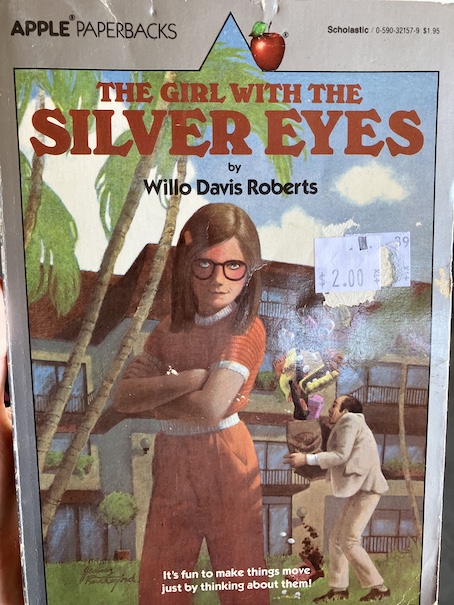
The Girl with the Silver Eyes by Willo Davis Roberts, 1980.
Katie has recently moved from the country to an apartment in the city to live with her single mother. Katie’s parents divorced when she was young, and for years, she lived with her grandmother in the country. However, her grandmother has now died, so she has gone to live with her mother. Katie has mixed feelings about living with her mother again after years of living without her, and she somewhat blames her mother for not keeping Katie with her instead of leaving her with her grandmother. Katie can’t live with her father because he moves around too much, and she doesn’t even know where he is right now.
At first, Katie wonders if things are going to be different in the city, but Katie soon realizes that the same problems that plagued her in the country have followed her to the city because she still has the same abilities she has always had and can’t resist using them. Katie has always made people nervous, including her own parents and grandparents because she’s not like other children. For one thing, she has strange, silver eyes that surprise everyone who sees them because they seem unnatural. For another thing, Katie has the ability to make things move just by looking at them and concentrating on them. She tries to use this ability only when no one can see her doing it, but people can’t help but notice that odd things happen when Katie is around. Somehow, things move around Katie without Katie apparently moving herself. Sometimes, when things happen by ordinary accidents, people blame Katie for them just because she was around, and they’ve all come to think of Katie as somehow causing strange things to happen. Secretly, many people think that there’s something seriously wrong with Katie, like she might be a witch or something, and they try to avoid her.
Katie knows that she’s never met anyone else like herself, but she wishes that she did because she’s often lonely. It’s hard to make friends when people think you’re strange or dangerous, and even your own family is distant with you because you frighten them a little. Although Katie tries to pretend normality as much as possible, the urge to use her powers is too strong, particularly when someone has made her upset. She subtly uses her powers to spook her mother’s crass boyfriend, Nathan, and her mean babysitter in the hopes of driving them both away.
After Katie succeeds in spooking the babysitter, she overhears her mother talking to Nathan about her. From their conversation, Katie learns things about her mother’s history and herself that she never knew before. Her mother, Monica, had lost another baby before her after being in a car accident, and then she went to work at a pharmaceutical company. She liked the work there and the other women she worked with, and she has stayed in touch with some of them. However, she left the job when she got pregnant with Katie, and some of the other women there also got pregnant around the same time. Originally, Monica had hoped to return to the job after giving birth to Katie, but the company stopped making the product they were working with, and none of the other women who had children returned.
Ever since Katie was born, Monica knew that Katie was odd because she never cried, and she’s always had those silver eyes, yet her mother has trouble thinking that anything could be seriously wrong with Katie because she seems healthy and is very intelligent. Nathan asks Monica whether the drug she was working with could have had some effect on Katie, and whether that could be why Katie is the way she is. At first, Monica doesn’t think so because she says, if that was the case, her friends from that time would have had children who were similar to Katie, and she thinks they would have said. Nathan asks her whether she’s sure that her friends would admit that their children were strange and a little frightening, and whether Monica has ever seen any of these children for herself. Monica has to admit that she hasn’t. Nathan suggests to Monica that Katie’s condition and whatever the conditions of her friends’ children might be could be the reason why the company stopped production of that medicine.
Katie is stunned at this information. She has always assumed that she was a random freak of nature, and it never occurred to her that there might be scientific explanation for her strange abilities. Although she still doesn’t like Nathan, she has to admit that his questions and his theory are sensible. She also begins to wonder about the children of her mother’s old friends and whether they are also like her, with silver eyes and the ability to use telekinesis. She secretly goes through her mother’s belongings to figure out who her mother’s old friends were so she can track them down and meet their children.
When Katie makes friends with a nice older lady, Mrs. Michaelmas, who lives in the same apartment building and persuades her mother that she would make a better babysitter than the others that her mother has tried, Katie finds someone to confide in for the first time. She isn’t alarmed when she discovers that Katie can talk to and understand her cat, and Katie finds herself telling her all about herself and the other things she can do. The older lady takes it calmly, saying that, at her age, she’s seen may things before and doesn’t get too worried about things. They talk about why people get scared of people who are different, and the older lady says that people are often afraid of someone they think might be somehow more powerful than themselves. Katie has powers that other people don’t have, and people are afraid of what she’s able to do that they can’t.
When a new tenant, Adam Cooper, moves to the apartment building, he seems open and friendly with Katie. Unlike other people, he doesn’t seem concerned about her silver eyes, and she wonders whether he could be a confidant, like Mrs. Michaelmas. At first, she thinks Mr. Cooper might be interested in her mother and could make a better boyfriend for her than Nathan, but then, she overhears him talking to her mother and asking questions about her. Mr. C seems way too interested in Katie and why Katie’s babysitters haven’t gotten along with her. In fact, it sounds like he’s planning to call her old babysitters and ask more questions about her. Katie doesn’t know why Mr. C is so interested in her, but she no longer thinks his intentions are merely friendly. When she hears Mr. C asking Mrs. M about whether Katie’s ever done anything odd around here, Katie is sure that Mr. C knows that she has powers that other people don’t have. Then, he tells Mrs. M that he’s been making inquiries about Katie in the town where she used to live, and some people there really think she’s a witch and that she may have caused her grandmother’s death. Katie is horrified because, while she knows that she didn’t do anything to her grandmother, it would be hard to prove because he grandmother died from an accidental fall downstairs. Even having someone open an inquiry into her grandmother’s death and suggesting that she could have been at fault would reveal Katie’s secret powers to the world!
Katie doesn’t know who Mr. C really is or what he wants with her, but she fears that, if he convinces other people that she’s dangerous, she could be locked up for life! She decides that her only hope is to find the other children who are like her. They may be the only people who could understand her and be willing to help.
My Reaction and Some Spoilers
I didn’t read this book when I was a kid, although I saw it around. For some reason, I just put off reading it, although it’s similar to other books that I did read about kids who have mysterious powers. When Katie eventually meets the kids of the other women her mother used to work with, they admit that they all feel like misfits and have wondered for years why they’re so different from everyone else. One of them says he thought that he might secretly be an alien, given to a human family to raise, which reminds me of Escape to Witch Mountain, which was written before this book. However, Katie and the other kids are all human, just mutated by the pharmaceuticals their mothers worked with.
Sadly, there are real-life cases of children changed by their mothers taking dangerous medications while pregnant, but in real life, those children are born with birth defects rather than psychic or telekinetic powers. A famous case of that was the Thalidomide scandal of the 1950s and 1960s, when babies were born with severe deformities after their mothers used the tranquilizer Thalidomide. Most of these cases happened in Europe because the FDA refused to approve the drug in the US due to inadequate testing.
In some ways, this book also reminds me of Matilda by Roald Dahl, but The Girl with the Silver Eyes was published first, so it’s not an imitation of that book. Like Matilda, Katie has powers of telekinesis and pointedly doesn’t like to watch tv but she loves books. I enjoy children’s books that also mention other, real children’s books, and Katie mentions some that she’s read. Among the books that the story mentions her reading are The View from the Cherry Tree, Gentle Ben, Charlie and the Chocolate Factory, The Boxcar Children, The Headless Cupid, and The Scarlet Pimpernel.
Mentions in the story of the dangers of child molesters and her mother has books that are inappropriate for children and stops her daughter from reading them. Katie’s mother thought she might be “retarded” when she was a baby.
Some Spoilers
I had several theories about who Adam Cooper could be and what he might want with Katie. At first, I wondered if Adam Cooper could be the father of one of the other children who are like Katie, secretly investigating the children of other women who worked with his wife to see if they all have the same condition. Then, I thought maybe Adam Cooper worked for the pharmaceutical company and was checking up on the children of their employees for years to find out what happened to them. I was hoping that he wouldn’t be part of a secret government organization, like the one in Stranger Things because that’s been done a lot, and sometimes, I feel like it’s become kind of a conspiracy theory cliche. Actually, none of those are the real explanation.
It turns out that there is an organization that has an interest in children like Katie. They don’t mean them any harm, but they are interested in studying the reasons why children like her end up with special abilities and helping these children to develop their abilities. He confirms that Katie and the children of Monica’s old friends aren’t alone, that there are other children with varying conditions and abilities, some also the children of people who worked with pharmaceuticals and others with no known cause. At the end of the story, Adam asks the children and their families whether the children want to come to the school his organization runs, which sounds a little like Professor X’s school from X-Men or The Mysterious Benedict Society.
However, the children and their parents aren’t entirely sure whether that’s a good idea or not. Adam assures them that the children wouldn’t be prisoners at the school, that their education and development would be prioritized, that they wouldn’t have to hide their abilities from anyone while they were at the school because they would be among others like themselves, and that they wouldn’t be treated like creatures to be merely studied. Still, the children don’t want to be separated from their parents, and the parents are concerned about sending the children away to this unknown school. One of the children asks, since there are four of them living in this area, whether they could form their own day school as a kind of satellite school to the main one, so they can continue living at home and being part of the regular world, not isolated from it. They don’t reach a full decision by the end of the story, but the adults discuss the possibility. Katie and the other kids feel like their lives have already changed for the better, just having each other and realizing that they’re not alone.
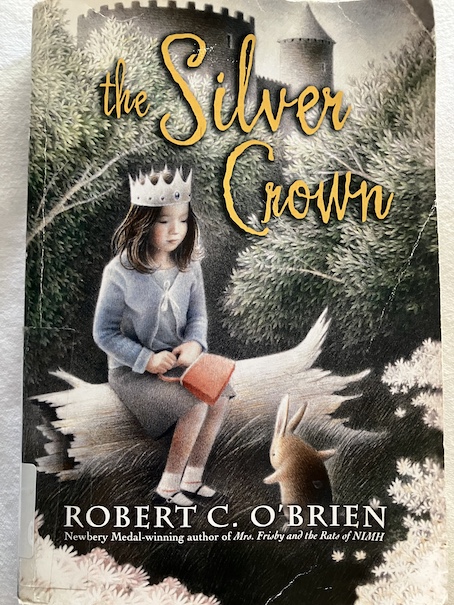
Ellen Carroll has always known, deep down, that she was a queen. Of course, everybody else sees this as a game of pretend, and it kind of is, but on her 10th birthday, her life changes forever, and there may be more behind Ellen’s feeling of being a queen than even she knows.
When Ellen wakes up on her 10th birthday, she finds a letter from her Aunt Sarah and a beautiful silver crown next to her on her pillow. Ellen loves the crown because Aunt Sarah is the only adult who seems to really believe Ellen when she says she’s a queen. Ellen takes the crown and goes for an early walk in the park, daydreaming about being a queen. When Ellen gets back to her house, she gets a real shock. In the brief period that she was gone, the house has completely burned down, and apparently no one else in her family survived!
Ellen, in shock, tries to talk to the firefighters and police about the fire and what happened to her family. She discovers that the fire was surprisingly sudden and fierce, there’s no indication that anyone survived, and they might only find bones when they finish their investigation. Ellen explains that this was her family’s house, but since her family hasn’t lived there very long. Nobody really knew her family, and nobody really knows her, and even the police seem to doubt her identity. However, a policeman says that he will take her to the station.
On the way to the police station, something else shocking happens. Ellen and the police officer witness a murder! A robber shoots a store manager, and when the policeman chases the robber, he is also shot. Alone and forgotten, Ellen watches more police come and investigate the situation, trying to figure out what to do. Ellen realizes that, with her family gone, what she really needs is a guardian or a next of kin. That would be Aunt Sarah. However, Aunt Sarah lives in Kentucky, and that’s hundreds of miles away. Ellen could write to Aunt Sarah, but it would take days for her to get the letter, and in the meantime, Ellen has nowhere else to stay. Then, Ellen decides that the thing to do is to go to Kentucky herself. She writes a letter to her aunt to tell her that she’s coming, and sets out to find a ride.
She accepts a ride from a nice man called Mr. Gates who says he’s a teacher and that he’s going to Kentucky, too. She considers it good luck until, during the ride, she begins to notice that there’s something weird about this man. He seems weirdly happy, all the time, and he sometimes repeats certain stock phrases at inappropriate moments. When Ellen gets a look inside in the glove compartment and sees something disturbing – a gun! Suddenly, something clicks in her mind, and she realizes that Mr. Gates was the man in the green hood who shot the store manager and the policeman! She escapes from Mr. Gates and runs into the woods.
While she hides from him in the dark woods, she hears Mr. Gates searching and calling for her. As she listens to him, he grows more disturbed and more disturbing. First, he tries to tell her that he’s going to take her straight to her Aunt Sarah, and Ellen realizes that she never told him her aunt’s name. Then, he begins raving, trying to command her to come out because “the king” has demanded that he bring her to him, and he will punish them if they don’t come. Ellen doesn’t know what he’s talking about, but in the woods that night, she has a strange vision where a man wearing a black crown that looks like hers seems to be commanding other people.
The next day, Ellen befriends a boy named Otto. Otto lives with his elderly mother in the woods, and they survive partly on things they salvage after trucks wreck on a dangerous section of road nearby. Otto and his mother invite Ellen to stay with them a little while to eat and get some sleep.
Ellen explains everything that’s happened to her to Otto’s mother, Mrs. Fitzpatrick. Mrs. Fitzpatrick is a wise woman, and she and Otto both sense that there’s something odd about Ellen’s crown. They sense that it has a power of some kind, but it’s the kind of power that only particular people can use. Whatever the crown does, Mrs. Fitzpatrick is sure that it will only work for Ellen. She questions Ellen about who gave her the crown, but she admits that she doesn’t really know. All she knows is that it was there when she woke up. Since it was her birthday, she just assumed that it was a birthday present. She talks her Mrs. Fitzpatrick about having this sense that she’s a queen and that her Aunt Sarah thinks so, too. Mrs. Fitzpatrick agrees, but she says the question, is what or where is Ellen the queen of? Ellen will need to figure that out before she can understand what the silver crown really is and what it does.
During the night, Mrs. Fitzpatrick shoots at someone who’s lurking outside their cabin, and they realize that someone is still hunting for Ellen. Ellen can’t stay there, and Mrs. Fitzpatrick points out a road that Ellen can take, and she insists that Otto go with her because he knows how to manage in the woods and can help Ellen. Mrs. Fitzpatrick admits that it’s also best for Otto to leave the area because he’s also in trouble.
At first, she’s vague about what trouble Otto is in, but gradually, Mrs. Fitzpatrick explains that Otto and his past aren’t what he believes or has chosen to believe. Mrs. Fitzpatrick found him as a very small child, abandoned on the nearby highway, and she has no idea who his birth parents are or what happened to them. Mrs. Fitzpatrick says she doesn’t really need the things that Otto has salvaged from the wrecked trucks, but for some reason, Otto believes that she does, so he’s been causing these accidents by using branches to hide the sign warning people of the dangerous curve ahead. It doesn’t seem to affect smaller cars, but bigger trucks can’t make it without warning. Ellen is horrified, but Mrs. Fitzpatrick says that she thinks that Otto needs to leave this place and the dangerous fantasies about himself and his life that he’s build, living alone in the woods.
Mrs. Fitzpatrick lets the children go with a warning to Ellen to keep the crown hidden and not to tell anybody about it. She also warns her to beware of any people or group who use the name Hieronymus. The first Hieronymus was a saint, but others have appropriated the name to study the occult and esoteric knowledge, and not for any holy purpose. Mrs. Fitzpatrick says that she has read about a crown like Ellen’s which is associated with these people, and she thinks this secret society is after Ellen now.
Ellen and Otto set out on a cross-country journey to reach Ellen’s Aunt Sarah, but they eventually find themselves trapped in a disturbing boarding school, run by the secret society they are trying to escape. The students in this school are controlled by the mysterious Hieronymus Machine, and they are being trained as soldiers in the service of “the king” to sow chaos in society. Ellen is close to learning the purpose of her crown, but she and Otto will need their wits to escape and put an end to this secret society’s evil plans!
Robert C. O’Brien is known for Mrs. Frisby and the Rats of NIMH, but The Silver Crown was his first book.
My Reaction and Some Spoilers
I was intrigued by this story from the very beginning. Strange things start happening very quickly – the appearance of the silver crown on Ellen’s birthday, the destruction of her house, the murder she witnesses, Ellen setting out on her journey to her aunt, and the strange and disturbing Mr. Gates attempting to kidnap her – all of these events, while confusing for Ellen, are related and part of a much larger story.
The parts of the book where Ellen and Otto are traveling cross-country, meeting people who help them escape from the people chasing them and continue their journey, seem almost like part of a fantasy book or fairy tale. This story is both fantasy and science fiction. (Spoiler) The Hieronymus Machine is an invention more than a thousand years old that controls minds by broadcasting feelings like radio waves. The school run by the society uses the Hieronymus Machine to control the minds of the “students”, and the students are all part of a larger experiment to test the powers of the machine and the ability of the black crown to control it. There is a pseudo-scientific explanation of how the machine works, which is the science fiction element, but the black and silver crowns that control the machine and the roles of “king” and “queen” associated with the crowns add the fantasy element. When Ellen meets the king, he explains to her how he discovered the machine and that the people who built it, although they called themselves monks, were actually sorcerers. I enjoy stories that are cross-genre, and I thought that this combination of fantasy and science fiction worked well.
Actually, I was surprised when Ellen and Otto ended up at the boarding school and started learning what the Hieronymus Machine is and what it does because it struck me as very similar to the plot of The Mysterious Benedict Society. This book is 40 years older than The Mysterious Benedict Society, and I wouldn’t be surprised if it inspired that later series. Both of them are based around the concept of mind control machines that work like radio waves and strange boarding schools that are used both for mind control experiments and for training/brain-washing people to serve a dark purpose. Both stories feature children who are orphans and/or separated from their parents and people whose identities are uncertain and whose memories are corrupted by the machine. (Spoiler) It turns out that Ellen’s family is still alive but being held captive by the secret society, but we never learn who Otto’s parents were or if they had any connection to the secret society themselves.
There are some differences between The Mysterious Benedict Society and The Silver Crown. Ellen discovers that the king, although seeming to be in control of everything initially, is also controlled by the machine. The machine controls everyone around it, to some extent. The king somewhat controls the machine through the black crown, but at the same time, he’s also carrying out the goals of the machine. Although he seems in command, he’s really just a tool of the machine itself and needs to be freed from it as badly as everyone else. This is a somewhat different scenario from The Mysterious Benedict Society, where there is one person who is definitely in control. Some people, like Ellen, have a natural resistance to the mind control effects because their minds work differently from other people’s, and that’s how Ellen is able to resist the mind control and use the silver crown. The silver crown is the one that actually controls the machine while the black crown allows the machine to control the wearer while giving him the illusion of control, which is why the king wants to control the silver crown and Ellen. On some level, the machine realizes that it needs Ellen and the silver crown to function. Ellen needs to learn how to use the crown and the knowledge it gives her about what to do to establish control over the machine and ensure that it can’t control anyone else again.
There are actually two different endings to this book, depending on whether you read the British version or the American version, and if you listen to Kent Kently’s reading on Youtube, he reads both of them at the end of the book. In the original British version, Ellen’s Aunt Sarah says that she sent Ellen the crown after finding it in a curio shop in Spain, where the shop owner seemed to think it was an old theatrical prop. This ending isn’t very detailed and leaves some things to the imagination. The American version has far more detail, and in that version, they conclude that the secret society had someone break into Ellen’s house and leave the crown for her because they were actively searching for someone who could use it. If you read other reviews of this story, some of them will differ from each other, depending on which version the reviewer read. Personally, I like the American version with its more detailed explanations better, but Kent Kently prefers the shorter, original version.
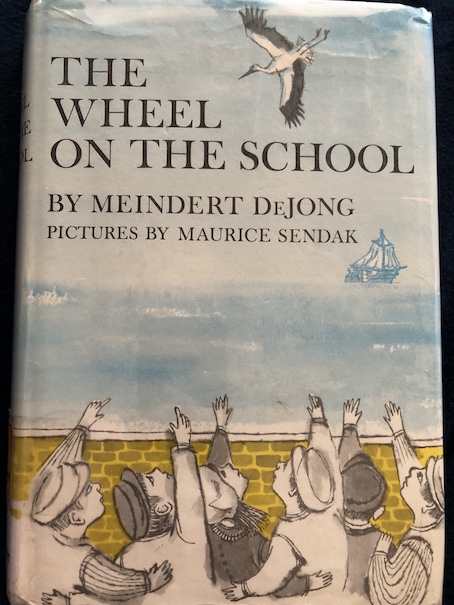
The Wheel on the School by Meindert DeJong, pictures by Maurice Sendak, 1954.
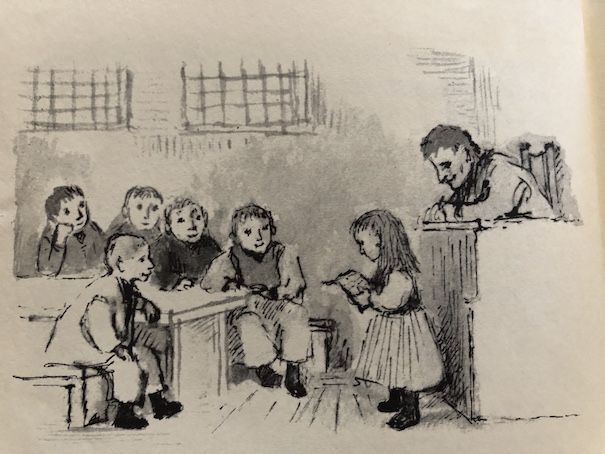
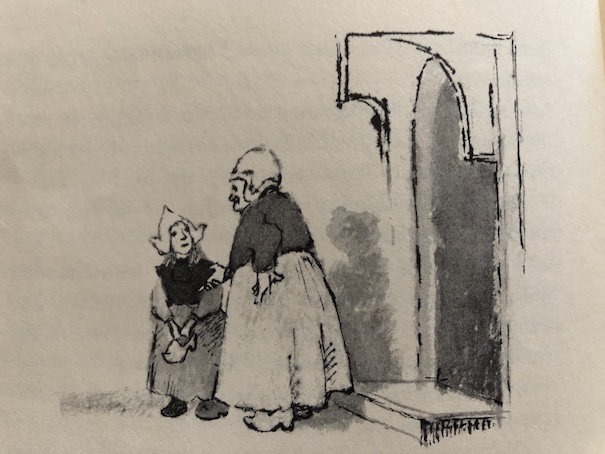
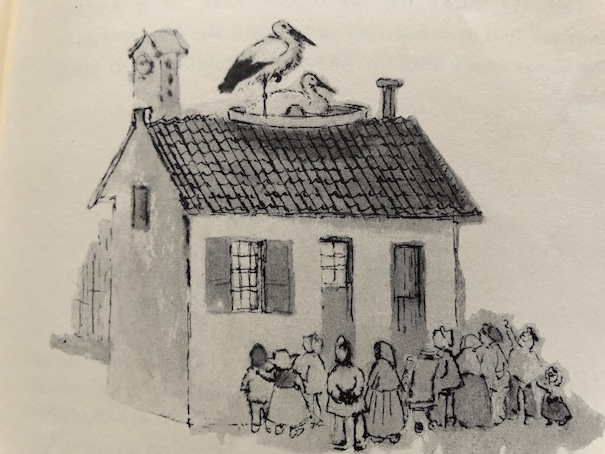
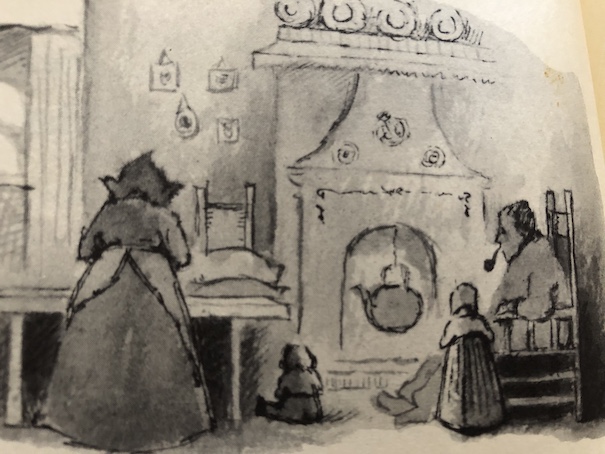
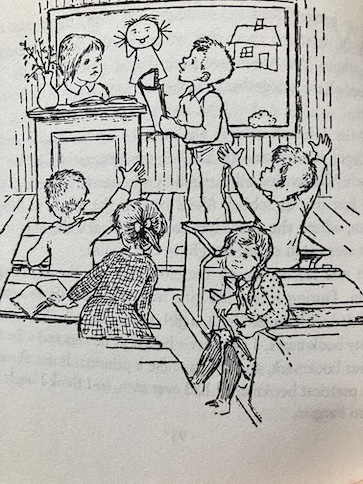
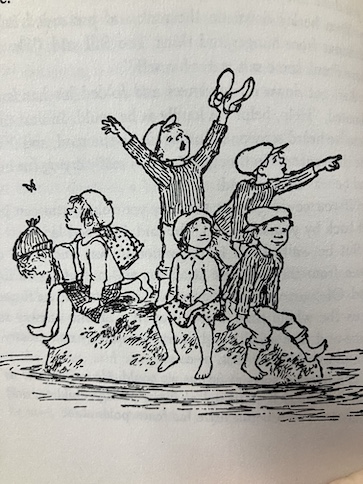
The story takes place in a small fishing village in Holland called Shora. Because the town is small, the local school is also very small, with only six children in the village old enough to attend. Five of them are boys: Jella, Eelka, Auka, and Pier and Dirk (a set of twins). The sixth student is Lina, the only girl. Lina is the one who gets the other students thinking about storks because she writes a story/essay about them. It wasn’t a school assignment. Lina just wrote it because she thinks that storks are interesting. It’s supposed to be good luck if a stork nests on your roof. Lina also notes that, while storks nest in other towns around them, like the one where her aunt lives, they never nest in Shora, for some reason. This starts a class discussion about storks, and the students generally agree that they know very little about storks because storks don’t live in their little village. The teacher says that, even when people don’t know much about a subject, they can still wonder about it, and he challenges the students to wonder about storks and why they don’t nest in their village. He is sure that, if the students wonder about it and think about it, they will learn the reason why the storks don’t come to their village. In fact, he lets the students out of school early so they can spend some time thinking about it. He mysteriously says that their wondering may cause things to happen.
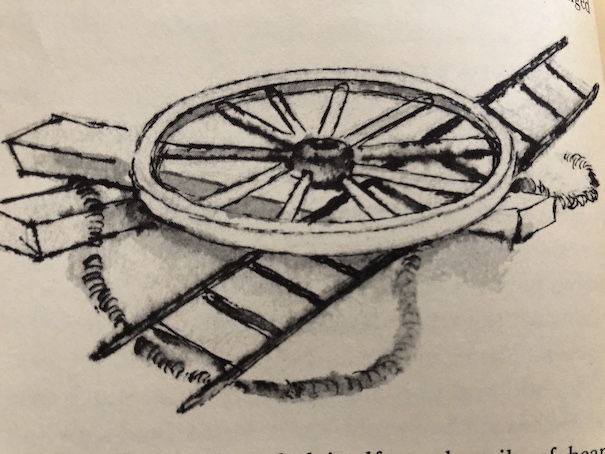
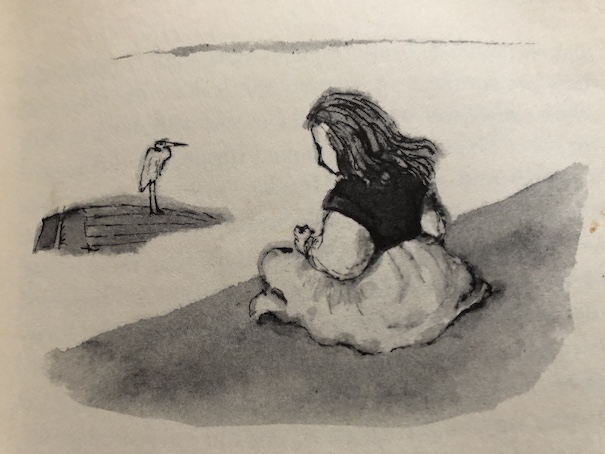
The children are thrilled at being let out of school early, but they feel bound now to wonder about storks and why storks don’t nest in their village. They’re not sure exactly how to begin thinking about this subject or how to figure out the answer, but they take a good look around their village. They find themselves looking at familiar places like they’ve never seen them before, but after a while, some of them become restless. Eventually, the boys all run off to play, leaving Lina to wonder by herself, to her annoyance. However, while wondering by herself, Lina notices something important: that all of the roofs in town are steep and that the school has the steepest roof of all. She realizes that the steep roofs are the reason why the storks can’t nest in Shora. When she realizes that, she also realizes that she knows what to do about it. Her aunt has a wagon wheel on top of her roof, and the storks nest there. Lina realizes that, if they put a wagon wheel on top of the roof of the school, the storks would have a place to nest.
Lina is thrilled that she’s managed to figure out the answer all by herself, but since all the boys ran off, she has nobody to tell about it. Then, an elderly lady who everyone in the village calls Grandmother Sibble sees Lina and asks her what she’s doing. Lina is a little shy about talking to Grandmother Sibble, but she finds herself talking to Grandmother Sibble about the storks and what she’s realized. Grandmother Sibble says that what Lina has realized is true, but she also points out that houses in other towns have trees around them, too. That’s important because Shora doesn’t have trees. Grandmother Sibble says that, if Lina wants to really understand what storks want and need, she has to imagine what it’s like to be stork and consider how a stork would think. Lina likes that idea and starts thinking about what storks would want.
Grandmother Sibble says that, when she was Lina’s age, she was the only girl in Shora, just like Lina is now. Back then, they used to have trees in Shora, and they also had storks there. What changed Shora was that there was a terrible storm that destroyed the trees. Grandmother Sibble says that the storks haven’t returned to Shora since. Lina is surprised about Grandmother Sibble’s story, but it helps explain more about why their village is the way it is. Grandmother Sibble says it’s important to consider the whole picture of the village and everything that’s there and look at it from a stork’s point of view. Grandmother Sibble says that she’s missed the storks ever since they stopped coming to Shora, so she will think about it with Lina and consider what to do. Lina is pleased that Grandmother Sibble is as interested in the storks as she is, and she also realizes that this project has changed the way she looks at Grandmother Sibble. She now sees Grandmother Sibble, not as an unapproachable old lady but as a friend, as someone who used to be a girl very much like herself and who understands how she thinks and what she cares about.
The next day, the teacher asks the students who spent time wondering about storks and what they learned from it. Lina is irritated that the boys say that they thought about storks, too, when they all ran off to play, but the boys tell her and the teacher that they did do some thinking. Jella says that he asked his mother about storks, and his mother says that there were never storks in Shora and that there’s nothing they can do about it. Lina contradicts him, telling the class what Grandmother Sybil said. Jella is forced to admit that his mother was wrong. She probably didn’t know storks had ever been in Shora because she isn’t as old as Grandmother Sibble and wouldn’t remember when they were there. Eelka says that he also thought about trees, partly because he got wet when he was playing with the other boys and wished that there was a tree to hang his clothes on. It made him think that maybe the storks wish there were trees, too. The teacher asks them if that’s their firm conclusion that the lack of trees is the main reason why storks don’t come to Shora, but Lina says that she still thinks that the lack of wheels on the roofs is important because storks nest on the roofs, not in the trees. She thinks that, when the trees in the town died, everyone just assumed that the storks were gone for good and stopped trying to put wheels on their roofs like they used to and like people in other towns do.
As the students argue and debate about the importance of trees and wheels on the roofs, the teacher asks them what they can do to test their theories. The students realize that growing trees would take a long time, and some of them think it might be impossible because their village has too much wind and salt in the air and soil from the sea, which is why the trees they used to have died. Someone points out that one person in town has a cherry tree, but it’s small, and he won’t let anybody near it. He has a fence around it to keep people and animals away, and he scares away birds who try to take the cherries. The teacher says that the cherry tree is evidence that at least some trees can survive in Shora, if they are cared for and protected. He also tells the children that making changes and making dreams come true does take time and work, so they can’t expect results from the theories they test immediately. Still, by trying different approaches, he believes that they will learn more and that they can get storks to nest in Shora again. If they can get even one pair of storks to build a nest in Shora, they will know that they’re on the right track.
Since the idea of putting a wagon wheel on a roof is one that they can do more quickly than growing new trees, they decide to start by testing that theory. The nesting season for storks has already started, so they want to get started right away, or they’ll miss the season. Their teacher agrees to give the students time away from school to work on the project, as long as they’re willing to make up the study time later, and they agree. The teacher helps them to coordinate their search for a wagon wheel they can use. The children are sometimes distracted or tempted to go play instead of working on their project, but they quickly realize that, if they don’t focus on their task, they’ll miss their opportunity.
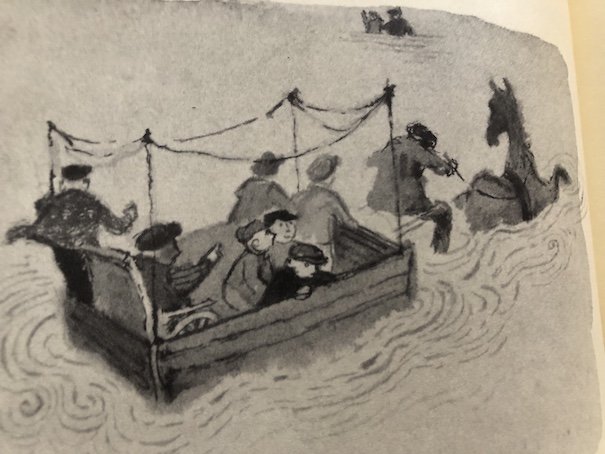
In the children’s quest to find a wagon wheel they can use, they learn a little more about some of the people in their little community and come to a new understanding and appreciation of them. When a big storm comes, the children worry that all of the storks will be killed and that their efforts have been for nothing, but reassurance and help comes from an unexpected source.
The book is available to borrow and read for free online through Internet Archive (multiple copies).
My Reaction
The author of the book, Meindert DeJong, was born in the Netherlands, and the tradition of putting wheels on roofs for nesting storks is real. If you Google it now, it’s difficult to find a mention of it that isn’t also about this book. I have found some pictures of stork nests on wheels (including some in Alsace, where they apparently have a similar practice) and some up on special poles. It’s a fascinating tradition that, admittedly, I wouldn’t have known about or thought to look up if the book hadn’t described it. There is also another children’s book, Wheel on the Chimney by Margaret Wise Brown, that also describes this type of nest for storks.
What I really enjoyed about this book was how the teacher encouraged the students to work through the issue of why there were no storks in their town in their heads, collect observations, brainstorm different possible explanations, and test their theories. Basically, he was teaching them a simple version of the scientific method, although he never calls it that. When Lina raises the question of why there are no storks in Shora when other towns around them have storks, the teacher encourages the students to put their minds to the question, collect some observations about their town, conduct research (like asking the adults what they know about storks in their town), develop a working hypothesis (the storks need a place to nest), and conduct an experiment to test their theory (provide storks with a place to nest and see if they can get a pair of storks to build a nest there).
The teacher provides some guidance as the children go through these steps, but then, he allows the children to approach the project by themselves, only stepping in when they run into problems. In some cases, the children do run into serious problems, even putting themselves in physical danger, which shows the dangers of not drawing some limits ahead of time or providing more direct supervision, but the children do manage to work out their problems, and fortunately, nobody is seriously hurt. By the end of the book, the children have also drawn many other adults in the community into their project, often in ways that help the adults as well and bring the community closer together. In the process, the children also learn a few things about themselves and their own abilities. In some ways, it reminded me of the Christmas story Starlight in Tourrone, where a community comes together to re-create an old ritual that people in a small village have otherwise abandoned.
I appreciated how the children develop some better understanding for the adults in their community by bringing them into the project or approaching them for help, and parts of the story actively encourage the children to be empathetic and look at different situations from someone else’s point of view.
Grandmother Sibble, the first adult Lina talks to, tells Lina that, to think what would attract a stork, she has to think about the village from a stork’s perspective and consider what a stork would want and need. Lina is fascinated at the idea of thinking like a bird would, but she also comes to think a little like Grandmother Sibble when Grandmother Sibble recounts her memories of how the village used to be when she was a little girl and the great storm that destroyed their trees. Lina comes to realizes that Grandmother Sibble wasn’t much different from herself when she was a girl and that the two of them understand each other better than she thought.
Jella angers a nearby farmer by taking a wagon wheel without his permission, and the teacher helps to soothe the farmer’s feelings by getting him to remember something he did as a boy Jella’s age, so he can understand why Jella did what he did. It’s a bit eye-opening for Jella as well, to see that adults around him were once very much like himself. The teacher also persuades Jella to give the farmer some help to make up for the inconvenience he caused the farmer, and Jella and the farmer bond over a shared love of archery.
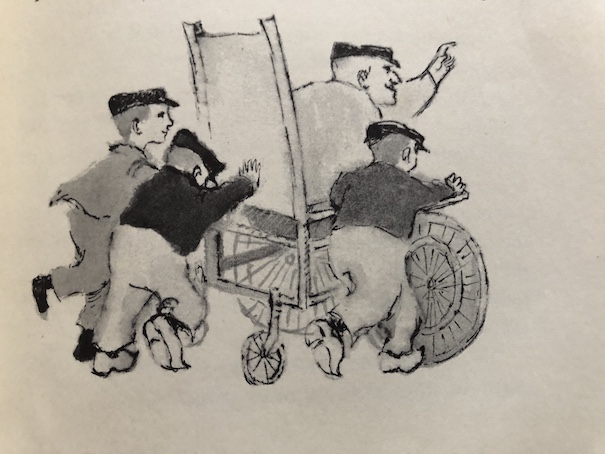
Later in the story, when the children consider approaching Legless Janus, an intimidating man in a wheelchair who has lost both of his legs and who has a reputation for having a nasty temper, Pier pauses to consider what it must be like to be Janus, how hard it would be to be confined to a wheelchair, and how that might make a person angry and temperamental. When Pier and his twin try to sneak into Janus’s garden to see if has any wagon wheels, there’s a confrontation between them and Janus, and Pier reveals to Janus some of the thoughts he had. Janus is surprised at how the children see him and the stories that they tell about him. He tells them the truth about how he lost his legs and reveals a shared interest in the children’s project that turns them from mutual antagonists into friends.
Besides the children in the story learning to think about situations from other people’s perspectives and getting to know other people better, the children also learn a few things about themselves that give them some different perspectives on their own futures. Lina often feels a little left out of things because she’s the only girl among the children old enough to go to school in their village. The boys don’t always include her with things they do because they say that girls don’t like to get their clothes wet and messy and that they cry or giggle too much. Even Lina at times wishes that, like a boy, she had less of an impulse to cry at times, and modern readers may roll their eyes at some of the story’s old-fashioned attitudes about boys and girls. With the exceptions of Lina and Grandmother Sibble, women in the story often play subordinate roles in the story, and the story refers to a male stork as being his mate’s “lord and master.” However, there are also parts of the story that prove some of those assumptions wrong. Lina does some daring things in her pursuit of the wagon wheel, and isn’t afraid to get wet or dirty while doing it. The women urge their husbands to help the children in their efforts, even in bad weather, and their support proves important and is appreciated, even when they’re not the ones leading the project. There are also times when the boys get a bit emotional or on the verge of tears, showing that the boys also have emotions, even when they try to fight them or hide them. The roles of boys and girls and men and women in the story aren’t what we typical want or expect in 21st century America, but I liked it that all of the characters are shown as being capable and that their contributions are appreciated.
Grandmother Sibble also helps Lina to see herself and her future from a new perspective. She reveals that, like Lina, Sibble was also the only girl in the village at her age. As the eldest girl of her generation in the village, Grandmother Sibble eventually became the eldest woman in the village, the “grandmother” of everyone, and eventually, Lina herself will someday be Grandmother Lina, the eldest woman in the village, telling stories about what used to be and how things have changed to younger generations. Lina isn’t just a girl but a kind of future village wise woman in the making, actively bringing about some of the changes that will later become part of village lore.
Some of the boys learn a few things about themselves, too. Eelka is a big boy who is often slow and clumsy, which is why some of the other boys, like Jella, are reluctant to let him join in games. Part of his difficulty is that he doesn’t always think things through all the way before he does them, which is how he gets into trouble in the story. Another issue is that, as the youngest of all of his brothers, he’s used to the idea that other people can do things that he can’t do. When Eelka rescues Jella from a dangerous situation, partly brought about by Eelka’s impulsiveness and the need he feels to try to tackle big jobs by himself to prove himself and partly caused by Jella’s own impulsiveness, Eelka comes to fully appreciate that he’s a lot stronger than even he knew. When he and Jella talk about it, Eelka says that his family is in the habit of thinking of him as the “baby” of the family who doesn’t know anything and can’t do things, but the truth is that people grow. Eelka isn’t a baby anymore, and he has developed strengths he didn’t know he had until he is forced to use them. He just needs to learn how to use them wisely.
The village’s shared participation in the project and the quest for a wagon wheel also brings out sides of the adults that some of them haven’t shown for years, giving them new confidence in themselves as well as greater appreciation from the village children. 93-year-old Douwa shows Lina that elderly people are sharper and can do more than she thinks they can and gets the opportunity to relive one of the most heroic escapades of his own youth. Legless Janus enjoys the most exciting adventure he’s had in years and shows that, even though he is now disabled, he has nerves of steel and an ability to take charge in an emergency. He also knows carpentry, so he creates the mount for the wheel on the school and later, he begins making new wheels for other roofs, finding a new trade to practice. He is also the one who reassures the children that reports of storks killed by the storm are exaggerated or made up because he has spent years watching birds and knows their behavior. He says that the storm probably scattered them over land, but they have instincts that would have prevented most of them from being over water when the storm was coming and that they will come resume their journey as the weather clears.
A few other concepts in the story are consideration for the environment, problem-solving, and time management. All through the story, the children are confronted with problems of various kinds, and they have to figure out how to solve them, using their own wits and whatever they have to work with. They also learn the importance of time management because they know that they don’t have long before the storks’ nesting season will be over, so they must use their time wisely, putting aside playing or other distractions to accomplish their mission. I was particularly interested in Grandmother Sibble’s description of how Lina needs to look at the whole picture of the village, what it has, and how it has changed over the years in considering why storks no longer nest there. Essentially, what’s she’s describing is the ecosystem of the village, how all of the different elements work together to either make it a hospital place for the storks or an inhospitable one. The wheel on the roof is one of the factors, but the trees (or lack of them) are also a factor, and the windy and salty conditions are further factors in the growth of trees and how friendly the environment is too wildlife. The story doesn’t use the term “ecosystem”, but that’s what this interplay of different environmental factors is. Changes to one part of the ecosystem will bring about other changes, just as the terrible storm that happened when Grandmother Sibble was young radically changed the character of the village.
There are a couple of things that readers might want to be aware of. First, there is some corporal punishment of children in the story. Janus spanks Jella badly when he tries to steal cherries from his tree, and the farmer hurts Jella’s ear when he takes his wagon wheel without permission. In 21st century America, we don’t generally encourage physical punishment, although Jella does get over these incidents and doesn’t hold it against either of them in the end. Admittedly, Jella was doing something he shouldn’t have been doing both times, and they don’t abuse him beyond the immediate incident either time. Each of them also admits after the fact that each of them might have gone a little too far in their punishment, and both Janus and the farmer do Jella favors, helping him with the wheel on the school project and teaching him how to make arrows for his bow, so the negative experiences are balanced with positive ones. Sometimes, adults in the story also use harsh insults to rebuke children, like “idiot” and “lunkhead”, which we also don’t encourage.
The presence of Janus in the story also leads both the children and readers to consider the feelings of people with disabilities and how people with disabilities would like to be treated. The children are afraid of Janus at first because he has a temper and can be pretty fierce in defending his cherry tree, but they later learn that he actually does care more about the children than his defense of his property makes them think. What Janus really wants the most is to feel useful and to show that he is still smart, strong, and capable, in spite of his disability. Later in the story, when the other men in the village get tired of Janus barking orders at them while they’re putting the wheel on the school, and one of them calls Janus a “slave-driver”, saying that he just needs a whip. Janus retorts that he doesn’t need a whip when he has a sharp tongue. He’s only slightly embarrassed at being called a “slave-driver.” It would be a very negative thing to say about someone in the 21st century US, but in some ways, it actually makes Janus feel a little better that the other men see him as being tough and not someone to be coddled or treated too carefully because of his disability. They even feel comfortable enough to joke with him about it. There is a moment when he’s a little unsure how to take a man’s comment that maybe the “shark” that got his legs should have taken his tongue instead, but when Janus sees that the man isn’t serious about it, he responds in the same bantering way, bragging that his tongue was too intimidating for the “shark”. (His legs weren’t really lost to a shark. That’s a kind of joke/village rumor.) Janus is also thrilled when one of the men makes a thoughtless comment that, if Janus isn’t satisfied with the way they’re working, he should come up on the roof and do it himself. It was a thoughtless thing for the man to say, and there’s an awkward moment when everyone remembers that Janus can’t climb up on the roof without legs. However, Janus tells the children that he’s actually pleased because the way the man made that comment shows that, for a moment, he completely forgot that Janus has no legs. Janus thinks that’s a good sign because it means that people are no longer thinking of him only in terms of his disability. He doesn’t want his disability to define him.
Toward the end of the story, the children do find some drowned storks, showing that an article the children saw in the newspaper about storks being killed in the storm wasn’t all “fake news” as Janus made it sound. At least some storks were killed in the storm. The adults in the story aren’t always right about everything. However, Janus is correct that the storks weren’t all killed. He helps the children to stage a daring rescue of a couple of exhausted storks off a sandbar before the tide comes in, saving them from drowning.
Overall, I though it was a very positive story that provides many things for young readers to think about. Sadly, as of this writing (March 2026), it is out of print. Used copies are still available, although some are a bit expensive, and libraries still have it. There is also an unofficial reading of the story on YouTube.
The Children of Noisy Village by Astrid Lindgren, 1947.
The story is told from the point-of-view of nine-year-old Lisa, a Swedish girl who has two older brothers, Karl and Bill. She and her family live on a farm that people call Middle Farm because it’s between two other farms, North Farm and South Farm. The three farms together are called “Noisy Village” because there are so many children around. The children who live on South Farm are Ulaf and his little sister Kirsten, who is only a year-and-a-half old, and North Farm has two girls, Britta and Anna, who are Lisa’s friends. Ulaf is friends with Karl and Bill. Sometimes, Lisa tries to play with her brothers, but they often tell her that she’s too little, and she sometimes thinks of the boys as a nuisance. Ulaf will sometimes play with girls, although Karl and Bill sometimes tease him about it, but there are also a limited number of children in the area to play with, so being willing to play with whoever is around is a good thing. Through the story, Lisa tells little stories and talks about the things that all of the children of Noisy Village do together.
When Lisa was younger, she used to share a room with her brothers before getting a room of her own. At night, Karl used to tell ghost stories, while Bill likes to talk about adventures. Lisa tells a story about how her brothers scared her one night with a ghost story and how they rigged up a trick to make it look like their room was haunted. Although Lisa sometimes misses the stories that her brothers used to tell her at night, she’s also relieved that she has a space of her own so she doesn’t have to put up with their pranks or them bossing her around all the time. Bill and Karl like their room because their window is close to Ulaf’s window, and the boys like to use the tree between their houses to go back and forth between the two rooms. The room that Lisa has now used to belong to her grandmother, before her grandmother moved in with an aunt. Lisa’s family remade the room for her as a present for her seventh birthday. Lisa’s room faces North Farm and Britta and Anna’s room, so the girls can send each other notes or signal to each other through their windows.
Some of the children at Noisy Village have pets, and Lisa explains how Ulaf got his dog, Skip, from the mean shoemaker, who was mistreating him. Britta and Anna don’t have any pets, but their grandfather lives with them, and the other children at Noisy Village like to visit him. Britta and Anna’s grandfather tells the children stories. One of his stories is about how he ran away from home as a boy. Inspired by the story, Lisa and Anna decide that they should have their own adventure, running away from home temporarily. However, they think that they have to run away during the night, and they both miss their opportunity because they fall asleep.
The children like to play games of pretend on their way home from school, which makes their mothers wonder what they’re doing and sometimes get them into trouble. Anna and Lisa accidentally get on people’s nerves one time, when they try too hard to follow their teacher’s advice about doing things to make people happy. They often end up doing the wrong things because they don’t know what other people really want or what people say they want doesn’t seem like enough. They finally succeed in making someone happy when they share some of their things with a girl from school who is sick.
The children’s adventures continue through the year. The people of Noisy Village have a charming, old-fashioned Christmas. At a Christmas party at a relative’s house, they play old-fashioned party games and tell stories. Lisa also describes a Swedish tradition of finding an almond in porridge, which is supposed to be a sign of marriage in the coming year. The children are allowed to stay up late on New Year’s Eve. The boys scare the girls with some firecrackers, and Britta and Anna’s grandfather teaches the children the tradition of pouring melted lead into water to see what shapes it will form to predict what will happen in the new year. On Easter, the children paint eggs and make egg nog.
Eventually, school lets out for summer vacation. The children go swimming and catch crayfish during the summer. When they go fishing for crayfish, they camp out in the forest, near the lake, with Lisa’s father and the other men. The children make little huts to camp in. The boys try to scare the girls with stories about goblins. The children appreciate their idyllic lives in Noisy Village!
My Reaction
This book is a series of pleasant, gentle, slice-of-life stories about the children who live on a collection of small farms outside of a Swedish town, probably some time in the mid-20th century. Because there is little mention of any form of technology in countryside, it could set almost be any time in history from the 19th century to the time when it was written in the 1940s. The one thing that identified it as the 20th century for me is when they mentioned “turning on lights” in the house rather than lighting lamps. Even into the mid-20th century, not all farm houses had electricity, but it seems that these do. Other than that, these children seem to be living an idyllic, “unplugged” life in the countryside that people who are into cottagecore would aspire to! I think it would be a nice book to read children at bedtime because it’s very gentle.
I enjoyed reading about the games that the children play with each other and with their families. The children like playing games of pretend that seem to be inspired by books they’ve read. The girls play at being princesses, while the boys play at being Indians, probably American Indians (Native Americans) because one of young Bill’s ambitions is to be an Indian Chief when he grows up. We don’t really encourage playing at being “Indians” today in 21st century America because that can devolve into caricatures of someone else’s racial group (cowboys are still fair game because that’s a profession, not an ethnicity), but that sort of thing was pretty common in the mid-20th century, even outside of the United States. I’ve read British books from around the same time period that also refer to children playing at being American Indians, so it was something that seems to have captured children’s imaginations, even internationally. The children also pretend that they’re marooned or shipwrecked on a rock at one point, something else that often appears in children’s literature and is based on older books.
I particularly enjoyed some of the descriptions of Swedish holiday traditions through the year. Some of them are very similar to traditions in the United States and Britain around this time and even earlier, like in the 19th century. They have a charming Christmas with friends and family and a party with old-fashioned parlor games. I’ve heard of the tradition of finding an almond in porridge or pudding before, but I think that’s more common in Scandinavian countries than in the United States. In Britain, there are traditions associated with finding things (like a coin or a bean) in porridge or pudding, but it’s not really common in the US. Another thing that stood out to me was that Lisa said they made egg nog at Easter. In the US, people typically have egg nog at Christmas, but when I thought about it, it does make sense for Easter because of the association with eggs.
One other thing that stood out to me in the book was the little huts that the children make when they’re camping out by the lake. It reminded me of the huts that children in The Secret Summer (Baked Beans for Breakfast) made.