 Going to School in 1776 by John J. Loeper, 1973.
“The grass is green,
The rose is red,
Remember me
When I am dead.
Ruth Widmer”
This is a non-fiction book about what it was like for children to go to school around the time of the American Revolution. The quote that begins the book, a short poem, was written by a real girl from 1776 in her copybook. The book’s introduction says that it was included to remind readers that, “History is not just facts. History is people.” Part of the purpose of the book is to remind people about the lives of ordinary people, of real children, making history come alive in a way that mere recitation of important names and battle dates never can.
The book explains some basic facts about the Americas in 1776 and what led up to the Revolutionary War. Then, it begins discussing what it was like to be a child at the time in different parts of the American Colonies. The colonies were largely rural and even major cities were not the size that they are today. However, there were differences in the ways families lived and the type of education the children received, depending upon where they lived and if they lived in towns or in the countryside.
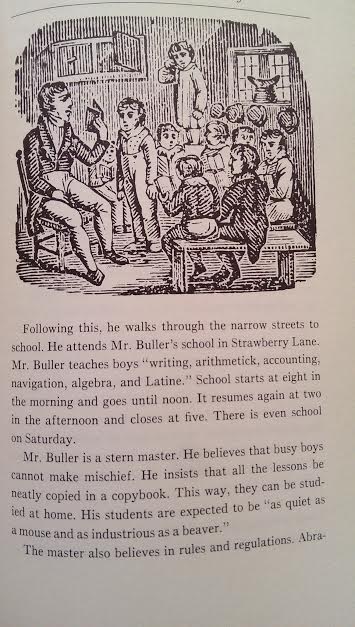 These explanations are told in story form, rather than simply explaining listing the ways children could live, learn, and go to school, trying to help readers see their lives through the eyes of the children themselves. The children’s lives are affected by the war around them. As the book says, many town schools in New England were closed during the war, so the students would attend “dame schools” instead. A dame school was a series of lessons taught in private homes by older women in the community. In other places, such as cities like Philadelphia, official schools were still open. Discipline was often strict, and school hours could be much longer than those in modern schools. Sometimes, children would argue with each other over their parents’ positions on the war.
Some schools were similar to modern public schools, open to all children of a certain area and operated by the town fathers. Others were church schools and included religious lessons. Families with money were more likely to send their children to school than poorer families, who could not always afford tuition, although public schools would not always charge the students an extra tuition fee because the schools were funded with local taxes. These systems varied throughout the colonies, and poor children in the South were less likely to be formally educated. Wealthy plantation owners would open schools for the upper class children, and lower class children might receive lessons in “field schools.” The field schools were just occasional, informal lessons given to the children in the fields by any adult who happened to be interested in the task.
Teaching in schools was not easy. Sometimes, teachers were itinerant, moving from one school to another and finding work in agricultural areas between the growing seasons, when children would be free from chores to attend school. Some teachers were even indentured servants, forced to remain in the employ of a person to whom they were indebted, often because that person paid for their passage from Europe to the Colonies.
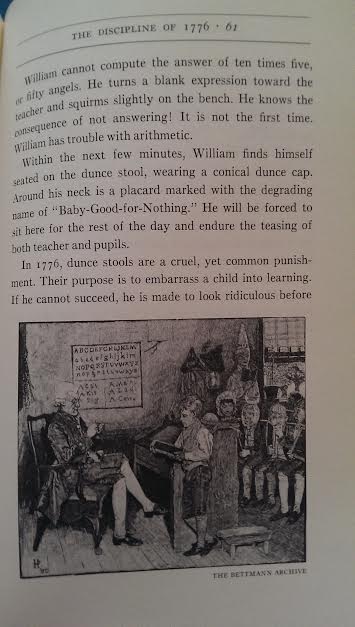 There were different standards for what girls and boys were expected to learn because their learning was guided by what they were each expected to do with their adult lives. A typical school might teach boys subjects like, “writing, arithmetick [sic], accounting, navigation, algebra, and Latine.” Generally, “reading, writing, arithmetic, and religion” were common elementary school subjects. Latin lessons and other advanced subjects were typically for boys who planned to become lawyers or clergymen. Girls were likely to receive little formal education beyond reading and writing, and black people were less likely to receive even that.
Of course, not every child went to school. There were other ways for children to learn, depending on what they expected to do with their lives. Apprenticeships were common. Boys would go to live in the house of a person with a particular profession and learn that profession from the master. Aside from basic training for a profession, the master would provide room, board, basic necessities such as clothing, and training in the “three Rs”, which were “reading, ‘riting, and reckoning.” In return, the apprentice would provide his master with his labor for a period of time.
Girls could also serve apprenticeships, although theirs were more focused on the domestic arts because most of them were expected to marry, and they often married young, about the age of sixteen. Beyond reading and writing, girls would also learn practical skills such as various kinds of needlework and also music and dancing. The book describes in some detail the various types of needlework a girl could learn and the materials they used. Typically, girls would create a “sampler” to show off all the stitches they’d learned, kind of like an apprentice’s master piece or a certificate of completion done in cloth. Unlike modern “samplers”, these would not be just cross-stitch alone because the idea was for the girl to demonstrate her skill and versatility, and using only one stitch would not impress anyone. Commonly, the sampler would include the alphabet and the numbers one through ten, which would all be done in cross-stitch (which was the basic embroidery stitch), but there would also be an inspirational quote, message or Bible verse, the girl’s name and the date of the sampler’s completion, and other decorative embellishments, which would be done in other stitches such as tent stitch, eyelet stitch, chain stitch, and French knot. There could be as many as twenty different types of stitches in a single sampler, depending on the girl’s skill and what she had learned. Girls hoped to do at least as well as their mothers in terms of the number of stitches they knew and skill in execution.
There are also sections in the book which describe the lessons that children learned, the types of school books they used, discipline in the classroom, ways children liked to have fun, and types of clothing that children wore in 1776.
This book is currently available through Internet Archive.




 #3 The Candy Corn Contest by Patricia Reilly Giff, 1984.
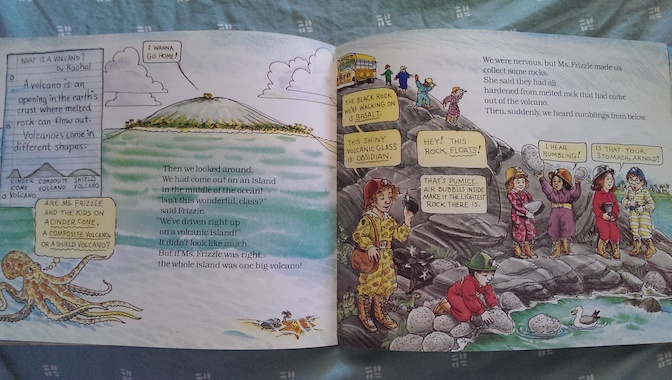
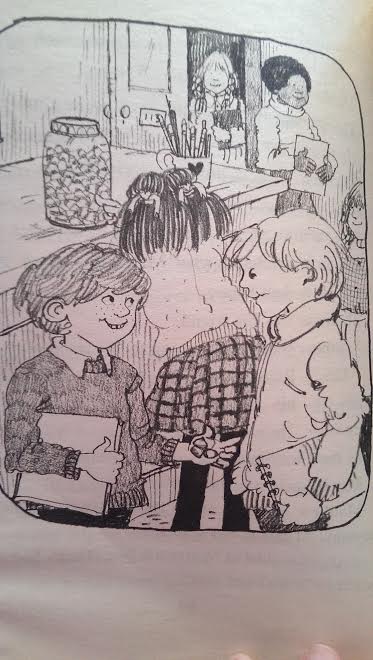 While Richard is worrying over his mistake, he’s also worrying about the sleep-over party his parents are letting him have over the Thanksgiving break. At first, he was looking forward to it, but some of the other boys in class can’t come and some of those who said they could are concerned because Matthew is coming. Matthew and Richard are friends, and people in class generally like Matthew, but everyone knows that Matthew still wets the bed. Some of the other boys are worried that they’ll have to sleep next to Matthew at the sleep-over. As much as Richard likes Matthew, it feels like his problem is going to ruin the party, and when Matthew is nice to him, it only makes Richard feel worse.
 #2 Fish Face by Patricia Reilly Giff, 1984.
 The title of the story comes from the fish faces that Emily was making, imitating the classroom pet fish. She shows Dawn her fish face when she’s trying to joke with her, but Dawn just thinks it’s weird. Dawn worries that she’s not making friends, but at the same time, she also seems determined not to like things and people at her new school and stealing Emily’s unicorn and lying about it was a sure way to make her angry.
 #1 The Beast in Ms. Rooney’s Room by Patricia Reilly Giff, 1984.
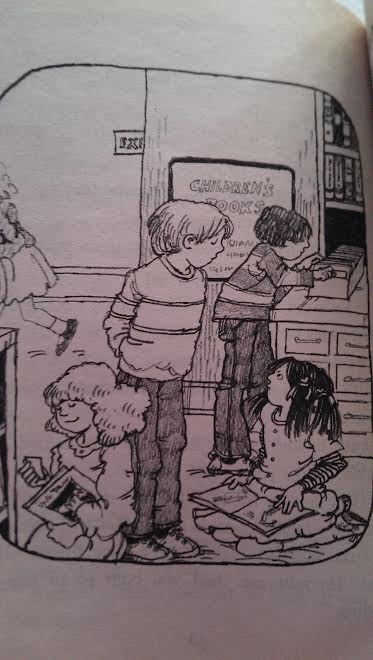 However, even though he’s embarrassed at having to attend special reading classes with Mrs. Paris while most of the rest of his class has normal reading, these special classes really help him, not just to improve his reading skills, but to connect with other kids in his new class who have the same reading difficulties he does and who understand how he feels.
 Journeyman Wizard by Mary Frances Zambreno, 1994.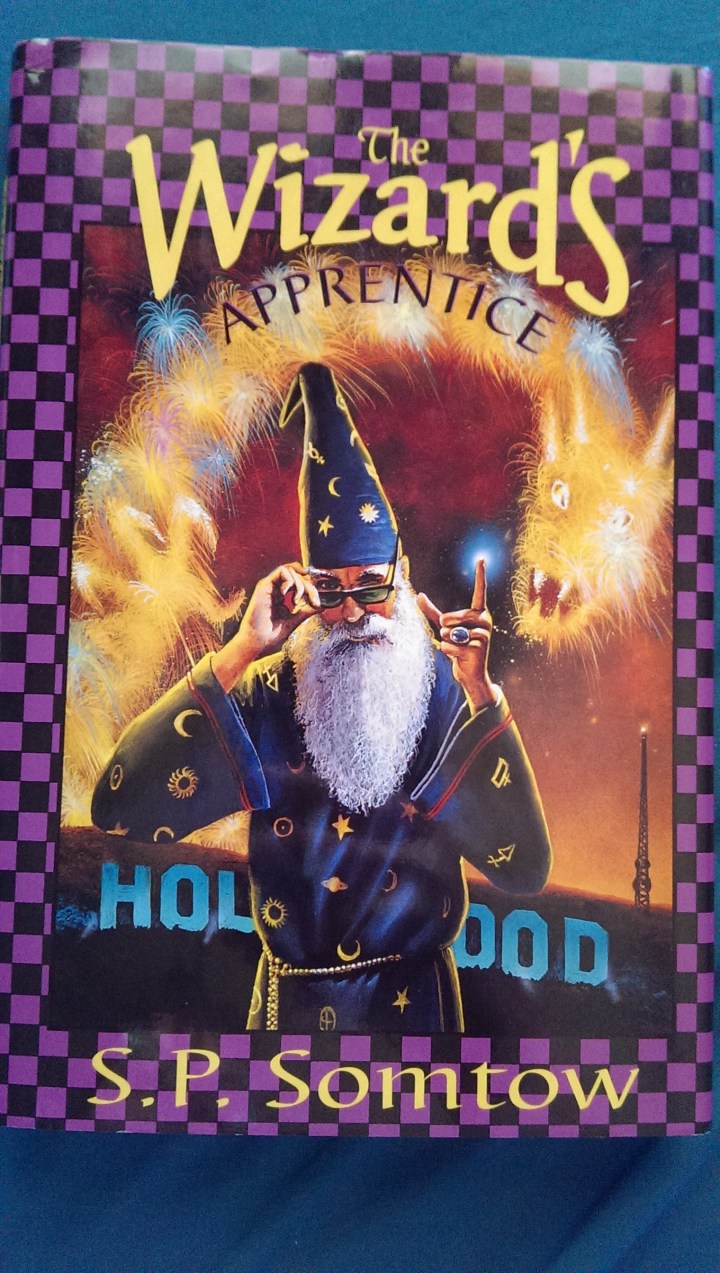
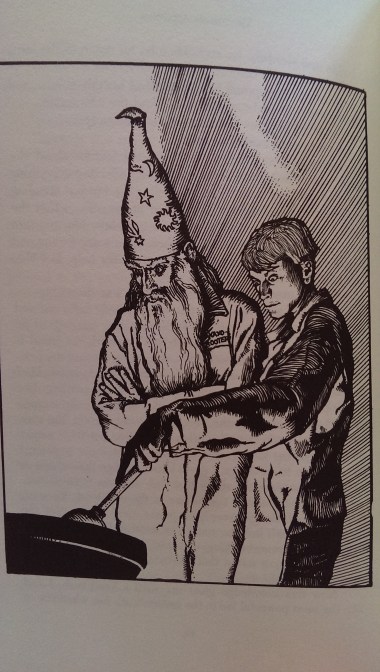 Sixteen-year-old Aaron Maguire thinks of himself as a typical teenager, even though his family is far from typical. His mother is a buyer for a fashion boutique, and his father does special effects for monster movies in Hollywood. They’re also officially “separated” and preparing for a divorce, even though they’re still living in the same house. So far, they’ve just kind of divided the house in two in order to have their own space. Aaron goes back and forth between the two halves of the same house as his parents share him. It’s a little weird (and, to Aaron, also a little depressing), but there’s weirder to come.
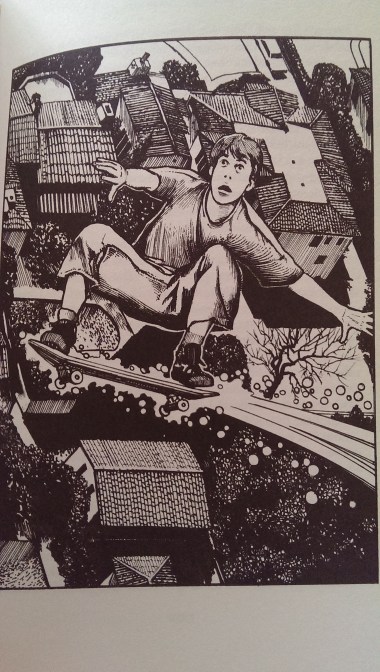 However, when Aaron meets the divine Penelope for pizza and she asks to borrow a mirror to check her hair, Aaron lets her borrow Anaxagoras’s mirror. He instantly regrets it because the mirror suddenly changes in Penelope’s hands. Now, it has a tortoiseshell frame and is shaped like a heart. Penelope, who has low self-esteem in spite of her prettiness, is suddenly really happy when she looks in the mirror and refuses to give it back, insisting that she wants to borrow it for a few days. Because Aaron is in love with Penelope, he finally agrees to let her keep it for awhile.
 #3 The Secret at the Polk Street School by Patricia Reilly Giff, 1987.


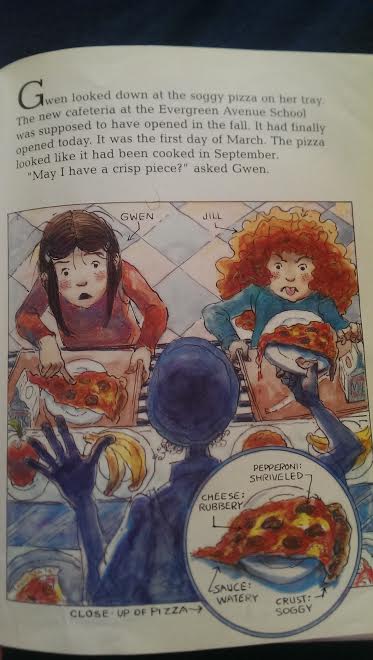 Ms. Lensky, the cafeteria lady at Gwen and Jill’s school, is just plain mean. All of the food that the cafeteria serves is yucky, even though the cafeteria is new. There will be a party to celebrate the opening of the new cafeteria, and even the kids’ parents and the mayor are invited. Gwen and Jill are happy because their class will get to help decorate the cake. However, Ms. Lensky, the M.C.L. (Mean Cafeteria Lady), doesn’t like the girls, and she blames them for a number of accidents that happen in the cafeteria.

 #4 Mandie and the Forbidden Attic by Lois Gladys Leppard, 1985.
 Jestress's Forgotten Books and Stories