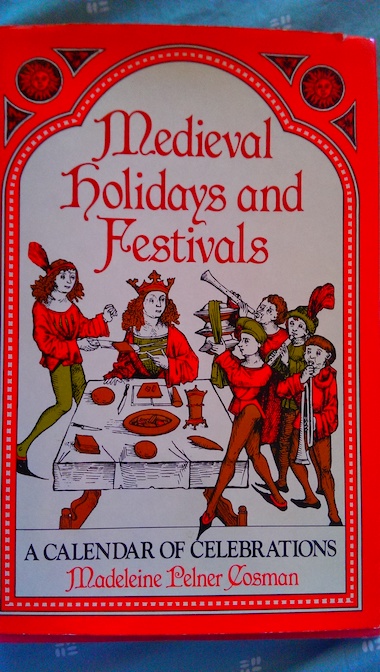
Medieval Holidays and Festivals: A Calendar of Celebrations by Madeleine Pelner Cosman, 1981.
This book explains the holidays that people celebrated in Medieval times and how these holidays would have been celebrated, along with some special information about Medieval feasts. The author also explains a little about how historians uncover and interpret information about people’s lives in the past.
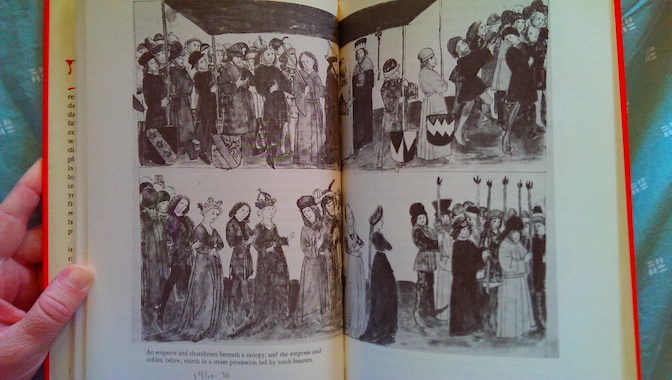
Many of the holidays celebrated in Medieval times tended to be either religious in nature or having to do with the changing of seasons.
The holidays included in this book are listed by month:
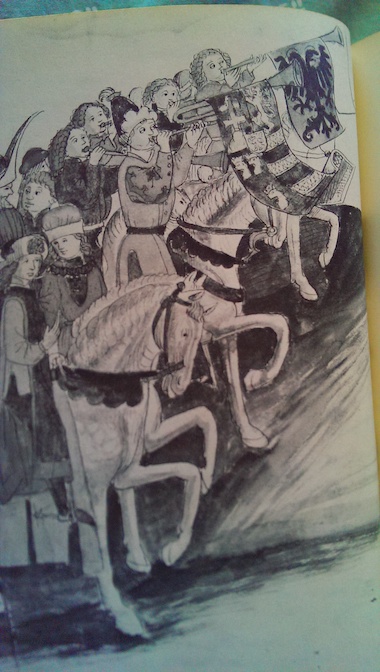 January — Twelfth Night — An extension of Christmas (remember the Twelve Days of Christmas song?), Twelfth Night is also known as Epiphany — the night that the Three Wise Men supposedly visited baby Jesus after his birth.
February — St. Valentine’s Day
March — Easter
April — All Fool’s Day — Not just a day for pranks, but when everything is turned upside down and backwards, and people intentionally did the opposite of whatever they usually did in many ways. Basically, a celebration of everything silly and ridiculous.
May — Mayday — A celebration of spring.
June — Midsummer Eve — A celebration of summer.
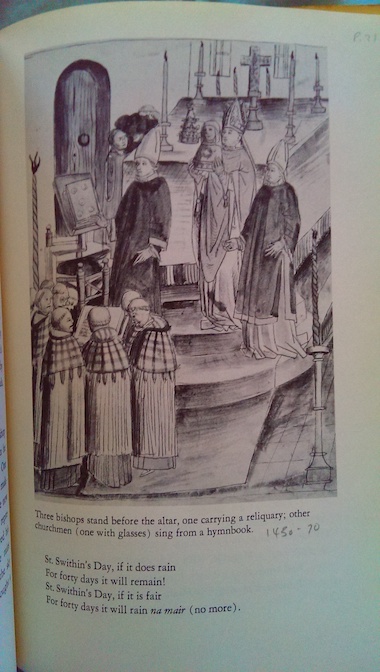 July — St. Swithin’s Day — St. Swithin was a bishop of Winchester who had asked to be buried without great ceremony upon his death. However, people later decided to give him a grand tomb. When they tried to place his body in the tomb, it started raining heavily and didn’t stop until they moved the body to a new location. They took the rain to be an expression of St. Swithin’s displeasure at the unwanted tomb. From then on, this time of year was used to predict rainfall for the rest of summer.
August — Lammas Day — The word Lammas meant “Loaf Mass,” which was when there would be special blessings for bread and grain and thanks given for bountiful harvests. The holiday was marked by the baking of a variety of special breads, including those in usual shapes, flavors, and colors. Some of them could be very elaborate.
September — Michaelmas — The holiday celebrating St. Michael is oddly associated with three things that few people would associate with each other: gloves, geese, and ginger. The glove was the symbol of the market of craftsmen held on Michaelmas. Geese and foods flavored with ginger were popular dishes served at Michaelmas.
October — Halloween
November — Catherning, or St. Catherine’s Day — St. Catherine of Alexandria was learned noblewoman who was killed on a wheel (it was a bizarre and disgusting form of execution). The holiday honoring her was associated with wheels, women (especially unmarried women and women students), and the professions which were associated with her such as lawyers, carpenters, spinners, lace makers.
December — Christmas
Each section in the book describes special traditions associated with each holiday, including games that would have been played and food that would have been eaten at that time.
In the back of the book, there is a section that explain decorations used for Medieval feasts, how to hold a Medieval-themed feast in modern times, and Medieval costumes. There is also a section of Medieval recipes.
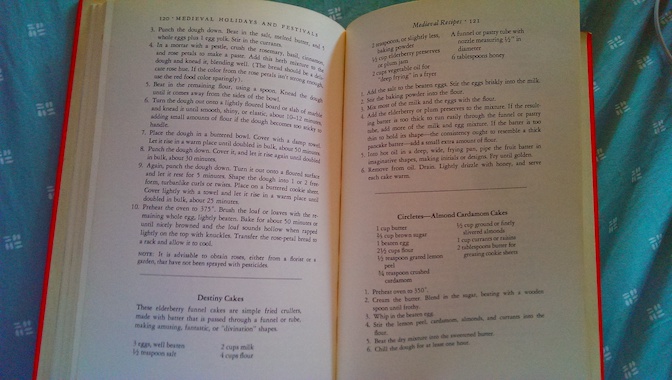
This book is available to borrow and read for free online through Internet Archive.
 Jestress's Forgotten Books and Stories
How many holidays are included in the book?
LikeLike
Twelve – one per month. The holidays I listed in my review are the only ones described.
LikeLike