The Witch Family

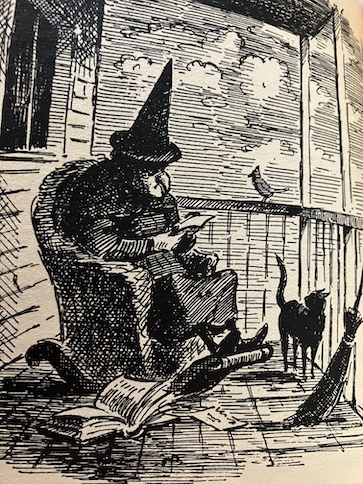
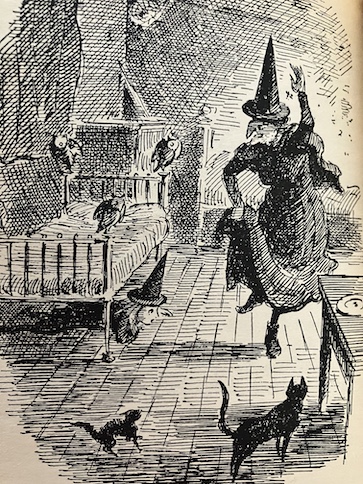
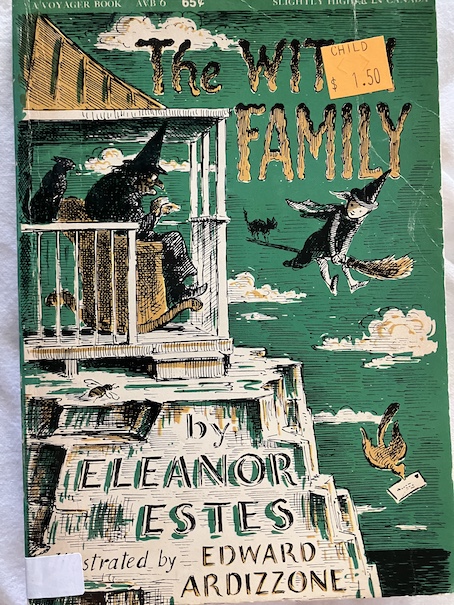
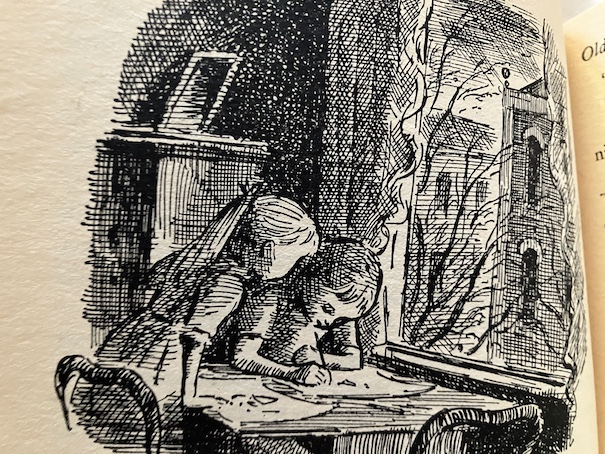
Amy and Clarissa are best friends. They’re about 7 years old and live in Washington, DC. They like to draw pictures and play games of imagination, and one day, they banish Old Witch, who is the head of all the witches, to a house on a glass hill by drawing a picture of the Witch House on the glass hill. They banish her to the hill for her meanness and for eating rabbits (her favorite food), but they relent a little when they consider that Halloween won’t be the same without a scary old witch. Amy writes a letter to Old Witch to tell her that, if she can learn to be good, she can leave the glass hill on Halloween. As soon as Amy is done writing the letter, a bird snatches it up and flies away with it, to the amazement of the girls. Amy is sure that this must mean that the letter will really be delivered to the Old Witch.

Old Witch doesn’t like living on the glass hill because it’s too bare and shiny, and she doesn’t want to learn to be good. She’s also lonely because she only has Tom, her cat, for company. Then, she gets another letter from Amy, saying that she will have company if she casts a spell. When the Old Witch casts the spell, she is joined in the Witch House by a Little Witch girl named Hannah and her cat, Little Tom.

Hannah likes the Witch House on the glass hill because she thinks it’s pretty and has an amazing view. Old Witch uses her match to summon a new bed and a rocking chair for Hannah. She also summons a brush and comb for her, which is a violation of witch rules because witches usually leave their hats on all the time and never brush their hair. Still, Old Witch is fascinated by Hannah’s lovely hair and can’t resist combing and brushing it. However, Hannah doesn’t like having her hair combed, and Malachi, bumble bee, stings the Old Witch to make her stop. Malachi had joined the Old Witch at the house secretly and has become a magical bee, spelling things out when he wants to communicate, like a spelling bee. He is Amy’s representative and warns Old Witch whenever she does something that she shouldn’t do.

The Little Witch Girl shows Old Witch the spells she’s been learning in Witch School, and the two of them have races around the glass hill on their broomsticks. Old Witch sometimes scares Little Witch with her cackles and wild witch dances. Little Witch is a sweet little witch, and she tells Old Witch that she doesn’t want to be scared. Old Witch has to learn to control her behavior so she won’t scare the Little Witch.

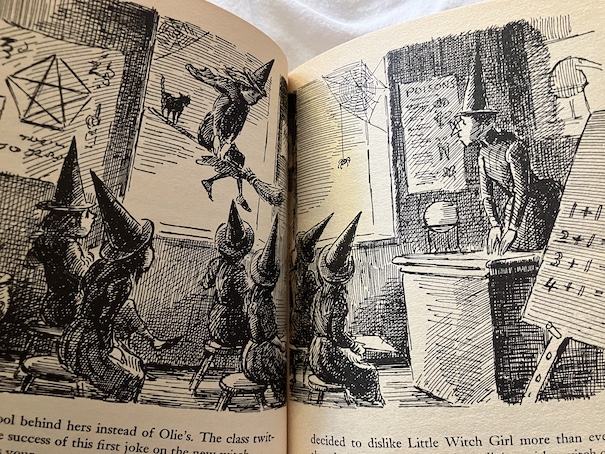
Little Witch has to go to Witch School, and the other young witches are jealous of her because she does so well at school and lives with the head of the witches. They try to tease and bully her, but Malachi stings them whenever they try to do something mean. Eventually, the other young witches give up their mean tricks and start admiring Hannah for her witch skills.

Amy decides that the Little Witch Girl has birthdays but never ages beyond 6 years old, just like how her doll never ages, and she draws a picture of Hannah’s witchy birthday party. All of the other young witches from her witch school attends. However, the Old Witch refuses to grant her wish for Amy and Clarissa to join the party because she’s still angry about being banished. Because it’s Hannah’s birthday, any spell she casts will work for her, so she summons Amy and Clarissa herself. Amy and Clarissa keep focusing on their drawings, and Amy cautions Clarissa not to say anything because they’re in a haunted witch house.

Fortunately, Amy declares that Old Witch can’t see them because they’re invisible to her, although everyone else can see them. After that, Amy and Clarissa can ride around on Little Witch’s mechanical toy broomsticks and play with the other little witches. Eventually, the Old Witch casts a spell that reveals the girls, but she is forced to allow them to stay at the party. The Old Witch insists that she’s been good during the whole time of her banishment, but the little witches urge her to do a suitably wicked spell for their entertainment. Old Witch would, but when she tries, Malachi stings them all.

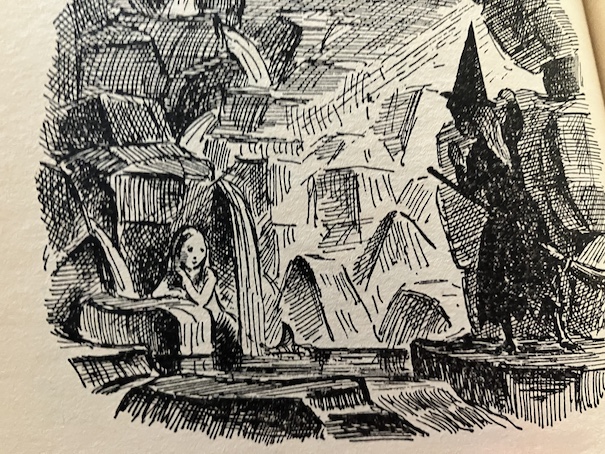
Because the Little Witch Girl needs a playmate, the girls create a lagoon with a waterfall inside the glass hill, where Little Witch Girl finds a mermaid with a baby sister to play with. Little Witch Girl wishes for a baby sister for herself. At first, Old Witch is reluctant to give her one, but finally, she casts a spell to summon a little baby witch carried by a tiny broomstick with a little black kitten. The Old Witch is surprised at how adorable the baby witch is, and caring for the baby occupies much of her time.

Even so, Old Witch is still tempted to commit acts of wickedness, particularly with finding cute rabbits to eat. When Old Witch spots some of them painting some eggs for Easter, she begins plotting to get them and their eggs to eat! Fortunately, the rabbits use painted rocks and toy rabbits to trick her. The Old Witch blames Malachi for her schemes being foiled and all of the times he’s stung her to stop her from being bad, so she challenges him to a spelling bee. Of course, Malachi is the winner because he’s literally a Spelling Bee.

When Halloween finally arrives, Old Witch is allowed out to fly with the other witches and make some scary mischief! She leaves Little Witch at home to watch the baby, but Little Witch is sad at the idea of missing Halloween, so she persuades her mermaid friend to babysit the baby while she slips out and enjoys some Halloween adventures of her own. Little Witch encounters Amy, who is also dressed in a witch costume for trick-or-treating, and the two of them switch places so Amy can have a ride on Little Witch’s broom. However, the broom takes Amy to the house on the glass hill, and she can’t get home by herself. She needs some help from Malachi.

Amy’s time alone in the witch house on the glass hill also get her thinking about how bleak the place really is. She decides that it is too harsh as a place for the Little Witch and even too harsh for the Old Witch, whose behavior has greatly improved. Relenting a little on Old Witch’s banishment, Amy gets Clarissa to help her improve conditions for the witch house and the hill through their stories and drawings.

This book is a story about the imaginations of two little girls and a story they create which seems to have a life of its own. The girls create the idea of the wicked Old Witch, and finding her frightening, banish her to a house that they imagine on a glass hill. All through the book, the girls add two aspects and characters to their story, drawing pictures together of the things they imagine.

There are times when the girls interact with characters in the story or send them messages. There are times when readers might question where imagination has crossed over into reality or if the girls have managed to make the witch and her family real through the power of imagination. However, it all seems to be part of their imaginary game. The story even admits this. The Old Witch sometimes tries to be sneaky and commit acts of “wickedness”, but she can’t fool the girls because Amy in particular is controlling everything that happens as she makes up pieces of the story. There are times when she wants to punish the bad Old Witch, but in the end, the witch family ends up living quite happily, and the Old Witch gets some freedom on Halloween.

Because the witches in the story are the products of the girls’ imaginations, they talk the way that Amy and Clarissa do, mispronouncing difficult words, like “banishment.” They say that Amy and Clarissa are Old Witch’s “banquishers” and that they “banquished” her because that’s how Amy says it. They also use other words that the Amy made up, like “grantify” as in “grantify a wish” instead of “grant a wish” and “haunched” instead of “haunted.”

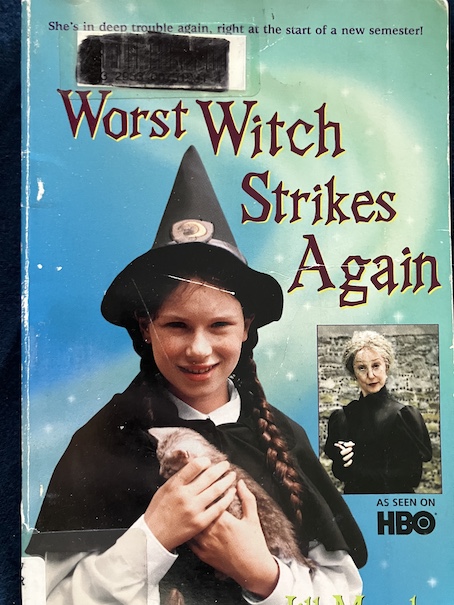
The Worst Witch Strikes Again

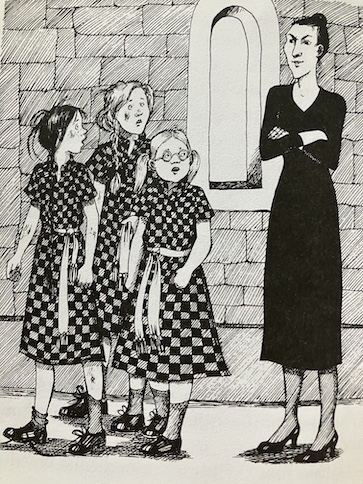
It’s a new term at Miss Cackle’s Academy, and Mildred Hubble is back! In spite of the headmistress’s gratitude toward her for saving the school the previous semester, it isn’t long before Mildred finds herself in hot water again. She still manages to get her lessons wrong, and admittedly, sometimes goofs around or does naughty things out of boredom.

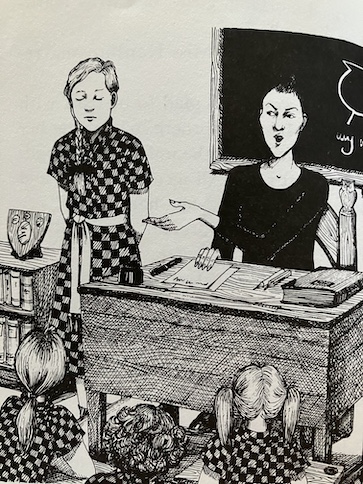
In an effort to teach Mildred some responsibility, Miss Cackle makes Mildred responsible for the new girl at school, Enid Nightshade. Mildred is supposed to show Enid around and make sure that she knows what she’s doing. Miss Hardbroom, the potions teacher, is dubious about this because it often seems like Mildred herself doesn’t know what she’s doing. Although Miss Cackle is hopeful that this new responsibility will give Mildred the incentive she needs to improve, so she can set a good example for Enid. However, what no one seems to consider is whether Enid is going to be a good influence on Mildred.

During their chanting lesson, Enid sings funny on purpose, and it makes Mildred laugh, getting her into trouble again. Enid also keeps a pet monkey in her room, even though only cats are allowed at the school, and Mildred accidentally lets it loose! After the monkey causes chaos in the school, it is revealed that the monkey is actually Enid’s cat. Enid changed it into a monkey for fun, but Mildred is blamed for doing it. Mildred can’t bring herself to tattle on Enid. Worse still, Mildred’s best friend, Maud, takes offense to Mildred spending so much time with Enid instead of her. Mildred can’t help it because she knows that Miss Cackle is expecting her to help Enid, but Enid keeps getting her into trouble, and Maud starts hanging out with the insufferable Ethel instead.

Enid continually gets Mildred in trouble, putting her in danger of getting expelled, while nobody seems to suspect Enid. Yet, Mildred has trouble getting angry with Enid because she doesn’t seem to mean the trouble she causes. At least, she doesn’t seem to mean for Mildred to take the blame, although she doesn’t step up to take responsibility and clear Mildred’s name, either. It seems like, rather than setting a good example for Enid, Mildred’s lessons in responsibility will be learning how to stand up to Enid and her escapades!

The book is available to borrow and read for free online through Internet Archive (multiple copies).

The idea of a teacher helping a student to learn responsibility by making that student responsible for a younger student is a classic boarding school story trope, dating back to Tom Brown’s School Days. However, this story humorously inverts the concept because Enid is a mischievous girl who ends up getting Mildred into more trouble than Mildred ordinarily gets into by herself! I was a bit annoyed at Enid because of how she causes trouble for Mildred and doesn’t take responsibility for it at first. The story makes it clear, though, that Enid doesn’t realized just how much trouble she’s causing for Mildred at first. When Enid realizes that Mildred is in serious trouble with the headmistress, she’s prepared to take responsibility.

It takes a nasty trick played by Ethel to really bring Mildred, Enid, and Maud together. Mildred and Enid pull off a wild stunt to get out of Ethel’s trick, and Maud stands up for Mildred and Enid, helping them to pass off the escapade as an ambitious tribute to the school. Fortunately, it’s enough to smooth things over with both the headmistress and the strict potions teacher!

From this point on in the series, Mildred, Maud, and Enid are all friends with each other.

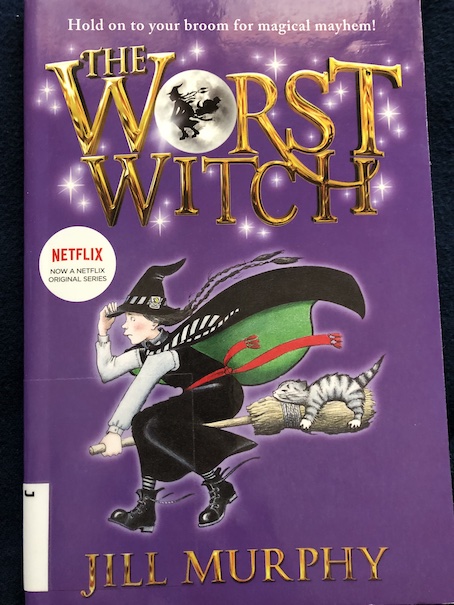
The Worst Witch

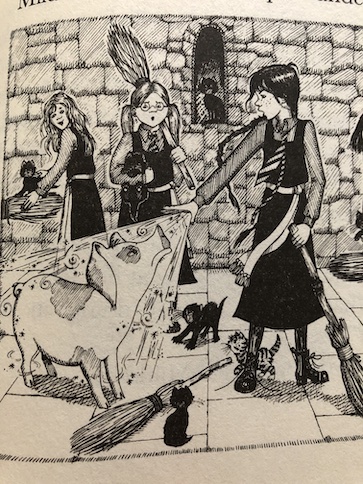
Mildred Hubble is a girl at Miss Cackle’s Academy for young witches, but she can’t seem to do anything right! It’s only about halfway through her first term, and it seems like she’s always getting confused and making the wrong potion in her potions class. Then, when she gets into a fight with a snobby girl named Ethel, she accidentally turns Ethel into a pig instead of a frog. When the girls at school receive their black cats, they run out of black ones, so Mildred gets a tabby cat, who seems to have even more trouble learning to ride on broom than Mildred did, and that’s saying a lot! Miss Cackle, the headmistress, is kind and tries to be understanding with clumsy Mildred, but Miss Hardbroom, the potions teacher, seems to think she’s a lost cause.

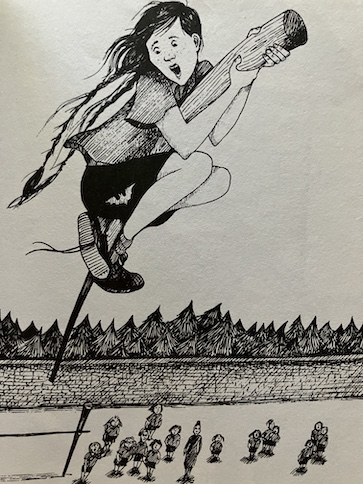
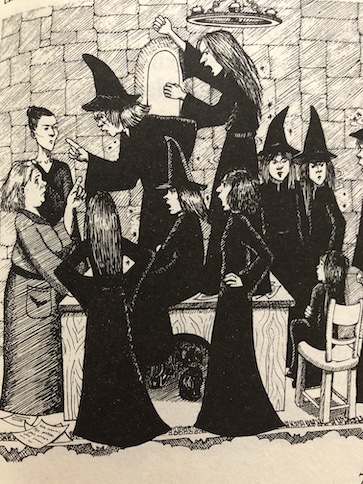
On Halloween, Mildred’s class at school is selected to make a special display. Miss Hardbroom decides that they will do a broom formation. Mildred is nervous about how she will do on her broom, and the mean Ethel sees an opportunity to get revenge on her for the pig incident. Because Mildred accidentally damaged her own broom, Miss Hardbroom orders Ethel to lend Mildred her spare broom for Halloween. Ethel puts a spell on the broom that causes it to act up in the middle of the formation, ruining the whole thing.

Everyone is mad at Mildred, thinking the incident was just more of her clumsiness and inattention. She knows that she will be called to a conference with Miss Cackle and Miss Hardbroom the next day. Unable to face them, Mildred decides to run away. However, outside the castle, she comes across a group of strange witches, talking about an evil plot to take over the school. Mildred is the only one who knows that the school is danger. Can the worst witch at the school manage to save it?

The book is available to borrow and read for free online through Internet Archive (multiple copies). This is the first book in a series. There was also a movie from 1986 (also on Internet Archive) and a tv show based on the series. (You can sometimes find the movie or some of the tv episodes on YouTube.)

The 1986 movie is fun and and contains a very trippy scene where Tim Curry, as a wizard, sings a song about Halloween. In the movie, Mildred is played by Fairuza Balk, who later played in the more serious witch movie The Craft in 1996.

When I was in high school, and the Harry Potter books were popular, a friend of mine pointed out that The Worst Witch was basically Harry Potter before Harry Potter existed. It’s true, too. I wouldn’t say that Harry Potter is a rip-off of The Worst Witch because there are many differences between the two series. Harry Potter has much more serious themes about death, prejudice, and oppression that you won’t see in The Worst Witch. The Worst Witch is definitely much lighter in tone. However, it is fun to notice some of the parallels. Both series are about a kid attending a magical school, and there’s a nasty potions teacher, a more privileged student who’s a snob and bully, and a villain who plots to take over the school. (Could the fact that the nasty teacher is always the one teaching the potions class possibly be an indication that many of us still carry traumatic memories from our chemistry teachers?)

I enjoyed The Worst Witch, although the stakes are much less serious than in Harry Potter. It’s a good series for younger children, combining boarding school style antics with magic and villains that aren’t overly scary but still threatening enough for Mildred to be a hero in defeating them. Mildred is a lovable misfit who constantly messes up (sometimes through her own fault and sometimes through someone else’s) but who always manages to come out on top!

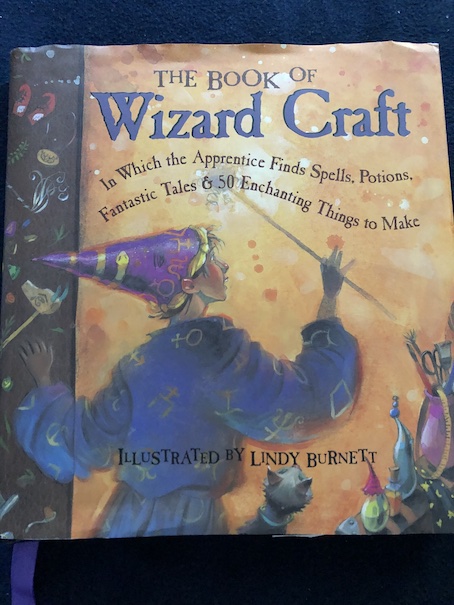
The Book of Wizard Craft

The Book of Wizard Craft by Janice Eaton Kilby, Deborah Morgenthal, and Terry Taylor, 2001.

One of the things I thought was interesting about this book was that it was published at the height of the popularity of Harry Potter, and many of the things in this book are clearly meant to appeal to Harry Potter fans, referencing activities and pieces of folklore included in the Harry Potter books. My mother gave this to me when it was new because I liked the Harry Potter books, and because my birthday is close to Halloween, she thought I could use some of the ideas in the book for one of my Halloween birthday parties.

The book is divided into chapters focusing on different types of crafts (the “craft” part of the title literally refers to arts and crafts, not “witchcraft”, although there’s a play on words there), activities, decorations, and recipes. Some of these could fall under more than one category. Aside from the crafts and activities, each chapter also has sections of folklore about magic, wizards and witches, supernatural and mythological creatures, and superstitions. The information about folklore and superstition don’t always directly relate to the main subject of the chapter.

Chapters in the Book:

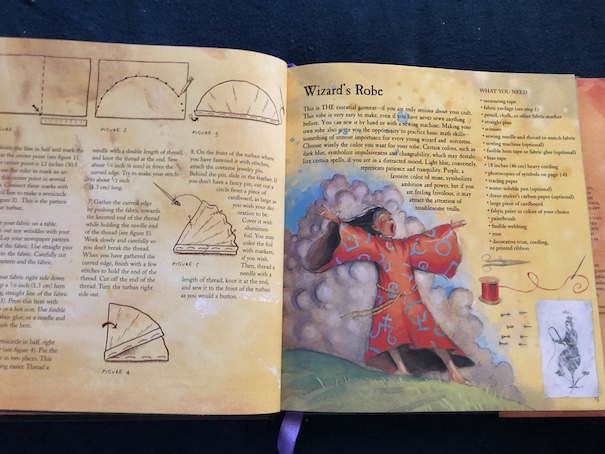
Wizard Regalia – This chapter is about how to make pieces for wizard-themed costumes, including hats, robes, wands, and cloaks. I thought the instructions for making a turban were interesting because wizards are typically known for wearing pointy hats. I think it was included because Professor Quirrell in Harry Potter wore a turban. There are also instructions for making an hourglass pendant, like Hermione’s time-turner. Good for dressing up for Halloween! This chapter also includes folklore about famous wizards and their animals and poltergeists.

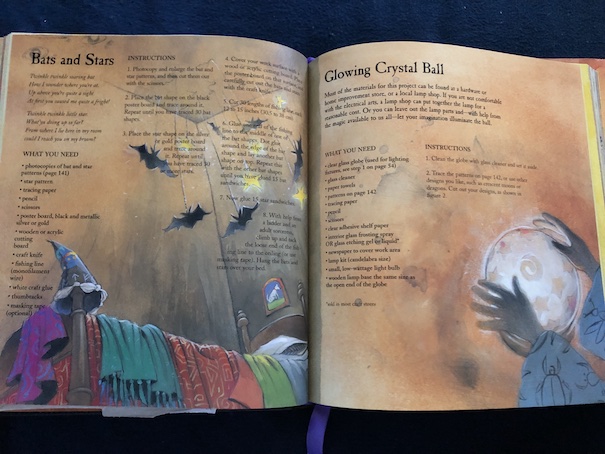
The Decorative Arts – This chapter is about how to make wizard-themed room decorations that could also make good decorations for a Halloween party. The decorations include a magic carpet, a magic mirror, a crystal ball, and bats and stars. The folklore for this chapter includes explanations about the hand of glory (not as another craft project, thankfully), screaming skulls, and headless ghosts. (I kind of wish that the headless ghosts were included in the costume chapter because that is a fun kind of costume to make, but then again, it’s not a wizard costume, so it wouldn’t really count.)

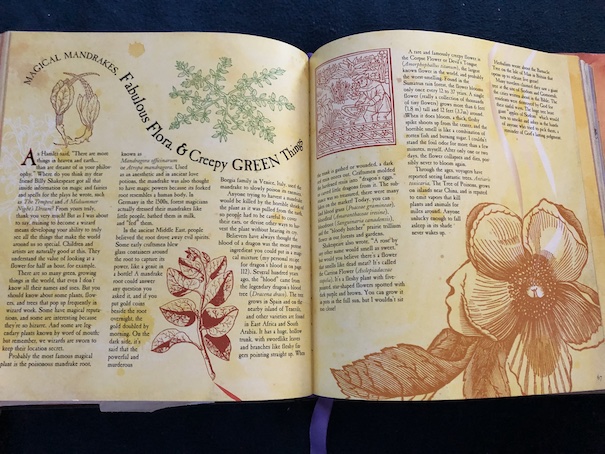
The Art of Horticulture – This chapter is all about things to do with plants. There are instructions for making a container garden and a terrarium with carnivorous plants and for planting a fairy circle with flowers (fairy rings that occur naturally are fungi). There are also instructions for carving “Shrunken Mandrake Heads” out of apples. I’ve seen that Halloween craft before, just called “shrunken heads.” The folklore includes additional information about plants and also information about fairies and giant spiders and snails.

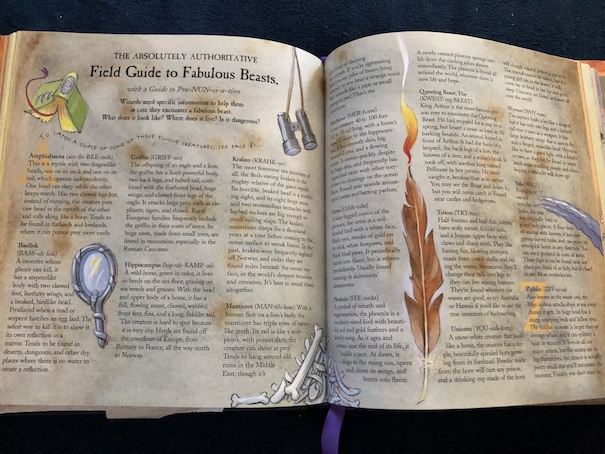
The Art of Animal Husbandry – This chapter contains a field guide to mythological creatures and also apothecary activities. I thought at first that the things an apothecary might make would have gone better in the plant section, but their ingredients supposedly come from animals. The activities are to make things like narwhal bubbles, unicorn horns, and dragon scales, which are supposed to be used in making other things, although later recipes in the book don’t use them. It’s just for play. The folklore in this chapter includes superstitions about animals.

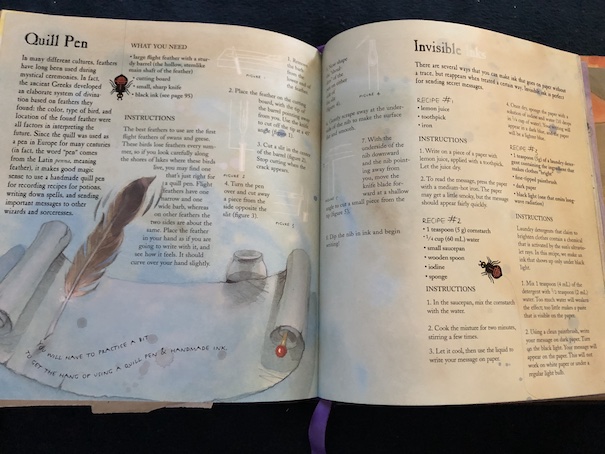
The Book Arts – This chapter is for all things related to writing. There are instructions for making your own journal and scroll, quill pen, and black ink and invisible ink. The folklore includes information about the Druids, King Arthur, and pharaoh’s curses.

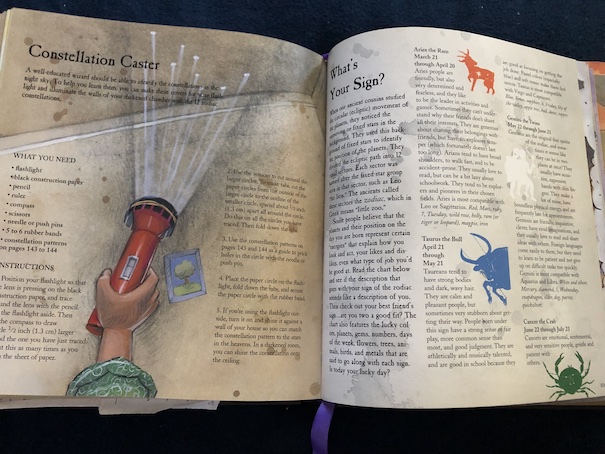
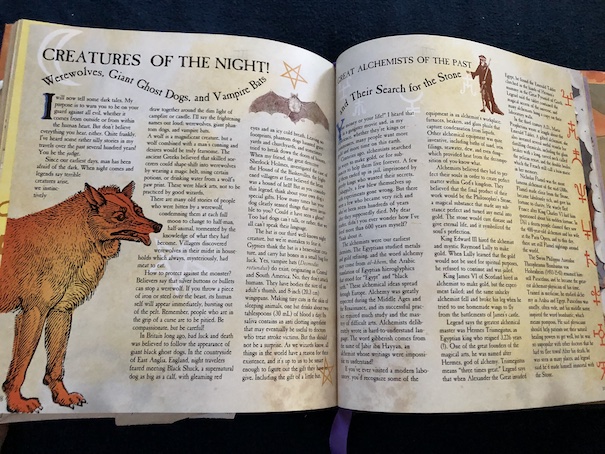
The Art of Astronomy – This chapter is about constellations and astrological signs. It shows you how to make flashlight covers so you can shine constellations on your ceiling. There is also a folklore section about creatures like werewolves, vampires, and ghost dogs.

The Art of Alchemy – This is the chemistry chapter of the book. There is a “magic potion cook book” of non-edible recipes for things like fake blood, slime, quicksand, and color-changing water. The folklore section of this chapter explains who alchemists were and about their search for the philosopher’s stone, the protected object of the first Harry Potter book.

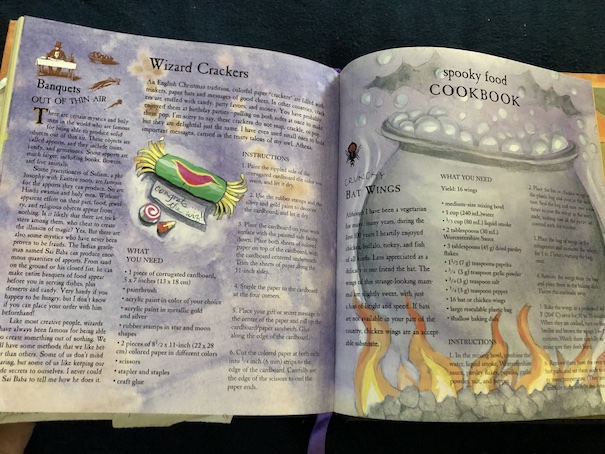
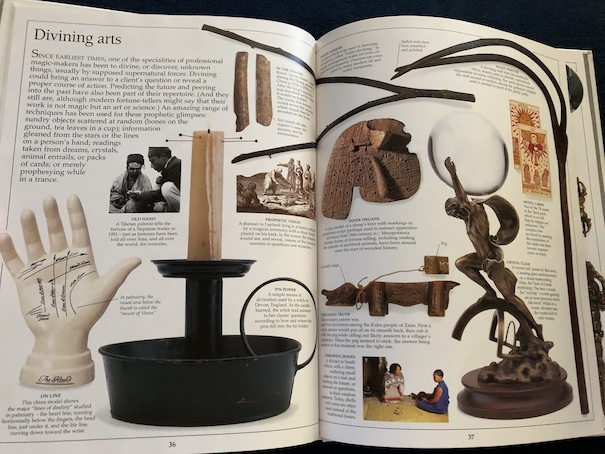
The Art of Amusement – This is the party-planning section of the book. There are more decorations in this section and instructions for making crackers of the sort that contain small party favors. There is also a cookbook of edible recipes that would make good party food for a Halloween party, like bat wings (really chicken wings), petrified tree cookies, and crystal candy. The folklore/activities of this chapter are about methods of fortune-telling, including reading palms and tea leaves. (Personally, I thought some of the decorations would have been better in the chapter about decorations, and I would have liked to see more party games in this chapter. I think some of the games that I included on my Halloween Ideas site would be good.)

The book is available to borrow and read for free online through Internet Archive (multiple copies).

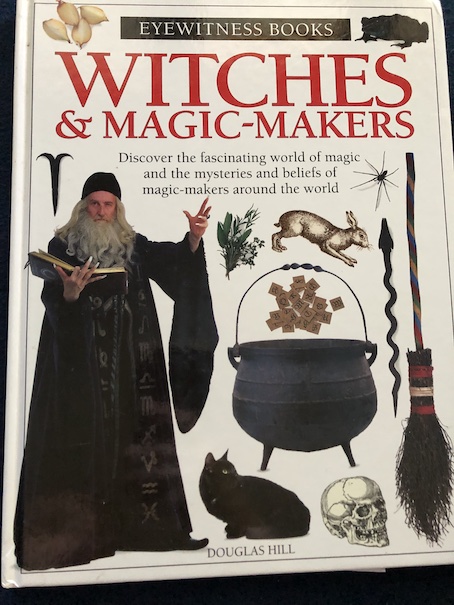
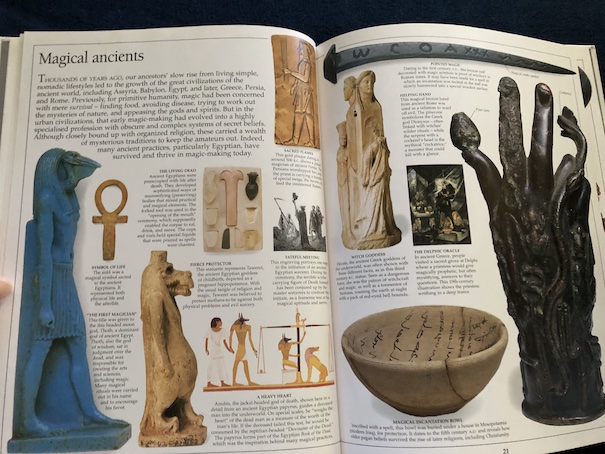
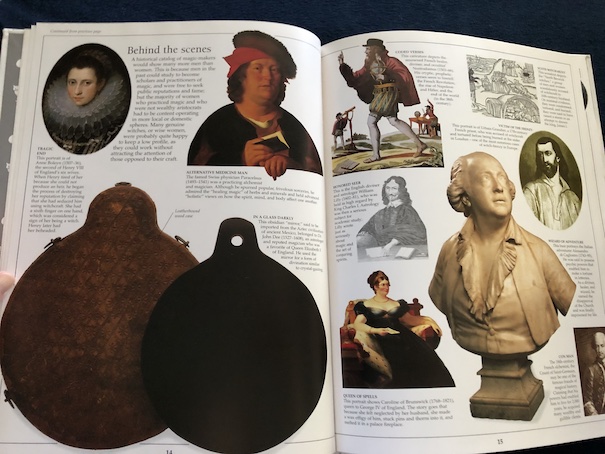
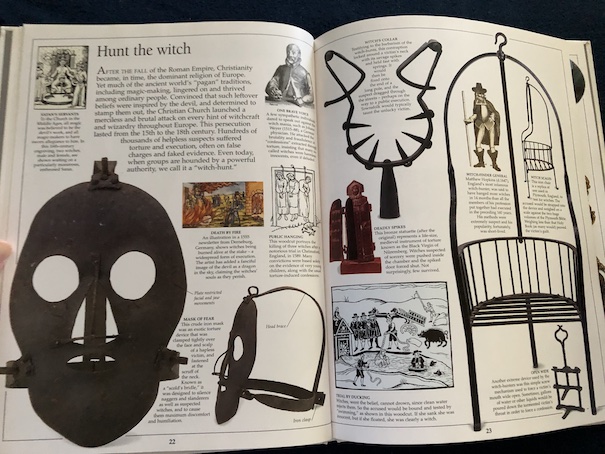
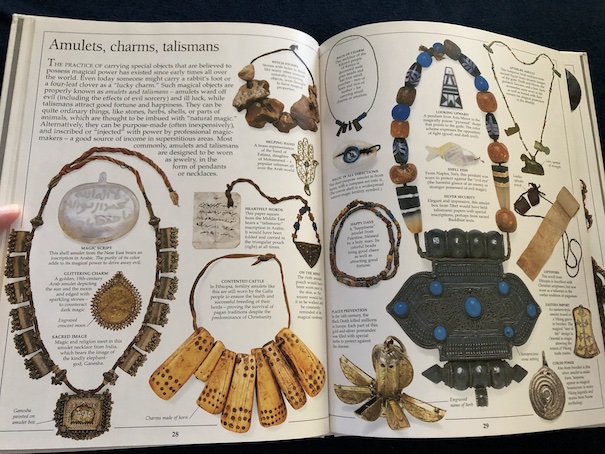
Witches & Magic-Makers

Eyewitness Books

Witches & Magic-Makers by Douglas Hill, 1997.

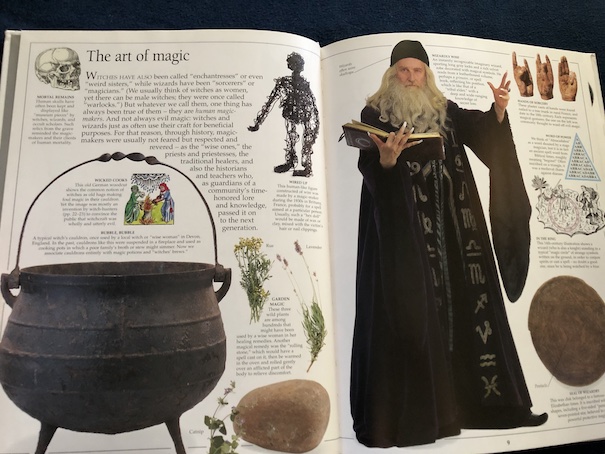
I always liked the children’s nonfiction Eyewitness Books because of their fascinating historical details and, especially, their pictures. I have to admit that I used this particular book for a college essay about witchcraft trials because, not only did it provide a good beginning overview on the topic but because, for some reason, books intended for adults tend to skimp on or forego pictures entirely. That always bothers me because there are so many things that can be explained better with a picture than a wordy description.

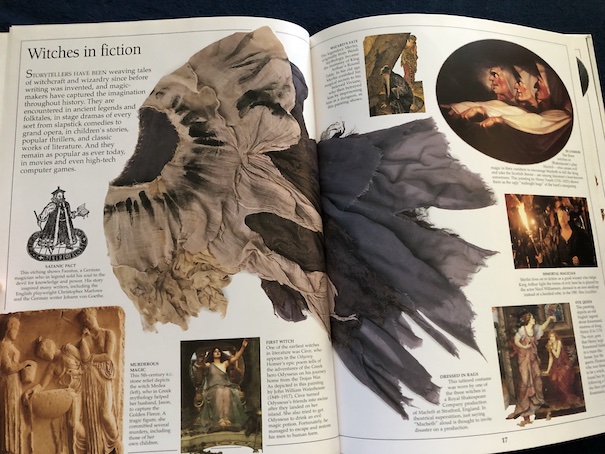
This book is about the history and legends of witches, wizards, and folk magic around the world. The concept that certain people have an ability to use magic for good or evil is an ancient one, found all over the world. The images we have of the sort of people who can use magic come from a variety of sources, from ancient folklore and legend to modern books and movies.

Real-life people who claimed to have the ability to practice magic or were suspected of doing it were very different from the fictional stories. From ancient times, people who were believed to have magical powers were both revered and feared. Ordinary people wanted the power of magic when they thought it could protect them from harm, heal their illnesses, or tell them important things about the future, but they were also afraid of the harm someone with magical abilities might do to them.

When witches were feared to be evil and harmful, they could be arrested, imprisoned, put on trial, tortured, and even executed. The book explains about witchcraft trials, including a section on the famous Salem witchcraft trial.

I particularly liked the pages in the book that explain specific things that witches and other magic-makers are believed to do and that show the objects and ingredients they use to conduct their spells. There is a page that shows magical amulets of all kinds, which are supposed to bring good luck or protection to their wearers. I noticed that some of these cross over into religion because they are specifically religious jewelry. It might be a matter of belief whether their effects would count under “magic” or the “power of the divine”, but I’ve always thought of magic and divine power as being separate. The linking quality here seems to be about physical objects that are believed to have a power that their owners wouldn’t have without them.

There are also sections about how people would use magic to try to tell the future and about the types of ingredients included in magic potions. (Actual results not guaranteed. I find it interesting, but I’m a skeptic.)

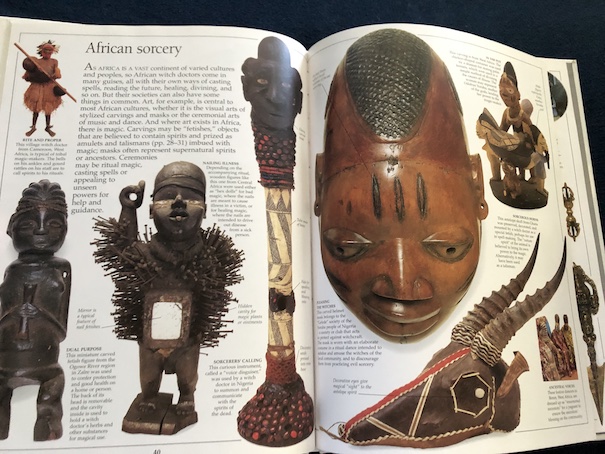
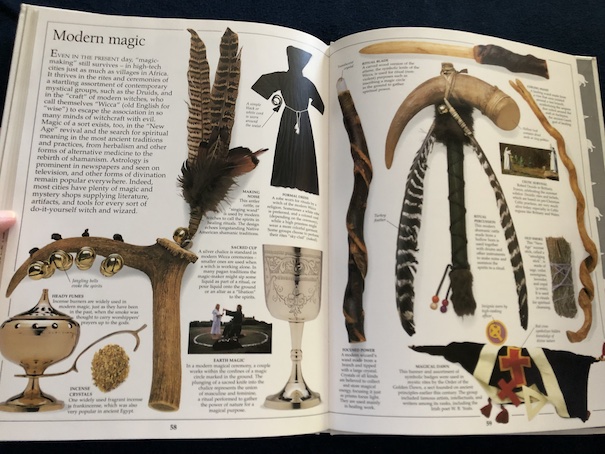
Of course, concepts like these vary around the world. Even when different societies share a belief that some people have the ability to use magic to do things like heal people or tell the future, they have different ideas about how that can be accomplished. The book has separate sections devoted to explaining the concepts of magic in different parts of the world, like Africa, India, Southeast Asia, and Latin America. The final section in the book explains modern beliefs about New Age magic and Wicca.

The book is available to borrow and read for free online through Internet Archive (multiple copies, including one in Chinese).

My Reaction

I already explained at the beginning about how much I like the Eyewitness Books and how I’ve used them before. I really think this series is fascinating and informative for adults as well as kids.

It occurred to me that this particular book is probably about the most potentially controversial book in the series, at least the most potentially controversial one I’ve ever covered. However, I’m not too concerned about it because this isn’t a how-to book about witchcraft. It’s more about history and folklore. I find folklore, history, and culture interesting, but I don’t actually believe in all of the things this book describes as magic.

I did once have an extremely brief foray into magic when I was about 10 years old, which I explained when I covered The Witches of Hopper Street, but I’m a person who comes with limits, which is basically the point of that particular story. I’m still not sure what book I read that time, but whatever it was, it had requirements that I realized I would never want to even try to meet. Let’s just say that people who feel like I do about animal entrails are probably not cut out to be witches, at least not the traditional kind. Since then, my interest in witchcraft has been limited to history and folklore, not actual practice.

As far as Wicca goes, I don’t know too much about actual practice, but for those curious about how it evolved, I recommend this documentary (not child-appropriate) on YouTube about the founder, Gerald Gardner. I love a fun eccentric, and as someone who grew up watching Disney’s Bedknobs and Broomsticks, I have to say that, if you’re going to try to curse someone with magic, I think Hitler is a justifiable target.

The Lancaster Witch

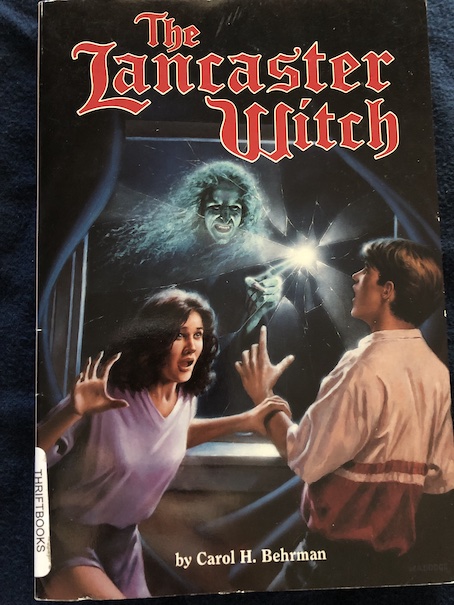
The Lancaster Witch cover

The Lancaster Witch by Carol H. Behrman, 1993.

Thirteen-year-old Maddie Stoner is startled when her parents suddenly tell her that she has an English cousin named Clive who is going to be arriving for a two-week visit on Saturday. Maddie has never even heard of Clive before and wants to know who he is and what’s behind his sudden visit. Her parents explain that Clive is more like a second or third cousin, the son of her mother’s cousin, who moved to England years ago and married a British man. Her mother’s cousin has only occasionally kept in touch since her marriage, but her son, Clive is just a little less than a year older than Maddie and wants to visit the US. His mother has asked Maddie’s mother if she’s willing to have him at their home in New Jersey this summer, and her mother said yes.

Maddie gets the feeling like there’s something more behind this mysterious cousin’s visit than her parents are admitting, but they dodge her questions on the subject. When she tells her friend, Chloe, about her cousin, Chloe theorizes that maybe Clive is some kind of juvenile delinquent or is otherwise in trouble or into something his parents don’t approve of, so they want to send him overseas to get him away from his problems. (Chloe says that she read somewhere that people in England use the term “teddy boy” to describe boys involved in gangs. I looked it up, and it seems to be an older term from the 1950s and 1960s. It seems more associated with the aesthetic of certain types of rock and roll fans, although there were gangs associated with it as well. It’s just kind of an old concept for a 1990s book.)

When Maddie and her parents go to meet Clive at the airport, Maddie sees a creepy woman in black with a very pale face following Clive, her hand on his shoulder. Then, a traveler hurrying past accidentally bumps into Maddie with his suitcase and knocks her down. When she gets up and looks around, the woman is gone. She asks Clive who the woman was and where she went, and he says that there’s nobody with him. Maddie’s parents think she was just mistaken, that she just saw another traveler who happened to be near Clive at the time. Maddie is sure that she wasn’t mistaken, but Clive refuses to acknowledge that the woman in black was with him and her parents don’t want her to keep talking about it.

As Maddie and Clive start getting to know each other, Maddie decides that she likes Clive. Neither of them has any siblings. Clive and his parents live in a resort town called Morecambe outside of Lancaster in northern England. When Maddie asks Clive what made him want to visit the US, he’s a little evasive, just saying that his mother thought it would be good for him to get away for a while, making Maddie more suspicious that there’s something about Clive that no one wants to tell her. However, they discover that they have similar tastes in music, and when Maddie invites him to come to the community pool with her and her friends, Clive eagerly accepts, saying that he likes to swim.

At the pool, something happens that convinces Maddie that something truly sinister is happening. Clive and her friends all go swimming while Maddie takes some time to sun herself. Maddie is dozing in a lounge chair when someone starts yelling that someone is drowning! Clive is the one who almost drowns, but fortunately, he is rescued in time by the lifeguard. When he’s pulled out of the water, he tells Maddie that “she” pushed him into the water and made him hit his head and that “she” almost killed him. When Maddie looks around to see who “she” is, she sees the woman in black leaving the pool area. However, when the lifeguard starts asking Clive questions, he changes his story, saying that he just made a clumsy dive and hit his own head. Maddie later confronts him about what he told her, saying that she saw the woman in black, but Clive just gets upset and denies it all.

Maddie talks to her mother, and her mother confirms that Clive’s mother said that he’s been having a few problems lately that he needs to get away from. Clive’s mother was vague about what kind of problems Clive has been having, and Maddie’s mother assumes that Clive’s problems are just typical kid problems. She discourages Maddie from talking it about with Clive because she wants his visit to be pleasant and doesn’t want him to be upset.

Still, Maddie suspects that something much more serious is happening with Clive. Unable to shake the feeling that something bad is happening and that Clive is in real trouble, she snoops in his belongings, finding a letter that he started writing to his parents, saying that “it” followed him to the US. Clive also has books about ghosts and has written some notes about ghosts. Maddie wonders if Clive could be crazy, but she saw the woman in black herself. Clive’s panicked notes about ghosts might not be the imaginings of an unbalanced person but the reasonable fears of a person experiencing something truly unearthly.

Eventually, Maddie gets Clive to admit that the woman in black exists, but he refuses to tell her more about it until she promises that she won’t tell anyone else. Maddie promises, and Clive tells her that it’s the Lancaster Witch. In the 1600s, a group of women were executed for witchcraft in Lancaster, England. One of them, a woman named Elizabeth Device, was supposedly the head of a family of witches, and she cursed the judge in the trial and his descendants. Clive is one of those descendants. He’s been aware of her presence, following him around for about a year, and that was why he wanted to leave England, hoping to get away from her. His parents don’t seem to see her, so he hasn’t been sure whether she was real or just a ghost in his imagination. There have been stories about people in his family being haunted, but his father thinks that’s just superstition. Even though Maddie assures Clive that she’s seen the Lancashire witch, too, and that he isn’t imagining things, Clive says he can’t be sure. Maybe his imagination is now influencing her imagination.

For a while Maddie is persuaded that maybe the woman in black is all their imagination, and she tries to distract Clive from thinking about it. However, everywhere they go and everything they do, she always seems to be lurking around them, causing bad things to happen. She shatters a mirror in Maddie’s room at night and shoves Clive down the stairs. When Clive goes out for a bike ride with Maddie’s friend Tommy on a day when Maddie isn’t feeling well, he mysteriously disappears. Everyone assumes that he just got separated from Tommy and got lost because it’s an unfamiliar town for him, but Maddie is sure that it’s the ghost of Elizabeth Device and her curse!

As they search for Clive, Maddie and Tommy have to confront some truly dangerous things, both conventional and supernatural. There is a real ghost in the story, but there is also a more conventional form of danger. Dealing with the physical danger provides a solution for ridding Clive and his family from the curse of the Lancaster witch forever.

My Reaction and Spoilers

I remember reading this book when I was about 10 or 11 years old. A friend of mine had a copy, and I borrowed it from her. I remembered that I really liked it, but I had forgotten many of the details over the years. Now that I’m an adult, I understand more about the history behind the events in the story than I did as a kid. As a kid, I knew about witch trials, so I understood the basic concept behind the witch’s ghost, but I now know much more about the specific witch trial the story references.

There is a note in the back of the book about the historical basis for the story. In 1612, ten women were hanged for witchcraft in Lancashire, England, in front of Lancaster Castle, including Elizabeth Device. There have been many non-fiction books written about this case, and there are video documentaries on YouTube about the Lancashire witches, also known as the Pendle witches or Pendle Hill witches. One of the more shocking elements of that witch trial was that Elizabeth Device’s own nine-year-old daughter, Jennet, testified against her.

In the story, when Clive and Maddie are discussing the witches and witchcraft trials, they compare the Lancashire witch trials to the Salem witch trials, although Clive is wrong about the Salem witches being burned to death. It’s sloppy scholarship on the part of the author. The notion of witches always being burned is prevalent in popular culture, and it makes for dramatic scenes in movies, but that’s not how it went in real life, at least not in Colonial American. Nobody was burned in Salem because it was a British colony, and the British punishment for witchcraft was hanging, like in the Lancashire trials. Most of the Salem “witches” were hanged, and one person was pressed to death. It’s been a pet peeve of mine to point that out since I did some reports about witchcraft trials in college. It’s one of the first things people get wrong about Salem when they haven’t really researched the events there.

Maddie and Clive discuss some of the motives people had for accusing others of witchcraft, which could vary from suspicion that a neighbor was causing misfortunes to outright spite against someone they hated or envied for other reasons. Clive says that some of the people accused and executed for witchcraft believed that they were actually casting spells themselves. Whether they actually could do magic or if they were actually just following old superstitions is debatable, and Clive acknowledges that. Of course, since this is a ghost story with a witch’s ghost, the presumption here is that the witch had some kind of real power.

The story is suspenseful, but it has a good ending. Most people don’t know that the ghost is real, and they think that the danger Clive is in comes from another source. There is a conventional source of danger in the form of some criminal activity. Dealing with that situation helps to resolve the matter of the witch’s ghost because the ghost decides that Clive has repaid her family for what happened during the witch trial.

In the story, Maddie and her friends enjoy talking with Clive about differences between American and British teenagers, and they point out the differences in the ways each of them talk. Maddie also wonders if British kids play Monopoly, and the book says that she and her friend Tommy teach Clive how to play. However, I know that Britain has had its own versions of the game of Monopoly for decades, long before this story was written, so Clive should have at least known the premise of the game, even if he didn’t usually play.

Witch Week

This is the third book in the Chrestomanci series.  In this series, there are many different worlds, and in each of those different worlds, there is a copy of every person.  Different versions of our world can differ dramatically in their history, and individual people’s lives can differ dramatically between the worlds. However, there is one person in each generation who has no duplicates in any of the other worlds.  This person is called the Chrestomanci.  All of the talents, abilities, and lives that would have been spread across the other worlds are now centered on that one person, giving that person, literally, nine lives.  The Chrestomanci fills an important role, being better able than anyone else to travel across the dimensions and between worlds, and he acts to keep a balance between them and make sure that the different worlds keep their proper course.

This story takes place in a world where witches are being burned at the stake in the 1980s. At a boarding school for troubled children and orphans, everyone is aware of what an accusation of witchcraft can mean. One day, one of the teachers finds a note in a social studies book saying that one of the students in class 6B is a witch. It’s a serious accusation, but how seriously should anyone take it? This is, after all, a school for troubled children, and children in general play pranks. Mr. Crossly finds the note worrying. Some of the teachers are convinced that this is just a prank or someone playing up for attention. Miss Hodge says that there is a sick mind in class 6B. Mr. Wentworth, whose own son, Brian, is in that class, says that he’s sure that all of the kids in class 6B have sick minds, but that’s just typical. He thinks it’s best if the teachers take no notice of the note. But, the note is correct. There is a witch in class 6B.

Strange things start happening in class 6B and to the students in that class. A flock of assorted birds swarms into their music class. In gym class, Nan Pilgrim can’t manage to climb the rope, no matter how hard she tries. When she and two other students are called to have lunch with the headmistress, Nan finds herself making disgusting comments about the food without her even wanting to say anything, but for some reason, the headmistress can’t hear a thing she says, even though the other students can. Then, it is revealed that Nan’s real name is Dulcinea, which is the name of a famous witch. Could Nan secretly be the witch in class 6B?

Although she can’t openly admit it, Nan is descended from the famous witch Dulcinea, who tried to stop the persecution of witches, and she is also what is called a “witch orphan”, meaning that her parents were witches. However, Nan insists that she’s not a witch herself, and Nan isn’t the only suspicious student in the class. Everyone there is troubled in some way. Brian Wentworth is often picked on for being the son of a teacher. Simon Silverson, Dan Smith, and Theresa Mullet are bullies. They are all eager to point fingers at Nan for being a witch, but could that be to cover up for themselves?

Charles Morgan was sent to the boarding school because his parents think that he is troubled and disobedient and a bad influence on his younger brother. In a way, he is very troubled, but he can’t explain what is really troubling him. When he was younger, he witnessed a witch being burned, something that still traumatizes him. Then, he helped another witch who was being hunted to escape. He can’t admit to his parents that he helped this witch because it was illegal, but the witch promised him good luck for doing so. So far, he hasn’t noticed any good luck, and he feels terrible every time he hears about another witch being burned, thinking that it might be his witch. It all makes him angry and depressed, and he hates the boarding school and everyone there.

Miss Hodge tries to investigate the students by having them act out witchcraft inquisitions. Since most of the children don’t know what happens at an inquisition and aren’t very good actors, most of them are terrible at it. But, she comes to think maybe Charles is the witch because he gets angry at Nan over all the disgusting things she said at lunch and taunts her about them in a way that makes it sound like he’s saying some kind of spell.

When Miss Hodge tries to tell Mr. Wentworth about it, he shrugs it off because he also heard the things Nan said at lunch. Mr. Wentworth interviews Nan about why she said all those things at lunch, but she can’t explain herself. She doesn’t know what made her say those things. Sometimes, she just can’t seem to help herself, and she felt almost possessed. Mr. Wentworth knows about her family’s history and warns her to be careful.

Then, when Charles is trying to escape from some bullies, he somehow manages to turn himself invisible. He doesn’t understand it, but he tries to do something else magical as a test. Since Dan Smith hid his spiked shoes earlier, Charles tries making Dan’s spiked shoes disappear. To Charles’s horror and astonishment, he succeeds! Somehow, he has apparently been a witch the whole time without knowing it. Charles thinks maybe he did some of the other strange things without knowing it, too. He’s always heard that witches are evil, and he thinks maybe he has secretly been evil this whole time and had better confess. An accidental mix-up when he goes looking for the headmistress stops him from confessing immediately, but it leaves him unsure what to do.

Mr. Wentworth has a private conversation with Charles about Miss Hodge’s suspicions about him. He knows what Charles was really talking about when he was arguing with Nan, but he points out to Charles how bad it might sound to someone who didn’t know what he was talking about. Information about witches and the past witch uprisings is drastically censored. There is almost nothing about it in the school library, but Mr. Wentworth understands the situation and explains it to Charles in a no-nonsense way. Nan’s ancestress, Dulcinea Wilkes, had been an advocate for witch’s rights in the 18th century, particularly the right not to be murdered. She said that witches couldn’t help being witches because they were born that way, and it wasn’t fair for them to be murdered for something they just couldn’t help. She said that witches would only use their powers in good ways if people would stop hunting them and burning them, but the murders and burnings continued, and Dulcinea lost her temper. She retaliated with violent spells that frightened people so much that they also murdered Dulcinea by burning her. In remembrance of that, people still continue to burn effigies of her, like they do of Guy Fawkes. Mr. Wentworth says that he thinks what happened to Dulcinea was unfair, but he is worried about his students because there has never been so much stigma against witches at any earlier point in history. Although his students wouldn’t remember it, there was a major witch uprising around the time they were all born. The news of this uprising was largely hushed-up, but the witches attempted to take over the entire government. The revolutionaries were all civil servants, and they were all burned when the uprising was crushed, but the government has been paranoid about anyone with any sign of witchcraft since. When they learned that the leader of the uprisings started showing signs of witchcraft when he was about 11 years old, they even started allowing children to be arrested for witchcraft, even on slight suspicion. The inquisitors have powers that go largely unchecked. Mr. Wentworth knows that any of his students can be hauled away and executed with little recourse.

Even though Mr. Wentworth is concerned with protecting Charles, Charles gets angry with him for giving him a black mark as a reminder to control his behavior, and he glares at Mr. Wentworth. It’s a terrible mistake. It turns out that Charles has the evil eye, and it seems like he accidentally makes Mr. Wentworth disappear. Although Charles tries to pretend like everything is normal, he is desperate on the inside. Soon, someone will realize that Mr. Wentworth is missing and that Charles was the last person to see him. He even tries burning his own finger on a candle to remind himself that burning hurts, and he needs to control himself to avoid being burned to death. When he tries to fix what he’s done with magic, Mr. Wentworth does return, but everyone’s shoes mysteriously disappear.

To Charles’s surprise, the memories of the witch he saw burned and the witch he helped to escape stop bothering him so much after he knows and accepts that he is a witch himself. It’s like he’s always known, inside, that he would be a witch, and once he becomes reconciled to his true nature, he becomes calmer and more self-confident. He knows that he can’t stop being a witch. He can only try to avoid being caught. However, it turns out that he is not the only student who has witchcraft, and when the desperate students seek help or a method of escape from this prison-like school, they accidentally summon Chrestomanci to straighten everything out.

The book is available to borrow and read for free online through Internet Archive (multiple copies, including some in different languages).

Like all of the books in the Chrestomanci series, this book takes place in an alternate world or alternate reality. It explores not only the suspicion and paranoia that go with witch hunts but also the mechanism by which these alternate worlds or realities are created. When the students who have realized that they are witches try to escape, they are given a spell that calls Chrestomanci from his world to theirs. Chrestomanci is accustomed to being summoned to random places on short notice (it’s just one of the hassles that come with the job), but he finds this particular world puzzling. He knows from the similarities between this world and others in the series of worlds that contains his own that he must be in that particular series of worlds, but he recognizes immediately that there is something wrong with it. It has way too many similarities with the world that is “our” world in the series, but yet, there shouldn’t be any witch trials or burnings in the 1980s. He explains that alternate worlds are created when there is some major event that has only two outcomes with an equal chance of happening. Every time that happens, the world splits into two separate worlds where each of the possibilities happen. Because this world is so much like the world that is “ours”, he knows that whatever event caused the split happened fairly recently in history, but for some reason, the split wasn’t complete. There is no real magic in “our” world, but this odd, dysfunctional, split-off world is full of it.

By talking to the students about what they know about the history of their world, Chrestomanci is able to pinpoint the event that caused the problem. As with other Chrestomanci books, Chrestomanci doesn’t just magically solve the problem all by himself, but once he understands the situation, he shows the students at the school where the problem lies and what they need to do to fix it themselves, making use of their own powers, and even some of the mistakes they’ve made, to set their world right and re-integrate their world with “our” world. Once their world is repaired, it’s as if all the witch trials never happened. People who were burned are alive again, and people who were in prison are living perfectly normal lives. The children must sacrifice their magical abilities and all or most of their memories of their old lives to join with our world, which some of them are initially reluctant to do, but once they do it, all of their lives change for the better. Orphans have their parents back, the school is now a day school instead of a boarding school where the children were basically prisoners, and the children are all much friendlier toward each other now that they are no longer part of that toxic atmosphere, where suspicions always surrounded them and everyone is afraid of exposure.

Parts of the story were stressful because of the bullying among the students and the constant threat of imprisonment or death for any child who was proven to be a witch. Most of the adults are not that concerned with the welfare of the students because this entire society is engulfed with paranoia, and everyone is desperate to protect themselves at all cost. The adults are often so preoccupied with saving themselves that they would be willing to throw the children to the wolves rather than face imprisonment or death themselves. The major exception is Mr. Wentworth, who tries to warn children who show signs of witchcraft that they need to be careful. His efforts to protect the children are touching because he has more to lose than some of the other teachers who play along with the politics and paranoia of their society. (Spoiler!) Mr. Wentworth and his son Brian are both witches, and Mr. Wentworth is being blackmailed for most of his salary by the headmistress. Mr. Wentworth advocates self-control to the students as the best way to avoid being caught, but it soon becomes apparent that nobody with witchcraft abilities can fight using them forever. That’s why some of the children’s abilities come out unconsciously, without them even being fully aware of what they’re doing. That’s where the mystery of the story comes in.

Chrestomanci books always contain an element of mystery in some way or other, and from the beginning of the story, there are the questions of who wrote the note about there being a witch in class and who the witch is. We never learn who wrote the note (I don’t remember that being definitely revealed), and in the end, it doesn’t really matter. When Charles realizes that he is a witch, that seems like the answer. However, Charles is not the only witch in class. As one of the other students points out, all of the weird things that have been happening at the school are very different in character, so there is more than one person involved. By the end of the book, it is revealed that (spoiler) the vast majority of the students at the school are witches. Some have been doing magical things unconsciously as their powers have started asserting themselves, and some have done things on purpose because they know they can. Chrestomanci realizes that many more people in their society in general are witches than these paranoid people ever suspected, and witches are only regarded as a minority because of the atmosphere of fear they live in. Everyone has been trying so hard to conceal any sign of abnormality that they all have a warped view of who they all really are and what their society is actually like.

I couldn’t help but notice that, witch or not, absolutely nobody in this society can be called an innocent person. Everybody is doing something illegal, unethical, or simply deceptive. They all have secrets, and they all do things to cover up what they’re doing. Even non-witches are often doing horrible things that they have to cover up. The apparently sweet and proper headmistress is actually a cold-hearted blackmailer. Teachers are manipulative for personal and professional reasons. The so-called “normal” (or “real”, as Nan thinks of it) children are all either secret witches or just horrible bullies and rotten human beings. Like their elders, the “normal” children are sneakily manipulative and practice blackmail and brutality against the other students, knowing that’s the way to get to top of their social heap. As I said, the entire society is toxic, not just the school, and everything the children do is a reflection of their elders (and vice versa, when you think about it). Grown-up witch hunters are like overgrown child bullies, and people like the headmistress probably started their blackmail and manipulation at a young age, just like the students, as tools of survival and self-promotion in this cold, toxic, pitiless world.

The normalization of the toxic parts of this world is both stressful and worrying. People can adjust to many awful things if they are not given any alternative, and that’s what this dysfunctional world represents. There are moments of lightness, though, and some characters are more caring than others. The story is told from the point-of-view of different characters, and much of this book is a psychological study in the different ways people deal with bullying, suspicion, and paranoia. As I said, Mr. Wentworth risks himself sometimes to help students in danger and make them see the seriousness of their situation. Some of the students band together to try to help each other survive their mutual risk, while others are more self-centered, prepared to throw each other under the bus to save themselves. It’s a relief to see all of that end when the world is set right, but it occurs to me that the story has exposed all of the characters’ true characters, what each of them are capable of doing in extreme circumstances. The extreme circumstances brought out the worst in some characters, while others were more creative and caring in spite of everything.
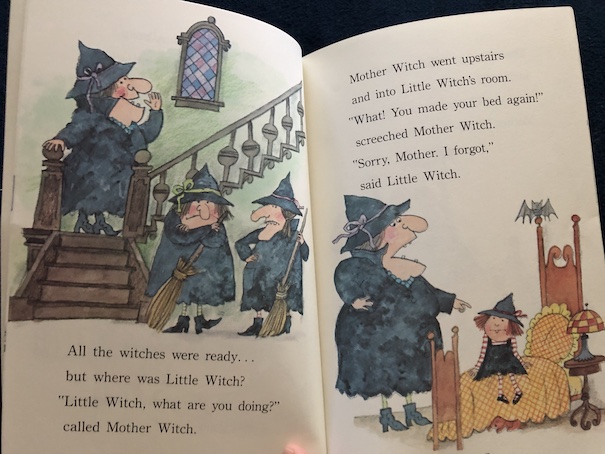
Little Witch's Big Night

Little Witch’s Big Night by Deborah Hautzig, illustrated by Marc Brown, 1984.

On Halloween night, all the witches in Little Witch’s family are busy getting ready for their big broomstick ride. However, when Mother Witch sees that Little Witch has cleaned her room and made her bed, something too nice for a witch to do, she punishes her by telling her that she will have to stay home.

Because Little Witch is left at home, she is there to answer the door for three trick-or-treaters dressed as an astronaut, a devil, and a pirate. Since she doesn’t have any treats to offer them, she offers to give them rides on her broomstick.

The trick-or-treaters have a great time as Little Witch has her broom do tricks and she shows the pirate a real pirate ship.

The trick-or-treaters have so much fun that they promise to come back next year. Little Witch resolves to be good all year so that her mother will punish her again and make her stay home from the Halloween flight, so she will be there to meet her new friends when they come back.

However, when the other witches come back, Mother Witch says that she missed Little Witch on the flight and that she will get to come on the flight next year. Little Witch asks if she can bring some friends with her, and Mother Witch says that will be fine, as long as Little Witch isn’t too good.

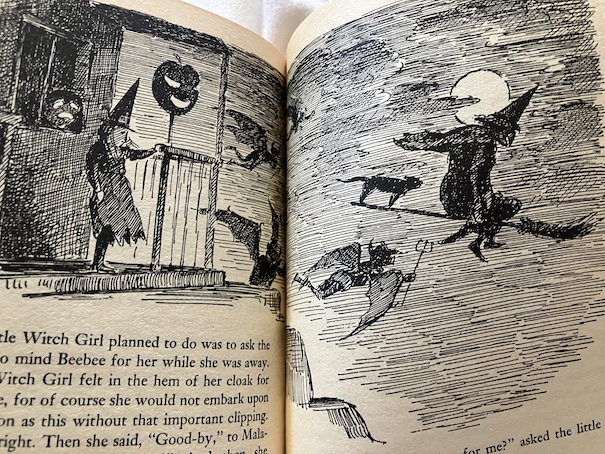
This was one of my favorite Halloween books when I was a child, and so is one of the other books in the series, Happy Birthday, Little Witch. The first time I read these books, I read them out of order, but you really have to read the books in order to understand Happy Birthday, Little Witch because it turns out that Little Witch still doesn’t understand the idea of trick-or-treating or that human children wear costumes on Halloween. She really thinks that she met a small astronaut, pirate, and devil on Halloween, and that makes it difficult for her to find them when she wants to invite them to her birthday party. The Little Witch in this series isn’t the same as the Little Witch in the Little Witch Craft Books.

The book is available to borrow for free online through Internet Archive.

The Midnight Folk

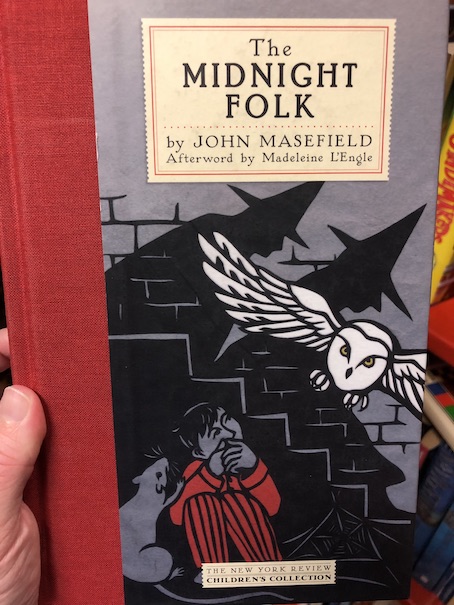
The Midnight Folk by John Masefield, 1927.

Kay Harker is an orphan, the ward of Sir Theopompus, usually in the care of his governess, Miss Sylvia Daisy. One day, Sir Theopompus asks Kay if he has any idea what he wants to do when he grows up. Kay says that he likes the idea of being a jockey, but Sir Theopompus says that he could be a sea captain, like his great-grandfather. According to the stories about him, Kay’s great-grandfather sailed around the world and stole a treasure from the priests of Santa Barbara worth about a million pounds (British money). The stories differ about what happened to the treasure, though. In some versions, his crew mutinied and took the treasure for themselves, but other stories say that he brought the treasure home with him and hid it somewhere in his family home, the home where Kay now lives.

Sir Theopompus asks Kay if he’s ever come across the treasure, but Kay says he hasn’t. Sir Theopompus suggests that if Kay finds the treasure, the two them could split it between them. Kay says that wouldn’t be fair, if he had to do all the work of finding it by himself, and also the treasure is stolen property, so it would rightly belong to the priests of Santa Barbara. Still, Sir Theopompus encourages Kay to search for the treasure. Kay doesn’t believe that the treasure is really in the house or that his great-grandfather would be a thief, and he doesn’t think it’s fair to tell such stories about him when he isn’t there to defend himself. His governess tells him that he has been impertinent and sends him to bed early.

Kay is later woken by someone calling to him to open the door, and he sees a door in his room that he has never noticed before. The voice he hears belongs to the black cat called Nibbins, who tells Kay to come with him and not make any noise. Most of the house is asleep, and Nibbins refers to the ones who are awake as the “midnight folk.” He leads Kay down a secret passage that was once used by smugglers.

There, Kay learns that his old toys were his “guards.” He doesn’t know where his old toys are because his governess packed them away when she came, saying that they would just remind him of the past. Nibbins says that his old toys had stumbled onto a clue about the hidden treasure and went in search of it. They didn’t think it would take them long to find it, but he hasn’t heard from them since. Kay sadly fears that his old toys may actually be dead. (A horrifying thought.)

Then, there’s an even more shocking revelation. Nibbins shows him that there are spy hole where Kay can see what’s happening in various rooms in the house, and in the dining room, he witnesses a meeting of witches! Nibbins shows Kay where the witches keep their brooms, and they take a couple of the brooms on a ride to the woods, where Nibbins introduces Kay to a poacher called Bitem. They witness the witches having a bonfire and a magical ritual at Wicked Hill. Nibbins says that he used to be a witches’ cat and helped with rituals like that. Sometimes, he still feels the call of magic.

The leader of the magical group is a wizard called Abner Brown, and they overhear him saying to the witches that they are going to hunt for the Harker Treasure. Abner has learned that the treasure is not actually in the Harker house, but it’s somewhere close by. Abner reveals previously-unknown details of the treasure’s history, including the fact that his own grandfather had once been in possession of it and hid it until someone called Benito Trigger found it. Abner has found evidence that his grandfather tracked down Trigger and confronted him in this very area and that Trigger may have killed him. Abner believes that the treasure is still hidden somewhere near to where his grandfather died. Nibbins leads Kay back to his bedroom through another secret passage before anyone discovers that he is gone.

Kay knows that what he witnessed the night before wasn’t a dream because, in the morning, he sees the remains of the leftover goose that the witches were eating the night before, picked to the bones. The servants think that the cats got at the goose and ate the leftovers, but Kay knows better.

Then, the portrait of Kay’s great-grandfather comes to life, and his great-grandfather invites Kay into the portrait, showing him the house as it was in the past. His great-grandfather denies having stolen the treasure years ago, but he says that it was entrusted to him and that he lost it. He was in Santa Barbara when the territory was breaking away from Spain, and the archbishop gave him the treasure to guard from the revolutionaries. However, his crew did mutiny and turn pirate. The crew took the treasure, and they abandoned Kay’s great-grandfather ashore, far from any European colony. For a time, he says that he was a slave of a tribe of Indians (Native Americans), but he eventually escaped and made it home to England. He heard that his old ship may have sunk, but he doesn’t know for sure. Even he doesn’t know where the treasure is now, thinking that it must have either sunk with the ship or been scattered by the crew. It’s always bothered him that he was unable to fulfill his promise to keep the treasure safe. He wants Kay to learn what happened to the treasure and, if possible, restore it to its rightful owners.

Through Kay’s midnight adventures and the ghosts of the past stirred up by the magic of the witches, Kay begins to learn the full sequence of events that led to the treasure being lost, and eventually, what happened to it. Along the way, Kay also makes the startling discovery that his governess is actually one of the witches!

The book is available to borrow and read for free online through Internet Archive (multiple copies).

My Reaction and Spoilers

There were some parts of the story that I found difficult to follow because the story kind of jumps around, people start talking about things as if we should already know about them, and some things that Kay encounters are not fully explained. Many of them seem like dream sequences or imaginings, except they have lasting consequences. Then, there are times when people go into lengthy explanations that seem to meander, and there are people who go by multiple names. For awhile, Kay almost seems to forget about seeking his great-grandfather’s treasure and starts looking for the treasure of an old highwayman instead, and there is a strange interlude with King Arthur and his knights.

Still, this story is a children’s classic, and it’s almost like a collection of all the features that are found in classic children’s literature: an orphan, talking animals, witches, pirates, ghosts, mermaids, a highwayman, King Arthur and his knights, hidden treasure, etc.

For awhile, I thought that the story might end with the implication that much of it was in Kay’s imagination. Kay is a lonely boy who doesn’t see his guardian very often and lives with a strict governess and no other children for company. I thought maybe he was spinning dreams or imagined stories to explain other events happening around him. I spent part of the story working out how a child might interpret a strict governess who took away his old toys as a witch, and I thought maybe she was in a romantic relationships with Abner Brown, which would be why Kay would see him as a wizard. Then, maybe these young people had parties in the house with their friends after Kay was put to bed, so he imagined that they were having witches’ meetings. They could also be hunting for the legendary treasure, so all the parts related to treasure-hunting could be true. However, the book implies that the magical parts of the story are real. Even the magical things Kay experiences have real world consequences, which help both him and readers to realize that what he has seen has really happened.

I thought that the story became a little more cohesive after Kay makes the discovery that his governess is actually one of the witches. He eventually learns the full truth of what happened to the treasure years ago and meets up with his old toys/guards, who are still alive and have been seeking the treasure the entire time. Kay’s toys/guards bring the treasure from its hiding place to a secret hiding place in Kay’s room and help him to alert the proper authorities and restore the treasure to its rightful owner. Kay’s governess is arrested when she and her friends are caught trespassing in pursuit of the treasure and in possession of smuggled goods. The governess is released when Abner Brown pays the fines for their activities, but she leaves the area instead of returning to Kay. Kay’s home life changes for the better because a friend of his mother comes to live with him and look after him.

Hester Bidgood

Hester Bidgood, Investigatrix of Evill Deedes by E.W. Hildick, 1994.

Hester Bidgood was a character in one of the McGurk fantasy mysteries, which involved time travel, and in this book, she investigates a mystery of her own in her own time, the late 1600s, Colonial America.

Goody Willson’s cat has been found, badly injured, with the shape of a cross burned into it. Some people are spreading the rumor that this is a sign that Goody Willson is a witch and that the injuries to the cat were a sign of God’s disapproval for Goody Willson’s “witchy ways.” Of course, Hester and her friend, Rob, don’t believe that. Old Mistress Brown worries that if the witch rumors go too far, everyone will soon be a potential witch suspect, like in Salem. Rob takes care of nursing the cat back to health, while he and Hester try to determine how the cat came to be injured in such a strange manner.

Rob knows what it’s like to be an outcast. Although he’s a white boy, he lived for a time among the Native Americans as a young captive and adopted many of their habits. He doesn’t know how to read, and Hester has been helping him. However, there are people in the community who don’t trust Rob because of his connections to the American Indians, and they call him derogatory names.

Hester and Rob consider that the mark on the cat could have been made by a branding iron. They go to the blacksmith and ask him if he has an x-shaped branding iron or if anyone has asked him to make one, but he says no. But, then Hester begins to consider that maybe the cross isn’t really a cross. A cross sign could also be made by putting two capital ‘T’s together at an angle.

Their investigations also take them to the old Morton homestead, where the entire Morton family was killed by American Indians some years before. Someone has been staying there in secret, and there are signs of blood, possibly from the injured cat. Gradually, Hester and Rob begin to put the pieces together, realizing who the person responsible must be and how this evil deed is actually connected to an earlier crime.

I didn’t really like this book because of the cruelty to animals. It wasn’t just what was done to the cat but also when Hester remembers Rob finding a dragonfly and considering taking off its wings. Hester stops him from doing it, but it’s still a disgusting thought. I thought that the villain was pretty obvious from the beginning, too, although I didn’t know the motive. When there’s a witch hunt, the person who is the most guilty is the first one to bring up the subject of witches.