Eyewitness Books
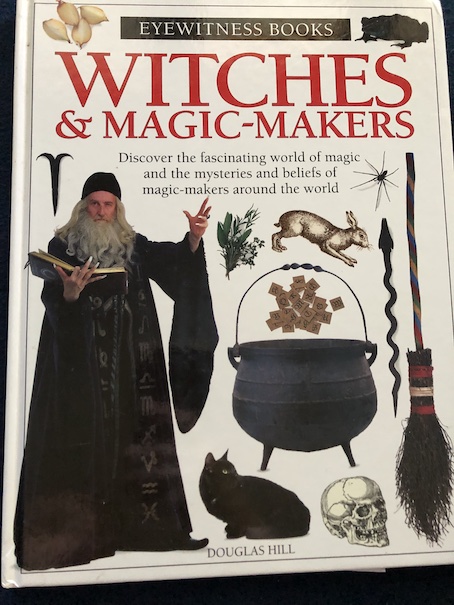
Witches & Magic-Makers by Douglas Hill, 1997.
I always liked the children’s nonfiction Eyewitness Books because of their fascinating historical details and, especially, their pictures. I have to admit that I used this particular book for a college essay about witchcraft trials because, not only did it provide a good beginning overview on the topic but because, for some reason, books intended for adults tend to skimp on or forego pictures entirely. That always bothers me because there are so many things that can be explained better with a picture than a wordy description.
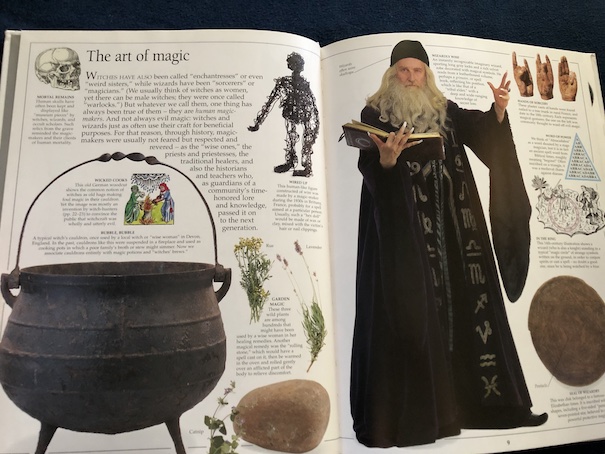
This book is about the history and legends of witches, wizards, and folk magic around the world. The concept that certain people have an ability to use magic for good or evil is an ancient one, found all over the world. The images we have of the sort of people who can use magic come from a variety of sources, from ancient folklore and legend to modern books and movies.
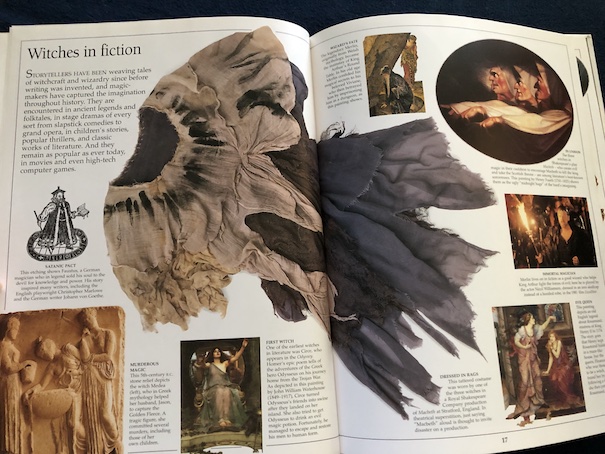
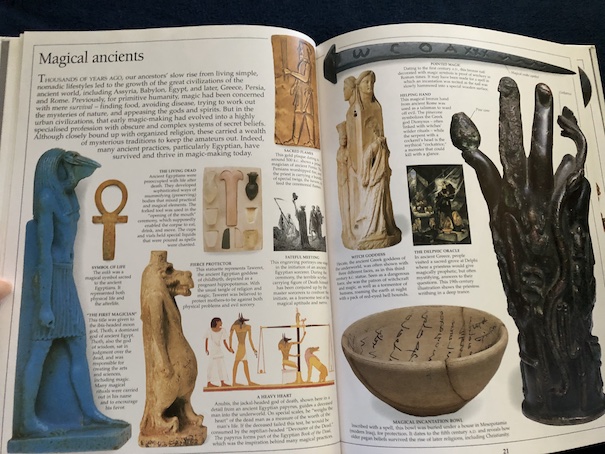
Real-life people who claimed to have the ability to practice magic or were suspected of doing it were very different from the fictional stories. From ancient times, people who were believed to have magical powers were both revered and feared. Ordinary people wanted the power of magic when they thought it could protect them from harm, heal their illnesses, or tell them important things about the future, but they were also afraid of the harm someone with magical abilities might do to them.
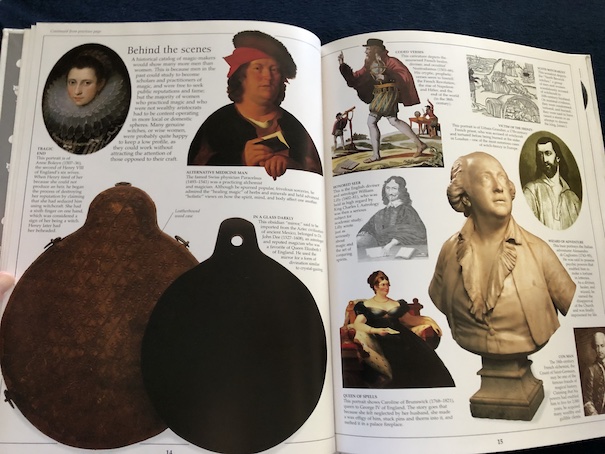
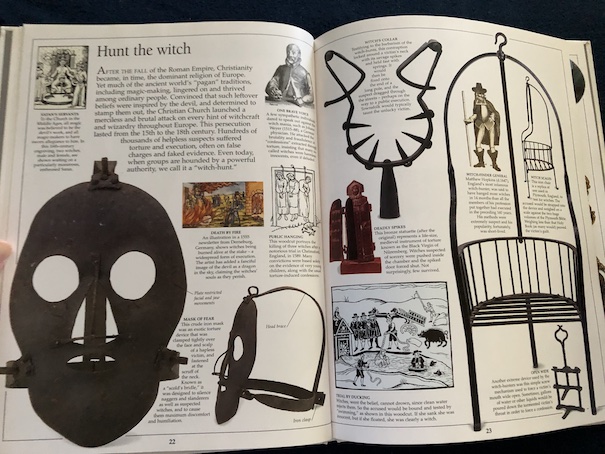
When witches were feared to be evil and harmful, they could be arrested, imprisoned, put on trial, tortured, and even executed. The book explains about witchcraft trials, including a section on the famous Salem witchcraft trial.
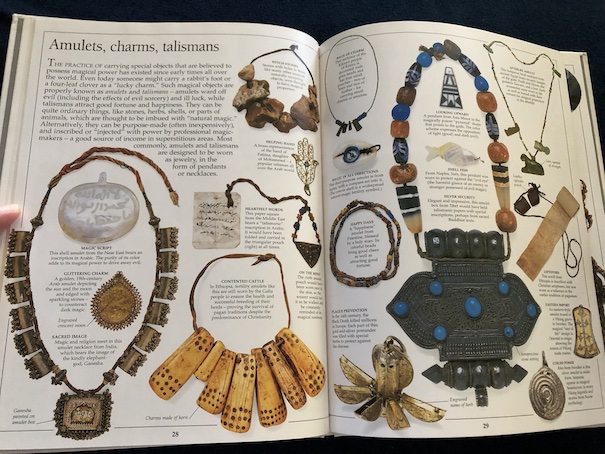
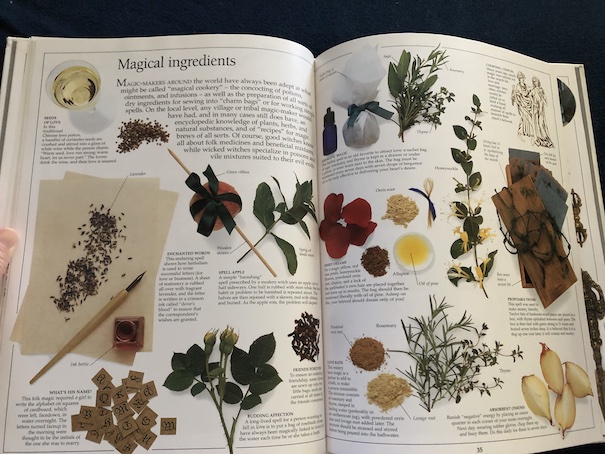
I particularly liked the pages in the book that explain specific things that witches and other magic-makers are believed to do and that show the objects and ingredients they use to conduct their spells. There is a page that shows magical amulets of all kinds, which are supposed to bring good luck or protection to their wearers. I noticed that some of these cross over into religion because they are specifically religious jewelry. It might be a matter of belief whether their effects would count under “magic” or the “power of the divine”, but I’ve always thought of magic and divine power as being separate. The linking quality here seems to be about physical objects that are believed to have a power that their owners wouldn’t have without them.
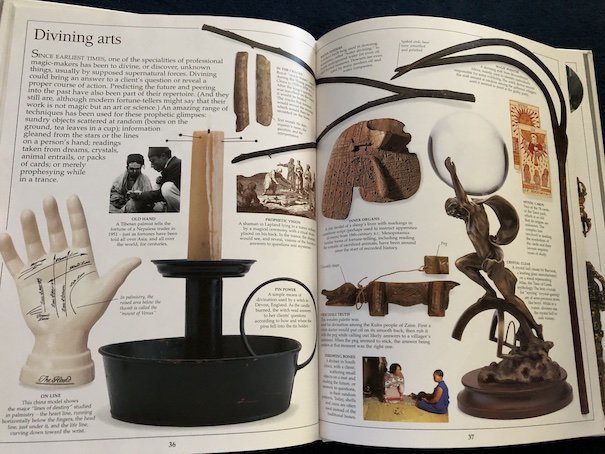
There are also sections about how people would use magic to try to tell the future and about the types of ingredients included in magic potions. (Actual results not guaranteed. I find it interesting, but I’m a skeptic.)
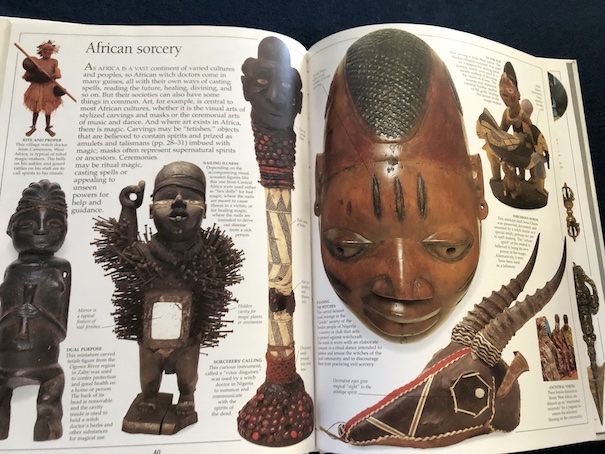
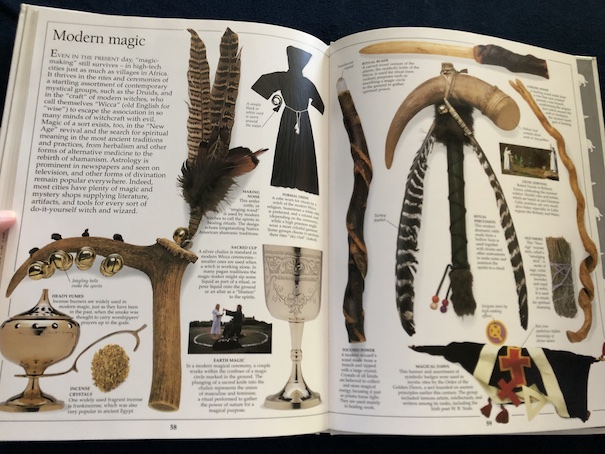
Of course, concepts like these vary around the world. Even when different societies share a belief that some people have the ability to use magic to do things like heal people or tell the future, they have different ideas about how that can be accomplished. The book has separate sections devoted to explaining the concepts of magic in different parts of the world, like Africa, India, Southeast Asia, and Latin America. The final section in the book explains modern beliefs about New Age magic and Wicca.
The book is available to borrow and read for free online through Internet Archive (multiple copies, including one in Chinese).
My Reaction
I already explained at the beginning about how much I like the Eyewitness Books and how I’ve used them before. I really think this series is fascinating and informative for adults as well as kids.
It occurred to me that this particular book is probably about the most potentially controversial book in the series, at least the most potentially controversial one I’ve ever covered. However, I’m not too concerned about it because this isn’t a how-to book about witchcraft. It’s more about history and folklore. I find folklore, history, and culture interesting, but I don’t actually believe in all of the things this book describes as magic.
I did once have an extremely brief foray into magic when I was about 10 years old, which I explained when I covered The Witches of Hopper Street, but I’m a person who comes with limits, which is basically the point of that particular story. I’m still not sure what book I read that time, but whatever it was, it had requirements that I realized I would never want to even try to meet. Let’s just say that people who feel like I do about animal entrails are probably not cut out to be witches, at least not the traditional kind. Since then, my interest in witchcraft has been limited to history and folklore, not actual practice.
As far as Wicca goes, I don’t know too much about actual practice, but for those curious about how it evolved, I recommend this documentary (not child-appropriate) on YouTube about the founder, Gerald Gardner. I love a fun eccentric, and as someone who grew up watching Disney’s Bedknobs and Broomsticks, I have to say that, if you’re going to try to curse someone with magic, I think Hitler is a justifiable target.

