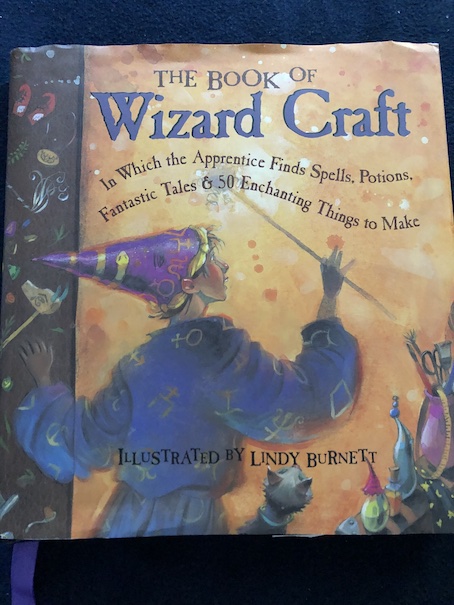
The Book of Wizard Craft by Janice Eaton Kilby, Deborah Morgenthal, and Terry Taylor, 2001.
One of the things I thought was interesting about this book was that it was published at the height of the popularity of Harry Potter, and many of the things in this book are clearly meant to appeal to Harry Potter fans, referencing activities and pieces of folklore included in the Harry Potter books. My mother gave this to me when it was new because I liked the Harry Potter books, and because my birthday is close to Halloween, she thought I could use some of the ideas in the book for one of my Halloween birthday parties.
The book is divided into chapters focusing on different types of crafts (the “craft” part of the title literally refers to arts and crafts, not “witchcraft”, although there’s a play on words there), activities, decorations, and recipes. Some of these could fall under more than one category. Aside from the crafts and activities, each chapter also has sections of folklore about magic, wizards and witches, supernatural and mythological creatures, and superstitions. The information about folklore and superstition don’t always directly relate to the main subject of the chapter.
Chapters in the Book:
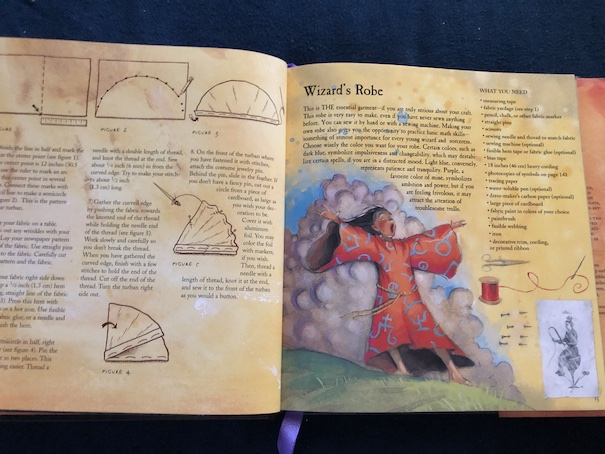
Wizard Regalia – This chapter is about how to make pieces for wizard-themed costumes, including hats, robes, wands, and cloaks. I thought the instructions for making a turban were interesting because wizards are typically known for wearing pointy hats. I think it was included because Professor Quirrell in Harry Potter wore a turban. There are also instructions for making an hourglass pendant, like Hermione’s time-turner. Good for dressing up for Halloween! This chapter also includes folklore about famous wizards and their animals and poltergeists.
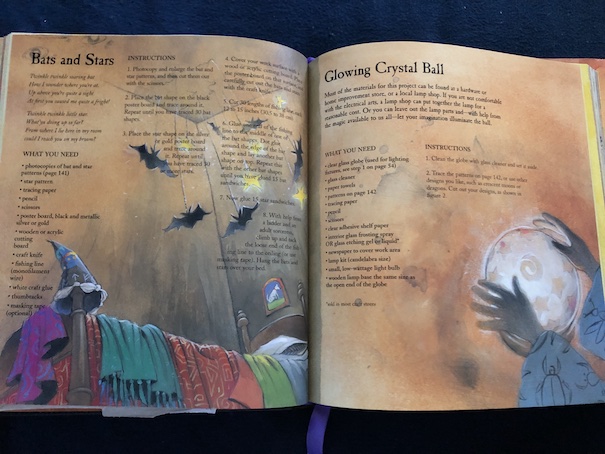
The Decorative Arts – This chapter is about how to make wizard-themed room decorations that could also make good decorations for a Halloween party. The decorations include a magic carpet, a magic mirror, a crystal ball, and bats and stars. The folklore for this chapter includes explanations about the hand of glory (not as another craft project, thankfully), screaming skulls, and headless ghosts. (I kind of wish that the headless ghosts were included in the costume chapter because that is a fun kind of costume to make, but then again, it’s not a wizard costume, so it wouldn’t really count.)
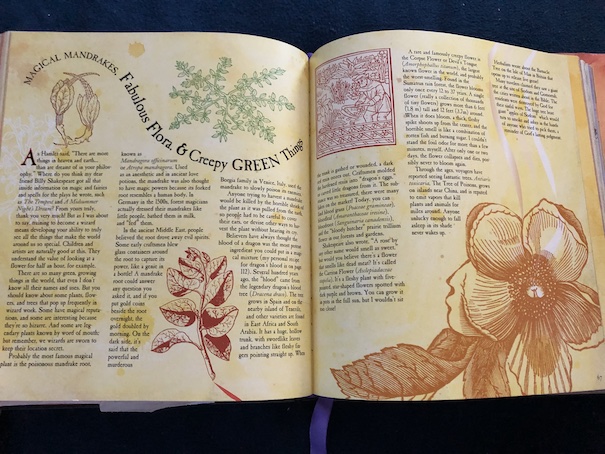
The Art of Horticulture – This chapter is all about things to do with plants. There are instructions for making a container garden and a terrarium with carnivorous plants and for planting a fairy circle with flowers (fairy rings that occur naturally are fungi). There are also instructions for carving “Shrunken Mandrake Heads” out of apples. I’ve seen that Halloween craft before, just called “shrunken heads.” The folklore includes additional information about plants and also information about fairies and giant spiders and snails.
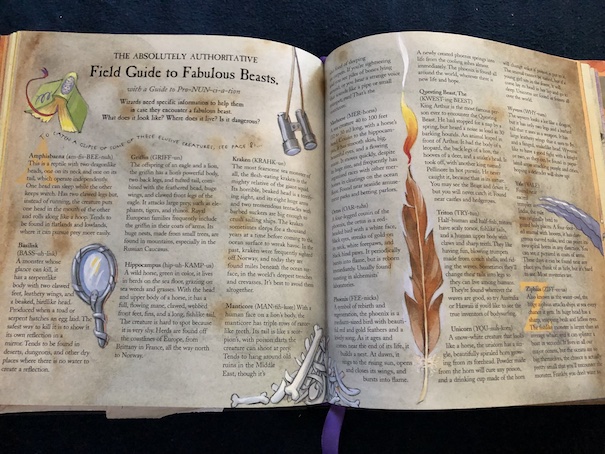
The Art of Animal Husbandry – This chapter contains a field guide to mythological creatures and also apothecary activities. I thought at first that the things an apothecary might make would have gone better in the plant section, but their ingredients supposedly come from animals. The activities are to make things like narwhal bubbles, unicorn horns, and dragon scales, which are supposed to be used in making other things, although later recipes in the book don’t use them. It’s just for play. The folklore in this chapter includes superstitions about animals.
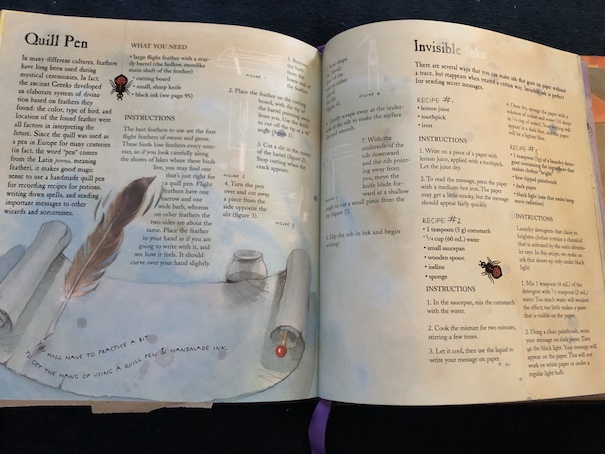
The Book Arts – This chapter is for all things related to writing. There are instructions for making your own journal and scroll, quill pen, and black ink and invisible ink. The folklore includes information about the Druids, King Arthur, and pharaoh’s curses.
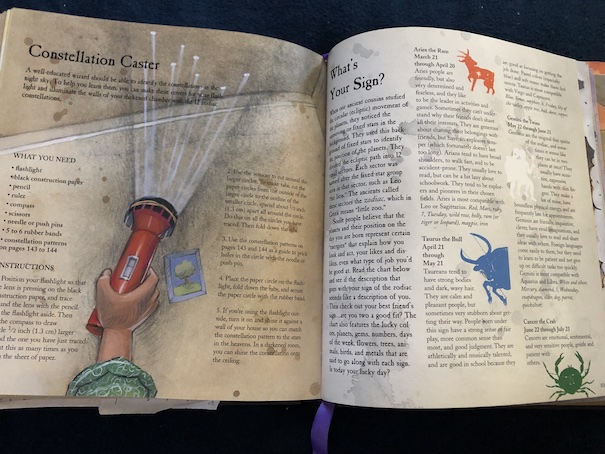
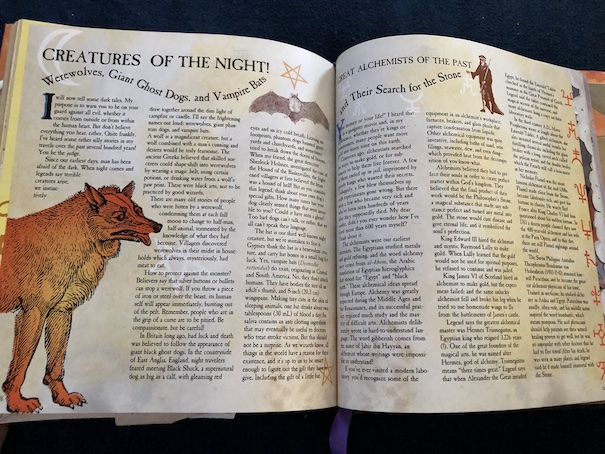
The Art of Astronomy – This chapter is about constellations and astrological signs. It shows you how to make flashlight covers so you can shine constellations on your ceiling. There is also a folklore section about creatures like werewolves, vampires, and ghost dogs.
The Art of Alchemy – This is the chemistry chapter of the book. There is a “magic potion cook book” of non-edible recipes for things like fake blood, slime, quicksand, and color-changing water. The folklore section of this chapter explains who alchemists were and about their search for the philosopher’s stone, the protected object of the first Harry Potter book.
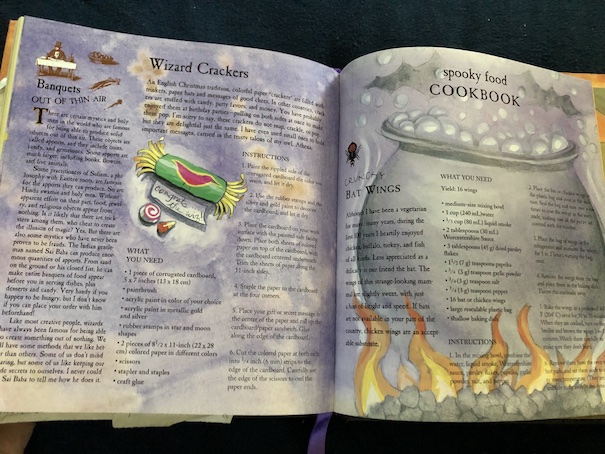
The Art of Amusement – This is the party-planning section of the book. There are more decorations in this section and instructions for making crackers of the sort that contain small party favors. There is also a cookbook of edible recipes that would make good party food for a Halloween party, like bat wings (really chicken wings), petrified tree cookies, and crystal candy. The folklore/activities of this chapter are about methods of fortune-telling, including reading palms and tea leaves. (Personally, I thought some of the decorations would have been better in the chapter about decorations, and I would have liked to see more party games in this chapter. I think some of the games that I included on my Halloween Ideas site would be good.)
The book is available to borrow and read for free online through Internet Archive (multiple copies).

