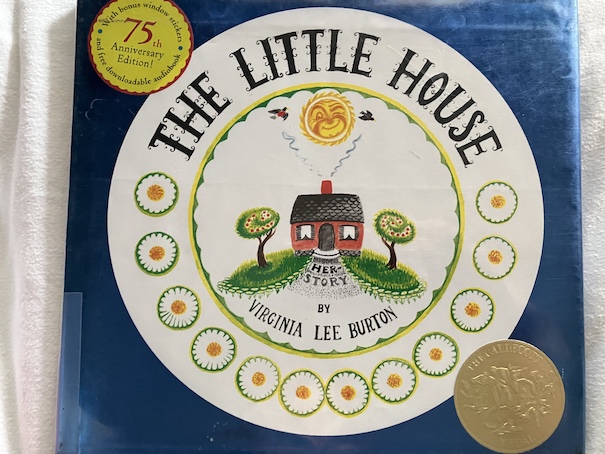
The Little House by Virginia Lee Burton, 1942.
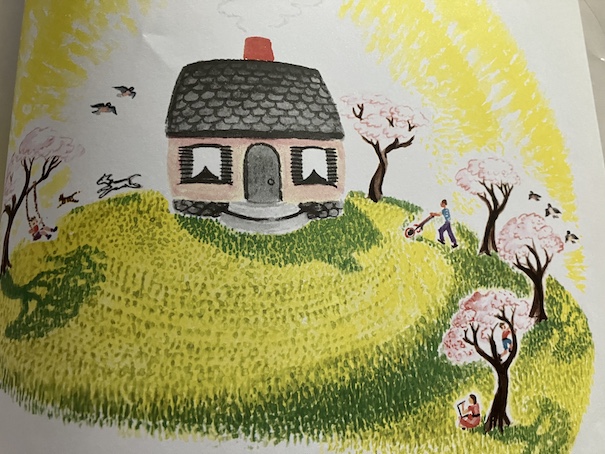
A family builds a strong little house in the countryside, dreaming of their descendants living in her. The little house is happy in the countryside, watching the changing seasons as the years come and go.
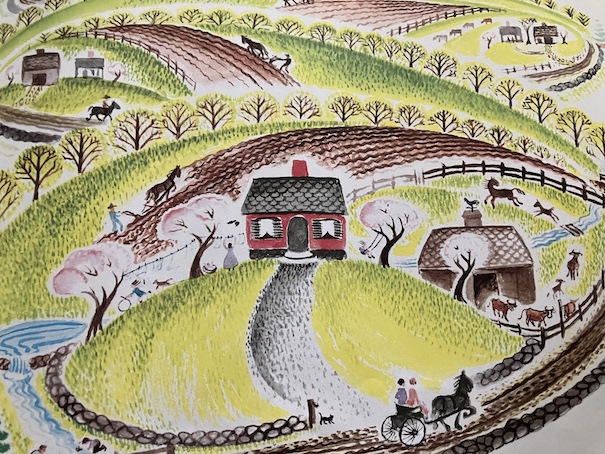
Over time, things begin to change, though. Other farms are built around the little house, but then, a big road is built, and the little farms gradually give way to suburbs.
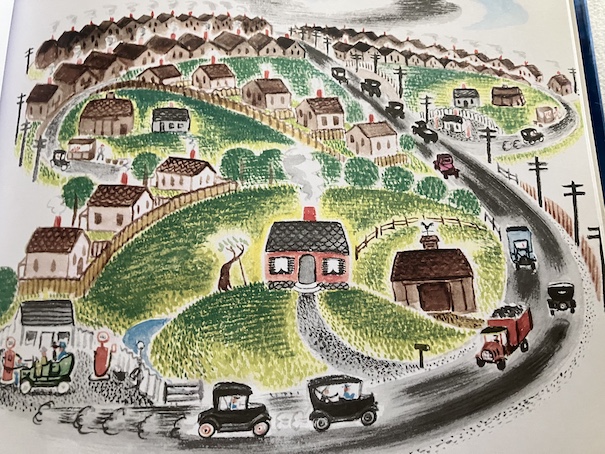
Eventually, the houses around the little house turn into bigger houses and apartment buildings. As time goes on, the little house is no longer in the countryside or even the edge of the city, but it’s actually engulfed by the city itself.
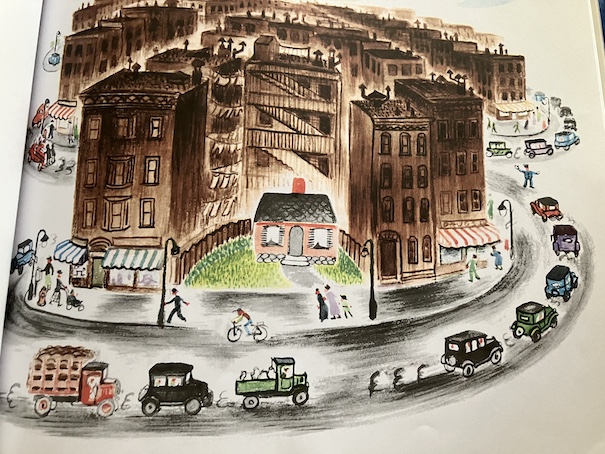
The city becomes more and more crowded with taller and taller apartment buildings, more roads and trains, and crowds of peoples. The little house stands empty and becomes run-down. She can hardly see the sky and can’t feel the changing of the seasons the way she used to because there isn’t much nature around her to sense changing.
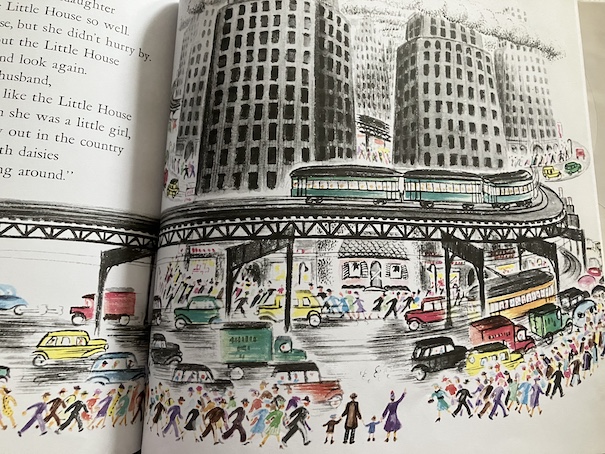
Fortunately, the little house is rescued from this terrible situation. One day, the great-great-granddaughter of the man who built the house spots the little house in the city and recognizes it as the one her family owned. When she and her husband look into it, they verify that this is her family’s old house, and they decide that they want to move it to the countryside, like when her family lived there.
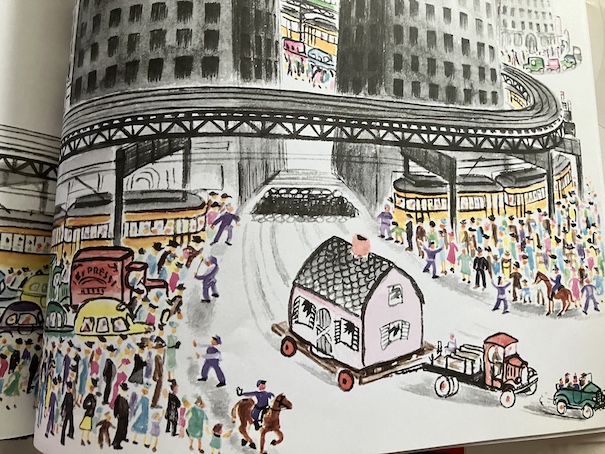
Because the little house was built so strongly, they’re able to move it intact to the countryside. The little house is happy to once again live in the countryside with the family who always loved her!
The book is available to borrow and read for free online through Internet Archive.
My Reaction
This vintage picture book is about the nature of change. Growing cities do expand into the countryside around them, so a house that was once outside of the city is gradually touched by and then engulfed by the nearby city as it expands. Readers get the feelings of the house as the world around her changes. At first, she’s a little intrigued by the city and isn’t sure if she likes it or not, but as the city becomes overcrowded, the house is neglected, and she can no longer sense the seasons, she decides that she doesn’t like it. When things change for the house again, she is relieved.
I remember this story from when I was a kid, and I remember feeling sad when the poor house was run-down and neglected in the city, surrounded by the towering apartment buildings. However, the book has a good ending. Houses can be moved, and the family that once owned this house remembers it and rescues it from the city, moving it to the countryside, where they all feel more at home. Things change, but sometimes, they change for the better. The house can’t move itself when it isn’t happy, but the family gives it the help and attention it needs.
When I reread this book as an adult, it suddenly occurred to me that this book was originally published during WWII, when the world was changing in some very scary ways. I think a book like this might have been reassuring to children of that time. Life is full of changes, but sometimes, things can change for the better again.
 Jestress's Forgotten Books and Stories