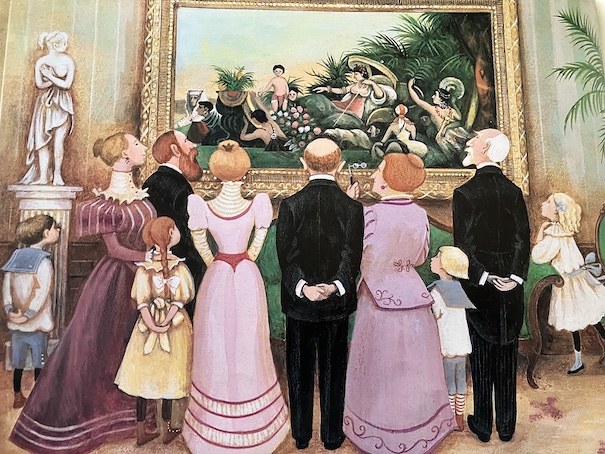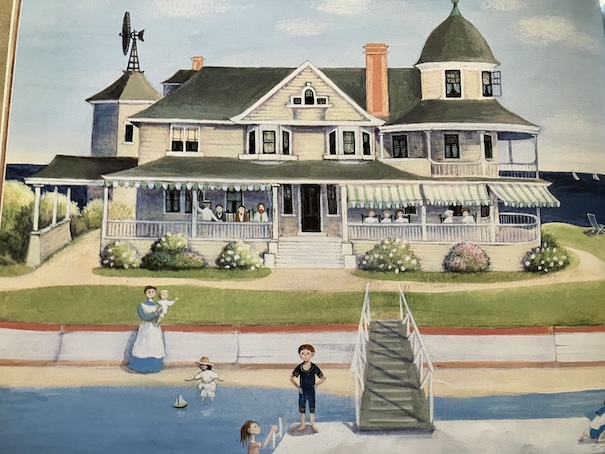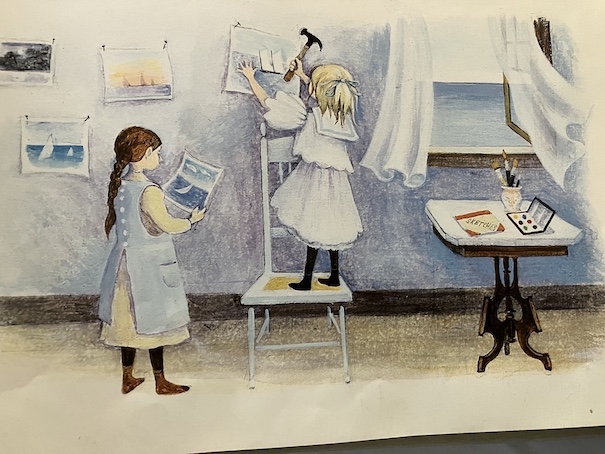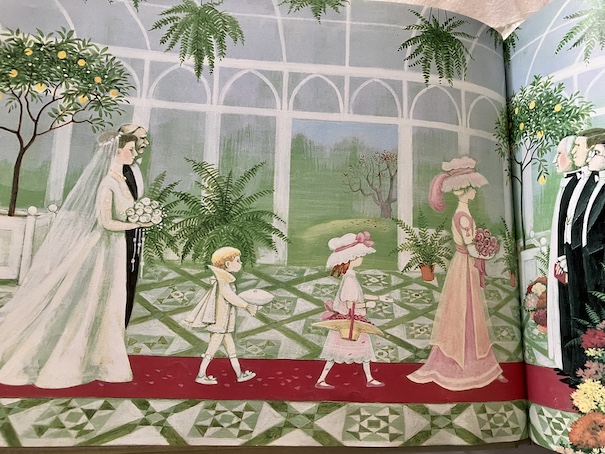
In the Garden with Dr. Carver

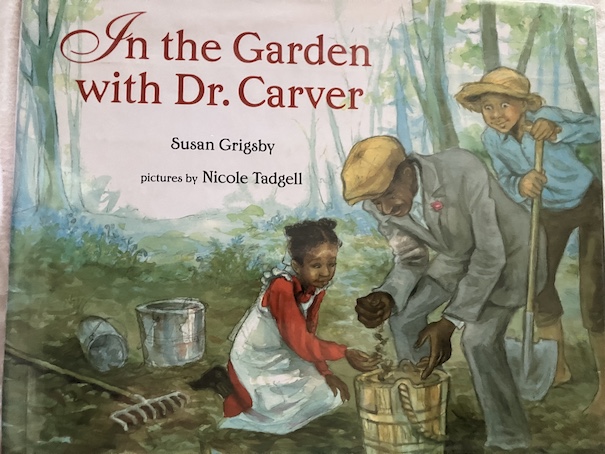
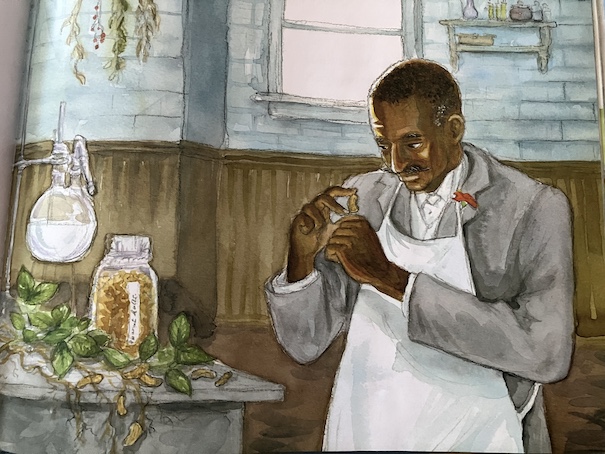
This picture book is about George Washington Carver, as told by a young girl named Sally.

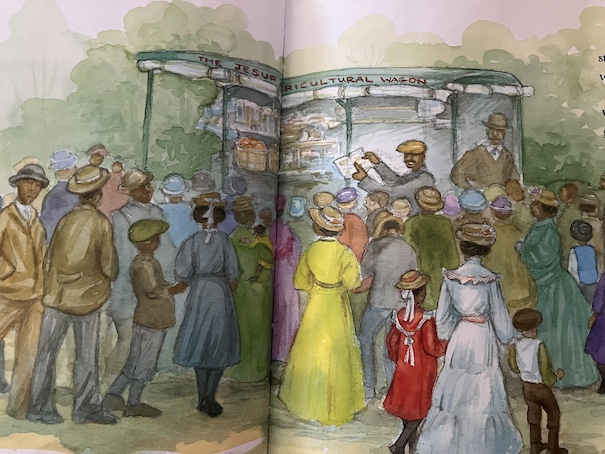
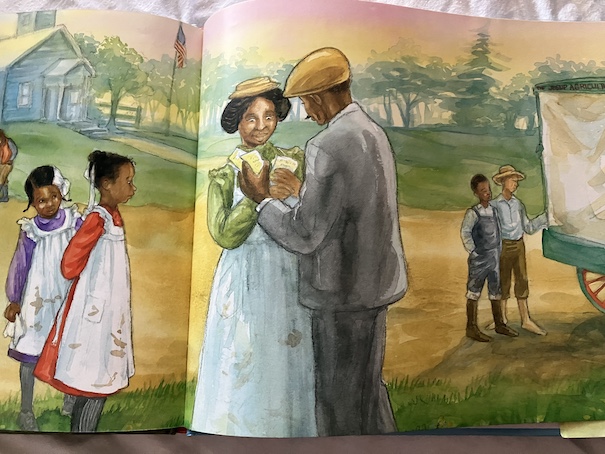
The first time Sally sees him is when he’s traveling with his wagon, pulled by a mule. Sally knows that Dr. Carver is a famous plant scientist from Tuskagee and that he uses his wagon as a kind of mobile school. It contains seeds, plants, and gardening tools, and people come to Dr. Carver for advice about growing plants. The nutrients in the soil of this area have been depleted by growing cotton, and Dr. Carver has been advising them about how to restore the soil. He also advises them about new ways to use common crops.
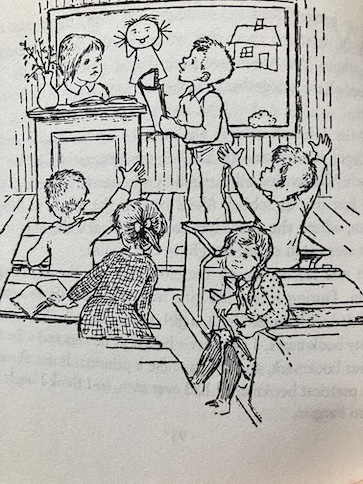
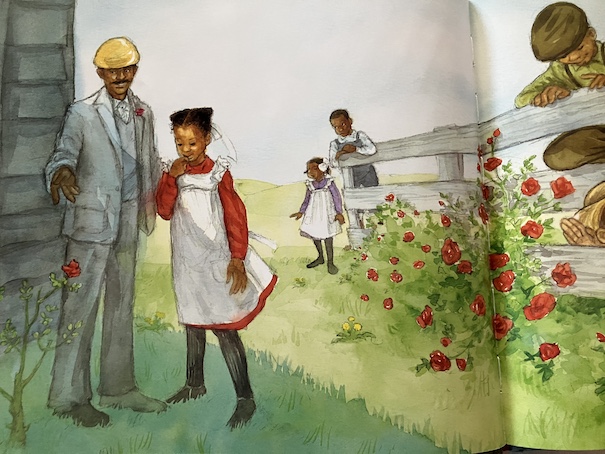
Dr. Carver visits Sally’s school to help the children with their garden. He teaches them how to use observation to notice the conditions that benefits plants and figure out how to help plants that aren’t doing well. When a boy is about to kill a spider, Dr. Carver stops him, pointing out that the spider helps their garden by eating bugs that are pests for the plants. He teaches the children that everything is part of an ecosystem (although he doesn’t use that word) and that they need to observe and understand the roles each plant and creature has in the ecosystem before deciding to eliminate or change anything. The reason why they remove weeds like dandelions is that their presence doesn’t help the other plants, and they take resources the other plants need. Although, he also shows them that dandelions are edible, so they are not wasted.

Dr. Carver teaches the children about restoring the nutrients in depleted soil using fertilizer and compost made from decaying plant matter and organic materials that most people simply throw away. Dr. Carver teaches them not to waste anything, helping them to make a scarecrow and markers for their plants from scraps of wood and other things people have thrown away.

Eventually, Dr. Carver has to return to Tuskagee, but the lessons he teaches the children stay with them.

There is a section at the back of the book that explains that Sally and her school are fictional, but George Washington Carver was a real person and the story is based around his life and writings. He was born as a slave in Missouri about a year before the abolition of slavery, so he grew up as a free person. He began learning about agriculture and botany from an early age, and as he grew older, he sought out schools that would help him further his knowledge and share it with others. He taught at Iowa State College before Booker T. Washington (see More Than Anything Else for a picture book about his youth) recruited him to be the head of Tuskagee‘s Department of Agriculture in 1896. He also believed in bringing education to people who couldn’t come to a college to learn by sending out bulletins about farming techniques and booklets for teachers in lower grades to use in their classrooms. His mobile school in a wagon was another form of outreach that has been imitated in other places.

I enjoy books about historical figures, and I found this story about George Washington Carver gentle and fascinating. There are some parts that I think I appreciate more as an adult than I would have as a child, making this a book that I think would appeal to readers across different ages and something that parents and teachers would enjoy sharing with children.

Although Sally wasn’t a real person, the lessons she and her classmates receive from George Washington Carver help to illustrate Carver’s real-life work and the lessons that he shared with people of his own time. I appreciated the level of detail the story provided about how people can use observational skills to diagnose and fix possible issues with ailing plants, the importance of understanding that plants exist as part of an ecosystem and that gardeners and farmers need to understand how all parts of the ecosystem interact, and how nutrients can be restored to depleted soil. I can’t remember whether I had heard before about how cotton farming depleted soil nutrients, but I appreciated how that explanation helped explain a real problem facing farmers of Carver’s time and how Carver was helping them to solve it.
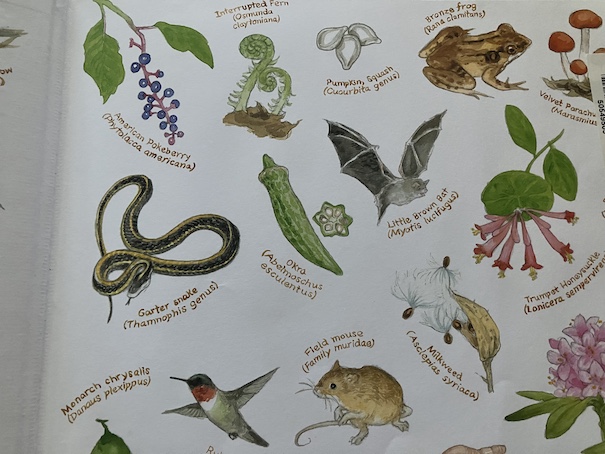
I think this book would appeal to fans of cottagecore as well as people interested in American history. The illustrations are beautiful, and even the inner covers are lovely, with small, labeled pictures of plants and creatures. As the book explains, George Washington Carver himself used drawings of plants and creatures in his work, and in the story, he teaches the children to make their own drawings to help themselves study details of the natural world.

Emma’s Afternoon

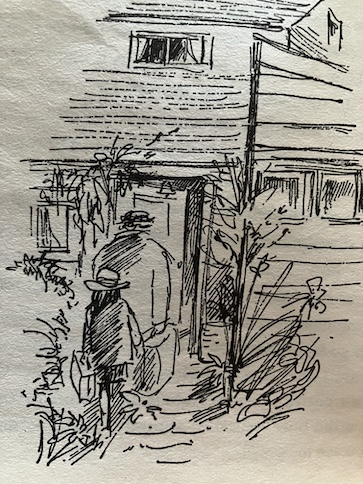
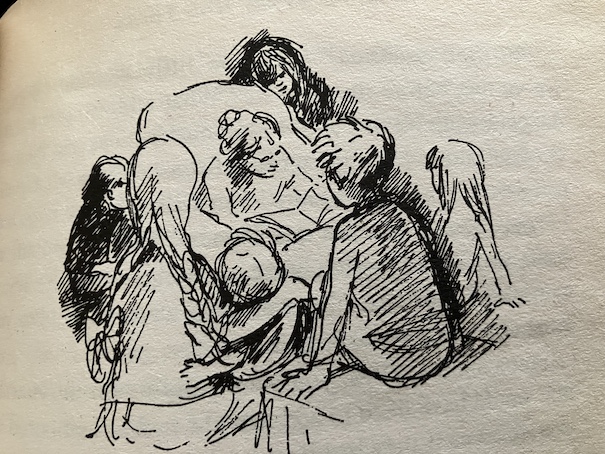
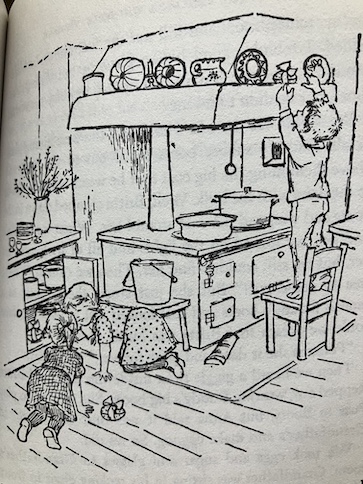
Six-year-old Emma has to stay home from school during the summer term because she has measles. By the time her quarantine period is over, Emma is feeling better but is bored and restless, eager to get back to school. However, the doctor thinks she should take an extra week off school to recover further.

As Emma continues to sit at home, she knows the other children are back at school, and she can’t help but think about all the things she’s probably missing and wonder if anybody there misses her. Her mother urges her to find something to do so she’ll be happier and the time will pass faster, but Emma is in a disappointed mood and doesn’t feel like trying to make herself happy. She resists all of her mother’s efforts to cheer her up or get her involved in some activity.

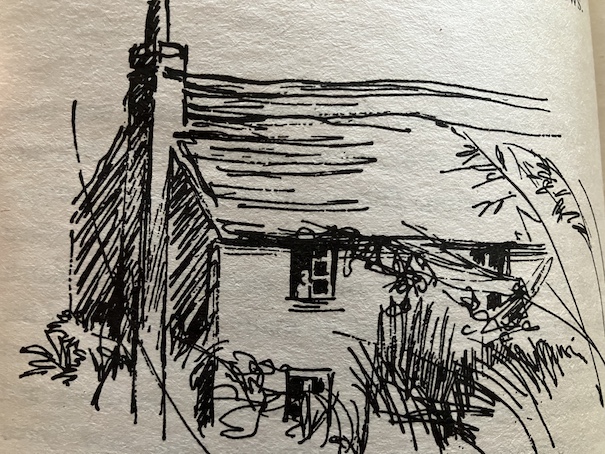
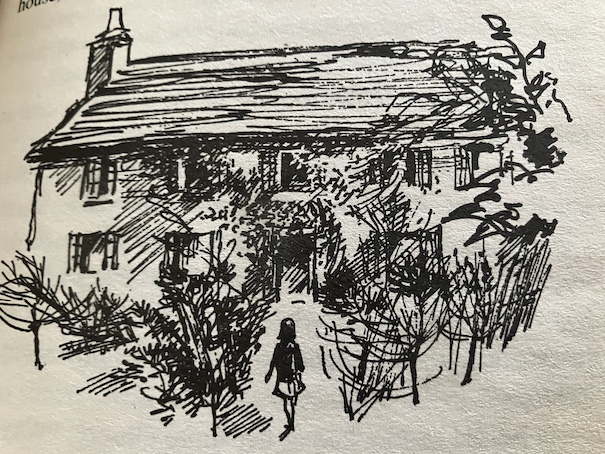
Finally, her mother suggests that she could go to Streamcross, a little area with stepping stones across a stream, where Emma has been with her father before. Emma loves the spot, but she’s never been there alone before. Now, her mother thinks she’s old enough to go alone. Emma takes along her doll, Annabel, and some biscuits (cookies, because this is a British book).

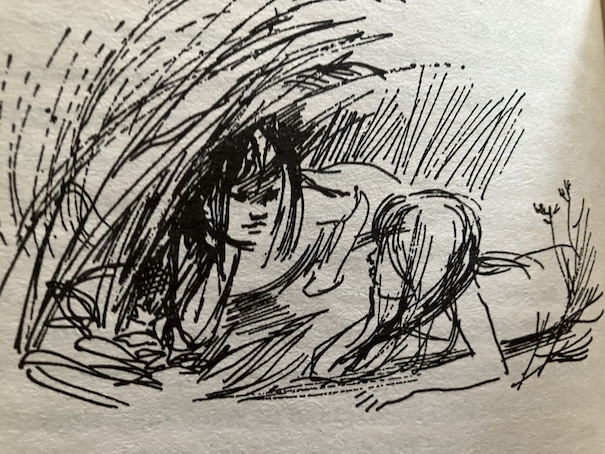
Along the way, Emma has adventures. She has to rescue Annabel from a farm dog. She picks wildflowers. She falls when trying to get a look at a bird’s nest, and she gets stung by nettles. When she tries to clean her doll and the doll’s dress in the stream, she ruins the dress and almost loses Annabel in the stream!

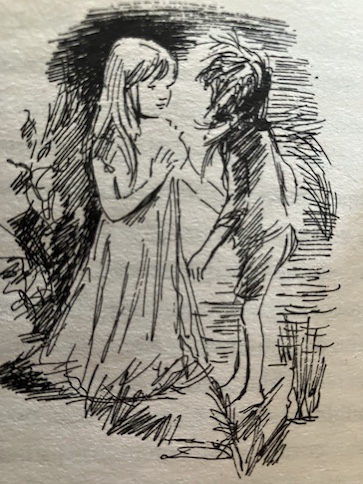
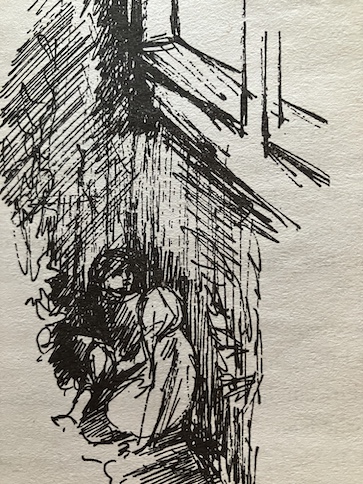
Then, Emma meets up with, Billy, a boy from school. She hides from him because of the state she and Annabel are in, but he spots her because she’s left a few things behind, and Billy plays detective, following the clues. Fortunately, Billy doesn’t laugh at her or her doll. The two of them discover that they share a love for this special spot in the stream, and they trade secrets about it. Emma shows Billy a bird nest she found, and he shows her a hidden spring. Then, he helps Emma to get home, past the farm dog, and stays to tea at Emma’s house.

The book is available to borrow and read for free online through Internet Archive. The American title for this book was Betsy’s Afternoon. The only part of the story that was really changed for the American version was the name of the little girl.

At the end of the story, Emma looks back on the afternoon as being lovely. Not all of it was lovely, like her frightening encounter with the dog or ruining Annabel’s dress and almost losing her completely. During the course of the afternoon, Emma falls down, gets muddy, and is stung by nettles. Still, even when things go wrong, Emma enjoys having an independent adventure, and when she has a friend to share it with her, it gets even better. She also learns that people did miss her at school.

Emma’s adventures are relatively low-key, slice-of-life adventures, but they’re the kind of small adventures that are meaningful, especially to a young child. None of the problems she encounters are very serious, and Emma doesn’t really have any lasting consequences from them, except for ruining her doll’s dress. The dog part was a little scary at first, but Emma isn’t bitten, and Billy later explains that he knows the dog, and it never leaves its farm, so they’re in no danger. Billy is a nice friend, and the two of them appreciate the natural beauties of their favorite spot. In the end, Emma’s adventures and her meeting with a friend who feels the way she does about Streamcross are just what she needs to cheer herself up!

I enjoyed the way the author connected with Emma’s feelings and thought processes. Readers really see through the eyes of a young child – her thoughts, her frustrations, the way she solves problems, and her joy at small discoveries and accomplishments. This is a short chapter book that would be appropriate for children in early elementary school but can still be pleasing to adults.

The Whispering Cloth

Mai and her family are Hmong refugees from Laos, living in the refugee camp of Ban Vinai in Thailand. Some of her relatives have gone to the United States, but Mai and her grandmother are still waiting in the refugee camp. Mai’s parents are dead, and Mai doesn’t really remember her family’s life in Laos. Almost as far back as she can remember, she’s always lived in the refugee camp. She only has vague memories of her parents’ deaths and how she and her grandmother fled to the refugee camp.

Mai’s grandmother teaches her how to do embroidery, and she begins helping her grandmother make pa’ndau, a kind of tapestry that tells a story. Together, she and her grandmother pa’ndau to sell to traders for money. They hope to use the money to get out of the refugee camp and join their relatives in the United States.

Their pa’ndau tapestries have beautiful floral borders and images that tell a story. Mai asks her grandmother if she can do one all by herself and if he grandmother will tell her a story she could use. Her grandmother says that she’ll be ready to do a pa’ndau of her own when she has a story of her own to tell.

As Mai thinks about how much she misses her parents, she realizes that she does have a story to tell in her own pa’ndau. She begins embroidering a pa’ndau that tells the story of her parents’ deaths and how her grandmother carried her away in a basket, fleeing as soldiers shot at them. She embroiders their arrival at the refugee camp, and the people and things she sees there.

When she asks her grandmother how much money they can get for her pa’ndau, she says that they cannot sell it because it isn’t finished yet. At first, Mai thinks that there isn’t anything more to tell because they’re still living in the camp, and she hasn’t experienced life beyond it. Then, she realizes that she can embroider the life she hopes to have when they finally join her cousins, based on the things they’ve told her in their letters.

The book is available to borrow and read for free online through Internet Archive.

The foreword to the story explains that the Hmong people of Laos were driven out by the Lao Communist government, and many of them were killed before they had a chance to leave. The government drove them out because they sided with the Americans fighting in Laos and Vietnam. Many people, like Mai’s family, found refuge in refugee camps like Ban Vinai, waiting until they could find another country willing to take them on a permanent basis. However, at the time this story was published in 1995, the Ban Vinai camp was set to close. The refugees there were set to be either transferred to different refugee camps or sent back to Laos, to face whatever the government there had in store for them. Understandably, many of them didn’t want to be sent back to the country they had escaped from. This article explains more about the generation of children who, like Mai, grew up in the refugee camp, disconnected from the lives their parents knew in Laos, and with ambitions to go to other places, like the United States, to start new lives.

Although this is a picture book, there are violent themes of war in the story, so I wouldn’t recommend it for very young children. The pictures in the book are beautiful, an unusual combination of paintings and actual embroidery. The artist who did the embroidery, bringing Mai’s tapestry to life, was also a refugee in camps in Thailand before coming to the United States in 1992.

I thought this was an interesting way to introduce readers to part of the history of the Hmong people and the fallout of the Vietnam War through a traditional Hmong artform/craft that tells stories in a unique way.

The Travels of Ching

A dollmaker in China makes a little doll named Ching. Ching is a high-quality, handmade doll, and the dollmaker sells him to a toy shop.

Ching sits in the window of the toy shop for a long time, waiting for someone who wants him. There is a little girl who sees him in the shop, and she wants him badly, but all the toys in the shop are expensive, and she can’t afford him.

One day, a wealthy tea merchant buys Ching, but he doesn’t want Ching himself. He plans to send Ching to someone else overseas. Ching begins a long journey by donkey, boat, and steamship to America. When he gets to America, he travels even further by train, eventually arriving at the apartment of a wealthy girl.

However, the wealthy girl doesn’t really want Ching. She already has many dolls, and she doesn’t find Ching interesting. She is careless with him, and one day, he falls off the balcony of the apartment and lies outside, forgotten.

One day, an old man finds Ching and brings him inside, but he doesn’t really want Ching, either. He gives Ching to his cook, but she doesn’t really want him, so she throws him in the trash, and Ching ends up in a junk yard.

Fortunately, Ching’s story doesn’t end there. A man who works for a Chinese laundry happens to pass the junk yard and spots Ching. Although Ching is dirty from his time outside, the Chinese man recognizes Ching’s quality and is pleased that the junk yard owner is selling him cheaply. The man buys Ching and cleans him up because he knows someone who will really appreciate him.

Thus, Ching is sent on another long journey … back to the person who always wanted him the most.

The book is available to borrow and read for free online through Internet Archive.

This is a vintage children’s book, and the illustrations of the Chinese people have the slits for eyes that are considered stereotypical now. However, there doesn’t seem to be any disrespect meant by the story. The basic theme of the story can be summed up by the saying, “One person’s trash is another person’s treasure.”

Ching travels a great distance from China to the United States, passing through the hands of various people along the way, and at times, he’s actually given or thrown away because the people who have him don’t really want him. There’s nothing wrong with Ching. He was always a high-quality doll, which is how he survived his time outside in the elements. It’s just that the people who have him don’t really appreciate him. Fortunately, there are people who recognize his quality, and there is one person who definitely wants him. It’s a happy ending when Ching finds his way back to her. All he really needed was for someone to want him, and in the end, he is happy to be with the person who does want him.

Eleanor

This picture book tells the story of Eleanor Roosevelt’s early life. Eleanor Roosevelt (full name Anna Eleanor Roosevelt) was the niece of Theodore Roosevelt (called Uncle Ted in the book), and later, in life, the wife of Franklin Delano Roosevelt (a distant cousin) and First Lady of the United States. This book is about her childhood, so it doesn’t explain about her husband or marriage until the Afterword at the end.

Eleanor’s home life wasn’t particularly happy. She was a disappointment to her mother in a number of ways. Her mother had hoped for a boy, and she didn’t think Eleanor was a pretty baby. Her mother often called her “Granny” as a nickname because she was such a serious child and seemed rather old-fashioned looking, and she reminded her mother of an old woman. When Eleanor’s younger brothers were born, Eleanor often felt left out when her mother spent time with them.

Eleanor’s father loved her and enjoyed playing with her and spending time with her, but she didn’t get to see him often as she was growing up. Her father, Theodore Roosevelt’s brother, Elliot Roosevelt, was a traveler and socialite and later became estranged from his family. Still, although he wasn’t a particularly reliable person and wasn’t present much, Eleanor was very attached to him and sometimes felt like he was the only one who really loved her.

Much of Eleanor’s early life was spent with her nanny, who spoke to her in French, so she mastered the language at an early age. Eleanor was very shy, so she didn’t spend much time with other children. She did spend some time with relatives, too. Sometimes, she helped them with charitable projects, giving her a sense of caring for the less fortunate.

When Eleanor was eight years old, her mother died of diphtheria, and she and her little brothers went to live with her grandmother and the aunts and uncles who also lived with her. Her father had been living apart from the family at this time, but he returned after his wife’s death. After that, he would visit Eleanor sometimes and take her for outings. However, he was sometimes neglectful. The book explains that he died in a fall when Eleanor was nine years old.

Life with her grandmother was difficult for Eleanor because her grandmother made her wear old-fashioned clothes, she had a strict governess, and her aunts and uncles seldom paid attention to her because they were busy with their own work and projects. Other children didn’t think much of Eleanor because she was shy and wore old clothes. Sometimes, her cousin Corinny would join her for dinner, but Corinny never liked it because the house was so grim and silent.

Eleanor was happier when they would go to her grandmother’s summer house, Oak Terrace. At the summer house, she could play games, daydream, read, and catch tadpoles with her little brother Brudie. Sometimes, she would go out in the rowboat with one of her aunts. There were also times when she visited her Uncle Ted and his family. Sometimes, she would play with her cousin Alice Roosevelt because they were the same age, but Alice teased her dreadfully, and Eleanor often found her a little intimidating. Her relatives encouraged her to be brave and to do things that she found scary, but she often found it difficult to keep up with them and some of their daring stunts.

Eleanor was often considered the “ugly duckling” of the family, but things changed for her when her grandmother decided to send her to boarding school in England. She attended a school called Allenswood, and the headmistress, Mademoiselle Souvestre, became a mentor to her.

Thanks to the lessons in French from her former nanny, Eleanor excelled at boarding school. Because the school had a rule that the girls should only speak French at dinner, Eleanor was the only girl at first who felt comfortable talking, a rare change for her. Eleanor made friends with the other girls at school and was happy there. Mademoiselle Souvestre encouraged Eleanor’s sense of independence, opened her eyes to the world around her, took her along on trips to Europe, and advised her to get clothes made in Paris, ridding her of the clothes her grandmother made her wear. By the time she returned home from boarding school, Eleanor was happier and more confident than she had been before, and she credited Mademoiselle Souvestre for her influence.

The book is available to borrow and read for free online through Internet Archive.

I enjoyed this book for its focus on Eleanor Roosevelt’s childhood. Many books about famous people focus on what they did when the became famous, but I enjoyed seeing her as a shy, awkward child, when it didn’t seem obvious that she would one day be famous. By seeing how she grew up, I feel like I’ve come to understand more about her.

Eleanor Roosevelt came from a wealthy family, but her early life wasn’t very happy. She was deeply affected by her mother’s sense of disappointment in her for not being prettier and by her parents’ troubles and their separation from each other. She was orphaned at a young age, and one of her younger brothers also died not long after their mother. She often felt like she didn’t fit in with her family, and they didn’t seem to understand or appreciate her.

The book explains a little about her father’s estrangement from the family, but it doesn’t go into all the details or some of the dark reasons why. The truth was that he was an alcoholic. His alcoholism was the beginning of his strained family relationships, but then, he had an affair with a servant girl who worked for his wife and fathered a child by her. When that happened, Theodore Roosevelt had him forcibly removed from his family’s home and did his best to keep him away from his children as much as possible, even after his wife’s death. When the book says that Eleanor’s father died in a fall, that was a soft way of explaining it. The truth is that he committed suicide because he was drinking even more heavily after his wife and one of his sons died, and he was depressed about the rest of the family keeping him away from his remaining children.

I thought it was interesting that Eleanor really blossomed at boarding school. She had always been a shy girl, but she was very studious and spoke French, skills which suited boarding school life well. Boarding school encouraged her to spend more time around other girls her age and took her away from her family’s influence, giving her the opportunity to find herself and bond with other people. In particular, the headmistress of the school became her mentor and encouraged her to look at the world in new ways and to become the best version of herself.

Uncle Jed’s Barbershop

Sarah-Jean remembers her grandfather’s brother, Uncle Jed, and how he would travel to people’s houses to cut their hair during the 1920s and 1930s. He’s the only black barber in their area, so he cuts everybody’s hair in the black community. What he really wants is to own his own barbershop, with proper barbers’ chairs and equipment, but times are tough, and helping out his family means delaying his dream shop.

Everybody is poor in their town, so many people think Uncle Jed will never be able to get enough money to open a shop. However, even though things are tough and money is tight, Uncle Jed is willing to help out when he can. When little Sarah Jane develops a serious illness and needs an operation, Uncle Jed gives her father the money they need for her operation, saving her life.

Later, Uncle Jed loses his savings when the bank fails during the Great Depression, so he has to start saving all over again. Even though he has it hard during the Great Depression, Uncle Jed still helps other people, sometimes cutting hair for customers who can’t afford to pay him because they’re even worse off. He takes payment in whatever form they can offer, like garden vegetables or eggs.

Eventually, things improve, and Uncle Jed is able to afford his barbershop, and everybody comes to the opening. He acquired his shop toward the end of his life, so he doesn’t have it for long before his death, but he was still happy because he accomplished his goal and did something people didn’t think he’d be able to accomplish.

The book received the Coretta Scott King Award.

I thought it was a nice story. The ending seemed a little sad, that Uncle Jed didn’t live very long after finally acquiring his shop, but the book has an optimistic tone. Although Uncle Jed accomplished his life goal toward the end of his life, he did get to accomplish it and enjoy it before he died. It’s less important how long he got to enjoy it than the fact that he did enjoy it.

It took a long time for Uncle Jed to accomplish his goal of having his own barbershop, but I think it’s important to note that he had a pretty good life along the way. Even though he lost his savings in a bank failure, he had steady work through the Great Depression, and he was also able to help friends and relatives when they needed it. He had good relationships with his family and neighbors because of his helpfulness and generosity, and everybody shows up to congratulate him when he finally opens his shop.

This story takes place in the South during times of segregation, which enters the story when Sarah Jane is ill and needs to go to the hospital. Although her condition is serious, not only is her family sent to a segregated waiting room, they also have to wait until all the white patients are tended to before the doctor will even see them. The doctor also insists upon payment before performing the operation she desperately needs, the implication being that the doctor will let her die if he doesn’t get paid up front to save her. Before anybody think that this is an exaggeration, that a doctor would refuse to treat a sick child or save her life because of her race, even during the Jim Crow era South, no, it’s not an exaggeration at all. It was routine:

“It’s absolutely incredible how little organized resistance there was,” says Theodore Marmor, emeritus professor of public policy at Yale University and a key health policy adviser during the Johnson administration.

Before the passage of Medicare and Medicaid, Smith says, the healthcare system was tightly segregated. Hospitals in the South complied with Jim Crow laws, excluding blacks from hospitals reserved for whites or providing basement accommodations for them.

“There were a lot of black communities in the South that had basically no access to hospitals,” says Smith. “Most of the black births in Mississippi were at home. The infant and maternal mortality rates were hugely different for blacks and whites because of that.”

The surgeon who developed the practice of blood storage and blood transfusions, Charles Drew, was also an African American who lived in the early to mid-20th century. He died relatively young of serious injuries from a car accident in North Carolina. There was a popular rumor, which was repeated on an episode of the tv show MASH, that he would have survived if he hadn’t been refused treatment at the hospital because he was African American. The reality is that doctors did try to save him, but his injuries were simply too serious for him to be saved. However, the rumor developed and persisted because the reality also is that hospitals of this time were known to turn away black patients. They had done it to others, so it was completely credible that they could have also done that to Dr. Charles Drew, even if they didn’t do it in this particular case. The fact that this rumor was completely believable and consistent with the practices of Jim Crow hospitals is an indication of their general behavior and conditions. With that in mind, it is also believable and credible that the doctor in the story would have refused to see a seriously ill black child until all white patients were seen and also that he would have refused her life-saving treatment until being paid.

However, rather than lamenting about the prejudices and inequities of this time period, the story focuses on Uncle Jed as one of the good people. The doctor and hospital in the story are not only prejudiced, but their behavior also contrasts with Uncle Jed, who is willing to put off payment or accept lesser or alternate forms of payment for people who need his services but are too poor to pay. The emphasis of the story isn’t on how bad other people or circumstances were so much as how Uncle Jed made things better for everyone as best he could. It meant some sacrifices on his part, putting off his own goals and dreams, but Uncle Jed enjoyed a good life and good relationships with other people along the way and accomplished his goals in the end.

I also enjoyed the pictures in this story, showing the old-fashioned country and small town life in the early 20th century. The illustrator also did the illustrations for Aunt Flossie’s Hats (And Crab Cakes Later).

Mooncakes

A young girl is excited because tonight is special, and she will be allowed to stay up late and eat mooncakes with her parents for the Chinese Moon Festival. They decorate with paper lanterns, and they spend the evening looking at the night sky from their backyard.

Her parents, called Mama and Baba, tell her stories from Chinese legends. The book includes the stories they tell, like the story of Chang-E (who was a woman who escaped from her cruel husband with the elixir of life and now lives in the Jade Palace on the moon), the story of the woodcutter Wu-Gang (who chops wood forever on the moon in his quest for eternal life), and the story of the Jade Rabbit (who lives on the moon with three magicians and brings food to people who need it).

As they tell stories, the girl and her parents drink tea and eat mooncakes. The girl tries to look for the characters that they talk about on the moon until it’s time for bed.

There’s an Author’s Note in the back of the book that explains a little more about the Chinese Moon Festival. It’s a harvest festival that takes place in the eighth month of the lunar calendar. It also honors family, and even family members who can’t be together will remember that the rest of their family is looking at the same moon, no matter where they are.

I know that I’m presenting this story out of season because the Chinese Moon Festival is in autumn. Because it’s based on the lunar calendar, it sometimes happens in September and sometimes in October. I did my review at this time of year because it fit best with my blog’s schedule.

I enjoyed experiencing this lovely festival through the eyes of a young girl, having a gentle celebration with her parents. It’s an idyllic evening of cozy story-telling, and I really enjoyed the three folktales introduced in the book! I enjoy folk tales from different countries, and I liked these brief stories. I think this book would make a good beginning introduction to Chinese folklore for young children.

The focus of the story and the pictures in the book alternate between the stories the parents tell and the girl and her parents as they enjoy their evening together. I think this would make a great bedtime story.

The Korean Cinderella

In this Korean version of the classic Cinderella story, a couple who live in a little cottage have a daughter they call Pear Blossom. Pear Blossom is a lovely girl, and when her mother dies, her father thinks that he should remarry, so he will have a wife to help care for his daughter.

The village matchmaker matches him with a widow who also has a daughter, a girl called Peony. However, after the marriage, it becomes clear that Pear Blossom’s new “mother” doesn’t like her, and her new “sister” doesn’t either. Her stepmother and stepsister are jealous of her, so they nitpick everything she does and make her do all the chores. As Pear Blossom’s father’s health worsens, he is less able to interfere with their mistreatment of Pear Blossom, and the stepmother schemes to find a way to get rid of Pear Blossom entirely.

The stepmother keeps assigning Pear Blossom chores that she thinks will be impossible for her to complete, but various animals take pity on her and help her. A frog helps her to fill a jug that has a leak by plugging the leak, and some sparrows help her to hull a massive amount of rice.

One day, Pear Blossom’s stepmother and stepsister go to a festival in the village, leaving Pear Blossom at home. The stepmother says that she can only go to the festival if she weeds the rice paddies first. However, a huge black ox appears out of a whirlwind and takes care of the task for her!

On her way to the festival, Pear Blossom sees the handsome magistrate but accidentally loses one of her sandals as she gets embarrassed and runs away. The lost sandal helps the magistrate to find Pear Blossom at the festival, and he declares that he wants to marry her.

There is an Author’s Note in the back of the book about the background of this fairy tale, and the author notes that there are multiple Korean versions of this story. There’s also an Illustrator’s Note that discusses the style of the illustrations. It explains about how designs that appear in the illustrations are based on designs from Korean temples, and there is also information about the clothing the characters wear.

The book is available to borrow and read for free online through Internet Archive.

Shirley Climo has written multiple picture books about versions of the Cinderella story form around the world, and it’s fascinating to see how a story that so many of us recognize varies from country to country while still maintaining the same basic pattern. An aspect of this particular version of the story that Climo explains in her Author’s Note is that the animals that help Pear Blossom in the story are sent by a kind of “goblin” called a tokgabi or doggabi. The story itself says this, but in folklore, this kind of “goblin” can represent the benevolent spirit of someone who has died. In this story, the spirit might be Pear Blossom’s mother. This explanation makes sense to me because I remember reading something similar about the Chinese version of the Cinderella story. The story of Rhodopis, which Climo retold in The Egyptian Cinderella, may be the oldest form of the Cinderella story, and it doesn’t have that element of the girl’s deceased mother helping her through trials until she finds happiness, but it does put the concept of the Fairy Godmother from European version of the story in a different light.

This is another children’s picture book where I appreciated the notes from the author and illustrator because they add more depth to the story. When I was a kid, I never read notes like that because I was only interested in the story itself, but notes like this make the book more appealing for older readers.

The Persian Cinderella

This is a Persian version of the classic Cinderella story.

There is a lovely girl named Settareh, a name that means “star” because she has a star-shaped birthmark. Her mother died shortly after she was born, so she has grown up with a stepmother, two stepsisters and some aunts and cousins. Her father leaves her to the women of the family to raise, but she is often ignored and neglected by them. Her stepsisters are jealous that she is pretty and are mean to her.

Then, one day, her father visits the women and gives them each some money to buy cloth for new clothes because the princes is inviting everyone to his palace to celebrate the New Year. However, in the market, Settareh spends her money on other things and has none left to buy cloth. She spends part of her money for something to eat because she’s hungry, and then, she gives some to a poor beggar woman as an act of kindness. Finally, she finds herself compelled to buy a strange blue jug. Her stepsisters tell her that she was a fool for buying the jug, which has an obvious crack in it and for wasting the money that she was supposed to spend on cloth, but Settareh still loves the little blue jug.

Then, Settareh discovers that the jug has a fairy inside and has the ability to grant wishes! Although her relatives think that Settareh won’t be able to attend the festival at the palace because she doesn’t have anything appropriate to wear, Settareh secretly asks the jug for a special gown and comes to the festival anyway. People at the festival don’t recognize her and think that she’s a visiting princess, and she catches the eye of the prince. However, she leaves the party quickly so she can return home before her family, accidentally losing a diamond anklet as she runs away. One of the prince’s servants finds it and gives it to the prince, who begins to search for the girl who wore it.

When the prince finds Settareh, he proposes to her, but Settareh’s jealous stepsisters scheme to get rid of her and take the magic jug for themselves! Settareh will need the prince’s help to escape!

There is an Author’s Note in the back, explaining more about this version of the story, which comes from The Arabian Nights, and some background information to the story, including a little about the New Year festival of No Ruz in the story, which is still celebrated in Iran. There is also an Artist’s Note about the style of the artwork.

The book is available to borrow and read for free online through Internet Archive.

I enjoyed this Persian version of the Cinderella story! I like Shirley Climo’s picture book series showing different versions of Cinderella stories from around the world, including The Egyptian Cinderella and The Korean Cinderella. One of the parts of this story I found the most interesting is that the story doesn’t end when the prince finds the girl who attended his party, as so many other versions of the story do. There is one last obstacle for the couple to overcome, when Settareh’s mean stepsisters use the magic of the jug to turn Settareh into a bird, until she flies to the prince, and he changes her back. I don’t now whether adding one more obstacle to the story enhances it that much, but I appreciated it as an interesting twist. It also resolves the matter of the jug because, while it grants the stepsisters’ evil wish, their wish also destroys the jug, so the wishing is over.

The artwork in the book is beautiful. The artist tried to make the art style as authentically Persian as possible, using models for the characters who were ethnically Persian (Iranian). The artist used a combination of water-based markers, colored pencils, and ink, and pictures are lively and full of color.

The Perilous Gard

Kate Sutton and her sister, Alicia, live in the household of Princess Elizabeth in the year 1558. Alicia hates the Hatfield palace because it’s dreary and poorly maintained, apparently on purpose because Queen Mary Tudor resents Princess Elizabeth and wants her and her household to be uncomfortable. Kate and Alicia are maids in the household, and Alicia decides to write a complaining letter to Queen Mary about the condition of the house. Alicia thinks of herself at trying to help Princess Elizabeth by explaining how bad the conditions there are, but her letter gets heated and insulting toward the queen. Alicia is accustomed to getting away with things and with people not being angry with her because she’s pretty. However, Kate has to be the one with a brain, and she sees immediately that Alicia’s letter is bound to cause trouble.

When Princess Elizabeth receives a reply to Alicia’s letter, she summons the sisters to see her. Queen Mary is very direct in her letter about what she thinks of Alicia Sutton’s letter, but she ultimately blames Kate for it because Alicia is a favorite of hers and Kate reminds her too much of her father, who she never liked. She believes that Alicia is only a sweet innocent and that Kate is a corrupting influence, which is unfair. Queen Mary has decided to separate the sisters, taking Alicia into her own household and sending Kate to Sir Geoffrey Heron at his house, Elvenwood Hall, in Darbyshire. The queen wants Kate to stay at Elvenwood Hall and out of her sight or hearing from now on. Kate has no idea where Elvenwood Hall is, other than in Darbyshire, and she doesn’t know Sir Geoffrey Hall. Although Alicia is initially pleased that the queen doesn’t blame her, she becomes remorseful when she realizes that Kate is taking the blame for the letter, when she knew nothing about it. She offers to write to the queen again and confess everything, taking full responsibility for the letter, but Princess Elizabeth, Roger, and Kate herself all tell her not to. The queen’s mind is made up, and another of Alicia’s letters might make it worse.

Princess Elizabeth asks her tutor, Roger, if she knows anything about Sir Geoffrey Heron, and he says that he’s heard of him. The house, Elvenwood Hall, has another name, Perilous Gard. The word “gard” indicates that the place was once a castle, but Roger knows that the house has been rebuilt with old parts cleared away. The other part of the name “perilous”, indicates that there is a superstitious element to the place, like places rumored to be inhabited by fairy folk or associated with pagan religion. One of his old pupils told him some stories about the place, but Roger would rather not repeat them. The accounts that Roger has heard of Sir Geoffrey say that he is an honorable man, so he thinks that Kate will be safe in his household.

Other than that, Kate has little idea of what to expect from Elvenwood Hall. She doesn’t think that Alicia’s dire fears that Kate will be thrown into a dungeon are true. The queen wants her out of her sight, and that’s why she’s sending her to a relatively remote area where she won’t have to deal with her and putting her under the supervision of a supporter of hers, who is supposed to keep her out of trouble. Kate isn’t actually under arrest.

The journey to Elvenwood Hall is rough. On the way, the traveling party meets an old harper, Randal, who Sir Geoffrey says is a little addled since he suffered from a serious illness. When they tell the harper that Kate is coming to stay at Elvenwood, Randal asks if she might be lost like the last girl. Sir Geoffrey seems upset about what Randal says and hurries Randal away to get some food. Then, Kate hears a laugh and sees a strange woman looking at them from the hill. Then, her horse acts up, and when Kate looks again, the woman is gone.

When Kate sees Elvenwood Hall, it doesn’t seem to be very old due to the recent rebuilding, and its interior is luxurious, compared to the house where Princess Elizabeth is living. It is surrounded by ancient stone walls and battlements, and the older parts of the house are more castle-like and crumbling. Sir Geoffrey is still in the process of renovating the castle and turning it into a luxurious manor. The elderly Dorothy, former nurse to Sir Geoffrey’s wife, is the manor’s housekeeper, and Master John is the estate’s steward. Master John seems cold and unfriendly, but he is in charge whenever Sir Geoffrey is away.

Much to Kate’s dismay, Sir Geoffrey will be leaving Kate under Master John’s supervision while he makes a trip to Norfolk. Kate gets the impression that Sir Geoffrey doesn’t like being at Elvenwood, in spite of its renovations, but under the queen’s orders, Kate is required to stay at Elvenwood and not to travel away from it. Sir Geoffrey also tells her that the queen will not allow her to write to anyone or communicate with anyone outside of Elvenwood without Sir Geoffrey’s permission, of in his absence, Master John’s permission. Sir Geoffrey says that he will not be back at Elvenwood until All Saints’ Day, so Kate will be under Master John’s authority for months.

Elvenwood used to belong to Sir Geoffrey’s wife’s family, the Wardens, and old Dorothy doesn’t like Sir Geoffrey or any of the Heron family. Dorothy says that Sir Geoffrey’s brother, Christopher Heron, was responsible for the death of Sir Geoffrey’s daughter, that he had admitted it, and that Sir Geoffrey never punished him for it. Sir Geoffrey knows that Dorothy has been gossiping with Kate, but he is not upset with Kate for it. He also doesn’t offer any further explanations about what Dorothy said before he leaves on his trip to Norfolk.

Elvenwood Hall is pretty comfortable and nobody there mistreats Kate, but she is often lonely because the place is isolated. The farthest Kate is allowed to go from Elvenwood Hall is to the nearby village, but there isn’t much there. When Kate visits the village, people stare at her and act like they’re afraid of her. Even the village priest makes the sign of the cross at her, as if he thinks that she is something evil. Mostly, Kate has Dorothy as her companion.

Then, one day, she notices a pair of visitors, and Dorothy says that they are pilgrims, coming to visit the holy well on the grounds. Kate knows that some people believe that holy wells have the power to heal or make people more beautiful. Dorothy says that the holy well in the cave here will take away sorrow and pain, if a visitor offers a gift in exchange. The gift is for “those who rule over the well”, who Dorothy says were in this land long before saints and Christianity, but she hesitates to say more about it. She says that Kate can ask Master John, if she wants to know.

When Kate decides to take a look at the well herself, Christopher Heron finds her, grabs her, and hauls her away from it. Kate is startled, and he explains that he thought that she would fall in and be lost in the chasm under the rocks there. Kate thinks that’s silly because the well has a wall around it, but Christopher explains that’s what happened to Sir Geoffrey’s daughter, Cecily. At least, that’s what Christopher thinks happens to her.

He explains that Cecily was a little girl and that her mother was dead when he and his brother came to live at Elvenwood. One day, Sir Geoffrey left on one of his trips, and Christopher was responsible for Cecily. Cecily liked playing a kind of hide-and-seek game, but that day, Christopher found her antics irritating. He left her with Master John and went for walk to visit the well. However, he spotted Cecily following him, so he made a mock wish at the well that Cecily, being a spoiled child, would be in the care of someone else. And, that was the last time he saw Cecily. He supposes that she must have fallen when he wasn’t looking, although he didn’t actually see her fall, and they never found her body. They only found one of her shoes on the path. Christopher feels horribly guilty about losing Cecily, and he knows how her loss has hurt his brother, who has been the only person who loved and cared of him since his mother died giving birth to him. For him to lose Cecily when Geoffrey trusted him to take care of her was terrible, and he knows that his brother has not looked at him in the same way since. As a penance, Christopher has been living in the old leper’s hut on the estate whenever his brother is not in residence.

It’s sad, but Kate thinks that Christopher has been spending too much time feeling sorry for himself. She thinks it would be more sensible if he made a confession to the local priest to clear his conscience rather than brooding over what he could have done or should have done. Christopher says that it’s none of her business what he does, and he will give himself whatever penance he thinks is fitting. Kate thinks that Christopher is indulging in pride and self-pity over what was merely an accident.

When Kate helps to rescue a local boy from a flooded river, his grateful mother talks to her about the guardians of the well, insisting that it’s really the fairy folk. She says that they live in a cave under the hill, that the strange woman Kate saw on the hill is their queen, and that they sometimes steal away children to be their slaves … or worse. She and others in the village think that’s what really happened to little Cecily and that the people at the castle know it, too. She thinks they’re purposely letting Christopher blame himself so that Sir Geoffrey won’t learn that his daughter is really alive and a captive of the fairies.

It does seem to Kate that everyone but the Herons genuinely believes in the fairies and that’s what Dorothy was talking about when she was talking about the guardians of the well being older than the saints. She reflects that Roger believed that the stories about fairies are just references to pagan gods and religious practices, and she starts to wonder if the people of Elvenwood, or the Perilous Gard, are secretly practicing pagan rituals with their traditions about the well. If the fairies are only superstition and the remnants of old religion, though, who was the mysterious woman who was watching Kate’s arrival? Could that have actually been a real fairy queen?

Kate tries to discuss it with Christopher, but he’s convinced that he knows what must have happened to Cecily. Then, they have an encounter with Randal, who tells them that the fairies have stolen away his wits. He knows he’s a bit addled and missing some memories, but he insists that the fairies did it to him because they couldn’t use a musician as one of their sacrifices, so they sacrificed his wits instead. Then, he claims that he has seen a little golden-haired girl dancing with the fairies and that she gave him her slipper to show to someone. To their astonishment, Randal produces a little girl’s slipper that matches the one Cecily lost on the path the day she disappeared! This slipper is much more worn than the other one, indicating that the girl who wore it continued to wear it after she disappeared.

Realizing that Cecily is still alive, Christopher wants to make a thorough search of the chasm beneath the well, but Kate urges caution. Whatever is going on at the well and whatever happened to Cecily, she’s sure that the people at the castle know about it, like the woman from the village said. If they don’t want to find and rescue Cecily themselves, it’s because they have something to hide. Sir Geoffrey’s wife seemed eager to leave this place, where Kate is now trapped by the queen’s orders, after her marriage, and Sir Geoffrey only returned here after she was dead, apparently unaware of the dark things that have happened here and still may be happening. Whatever is going on, the people of Perilous Gard are involved, and Kate and Christopher cannot expect any help from anyone in the castle.

People leave coins and gold as gifts to the well when they ask it for something, and Christopher wonders if that could be the secret source of money for the estate that has funded all the luxurious renovations. Master John could be secretly taking all of the offerings the pilgrims leave. On the other hand, the name of the family that once owned this estate was “Warden”, a name that indicates the caretaker for something. Were they once the caretakers of the well, of a remaining cult of pagans that still practices the old religion and its rituals … or perhaps of actual fairies? What was Sir Geoffrey’s wife afraid of in her old family home, and where is little Cecily now? Was she taken as a hostage to ensure that Sir Geoffrey wouldn’t interfere with whatever the people at the castle are doing … or as a potential sacrifice to fairies or pagan gods? They reflect that the story of Tam Lin, about a lover who rescued her beloved from the fairies, was set on All Hallow’s Eve (Halloween). Cecily’s father plans to return on All Saint’s Day, the day after All Hallow’s Eve (November 1). Kate and Christopher need to get word to Sir Geoffrey or rescue Cecily themselves before it’s too late!

This is a Newbery Honor Book. It is available to borrow and read for free online through Internet Archive (multiple copies).

This book was fascinating and suspenseful! From the beginning, I wasn’t really sure whether or not this was a fantasy story. It turns out that it’s what I call pseudo-fantasy. It has all the trapping of fantasy, and there are points when it seems like something supernatural might be happening. However, it seems that, in the end, the “fairies” are humans practicing pagan rituals and who have convinced themselves that they are somehow different from the other humans who live above ground, out of the caves. There may be things that indicate that they might be more than that, but overall, Kate believes from the very beginning, that they are merely humans with strange and dangerous practices. As she puts it, “There were never any heathen gods, only heathen people who believed in them.”

In their attempts to free Cecily, Christopher and Kate become the captives of the “fairies”, and Christopher is in danger of being used as one of their sacrifices. During their captivity, Kate gets to see some of their practices, and she realizes that they control people through things they give them to drink that affect their minds, and she learns what she needs to know about their rituals and beliefs to thwart their plans. In real life, there are a lot of gaps in our knowledge of pre-Christian religion in Britain because the practitioners didn’t leave written records. Mostly, what know about them is based on archaeology and accounts left by the Romans, which may not be entirely accurate. In the story, the “fairies'” beliefs are based around the idea of sacrifices, energy from humans and the earth, pieces of folklore, and probably the use of some kind of psychedelics. The most interesting and revealing part of their beliefs comes when Kate discusses the need for sacrifice with the fairy queen, and the two of them face off with their respective religious beliefs. During their discussion, they compare their beliefs on the subject of God/gods, power, and the purpose of sacrifice.

The fairy queen says that sacrifice is necessary to take the power from a human life and put it into the land and people through to keep them alive. In spite of her group’s isolation and life in the caves, she seems to understand some of the basics of Christianity, and she says that Kate should understand the notion of sacrifice because Christianity is built around one particular sacrifice. The fairy queen compares Christ’s sacrifice to the sacrifices that her cult holds – one person must give their life for the sake of the others as a way of transferring their life energy. Kate is a Christian, and she knows this description of Christ’s sacrifice isn’t completely accurate, but she tries to convince the queen that Christ’s sacrifice makes other sacrifices unnecessary. She says, since Christ gave Himself for the sake of humanity, He has guaranteed humanity’s safety so no others need to pay the price He paid. The queen argues that Christ’s sacrifice happened a long time ago, that His life energy has passed, and their cult holds a sacrifice on All Hallow’s Eve every seven years to renew the energy. Kate argues that Christ was special as the son of God, the only God that truly exists, and that His energy never dies, that it has transferred to living humans. She uses the story of Christopher’s namesake, St. Christopher, as an example of Christ’s power extending to humans. Unfortunately, the queen takes that to mean that Christopher holds some of Christ’s power in him, so sacrificing Christopher would not only give them the power of his life force but the power of Christ as well. Kate realizes that she can’t persuade the fairy queen or make her understand because the queen will just take everything she says and try to fit it into her views and what she has already decided needs to be done.

The philosophical and theological discussion between the two of them was fascinating, but the only way Kate can disrupt the sacrifice and save Christopher is to use the power of stories these people already believe. Kate never cared much for folk tales and ballads before, but she knows that the queen believes in the legend of Tam Lin and that the method the heroine from that story is the only one that can save a sacrifice like Christopher. When Kate finds out that the queen completely believes in that story, she realizes that she has to use the heroine’s solution from the story to rescue Christopher.

This is a point where the actual ritual differs from the magic in the story of Tam Lin. In the story of Tam Lin, he is physically changed into various forms that are frightening or difficult to hold onto, but his lover has to keep hold of him for him to be released from the magic. In this story, Christopher is not actually transformed into anything. It’s more psychological. The fairies believe that people who are going to be sacrificed need to give themselves to the sacrifice willingly, so they use psychological manipulation to convince Christopher that he has nothing to live for, playing on his feelings of guilt for not protecting his niece better and other traumatic pieces of his past, like his mother dying while giving birth to him and his father resenting him because of it. To hold on to him, like the heroine in the story, Kate has to speak up and convince him that the fairies are lying to him and that he does have things to live for. She needs to hold on to his mind and get him to assert his own will to survive while the fairies try to convince him that the only purpose he has left is to offer himself for sacrifice. “Holding on” in this case means holding on to one’s sense of self and one’s purpose, even in the face of doubts, insecurities, personal trauma, and the toxic influence or manipulation of other people.

In her arguments with Christopher to get him to see that his life is worth living, Kate also confronts her own inner demons and insecurities – that everyone prefers her pretty sister, that she was blamed for things her sister did, etc. Their experiences with the fairies and confronting their personal demons are traumatic for Christopher and Kate, but they grow through them and come away with a better sense of self and greater self-assurance. Kate’s growth shows in the end both because she other women realize that she no longer fits into her clothes and will need new ones and in her maturity with dealing with her old insecurities when she sees her sister again.

There is a point when, because Alicia is thoughtless in the way she talks and has a habit of giving people the wrong impression about things, Kate thinks that Christopher has fallen in love with Alicia as the prettier sister and that he is going to marry her. This is crushing for Kate because Alicia is often favored by people and because she has fallen in love with Christopher through their shared experiences. The fairy queen makes a last appearance in which she offers to give Kate something to make Christopher fall in love with her, but Kate rejects it. While it would hurt for Christopher to reject her in favor of Alicia, and it would add to past hurts she’s had about Alicia being the favored girl, Kate has grown emotionally through the story. She is above the manipulations of the fairies, and whatever she encounters in her life that might cause her hurt, she has the emotional strength to handle it and do the right thing in spite of it. Her rejection of using dirty tricks is rewarded when Christopher proposes to Kate. Her doubts of his love were only because Alicia is thoughtless in the way she says things to people and because of Kate’s remaining insecurities. Kate is happy that she can accept Christopher’s honest love for what it is without attributing it to any manipulation. They’ve been through the worst together, they’ve seen each other’s insecurities, and they love each other all the more for it.

It isn’t just Christopher and Kate who grow through their experiences. Sir Geoffrey realizes that his own bad decisions and blindness to what was going on contributed to the danger his daughter was in. He had no idea what his steward was involved in and what was going on around the castle. He also realizes that little Cecily needs the attention of someone who can devote herself more to the little girl without distraction and a life in a more settled place with greater access to broader society, so he sends Cecily to her aunt’s house in London. Sir Geoffrey’s acceptance of his own failings absolves Christopher of the last of his guilt over Cecily’s disappearance/abduction.

I also appreciated that characters in the story didn’t hate each other even when they had suffered hut because of them. Sir Geoffrey didn’t stop loving his brother when he thought that Christopher had failed to protect Cecily. He found the loss of his daughter difficult to take, and his brother’s role in that was hard on his feelings for his brother. However, Sir Geoffrey never sought to banish or punish Christopher for it, and when he finds out that Christopher is in trouble, he races to the rescue! In the end, Kate also cares about Alicia. Even when she was punished for the letter that Alicia wrote and thought that she might lose Christopher to her, she didn’t let spite and resentment take over. I appreciate the characters’ growth, and I also liked the way they dealt with their emotions when they were hurt and things were difficult. They still care for their family members because, deep down, they still love them and want to do right by them, even when it isn’t easy.