
Emma in Winter by Penelope Farmer, 1966.
This is the second book in the Aviary Hall Trilogy. Each of the books in the series could be read independently of each other, but this book in particular makes more sense if you have read both the first book, which is The Summer Birds, and the third book, Charlotte Sometimes before reading this one. People in this book directly reference events in The Summer Birds, something with Charlotte Sometimes does not. Although Charlotte Sometimes was written and published after this book, it actually takes place during the autumn before this story and it does inadvertently contain a spoiler for Charlotte Sometimes because Charlotte appears at the beginning of the book. It’s just my own preference that it’s better to read this book after Charlotte Sometimes because it makes Charlotte Sometimes more suspenseful. Like Charlotte Sometimes, this book also involves time travel, and the characters do some research on the subject of time and how it works.
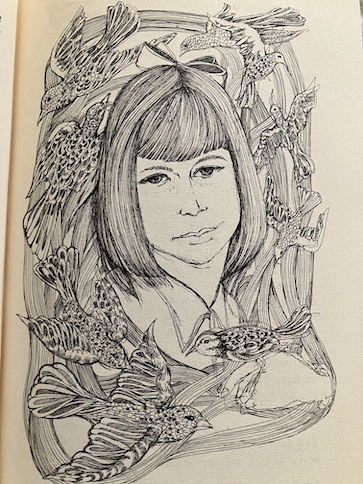
At the beginning of the story, Emma Makepeace is upset because her older sister, Charlotte, will be leaving early for the new term at her boarding school after Christmas. At this point, Charlotte has already had her first term at boarding school (which is where and when Charlotte Sometimes takes place, although there are no references to the events of that story here), and she has been invited to visit one of her new friends from boarding school before they return to the school together. All through Charlotte’s first term at boarding school, Emma has been lonely without her and has been finding life at their home, Aviary Hall, increasingly difficult.
The girls are orphans (although the books never explain what happened to their parents) who live with their grandfather and his housekeeper. Between the two of them, Charlotte is the more serious and responsible and Emma is the more mischievous and thoughtless. Up to this point in their lives, Charlotte has acted the part of the caring older sister, trying to teach Emma to behave herself and covering for her when she doesn’t. Charlotte has realized that their grandfather has little patience for misbehaving children and that Emma pushes the limits, so she has frequently intervened and smoothed things over when Emma tries his patience.
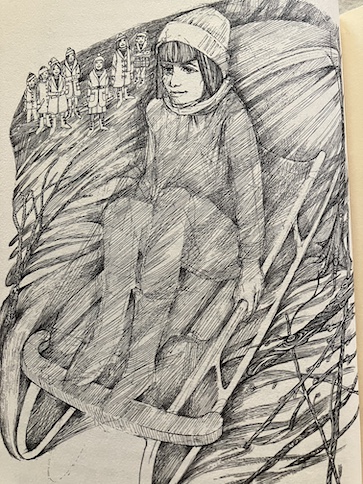
Emma has often thought of Charlotte as a kind of spoilsport for trying to act grown-up and mature, but during Charlotte’s absence at boarding school during the previous term, Emma has suddenly come to see how much Charlotte has been helping her and saving her from the consequences of her own actions and the realities of their home life. Without Charlotte there to be the motherly big sister, providing some warmth and affection and acting as a buffer between Emma and the adults, the grandfather has become more impatient with Emma’s immaturity. Both he and the housekeeper have been more direct with Emma about her behavior and bad habits, and there’s no one there to shield Emma from it. Emma is lonely for Charlotte’s company and feels picked on by the adults, so when Charlotte cuts her time with Emma short after her first visit home to go visit one of her school friends, Emma is angry and resentful. Charlotte is tempted to back out of her friend’s invitation for Emma’s sake, but she feels like she can’t, and their grandfather tells her that she must go ahead with the visit.
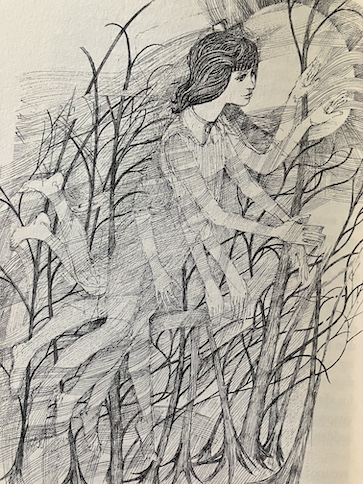
Emma is in a state of emotional turmoil through most of the story, adjusting to Charlotte’s absence, the new expectations of the adults in her life for her to mature and improve her behavior, and her own resentment about these things. While all this is happening, something else strange happens. Emma begins having strange dreams about flying. They remind her of the children’s flying adventures from two years previously, as described in The Summer Birds. It has been so long since she last flew that she struggles to remember how in her dreams, and when she wakes up, her muscles feel sore from the effort. However, at first, she can’t remember what happened in her dreams.

At school, when the new term begins, Emma is made head girl because she is the eldest girl in the class. A boy called Bobby Fumpkins is made head boy because he is the eldest boy. Emma is embarrassed and uncomfortable about being the head of the class in partnership with Bobby. She hates Bobby because he is fat, awkward, and spoiled. Before his mother gave birth to Bobby’s younger sister, who is still a baby, she babied Bobby more than she really should have at this age. Their family also has their own tv set, something most of the other children’s families don’t have at this time, and which Bobby bragged about when they got it. For these reasons, most of the other children in the class don’t like Bobby, either, and they’ve teased him mercilessly for years. They think he’s a sissy and a baby because of his mother’s attention and because he’s milder-mannered than they are and never stands up to them. Because of his awkwardness, they like to call him Jemima Puddle-Duck after a character from a children’s book by Beatrix Potter. Bobby tells himself that his classmates mean all this teasing good-naturedly, but they don’t really. Emma is particularly adamant within herself that she genuinely hates Bobby.
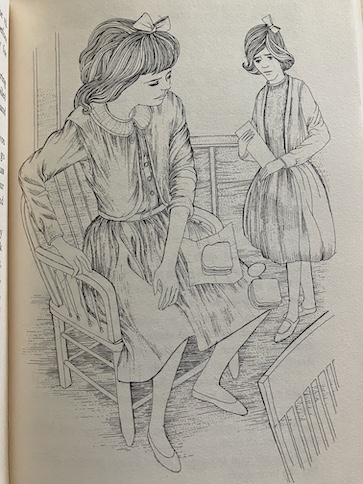
However, like it or not, Emma’s life has become intertwined with Bobby’s. Their teacher expects the two of them to work together at school during the day, and at night, she gradually begins to realize that he is sharing in her same dream of flying. Other children at school tease Emma about being friends with Bobby, particularly one girl who really wants to cause trouble for Emma because, as the next eldest, she would be next in line for the head girl position herself. Emma denies being Bobby’s friend, partly because he still gets on her nerves and partly because she’s still lonely without Charlotte and is worried by being shunned by the other children at school. However, she gradually begins to feel guilty about the way she and others have been treating Bobby, and she begins to feel the impulse to try to be nicer to him.

As her relationship with Bobby improves, Emma begins remembering more of their shared dream, and the two of them talk about the dream together. Bobby was one of the children at school who shared in their flying adventures two years before, and the two of them discuss their past adventures with each other and how they compare to the dream they’re now having. There are a few things that they begin to notice that are different from their past flying adventures. One is that they both have the feeling that someone is watching them. It seems to be a stern or hostile presence, a pair of eyes that belong to some unknown person, but they don’t know who it is. They also begin to notice that it looks like plants are growing backward as they fly over the countryside. That is, grown plants seem to be returning to small plants and seeds. They gradually notice that the land seems to be going back in time. Eventually, they start seeing dinosaurs in their dreams, and it looks like they might be going back to the beginning of the world. What will happen to Emma and Bobby in their dream when they eventually reach the beginning of everything?
The book is available to borrow and read for free online through Internet Archive.
My Reaction and Spoilers
I’ve already explained my reasoning about the reading order of the books. The Summer Birds is the first book in the trilogy, and you really have to read it before you read this book because the characters directly reference events from that story. Actually, I thought that was a really interesting choice, to have Emma and Bobby talking openly with each other about the summer when they learned to fly. They just accept that event as a common event in their lives that they shared and that everyone who shared it with them openly acknowledges. Sometimes, in children’s fantasy stories, the characters later downplay magical events, feeling like they were dreams they had or games of pretend they played because they seem too strange to have really happened, but no, in this book, the characters all know what happened to them and just accept it as a part of their lives. I thought it was interesting that this book acts as a bridge between the theme of flying and the themed of time travel in Charlotte Sometimes, although I still think that Charlotte Sometimes keeps more of its suspense if you don’t know that Charlotte safely returns to her own time before you read it.
I still think that Charlotte Sometimes is the best book in the trilogy. It is the best known, and unlike this book, it can be read independently of the others in the trilogy. It doesn’t reference either of the other two books at all. There are no references to Charlotte having participated in any previous magical adventures in that story. That may be partly because she is among strangers at her new boarding school who wouldn’t know anything about her flying adventures, but even her private thoughts don’t give any hint to that. What I think that The Summer Birds and Emma in Winter add to Charlotte Sometimes are some further insights into Charlotte and Emma’s personalities and the relationship between them. I still think that Charlotte Sometimes is the best book in the trilogy. It is the best known, and unlike this book, it can be read independently of the others in the trilogy. It doesn’t reference either of the other two books at all. There are no references to Charlotte having participated in any previous magical adventures in that story. That may be partly because she is among strangers at her new boarding school who wouldn’t know anything about her flying adventures, but even her private thoughts don’t give any hint to that earlier adventure. What I think that The Summer Birds and Emma in Winter add to Charlotte Sometimes are some further insights into Charlotte and Emma’s personalities and the relationship between them. Emma in Winter also adds some thoughts about the nature of time and time travel, which add some further insights into Charlotte’s time travel experiences.
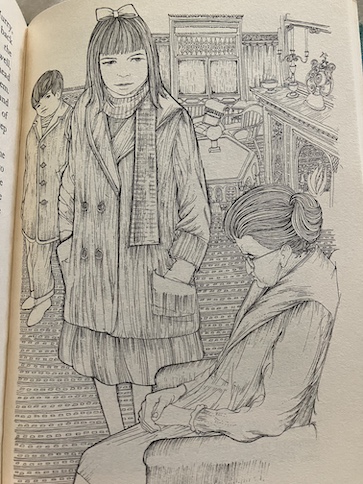
Emma and Bobby do some research about time in her grandfather’s study, a room where Emma is usually forbidden to go. One of the theories they find is that time moves in a coiled pattern, like a spring, and that the coils of the spring can be pushed together so different points on the coils can touch each other. This theory really relates better to Charlotte Sometimes than to Emma in Winter, but what is more relevant to this story is the idea that human thought can be the force that pushes the coils together and makes them touch. This is also a part of Charlotte Sometimes, and I explain in my review of that story about how Charlotte and Clare having many similarities and being in a similar state of mind as well as sharing the same physical space at different times allowed them to switch places with each other. However, the emphasis in Emma in Winter is Emma and Bobby realizing that their own thoughts and feelings influence their dreams and, therefore, their time travel.
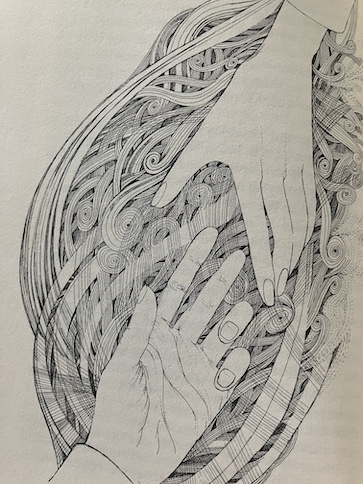
This story is rather metaphysical and a little difficult to follow during the dream phases. I noticed that some other reviewers seemed confused about the point of the time traveling. I found it a little confusing, too, but it seems like this is a coming-of-age story, like the other books in the trilogy. The Summer Birds focused on Charlotte and how her more mature outlook helped the other children make an important decision that would alter their lives forever. Charlotte Sometimes raises the question about what defines a person’s identity and how a person’s identity can be tied to someone else’s even when they’re separate people. Emma in Winter focuses on emotional understanding.
Both Emma and Bobby are going through major changes in their lives, particularly ones that require them to become more mature than they once were. Bobby has been somewhat spoiled and coddled by his mother, but he’s no longer the center of attention at home, now that he has a little sister. At first, Bobby finds it hard to cope with his mother no longer giving him the attention she used to give him, but it does give him the opportunity to become more independent and mature. Emma despises Bobby for being babyish because he was spoiled and overprotected by his mother when he was younger, but the truth is that Emma is also babyish. She’s not accustomed to being accountable for her own behavior and bad habits because Charlotte usually takes responsibility for her and shields her from some of the reactions of the adults and other people.
When Charlotte goes away to boarding school, Emma is left on her own for the first time to deal with the consequences of her actions and other people’s reactions to them. It’s a bit of a shock for her at first, and she realizes that she hasn’t fully appreciated what Charlotte was doing for her for the whole time. She also comes to the disquieting realization that, even thought she feels like the adults are picking on her over her behavior, she doesn’t like the way she behaves, either. She comes to feel guilty about the way she treats Bobby, and when she draws some nasty pictures of her teacher, she is startled to realize how much she has hurt her teacher’s feelings and how badly she feels about doing that. For the first time in her life, Emma has to face her own behavior and see how her behavior truly affects other people. She is shocked and troubled when she realizes that she doesn’t like what she sees and it’s her own fault. Only Emma can decide how nice or how mean she is and who she really wants to be.
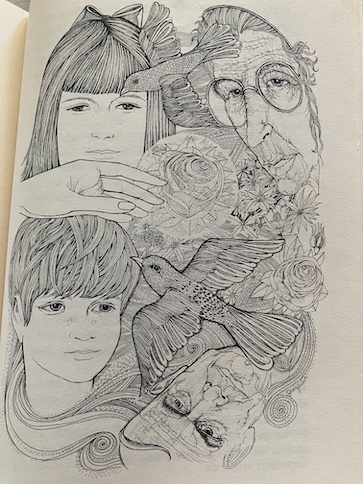
The children’s time traveling adventures that they have while dreaming lead them to explore their relationship with each other. Emma realizes that she has to be nice to Bobby and learn to get along with him for them to be able to function with each other in the dream. Their final dream together is confusing and rather surreal, but it also involves the two of them confronting aspects of themselves, their lives with other people, and their own behavior.
When they move all the way back in time as far as they can go, they’re confronted by a vision of their teacher, not as she actually is, but as Emma drew her in a mean drawing. Emma has to remind herself and tell the figure that it’s only a drawing she made; it’s not reality. They also see visions of other people in their lives and even of themselves at their worst and most frightening, but they have to hold on to the reality of themselves, as they are now, the people they’re becoming, not who they used to be or how other people see them. I took it to mean that neither of them can go backward in their lives anymore, to their old habits and who they were or how they were as younger children, but they have to accept the changes taking place in their lives and in themselves to return to the real world, their own time, and the lives they have ahead of them. They discover that the key to traveling through time is thinking, so they have to think themselves out of their time travel dreams, focusing on their real selves and the real lives, accepting and even loving themselves as they are. Change has been coming for both of them, but they have to make the decision to face it and embrace it and to let go of their past selves to move on in time and in their lives.
 Jestress's Forgotten Books and Stories